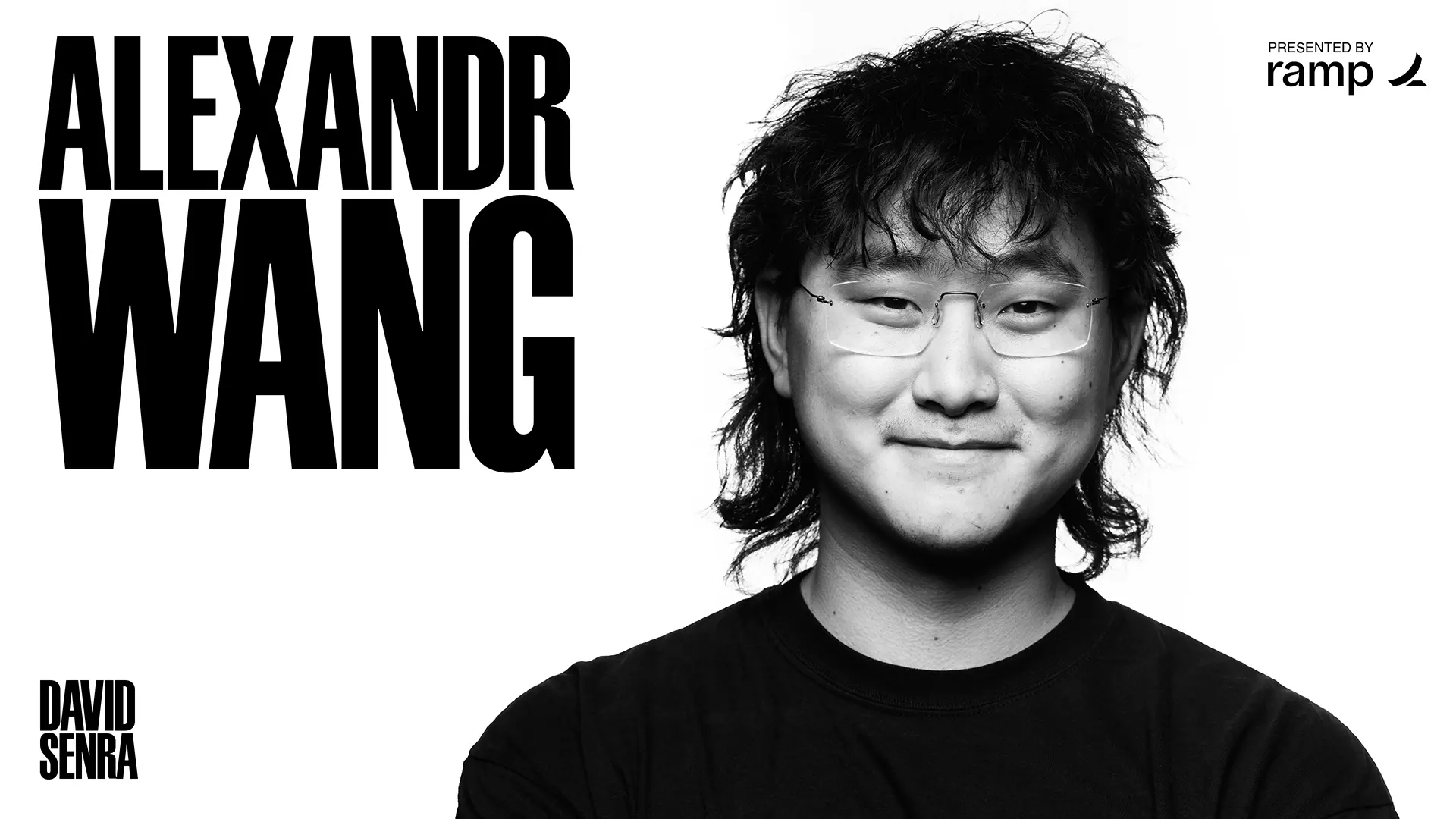
Alexandr Wang
Alexandr Wang is the chief AI officer at Meta and co-founder of Scale AI.
Summary
Alexandr Wang is the chief AI officer at Meta and co-founder of Scale AI. We talk about the seven-month effort to build Muse, why Meta focused on personal AI agents instead of coding, and how Mark Zuckerberg and Nat Friedman helped shape the product. Alexandr shares how Zuckerberg recruited him after Meta's Llama 4 setback, why he left Scale after nine years, and how he's rebuilding Meta's AI lab around small teams, exceptional talent, and minimal bureaucracy. We also discuss using memes to make a product go viral, the importance of having a single point of view, and why Alexandr believes AI could give everyone the ability to pursue bigger ambitions.
Episode transcript
This transcript was generated using speech recognition software and may contain errors. Please review the episode audio before quoting from this transcript.
[David Senra]
Tell me the history of Muse.
[Alexandr Wang]
The first thing to start with is probably what our vision was when we started Meta Superintelligence Labs. And when we started it, Mark published this memo that myself and Nat Friedman and a bunch of others worked together with him closely on, called "Personal Superintelligence." And the whole idea was, how do we make
[Alexandr Wang]
AI, how do we build powerful AI that actually makes all of our lives better? How do we build something that actually lifts the human experience, broadly speaking? In that memo, we spoke to a bunch of the ideas, and we basically alluded to, I think, a lot of what Muse has ultimately become. But we were gesturing at it very, very early. This was in June 2025, before really agents had happened in any meaningful way. In the summer of 2025, AI was just in a totally different spot. But that's what we wanted to build towards. That was the mission of MSL, and that was really where we wanted to take everything. Then we kind of just got to work building models, because the end-to-end process of developing any of these frontier models is many, many, many months. You have to go through, you have to build your entire stack, you have to produce the datasets, you have to pre-train the model, then you have to do pro-training the model, you have to build a whole stack for that. It's a very lengthy end-to-end process, kind of this whole production line. At the start of this year,
[Alexandr Wang]
Opus 4.5 obviously really caused many people, including us, to sort of see what the future of agents could be or was, and really brought the sort of potential of agents to the foreground. And OpenClaw was happening at the start of the year. Nat Friedman, who I work closely with, was, I think, the first person within MSL to work with OpenClaw and try OpenClaw. He had an experience I would describe as somewhere between terrifying and euphoric. I think he really
[Alexandr Wang]
went all in. He trusted it entirely. He's told some of these stories that he had a Stripe sessions interview where he talked about some of this, where he told his OpenClaw that he wanted to drink more water, and then his OpenClaw would watch him in security footage to make sure that he was drinking water and tell him, "Good job." And he had many, many crazy stories like this. And it also makes you realize, oh, there's something quite magical about what's happening here. And I remember one of the things that Nat told me, and this is one of the things I remember the most, is he said, "I think there really is something here." And I don't know, early adopter Nat Friedman is a pretty good indicator, because he was one of the first customers of Stripe back in the day and then was really early on a lot of open source developer stuff. And he also helped create GitHub Copilot and many other things. So, that was a clear signal. It was like, okay, there's clearly something pretty magical about personal agents, generally speaking. But when you actually kind of trust the personal agent and really bring it into your life, it has the ability to do so many things. And after hearing all of these crazy stories, I started using it very deeply. I think for many weeks, I think both of us were sort of like, every spare moment we would just spend talking to our OpenClaws and
[Alexandr Wang]
really immersing ourselves in what personal agents could be.
[David Senra]
What was your initial reaction? Euphoria or terror?
[Alexandr Wang]
Nat, at the time, he had built this prompt to do this basically full psychoanalysis of yourself. There were multiple waves of deep psychological probing. He basically wrote this prompt for you to use in OpenClaw. And I think that was one of the very first things I did with my own OpenClaw. It was maybe the equivalent of three years of therapy all compressed into this one moment.
[David Senra]
Wait, I'm curious. Why, when you get your first shot at OpenClaw, this is one of the first things you do?
[Alexandr Wang]
I downloaded it, I installed it, and then Nat was like, "Oh, you should do this." I was next to him. He was like, "Okay, I'll just do the thing you're telling me to do." And then-
[David Senra]
Okay.
[Alexandr Wang]
... and then it was this crazy experience.
[David Senra]
Wait, say more about the crazy experience, though.
[Alexandr Wang]
Oh, well, it was just very intense. Again, it was like three years of therapy, because it was just successive rounds of deep psychological probing, because it had other information about me. It had access to my email and access to a bunch of my photos, and it could go and look up other information and sort of pull it all together. I was very vulnerable through that process. This was in February.
[Alexandr Wang]
Both of us, I think, had come to this joint conclusion that there's clearly something really special happening here. And we both wrote memos at that time. I wrote a memo about, and both of these we kind of sent up through the Meta board, because for whatever reason, it was board season. I wrote a memo about how I felt that in many ways this was the final consumer product, and that the superagent was something that was, as far as consumer products went, a clear endpoint in many ways. And then he wrote one called, he wrote actually two, which had very memorable names, "The Claw is the Law" and "Trust is a Must," which ultimately defined a lot of the core of how we built these products. So we came to this conclusion, this was in February, there was something very important here. And then we built, our teams, we built a prototype within
[Alexandr Wang]
a week, maybe two weeks, and demoed it to the board. It was this very fast cycle. And many of the decisions that made its way into the final Muse product were present in the first prototype. The Jolly Bot was there. The early version of the Muse Charm was in that very first meeting. Not all of the ideas and not all the tabs were there, but a lot of them were present. Then from there, obviously that was February, we launched the product seven months later, was
[Alexandr Wang]
the really, really hard process of taking- This you know prototype where it like sometimes worked and was magical, but most of the time didn't work and would constantly break. And like going from there to something that would be highly reliable like you know kind of like a beautiful crafted consumer product that we felt confident as a contribution to the consumer world. And that was like this very lengthy and quite painful process. And I think-
[David Senra]
Before we get there, I want to go back to the idea that you wrote the prototype. You guys created the prototype in like one to two weeks. You show it to the board. What's Mark's role in all this?
[Alexandr Wang]
He was like experiencing the sort of like euphoria/terror of the product at the same time as all of us. I think he's talked about this in various interviews, but like I think he used it for a bunch of things around the home, and he was using it with his kids, and he used it in his
[Alexandr Wang]
MMA training. Like he had it watch videos of himself doing MMA training and like we would give him tips on like how to improve. There were like some staff meetings. And by the way, like you know this kind of became a thing for much of the the Meta team was like having a staff meeting and saying like, "What were the crazy experiences that you had
[Alexandr Wang]
with your agent?" Again, this was back in February. It's very interesting to kind of think back to this whole cycle because obviously the OpenClaw phenomena, it peaked and then-
[David Senra]
Disappeared.
[Alexandr Wang]
Yeah. It didn't persist, and I think a lot of people kind of had this experience, which was it was just like you would have these magic moments, but for the most part didn't like work that well, and there were all these problems, and then you know it just kind of like died down. And so part of I think the
[Alexandr Wang]
building the product, a lot of the focus of the product was just like, how do you make this into an actual reliable consumer experience that you feel comfortable putting in front of, over time, billions of people, and you can feel confident that like most of those people have an amazing experience?
[David Senra]
Why were you able to do that and the developers of OpenClaw were not?
[Alexandr Wang]
Well, first of all, I think we respect Peter Steinberger and everyone who's contributed to OpenClaw immensely. Like I think Peter is definitely a visionary. I think whatever happened in his beautiful brain that created OpenClaw is magical, and I think maybe the unglamorous part of what made Muse so magical was just really grinding out and sanding out all of the details to make the combined model plus product experience really amazing. And we did many, many iterations on the model itself. We aimed the overall model roadmap towards building towards personal superintelligence, broadly speaking, but certainly personal agents as like-
[David Senra]
Say more about that and how that differentiates between your other competitors.
[Alexandr Wang]
Yeah. Well, this is kind of-
[David Senra]
That's actually really interesting.
[Alexandr Wang]
Yeah. It's actually useful to go back to the moment because if you go back to the start of the year, February, Opus and Claude were way ahead in coding, way ahead of anyone else, and they were exploding. It was the beginning of the sort of like you know Anthropic takeover in the whole industry. And it was a very scary moment, I think, generally speaking, which is like, "Oh, wow, they're so ahead on coding." And then obviously they had Mythos, and they had like this clear lead. I think the
[Alexandr Wang]
conventional wisdom in the industry was that coding agents were the only form factor that mattered, or maybe the only technology that mattered, or only like capability that mattered for advanced AI. You know, there's this incredible force in the industry to just like go and crowd that use case and compete with Anthropic on coding agents. Because of our experiences and our conviction that I think formed around this idea of personal agents and the sort of taking a step back, I think the reason why we did personal superintelligence in the first place was that it was also what we believed Meta was uniquely positioned to do. And we can talk more about that, but like I think because of that-
[David Senra]
Well, let's talk about that now.
[Alexandr Wang]
Okay.
[David Senra]
We'll just do the weave.
[Alexandr Wang]
I think one of the first things I told Mark, even before the whole Scale and Meta deal happened and everything, one of the first things I told him was,
[Alexandr Wang]
"I think Meta is actually a really special company if we have AGI or ASI or whatever you want to call it, because part of the promise of AI is that for all of us, we have a mix of things that we want to do and things that we have to do. And the promise of AGI is that we're going to spend almost none of the time doing things that we have to do because the AIs will just start doing a lot of that for us, and we can spend all of our time on things that we want to do." And for me, Meta's products represent the things that we all want to do. Like my use of Instagram or WhatsApp or Facebook, like these are products that represent what I
[Alexandr Wang]
follow my interests, I follow my hobbies, I follow people that I like, my friends and the people I care about. Like the product span of Meta encapsulates the sort of like what we want to spend our times doing sort of realm. I think on a long arc, Meta's an incredible winner through all this. That's like one of the first
[Alexandr Wang]
things that I believed about Meta and superintelligence, and then ultimately a lot of those ideas made its way into this concept of personal superintelligence. You know, you can kind of look at it a few ways. One is, what's the heritage of the company? The heritage of Meta is connecting people with their friends and family, helping them discover their interests. Like these are things that are very human. And then there's also the sort of like you can take the business lines, which is Meta has distribution to three and a half billion people using the apps every day, and the natural
[Alexandr Wang]
area where Meta was going to be successful is consumer AI.
[David Senra]
It's not work, it's not coding, it's personal.
[Alexandr Wang]
Yeah, exactly. So- Personal agents and personal AI and consumer AI, broadly speaking, were always the zones where we always felt that Meta was going to be able to do something very special.
[Alexandr Wang]
So that brings us to early 2026.
[David Senra]
Now you have the prototype, you have the buy-in, everybody knows, Mark's on board, and now you're doing the seven months of the difficult work of refining this product.
[Alexandr Wang]
Yes. There was kind of this specter, which was like, oh, personal agents, they came and went. And we always felt that it was because the experience wasn't perfect, it wasn't polished yet, all that kind of stuff. But we knew that that was something that we had to think about as we were developing this product. We focused our model development roadmap, the top focus, or one of the top focuses, was towards building on personal agents. And we had these long spreadsheets of hundreds or even thousands of different... not thousands, but more than a hundred specific behaviors and capabilities that we knew the model needed to have to be able to build the ideal personal agent. It was very, very meticulous. And then over time, we built evals for all of those. We figured out how to train the model to be really, really good at every single one of those things. And we have these reviews where we look at that spreadsheet, and we figure out the things that we're bad at and make sure that we're improving on them. We did this very meticulous process to slowly just keep improving and sanding out all the edges of the model so that it could power the product.
[David Senra]
Is that really the culture of Meta, too? This constant sanding of the products?
[Alexandr Wang]
Yeah, a lot of the culture of Meta is like, once you know what you're measuring, there's very talented people, and you can optimize for those things. You can sand out all the details. You can make those things amazing. I think in the sort of pre-AI consumer product era, a lot of this was around, how do you optimize your conversion? How do you optimize the referral rates? How do you optimize every part of the onboarding flow? How do you make all that stuff just perfect? And then I think the AI era, I think a lot of that, especially for Muse, has been in the form of sanding out every detail of the model to be perfect for the product.
[David Senra]
I want to tell you about the presenting sponsor of this podcast, Ramp. I have been reading a lot about SpaceX lately. SpaceX is one of the most valuable businesses in the world, and one of the main themes in the history of SpaceX is constantly attacking and questioning your cost. Ramp helps many of the most innovative businesses in the world do exactly that. The median company running on Ramp cuts their expenses by 5%. And one thing SpaceX has demonstrated is that a religious dedication to controlling costs can help actually increase revenue because you can pursue opportunities you couldn't otherwise. And we see that in the Ramp data, too. The median company running on Ramp also grows their revenue by 16%. So when you're running your business on Ramp and your competitors are not, you have a massive competitive advantage that compounds over time. Ramp is the only platform designed to make your finance team faster and happier. Many of the top founders and CEOs I know run their business on Ramp. I run my business on Ramp, and you should, too. Go to ramp.com to learn how they can help your business save time, save money, and grow revenue. That is ramp.com. Deel is how the best founders turn the world into their talent pool. I've been studying how history's greatest founders operate for a decade, and one thing they all have in common is they understand that recruiting and hiring the very best talent is your most important priority. A players recognize other A players, which is why top companies like Ramp, Shopify, ElevenLabs, Uber, and DoorDash all use Deel. Many of the top founders I know have personally invested in Deel after using their product. And what they discovered is that Deel is the best company in the world at building infrastructure for global hiring. Deel will help your business hire, pay, and manage any worker anywhere in the world so you can retain the best talent anywhere and spend the rest of your time focusing on what you do best, delivering value to your customers. The founder of ElevenLabs has a great description of the value Deel can give your company. He said, "We built ElevenLabs to break down language and communication barriers. With Deel enabling us to hire and support exceptional talent anywhere, we can accelerate our innovation and bring more voices, stories, and ideas to every corner of the world." Deel is trusted by over 40,000 companies and growing fast. Learn how they can help your business by going to deel.com/senra. That is deel.com/senra.
[Alexandr Wang]
Did you see this profile that's written on Zuck in "Colossus" written by Jeremy Stern? I saw it. If I'm being honest, it was too long, didn't read, but- It's 15,000 words. I just had Jeremy on the podcast. He's my favorite. Which I saw. I saw the- Yeah. I saw the- Yeah. I think he's writing the best profiles on entrepreneurs and investors in the world right now. I think he's literally the best in the world at what he does. But in that, Zuck says, he was talking about the advantage that he has relative to, I think, Elon and Sam Altman. And he's just like, "Listen, my skill set is very unsexy, but I'm really good at building teams and then just improving a product slowly over a long period of time." And relative to Elon and Sam Altman and others, he's like, "I'm not going to lose control of my company, and I don't need to raise any more money. And so I can just do this for an excessively long period of time." That section of the profile is popping in my mind when you're talking about this seven-month
[Alexandr Wang]
stretch of trying to refine and build Muse. I think that's exactly right. I think that it took immense patience. Seven months maybe doesn't sound like that long, but AI is fierce. Seven months in AI time. Seven months in AI time, which may be a decade in non-AI time. And I think for all of us, but I really give Mark a lot of credit for this, it took a lot of patience and restraint and a lot of trust in the process. And you can go back and look at
[Alexandr Wang]
what Mark said in earnings calls for this entire period from February through
[Alexandr Wang]
September, and he will allude to the fact that we were building personal agents. And we weren't really trying to hide it. We were building- Personal agents, and we were talking about it, but I think there's a lot of doubt in the company for that entire period. Like, people, obviously one of the dominant Wall Street narratives is like, "Oh my gosh, Meta's just burning all this money. Like, are they even going to pull anything off in AI?"
[David Senra]
It's more than that. It's like, "Zuck cannot win AI." It's said over and over again for a long period of time. And again, going back to Jeremy Stern's profile on him, he then, off the record, starts talking to his competitors, including one former researcher that is now at a competitor that used to work with Zuck and is now at another lab. And he goes, "I don't want to have to compete with him because Mark is like the fucking..." I think the line is, "Mark is the fucking terminator." And it was like, he just will not stop. And then he talks about
[David Senra]
one of his superpowers is that he's never happy with the state of the product, so he always wants constant improvement, but he's not an asshole. Like, he's not a dict- he's definitely a dictator, but he's not rude and
[David Senra]
will destroy the chemistry of a team. He actually talks about in the piece that team cohesion is excessively important to him.
[Alexandr Wang]
I think that's all right. I think one of the magical things about Muse was that we
[Alexandr Wang]
really took quite a bit of time to sweat all the details before ultimately coming out with the product. Because I think that personal agents was one of these product areas that kind of rested on a knife's edge, which is if it can reliably deliver these magical experiences, it has the potential to be one of the greatest consumer products ever. But you're dealing with models, you're dealing with something non-deterministic, you're dealing with agents. They can break, they can be unreliable. Like, if people have these unreliable experiences, they think it's trash. It was one of these things where getting to the product to a point of quality and value such that it resonated with so many of the people who downloaded and used it.
[David Senra]
I want to talk more about this process. I'm curious how much resources, how big the team, how many people are working on it. Do you guys have any data on like, "Okay, I'm using Muse, nine great experiences, two inconsistent or shitty experiences, and then I churn out?" Like, do you have any information on this?
[Alexandr Wang]
You can see this from a lot of the other agent products at the start of the year. Like, almost everyone churned out of those, and it's because they were unreliable. We did a lot of user testing of Muse. Like, we did many, many rounds of new people trying to download it and use it from scratch, and just seeing
[Alexandr Wang]
what that experience was like. A huge part of the premise of Muse, and I think what's really landed, is that it is
[Alexandr Wang]
a different thing from what most people have experienced with consumer AI. Like, it is not a chatbot, it is an agent, and it can do agent things for you. And
[Alexandr Wang]
I think to a developer, this is kind of like old news because they've had to download agents and have been using them for a while. But for most people, just even that graduation process,
[Alexandr Wang]
it needs to be explained and needs to be onboarded on a very thoughtful way. And then for sure, we definitely have seen
[Alexandr Wang]
when... Because we've done tests with different versions of the model and various model versions and continuously do those A/B tests. The product experience is very, very sensitive to model quality. It's very sensitive to how reliably the models can undergo these tasks, how reliably they communicate with the user about them, how reliably they check back with the user if there's things that they require guidance on.
[David Senra]
But how'd you know it was ready to be released?
[Alexandr Wang]
Part of it was pretty numerical, which is like we had set...
[Alexandr Wang]
Go back to that spreadsheet of 100 plus things. We had set for each of those rows what threshold is launch blocking and above what threshold is good. We had many checkpoints that were green on 80 of the rows, but red on 20 of the rows. We knew that wasn't good enough. And we had our first model checkpoint, which was green across the board, which was a specially trained version of Muse Spark 1.3. So there was the very numerical part of it, and then there was just the experiential part, which is we tried the model. We could tell that it was a lot better than anything we had iterated with before.
[David Senra]
So going back to that seven-month period you were talking about, how many people were working on the product?
[Alexandr Wang]
Between the model work and the product work, like
[Alexandr Wang]
under 200 people total, which I guess sounds like a lot, but in big company land is-
[David Senra]
It's actually a lot smaller.
[Alexandr Wang]
It's not very many. It was kind of cool looking back on this and thinking about it is like, we knew this was going to be the most important product that... The whole executive team, everyone knew that this was probably going to be one of the most important products that Meta would ship this year. But
[Alexandr Wang]
we had the restraint organizationally, I think, to make sure that it was a really small, focused team working on it, and that it didn't balloon to this like, "Oh, you have huge swaths of the company working on it," because we knew it was a single work of art. Like, it required strong point of view and strong focus to pull that through into one beautiful experience.
[David Senra]
Say more about this. Why did you just call it a single piece of art and that you need a single perspective or point of view?
[Alexandr Wang]
I think one
[Alexandr Wang]
criticism of products that come from larger organizations, and I think this
[Alexandr Wang]
is even now starting to plague
[Alexandr Wang]
a lot of the AI labs, is that they become kind of this Frankenstein, almost like Cronenberg amalgamation of a bunch of different people's points of view and visions and
[Alexandr Wang]
beliefs. And it's sort of like PM hell in some sense, where every PM has a thing that they're trying to get into the product and jam into the product, and then all of that kind of blends together into this smoothie almost. People feel it as users and consumers. You can feel when a product is just like, it feels like lots of different people worked on it and there were clearly different people who were goaled differently, so they just kind of jammed it all together. Muse had to be the exact opposite, which is like, there's one clear point of view.
[Alexandr Wang]
There is one cohesive experience that we're trying to deliver
[Alexandr Wang]
to the world.
[David Senra]
I love that you said that, and it just happens to be pure coincidence. I don't know when this is going to come out, but we're recording this on the 15th anniversary of Steve Jobs' death. And when you think of somebody, like consumer products that had a single point of view, you obviously think of Steve first. I've read every single book on Steve and the history of Apple, and I've done, I don't know, 15 or 20 episodes on him for my other podcast, "Founders." But one of my favorite lines to describe Steve's impact was, it says that, "Apple is just Steve Jobs with 10,000 lives." The products are to his taste, his perspective, his point of view. What he wanted to see in the world is exactly what the end user got.
[Alexandr Wang]
In Muse's case, Nat Friedman deserves a lot of credit. His taste and sensibilities ultimately dictated and shaped what that product became.
[David Senra]
Do you talk about how many people are using Muse? Are you guys talking about this publicly or no?
[Alexandr Wang]
We have said millions, and then I have
[Alexandr Wang]
retweeted other people who have shown graphs where you would imply that Muse is the fastest-growing consumer app of all time, consumer AI app of all time.
[David Senra]
So you won't say a number, though?
[Alexandr Wang]
We've said millions, yeah.
[David Senra]
Well, millions could be hundreds of millions. That's also millions. So you're just not adding the
[David Senra]
beginning to that. I want to go into, you've been kind of going, and I mean this in a loving way, unhinged on X. So can you talk about your, is this marketing strategy? What is going on? I feel like there's a distinct difference in your public tweeting since Muse launch. What are you doing?
[Alexandr Wang]
There's a few pieces of what's happening here.
[David Senra]
This has got to be more fun than Scale AI, when you were building Scale AI. It has to be. We're going to talk about that later, but it has to be.
[Alexandr Wang]
The past few weeks have been some of my most fun building, yeah, certainly in my career. And I think there's a few things happening. So one is, it felt important that we figured out a way to make Muse break through. It's a pretty torrential, going back to this, it's this torrential stream of updates. For most people, they're just constantly being
[Alexandr Wang]
bombarded with new AI products and startups and releases and things and models, and here's another model, and here's another product, and here's another feature, and it's just this torrential stream. We had actually large meetings where we talked about this as a team, and it was like, "We need to break through." And obviously, Meta, we have lots of distribution. We can make sure everyone knows about it, but that's not enough to make it break through in an interesting cultural or fascinating way for the world to kind of pay attention to. I separately in my life have happened to have met and become friends with
[Alexandr Wang]
memers, and
[Alexandr Wang]
I have these, I affectionately call them my schizo friends, but people who literally they spend all their day thinking about memes and the internet and understanding that.
[David Senra]
I have people that are obsessed with Muse, and they're also obsessed with your X feed, and they're convinced that you have like a hundred Muses coming up with memes to meme Muse.
[Alexandr Wang]
No, they-
[David Senra]
Looks like you just have a collection of schizophrenic friends that are terminally online.
[Alexandr Wang]
The X feed, just for what it's worth, is literally every one of those tweets I write. There were
[Alexandr Wang]
quite a period where it was really hard for me to pay attention in meetings because I would just think of a meme, and I'd be like, "Oh God, I have to get this out."
[Alexandr Wang]
And it was moments of inspiration.
[Alexandr Wang]
I was trying to have dinner with one of my coworkers, and then during the dinner I was like, "Wait, wait, I figured it out," and then I posted a different meme.
[Alexandr Wang]
I almost felt like I was an engineer solving bugs again because it was like you could tell when something was going to click. But yeah, so one thing is we wanted to break through. Another thing that I just thought was important is, how do we make
[Alexandr Wang]
Meta cool again? Because for whatever reason, despite having these incredible pieces of cultural software, like Instagram and Facebook historically, Meta was not cool for a while. And so, wanted to make Meta cool and interesting and kind of funny. And then the unhingedness was something that happened kind of
[Alexandr Wang]
naturally over time. When Muse first came out, I was just mostly focused on promoting all the interesting use cases that I saw. I was retweeting tens of interesting use cases that I saw of people using Muse. And then at some point, it was because I was just tweeting so much, there were a few tweets where I was just didn't think that much about it and just said, "Fuck it, post." And then some of those tweets did really well.
[David Senra]
Have you seen this time spent thinking about it and then banger? Have you seen that graph?
[Alexandr Wang]
I haven't seen, but I agree with that.
[Alexandr Wang]
Some of these things I didn't spend that much time on, I tweeted them. I didn't even check my phone for a few hours, and I was like, "Oh, wow, that one went really well." And then I kind of remembered something about the internet, which it wasn't super intentional, but I remembered the internet rewards risk, and it rewards surprise and things that people don't expect. And so then I just kind of went off. A lot of my coworkers, I think, were somewhat surprised at
[Alexandr Wang]
something that Nat said for the whole week when I was posting all the memes. He was like, "I thought we would learn..."
[Alexandr Wang]
He said this in a bunch of meetings. He was like, "I thought we were going to learn a lot about Muse users and how people were using Muse, but actually, we're just learning a lot about Alex's mind."
[Alexandr Wang]
It was a lot of fun. I felt like I was drawing on all of my internet knowledge for years and years and years to pull into those moments. And I think it actually, I don't know, we don't have the tracking and it's hard to tell, but I actually think it actually genuinely made an impact on growth, which is kind of hilarious.
[David Senra]
I definitely think it did.
[David Senra]
I can't stop hearing about it. So, and all the people I'm hearing about it from also downloaded the app and are now using it. Go back to what you were saying, though. It's like, "Hey, we have distribution, but that doesn't mean that we can make something that people are going to come back to and actually sticky." So, how did you do this with Muse?
[Alexandr Wang]
I think it was like, how do
[Alexandr Wang]
we make this breakthrough as a product? And I think there were a few parts of that. But I think one is, how do you get people to match the experience? Like, how do you get someone to a wow moment with a product as early as possible? And this product, I think, naturally lends itself to that because I think
[Alexandr Wang]
it's AI, it can do a lot.
[Alexandr Wang]
If someone has never used an AI agent, there is a lot that it can do that will surprise you. So that, I think, was a big part of it. I think another part of it was like,
[Alexandr Wang]
how do you harness all of those stories of people having these wow moments and use those to help make the product sing and make the product fly?
[David Senra]
How are you using the stories, though? Because you guys aren't running ads for Muse, are you?
[Alexandr Wang]
We ran a few ads. I mean, honestly, I think at first it was just the fact that I would retweet so many of them.
[David Senra]
Yeah.
[Alexandr Wang]
Anytime I saw someone do something interesting about Muse, I was like, "Quote tweet."
[David Senra]
I couldn't understand why both Anthropic and OpenAI's ads are so bad, because remember, Anthropic was doing this huge outdoor campaign, and it's all about them. And same thing with ChatGPT. It's like they'd have the icon, which I don't even think people recognize that as a logo, and they'd just say Codex, and it'd just be two people sitting at a desk. I'm like, "What the fuck does this mean?" Where it's like, you have all these use cases. All you have to do, your ad is to show the benefit of your product.
[Alexandr Wang]
Yeah.
[David Senra]
That's it.
[Alexandr Wang]
Yeah.
[David Senra]
You have millions of them. Run those ads. It's so elementary that it's interesting that people make this mistake over and over again.
[Alexandr Wang]
Yeah, I think one thing that we came back to a lot in both building Muse as well as just building stuff in general at Meta was just like, why would someone care?
[David Senra]
They don't care about you or your company. Everybody's self-interested. There's this very old book. It's called "Scientific Advertising." It was written in the early 1900s. It was so valuable that the guy that made the most money as an advertising agency founder in the 1920s and '30s,
[David Senra]
it was written by this guy named Claude Hopkins, who was this best copywriter. He's like, "These are all the ideas of how I'm making this money. I'm putting this manuscript in a safe for 20 years." Right? But essentially, it's not about advertising. It's about human nature, which doesn't change. And his whole point was just like, your ads are about you. Your ads are about your product. Your ads are like, "Hey, I have this thing. Buy." People don't care about that. They're self-interested. And all you have to do is just do the trick of what this does for you, and you just lead with that.
[Alexandr Wang]
Yeah.
[David Senra]
And there's people that took those ideas that were written in the early 1900s and went on to build massive companies, advertising agency founders-
[Alexandr Wang]
Totally
[David Senra]
... in the '50s, '60s, '70s, and even to this day.
[Alexandr Wang]
Yeah, 100%. I think there were a few insights, let's say. First is, most people in the world, they don't give a shit about OpenAI or the research or these other companies or the research, or even us or our research or whatever. They care about what it can do for them. We had this gift of the mascot, which was the little jolly guy. I remember the tweet where I realized, I was like, "Oh, wow, this has mileage." Because basically I was driving into work,
[Alexandr Wang]
and while I was on the way, I generated a version of the guy holding a briefcase, and I tweeted, "MFW I go to work on Monday." I remember thinking, this is one of my best tweets in a while. And then I kind of realized, you can put him into a lot of situations. One thing I kind of realized as we were going through that process was like, how do you create surprising moments that are very different from any other marketing that you've seen of a product? I don't really remember the last time someone leaned into racy memes to market a product. I don't actually know if it's been done before, but I kind of realized, oh wow, this is a thing that we can do with this little guy. And that's something that is interesting. That's something that drives intrigue to the average person.
[David Senra]
Okay, but that might get them, raise awareness, might even get them to download the app. But then how do you get them to stay engaged once the app is
[David Senra]
on their phone?
[Alexandr Wang]
There's a cycle that people who
[Alexandr Wang]
really love the app, and we, even back in February, had, which is you try to give it a little thing, and it does it. And you're like, "Oh, wow, it did that." And then you try to give it something a little bit more, and then it does it. And you're like, "Oh, wow, it can do that?" It could do that first thing, it could do the second thing, and then you give it a little bit bigger of a problem. And it's kind of this trust fall almost that you have with an AI agent, which is at first you don't really trust it, but you're kind of intrigued, so you're going to give it a little nibble, and then you give it something a little bigger and something a little bigger and something a little bigger. Certainly, when I talk to college students or whatever, some of the ways that people use AI, it's like a full trust fall. They just are recording voice notes and brain dumping to the AI, and they send it, and they just trust the AI to organize all the thoughts and give them clear plans and clear things to do, et cetera. I think for the successful users of Muse, it really is like getting them onto this trust fall process of using it for slightly bigger and bigger and bigger things, and then having it work every one of those times.
[David Senra]
I found one of my all-time favorite quotes when I was reading the book "Zero to One." The quote says, "The single most powerful pattern I have noticed is that successful people find value in unexpected places, and they do this by thinking about business from first principles instead of formulas." That is exactly what Applovin has done with their advertising platform. Applovin connects you with over a billion potential new customers in mobile games. Applovin allows you to capture undivided attention. Applovin ads are full-screen videos that are watched for an average of 35 seconds. That is retention that blows other ad platforms out of the water. And you can launch on Applovin in minutes. You set the goal, and Applovin achieves it. No complex setup, no expertise needed. And Applovin scales quickly. They can put your ads in front of over a billion potential customers. Other businesses have seen immediate results, scaled to hundreds of thousands of dollars of spend per day, and increased their revenue by millions. So you want to get started quickly before all of your competitors are on Applovin. And you can do that by going to applovin.com. That's applovin.com.
[David Senra]
I wonder how much of this is actually driven by word of mouth. So obviously, talking to you, I was going to have to download the app no matter what. But what really piqued my interest is a friend of mine who sent me screenshots of how he was using Muse. So, when you download the app, it doesn't really tell you like too much of like what you can do. It's kind of like open-ended, like a open text box. But a friend of mine who's running like a 100 billion dollar company, he left his ID on a Flexjet, and then he went through and he's just like, "Well, I want to..." He was telling Muse, "I don't want to be involved in this process at all. You have to figure out how to get the ID. Go pick up the ID. This is where it's at, and then this is where I'm at, and then figure out all the steps along the way." And then arranged the courier, went there, got through his security in his office somehow, and got upstairs to his office. And it was like, "Holy shit, this is the best marketing." It's just three or four screenshots of Muse going back and forth and him saying, "I don't want to be involved. You have to do everything," and then figuring it out on the way.
[Alexandr Wang]
Yeah, no, this is actually one of the things about...
[Alexandr Wang]
I don't know how int- it was like somewhat intentional, but definitely modern product marketing is very screenshot-driven. I think to have a modern consumer product, it has to work on the screenshot. The screenshot has
[Alexandr Wang]
to fly, so to speak, either through group chats or word of mouth or online. And I think that's been a big part of it. This wasn't intentional or engineered, but I think the fact that we had the little guy in the screenshot was a big deal. Because I think having Jolly or whoever your Muse is in the screenshot immediately communicates this is a Muse screenshot. It's just like the best marketing you could possibly have.
[David Senra]
So are you on your Muse all day long? What is your own personal usage?
[Alexandr Wang]
I mostly set up a lot of workflows using it, and then
[Alexandr Wang]
I guess my meetings a lot of the time.
[Alexandr Wang]
So in practice, I think in my job, quote-unquote, I'm supposed to pay attention and be pretty present and interact with people. I set up a bunch of workflows and kind of treat it as like a second brain.
[David Senra]
Yeah, you said that in the post that you wrote, and it was really short, and I think I saw last time it was five and a half million views so far. But you said, I love how you described Muse, like, "Well, if everyone had a second mind beyond their own."
[Alexandr Wang]
I think this is, philosophically speaking, one of the most interesting questions about what does it mean to be human when you have powerful AI, and what is that relationship like, and how exactly does that look? And different people have different takes on what exactly that looks like. I think the sort of fear case is obviously that AI is above us and that we're just sort of doing what they do, and there's other worlds where that relationship is different.
[David Senra]
Before you go on, what is your own personal view of that?
[Alexandr Wang]
I really believe in Muse. I believe in the personal agent as a long-term form factor of just it is human nature to have wants and desires and dreams. And I think AI and personal agents like Muse will be the mechanism and the bridge that enables us to accomplish those things and continue accomplishing them. And then humans will dream bigger and bigger and bigger and bigger. Kids will dream of having their own star systems or whatever, and Muse will help them do that. There's this thing that
[Alexandr Wang]
Bezos
[Alexandr Wang]
wrote in, well, I think it was one of his shareholder letters, which is the beautiful thing about consumers is that they're always beautifully unhappy or something like that, or beautifully unsatisfied with the options they have. That is one modality of our relationship with AI. I think that there's other modalities. I think that AI will start doing more and more of the scientific discovery process. I think AIs will start inserting more and more into various parts of the economy. But I do believe in this
[Alexandr Wang]
form factor long term of everyone having an AI that supports them and what they want.
[David Senra]
So you see AI as kind of removing all the kludge of life, right? The stuff that we don't want to do. I think in the piece you said something like, "The world is full of gatekeepers and obstacles, and Muse can get around this for you without spending any more of your time so you can actually focus on stuff you want to do."
[Alexandr Wang]
I think Muse can
[Alexandr Wang]
give everyone the adulthood they dreamed of in childhood. Everyone, when they're kids, they have big ideas and big dreams. And when they imagine their life and they sort of play it out, they imagine this life where they can be an astronaut or they can save the planet or they can change the world or whatever it might be.
[Alexandr Wang]
They think big. And then for
[Alexandr Wang]
a variety of reasons, by the time people finish school, they enter the workforce, by the time they
[Alexandr Wang]
have been in a job for a while, it's that all that hope and ambition and ability to dream has been sucked out of them.
[David Senra]
No, it's been beaten out of them.
[David Senra]
Life has beaten out of them.
[Alexandr Wang]
I think as adults, I don't think we just appreciate the degree to which we're all zombies. We lost our agency and we lost our... I think ambition is really a good word for it. One of the promises of AI, broadly speaking, and I think through products like Muse, is to
[Alexandr Wang]
keep it going from when you're a kid. You're a kid, you have big dreams. Use AI, help make those things happen. Then dream bigger, make those things happen. Dream bigger, make those things happen. And kind of experience this escalator of agency, an increase in agency throughout your life, versus a sort of you have lots of agency and then it gets crushed.
[David Senra]
You know what I was thinking of when you were speaking just now? You mentioned earlier this experience that you and Nat Friedman went through where you had this disturbing psychological audit
[David Senra]
coming in waves from this AI. It's like, yeah, what if we had that, but it's the opposite of what you're saying. It actually gave you more self-confidence, gave you understanding the world is malleable, and if you push on it hard enough, you go after it with enough energy and drive, you can actually change it around you.
[Alexandr Wang]
Yeah, I think this is something that certainly the most impressive entrepreneurs exhibit, which is I think they dream big, they accomplish that, then they dream bigger. And then maybe they work on that for, like, a decade, but then if they accomplish that, then they dream bigger. Like, Elon is obviously a great example of this. I think Mark is a great example of this. But I think a lot of the iconic entrepreneurs, this is kind of like their lived experience, and I think there's a version of that that should be true for every person. And I think what's kind of tragic is, I think for most people, you have bigger dreams, big ideas, you enter the corporate workforce, you kind of become a zombie. Maybe at some point you want to go tackle your dreams, but then it's really, really hard because you have all these commitments. You maybe have a family, maybe have whatever it is. It's almost you become trapped in this sort of zombiehood.
[David Senra]
There's one more thing on Muse before I want to get to Scale AI and the partnership that you did with Meta in making that decision. But in this essay that you wrote, or this short post that you wrote, I love what you said. You said, "The world until now has been shaped by the small number of fanatics who have somehow found a way to make their wants real, but we've never seen humanity with every single person's agency fully switched on."
[Alexandr Wang]
I think the promise of this world that I'm describing, where every single person has this agency increase throughout their lifetime and they have the ability to accomplish their wants and their dreams, I think that world looks crazy in a very good way. I think it will be very interesting. It'll be artistic and cool, and you'll go into different pockets of the world, and it will be very diverse that it'll be kind of insane to think about what exactly that looks like, where
[Alexandr Wang]
literally billions of people have all of a sudden, because of abundant intelligence, the resources to make incredible things happen. I think that's part of the promise. I think in my head, it's almost like the "Rick and Morty" interdimensional cable
[Alexandr Wang]
but just somehow manifested into reality for humans. It could just be really awesome.
[David Senra]
So, I keep hearing this line from that show where it's like, "The universe eats smart people."
[David Senra]
Okay, so I want to go back. What I'm personally curious about is you founded Scale AI, you're running Scale AI, and then one day, Mark Zuckerberg reaches out and says, "Hey." I assume he says, "Hey, I want to talk." Can you tell me about this?
[Alexandr Wang]
Yeah, I think the exact message was something like, "Hey, do you have time for a call?"
[David Senra]
Did you have a relationship with Mark previously? Did you spend any time with him? What's the background there?
[Alexandr Wang]
I have a friend,
[Alexandr Wang]
this guy, Alex Schultz, who I've known actually for many, many years, from when Scale was maybe a year old. I met him in San Francisco. He's currently the chief data officer at Meta, but was longtime Meta executive lieutenant. And he introduced me to Mark,
[Alexandr Wang]
I want to say in about, I think it was 2021 or 2022, to talk about AI, because I think at that time, Mark was getting a lot more interested in AI. Scale, we were doing a lot of stuff in AI. My memory is that I think it took
[Alexandr Wang]
one year to schedule that first meeting. From the intro to the meeting being scheduled, I think it was a full year.
[David Senra]
Why?
[Alexandr Wang]
Mark obviously has an insane calendar and has a bajillion different things to deal with. And he's also very good at prioritization. He will spend a lot of time on the things that are really, really important, in some ways, too much time on the things that are really, really important. The only way he's able to do that and be a good dad and be a good partner and all this other stuff is to just ruthlessly prioritize. I had spoken to him a few times kind of after that and had gotten his advice as a founder to get advice from Mark Zuckerberg, obviously a really big deal. And I actually remember at that time,
[Alexandr Wang]
I would ask him a question on WhatsApp, and then he would write these really long responses, and I was really confused. I was like, "How does he have time to write these really long responses?" But now I realize he is just really fast and rigorous at writing. So, a lot of WhatsApp messages, he'll write a very rigorous, long response very quickly. It's a very impressive skill of his.
[David Senra]
Gives you a sneak peek into what's going on in his mind.
[Alexandr Wang]
Yeah.
[David Senra]
Fair.
[Alexandr Wang]
Yeah, there's racing. Meta was an important customer of Scale, and I would say prior to this instance, maybe we spoke once every six months or so. Maybe that was the cadence of our interactions. And then, yeah, I think he had called, and I think it was actually not obvious at first what the
[Alexandr Wang]
endpoint was going to be, because the first conversation was just like, this was after Llama 4, and it was kind of just asking, "What do you think we should be doing?"
[David Senra]
Why is that an important point, that this conversation is happening after Llama 4?
[Alexandr Wang]
Llama 4 was not on the trajectory that Meta wanted as a company. It definitely was, I think, internally speaking, a disappointment. And it was also at a time where AI was clearly becoming just increasingly, increasingly important. It was clear that AI was going to be really critical to the future of Meta. So yeah, the first few conversations, we spoke on the phone, and he was just sort of
[Alexandr Wang]
asking for advice on, "What do you think we should be doing? What do you think we should be focused on?"
[David Senra]
This is what I've heard about him privately, that he has this insane... It's not a board of directors, like a Meta board, although there's some people on the board that he also does this with, but he's got this group of world-class entrepreneurs around him. And I've spoken to some of them, like, "You don't understand. He asks for advice constantly."
[Alexandr Wang]
Yeah.
[David Senra]
He's hitting us up. He's like, "Here's what's going on in my life or in the work. What would you do?" And then he'll do that over and over and over again.
[Alexandr Wang]
Yeah, I think this is quite an impressive trait.
[David Senra]
Yes.
[Alexandr Wang]
Because it takes humility, obviously, to continue doing that even after all the incredible things that he's been able to accomplish. The whole
[Alexandr Wang]
timeline from when he first reached out to when we announced the deal was
[Alexandr Wang]
five, six weeks. It was pretty quick.
[David Senra]
Another thing that world-class entrepreneurs have in common. We had Jonathan Ross, the founder of Grok, on this podcast. The first time we ever spoke- Publicly about the 20 billion dollars deal he did with NVIDIA, was on the show. And he's like, "From the time first call from Jensen to the money's in my bank account was three weeks."
[Alexandr Wang]
Yeah. That's amazing.
[Alexandr Wang]
I just had lots of ideas on what I'd be doing if I were in his shoes on how I would be thinking about Meta's AI strategy. One of the first things I said was what I said earlier, which is like, "Hey, I actually think because Meta is heritage-wise focused on things that people want to do is actually one of the most specially placed companies with this incredible shift to AI." I
[Alexandr Wang]
had lots and lots of ideas that I sort of sent his way, and then that was kind of this conversation happening in parallel with this like, "Oh, yeah, maybe we should potentially consider if there's a way to work together."
[David Senra]
So when he says that, what do you think? Because this was not predictable to you.
[Alexandr Wang]
Not predictable, no. The whole thing was like a really crazy sequence. At the time, I was just like, "Oh, that's nice, but there's no way that-"
[David Senra]
But you know what that means when they say that, right? They want to buy you. It's always the same thing, but they say, it's like, "Oh, we got to find a way to work together."
[Alexandr Wang]
Yeah, I don't think I'd had that kind of coaching
[Alexandr Wang]
at the time. One thing that I explicitly felt at the time was like, yeah, it probably doesn't make that much sense even. I think I personally was like, "Yeah, maybe he's
[Alexandr Wang]
teasing it or throwing it out there, but does it even make that much sense?"
[David Senra]
Why wouldn't you think it makes sense?
[Alexandr Wang]
I mean, obviously, a deal ended up happening, so what do I know? But-
[David Senra]
No, but back then. We know what happened, but I'm very curious to your thinking as you're going and experiencing this. The fact that you said, "Oh, yeah, you said this, but that doesn't make sense." Why wouldn't it make sense?
[Alexandr Wang]
Taking a step back, obviously the iconic Meta acquisitions have been Instagram and WhatsApp, and these were very
[Alexandr Wang]
clear
[Alexandr Wang]
product logic-driven decisions. Scale is
[Alexandr Wang]
a deep enterprise, government sales, an entirely different kind of business from Meta. And so the logic that I had thought at the time would have made sense is if
[Alexandr Wang]
Meta wanted to get into those things, then I think
[Alexandr Wang]
maybe that's the industrial logic that would have made sense. But this wasn't that, because I think Mark clearly was predominantly interested in getting the Llama program or his overall AI program onto-
[David Senra]
He wanted talent.
[Alexandr Wang]
Yeah, he wanted talent. It was kind of shrouded and unclear the whole time,
[Alexandr Wang]
a lot of the way.
[David Senra]
When did it become clear? After the money hit the account?
[Alexandr Wang]
When we started talking numbers, I was like, "Oh, wow. Okay. All right."
[Alexandr Wang]
That's when things became more clear.
[David Senra]
Yeah, at first you're like, "Oh, this doesn't make sense." Then you guys keep talking, and then how fast did he convince you this is a good path for you?
[Alexandr Wang]
There was a part of it which was like, "Wow, this is a really fascinating deal construct." We ultimately landed on this deal where
[Alexandr Wang]
Meta invested,
[Alexandr Wang]
owns 49% of Scale. Scale continues. Myself and a few people joined Meta. What I was kind of incredulous about at the time was like, it's such a weird kind of deal, but is one that I think
[Alexandr Wang]
genuinely kind of was this very interesting win-win-win-win, so to speak. There's a win for the shareholders of Scale, because all shareholders of Scale got a great deal, benefited a lot. Scale continues, and I truly believe the best days of Scale are ahead of it.
[David Senra]
My question to you is, or what I'm personally interested in is, okay,
[David Senra]
he can explain this to you and you come around to that perspective in one phone call? Is this just like, "Wait, wait, Mark, I got to think. This is so fucking crazy. I got to think about this for a few days." Explain this process as much as you can.
[Alexandr Wang]
Many weeks of being like, "This is insane. Is this even real? Does this make any sense? If it does make sense, how do I feel about it?" The predominant emotion was more like, "This is kind of insane." And then as I thought more about like, "Oh, I actually have to make a decision of whether or not I do this." That was in and of itself, there were a lot of conversations there with the people at Scale, with our investors. There were a lot of interesting conversations on
[Alexandr Wang]
that side. I mean, it's obviously really hard to let
[Alexandr Wang]
go of or give up your baby.
[David Senra]
Because you worked on Scale for how long? How many years?
[Alexandr Wang]
Yeah, nine years from founding until the-
[David Senra]
And you're still young. You're not even 30 yet.
[Alexandr Wang]
Yeah.
[David Senra]
So this is like a third of your life.
[Alexandr Wang]
There was something that Paul Graham said for a long time, which is like, "If you think of your company as your life's work, you will operate differently." I did really genuinely think of Scale as my life's work for the whole time that I was working on it. That was a tough emotional process. And then I think what ultimately got me was a combination of, "Wow, this is
[Alexandr Wang]
a win-win-win-win."
[Alexandr Wang]
It's a good deal for all parties. And also just this, I saw the potential of what could happen at Meta. And this is a point at which
[Alexandr Wang]
I think Meta on AI certainly
[Alexandr Wang]
looked like damaged goods in many ways and was maybe not the most appealing place to work on AI. But I think that kind of triggered my entrepreneur side where I was like-
[David Senra]
Because you can essentially rebuild it. It's like a refounding of the lab.
[Alexandr Wang]
Yeah.
[Alexandr Wang]
I think this is one of the things that ended up being kind of fascinating, which is
[Alexandr Wang]
because
[Alexandr Wang]
it was clear that there was so much work to do, it really cleared the way for me to be able to
[Alexandr Wang]
kind of build a lot of stuff up from scratch, set up the right principles, build the right culture. It created the conditions for us to build something amazing.
[David Senra]
And is that how you and Mark discussed it? It's like, "Hey, we have to hit a reset here. Obviously,
[David Senra]
if we keep on this path, we're essentially going to throw out what we have and redo it with a completely different level of talent." Are these the conversations that are occurring between you and him? It didn't seem like he wanted a minor adjustment. You understand what I'm saying? He's just like, "Oh, this is not working at all. If it's not going to work, then let's rip it down to the foundation and rebuild." Correct?
[Alexandr Wang]
It was an evolving conversation where I think there were like... One of the things that I believe really strongly, I think Elon has demonstrated this in various times in his career, where you just have a small, incredibly cracked, highly technical team that's very flat. And if you do that, you can accomplish a lot very, very quickly. So, that was something that I had a lot of conviction in, and I believed in AI, that is the right approach, especially if you had to do what we had to do, which is move very, very quickly. And I think early on, that was one of the things that I talked to Mark a lot about, and I think he was excited about as well. That ended up becoming one of the tent poles of our overall strategies, like small, very flat, highly technical team, very high talent density. How quickly can you move if you have those ingredients?
[David Senra]
From an outside perspective, it just seems like Mark empties the clip, is the way I think about this, right? Have you ever read this book called "The Mind of Napoleon"?
[Alexandr Wang]
No.
[David Senra]
Okay, so "Mind of Napoleon" published in 1957. I found it because I saw this interview. I think Tyler Cowen interviewed Sam Altman, and it takes us to 2018, and he asked him, "What's the most important book that you read this year?" And he said, "The Mind of Napoleon." So it's very hard to find. I buy the book. It's 300 pages of just Napoleon, his own words, organized by topic. And in that, he talks about over and over again that hesitation is fatal. But he says, "Before you engage in a course of action, there's a lot of deliberation." He'll study from every angle, make sure he's making the right decision. I feel there's an echo with the way Mark operates. Does a lot of deliberation, make sure he's on the right path. But once he makes that decision, he just goes all in. He just empties the clip. And that's the way I felt about what was occurring right at this point where he comes and gets you, and then you guys start rebuilding this entire organization.
[Alexandr Wang]
I think he really has internalized that failure doesn't matter. It matters when you win, how big you win. And I think this overall concept, I think, enables him to operate, I think, truly without fear in a lot of circumstances, because I think he is just very comfortable taking lots of risk.
[David Senra]
He's got that great line where it's like, "In a world that's changing all the time, the biggest risk is not taking any."
[Alexandr Wang]
Yeah, exactly. I think he's internalized this quite deeply. There's certainly versions of the world where Meta looks a lot more like Google in some sense. It's just more slow-moving and more bureaucratic and just looks very different as a company. But I think he, because he's internalized some of these lessons so deeply, keeps the thing dynamic and moving and live.
[David Senra]
Talk me through the difference between how you were as... You're the founder, you're running Scale. Now you're refounding this lab, working with Mark. The different ways that you approach your work in those two environments.
[Alexandr Wang]
At Scale, one of the things I really
[Alexandr Wang]
internalized, and I don't even remember where this advice came from, but it was kind of one of these ideas that if you want to be a good founder, you have to be able to do every job. Had a very strong point of view about how every little thing at the company should happen and should work, and that resulted in a company that was very much so a product of my effort and my point of view, and it expressed itself in all sorts of ways throughout the company, but also made me the bottleneck in very big ways. There's pros and cons of that for a company.
[Alexandr Wang]
Definitely, I think that's if you were to start a company and it's your first time starting a company, you should definitely take that approach because it's much more likely to be successful than if you don't take that approach.
[David Senra]
Was Scale your first company?
[Alexandr Wang]
Scale was my first company, yeah.
[David Senra]
Incredible.
[Alexandr Wang]
Yeah. But at Meta, it was a very different assignment because we had to accomplish so much in so little time. I didn't have the luxury of being able to, quote unquote, "do every job" within the lab. I
[Alexandr Wang]
certainly am not an AI researcher. I'm also not a product designer. I'm not all these things that are totally pivotal to the organization being successful. So at
[Alexandr Wang]
Meta, very much so, I adopted this
[Alexandr Wang]
philosophy around just how do we create an environment where we're going to hire incredible people? It was job number one, hire brilliant and incredible people who are at the top of their field across every discipline.
[David Senra]
Why do you think you're able to do that at Meta? It's just because you have more resources? Why can you do that?
[Alexandr Wang]
I think one of the things that was very charismatic and attractive about the founding moment of MSL was there was an opportunity to build a lab from scratch with a really, really small team, and we had a strong point of view of where we're going, personal superintelligence, that I think resonated with people. I think everyone who works on AI wants it to help people, wants it to ultimately mean something to their mom or to their grandma or to their grandpa, wants it to be something that's meaningful to every single person in the world. Because of the fact that we're doing this with the resources of Meta, there was an opportunity to... We weren't going to be bottlenecked by compute. We weren't going to be bottlenecked by infrastructure. We weren't going to be bottlenecked by distribution. We weren't going to be bottlenecked by the things that startups often are bottlenecked, but it was an opportunity to really build something that you could put your stamp on and have a lot of influence over and really shape. I think that was quite exciting for a lot of people.
[David Senra]
And so that's why he chooses to spend an insane amount of money, what looks like an insane amount of money, getting a handful of top talent, because then he knows that those top talent will recruit, in turn, other top talent. But you need that as a starting point, correct?
[Alexandr Wang]
Yeah, and I think one thing that is maybe somewhat underappreciated about that specific part is that the stock prices of OpenAI and Anthropic ran up a lot. So, it just happened to be the case that-
[Alexandr Wang]
If you looked at how much these people were making if they stayed at OpenAI or Anthropic,
[Alexandr Wang]
it was a lot of money. So, I think for a lot of the talent, it ended up being kind of net neutral in many ways, comp-wise. But obviously, I think it's kind of like the same thing. Like, oftentimes,
[Alexandr Wang]
a lot of us don't think about how much the early employees or the early researchers at these labs that have had immense stock value appreciation, what their comp looks like. We started this fully on the belief of having and hiring the most brilliant people. That's one. Setting clear North Star, personal superintelligence, those two. How do we create the environment where people do their best work? At Meta and in MSL, I'm doing much more of,
[Alexandr Wang]
quote-unquote, "traditional management," so to speak. Because these are the things I'm thinking a lot about, is like, how do I create the environment where all these brilliant people who are exceptional and very, very special can all operate and achieve the greatest expression of their talent? I'm thinking a lot more almost like a coach in some ways, versus at scale, it was very different. I was the auteur. I was the person whose point of view had to be expressed in everything that we did.
[David Senra]
Say more about that you feel like a coach.
[Alexandr Wang]
I think that my job is to, A, help set the North Star and the directionality of where we want to go, which again, personal superintelligence, winning on consumer AI, building AI that means something to every person. And then spotting in the team special talent, and then giving people the environment and resources to be able to express that maximally. I think one thing that big companies often mess up is that there's exceptional people at most big companies, but they just are not empowered to do their best work, and that's why they often leave to go to smaller companies or start startups or whatever it might be.
[David Senra]
You mentioned Jeff Bezos' shareholder letters earlier. That's something he would repeat as well in all the books I read about him, but also in shareholder letters. Like, if you have great people that can't build, they're going to leave.
[Alexandr Wang]
Yeah, exactly. And AI is such a special thing. I think this term research now, it feels like it almost doesn't mean anything. But by definition, humanity doesn't know the limits of what these models are capable of and what are the things you can do with them. They really are these unknown artifacts that we don't understand super well. So, it really is science and research. We are exploring the limits of what you can do with this technology and what are the things that can be built. And it is a process that requires lots of trial and error. It requires brilliant people to have incredible insight. It's one of these things that you can't think about this process like a very operationally intense process. People need space and time and resources to be able to do their best work. And I think about this in many dimensions, right? I think Nat Friedman is absolutely brilliant. And as I mentioned, so much of Muse, if there were a single person whose single point of view came through on Muse, it is Nat. It's important for him to be in a position where he can fully express all of that. And then we have some brilliant researchers. They have very, very exciting ideas. How do we create an environment where they are able to explore those? And most of them won't work out. Some of them will work out incredibly well. The cases where that works out justify all the investment. So, there's two kinds of problems, so to speak, and that analogy is like diamond mining or building skyscrapers, and it depends on what the distribution of the payoff of the things that you're working on are. So, there's some areas where the distribution is super power law. Most of the things you do will be kind of useless, but then some things you do can be literally a million times more valuable than everything else. VC, I think, is a great diamond mining kind of industry, to give a sense. It's just all about being able to identify the special ideas and see those through.
[David Senra]
And that's easy to do. Just go to your 19th birthday party.
[Alexandr Wang]
Yeah. I mean, that's unbelievable.
[David Senra]
To people listening that don't know what the hell I just referenced, can you talk about real quick who was at your 19th birthday party and why that would have been a good bet if they just invested everybody around the table?
[Alexandr Wang]
This is a really crazy thing to think about. My 19th birthday party, I was a freshman at MIT. It was in January. I was doing a winternship, a winter internship , a winternship, at a trading firm called HRT. There were
[Alexandr Wang]
10 of us, 12 of us, something like that. Almost all of whom were students at either Harvard or MIT. Most of us already knew each other from various math and science or computer science competitions. Some of the other people were Jeffrey Yan, who went on to start Hyperliquid.
[David Senra]
Yep.
[Alexandr Wang]
Very successful. Scott Wu went on to start Cognition, very successful. Another person there was
[Alexandr Wang]
Jesse Zhang, went on to start Decagon, also quite successful. Another person was Vicky Yi, who is, I think, a brilliant researcher, works at Anthropic. Everyone was incredibly talented. I actually talked to the
[Alexandr Wang]
founder of HRT recently, and HRT itself, by the way, now is crushing it unbelievably.
[David Senra]
What does HRT do?
[Alexandr Wang]
HRT, it's a proprietary trading firm, so they trade their own money. In Q2 of 2026, had 11 billion of revenue, and I think 8 billion of profit is the record number.
[Alexandr Wang]
I think it's under 1,000 people work at HRT. I mean, it's unbelievable. But I recently met up with the founder of HRT, and they were talking about like, "Oh, yeah, we're starting to do some private investments." I was like, "Just invest into the interns."
[Alexandr Wang]
All the interns get seed checks.
[David Senra]
That's great.
[Alexandr Wang]
I grew up doing math and- ... science and computer science competitions and Olympiads and got to know all sorts of people from all around America doing this kind of stuff. It's quite surreal to see
[Alexandr Wang]
the people that I did competitions with become so successful.
[David Senra]
It's going to be fascinating what all of you do the next few decades. Before I interrupted you, did you have more to say about diamond mining and skyscraper stuff?
[Alexandr Wang]
Basically, it's like, does it have a power law payoff where some things just pay for literally a million times the investment? Or is it something more like building skyscrapers? Which I would describe data annotation or data businesses as more like this, which is like Amazon Prime deliveries is another example where the payoff is pretty linear, and you have to just develop a process where you're really, really amazing at doing it. If you're building skyscrapers, then it's a very operational business, and it's all about squeezing every ounce of efficiency out of that process, and you just look at it and you figure out, "I can make it 2% more efficient this way and 1% more efficient that way and half a percent more efficient that way," and you just try to squeeze every ounce of optimization out of it. And then there's diamond mining where you're kind of like, "Hey, everyone, just
[Alexandr Wang]
go forth, try all your crazy ideas," and you're just nurturing the ideas that seem promising.
[David Senra]
That's what you feel you're doing at Meta right now?
[Alexandr Wang]
That's what I feel I'm doing at Meta, and the building skyscraper stuff, generally speaking, is what I felt I was doing at at Scale. And that's this big paradigm difference.
[David Senra]
Going back to the coaching and the difference of how you're essentially managing now at Meta compared to what you did at Scale, why do you have so many direct reports? You have what, 100 direct reports? How many direct reports?
[Alexandr Wang]
Yeah. I think more than 200, yeah.
[David Senra]
How and why?
[Alexandr Wang]
Going back to it, one of the founding thesis of MSL and what we want to do in rebuilding this lab was, how do you have really, really high talent density? How do you make it the best place for a lot of these brilliant people to do their best work? And how do you build an organization that's technically focused where the technical people are doing their best work and have the opportunity to really do their life's work? And one of the design principles around this was making it very flat. Effectively, all the researchers that we hired into this group called TBD, they report directly to me. And it's more of a statement of the fact that this is anti-bureaucracy. TBD is literally anti-bureaucracy. The point is, we're hiring brilliant people, and you all have demonstrated clearly that you can do brilliant, brilliant work. You have done it before in your careers. So, I don't need to be micromanaging you to do brilliant work. You're going to be able to do that on your own. We need technical leadership, so some of you are going to be responsible for setting clear technical directions for your groups. And we have this kind of pod structure where we have various pods, and there's various technical leads of the pods who tie a break on the technical decisions. So, there's a technical leadership structure in place, but from a quote-unquote "people management" perspective or from a bureaucracy perspective, we're just anti-bureaucracy. And then the other part of this is we do make a lot of group decisions. We want to debate because it is a very talent-dense group of brilliant people. We want to have those conversations where we're all discussing what we think the right path is. Everyone in the lab has done brilliant things. We want to hear all these opinions. We want to arrive at things that we all believe are the best path forward. So, it's certainly an unconventional way to run the team, and I would be lying if I said I was the best manager to more than 200- ... people. But part of the point is that they don't need managers. They need a great environment. They are all brilliant. They're all extremely capable. They just need the room to cook.
[David Senra]
Yeah, and so maybe not a coach. You're kind of like the steward of a great environment so they can do great work.
[Alexandr Wang]
Yeah, exactly.
[David Senra]
Alex, this was awesome, man. Thanks for taking the time.
[Alexandr Wang]
Yeah, thank you.
[David Senra]
It's awesome talking.
[David Senra]
I hope you enjoyed this episode. Please remember to subscribe wherever you're listening and leave a review, and make sure you listen to my other podcast, "Founders." For almost a decade, I've obsessively read over 400 biographies of history's greatest entrepreneurs, searching for ideas that you can use in your work. Most of the guests you hear on this show first found me through "Founders."
Books mentioned
Every book mentioned in the episode
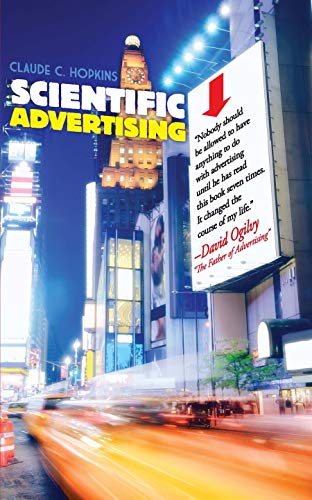


delivered
Get key takeaways from each episode delivered to your inbox.