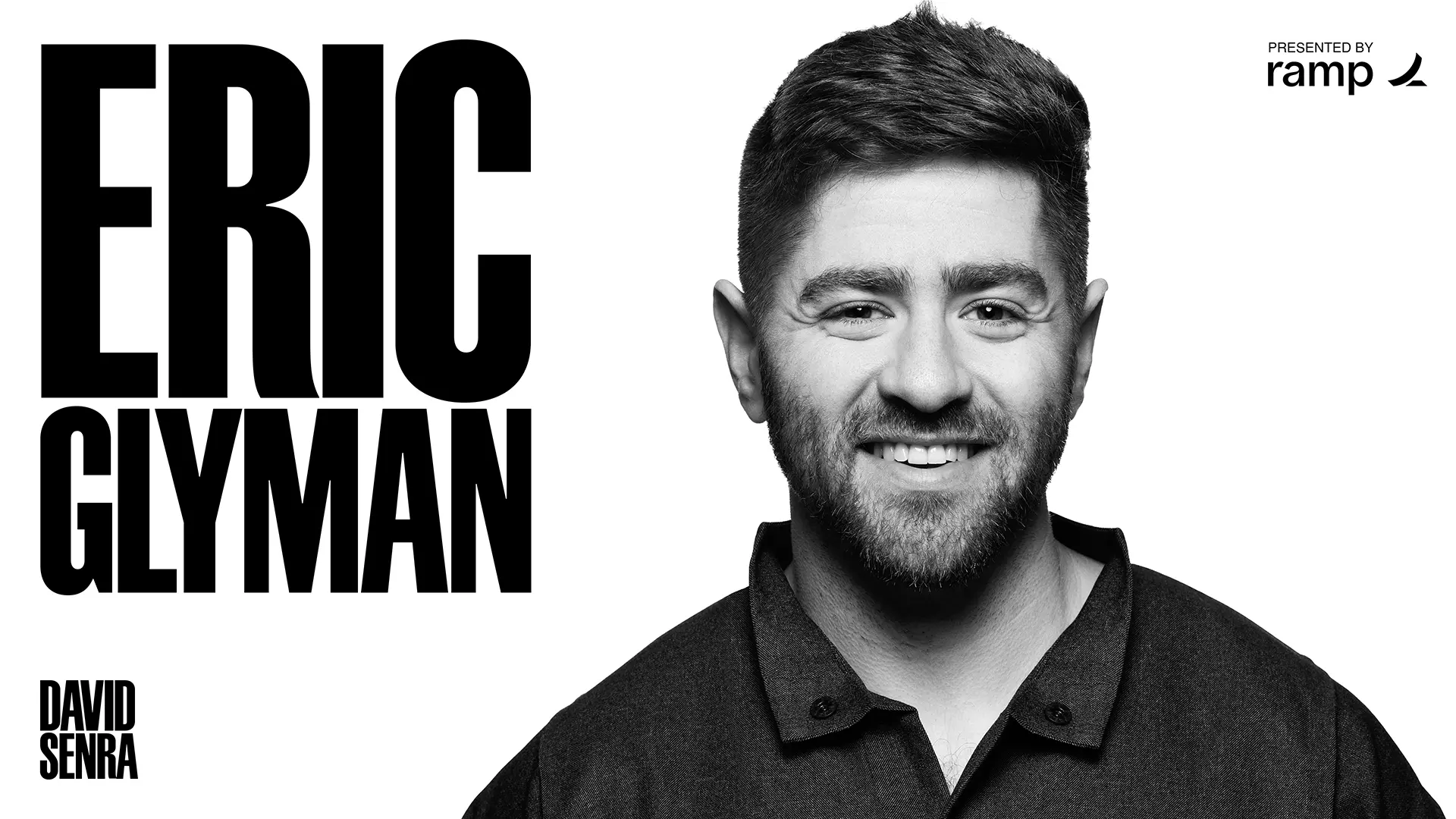
Eric Glyman
Eric Glyman is the co-founder and co-CEO of Ramp.
Summary
Eric Glyman is the co-founder and co-CEO of Ramp, the financial-infrastructure platform valued at $44 billion used by over 70,000 businesses to run payments, expenses and accounting from a single place.
Glyman grew up in Las Vegas and studied at Harvard, where he met his eventual co-founder, Karim Atiyeh. In 2014 the two started Paribus, a price-tracking app born from Glyman's frustration after missing an airfare price drop — the software automatically caught retroactive discounts and filed refunds on customers' behalf. Capital One acquired Paribus in 2016, and Glyman and Atiyeh stayed on for roughly three years running the business inside the bank.
That experience showed Glyman something he found strange: card companies made money by convincing customers that points and rewards were valuable, then quietly devaluing them. In 2019 he, Atiyeh, and longtime friend Gene Lee left to build Ramp on the opposite premise — instead of pushing businesses to spend more for rewards, help them spend less and waste less time doing it. Every product decision gets run through what Glyman calls a version of "Elon's algorithm": question the requirement, simplify, then automate.
Ramp tracks its own success obsessively — a running "scoreboard" of dollars and hours saved for customers, displayed on office walls and posted in Slack. Glyman now sees the company's real competitors not as other fintechs but as AI labs, since Ramp is ultimately selling automated knowledge work, not money movement. He frames the company’s mission as: build something that saves people time and money, and let the business follow — freeing entrepreneurs and finance teams from rote work so they can focus on what actually matters to their companies.
Episode transcript
David Senra: I want basically a download of your thoughts on how you're thinking about your business today and moving forward in, let's say, the next few months.
Eric Glyman: You use Ramp, and you know it, but let me just give you a snapshot of where we are. You can think of Ramp as smarter financial infrastructure to run your business, right? From one single place, you can make payments of all kinds, whether that's cards, bill payments, procurements. You can better manage funds, you can automate expenses, and even automate your accounting, right? And the way all of these tools are built is meant to be a single plane for you to better run your business and get more value out of every dollar and hour.
Eric Glyman: The way that we measure ourselves is how many fewer dollars do our customers spend after adopting Ramp, and how many fewer hours are they using to go and run their business. Today, over 70,000 businesses use Ramp. Over 3% of all of the corporate card transactions in the United States are powered by Ramp, and nearly 1% of all the corporate transactions are running through Ramp.
Eric Glyman: And I think the most useful piece of information is that the typical business that adopts Ramp is able to cut their expenses by over 5% per year. And as you know, a dollar saved is more than a dollar earned. The typical business that adopts Ramp is growing their revenue a median of 16% per year. The US average is 3% to 4%. And so, we're just trying to make dollars and hours go further.
David Senra: You and I, when we're talking off camera, talk a lot about AI. Ramp started as corporate credit cards. Now, if you look at how people speak about you guys on X, it's like they're just using AI to make your finance team more efficient and happier, is like a great line that you have. Talk about some of the ways that you guys are using AI and what other products you're building.
Eric Glyman: One of the most, I would say, present experiences, just like the act of, let's say, doing expense reports. So we'll go there, we'll talk about paying bills, we'll talk about closing your books, right? For many people, doing your expenses, just the worst hour of your month, right? And if you think about it, it's sort of nuts that everyone accepts as normal that some company somewhere is going to issue you or your employee a card, or your expense policy is not going to drive how the thing actually works.
Eric Glyman: You're going to pay for a client dinner, you're going to get a piece of paper, then you're going to go into another system maintained by an entirely different company, and you, the employee, are going to go manually do your expenses yourself. Kind of a waste of time. You could do it that day. You probably do it a month later, and it's an hour of your time wasted. Someone in another city or state reviews this thing. It's a whole rigmarole. At Ramp, we fuse all of it, right? And so we issue smart cards. Your expense policy drives how the thing actually behaves. You tap it, we check in real time if it is in or out of policy.
Eric Glyman: If it is, we pull the data from the merchant, we process the transaction, we write the memo, we push it into your accounting software, and it's done. Zero-touch expenses. Similar for paying bills. Often, if you're a small business and let's say you receive an invoice from a vendor, it's 50 clicks and a lot of your time wasted for you or an AP clerk. You're checking who is this vendor? Why do we owe them money? Did they deliver the service that they promised they would? You're entering the itemized level details, and it could be 50 clicks before the time you're done.
Eric Glyman: With Ramp, you upload it, we check all those things, right? Do you have a contract? Was a service ultimately rendered? All the fields are entered for you, and if you go and change it, the next time you get a similar invoice, it's done correctly. And so, the effect is actually like your bills are paid on time. If there's a lower-cost way to do it, maybe you can earn cash back on it, or maybe you get better terms by paying early. We can do that automatically for you.
Eric Glyman: And so the effect is something more like if there's car companies interested, like maybe a Tesla is designed to not just get you from A to B, but to drive you there without you needing to spend your focus on it. Ramp is trying to do this for your financial processes, and the effect is, if you're a CFO, it gives you one place where all the funds that are moving inside of your organization are being tracked are being accounted for.
Eric Glyman: And ultimately, we're recommending the next time where you can get more utility out of every dollar that's flowing through your org or hour. It's like how you can think about it.
David Senra: How do you describe the mission inside the company, though? So, like something that's very common, obviously, one of my favorite examples of this is like Steve Jobs would describe what he wanted to do. He said he used the same phrase when he was in his 20s. He used the same phrase when he was in his 50s. He says, "Insanely great products."
Eric Glyman: Yep.
David Senra: He would just repeat, "If you wanna make insanely great products, come with me. If you don't, then you shouldn't be working here."
Eric Glyman: Yep.
David Senra: I just talked to Tobi Lütke from Shopify. The way I would think about the mission of his company and the way it's spread throughout internally, it's like, we're building infrastructure for entrepreneurs.
Eric Glyman: Yep.
David Senra: So how do you describe it as a CEO to your team inside of Ramp?
Eric Glyman: I think our mission is endless, right? It is to help every business owner get more out of every dollar and hour. That's what we're trying to do. The credit cards that we offer, the expense management, the bill payments, the accounting automation, these are just products. At the end of the day, what we are trying to do is really measure for all the dollars that have passed through your organization, how do we make sure that few leave your organization at the end of the month? That you get more for every dollar and every hour is what we are trying to do.
Eric Glyman: And I think what made Ramp start to scale very early on in a very crowded industry that people thought we were like 175 years late to, was this was, I think, really inverting a lot of the way that many of our competitors had acted, right? If you kind of look at the credit card industry, which is where we started, even just seven years ago, everyone had agreed that the best way to earn business was through these points and rewards programs.
Eric Glyman: Go spend more money. You can earn points and multipliers. We'll have your back. And it was, I think, exactly the opposite of what most business owners and CFOs that I knew wanted. They actually wanted more in their bank account, and they wanted their employees spending less time on this stuff. And so, simply by inverting that primary assumption and saying, "What if instead of going and trying to get you to be a little bit worse off by spending more than you intended, what if I worked really hard to help you spend less"? It leads you to answer different kinds of questions.
Eric Glyman: It's part of why we're the first in the industry to go look at expenses and say, "Why are there two systems involved in buying every single thing you do"? It's part of why we said, "Why do you need another different tool for bill payments? Why do you need another one for procurement? Why do you need another one for treasury"? And ultimately, where it's led us is to build better infrastructure and kind of the substrate where your dollars are moving through it. But again, I care less about what are the dollars we're moving, but actually, how do we get more value from every movement that's occurring?
David Senra: So, can I think of the North Star that you're working backwards from, right? When you guys are talking about I'm going to build, we're going to build new products and new features, the question you ask yourself first is, is this saving our customers either time or money?
Eric Glyman: Mm-hmm.
Eric Glyman: That's right.
David Senra: Correct? Okay, so that's the North Star you're working backwards from.
Eric Glyman: Yeah. That is exactly right, and I think a lot of it too, like I've been, I mean, a huge fan of Founders and what you've been building for years. Like, I think of Elon's algorithm as one that has been incredibly motivating and orienting, and clarifying for us, right?
Eric Glyman: With every process of money movement or allocation of resources or measurement of money movement that occurs inside of companies, we are trying to apply a similar philosophy of asking, whose requirement is this in the first place? What is it that we're trying to achieve? Do we need every single step? Is there a way to simplify the process? Can we cut out unnecessary parts? Can we accelerate the amount of time it takes to develop a feature?
Eric Glyman: And then once we've simplified it, can we go and automate more parts of the process at the end? And what we are trying to do is take that methodology and that style of thinking and ask about every dollar or hour that organizations choose to spend, and how can we build technologies that make it such that you can just run your business more profitably with less effort. That's really what we're trying to do, and the products we make are frankly just scaffolding and a form factor for us to go deliver that service to our customers.
David Senra: I want to tell you about the presenting sponsor of this podcast, Ramp. I have been reading a lot about SpaceX lately. SpaceX is one of the most valuable businesses in the world, and one of the main themes in the history of SpaceX is constantly attacking and questioning your cost. Ramp helps many of the most innovative businesses in the world do exactly that. The median company running on Ramp cuts their expenses by 5%.
David Senra: And one thing SpaceX has demonstrated is that a religious dedication to controlling costs can help actually increase revenue because you can pursue opportunities you couldn't otherwise. And we see that in the Ramp data, too. The median company running on Ramp also grows their revenue by 16%. So when you're running your business on Ramp and your competitors are not, you have a massive competitive advantage that compounds over time. Ramp is the only platform designed to make your finance team faster and happier.
David Senra: Many of the top founders and CEOs I know run their business on Ramp. I run my business on Ramp, and you should, too. Go to ramp.com to learn how they can help your business save time, save money, and grow revenue. That is ramp.com.
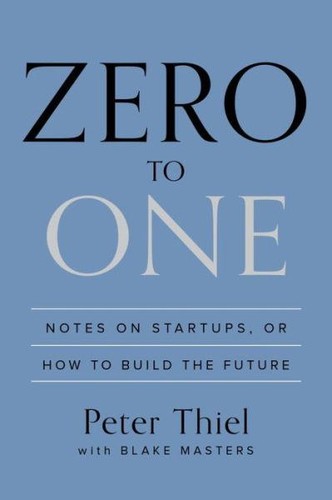
David Senra: I found one of my all-time favorite quotes when I was reading the book "Zero to One." The quote says, "The single most powerful pattern I have noticed is that successful people find value in unexpected places, and they do this by thinking about business from first principles instead of formulas." That is exactly what AppLovin has done with their advertising platform. AppLovin connects you with over a billion potential new customers inside mobile games. AppLovin allows you to capture undivided attention.
David Senra: AppLovin ads are full-screen video ads that are watched for an average of 35 seconds. That is retention that blows other ad platforms out of the water. And you can launch on AppLovin in minutes. You set the goal, and AppLovin achieves it. There's no complex setup, no expertise needed, and AppLovin scales quickly. They can put your ads in front of over a billion potential customers.
David Senra: Other businesses have seen immediate results, have scaled to hundreds of thousands of dollars of spend per day, and increased their revenue by millions. So you want to get started quickly before all of your competitors are on AppLovin. And you can do that by going to applovin.com. That's applovin.com.
David Senra: So, AI is accelerating. You guys are adopting every single new technology you possibly can. You guys are obsessed with this. A lot of the late-night dinners we have is about this.
Eric Glyman: Yeah.
David Senra: My question, though, is like, I've met so many people at Ramp, like you guys hire for spikes, and you see this because so many people were either former founders that now work in Ramp or used to work at Ramp and then start companies, right? So you have that very entrepreneurial lifeblood that's running throughout the company. Curious, do you think about talent differently now because so much of your work can be or is supplemented, in some cases, replaced by AI agents? Like, how are you thinking about hiring now, given the capabilities of AI compared to, say, two years ago?
Eric Glyman: There's a few things that I think are evolving with AI. One, just the power laws are getting more extreme in the same way companies are getting larger. The speed to which companies are getting built is accelerating. I think the returns to talent is higher than ever. The most effective person in the world is no longer 10 times as effective or 100 times as effective. It could be 1,000 times as effective in a particular area.
Eric Glyman: So I think finding people who are very spiky in areas, I think is absolutely right. The thing which I think has bent my mind most over the past year is if you're really internalizing what LLMs are doing, I think we used to be in a world where skills were very scarce and very hard to find. And I think we're starting to get to a place where a very determined generalist can start to do much more than they used to be able to do, right?
Eric Glyman: To explain a bit more of what, what I mean, large language models have read more lines of code than any engineer alive, right? They've read more medical case texts than any doctor alive. They've read more company filings and chart of accounts than any accountant who's ever lived or probably ever will live. And in some sense, if I can just ask a good question, I'm the best doctor I've ever been in my life, and I'm not a doctor at all, right? If I'm just stubborn, I can keep going and do this.
Eric Glyman: And in a way, I think a lot of work over the past 100 years was you would have some craft or subject matter expertise that you were very, very good at. But once you hit kind of the boundary, right? You were a great engineer, but you venture into design, you say you can have your intuition, but ask the designer, right? Or you can have your ideas, but go ask someone who's skilled at sales.
Eric Glyman: And now, if you are stubborn enough and pushing and willing to start to go build systems, you can extend your boundaries, so the positive interpretation is you're not gate-kept, and you can do a lot more. But I think the more interesting interpretation for people building businesses is, is first, if you find really determined people with a high level of determination and an aptitude, just like a drive, these people can do far more than they ever used to be able to do, so it's not restricted just to specific spikes.
Eric Glyman: And then I think it leads you to question, you design organizations with lots of subspecialties, which can lead to walls and barriers and things that get lost between organizations. And I think you can radically simplify.
David Senra: Wait, what does that mean?
Eric Glyman: Yeah.
David Senra: The barriers between organizations.
Eric Glyman: I'll put it this way. When Ramp was, call it 10 people, and you ask people, "Where do you work, or what do you do here"? They'd say, "I work at Ramp, and I'm an engineer." You get to 50, you might hear something simpler. "I work at Ramp, and I'm in the sales team." And you start seeing these different divisions grow. But once you start getting to 200 or 500 people, you start hearing this inversion in identity. People say, "I'm a salesperson at Ramp." "I'm a designer at Ramp." They start to identify by their craft and what they do and what they are asked to do.
Eric Glyman: They interact with mostly people who are in their craft. Salespeople talk with other salespeople, and you see these mega corporations. It's kind of like the Tower of Babel, where no one in sales knows an actual engineer. The engineers don't know any actual designers. Everything is hard because information has to go up top and down on through, and these organizations become very Byzantine.
Eric Glyman: And I think now in a world where someone who develops the product can use technologies that helps them sell more effectively, that helps them track customers, that helps them track outreach, that helps them write with a better pitch on the first go, and these are real tools that you can build for people today. I think you start seeing fewer types of specialties within organizations, and it's leading, I think, a lot of organizations right now to question, "Do I have the right shape of an organization for the world that we're starting to enter into"? And so, I just find this whole field really interesting right now.
David Senra: I want to go to the shape of organization if you think you need to change it or not. So, what I'm understanding from what you're saying is like, essentially, you're looking right now in this age, you should just find the highest agency person possible for what you're trying to do inside your company. I have a question for you. How do you find high agency people right now when you guys are hiring? I just saw a clip from this podcast, which I actually really liked. It was Tobi talking about this. And he's like, "Listen, I'm a high school dropout. The idea that I'm going to ask for your credentials would be like completely ironic."
David Senra: And the way Shopify does it is when they're interviewing, he's like, "I want you to tell me your life story. And in your life story, if you're a high agency person, you're going to have examples of this thing, I ran into this blockade, and this is what I did to get over it." And so they have high agency people reveal themselves through the telling of their life story. How do you do it?
Eric Glyman: There are two things that I'm generally looking for, right? One, I completely agree with Tobi. I think you're trying to look for some evidence of a spike or some level of exceptional drive. I think that there are many people in certain fields that can be top 1% or 0.1% percent in some field. But most are not, and I think that if folks are, there's usually some evidence to some degree somewhere in the past that you can find.
Eric Glyman: When I think about a couple of these things, I think about there's an engineer and actually a whole litany now, a whole community of people at Ramp, who we found them because when they were 15 years old, they were playing like 80 hours, 100 hours a week just on "Minecraft." And a few of them were known for building these private Minecraft servers that were so entertaining, other kids would love to play it. One of them paid his way through college, hundreds of thousands of dollars, by making something that was entertaining.
Eric Glyman: He became like a small business person when he was quite literally very small. And it turns out he knew all the other "Minecraft" developers. And you find these people he would have missed. I think that a lot of traditional ways of looking for employees would go and say, "Oh, they don't have a college degree. They aren't well-rounded in all these ways."
Eric Glyman: But he has this incredible focus and drive, and if you talk to the other folks who are in the community at the time, people would say, "He was incredibly obsessive, he was super detailed, and he was able to bend the API to do things that we didn't know it could do because he was so discerning." And I think you can often find people with incredible spikes. Sometimes it's through video games, sometimes it's through sports. Who has the drive to go and be that good? It can be through grades.
Eric Glyman: It can be by people who didn't have any of these credentials, somehow are out there making and putting out incredible work. I think even just about you, I think you just sat down one day a decade ago, and you said, "I want to make incredible podcasts." And for years and years and years, you were working on this, and I just remember meeting a lot of folks who just kept talking about, "There's this guy making Founders podcast, and it's really good."
Eric Glyman: It's all to say, I'm less interested in what is the resume. I'm far more interested in proof of work. It can be an award. It can be something you built. It can be a great work that you read and say, "This is electric." And so often I think I'm really looking for signs of that. And you can find that I think by searching of where is work, where are people producing interesting achievements, awards, bodies of work, and actually starting and looking for that.
Eric Glyman: And so part of our hiring process is actually going and just trying to look for people who are very active on GitHub. We're trying to meet people who were leaders in different bizarre fringe communities. And it turns out, too, even if you have a really intensive interview process and you have 10 rounds of interviews, right?
Eric Glyman: And you interview someone for 15 hours, it turns out in two business days of working with someone, you're going to have more information about working with that person, so we rely a lot on referrals. We try to find people who have maybe some asymmetric information about who someone actually is versus who they present to be. I think the next thing which I specifically spend a lot of time looking for is, look, there's a lot of incredible things to work on in the world, right? I shouldn't be so arrogant to assume that people need to want to work for Ramp or whatever it is that we're working on, right?
Eric Glyman: Or you can be working on making humanity multi-planetary. You can be working on artificial general intelligence. Why should I assume people should be interested in what we're doing? And I think a lot of that starts with asking, what is their actual motivation? I think in some sense, like we only live our lives, right?
Eric Glyman: Everyone in some sense is the hero of their own journey, of their own story, and try to spend a lot of time... You know, forget even some of the capabilities, but like, what does someone want independent of what Ramp will do in 5, 10, 15 years? Where do they hope to be in 5, 10, 15 years? What drives them? What motivates them?
Eric Glyman: Does that coincide, and can I see and understand how it could coincide, or present how me saying, "Actually, please spend years of your life working on this mission, and I'll try to convince you why it's worthwhile." If there isn't a clear sign of evidence of why they might want the same thing and how it can connect, don't worry about it. Don't waste your time. And so those are the two things that I spend a lot of time looking for when I'm interviewing people.
David Senra: That brings something, a thought to my mind. I just had a conversation with Gustav, who's the co-CEO of Spotify, and one thing that's remarkable about him is, he had a startup, sold a startup, then goes to work for Spotify, then works there for 18 years, then becomes the co-CEO.
Eric Glyman: Mm-hmm
David Senra: And if you look at the top leadership in Spotify, it's usually, I think he said something like a decade is the average that they've been working together. And on the other end, you have people like Elon, who just wants to, like... He says, "I want fresh blood. I want to churn through people." What's your opinion on this? Do you want consistency in the top people in your company, or do you encourage turnover? Do you want to keep the core product kernel team together? Like, how do you think about that?
Eric Glyman: I think that people's level of experience can change, and you can learn unique things, but I think general aptitude is reasonably consistent. And what I mean by that is, let's say you want to take the snob route and just go look at MIT and find the smartest people there. You can reasonably figure that out within one semester of who are the top 50 smartest people at MIT if you ask around and spend some time on that.
Eric Glyman: And generally, people are not recruiting people for their internship program until their junior year or their junior summer, but you can go and say, "Actually, I'm going to try to find the smartest freshmen and offer them a winter internship or a summer internship," and go bring them in and find the smartest and incredible aptitude of people. And by the way, other freshmen, when they see the smartest person went, they want to go to your company, too. And you can start to create these virtuous cycles of finding great people.
Eric Glyman: So I agree with Elon's philosophy of trying to find really smart people, in part because it allows you to find maybe something like a mispricing in the market. By their junior summer or after they've been working for five years, it's priced in. You're competing straight up with quant firms, AI labs, whoever you name it. People are paying top dollar for folks. But that early in careers, when people don't have a resume, you can start to go and break down.
Eric Glyman: Actually, you can find signs of incredible aptitude, drive, and potential for performance early on and start to build an affinity. So we try to find those folks and give them a lot more responsibility than maybe they're used to. And when they work for quite a number of hours and do great things despite their age, and then when they've built experience earlier in your company than they would have otherwise, they want to stay. They want to build it. And that leads me to... My actual goal is I want to work very early with people, and I want to work with them for a long, long, long time.
Eric Glyman: Because I think when you've built the trust and you understand how to complete each other's sentences without the other needing to go do it, you're able to rely on each other, you're able to move faster, and you're able to communicate far more in a shorter period of time, which leads you to act with higher velocity.
David Senra: It's almost like an ESP that develops.
Eric Glyman: Yeah.
David Senra: So, we were just talking very before we recorded that a few days ago, I recorded MrBeast. The episode's not going to be out for several months for reasons that we can't disclose. And what's fascinating about him, and I've spent a bunch of time with him, is he has this thing where it's just like, he has almost like, there's certain... The people who've worked with him so long to the point where they used to live with him and then spend every waking hour with him.
Eric Glyman: Yep.
David Senra: And he's like, "Now..." You're not talking about 100 hours. In some cases, this is well over even 10,000 hours that they've spent working together.
Eric Glyman: Mm-hmm.
David Senra: And he says, his operations guy, I think his name's Tyler, if I remember correctly, he can walk on a set that, just like the one you're on right now, that Tyler does, and before MrBeast looks at something or opens his mouth, Tyler's like, "I already know what you're going to say. I did this reason for it. That light's over here for this. This camera's actually here. You think it should be over there, but the reason it's not over there is because if I position it here, it lets me shoot into here."
Eric Glyman: Yeah.
David Senra: And then he doesn't have to say anything. He goes, "That's exactly what I would have done if I knew that." And he says, "It's excessively important." And then he had a great line. He's like, "You don't get there in 100 hours."
Eric Glyman: Yeah.
David Senra: There is something special about this, like... I talked to Charlie Munger. I went to Charlie Munger's house right before he died, and the fascinating thing, one of the questions that one of these other entrepreneurs were with asked him is like, "Well, how often do you talk to Buffett these days?" And he's like, "We talked so much, we got to the point where we didn't have to call each other anymore."
Eric Glyman: Yeah.
David Senra: And his whole point was just like, "I already know. Buffett knows. He used to organize his thoughts with me. Now he knows what I'm going to say, so he could be like, 'Oh, I should pick up the phone and call Charlie,' and then have the conversation in his head without actually having the conversation."
Eric Glyman: It allows, I think, a much more pure pursuit of the mission, because you understand what each other are pursuing, what that mission actually means, what the impact is if you're successful, and you also know what you are excellent at and you can take and push forward, and what you can rely on another person to do with you. And I think it leads to these effects where you see some companies, when you have a really strong culture, you have really strong trust, it's not necessarily that the talent level is different.
Eric Glyman: It's that in every single hour, the amount of throughput that organization gets is radically higher. And so, I think some form of both is what we're trying to pursue. And then last, look, I think one of the most damaging things you can do to an organization is if there are folks who are getting paid similarly, have similar ownership, and are just not pulling their weight.
Eric Glyman: Because I think it leads to this very tough question and fair one for folks of like, if I'm busting my a** and working super hard and giving up on all the things that I am, and there's all these folks free-riding and you're not enforcing high standards, why should we obsess so much over reaching our higher potential?
Eric Glyman: This organization doesn't seem to demonstrate a real respect for the pursuit of higher and higher standards and an intolerance for anything less than giving your best. Like, ultimately, I want to win, but what motivates and drives me and most people at Ramp is this belief that every day we can wake up and actually get a little bit better, drive a little bit more impact, get better at the things that we do.
Eric Glyman: And I think when you have an organization filled with people who share those set of beliefs, iron sharpens iron. You build better products faster. And so my whole job, I don't believe I'm the smartest person at Ramp. Not even close, sadly, at this point.
David Senra: My job is to try to create the conditions for people to do their life's work, and that involves finding great people, making Ramp the kind of place that people want to come and do their great work. And then once they're here, ensuring that they're able to do incredible work, make decisions quickly, see if they're right or wrong fast, and get products into people's hands and move. That's my job, is to unblock these other people.
David Senra: Deel is how the best founders turn the world into their talent pool. I've been studying how history's greatest founders operate for a decade, and one thing they all have in common is they understand that recruiting and hiring the very best talent is your most important priority. A players recognize other A players, which is why top companies like Ramp, Shopify, ElevenLabs, Uber, and DoorDash all use Deel. Many of the top founders I know have personally invested in Deel after using their product, and what they discovered is that Deel is the best company in the world at building infrastructure for global hiring.
David Senra: Deel will help your business hire, pay, and manage any worker anywhere in the world, so you can retain the best talent anywhere and spend the rest of your time focusing on what you do best, delivering value to your customers. The founder of ElevenLabs has a great description of the value Deel can give your company. He said, "We built ElevenLabs to break down language and communication barriers.
David Senra: With Deel enabling us to hire and support exceptional talent anywhere, we can accelerate our innovation and bring more voices, stories, and ideas to every corner of the world." Deel is trusted by over 40,000 businesses. Learn how they can help your business today by going to deel.com/senra. That is deel.com/senra.
David Senra: Ramp is six years old, seven... How many years right now?
Eric Glyman: Mm-hmm.
David Senra: I know you do the day thing, but how many years?
Eric Glyman: It's just over 7 years or 2,620 days, in case you were curious.
David Senra: Okay.
David Senra: There you go. So, seven years ago, and you guys had this from day one, where you're doing expense management, corporate cards, B2B, but you guys had a love and insistence on elegance of design, almost like a consumer level that you didn't see in B2B software, which is still talked about to this day and has been copied by many other companies.
Eric Glyman: Yeah.
Eric Glyman: Sure.
David Senra: But, yeah, I think that just speaks to you. It's like, if we want to have excellent standards, I'm going to quote Tobi for the third f***ing time in this podcast, but he even goes, "I hate these goddamn Norman doors." He has thick accent. I was like, "What is that?"
Eric Glyman: Yes.
Eric Glyman: Yeah.
David Senra: I didn't know what that was, and it's a door where you can't tell if you should push or pull.
Eric Glyman: Exactly.
David Senra: And so he's like, "I can't have shitty design things," so he had them removed from the Shopify offices because he's like, "That design falls below the engineering standards that I'm trying to get to, like I want spread, and we have to adhere to." And I love this idea of like, the way you do one thing is the way you do everything.
Eric Glyman: It's totally right, and it's funny, like a group of designers were hanging out the other day, and I found myself in a very funny conversation. Have you ever used a Breville toaster?
David Senra: No.
Eric Glyman: If you care about design, you're meeting all these people, you should buy a Breville toaster. So one of the big problems, right, in enterprise software, in a lot of B2B software, is it starts out clean and elegant. There are a bunch of businesses who love the product and they start serving more customers, and they have more requirements, and they have more ideas. And before you know it, you end up with these disasters of B2B softwares, which require a PhD to learn how to use these tools, and people who will maintain your database.
Eric Glyman: They're horrible to use, and as a result, you never want to go log in. You can kind of name what other software is. And for salespeople, for HR people, for finance people, you name it, they're horrible. That's, I think, a lot of how people would describe B2B software. Let's go back to toasting, right? If you were to go ask people, "What do you want in a toaster or maybe in a microwave?" They might say, "I like toast, but sometimes I want to reheat pizza.
Eric Glyman: I should have a reheat frozen pizza mode." Or maybe you're cooking stuff and you want it to be more like an oven, or you want to make popcorn, and it's a toaster/microwave, and all these kinds of things. Before you know it, these toasters are filled with buttons and buttons and buttons and knobs and dials, and it's super crazy, right? And I think that is quite literally asking customers what they want and building exactly that. The Breville toaster I find is very, very interesting. I think there was an incredible designer there who thought about things maybe like Tobi did with the Norman doors.
David Senra: Yeah.
Eric Glyman: And what he started doing is try to observe people toasting things. And if you watch people toast things, what they actually are doing basically falls into two categories.
Eric Glyman: You hit start, and either you've undercooked the toast, and you need to put it back in for another cycle, or you've overdone it, and now I can start over, and it's horrible. And so if you look at that, there really is only a few buttons, and one of the four buttons, I think, on there is a button called A Bit More. The reason it goes back to that is actually one of the most dominant things, and no one would ask you, right, for a bit more. They just want the perfect level of toast, and it's hard to kind of know that, and so they built that in.
Eric Glyman: And I think that great design is following and understanding. No one is coming to Ramp saying, "I want to buy a credit card," or "Can you build me a better expense app?" I don't think people should do expense reports. It's crazy. All the data is digital in the first place. You're an adult who's allowed to buy things on behalf of your company. Expenses should do themselves, right? If we have a world that computers can think, your books should close themselves, right?
Eric Glyman: And so a lot of what we were trying to do was not be stuck in the form factor of what is the product we're trying to solve, but what are we trying to deliver for customers? We are trying to deliver a business that is easier to run, that is more profitable, that is not distracting you with bullshit at work. And so I'm happy it's manifested in terms of people saying, "Ramp is easy to use, intuitive," but I think if you actually respect people's time and care about what they're doing, you have to be asking these kinds of questions. You have to be interested in these kinds of products.
David Senra: This leads me to another question. How do you align incentives with your customers? One of my favorite lines from the history of entrepreneurship comes from Henry Ford. He says, "Money comes naturally as a result of service." So in his organization, he's like, "We're going to focus on serving the customers, and the money will take care of itself as long as you do that." You and I were at an event together, I don't know, a month or two ago. You were sitting to my right. You were wearing Ramp merch, and I grab your sleeve because I wanted to read what was on it. It says, "We win when our customers win."
Eric Glyman: Yeah.
David Senra: So, I believe that to be true. So how do you align the incentives of your company with your customers to make sure that stays true?
Eric Glyman: It's one of our six values, and a lot of companies have this idea that they want to have values. My elementary school had values, right? What I didn't like about the values at my elementary school, sorry if any administrators are listening to... There were like 20 of them, and I couldn't remember any of them, right? And what we tried to do at the very start of the company was ask, "What are the very few things that all of us really agree with?" And if we don't all strongly feel this and agree with this, it's a nice idea.
Eric Glyman: You can go pursue it, but it's not an actual value, right? And so one of the top-level things we wanted to do at the start of the company was set a goal that explicitly measured, for the products that we put out there, could we measure how many dollars our customers are spending, and how many did we block? How many dollars did we prevent from going out of their company?
Eric Glyman: How many hours did they spend doing expenses or closing their books or paying bills or moving funds to earn higher yield? And so we both... It's part of why we connect, right, to a company's accounting software to have kind of a source of truth as part of the way we move funds, and then we explicitly create measurements on how many dollars did we block, how many expense reports did we automate, all that.
Eric Glyman: And then all we do each and every month is look at the scoreboard, and we ask, "Did we save in aggregate customers more money? Did we save them more time? And for individual customers, did the experience get better or worse?" And our job is to make sure the products that we build ultimately ladder back to that goal. For example, automating merchant matching or being able to go and take, like... Often, if you look at your credit card statement today, for most people, it's like a string of text, and it's inscrutable.
Eric Glyman: It'll say like "UBR STAR 478," and you have finance people whose time is wasted running pivot tables to tell you, "Oh, that's Uber, and we spent 50,000 dollars this month at Uber." With Ramp, part of why we built that was we discovered our end customers, their finance teams were just going and trying to do all these transformations to simply say, "Oh, we spent money at Uber. Here's what they spent." And so part of what we did was, after measuring where people were going and spending their time, we built software to automate that for people.
Eric Glyman: Okay, we've saved an hour here for them. We've saved this hour for 20,000 other companies. How do we start adding more features and compounding?" And so you flash forward seven years. Today, any customer you talk to who uses Ramp will tell you, "This thing saved me way more hours than I expected it to. It saved me time in areas I didn't expect.
Eric Glyman: "I was able to block transactions, so when I canceled my subscription to some SaaS software and I deactivated that merchant just on the card, it didn't go through." We are tracking those religiously across the company to try to go and get better at it each and every month. And as good as Ramp is, I don't think it's good enough. I think we can do a lot more just to cut out waste and wasted motion.
David Senra: A question on the scoreboard. They use the term scoreboard. How is this presented to your team?
Eric Glyman: Yeah.
David Senra: Is it an actual scoreboard inside of Ramp?
Eric Glyman: Yes.
Eric Glyman: Yes. Yeah, I mean, you can get it any minute or second of the day if you go onto our internal dashboards, or you can query, ask one of our internal agents, Ramp Research, any question you want. "How many dollars and hours did we save a specific customer? Show me all the ways." And it's tallying, but effectively it's a data table.
David Senra: But it's inside a dashboard on their computer?
Eric Glyman: Yes.
David Senra: Have you ever thought about putting it on the giant, like a making a giant version on the wall?
Eric Glyman: Yeah.
Eric Glyman: It's on the wall.
David Senra: Okay.
Eric Glyman: It's reported out in the largest channels in Slack. It's things that we talk about frankly every month. And it's part of why, even on the first slide, if we're meeting with a new potential prospect, we talk not just about how many dollars, how many customers are using it, how many dollars we've moved, but how many fewer dollars and hours have we helped organizations spend?
David Senra: Yeah, I think putting that data in front, constantly reminding and putting it in front of your employees, is super important. I did this episode on Ken Griffin from Citadel.
Eric Glyman: Yeah.
David Senra: And I think he was giving this lecture at Yale, or maybe it was Stanford, and I thought it was interesting. He actually got the idea from Saudi Aramco.
Eric Glyman: Yeah.
David Senra: And he's like, "There's not... Like you said, if you have 20 variables, it's too many."
Eric Glyman: Huh.
Eric Glyman: Yeah.
David Senra: "Six, five, whatever it is." So Saudi would put up the handful of things that were most important, like maybe how much oil they drilled that day or how many they shipped, or whatever the case was, and it was a giant f***ing screen in their headquarters.
Eric Glyman: Yep.
David Senra: And at the time, I think Ken was having an issue with risk, and he identified a handful of things that we need to monitor, and he said he drastically reduced their risk by just putting it, I think at the time Citadel was in Chicago, just putting this giant dashboard, like a scoreboard, in the office where everybody could see it.
Eric Glyman: Mm-hmm.
Eric Glyman: Yeah.
David Senra: Just this constant reminder. It's like you can't run from it.
Eric Glyman: That's it. And it comes back to, at the end of the day, people love complexity in new things and new products, and the world is changing. There's nothing wrong with that. In some sense, a company is just a fiction. You make some filings somewhere and you say, "We're a corporation today," even though we're just two people sitting around a couch and we have a few dollars in a bank account, right?
David Senra: Mm-hmm.
Eric Glyman: And if these fictions are intended to grow to hundreds, to thousands, to tens of thousands of people, it should be because there is some common purpose. There is something that, in aggregate, the sum of the parts of all the people working together should be able to move something further, faster than anyone alone could do. And so I think part of the role of a leader, frankly, is to go and assert, "How will we measure ourselves?"
Eric Glyman: If we are seeking to be your best and get better every day, how should we think about that, and how can we understand our forward progress? What is the right scoreboard? And so, yeah, we spend an incredible amount of time on that, and at the end of the day, I don't know what Ramp will look like exactly in 100 years, but I think, just as it was true 100 years ago, people always wanted more out of every dollar and hour. I think people will absolutely want it in 100 years, in whatever form that may take. And so I think for-
David Senra: You're speaking to this Bezos idea where it's like one of the smartest things a company can do is identify the things that don't change, and he identified three at the beginning of Amazon. And if you can invest heavily in them decade after decade-
Eric Glyman: Yeah.
Eric Glyman: That's it.
David Senra: ... because you know the customer's going to want lower prices, more selection, and faster delivery.
Eric Glyman: That's it. That's it. And look, there's so much that's changing about the world, and we can talk about what we're focused on and obsessed in and some of the themes of this decade, but I totally subscribe to that notion of you should be focusing on the timeless if you're trying to build an enduring brand. I want this to be the last company I ever work on, and I want to work on this for the rest of my life. I love building this thing.
David Senra: You know what I'm going to say to that question? Like, I talked to founders and they want to talk to me, so we've talked about their company and one of the first things I was asked is like, "Is this your last company?"
Eric Glyman: Yeah.
Eric Glyman: Yeah.
David Senra: It's just that's the thing I'm super interested in, because then all the good things in life come in compounding. And I was just at this dinner two nights ago and ran into the son of this guy I wound up being able to spend an hour with, and just sold his company for 50 billion dollars. I think he's 77 or something like that.
Eric Glyman: Mm-hmm.
David Senra: And he started that company when he was 22. So that means he's had 55 years of experience in the same company.
Eric Glyman: Yeah.
David Senra: And it's like those conversations are so full. Like, insight per minute, you're not going to beat that at all.
Eric Glyman: Mm-hmm.
Eric Glyman: That's it. And you'll see things at a deeper level of depth, and it's fun. You learn. All the scar tissue you have, the mistakes you made, I think, allow you to move with a lot more efficiency and movement.
David Senra: I am very skeptical of the statement that humans repeat throughout history that this time is different.
Eric Glyman: Hmm.
David Senra: Usually it's not different. I was spending more time with Michael Dell the other day, and I figured, "Okay, you started the company when you were 19. You're in your 60s. He's had to manage and thrive through all these different technological revolutions and everything else. I go, "Michael, is this time different?" He goes, "Yes. It's actually different." We had a wonderful conversation about it. So I want to go back to AI has to... I would imagine, in your opinion, and I've spent enough time with you, I think I know the answer to this, but I think it's going to change the shape of your organization, is it not?
Eric Glyman: Yep.
Eric Glyman: I think this is a super deep topic. And maybe we'll just start at the highest level, like I think you'd ask, "Does AI throw out all the fundamentals and lessons we've learned about business?" And I say this because I'll encounter engineers every month, right? On one side, you have people who are terrified, right? This is doom, and it's going to be kind of the end of business as we know it. At the other, you see almost this obsession with the labs and deep love of them.
Eric Glyman: And look, I think there's something incredibly revolutionary going on. I think that some of the labs are going to be some of the best businesses created of all time. But the potential of AI is so great it can blind people and ask, "Is it worth working on anything else? Should we even build a company if AGI is almost here around the corner?" And I think history offers some pretty interesting lessons around this. And maybe, to use an example, let's talk about air conditioning. It's 95 degrees outside.
Eric Glyman: We're not sitting here talking about the great robber baron families of the air conditioning industry, right? And these great family fortunes of the people who created it. And at the same time, like air conditioning. I was born in Las Vegas. That city wouldn't exist if not for the air conditioner. You live in Miami, right? There's entire ecosystems. If you think about it, the value that was created out of the ecosystems far exceeded the value that was captured by the people who invented this technology.
Eric Glyman: And I think with artificial intelligence, don't get me wrong, I think that this is going to be one of the most revolutionary transformations in our life. I think on the scale beyond the Industrial Revolution, making goods plentiful, and it'll make services plentiful. I think it is interesting to go work on creating a general intelligence that is artificial for the world.
Eric Glyman: But I think one of the more interesting questions to be asking is, in a world in which intelligence is very plentiful, in which intelligence is accessible, in which intelligence is cheap, what should you build? What kind of businesses are now possible? Just as there were cities and things created that were not possible before maybe the air conditioner and something as dull as that, I think that there are entire things that we can go do when you have intelligence that is accessible.
Eric Glyman: Come back to us.
Eric Glyman: In some sense, you and I are a form of general intelligence, right? We have kind of our evolved monkey brains, and we've kind of seen over the course of thousands of years, how does a general intelligence like to do things? And it turns out that general intelligences like to pay for things. They will hire other types of intelligences to go do this. And you can think about payments almost as a form of a distributed ledger to manage resources and work.
Eric Glyman: There's records around this, and there's a reallocation of these types of resources. And I think part of why we are so interested in payments in this kind of world is I think when you have an explosion of intelligence and it's more accessible than ever, I think you will have an explosion of payments, whether it's people or agents on behalf of people, or even agents in general making purchases. And I think you'll need a better substrate and a form factor to track, control, and get more value out of every dollar and hour.
Eric Glyman: And so a lot of what we're focused on right now is, "How do you build the scaffolding and the systems for organizations to manage not just the dollars they're spending on people and things, but the dollars they're ultimately spending toward resources, toward tokens?"
David Senra: Talk about what you guys are doing with token spend. This is very interesting.
Eric Glyman: I want to be clear, this is not just some esoteric science fiction topic, right? Just observe it. Like, I don't know, let's take Anthropic. Three years ago, they made their first dollar. While we're recording this, the rumor is the run-rate revenue is over 5 billion dollars a year.
Eric Glyman: And if you play out what they and OpenAI, just the two labs, are on track to do in revenue, and call it a year's time, I think it'd be reasonably conservative at this point to say they're going to pass more than 300 billion dollars a year in revenue, which is like 1% of the entire gross domestic product of the United States is spent on token spend. And this type of spend, unlike other types of software, does not have no marginal costs. Every job you're doing has a marginal cost.
Eric Glyman: And I think in a world where before it was fine for a CFO to go and say, "I'm just going to manage my payroll, and I have a philosophy about how I'm going to decide how much to spend on that. I'm going to manage my vendors." I think there's going to be a third mega category created around how we manage knowledge work that will be done on behalf of organizations and done through these tokens. Part of why we're so focused on this is our customers are incredible early adopters of this.
Eric Glyman: There are many reasons why Ramp is doubling its revenue each year. This is one of them, the growth of these categories. But these businesses are trying to better manage the spend. One of our customers is Uber, who was prior to going and adopting, but they had mentioned that their CTO had said publicly that in a few months of the year, they had spent the entire budget they had allocated for AI spend in a quarter. No one has a budget. I can tell you, five years ago, no company budgeted for this type of spend.
Eric Glyman: And by the way, a lot of this is really high-returning, but not all spend is created equal. And so part of what we're doing on behalf of our customers is helping them understand where did they spend on? Was this opex spend? Was this R&D spend? Who spent it? What was the return on that? And I think the really interesting thing that's happening right now is, look, most of the spend is concentrated in frontier models, right?
Eric Glyman: These are sort of a code word for the most advanced model that is commercially accessible, and maybe you use this for your most difficult types of asks. And the really interesting thing going on, and as this is going on too, you have this, the labs don't like the notion that these labs can be distilled. As you've noticed, it's not one super model. There's a great model, and then a few weeks later, this company comes out with a model that's almost as good, or this company has a model that's as good for this task or that, and it's constantly kind of moving.
Eric Glyman: And what we've observed is about six months after the latest and greatest model comes out, you'll have an open-weight model that is just as good and maybe costs one-hundredth to go and use it. And so it begs the question of, you can use this advanced alien intelligence to edit your email, but perhaps you could route these tasks to these lower-cost models.
Eric Glyman: And so part of what we and others are focused on is delivering services like token spend management, right? To go and observe what was requested, what was the output, and were there better ways to route this type of work as it's moving outside of just engineering to general finances. And so that's a major area. There's agentic spend. One way of thinking about this is like you and I, in some sense, are limited agents of our companies, right?
Eric Glyman: If I'm on business, I have the limited agency to book a hotel and take an Uber and go to dinner, but I can't just buy a 2 million dollar Ferrari because I feel like it. I would probably need the CFO and maybe the board sign-off.
David Senra: Or if I worked with you, we're lucky enough to have this partnership with Aman. So this film here, when we're in New York in the beautiful Aman, I don't think you would appreciate it if I worked at Ramp if I was booking the Aman Hotel.
Eric Glyman: Probably not. Unless you close some great deals, in which case we can talk. But what I'm getting at is, we built a structure for organizations to delegate authority to spend on certain types of things. It is core to how the product works. And already today, there are organizations that are saying, "You know what? We auto-renew 10 million dollars of software every single year."
Eric Glyman: And my process today is I ask somebody in this department or that department to go review and say, "Do we still need it?" And they need to go ask. It's like, "Hey, we're paying for a thousand licenses. Who's logging in or not?" And I will submit to you that in a few years, and frankly already we're seeing organizations do this, are tracking this programmatically, right? They'll go and pull the data and see, "All right, we paid for a thousand seats. How many people actually logged in?"
Eric Glyman: This rate that we're getting, maybe we're getting charged 100 dollars per seat. Ramp can show them actually your price per seat is lower or higher than what the rest of the market is doing, and I think that very quickly you'll have agents negotiating with agents to buy things on behalf of companies because, in some sense, it's just your policies that people are applying to govern what you're going to spend on. And I think that's going to become software.
Eric Glyman: And so part of what we're working to do is, on one side, manage the spend where you are actually just paying for types of compute for all types of work. On the other side, allowing intelligence to allocate resources for you, not just digitally log and help you close the books, but over time, can you start to build an operating system that allows organizations to frankly make sure the most worthwhile cause and the highest return on the dollar gets the dollar.
David Senra: The best businesses I've studied all figured out the same thing early. Your team is only as good as the information they're working from. And today, that team includes people and agents. But most generic agents only have limited information and don't know the most important aspects of your business, like your actual customer conversations, your sales history, what worked last quarter, and what didn't. This is what HubSpot fixes. It connects AI to your real customer data.
David Senra: So when you ask AI to write an email, it knows this customer asked about pricing three weeks ago, it knows what campaign brought them in, and it knows that customer already contacted support twice this month. And that changes everything for a startup. When you're hiring, new team members can see how you actually sell. When you're fundraising, your data is clean and ready. And when you're scaling, you're building on something designed to grow with you, not rebuilding from scratch.
David Senra: It's the same platform that more than 300 startups who have grown to over a billion dollars in valuation grew their businesses on. And now, HubSpot for Startups offers this service at up to a 90% discount exclusively for eligible startups. Visit hubspot.com/startups to learn more. That is hubspot.com/startups.
David Senra: I just had this fascinating conversation with Jared Kushner, and he talks about when he's doing these, he's negotiating, trying to negotiate these peace agreements. He doesn't start with, "Okay, let's do the smallest thing, the smallest thing we could do." Let's start with the most ideal situation and work backwards from that.
Eric Glyman: Yeah.
David Senra: And he finds that he actually has more success swinging for like the fences than if like, "Hey, I just want you to stop doing this one little thing."
Eric Glyman: Yeah.
David Senra: My question to you is, as Ramp evolves and these new technologies, you take advantage of all the new latest technology developments, in your mind then, like what is... It's not there now, but what is the ideal product? Is it literally self-driving money? It's like, you're not buying seats, software, you're buying work. What is it to you?
Eric Glyman: I think that's really well said, right? I'll just start with who we serve today, right? A lot of our customers are business owners and finance organizations. And I think I remember meeting a lot of friends who were studying accounting and finance back in college. I remember the things you'd hear from them, like the dreams they had is like, "I want to go be at the table where it matters, right? I want to be allocating resources to causes that are important."
Eric Glyman: I want to help people understand businesses better so they can make better decisions. I want to create great products. I want to do things that are really meaningful. And you go study this kind of craft and trade of accounting, finance, whatever it may be. And then you are rudely awakened to the reality that's like, oh, no, no, you're not doing that. Your job is you're going to do the expenses. You're going to go and take the bills and you're going to go process them.
Eric Glyman: You're going to go rerun this analysis that we ran last month for a liquidity roll forward or a financial projection again for this quarter, and you're going to spend like 80, 90% of your time just on rote recurring tasks because the machinery is so hard to operate. There's so much data split across all these tools today that is very difficult to operate.
Eric Glyman: And part of what we're doing is, one, just collapsing the number of tools that organizations need so it's easier to monitor, but two, ultimately, when you have better tools that are generating, moving the payments, but also have the audit trail, know your policy is connected to your full financial data, so it can know this dollar, did it make you money, or was it neutral, or did you waste money by spending on this?
Eric Glyman: Then suddenly, all right, the job starts to change from most of your time is looking backwards and very little is actually on the interesting stuff to finally, if you're a business owner or if you're leading the finances of an organization, you can actually spend most of your time on like, who is your customer? What are the great products that we're developing for them? Where should the next dollar actually be going, and how do we actually allocate the resources going forward?
Eric Glyman: And so I think for me, where this turns into, and where it gets interesting is your point is like, "Yes, it is selling." This rote low-value work is done for you. Yes, you can go and turn on Ramp and all of these things. Maybe you're a small business owner and you have an obsession. Maybe you know how to make a great podcast, but you don't care at all as to like, I do not know how to keep books or pay vendors at the lowest cost or optimize my working capital.
Eric Glyman: And you can hire Ramp to do that for you and with you, and that's what we're working towards. I share a lot of common beliefs with folks like Tobi who are trying to make entrepreneurship more accessible to people. I think people should be put in a position where technology and tools empower them to pursue their actual missions and dreams and purposes versus getting clogged with all the tedious work that tends to drag most people down and, I think, defines most of corporate life today.
David Senra: So I think a lot of what we've talked about so far ties to this fact, which is surprising, and I do not know if you or Karim have talked about this publicly, but who you actually look at as the competitors to Ramp is not the typical people other people on the outside kind of group you together sometimes or compare and contrast you with. Your answer to that is the labs.
Eric Glyman: Yeah.
David Senra: Can you explain why?
Eric Glyman: Yeah.
Eric Glyman: So if you get down to it, there's this question of like, "What does Ramp sell?" And I think early on we were bunched in with a lot of financial service providers, and I understand that comparison kind of on the face of it. We move funds.
Eric Glyman: We're quite good at it, and people are often coming from legacy tools. And I think that these banks, at the core, a lot of what financial institutions or folks engaged in the movement of money are selling to their end customers is money, right? They're selling you money. They are selling you rewards, right? A larger rebate on a purchase. They are selling you more working capital. They are selling you a loan, right?
Eric Glyman: They are selling you a higher interest on your accounts, and they compete often based off of price or brand or service or some form of who can convince you they're giving you the most money or value back and keep a reasonable margin.
Eric Glyman: Ramp was very unusual in that, from the get-go, really what we were trying to sell you was time.
Eric Glyman: We would move your funds, but the pain that people had was it was a waste of everyone's time to do expense reports.
Eric Glyman: It was a waste of time to go and have to tick and tie for every payment to close your books. Really what we're trying to do is automate and do the work around the money movement. It is all of the knowledge work and the business process that we are working to automate and help you get more value out of. In some sense, it is a form of knowledge work and intelligence that we are serving and servicing for you.
Eric Glyman: And I think that labs are, in some sense, the most comparable provider of this type of service. I think, in some sense, it could be labor, but it also could be knowledge work done in different ways. And so, one, I think it's incredibly exciting. I actually get very energized having great competitors and having great organizations to compete with. I think iron sharpens iron, and I think it forces people to ask deeper questions, to get off their a** and not be lazy, and to go build something great every single day and week.
Eric Glyman: And so I think I'm having some of the most fun I've ever had in my life. We've had five quarters in a row of accelerating revenue growth while doubling the business and doing it on a multibillion-dollar scale, and so that part of it has been incredibly energizing. At the other side of it, you need to think really carefully of these organizations, and I think humanity is on the exponential. Just a few years ago, we were all shocked when AI could generate a paragraph that sort of made sense and might have had some typos or things that were weird, but it seemed sort of human.
Eric Glyman: Just a few years later, people quibble. You get a 100-page dossier, and some footnote is off or hallucinated. And I do not think there's any sign this stuff is slowing down. And if you really internalize what are the capabilities of some of these organizations, I think it calls into question of, if you assume intelligence will be functionally free in some sense, what is unique, and how do we make sure we're adding durable and differentiated value compared to these organizations?
Eric Glyman: And so, look, it's super exciting. I think it leads us to go really deep and ensure that we are providing a different sort of value. I think a lot of how we do that for organizations is by being the layer where money movement is actually occurring. I think in some orgs, maybe you can determine two months ago we wasted funds, and with Ramp, we're building kind of the circulation and connective tissue so you can stop dollars from leaving before they ever go out.
Eric Glyman: And so I think that it tends to feel much more like an operating system in connecting to the movement of funds, but I think they are some of the most exciting competitors for all types of businesses I think we've ever seen.
David Senra: I think you put forth a very optimistic case for entrepreneurs. This was awesome. Thanks for taking the time to do it.
Eric Glyman: Thanks a lot, David.
David Senra: I hope you enjoyed this episode. Please remember to subscribe wherever you're listening and leave a review. And make sure you listen to my other podcast, Founders. For almost a decade, I've obsessively read over 400 biographies of history's greatest entrepreneurs, searching for ideas that you can use in your work. Most of the guests you hear on this show first found me through Founders.
Books mentioned
Every book mentioned in the episode


delivered
Get key takeaways from each episode delivered to your inbox.