Eric Jorgenson
Eric Jorgenson is the author of The Book of Elon and The Almanack of Naval Ravikant and CEO of Scribe Media.

Summary
Eric Jorgenson is an investor, author, and the CEO of Scribe Media — best known for his mission to distill the ideas of the world's most consequential thinkers into books anyone can read.
Obsessed with the idea that the best way to understand a great mind was to read everything they'd ever said, Jorgenson spent years compiling Naval Ravikant's writing, podcasts, and interviews into a single coherent volume. The result — The Almanack of Naval Ravikant — was released for free, spread virally, and has been read by millions of people around the world. He never charged a dollar for it.
That project established a model. Rather than waiting for great thinkers to write their own books, Jorgenson would do it for them — hunting down every interview, essay, and conversation, finding the signal in the noise, and shaping it into something permanent.
The Book of Elon followed. Drawing on decades of interviews, Jorgenson assembled the most complete portrait of Musk's thinking ever put in one place — how he reasons, how he recruits, how he sets goals that seem insane until they aren't.
His work sits at a rare intersection: rigorous enough for serious students of business, accessible enough to hand to anyone. In an era of content overload, Jorgenson's instinct runs the opposite direction — that the most valuable thing you can do is take a lifetime of wisdom and make it impossible to ignore.
Episode transcript
David Senra: All right, so I have an advanced copy of your book, "The Book of Elon: Elon Musk's Most Useful Ideas in His Own Words." You just said something that there's only four of these copies in the world. Who has them?
Eric Jorgenson: It's a pretty special list. It's like Naval Ravikant, MrBeast, Ivanka Trump, and you.
David Senra: Okay, so the idea for this is you spent five years, thousands of hours studying Elon. He's been a personal hero of yours for a very long time. I just want to, I've obviously read and reread the book. I'm just going to run through a bunch of highlights and ideas that I thought were interesting and just kind of throw them to you, and you see what you find interesting about it or add additional context.
Eric Jorgenson: Yeah.
David Senra: So, something we were talking about when we were having coffee this morning is the importance of encouraging as many people as possible. Like, we have enough dealmakers, we need people making products and building companies.
Eric Jorgenson: Yeah.
David Senra: You don't need to be doing deals all day long, and that is a main theme that Elon talks about all the time. And so he says this quote in the book, which I loved, "I do not start companies with the standpoint of what is the best risk-adjusted rate of return or what I think could be successful. I just find things that need to happen, and I try to make them happen. I thought these things needed to get done. If the money was lost, okay, it was still worth trying." What is his mindset around what he chooses to spend his time and energy on?
Eric Jorgenson: He seems to attack problems that nobody else is working on that have a positive impact on the future. That's his philosophy and mindset going into everything he does, which is, I think, unique. A lot of people assume that he's money-motivated, or a lot of people are money-motivated, and you hear entrepreneurs all the time talk about, "Oh, this is a great business model, this is a good place to go." I'm going to go start self-storage because the failure rate is so low, and this is not how he thinks in any way, shape, or form. He literally says, "Nobody else is crazy enough to try space, so that's the company I have to go build, because nobody else is working on it, and I can."
David Senra: He has a great line in here, he's like, "Don't start a company because you want to be an entrepreneur or because you want to make money. It is better to approach from this angle. What is a useful thing you could build that you wish existed in the world?"
Eric Jorgenson: Yeah. I think there's a paradox there of the thing that you can do that nobody else is working on is actually more likely to be successful. It forces you to try to do something unique that also ends up being more valuable for everybody else because you're solving a problem, you're adding a capability to humanity. You're not just starting another commodity business of some sort.
David Senra: Yeah, I think it's important to point out the context in which he started SpaceX and Tesla.
Eric Jorgenson: He's been thinking about these problems since he was in college, literally. Like, even younger, as a kid. He was very influenced by sci-fi and thinking about things that are possible. He talks about engineering as magic. He's like, "If you build something that couldn't previously exist, that's like being a magician." And like, who wouldn't want to be a magician? There's a whole section, not just a chapter, a section in this book about the value of engineering and the fact that excellent engineers are the fundamental constraint on building and growing civilization, and the constraint on advancing these companies. He's like, "I have all the money I need." The constraint is not capital, the constraint is truly excellent engineers.
David Senra: Does he go into detail how he finds truly excellent engineers?
Eric Jorgenson: Yeah, his interview process, I mean, a lot of it just comes from him being a really good engineer himself, right? So you can take the questions, like he looks for evidence of exceptional ability, he says. He looks for people who've really solved a specific problem, and he asks detailed questions about a hard technical problem that you've solved in the past. And he's got a good bullshit radar. Like, you could ask those same questions, or I could ask those same questions and not have the same ability to scrutinize and determine who's truly excellent, but he does because he's so close to all this all the time, but that's his advantage. He really biases towards hiring young, unproven engineers and then giving them a shocking amount of accountability and responsibility, and that's part of the benefit of the iteration rate of these companies, he can figure out who knows what works. It's like in wartime, how you get these skip-level promotions, and you just find competent people and give them more responsibility as fast as you can. Like, that's how these companies operate.
David Senra: I was just talking to Luca Ferrari, who's the founder of Bending Spoons, and he said something that was interesting. He wants to hire young interns or young people.
Eric Jorgenson: Yeah.
David Senra: And he says, "Once you find somebody competent, you just saturate their capacity."
Eric Jorgenson: Yeah.
David Senra: Which I thought was an interesting description.
Eric Jorgenson: Yeah.
David Senra: This idea of finding people that, it's better to have somebody that has no habits than bad habits, so recruiting from existing incumbents.
Eric Jorgenson: Mm. Yeah.
David Senra: Like, that's something that reappears throughout the history of entrepreneurship. Another thing that reappears throughout the history of entrepreneurship, maybe my favorite maxim of all time from the history of entrepreneurship, is that excellence is the capacity to take pain. Elon has a great way of saying this. He says, "My way of dealing with mental problems is to make sure you really care about what you're doing and take the pain."
Eric Jorgenson: Yeah. I think it's so funny that the most productive person on Earth does zero, zero, zero of the meditation, journaling, morning routine. He wakes up and picks up his phone, and goes to war every day. Like, that's his routine.
David Senra: Goes to war.
Eric Jorgenson: Yeah.
David Senra: In this book, we have Isaacson's biography of Elon, which you and I both have read and reread. I've done an episode on that book as well. Yeah, he has this great thing that he would repeat for decades, that he is wired for war.
Eric Jorgenson: Yeah. Like, we were trying to come up with any sort of analogous founders, and the closest thing we can come to is Napoleon. He's not analogous to other founders or sort of operating companies with the standard best practices of today. He is moving around constantly, moving people between companies, moving the fronts, looking at supply lines. It is a very unique operating situation. He has no... He fired his scheduler because he's like, "I want complete, perfect control of my time. I want to be able to work on the most important thing immediately. I want to be able to move whenever I want to solve the problem physically." That's one of the big tenets of his productivity. I think there's so much to be said about doing the right work at the right time. It is a multiple order of magnitude productivity increase, not a percentage.
David Senra: Say more about moving around resources and people.
Eric Jorgenson: I mean, one of the underrated advantages, all the time you see problems getting solved by people from other companies. And so when there was a real constraint on Raptor engine productivity at SpaceX, the engineer who was in charge of that, a young, really talented engineer, brought in the head of production from Model 3 and walked the line with that guy. And he was just like sobbing because the aerospace best practice, even at SpaceX, was way, way, way, way behind how they thought about volume production.
David Senra: Wait, who was crying?
Eric Jorgenson: The guy from the Model 3. He was just like, "How is this your most efficient thing? There's so much room for improvement," because of what they learned on Model 3 production, which is like produce or die very, very quickly. And that's why SpaceX has reached this volume production that nobody in aerospace ever has.
David Senra: So we have a friend named Max Olson who's writing a book on SpaceX that is not released yet, but he just did this excellent essay that me and you both love, and we actually printed out.
Eric Jorgenson: Yeah.
David Senra: There's a bunch of notes in front of us. He calls these memes that spread through Elon's companies, and at the end of the essay, he has these five memes. Number one was tip-of-the-spear focus. Always identify and attack the biggest limiter. Don't spread effort across secondary problems. Laser in on the single constraint that, if removed, would unlock everything downstream. This is my favorite line from this section. This is true at every level. Each SpaceX site has a single dominating objective, right? To simplify prioritization. A NASA manager who visited SpaceX observed that when a new problem appears, it looks like a flash mob appears in the hallway.
Eric Jorgenson: Yeah. That essay is excellent, and it asks a really important question, which is a lot of people have talked about, and this book is really an answer to: how does Elon get so much done? This essay and this book are really an examination of, why is SpaceX so special? How has nobody been able to replicate what they've been able to do? The path that they've been on has been proven for years. There's lots of people with more engineers and more money, so why can't they catch up? They're not even really getting closer. There's been more mission failures at Boeing since SpaceX. Like, this is not good. And so this is unpacking that, and the deepest answer is the culture and the habits and the routines, the selection of the people, and then the memes that spread through the organization, how they work, and how they attack problems. And so I think that is a great description of the whole organization learning to operate like Elon does, which is a combination of two extremely important skills, which is like, find the most important thing to work on and then absolutely attack it. What's the limiting factor? Go ape shit on it immediately.
David Senra: I know he's mission-oriented. He's like, "I have a mission in life. This is what I want to do." But does he talk about anything other than, "I'm going to do this and essentially persevere through pain"?
Eric Jorgenson: Oh, he's got some absolute killer lines about this. Like, "I don't ever give up. I'd have to be dead or completely incapacitated." The one you just read about, "My way of dealing with mental problems is to just care about what I'm doing and take the pain. Come hell or high water, we're going to get this done." Like, there's so much unlocked when you have a mission that you know you would never give up on. So few entrepreneurs, I think, would make the bets that Elon has made because they're not truly, purely as ideologically and philosophically motivated as he is. To think about on his third company, Tesla and SpaceX, fourth company, to start with 200 million dollars and put your entire generational wealth and reputation, maybe even more importantly, on the line is... How many entrepreneurs did you know that have risked going back to zero and public humiliation once they reach a nine-figure net worth? He's the only one I can name. And that happened at the lowest of the low point, and he was all in before he asked anybody else to put in any money. 200 million dollars into these own companies. And that ability to not give up and not even think about giving up and just burn the boats and keep pushing and keep pushing comes from this maniacal devotion to the mission because it is a truly important mission. Getting us to a new planet could mean the difference between consciousness continuing or not continuing. If you are truly in on that mission, of course, it's worth risking public humiliation. Of course, it's worth risking 200 million dollars. Of course, it's worth working 100-hour weeks and living in the factory and recruiting anybody that you possibly can and demanding the most of them and firing anybody who feels like they're slowing down progress. It's a really incredible test, actually, to give yourself that. If you can imagine giving up on what you're doing, should you even start it? I know you talk like this all the time. You're like, "Death is my exit strategy. You'll pry this mic from the cold, dead hands." You are unquestionably on the mission of your life, and that's a really, I think it's a really interesting question to reflect on.
David Senra: He talks about burning the boats constantly.
Eric Jorgenson: Yeah.
David Senra: And he did this from day one.
Eric Jorgenson: Mm-hmm.
David Senra: Like, even with Zip2. I do think there is some kind of very advanced understanding of human nature, that if you truly are putting your back against the wall and not giving yourself any options, you will come up with ideas or push yourself into an extreme manner in which you just can't if you're optimizing for optionality or it's like, "Oh, if this doesn't work out, I have like a plan B."
Eric Jorgenson: Yeah. Yeah. Yeah.
David Senra: I love Jeff Bezos' quote on this. Bezos is like, "The plan B should be to make plan A work."
Eric Jorgenson: Yes. I think Schwarzenegger says the same thing, and I think it's worth... Zip2 is a good example. Most people don't remember that he started a company at, whatever, 20 and went all in on it unbelievably hard. He was a little old, actually. But he was doing these insane surges and deadlines and things. He set their initial launch date for PayPal on Saturday of Thanksgiving weekend, and he's like, "Get your ass in this office. We have a deadline." They're like, "Why do we have to launch on Thanksgiving?" He says, "Because I said. We're launching on Thanksgiving weekend. Get in here, work 24 hours. Let's get it done." It's been an operating principle that is an outcome of who he is and has been consistent through all of these companies.
David Senra: I want to tell you about the presenting sponsor of this podcast, Ramp. I have been reading a lot about SpaceX lately. SpaceX is one of the most valuable private businesses in the world, and one of the main themes in the history of SpaceX is constantly attacking and questioning your cost. Ramp helps many of the most innovative businesses in the world do exactly that. The median company running on Ramp cuts their expenses by 5%. And one thing SpaceX has demonstrated is that a religious dedication to controlling costs can help actually increase revenue because you can pursue opportunities you couldn't otherwise, and we see that in the Ramp data, too. The median company running on Ramp also grows their revenue by 16%. So when you're running your business on Ramp and your competitors are not, you have a massive competitive advantage that compounds over time. Ramp is the only platform designed to make your finance team faster and happier. Many of the top founders and CEOs I know run their business on Ramp. I run my business on Ramp, and you should too. Go to ramp.com to learn how they can help your business save time, save money, and grow revenue. That is ramp.com. He talks a lot in the book, or you profiled him in the book about fear. He says, "Feel the fear. Do it anyways. Look fear straight in the eye, and it will disappear. The nature of fear is that people don't look at it. Look at it directly, and it will be gone." These are direct quotes from Elon. "When something's important enough, and you believe in it enough, you do it in spite of fear. It is normal to feel fear. If you don't feel fear, you definitely have something mentally wrong. Just feel it and let the importance of your mission drive you to do it anyway."
Eric Jorgenson: I think the purpose-driven nature of these businesses is an extremely powerful piece of their success because that's not just Elon. It attracts people who feel the same way about the mission and who want to be pushed. Like, how many people go into their jobs and they're like, "God, I want this company to just wring all of the potential out of me. I want to give everything possible to this mission." It's not what most people think, but it is how the people who go work at these companies think. And that's an incredibly powerful thing to drive the success of the company, but it's also great for the people who want to opt into that environment. That's why Tesla's kicking the rest of the auto industry's ass and will continue to.
David Senra: Yeah, that was interesting when I asked, "You what do you hope people take away?"
Eric Jorgenson: Yeah.
David Senra: They buy the book, they read it, or they give it to somebody else. What's the point? Like, what do you want to happen at the end? And what was your answer to that?
Eric Jorgenson: I have many hopes for this book, but the overarching one is I hope that this book can generate one million Musks. I don't mean to go follow his life blueprint. I don't mean start an electric car company, but I mean figure out a unique problem that nobody else is working on and dedicate your life to solving it. Like a thing that adds a new capability to humanity. Build a new thing. Biggest lesson of Elon's life to me is that we are all capable of so much more than we think.
David Senra: That is what you said to me.
Eric Jorgenson: He's special, but he's not superhuman.
David Senra: Yeah.
Eric Jorgenson: He's just figured out how to get an unbelievable amount out of himself. And he had a lot of disadvantages. Like a lot of people listening to this are going to have a lot better hand to start life with than Elon did.
David Senra: Explain some of the disadvantages, because a lot of people think he was privileged, is something you'll hear a lot of his critics say.
Eric Jorgenson: Oh, God. Yeah. I don't think that's a particularly well-informed take. His dad was an engineer and an entrepreneur, and he had ups and downs in his career, but the more defining trait of his dad was that he's... I don't know, I've never met the dude, but by all accounts in the Isaacson biography, he did have a lot of surface area with him, and from accounts from Kimbal and Elon, he was like a narcissistic, abusive, manipulative, grandiose...
David Senra: I think I was going to say compulsive liar.
Eric Jorgenson: Compulsive liar, fabricated a lot of things. He had brilliance, but he was also really dark. He's unreliable, and he would lie to the kids all the time. I mean, Elon at eight would stand in the living room and be berated by his father for hours. It's not just a mean comment. He'd scream in his face and call him worthless and useless and stupid as a young, young boy. Imagine the fuel that fills you with as a kid. I mean, and Elon figured out how to make the demons pull the plow. He turned that into something really productive and really positive for the most part. I mean, there's another case where he got beat up very badly. This is not lost a fight, stomped by a gang of kids, and was in the hospital for like a week, unrecognizable face, and his dad sided with the bullies and called him stupid for picking a fight. And that is an unbelievably brutal place to start. So I think some of these rumors about how privileged he was actually come from his dad lying and trying to take credit for some of his success. And they've had a strained relationship, and all kinds of weird stuff has happened over the last couple decades, but Elon arrived as an immigrant to Canada at 17, paid his way through college, graduated with student debt, dropped out of Stanford graduate school to start his first company in the early internet boom and basically made, I forget the exact first number.
David Senra: 22 million.
Eric Jorgenson: 22 million.
David Senra: He says it's a great line in the book because they sold for 307 million in cash to Compaq computer.
Eric Jorgenson: Yeah. Yep.
David Senra: And he goes, "My bank account went from 5,000 dollars to 22 million and 5,000 dollars."
Eric Jorgenson: Mm. Yes, which he's like standing at the mailbox holding this check, being like, "Wow." Yeah, that paid off his student debt. And so he made his first fortune by himself and in that era was like, he said he couldn't afford an apartment and an office, so he leased an office, and he showered at the YMCA, worked constantly. All he had was a laptop and some books, and student debt. That's his starting place, and he earned his first seed money from... Most of what he made from Zip2, he rolled right back into starting, like the week later, starting X.com, which became PayPal.
David Senra: Yeah, there's a great line in the book, I think he might have been in college, where he figured he's either going to be broke or wealthy, but nothing in between.
Eric Jorgenson: Yeah. And he rolled that dice like a bunch of times.
David Senra: You do a really great job of breaking down the ideas and essentially under these headings of maxims, and you know I'm a sucker for maxims. One of them actually came from Founder's Podcast, which I appreciate.
Eric Jorgenson: Yeah.
David Senra: And it says, "If you know your business from A to Z, there's no problem that you can't solve." Why did you apply that to Elon?
Eric Jorgenson: I started with the full list of maxims, according to me, which is like 107. I went down the list, and I checked all the ones that I felt like Elon was a good example of, which is like 75.
David Senra: Mm-hmm.
Eric Jorgenson: And then I went down again and was like, "What are the ones that he's like, 'Could be an iconic exemplar of?'" and it was like 15 or 16. So, I think that's a good testament to not just Elon as a well-rounded entrepreneur, but also the ability of the maxims to describe the traits that become an incredible entrepreneur. The business from A to Z, I think it's Sam Zemurray, is the one who best exemplifies this, like the banana man.
David Senra: Yeah, the book, so people know it's called...
Eric Jorgenson: Yeah. "The Fish That Ate the Whale."
David Senra: "The Fish That Ate the Whale." It's one of my favorite books. It's by Rich Cohen. I've read it like three times.
Eric Jorgenson: It's an incredible book of like high agency and deep expertise.
David Senra: Yeah.
Eric Jorgenson: And this guy was running a banana empire from the farms in Honduras and Guatemala and stuff.
David Senra: Honduras or Guatemala.
Eric Jorgenson: And so, Elon is the modern manufacturing example of that. He lived on the line. He goes to the problems. He has a really deep understanding of not just the product, but the physics behind the product. There are so many stories of him having this deep intuition for what the materials in a thing can do, where the threshold is, and pushing engineers and designs over and over and over to get to that failure point and find what the true, most elegant, most simple, most efficient version of the product could be.
David Senra: Can you give us some examples of that?
Eric Jorgenson: One is the thickness of the stainless steel welds on Starship, right? And so the design engineers gave one number, and then he went and talked to the guys actually doing the welding, and they were kind of like, "We think maybe four and a half millimeters would be getting too sketchy." And he's like, "Let's try four millimeters." And four millimeters worked. Even the move to stainless steel. Like most rockets previously had been made with carbon fiber, it's just really hard to work with, and it's big, and he had this intuition and knew that stainless steel at low temperatures gains strength. And so, once the rocket is actually up in orbit, it's stronger, which is an easy thing to forget. And so he's like pushing people over and over again to use things that are cheaper, use things that are easier to work with, reduce the moving parts. My summary of Elon is he's David Goggins level like intensity, he's Richard Feynman's level of unconventional technical brilliance, and he's Napoleon's strategic genius and insane bias to action. Those three traits combined make him just incredibly singular, and the volume of time that he puts in. Even if you put in this amount of time, starting to know your business from A to Z as without that deep technical intuition or sense of the fundamentals of the physics and the materials, you couldn't make the calls that he's making, or you couldn't push on the things that he's pushing. And of course, he's not always right, and of course, the engineers are always the ones doing the highest volume of the real work. But as you say, the founder is the guardian of the company's soul, and he is there to raise the bar and push people. And I think he has this really keen sense of... I love the line so much, "Failure is essentially irrelevant unless it's catastrophic." And so he pushes these things to the breaking point, pushes the materials, pushes the designs. He wants to reach the point where he knows for sure that it's the most efficient version of the design because the mistake or the failure that reveals that information is going to pay off a million times. We're going to make 10,000 of these engines, and I don't want an inefficiency in there that we're going to replicate 10,000 times. I want to make a failure. I want to fail 500 times on every single design decision so that I know that we have the most elegant thing as we scale up and ramp up.
David Senra: Yeah, I think one of the things that will surprise people is just how much, like I said in the episode I did on the Isaacson book, it's like half the book is just him yelling at people to simplify and to delete.
Eric Jorgenson: Yes.
David Senra: And there's a maxim for this, it's just like genius has the fewest moving parts. And you see this with the, there's that meme of like the, I think it's the Raptor engine design, and there's three different ones over time.
Eric Jorgenson: Yes. Yeah.
David Senra: And it's like this convoluted mess, and it just gets to this simple, this beautiful simplicity.
Eric Jorgenson: Yeah.
David Senra: You just mentioned it, where like... I was reading about the decision to do stainless steel instead of carbon fiber. And like, well, to do carbon fiber, it's more expensive, it's harder to work with, you have to build it in a giant autoclave.
Eric Jorgenson: Yeah.
David Senra: He's like, "We can weld stainless steel in a tent."
Eric Jorgenson: Yeah. He's literally building these rockets in a tent in a parking lot. Which is a very, it's a very Elon thing of like, let's do just what we have to do to make progress on the product. I want to linger on failure for a second because I think it's a really underrated piece.
David Senra: Please.
Eric Jorgenson: I think some of these maxims and some of these taglines that Elon uses, if you kind of put them next to each other, show this pattern of, he's like, he's designing these organizations to create small failures as quickly as possible, right? So, if you're not adding back in 10% of the things you removed, you're not taking out enough, right? So like fail. That is a mandate to go create something that doesn't work and then figure out why it didn't work and just add that little bit back in so that we know it's the most efficient version of the design. When he sets deadlines, he's like, "I want to pick a deadline that I'm 50% likely to make. We're going to miss half our deadlines, and I'm totally fine with that, because it means we'll be moving as fast as we possibly can, and we're going to make some deadlines that nobody thought we were going to make. If we're making 100% of our deadlines, then they're way too far out because we'll always consume at least the amount of time that we give ourselves." And I think people have this inherent bias, especially if your job is on the line, or if you want to look good in front of your peers, or you just want your company to work, you don't want to be seen as failing. Like, you make so many decisions. Engineers in general are like, "I don't want my product to fail. I don't want my part to fail." And he's so much of what these cultures reinforce, and these sort of maxims reinforce is like, you should be failing. He says when he hires people, "If you can't tell me the four ways you fucked something up, then you weren't the one doing the real work."
David Senra: I was literally searching for that quote right now.
Eric Jorgenson: Yeah. It is a great one, but all of those kind of line up behind if you're not engineering your organization to have these small failures, you're creating... This is the antifragile idea. Like, you're creating this sort of fragility and this inefficiency in the global thing if you don't learn to fail along the way and iterate extremely quickly towards a better product.
David Senra: I had a conversation with Michael Dell. It's one of the first episodes of this show, and he was talking about that, too. He's like, "Listen, when you're inventing a new business using new technology and a new business model, there's no playbook. You can't go read a book that says, 'Here's how you do it.'" And he's like, "And you can't even hire people from adjacent industries because they're just going to do it the way they used to do it."
Eric Jorgenson: Yeah.
David Senra: So he's like, "The only way to do it is to experiment it in..." I think he used the word intuit yourself.
Eric Jorgenson: Yeah.
David Senra: He's like, "You have a hypothesis, and then you test the hypothesis." And the point he was making is like, so therefore you want mistakes. You actually want to make mistakes because that's the way you learn, but you want to make them small, and you don't want to make the same mistake over and over again.
Eric Jorgenson: Yeah.
David Senra: Which, again, is like an echo of what you were just saying about Elon. I guess this ties to the part of the book that's right in front of me, where it's clear that Elon's companies, he wants to use reality as a validation tool.
Eric Jorgenson: Mm-hmm.
David Senra: So, he talks about, he's like, getting to the truth is really important. So, he says, "In business and personal life, wishful thinking causes a lot of mistakes. You have to ask whether something is true or not. Wishful thinking is a natural human tendency." Again, these are direct quotes from Elon. "It is a challenge to tell the difference between believing in a new idea and persevering or pursuing an unrealistic dream. The real test of any startup is how well it responds to adversity and adapts. When most things start out, they don't make much sense, but as long as you adapt quickly, you can make the company work. Being tenacious and super focused on the truth is extremely important. You should look for feedback from all sources.”
Eric Jorgenson: The iteration towards reality, as the teacher is, it was another great element of Max Olson's essay, and Naval is super articulate about this at applying David Deutsch's ideas to company building. He's like, "Your goal as a company is to discover new knowledge, which means interact with reality, and then instantiate it into a product." And this cycle of iteration and experimentation is how you check against reality, right? This is how all knowledge is created. It's gene mutation and selection. It's scientific hypothesis and testing. But people don't usually think about their organization in terms of how much new knowledge is being created, how many experiments are we running, how quickly, and how cheaply can the failures be created.
David Senra: Yeah, here's another great line, "If you have beliefs that are incompatible with the rocket getting to orbit, the rocket will not get to orbit. Physics is a harsh judge." "Then I left myself," he repeats over and over again. Like, "Physics is a law, everything else is a recommendation."
Eric Jorgenson: Yeah. Another branch off of that is like physics doesn't care about your feelings. And so that is a line that he repeats over and over again with people who are like, "How can you be so quick to judge people or to fire people or to like get the team?" And he's like, "We have one test, we have one bar to clear does the rocket fly and how much payload can we get to orbit? There is one metric that we're optimizing for, and I will do what I have to do to march us towards that piece, to clear that bar." I mean, this is where the Asperger's comes out, you know? Like in a truly advantaged way. Like he says, the need to be liked is this huge disadvantage that so many people have, and I do not have that. He straight-up says, "I do not have that weakness." And Peter Thiel has an interesting observation about that. He's just like, "Why are so many of the successful tech founders seem to be somewhere on the spectrum? Like, why do they all have this sort of biological advantage in dismissing the opinions of others? What does that say about our society that that's a skill that you need to have in order to be an innovator and build something new and build a great organization?"
David Senra: So, I guess that leads into the next thing I was going to ask you about, which is the algorithm.
Eric Jorgenson: Mm.
David Senra: Which is the first step of the algorithm. Algorithm is what?
Eric Jorgenson: Question requirements. "Make your requirements less dumb" is specifically how he says it a lot. And there are so many requirements. That was a hard-earned first step.
David Senra: Yeah. Explain what he had to go, like how he learned.
Eric Jorgenson: The most common error of a smart engineer is to optimize something that shouldn't exist, and there are many places that requirements come from, right? Sometimes they came from inside the organization, sometimes they came from a team, sometimes they came from legal, sometimes they came from a design partner. Like in NASA, like if you're going to shoot up a rocket and the capsule, the vehicle is going to dock with the space station, they have all kinds of requirements about your latches and how things go in. If you're going to launch from a specific pad, you've got requirements around sound or timing or all these things, and he's like, "So much money and time and effort are wasted trying to accommodate requirements that don't make any f***ing sense in the first place. So the first thing to do is shorten your list of design requirements so that you've got the maximum possible space to play in." And there's so many times, many stories, and the latch is like a true one that's in Max's essay, which is like the requirement said you got to buy this specific omni latch from an aerospace company made of these materials, and it was like super expensive. And they sort of questioned that requirement, and they were like, "All right, well, as long as it does this and this, it's fine." And so they bought off-the-shelf parts from McMaster-Carr, and they did the job just fine, which were like two orders of magnitude cheaper. There's also times when the requirement is legal or regulatory, and he'll assign somebody. He's like, "Go..." It'll take another year or a year and a half to like get this permit, and he's like, "Assign somebody." He's like, "Go fly to this office and sit in this office until you get permission, sign on this sheet. Come back. Don't come back without a signed sheet, or you're fired." That is a way to question a requirement or a dismissal, or a waiver of this requirement, because it doesn't make any sense. And there's things that he's like, "We are forced to comply with so many regulations from 20 years ago, 50 years ago, that just don't make any damn sense, and they're not helping the consumer. So, let's remove as many of them as we can so that we can design the best possible product for the cheapest possible price."
David Senra: What's the second?
Eric Jorgenson: Delete, delete, delete. Simplify. I mean, the canonical line about this is like the best part is no part, the best process is no process. And I don't know exactly the number, but the number of times combining parts has happened over the course of the Model 3, or eliminating them. I think when he started, there were over 10,000 parts, and that has come down steadily as he's combined parts. Because every time two things need to be attached, not only are there two things that need to be attached, but maybe they need to be glued, maybe they need to be screwed, bolted, riveted, whatever. The way the metals interact needs to happen. They need to be actually assembled, and then there's a tolerance that could change whether other things fit. He's like the number of expenses, changes, and risks that come from additional parts or additional attachments is so, so, so high. Simplicity gets you both reliability and low cost. That is the best part is no part. Simplicity delivers both reliability and low cost. And so between those two things, you have to delete as much as humanly possible. And so he goes to great lengths to combine parts, simplify things. He says, "Go ultra hardcore on deletion and simplification." That's how you see that raptor meme where things get more and more and more simple, and that's how the Model 3 has gotten simpler, more reliable, cheaper to produce, and better. And maybe the most famous example of this is his decision to cast entire the front third and the back third, and he got that idea from toy cars. He's like, "Toys are cheap, reliable, scale quickly. How do they make them? Let me steal an idea from this industry." And it turned out that nobody had ever made casting machines that big.
David Senra: Okay. So, this is an important part because then he combines these ideas together.
Eric Jorgenson: Yeah.
David Senra: So we just talked about first principles thinking, which I think he was the one basically popularized it.
Eric Jorgenson: Yeah. Yep.
David Senra: Now everybody talks about it. Very few people actually do it. But in that book, and I actually made, I clipped this from one of my episodes because I thought it was so interesting, where he's like at Tesla, he's just playing with a little toy Tesla.
Eric Jorgenson: Yeah. Mm-hmm.
David Senra: And he talked about learning from LEGOs and how precise it has to be. And they're like, "Why can't we just cast the entire, I think, underbody?"
Eric Jorgenson: Yeah.
David Senra: And he was like, "Because there's no casting machine that's that big." He just breaks down. "How many companies make casting machines?" I think there were like something like six in the world.
Eric Jorgenson: Yeah.
David Senra: He's like, "Well, let's go talk to them about it."
Eric Jorgenson: Yep.
David Senra: Five said no, one said maybe, and Elon goes, "I took that maybe as a yes."
Eric Jorgenson: Yeah.
David Senra: And it greatly simplified the production. There's another story from the books, and I think he talked about this on a couple podcasts, too, when they were trying to solve production hell at Tesla, they had to literally knock a wall.
Eric Jorgenson: Mm-hmm.
David Senra: They were throwing out so many robots and disposing of them so fast, they knocked a huge wall in the side of the factory and just threw out I forgot how many, hundreds of robots.
Eric Jorgenson: Yeah.
David Senra: Because he found weird shit like, "Hey, this one robot picks up this piece, hands it to another robot. That robot then turns around and hands it to another one." He's like, "Why don't this robot just hand it to that robot? Why is this guy in the middle and adds complexity?" He's like, "Just rip it out of there."
Eric Jorgenson: Yeah. Yeah. And that's in the production system. Yeah, I mean, this is why automate is the last step of the algorithm.
David Senra: Because he used to do that first, right?
Eric Jorgenson: Yeah. His original vision for Tesla is like, "We're going to automate everything. This is going to be like a pure robot dreadnought autonomous line." And he's like, "That was a huge mistake. We didn't have it refined. We didn't have the design refined. We didn't have the manufacturing design. We hadn't questioned the requirements. We hadn't deleted enough parts. We should not have automated until all of these other steps had been gone through." And he said, "There's many times where he did every step in exactly reverse order." Something was automated and then tried to be done faster and then optimized, and then ended up getting deleted because nobody had questioned the requirements. He's like, "That's why we do these things in this order over and over and over and over again." And, oh, there's a great story of the taking Starlink was like a mess, right? It was 10X too expensive, and they were building one-tenth of how many they needed, so like two orders of magnitude off success. He's like, "I've had it. I'm fixing this. This is now the bottleneck." He grabs Mark Juncosa, which is one of his super-talented early hires from SpaceX. This is a rocket scientist. This is not a guy who's ever worked on satellites. He grabs a team of engineers that he trusts. They fly up to Seattle. They fire the entire Starlink leadership team, and they sit down in a war room, which I think is an underrated tactic, and they start running the algorithm. What is the first principles of satellite design? How simple can we make this thing? Why, why, why, why? Why does this exist? Why are these two things so far apart? Why do we need this much energy? Why do we need this manufacturing process? And over the course of a few months, they make this two-order-of-magnitude leap. Mark Juncosa and these people, who had never encountered this design before, but just by applying the algorithm and working with maniacal urgency towards this extremely high design bar, they created this product that's now, if it was a standalone business, would be worth tens of billions of dollars.
David Senra: Deel is the best company in the world at building infrastructure for global hiring. Deel will help your business hire, pay, and manage any worker anywhere in the world. Deel is one platform for payroll, HR, benefits, and device management across 150 countries. Deel gets you everything you need to run a high-performing global workforce on a single AI native platform. From the first offer to final off-boarding, Deel handles the complexity so you can stay focused on your business. The best founders and operators in the world have one thing in common: They control as much of their business as possible. The founders of Deel do exactly this. When you use Deel, you aren't using a third-party payroll processor or a messy network of in-country providers. Deel built and owns their own rails. That means faster speed, better service, and total accountability. Deel has built AI teammates that take action. Most HR AI stops at chat. Deel puts AI inside the workflows themselves, so it can run real work across hiring, payroll, mobility, IT support, and reporting. Grounded in compliance-vetted knowledge, Deel AI takes action to help teams move faster without adding headcount. Deel is trusted by over 40,000 businesses. Learn how they can help your business today by going to deel.com. That is D-E-E-L dot com. I did this episode of Founders called How Elon Works. And I think in the description or maybe even in the intro, I was like, "Listen, I've read 400 of these f***ing biographies. I can usually find an historical analogy to an entrepreneur living today, where like that person was very similar to this person maybe 50 years ago, 100 years ago." I think Elon's singular, and I think I said he was singular living or dead.
Eric Jorgenson: Yep.
David Senra: I can't really find a historical analogy to him. But it's like if that's the case, and he repeats, he says, this is a direct quote. Well, not, it's a paraphrase of a quote from Elon in that book where he's just like, "I would say the algorithm so much, and I repeat it so many times that people in the meeting would start to be able to predict what's coming out of my goddamn mouth."
Eric Jorgenson: Yeah.
David Senra: So, why don't we think about, he's a singular character in the history of entrepreneurship, and he repeats this over and over again. Maybe we should spend a little bit more time, and we should think about this over and over again, to the point that was a great illustration of the story. I think the maxim here is like, repetition is persuasive.
Eric Jorgenson: Yes.
David Senra: It's like you have to repeat... One thing that is reoccurring throughout a lot of these founders is, they had to identify a handful of principles. If we go through all the notes, all the books, everything we have in front of us, it's not 25 ideas. He's got a handful of principles that he uses over and over and over again, and I love this idea that he built, it's almost like another form of a meme. It's like this operating system where there's these four steps, and we can apply it in space, in cars, in tunnels, and everything else.
Eric Jorgenson: Yeah. Yeah. Yeah.
David Senra: Let's go to step number three.
Eric Jorgenson: Step number three is simplify and optimize, which is, I think, that's what most engineers just do as a standard. But that is the thing that you should only do after for sure that the thing exists, and for sure you've got your requirements as clean and short as you possibly can. The other thing that's actually really important about the requirements is that a single individual's name has to be attached to every one of them. He's huge on direct individual accountability, and so there's no such thing as a requirement from legal. There's a requirement from Jan in legal, so you can go ask her and be like, "Why does this requirement exist? Please explain it very thoroughly. Can we throw it out, et cetera?" Right? And so many times, he found requirements that were created by an intern who left the company two years ago, or a department where nobody in the department actually agrees with the requirement. So once you get there, it's like the very normal engineering work of let's figure out the trade-offs, let's optimize this thing.
David Senra: Yeah. There's a great story from Tesla where you had the battery pack, and then it had something like a layer on top of it.
Eric Jorgenson: Mm-hmm.
David Senra: This was for sound, and one part of Tesla thought it was for sound, and the other thought it was for fire prevention. Am I remembering this correctly?
Eric Jorgenson: Yeah, the fire prevention team thought it was for sound baffling, and the sound team thought it was for fire protection. And once that was established, actually, they tested it. They put a mic in the car, and nobody could tell the difference. They're like, "Delete."
David Senra: Okay.
Eric Jorgenson: But it was the bottleneck at that particular time.
David Senra: But again, it's like this department said this and this department said that. They're not agreeing.
Eric Jorgenson: Yeah. Yeah.
David Senra: But then I think, not to skip over this part, because I think it's the most important part, Elon's solution was very simple. It's like, well, does it reduce? Inside the cabin, is it louder if this thing's not here? How are we going to figure that out?
Eric Jorgenson: Yeah.
David Senra: Well, let's just put a fucking microphone and we'll test it.
Eric Jorgenson: Yeah. We'll test it, and six hours later, the part is deleted, and this whole thing that was slowing down... They pulled more robots off the line, and it sped up, and that increased the throughput of the entire production line, then it was millions, maybe tens of millions of dollars worth of a decision. He says there are times when a single half-hour meeting has added 100 million dollars to the enterprise value of Tesla. Every single minute of thinking is worth a million dollars, a high-quality minute of thinking. And these tools are the things that he does in those minutes that actually have that kind of effect, which is, to your point of "this is the singular greatest entrepreneur of our generation," this is the thing that he talks about most often, maybe it's useful.
David Senra: Well, I hadn't made that episode in probably six months, and I was listening to it again to prepare for this conversation with you, and I'm like, "I should listen to this every month."
Eric Jorgenson: Yeah.
David Senra: It's just like, it's an hour and a half. You can listen at one point. It's an hour if you're at one point, 5X speed, or whatever it is. It's just like, oh, I forgot some of these ideas. And I think that's where the repetition is so important.
Eric Jorgenson: Yeah. Yeah. I mean, that's why I really design all my books to be read and reread. Like, I want them to be handbooks and reference guides, and I love when I see just a beat-to-shit copy that's been in and out of somebody's backpack every day for years and is dog-eared and flagged and all the highlights on every page. These ideas, repetition doesn't spoil the prayer. Repetition is persuasive. Like, you have to work to install these ideas in your head so that they're there when you need them, so that you ask the right question or have the right instinct as an operator when you're confronted with one of these decisions.
David Senra: Are there any other interesting stories that you can think of that come from the third step of the algorithm?
Eric Jorgenson: I think the third step is the least interesting, honestly.
David Senra: Okay.
Eric Jorgenson: I think the question requirements and delete are probably 8% of the lift. I think the simplify and optimize, the accelerate, and the automate are the things that people leap to naturally, and the algorithm is really designed to get them to sharpen the axe before they start chopping down the tree, or be sure you're chopping down the right tree. Be sure chopping down the tree is the right next step at all, anyway.
David Senra: What's step four in the algorithm?
Eric Jorgenson: Accelerate. Go faster. However fast you're going, you can go faster.
David Senra: Is there anything else to it?
Eric Jorgenson: Not really.
David Senra: So, just go faster.
Eric Jorgenson: Accelerate.
David Senra: He has that line where we what did he say? A maniacal sense of urgency is going to be our operating principle.
Eric Jorgenson: Yeah.
David Senra: Yeah.
Eric Jorgenson: But the example here I would use is probably going to the tunneling machines. He's like, "If you want to accelerate the tunnel..." Like the machines that are currently tunneling, even in state they are tunneling, are nowhere near their power or thermal limits, so just crank them up. Make them go as fast as they can. The interesting thing about when everything is actually automated is how fast can the robots move is a way higher limit on that than how fast can humans move. And so, if you actually do accelerate everything, he's been talking about this a bunch with AI. If you can remove the human element, and then you can automate everything, you can do it to a degree that is superhuman level of speed.
David Senra: You have a great way to describe this in the book. I'm just going to read. This is Elon's description of step four from the book, which I love. And so he's talking, he's like, "Then and only then, step four, accelerate cycle time. Once you're moving in the right direction and moving efficiently, you're moving too slow. Go faster. You can always make things go faster. But do not go faster until you've worked on the other three things first. I mistakenly spent a lot of time accelerating processes that I later realized should've been deleted. "Speeding," this is hilarious. "Speeding up something that shouldn't exist is absurd. If you're digging your grave, don't dig it faster. Stop digging."
Eric Jorgenson: Mm-hmm. Yeah. This is in the Designing the Organization section of the book, and I feel like it is really underrated that he applies the algorithm to his own companies. Like, he minimizes the distance between the designers, the engineers, the manufacturing engineers, and gets rid of as much stuff in his companies as he possibly can. He makes the companies go faster. He questions the requirements of the companies and the structure themselves. He talks about it. You can see the flaws in the organization in the product. So if there's a battery team building a box for the battery, but a chassis in the car right above it, like they'll put a lid on the battery because it makes sense to design a complete battery with a lid, there's a car on top of it, so you don't actually need a lid on the battery case. You end up with like a box in a box, where the most efficient thing to do is have enough interactions between all those people that you are not duplicating parts or responsibilities or materials, because if you allow individual pockets to make too many optimization decisions, they'll optimize for their own tiny unit, but not how the unit exists in part of the broader system. You'll have a bunch of disparate metals that have to come together or a bunch of insane design decisions that don't make the full system optimal as a whole product.
David Senra: Yeah, he talks about the opposite of that. I think he calls it ivory tower engineering.
Eric Jorgenson: Yeah.
David Senra: He's like, "I'm going to design a product or process. I'm going to throw it over the wall and you can engineer and manufacture it. And he's like, "No, you have to be able to the engineer and the manufacturer should be able to call our designer, be like, 'Why did you do it this way?'"
Eric Jorgenson: Yeah. Yeah. Going back to the iteration speed and the number of failures that you can correct and identify, moving the Raptor production. He had their whole team move their desks to the Raptor production line. So that as they're like sitting there designing or working on it, whatever they're working on, they're like watching the machine, the engine, get manufactured like right next to them. And they're like dialoguing. There's like the feedback, the bandwidth between the people actually moving the atoms and the people designing the product are super, super, super high. I mean, he talks about traditional aerospace as like designing a file that then gets parted out, that goes to subcontractors, and those subcontractors delegate it to subcontractors, and you have to go five companies down before you find a guy who's actually like cutting metal or touching the material, and then it kind of goes all the way back up, and everybody's adding complexity and confusion and overhead and cost and profit. And that's part of the reason why SpaceX was able to do something that was like orders of magnitude more efficient and cost-effective and that's before you even get to the fact that they're like iterating so quickly on the design that they're removing all this unnecessary stuff.
David Senra: All right, let's go to step five. I think I mistakenly said there's four steps. I've done 10 episodes on this guy. You'd know this by now. So, let's go to step five.
Eric Jorgenson: Step five is to automate. It is the Holy Grail, but you want to be sure you're automating the right thing, because automation itself, the process of creating the automation, is expensive and difficult to adapt. So yes, things should be automated, but then it should only be automated after you've rigorously applied the other steps to the algorithm all the way through.
David Senra: You just mentioned something I think is a huge like theme that runs throughout like his entire career. That he wants to control everything always.
Eric Jorgenson: Yeah. Yes.
David Senra: Can you talk about like why that is so important?
Eric Jorgenson: Well, he had a tough experience in the early days of Tesla, I think, like sharing responsibility or power over this, over this company. And the beginning of Tesla was kind of a messy experience, like he was the main investor and chairman, but he wasn't actually CEO, but he spent so much time like getting deeply involved in the product and like trying to drive a good outcome there that reached the bar that he had for his vision for electric cars that it just didn't really work in the long term, and the company was heading down this tough path and wasn't really making the kind of progress that it needed to. And so he talks about his reluctance to step in as CEO of Tesla. He's like, "If I didn't do that, the company would've died. I provided most of the money. I've been as involved as you could be in creating the actual contributing to the product." But eventually he's like, "If this is going to work, I've got to take control of it, and I've got to go all in on it."
David Senra: Yeah, he talked about the mistake of trying to... Because originally they used the Lotus, right?
Eric Jorgenson: Yeah.
David Senra: The Lotus chassis, I think it what it was.
Eric Jorgenson: Yep.
David Senra: And he's like, "We should just design this from a blank sheet of paper." "It's always better if you're going to do something new, just design from a blank sheet of paper."
Eric Jorgenson: Yeah. It is a really good lesson, and actually a big theme of his is like, go for the strong form of the technology. Don't try to adapt what came before. Try to think in limits, go to first principles, and build a true leap in technology that totally leaves behind the constraints of the past. Not just the past sort of designs, but the past entire supply chain. Like, even if you're counting on the existing suppliers in the industry, it's going to be really tough to fully innovate in the way that is possible if you start with a truly clean sheet of paper, you question every requirement, you start with the platonic limit of, what is the maximum ideal possible product? And then work backwards from that. How close can we get to that? Not start with an analogy of like, how can we be 10% better than what exists in the field? How can we do 20% better? Like, what does perfection look like? What is the absolute ideal, and how close can we get to that? And if anybody gives you a reason why you can't do that, start asking why. Start drilling down. Start questioning requirements. Start pushing on those assumptions.
David Senra: Well, I think it's important to hammer on this point, though, because it's obvious if you read, if you just study histories of entrepreneurs, they all wind up in the same place.
Eric Jorgenson: Mm-hmm.
David Senra: It's as vertically integrated as possible.
Eric Jorgenson: Yeah.
David Senra: They're going to control as much of their business, their raw materials, and everything. And what I couldn't help but notice is this is how the car industry started.
Eric Jorgenson: Mm-hmm.
David Senra: Like Henry Ford, they made almost all their parts themselves. Obviously, they were making it by hand. This is before he figured out how to mass-produce a car, and that was his main idea.
Eric Jorgenson: There was no auto supply chain.
David Senra: No. Like, you start doing it, and then you have control. He's also obsessed with control.
Eric Jorgenson: Yeah. Yeah.
David Senra: He wound up buying out his investors, I think in 1919, Henry Ford owned 100. By 1919, he owned 100% of Ford Motor Company. It was just like the equivalent of you owning 100% of a 20 to 40 billion dollar company today. He was so obsessed with control. He bought a railroad. Like, he bought a rail... It's like, not only do I want to control every single design and part that goes into the Model T and all of my cars, I want to make sure that all those parts get to me, and I want to control the logistics of them getting to me.
Eric Jorgenson: Yeah.
David Senra: And what's fascinating about Elon is like he just went and bucked the trend of the American automobile industry at that time, which was like subcontractor, subcontractor after subcontractor. He talks about this over and over again. They're just not even making their own shit.
Eric Jorgenson: Yeah.
David Senra: And he's like, "I'm just going to go back and do it the way it used to be done." But I think the reason that is so important is like, not only do you have control, but it's like how you make a cost-efficient product. Because if you're having subcontractor after subcontractor. I think when he did the initial calculation, he wasn't calling it the idiot index, which we could talk about.
Eric Jorgenson: Yeah.
David Senra: But at the time with the rockets, he realized that like 98% of the cost of a rocket was not from what it was made out of. He's like, "Where the hell is the money going?" And he was like, "Oh, it's going from this contractor who's... This subcontractor actually hired another subcontractor who hired another subcontractor who hired another subcontractor before I get to the actual person," like you said, bending the metal or making the thing.
Eric Jorgenson: Yeah. There's actually a very important Meta to that, which is, he has a completely different vision and set of incentives. So, the whole aerospace industry to date had basically been supported by cost-plus contracts from the government. And so what is their incentive? Their incentive is to spend as much f***ing money as they can because they make a percentage of the budget, and they're not actually incentivized to succeed. Well, maybe they're incentivized to succeed, but they're not incentivized to succeed economically, and they're not necessarily incentivized to succeed on the original deadline. What Elon did is went to the people actually awarding these contracts and said, "We want an outcome-based contract. I want to be incentivized to drive down the cost. I want to be incentivized to hit the deadlines." Like, he wanted to compete at low cost. For all the talk that happens about him doing things that have never been done before, the things that he's doing that have never been done before are because he drives costs down, and he drives costs down because the vision is not make as much money as I can. It wasn't start a new aerospace company that's as profitable as possible. It was get us to Mars, which means drive down the cost of getting a payload off Earth as low as possible, which means I want to be incentivized to build a system that is as low-cost as possible. And once he did that, he did start winning all these contracts and get actual outcome-based things, which, by the way, better for the government, better for taxpayers. That is a heroic thing to go in and say, "I know I could get paid X to do mediocre work or to do marginally better work, but I actually want to take the risk. I want to burn the boats. I want my back to the wall. I want to know that we have to clear this threshold that nobody has ever crossed before. And I want to go tell my team that because that's how we're actually going to achieve this objective that everybody thinks I'm crazy for setting, which is get us to Mars, which is make this very massive orders of magnitude leap in the efficiency of the human engineering system." It is such a different approach, and that goes all the way back to his sci-fi dream and his purpose-driven nature. It's the same thing with Tesla. He didn't go out and say, "I want to make a profitable electric car company." He's like, "I want as many human beings as possible driving electric cars because that's how we're going to solve climate change. That's how we're going to put a dent in this." So all of his decisions are not, how do I maximize profits while making electric cars? It is how can I get as many people as possible driving electric cars? They have to be as cheap as possible. I have to drive that down. I need to simplify the product. I need to get a massive volume so that the scale of the manufacturing supports a really, really, really low price point. And so he just keeps making these principle-driven decisions from a very long-term view. Like his view is so zoomed out that it's actually really difficult to relate to. And he keeps doing these things that seem crazy or stupid or visionary or counterproductive, but isn't counter to the prevailing wisdom of the industry.
David Senra: Mm.
Eric Jorgenson: But it's not from a sense of like, they're doing this, so I'm going to do this. It's not even from a sense of like, this is a strategically optimal local thing. It is, I am working on this gigantic mission, and I will make every decision possible through the service of this gigantic mission. And that's why he's so strategically differentiated. It is back to the paradox of like, when you're shooting for a target that nobody else is even shooting for, you are incentivized by these completely different sets of systems, and those incentives drive all of these decisions. And that's why Tesla and SpaceX both have the same dynamic, where they're doing things that nobody else is doing.
David Senra: There's two things that come to mind when you're talking about that. One, I want to talk about that I think people should heavily invest, and maybe practice on their ability to distill ideas and communicate something complex in a simple way. And I think Elon's, maybe, arguably one of the best people in the world at doing that.
Eric Jorgenson: Yeah.
David Senra: The second part, which is a theme throughout everything, especially, and I think it's most notable in SpaceX, is making cost control an obsession, is not something you graft onto the organization after. It was there before the organization even started.
Eric Jorgenson: Yes.
David Senra: When he has this idea where he's just like, "Why the hell are these Russian ICBMs so expensive?" And he starts doing the first principle thinking, which is, you know, everybody knows the story, which is interesting, but then him describing it in another way, which I found was way more memorable. He's like, "Why would Russia be the only way that can make a cost-effective rocket?" And it's in your book, and he goes, "Do we drive Russian cars? Do we use Russian appliances?" Like, there's just no way that this country figured out how to make the most cost-effective launch vehicle. And he goes, "America's a pretty competitive place."
Eric Jorgenson: Yeah.
David Senra: "We should have the most cost-effective launch vehicle," which, obviously, now he's absolutely dominating that.
Eric Jorgenson: Yeah.
David Senra: And again, it's like speaking in that manner, you could say, "Okay, well, I broke down from first principles thinking all the the parts, and looked up what it was on the commodities exchange." Or you could say, "Why aren't we driving Russian cars?"
Eric Jorgenson: Yeah.
David Senra: Is your dishwasher at home, is your fridge Russian? No.
Eric Jorgenson: Yeah.
David Senra: America makes great shit, and we make it great and cheap.
Eric Jorgenson: Yeah.
David Senra: Why can't we do the same thing for this domain that I want to operate in?
Eric Jorgenson: The answer is because it had been like a government-contract-driven oligopoly for the last couple of decades, basically. And NASA was amazing at pioneering, but hadn't really applied themselves to this project. I think that is a thing that people forget is, the original vision for SpaceX was not to start a launch company. Elon's original goal was to increase NASA's budget. And he was willing to just burn 100 million dollars on a philanthropic mission to display a greenhouse on Mars. So, shooting a greenhouse to Mars, with existing rocket technology, get this photo on the front page of every paper. There was a little plant on the red planet, the first time life had transferred to another planet, and he's like, "That'll probably increase NASA's budget, and spur this wave of exploration and interest in space." And when he tried to do that, he discovered that the space launch market was so expensive and uninnovative, and hadn't been moving forward. And that's actually how he discovered the opportunity to start SpaceX. It was like, that's what's actually going to move this market forward. And then, he sort of ended up, almost accidentally, but as a byproduct of making that progress, moving into Starlink, and now moving into solar compute in space.
David Senra: So, the Starlink thing is interesting. It's in the book, and it's also in the Max Olson essay that you and I keep referencing, which is like, "If you're not on the frontier..."
Eric Jorgenson: Yeah.
David Senra: Elon obviously wants to operate on the frontier in the domains that he's operating in. And the reason that it's important is not only because he wants to push his missions forward, but you also unlock opportunities you can't see unless you're on the actual frontier.
Eric Jorgenson: Yeah.
David Senra: And if they didn't have the ability to put up... The idea to have, I think there's like 9000 satellites in the Starlink constellation now, somewhere around there. It's an insane number, and it's obviously increasing. It's like that couldn't have happened when you're launching at the time, and when he founded SpaceX.
Eric Jorgenson: Yeah.
David Senra: I think they said they were launching what, like, two, four launches a year or something like that?
Eric Jorgenson: Yeah.
David Senra: And I think there's now a SpaceX launch every two days.
Eric Jorgenson: Yeah. This is a concept of induced demand, where people have this perception that the demand, the size of a market, is always going to be the size of the market, and he's like, "Well, if you lower the cost, like two orders of magnitude, there's a lot more use cases that are suddenly valid." And, as Max talks about in the essay, reaching volume production of rockets is actually a core part of SpaceX's strategy. You need iteration and volume to cover the fixed cost. And so, you come up with new use cases to drive the volumes. And what are you going to do with new tons of launch capacity every year? And the first thing, the most obvious thing was like, all right, Starlink. And now the next most obvious thing is, yeah, this solar compute, like build a Dyson sphere, build a moon base. All kinds of crazy stuff is going to happen. There's stacks of S-curves here that are going to continue, and that Elon deserves a lot of credit for not sitting on his laurel. He could've sat on Falcon 9 and just absolutely raked in cash for decades. There's nobody else who can do it, and it's a super profitable business. But he is all-aggressive. As soon as that was even beginning to be obvious, and probably before, he was already onto Starship. Again, back to this purpose-driven nature of "we are going..." This is the business, and the technology, and the team that's going to get us to multi-planetary.
David Senra: I found one of my all-time favorite quotes when I was reading the book "Zero to One." The quote says, "The single most powerful pattern I have noticed is that successful people find value in unexpected places, and they do this by thinking about business from first principles instead of formulas." That is exactly what AppLovin has done with their new advertising platform, Axon. Axon is the most powerful advertising platform in a generation. Axon allows you to capture undivided attention. Axon ads are full-screen videos that are watched for an average of 35 seconds, retention that blows other ad platforms out of the water, and you can launch in minutes. You set the goal, and Axon achieves it. No complex setup, no expertise needed. And Axon scales quickly. They can put your ads in front of over a billion potential customers. Other businesses have seen immediate results, scaled to hundreds of thousands of dollars of spend per day, and increased their revenue by millions. And most advertisers aren't even thinking about this channel yet. Less than 1% of advertisers have access to Axon. So you want to get started quickly. And you can do that by going to axon.ai. That is axon.ai. I want to go to some more ideas directly from Elon. Again, the subtitle of your book, I think, is super important.
Eric Jorgenson: Yep.
David Senra: "Elon Musk's Most Useful Ideas in His Own Words."
Eric Jorgenson: Yep.
David Senra: It's like, when I was describing to friends what I was reading, I was like, "It's 200 pages of just Elon talking directly to you."
Eric Jorgenson: Yep.
David Senra: And you can read it straight through if you want, or you can just go to a certain chapter. And I think keeping this book on your desk and reading a few pages every few days is a great idea, like a tool for your career.
Eric Jorgenson: It's set up as a dialogue. I want it to feel like you're out to dinner with Elon Musk, actually.
David Senra: Again, I want to hammer on this idea like he's just completely... You know, he came to the same conclusion that most of his generation's entrepreneurs did, which is vertically integrate, vertically integrate, control as much of your business as possible.
Eric Jorgenson: Yep. Yep.
David Senra: That also ties in. And they said it wasn't a philosophical thing for him. It was, "These other companies move too goddamn slow."
Eric Jorgenson: Yeah.
David Senra: And I'm in the section of your book where he talks about time. And this was fascinating to me.
Eric Jorgenson: Yeah.
David Senra: The reason I invited you, and I wanted to have this conversation with you is, like I said, I've read every book I could find on Elon. I've read countless books on the history of SpaceX. I've done 10 episodes on the guy. And yet, I found stuff in your book that I've never found anywhere else, which, again, goes to, I think, how thorough you are. But I want to go to just read a couple of things and throw it at you, to see if it has any thoughts. We already mentioned this. "A maniacal sense of urgency is our operating principle." And his whole thing is like, "Don't waste time."
Eric Jorgenson: Yep.
David Senra: "Get rid of all large meetings, unless you are certain they're providing value to the whole audience, in which case, keep them short."
Eric Jorgenson: Yep.
David Senra: "Also, get rid of frequent meetings, unless you are dealing with an extremely urgent matter. Meeting free..." This is so good, such a good observation by Elon. "Meeting frequency should drop rapidly once the urgent matter is resolved." That makes me think of the observation by the guy at NASA, who's observing SpaceX. He's like, "Wait, there's a problem. It looks like a flash mob."
Eric Jorgenson: Yep.
David Senra: Flash mobs don't stay there forever. Why are you having this reoccurring meeting? "Walk out of a meeting, or drop out of a call as soon as it's obvious, you aren't adding value. It is not rude to leave. It is rude to make someone else stay and waste their time." I've double-underlined several things in your book. This is one of them. "The only true currency is time." And then he tells this story because he talks about that speed is both offense and defense. And this was a fascinating story that I haven't heard anybody else talk about.
Eric Jorgenson: Yeah.
David Senra: He says, "The best offense and defense is speed. The SR-71 Blackbird is a military plane with almost no defense, except acceleration. It was never shot down, not even once. Over 3000 missiles were shot at the SR-71 Blackbird, and none hit. All it did was go faster. The power of speed is underappreciated as a competitive factor."
Eric Jorgenson: This is, actually, I think, both Tesla and SpaceX's core advantage. It's like how quickly they iterate and design new technologies. He open-sourced the patents for Tesla. "Go ahead. Go copy it. Good luck."
David Senra: Yeah.
Eric Jorgenson: Because by the time you're producing the things that they've open-sourced, they're going to be 5-10 years ahead. And there's a bunch of stuff in that book about what he's learned from military history. And he's like, "The decisive factor in most... certainly, every modern war, but many wars, is the speed of technological innovation. Not tactics, not size, but this technology asymmetry, and the longer the war, the more important the speed of iteration becomes. Not where you started, but how quickly you're developing something new.
David Senra: He continues, "A factory moving twice the speed as another factory is basically equivalent to two factories."
Eric Jorgenson: Yeah.
David Senra: And I love this, "I have a running triage of what I do at each company, constantly thinking, 'What is the most useful thing I can do?'" Which goes back to that tip of the spear meme, that tip of the spear focus.
Eric Jorgenson: Yeah.
David Senra: What is a limiting factor? Literally get on a plane, and go to whatever the limiting factor is, and don't leave until that is resolved.
Eric Jorgenson: Yeah.
David Senra: Which is another form of speed.
Eric Jorgenson: It's the speed of identifying the bottleneck, and then going to it, and attacking it and resolving it. Every one of those steps is an increase in speed that pays off. And there's so many things. This is a tiny story, but I love it because I think it's an example. It's a thing that happens in every single company that usually takes two weeks, that he does it in an hour, right? So he's like interviewing a machinist, and a 20-minute, 30-minute interview, he wants to hire the guy. So he asks him how much he costs, haggles right there, come to terms. Somebody's standing beside him with an offer. He's like, "All right. Fill in the blanks. Here you go." Signs it, goes to work.
David Senra: The same day?
Eric Jorgenson: Same day. And by the way, it's Saturday, at six PM. So, your description of how he uses time, it's like he uses all of it, immediately. That's such an important insight, and he is... It's why these, not just he, but also these companies move so quickly. When you combine... I feel like a lot of people talk about the tactics. They're like, "Yes, he moves fast. Yes, he has first-principle thinking. Yes, he works on the bottleneck." But when you combine these things, it's like a Lollapalooza from Charlie Munger, right? It is like, this is not a 10% on a 10% on a 10%. If you're working on the most important thing with manic intensity, and you're doing that 100 hours a week, instead of 40 hours a week, you are orders of magnitude beyond the productivity of somebody else. And he's been doing this for decades. So, no wonder he's so far ahead. Yes, he's smart. Yes, he's intense, but he's not superhuman. He's not orders of magnitude smarter than his competitors. But the way that he works and the methods that he uses, the mindset that he has, puts him orders of magnitude ahead.
David Senra: I love that you describe it as a Lollapalooza. I think that's what I'm trying to get across, from the podcast I've been doing on Elon, the conversation I want to have with you, the conversation we're having right now, your book.
Eric Jorgenson: Mm-hmm.
David Senra: It's like you have to use all the ideas, because them combined, and they can apply to like anything.
Eric Jorgenson: Yeah. Yep.
David Senra: I'm not building rockets.
Eric Jorgenson: Yeah.
David Senra: Literally, right before we started recording, there's this idea of finding a limiting factor, even for this show. Me and my partner Rob, who's sitting over there, he's like, "We've identified there's two. We want to go faster and increase production." Well, what are bigger bottlenecks? We have two of them, and we're attacking both of them. You heard me talking to another team member right before we started recording. I was like, "There's one thing that I'm not happy about." I was like, "We need to drill down on this over and over and over again."
Eric Jorgenson: Yeah.
David Senra: It's like you can use this for anything. There's something that you have in your book, which I read for the first time. I think I read this guy named Ashlee Vance wrote this biography of Elon, I think, in 2013, is when I first read it, maybe.
Eric Jorgenson: Mm-hmm. Yeah. That was the first one. Yeah.
David Senra: Yeah. It's the first episode of Founders ever. In 2016, I did an episode on it.
Eric Jorgenson: Everybody should go listen to that. David will hate it.
David Senra: No. Do not do that. The way I think, it's like... So we're talking about speed and time, and building products, companies, and everything else. But he even applies it... And you just mentioned this, that he has this weird long-term view that if you don't have that, you're not really going to understand the decisions you're making.
Eric Jorgenson: Yeah.
David Senra: So, the way I describe this paragraph when I read to you is like, this is how Elon thinks about money. And this, I've never heard anywhere else. "In early SpaceX, I told the team everything we did was a function of our burn rate."
Eric Jorgenson: Hmm.
David Senra: "We were burning through 100,000 dollars per day. In the same way, I expected the revenue in 10 years to be 10 million dollars a day. Every day we were slower to achieve our goals, was a day of missing out on that revenue." So, there's a story in the Ashlee Vance book, where they're like, "I don't get Elon." It's like, "I just went to him and tried to get him to spend 25,000 dollars on a part. He said 'no' because he thinks I could build it for 2000, because of the idiot index. That part should be 2000. Figure out how to do it. Yet, he just let us use his jet and burn 60,000 dollars of jet fuel to get a part to Hawaii, that would save us a workday."
Eric Jorgenson: Yeah.
David Senra: And so, that makes perfect sense if you spend 60 grand because that day, 10 years from now, is 10 million.
Eric Jorgenson: Yes. Yeah. And you unlock an entire team and all the infrastructure value. So, a thing that's underrated about Elon in my view is this hyperfluency across domains. This is a simple example, but he studied both physics and economics as an undergraduate. He has been running his business and functionally being head of product at all of his companies. It's an extremely wide multivariate set of trade-offs that he's looking at, and he deeply understands, to your point, the zoomed-out view of opportunity cost and compounding. So, thinking about where a business could be in 10 years, where the bottleneck is today, what the burn rate is of all the money and equipment and time and attention, and what gets unlocked, not just today, but the potential future value of that is really, really interesting. And that's, I think, a powerful source of the maniacal urgency, because he's like, hair on fire all the time. So there's billions of dollars at stake every single hour of the day. Like, we can be working with such greater intensity, and the rewards for doing it go up every time we're able to move faster.
David Senra: Yeah. I just randomly flipped to this page in the book, which I think speaks to what you're saying. Before I read it, I think what you were referencing there is he talks about the fact that finance and engineering is in the same head.
Eric Jorgenson: Yes. The same brain.
David Senra: Where in most companies, it's separated. It's him.
Eric Jorgenson: Yeah.
David Senra: So, he wants to make something. They want to know the cost, or the potential growth and revenue. It's like, "No, that discussion is taking place with me."
Eric Jorgenson: Yeah. Yeah.
David Senra: So there, again, I can move faster because it's in one head.
Eric Jorgenson: A sole decision. I mean, how many of the great founders of history are that kind of sole decision maker?
David Senra: Yeah. There's not many committees that make great things.
Eric Jorgenson: Yeah.
David Senra: In fact, I've never read "Atlas Shrugged" before. And the funny thing is, I'm reading it. I actually might do an episode on it. I think it's an interesting thing.
Eric Jorgenson: Yeah.
David Senra: But in beginning of the book, there's one person that is very much like an Elon character, and her brother is kind of her partner, and he's the opposite. And she's made a decision to do something. He's like, "Well, how did you decide that?" She's like, "I just decided."
Eric Jorgenson: Just decided.
David Senra: It's like, "But we have to check with the board and all these other people." It's like, "No, we don't. We're just going to make the decision."
Eric Jorgenson: There's actually over... You'll see this as a pattern as you read. There's a pattern of responsibility. And there's a chapter in my book called "Internalized Responsibility," and over and over again, you'll see, the hero characters in Atlas Shrugged. Everybody else is sort of trying to find someone else to make a decision or shove risk, and Dagny's just like, "I am responsible. This is me making this decision. I'm responsible for this decision. If it's right or wrong, hold it against me later." And you'll hear Elon do that in launch rooms. It's kind of like, "Hey, we've identified a risk factor, go or no-go." And him, in that moment, standing in front of a rocket worth tens of millions and the public watching him in a launch, is like running a calculation of the physics, the risk, the economics, the market value, the speed of the company, when the next launch window is, and he'll be like, "Take the risk. Launch the rocket. Let's go." Over and over and over again, so many of those decisions that he's just solely responsible for, and that's why I think these lessons are so valuable. Who else has lived this kind of experience and honed these lessons to deliver to us?
David Senra: So, going back, let's extend this idea of how Elon thinks about money. Says, "Tesla is getting to the point where every high-quality minute of thinking has a million-dollar impact." You referenced this earlier.
Eric Jorgenson: Mm-hmm.
David Senra: That is insane. That's Elon talking.
Eric Jorgenson: Yeah.
David Senra: "If Tesla's doing two billion a week in revenue, that's about 300 million a day, seven days a week. There are many instances where a half-hour meeting improved the company's financial outcome by 100 million dollars."
Eric Jorgenson: This is the highest-leverage man on Earth. Tens of thousands of engineers, how many billions of dollars of capital, billions of dollars of CapEx factories? You know, he says, "It makes it hard to sleep. There's always something important to go do." And he's constantly running a triage on what's the most important thing he can do. That's why he runs no schedule. His jet has him flying all over the world, like whatever the most important thing is to do.
David Senra: Yeah. I think there's a story in the Isaacson book, where I think he's dating Grimes at the time, and she was interviewed by him, and she's like, "I've caught him up in bed, like, I'm sleeping. I wake up, and he's just sitting there in like the thinking man's pose."
Eric Jorgenson: Yeah.
David Senra: When we went to sleep, he's in the thinking man's pose. I wake up, he's still in the thinking man's pose.
Eric Jorgenson: Yeah. I mean, there's hours of... many stories of him dressed to go to a party, and he's like, "I'm just going to go look at this," and then ends up spending the night under a rocket, working in a tuxedo.
David Senra: Those are early days of SpaceX history where he shows up, I think it's like a Christmas party, and he's in fancy leather shoes or something.
Eric Jorgenson: Yep. Yeah. Yeah.
David Senra: And they're like, "You know, we're going to be an hour late. We're going to be two hours late. We're not going, and now my fancy shoes are f***ed up."
Eric Jorgenson: Yeah.
David Senra: "Because I'm literally trying to help build a rocket."
Eric Jorgenson: Yeah.
David Senra: Just some random quotes from him. I think this is great, and it's almost like a maxim. "Avoid serialized dependencies."
Eric Jorgenson: I mean, the most obvious one is just, who starts SpaceX and Tesla at the same time? That's insane. But both of these things are important, so I'm going to try my best to do them both. The story from PayPal is a little more generalizable, which is: We have these regulatory boxes we need to check. We have these partnership integrations we need to run, and we have a product we need to build. And the sane thing to do is do one after the other, and these end up being three-year things because you're not wasting time building a product if you don't know you're going to get the regulatory clearance you need. And he just attacks this and is like, "We're going to do it all in parallel, maximum risk, minimum timeline. We do it all in parallel and launch in a year, ready to go." So these things are... Warren Buffett's quote, "You can't get a baby in one month by getting nine women pregnant." It's like this sense of how many things can you do in a row to minimize the overall timeline? And yes, it comes with additional risk, and yes, it's more expensive. But back to the fundamental currency of time being the most valuable thing, that's actually the thing you should do. And that's a big part, I think, of why the pace of these companies, the velocity of them, is so high. And many great entrepreneurs talk about how underrated velocity is. And Elon talks about it, too, not just the pace of the company, but the team itself. So he talks about the team as being a vector sum. And so, imagine every employee as an arrow. How big the arrow is is maybe how high-quality the employee is. How long the arrow is, is how fast they're moving. And then Elon's job is to align them all on the same thing. And so, he talks about how good the team is, how aligned they are, and how hard they're working, right? That is the vector sum of the team, and that is what's ultimately going to determine the progress of the company and how successful they are.
David Senra: I want to bring up a couple of things you just mentioned about this. He's just constantly hammering on time, not wasting time.
Eric Jorgenson: Yeah.
David Senra: But I can't help but notice that in an episode dedicated to Elon, you mentioned getting nine women pregnant. I don't know if you slipped that in there intentionally or not, but we're just going to move on. Direct quote from...
Eric Jorgenson: I'm not going to say any of this. I haven't slipped anything in it, intentionally.
David Senra: "The one thing..." Direct quote from Elon here. Thank you very much. "The one thing you cannot replace is time." He goes on a few pages later, "I often tell the team, 'It's okay to scrap equipment or money. It is not okay to scrap time.'"
Eric Jorgenson: Minimizing the waste of each other's time. Once you've identified the exceptional entrepreneur-- or exceptional engineers are the fundamental constraint, the next is how effectively are you using them? How effectively are they aligned? And this is a thing where Elon is underrated, actually, as a communicator. He's not a super-polished presenter like Steve Jobs. But especially when you read him and read a well-edited transcript of him, the clarity that he communicates with is extremely high, and he's got this amazing habit. You talk often about how clear and how repetitive good CEOs need to be, good leaders, good founders need to communicate super clearly and align the team. And he's got the power of one, like one metric that the entire team is working towards, and he's really methodical about the beginning of every meeting we are going to... This metric better be on the first slide. It's the thing that we're optimizing for. So when he was working on autonomous cars, it was like, "How many miles were driven without interventions?" When they're working on Neuralink, how many electrodes are you installing per minute into a brain? So there's always a single key metric that the team is driving towards, that every decision is run through. Does it drive this metric forward? Does it drive this metric forward? And that's a really good way of aligning all those arrows, and for him to sort of know that the team is working on the objective that he's identified as the most important, and doing it as most effectively as they can. And for themselves to all keep each other honest, and not get distracted by these secondary objectives.
David Senra: Yeah, I think that's, again, world-class communication. It's like, there's so many limited things that a human being can remember.
Eric Jorgenson: Yep. Yep.
David Senra: And so, if you can organize your entire company around one single thing.
Eric Jorgenson: Yeah.
David Senra: It's like, is this getting better? This is how we're going to judge our success. Brad Jacobs has started eight separate billion-dollar companies. He said, "I've come to know a lot of extremely successful people in my life, and they all have one thing in common. They think differently than most people. All of them, to a person, have rearranged their brains to prevail at achieving big goals in turbulent environments, where conventional thinking often fails." What Brad noticed is that great business leaders are pattern spotters. But you can't spot patterns if you can't see all of your data. Most businesses only use 20% of their data. Why? Because 80% of customer intelligence is invisible. It's hidden in emails, transcripts, and conversations. That's where HubSpot comes in. With HubSpot, all of your data comes together so you can see the patterns that matter. This is important because when you know more, you grow more. And that is a pattern that never fails. Visit hubspot.com today. That is hubspot.com. So, you and I have been talking a few months. You were kind enough to give me an early copy of the book. So we've been talking about Elon for a few months, and you brought it up, I think, already in this conversation. You brought it up earlier this morning, when we were having coffee. You've brought it up on the phone. This idea of like, failure is almost meaningless, as long as it's not catastrophic. There's a line in the book that I thought was interesting, that he says, "The longer you do anything, the more mistakes you will make cumulatively."
Eric Jorgenson: He's talking about his sense of prediction, but it's also cultivating these failures. He does not mind being too early. He does not mind being wrong in a specific prediction. He talks how often about, he's like, "I'm rarely correct, specifically, on the timing of a prediction." But the direction of the prediction is almost always correct. It's like I might be a year off, I might be two years off, and sometimes I'm five. But being directionally correct, again, once you're zoomed out about the heading of the future and what we're working towards, is massively more important than the specific breakpoints.
David Senra: I want to jump to something else that you and I have talked about a bunch, which is one of your stated goals for making this, like you want to encourage more people to make stuff. To actually make products, services that make other people's lives better.
Eric Jorgenson: Yeah. To make stuff, to make important stuff, to make it as cheap as possible.
David Senra: I talked to Tobias Lütke on this podcast, which was one of my favorite conversations I've ever had in my entire life. It was very interesting. I didn't even think about it in these terms, but at the end of the conversation, he's like, "Oh, me and you actually have the same job. Our job is to increase entrepreneurs, to create more entrepreneurs."
Eric Jorgenson: Hmm. Hmm.
David Senra: He's doing it through Shopify. I'm obviously doing it through reading all these biographies, taking this collective knowledge of history's greatest entrepreneurs, and pushing it down the generations.
Eric Jorgenson: Yeah.
David Senra: So, in many cases, I do think there's going to be people that pick up your book, and your series of books, and be like, "Wait, I can do something too."
Eric Jorgenson: Yep. Yep.
David Senra: And take these ideas and apply it, even if it's in a small way. This section, there's only two pages here. It's like a page and a half. I think it's really important. I highlighted almost the whole thing, but it's like...
Eric Jorgenson: Yeah. You did.
David Senra: Just again, these are Elon's words that are super important. He says, "We must make stuff. Manufacturing is underrated. It is hard. I've got mad respect for the makers of things." That's my favorite sentence on this book-- or on this page. He says, and this is why it's important: "Some people have an absurd view of the economy as a magic thing that just produces stuff. Let me break it to the fools out there. If we don't make stuff, there's no stuff. Some people have become detached from reality. This notion that the government can just send out checks to everybody and everything will be fine is not true. Obviously, you can't just legislate money to solve things. If we don't make stuff," he says again, "There is no stuff. Technological progress is not inevitable. It's not some kind of abstract concept. Humans make technology."
Eric Jorgenson: Yes.
David Senra: "If we don't do it, it will not happen. Somebody has to do the real work."
Eric Jorgenson: This is the clip, I believe he was on the Joe Rogan podcast, where I was like, "I must write this book."
David Senra: Say more.
Eric Jorgenson: It identified to me that he is such a clear communicator, and this is such an important idea. And I think about my generation of entrepreneurs and the leaders that we had, the people that we look up to, the content we created, and that's just something that I want to install in as many people's heads as I can. You and Tobi talk about your job is to create as many entrepreneurs as you can. I believe in creating entrepreneurs. I believe in spreading good ideas, spreading useful ideas, spreading correct ideas, like expanding knowledge into as many people as we can. And this is an unbelievably important meme. And if we all run around, creating info products or charging as much as we can while delivering as little value as you can, or starting commodity businesses, or worst of all, trying to do as little as possible, while getting as much as possible, or legislating yourself a universal basic income and never working again, or whatever. This is not how we advance. This is not how we grow. This is not how we take care of each other. We have to produce stuff and build stuff. I think the first sentence in the book is, "Don't aspire to glory. Aspire to work. Aspire to be useful." Do something that is a benefit to all of your fellow humans. Elon has both really hard and really positive motivations. He burns clean fuel and dirty fuel at the same time, right? Yes, he's trying to escape this really hard childhood he had and prove to himself that he has this incredible value. But he also has these really beautiful, massive aspirations. And he's inspiring so many people to do great work, and helping them learn how to do it in the most effective way. He's raising and educating this whole culture, all these entrepreneurs who are going to come out of these companies. We're already seeing SpaceX founders do incredible things. And the intensity and pace and vision that these people are working with, I think, is going to usher in an incredible next generation of entrepreneurs. And I hope this book helps people gain these ideas into their head and choose what they think is important and what they work on, who they work on it with, and how they work on them.
David Senra: I do agree with you. I think it's one of the most important ideas. In Max Olson's essay, I love what he said. He's like, "The output of SpaceX in particular is not cheaper rockets, it's people being trained to do difficult things and taking those ideas and putting them into different domains."
Eric Jorgenson: Yes. Yeah.
David Senra: And I think the important thing is making more things, not doing more deals, not going into finance. Like, you have the best entrepreneur on the planet, maybe the best in history, telling you... What'd he say? "There is an overallocation of talent in finance and law. Too many smart people are going into finance. We should have fewer people doing that, and more people making stuff."
Eric Jorgenson: Yeah.
David Senra: That is a direct quote. We should have fewer people doing finance and more people making stuff. Man, this is so important. Manufacturing used to be highly valued in the United States. These days, it hasn't been as much, which I think is wrong.
Eric Jorgenson: Yeah.
David Senra: Making cars is an honest day's living, that's for sure. Making anything or providing a valuable service, like good entertainment, good information, these are valuable things to do. And then I'll close this section with, again, the quote which is my favorite part, "I've got mad respect for makers of things."
Eric Jorgenson: Going back to the kind of founders archive in your head, how many of the great founders were making things, manufacturing, building, moving physical stuff around?
David Senra: I mean, if you think about the most famous or just go through the robber barons, where their names are known, there was essentially one robber baron that did finance, and that's J. Goldman. But I have a different take on that, where if you read...
Eric Jorgenson: J.P. Morgan.
David Senra: I've read every single book I can find on J.P. Morgan.
Eric Jorgenson: Yeah.
David Senra: He is interesting character. I found his dad to be much more of a formidable individual than he was.
Eric Jorgenson: Hmm.
David Senra: And there's a funny thing, when J.P. Morgan dies, the size of his estate is revealed. I forgot the number, it was like 50 million, which is still a ton back then, but Andrew Carnegie goes, "Oh, to think he wasn't even a rich man." But Carnegie and Steel, Rockefeller and Oil.
Eric Jorgenson: Yeah.
David Senra: Vanderbilt and transportation. They were building things.
Eric Jorgenson: Yeah.
David Senra: I mean, they were creating essentially entire industries.
Eric Jorgenson: Yeah.
David Senra: If you really think about it, they were building the best company inside the industry, but they were really creating the industries.
Eric Jorgenson: The closest analog for Elon are those names. I don't think there's anybody else. Going back to why he's singular, we would have social networks without Mark Zuckerberg. We'd have search engines without Google. We would have operating systems without Bill Gates. Yes, they're some of the biggest companies on Earth, and they were incredibly well executed, but I don't think they were singular, and I don't think we're going to see quite the same longevity that we see out of both of these companies.
David Senra: It's just refreshing for him to talk about how important manufacturing and building physical things are.
Eric Jorgenson: It is.
David Senra: I mean, he says in the book, "Manufacturing is the moat. Two things define manufacturing competitiveness: economies of scale and technology. If you maximize your level of technology and maximize your level of scale, that is obviously going to be the most competitive situation. That's why these plants are so freaking giant."
Eric Jorgenson: Yeah. I mean, Tesla is building a lot of things in the US, and now working backwards into their own supply chain. Like, they can't get enough lithium, so they're starting a lithium refinery in the United States, spinning it up. They're now starting to fabricate their own chips because that's become a bottleneck. They just keep attacking up and down the supply chain as much as they can in order to be as efficient as possible and drive the product cost down.
David Senra: So we've already touched a few times on the fact that he wants to take technology to its absolute limits and be operating on the frontier.
Eric Jorgenson: Yep. Yep.
David Senra: Again, you did a great job of finding quotes of somebody that studies Elon for years that I've never heard anywhere else, and he was just talking about the fact that, if you're developing technology, it should be pushed to the maximum level possible. And then he gives an example of somebody not doing that, and he's like, "It was like building F-22 fighter jets and then selling them to people who roll them down the hill at each other. That's not the way to use the technology."
Eric Jorgenson: Yeah. That was an outcome of his Zip2 experience, where he was building software and then selling it to legacy media companies to kind of move newspapers online way back in the day. And he was just super frustrated by having to sell to a slow-moving, old-school company that was between him and customers, and that's where he came kind of... There was an early lesson that he's carried with him forever, which was go straight to the consumer. Like, own everything, and the customer is the one who's going to make the final determination, like you want to take the technology straight to the customer.
David Senra: The way I think about Elon is there's no work about work, just work.
Eric Jorgenson: Yep.
David Senra: So he has this great quote, "Better to pick a path and keep moving than just vacillate endlessly on a decision."
Eric Jorgenson: Also, a PayPal thing. Like, make the decision as quickly as possible and then just keep moving. Like, back to velocity, speed is everything.
David Senra: "What matters to me is winning and not in a small way."
Eric Jorgenson: He's a competitive guy. Loves to win. We are lucky that he's working on the things that he's working on. His inherent personality would dominate whatever industry he went into, and how lucky are we that he's working on some of the most important problems that humanity faces?
David Senra: Yeah, he could use his talents for evil.
Eric Jorgenson: Yeah. I mean, which goes back to the incentive system, thank God for capitalism. Napoleon didn't do a lot of good with his massive energy and brilliance, right? He won a lot of land, lost a lot of land, a lot of people died.
David Senra: Did you ever read Jimmy Soni's biography of Claude Shannon?
Eric Jorgenson: Not yet.
David Senra: I think it's called "A Mind at Play."
Eric Jorgenson: Yeah.
David Senra: And Claude Shannon made famous for coming up with information theory, but he gives this great talk in this biography where he wins this award, and he's like, "It's really weird that history celebrates conquerors and politicians."
Eric Jorgenson: Yeah.
David Senra: He's like, "We should actually celebrate innovators, inventors, engineers," and he gives this whole speech, and that was probably like 60 years ago.
Eric Jorgenson: Yeah. And Claude Shannon's an incredible example.
David Senra: Here's another thing we've already talked about, but I think it's really important. This is Elon, "A lot of entrepreneurial talent and financing goes to the internet. Other sectors like automotive, solar, and space don't see new entrants. Not a lot of entrepreneurs go into those areas, and not a lot of capital goes into those startups. This is a problem because innovation tends to come from new entrants to an industry. In an oligopoly, no one is forced to innovate. New entrants drive innovation more than anything, which is why I have devoted my efforts to building new companies in those industries."
Eric Jorgenson: There's actually a great story that I think is a really replicatable tactic that's underrated that I think people can really use actually, which is when he was considering starting SpaceX. So this is after he sort of had his bad experience in Russia, and he's thinking about entering the launch market, he doesn't just say, "I'm starting a company." What he does is do, he calls it a feasibility study. So he pulls in a bunch of engineers that have worked on the great launch vehicles, he starts reading all the books, as you say, devouring the entire shelf, talking to all the people that he can, and he sets up a series of meetings with these engineers who are experienced, so basically vet the idea of how good could launch be? Let's start with first principles, let's start with a clean sheet of paper, and what's possible in this market. And almost at the same time, they sort of came to the conclusion through this work that massive order of magnitude breakthroughs were possible was when they actually sold PayPal. And so he's kind of like, "All right, I got a bunch of cash, we've vetted this idea with these experts." But I think it's really worth drilling down on the fact that, at this point, he was almost 30, if not more. He had only worked in software. He studied physics in undergrad, but had not built hardware, and he just learned how to become a rocket scientist, essentially, just by reading the books, talking to people, and going after it. And he says, "Most people self-limit their ability to learn." Like, "I never studied rocket science, but I picked it up along the way." He's a powerful example of what is possible. Once you've identified a meaningful mission, you just become who you need to be in order to accomplish that mission.
David Senra: He's obviously very high agency. What I loved about the story from one of the biographies is how dismissive everybody was. It's like, "Oh, this is just a software guy playing with expensive toys." That's how he was described.
Eric Jorgenson: I mean, that was the press, but also his friends. I'm sure that many of them would deny it now, but they were all trying to talk him out of it. There's only a graveyard in this particular place. People were showing him rocket videos. It's not that nobody had ever attempted this before, it's just everybody had failed.
David Senra: No, there was a lot of failed...
Eric Jorgenson: Yeah.
David Senra: I mean, I find this guy fascinating because there's so little known about him, Andy Beal.
Eric Jorgenson: Mm.
David Senra: But Andy Beal, he made money independently in another industry and then tried to do a rocket company.
Eric Jorgenson: Yeah.
David Senra: Wound up burning, I think, a couple 100 million of his own money. And then the reason it was related to Elon is because when they're trying to find a place in Texas to set up, turns out they could lease this property that was previously utilized by Beal, I think it was Beal Aerospace.
Eric Jorgenson: Mm. Yeah.
David Senra: And so it kind of jumpstarted them.
Eric Jorgenson: It was actually a big motivation of Elon's, "Even if I fail, even if I lose this money, and that is the most likely outcome, not just by a little, by a lot," he's like, "I will have moved the ball forward." Like, this is an important mission, and going in with the idea that he'll burn this money on the Mars mission. He's like, "Even if I waste my money on advancing progress in space launch technology, at least I will have made progress." In the same way that Andy Beal left some infrastructure behind that helped SpaceX. Like, these things do build and compound, and there's back to the sort of fragility sense, even when entrepreneurs fail trying to move the ball forward, the ecosystem moves forward. Like, that's part of the beauty of the human system that we have.
David Senra: Another great quote that I haven't seen anywhere else, "I have a habit of biting off more than I can chew and just sitting there with chipmunk cheeks."
Eric Jorgenson: That's a great visual, yeah.
David Senra: You think he's doing that right now?
Eric Jorgenson: Yeah. Yeah. An underrated piece of him again is that I think he keeps doubling down and taking massive risk. Like, he took what seemed like that impossible pay package trade-off at Tesla that everyone was like, "Oh, my God, this is never going to work." He did it, got the biggest comp package in history because it was the riskiest, and now he's doing it again. Like, he won't... He'll get a trillion dollars if Tesla becomes a trillion-dollar company, but nothing if it doesn't. Like, again, just all on the line over and over again, burning the boats, putting his back to the wall, putting himself in a situation where there's no option but forward at max speed.
David Senra: So as I'm here listening to you talk, I'm just leafing through the book to see what other interesting stuff comes. What you said just matches up perfectly with the subheading of the page I just happened to randomly turn to, which is called "The Edge of Sanity." I just need to read some of this stuff to you because he's hilarious.
Eric Jorgenson: Yeah.
David Senra: "Question: How do you prioritize with so many things going on at once?" He goes, "Prioritizing is usually made out of desperation, not selection. It's not 'Oh, let's sit back and leisurely decide how we should spend these resources.' It's 'This isn't working. If we don't make it work, we're going to go bankrupt, so we better make it work.'" And then he goes, "I felt like Indiana Jones running down the temple. There's a huge boulder chasing you, and you need to jump across a giant pit in the ground. If you slow down, the boulder will crush you, and if you don't make the leap, you'll die in the pit. That's prioritizing."
Eric Jorgenson: It is how scaled entrepreneurs feel. Like, when you interviewed Brian Armstrong, that is how it sounded. He's like, "We hit product market fit and all I could do for years was just wake up and stay alive. Just try to keep up. The servers were on fire, the support tickets were coming in. Like, oh, my God, I just have to stay on top of it. I just gotta keep running and jump across the pit."
David Senra: "How do you motivate the team? I told them we have to go ultra hardcore."
Eric Jorgenson: Yeah.
David Senra: Which is funny to me. "I lived in the factories for three years," talking about the Tesla production hell.
Eric Jorgenson: Yeah. Yeah.
David Senra: "I lived in the factories for three years, running around like a maniac through every part of the factory. I was living with the team. I slept on the floor." This is actually smart, "I slept on the floor so the team going through a hard time, could see me on the floor and knew I was not in some ivory tower. Whatever pain they experienced, I experienced more."
Eric Jorgenson: It comes straight from his study of military history, right? Generals lead from the front line, wherever the general is, the troops are going to fight better. Like, these are Napoleon things that he exemplified, and he even says in there, not only did I sleep on the factory floor, but he slept outside the conference room. It's not like he slept at the factory. And I've talked to employees, they're like, "There's a hotel across the street." Like, it would've been fine if he just went to the hotel and come back. His presence would've been the same, but he wanted people to see him sleeping on the factory floor. He doesn't just not have concern for his personal comfort, he sacrifices his personal comfort for leadership, for the credibility of his engineers to build trust in that, and that is part of how he gets so much out of people is these conspicuous, visible, tangible, obvious displays of self-sacrifice. And it does over and over again, he pushes himself so hard. I mean, the edge of sanity, he says, "I've worked to the edge of sanity." You've talked about Talulah Riley in the 2008 thing. He's having night terrors. He'd wake up screaming and puking, like...
David Senra: Talulah Riley was his wife at the time that this was occurring, so she's seeing this.
Eric Jorgenson: Yeah.
David Senra: They're in bed and he's trying to sleep and he's just yelling in his sleep, and...
Eric Jorgenson: Yeah.
David Senra: Yeah.
Eric Jorgenson: Edge of sanity is not a euphemism for "I worked hard." It is like... a Herculean test.
David Senra: And a direct quote from him on the page I just flipped to, "I worked to the edge of sanity."
Eric Jorgenson: Yeah. It is a very, I think, a meta lesson from the book and from his life that anybody can take away. It is Goggins of entrepreneurship. It is: You are capable of so much more than you think. What you think is your best effort is maybe 30% effort, and you're actually capable of so much more if you make full, massive use of time, if you push yourself to the edge. And I'm not advocating that this is the right path for everybody. I think some people are Jason Fried, and some people are Elon Musk.
David Senra: I don't know anybody else that could withstand as much pain and torment as he has.
Eric Jorgenson: Yeah.
David Senra: Can't think of another entrepreneur living that has.
Eric Jorgenson: No, but people can probably take more than they're currently taking. If it's not a blueprint, is it an example of what's possible, right? It also, I think, it's an antidote to envy. I don't want to live through what he lived through, and that makes it very easy to be like, "I don't want to compete with that." But it does show you what's possible. That's what maximum effort really looks like. I think that's a really helpful lesson to know.
David Senra: Yeah, maximum effort always everywhere is the way I really think about him. I just came across another paragraph that I underlined that I think ties a lot of these ideas we're talking about, the fact that he's obsessed with speed.
Eric Jorgenson: Mm-hmm.
David Senra: Obsessed with control, and if you're obsessed with control, it's going to lead to vertical integration, and then you really should just design from a blank sheet of paper and do that in a first principles way.
Eric Jorgenson: Yep.
David Senra: He says, "There's a lot of vertical integration at Tesla. We make the battery pack, the power electronics, and the drive trains ourselves. We vertically integrated because the pace we need to move was much faster than the supply chain could move." That's a great line. "To the degree that you rely on the legacy supply chain, you inherit the legacy constraints, including their speed, their costs, and their technology." He's talking about Tesla. The exact same thing applies to SpaceX, though.
Eric Jorgenson: You can't make two orders of magnitude improvements if you rely on the existing supply chain. And one of the things we were talking about this morning is the most interesting thing is, identify the limiting factor and work on the bottleneck is almost so obvious that it's trite, right?
David Senra: But no one does it.
Eric Jorgenson: One, people don't do it, but two, it's a more nuanced thing than it appears at first blush, right? If the limiting factor is energy, it's like, okay, what is the peak load? Where does it come from? What's the cost-optimized thing? Oh, if turbines are the cheapest way to do it, what is the actual... Who's manufacturing the turbines? Where do they come from? Where do they exist? If the piece, what piece of the turbine makes it more difficult? So he did this example and drilled all the way down, and he's like, there's actually one machined part that is the fin of the turbine that is the portable piece of the generator that is the bottleneck of compute infrastructure for xAI right now. And so he's like, "It's actually one part of a thing," drilling all the way down and identifying with super high specificity where the bottleneck is.
David Senra: Wait, wait, wait. Essentially, explain that to me again. So he's trying to find out the limiting factor for xAI?
Eric Jorgenson: Yeah, and the limiting factor is energy, right?
David Senra: Okay.
Eric Jorgenson: We bought the chips. We need the building. This is when he was running the first supercluster, and somebody told him it was going to take two years to get this building up and running. He's like, "Nope. If we don't do it, there's a break point. If we don't do it in 90 days, we're dead, or six months maybe, we're dead." And they spun up the whole thing. They found a building in Memphis. They bought the chips from NVIDIA, then they needed cooling, and they needed power. You can't get a grid interconnect done in six months, so what do you do? You go get these turbines, these gas turbines, which are portable energy generators, and you just line them up all along one side of the building. And you can't get that much cooling installed, so he went and hired mobile refrigerator trucks to line them up against the other side of the building. And so it was just like, what is the fastest possible way to get this thing done, and what's the limiting factor of the limiting factor of the limiting factor drilling all the way down to figure out truly where to attack. That kind of five whys all the way down to figure out the limiting factor of the limiting factor of the limiting factor.
David Senra: Kind of relates to a little bit about just paying attention to the smallest details.
Eric Jorgenson: Yeah.
David Senra: This is something that I think is really important too, is most people don't consciously notice the small details, but they do subconsciously.
Eric Jorgenson: Mm-hmm.
David Senra: Your mind takes in an overall impression. You know if something is appealing or not, even though you may not be able to point out exactly why. That sense is a summation of many details. Most of us experience this as "that's ugly," or "that's beautiful," or "wow, that's elegant," but we cannot break down why. Pay attention to little details. Train yourself to notice them. When I read that section, I thought about, it's what Steve Jobs was, I think maybe the best in history at.
Eric Jorgenson: Yeah.
David Senra: And he has this great way of describing this. He says that "a great product is better than it has to be."
Eric Jorgenson: Yeah. I think Elon is underrated in his design sense, actually. Like, there are a lot of times when you hear Elon quotes that sound exactly like Steve Jobs would've said. There's an important piece of the design, in particular for cars. He thinks about it like an algorithm, right? There are certain specific things, ratios that have to exist between the product, or it needs to feel bigger on the inside than it looks on the outside, that he just absolutely insists on. And there are stories, especially from early Tesla, of him being unreasonable about design decisions that he's just puts a finger on. He's like, "It has to be this way, or it's not good enough. It's not beautiful enough. It's not aesthetic enough," in the same way that Steve Jobs was very much like, "No, put a handle on that computer because it changes the relationship that somebody has with this kind of new foreign machine."
David Senra: Something I thought about when I was reading your book was the idea is like we're going to have a single organizing principle to see, to track the progress on this particular product or this particular company.
Eric Jorgenson: Mm-hmm.
David Senra: He kind of breaks things down to a singular objective or a singular something he repeats. There's a line in Sam Walton's autobiography which I thought was very interesting, because we're talking about like Elon has not only started the companies, but now these companies are at scale.
Eric Jorgenson: Yeah.
David Senra: And Sam's like, "Listen, it's in human nature to overcomplicate things. As your company grows, you are going to add bureaucracy, and your job as the founder is to beat bureaucracy back over the line.
Eric Jorgenson: Yes. Mm-hmm.
David Senra: And you're going to beat it back over the line, and it's going to creep back up, and you're going to beat it back over the line. That ebb and flow will never stop." And one way that Elon talks about this in the book that I thought was interesting, he's just like, "For any company, you just ask yourself a very simple question. Are the efforts that we're doing right now, are the efforts that we're expending, resulting in a better product or service? If they're not, then you stop those efforts."
Eric Jorgenson: It's an easily forgotten truth, like Tesla doesn't advertise. They're just all the money back into the product or all the money back into the next product. There's stories about the rift between him and his cousins doing SolarCity, because SolarCity was a very sales-driven organization. So, door-to-door sales, they weren't as focused on product differentiation, and he was on the board, and he just came in like a maniac on their product, and was like, "Why do these clips exist? Why do these roofs take so long to install? Why are they so expensive to install?" And he was adopting that super Steve Jobs, make a beautiful product, make it an obviously better thing, get rid of these salespeople. I don't want the organization to be better at selling a mediocre product. I want it to be better at creating an excellent product that sells itself. That is his whole ethos.
David Senra: Yeah, I like the point that you made that he applies the same idea at the product level and at the company level.
Eric Jorgenson: Yeah.
David Senra: So this idea where he's like, "Please go ultra hardcore on simplification and deletion."
Eric Jorgenson: Yeah.
David Senra: It's like, and the product and in the company is a great... He repeats the same idea in different ways, too, which I thought was interesting, eliminate what isn't necessary to solve the key problem.
Eric Jorgenson: Mm-hmm.
David Senra: And so he gives an example of what he is talking about there. Early versions of Starship didn't even have doors. We didn't need doors. We did need to be super focused on getting to orbit. Doors were just unnecessary complexity. The first 10 ships or more, we were not going to get back from orbit, so then again, understanding that failure is built into it.
Eric Jorgenson: Yeah.
David Senra: Like we're seeking the limits, so we are going to fail things. And then he talks about, again, this genius of the fewest moving parts. It's really hard to scale something that's complex. So he says, "Scale has value in itself. For example, the same computer that controls a tiny rocket controls the big rocket. The percentage of weight of the electronics is significant in a small rocket but becomes vanishingly small in a big one."
Eric Jorgenson: Yeah. Which this is the same logic that he applies to factories, right? Like, the inherent value of scale. Just make something extremely big and diminish the fixed cost as much as you can, and the value of volume. Like making these leaps between... That's why they started with sports car because you can have like a unit profitable thing at small volume, then the Model S, then the Model 3, and the same thing he's doing with the rockets, right? Falcon 1 to Falcon 9. The ability to sequence the strategy through different products, different S-curves, and have it be profitable at each sort of stable equilibrium is a really important piece that I think for all the talk about how he's a visionary and builds these great products, he's still really economical about how he goes about it, which I think is very underrated piece of his genius.
David Senra: Well, another thing you do a good job in the book of is you give multiple examples of the same idea.
Eric Jorgenson: Mm-hmm.
David Senra: And again, all these ideas relate to each other. And so, he talks about why did they remove the landing legs. I think this is of Starship 3. And he says, "Again, here we try to think to the limit of physics."
Eric Jorgenson: Yeah.
David Senra: "The problem with landing legs is they add mass. We have to protect them during re-entry, and we have to get a giant rocket from wherever it landed back onto the launch stand. That is tricky. I was trying to think of the limit. What's the fastest way to achieve reusability? It would be to land on the launch stand." So he talks about planes land, and then they immediately take off again. That's what we want to do with rockets.
Eric Jorgenson: Yep.
David Senra: "It would be to land on the launch stand. Why not just have it land on the arms of the tower it launches from?" So again, which is a crazy thing. "When we talked about it first, it sounded batshit crazy," direct quote from Elon. "To custom-build a giant tower to catch the heaviest flying object ever made with mechanical arms, pluck it out of the air? But we did it. It is an epic sight, giant robot arms catching a giant rocket."
Eric Jorgenson: That is a great story because it exemplifies a few different things, right? There's the thinking in limits part, like what is the Platonic ideal? How good could it be if we were just dreaming? And then it seemed impossible, and he's got a really specific tactic he does. When he's exploring, he says, "What's possible within the absurd?" And so he takes these crazy ideas and throws them out, and people are like, "That's crazy. That wouldn't work. That would be absurd." And he asks, "What would it take? Don't tell me no, tell me what would have to be true. What would it take to make it possible?" What he finds, and this comes up over and over again, is in stories, is what first seems impossible, and people push back, and he sort of gives it a day. And then people start to churn on it a little bit. And then he asks more questions, questions more assumptions, asks what it would take again. And then within a week, people start to be like, "Wait a minute, this might be possible." I think he's been through this loop enough times where people are like, "No, that's crazy." They dismiss it. He pushes back. He says, "What would it take?" He says, "Do the brainstorm." He says, "Just spend a day or spend a week designing it. Just assume that it's possible and start working on it to see how far you can get." And so many times, he's like, "What seems impossible, there's no fundamental law of physics reason why this is impossible." And I think all of this actually goes back to his belief that engineering is magic and the laws of physics are the limit of the magic. And so not analogy, not what have we designed before, not what problems have already been solved, not what do our current methods let us achieve, but like what is the limit of what's theoretically possible, and he's just going to be unreasonable in pushing as far as he can towards that. And he's seen over and over again that when he holds that line and asks what would it take, and says, "Keep trying. I know it's hard. Keep trying. You've just gotta muscle through. There's no reason this isn't possible. Show me why it's impossible or keep working on it." And people respond to those pushes and do achieve things that seem impossible over and over again.
David Senra: I think the book that you wrote is really important. What I want to do is I'm going to buy a thousand copies. I will leave a link down in the show notes, so maybe the first 1,000 people that click that link, I'll buy a copy of the book for them because I do think what you're doing is so... Like, think about how crazy it is. Elon has a 35-year career as an entrepreneur so far, something around that way.
Eric Jorgenson: Yeah.
David Senra: You spent five years and thousands of hours distilling the way he thinks about building companies and products and new technologies into a book somebody could read in 5 hours, 10 hours?
Eric Jorgenson: Yeah.
David Senra: That is insanely valuable. I do want to end our conversation with what I think is most important to you and I and what we're both trying to do with work.
Eric Jorgenson: Yeah.
David Senra: This entire reason I'm doing this new show is a celebration of capitalism. It is a love letter to capitalism. It is, "Hey, you know what? If you want a role model, how about somebody that started a company, that built a product and made somebody else's life better, that created wealth for their employees, that created jobs, that created wealth for themselves and their family?" Like, these things should be applauded. And it's exactly what Elon says here, so I want to close here. He says, "It is insanely hard to build and ship useful products to a large number of people. There's a hell of a lot of difference between a company that has shipped a product and one that hasn't. It is night and day. If you create great products and services which create wealth, that should be applauded. You increase the standard of living of the country and perhaps the world." Thanks for writing the book. Thanks for taking the time to have this conversation.
Eric Jorgenson: Thank you for having me. I'm honored.
David Senra: I hope you enjoyed this episode. Please remember to subscribe wherever you're listening and leave a review, and make sure you listen to my other podcast, Founders. For almost a decade, I've obsessively read over 400 biographies of history's greatest entrepreneurs, searching for ideas that you can use in your work. Most of the guests you hear on this show first found me through Founders.
Books mentioned
Every book mentioned in the episode
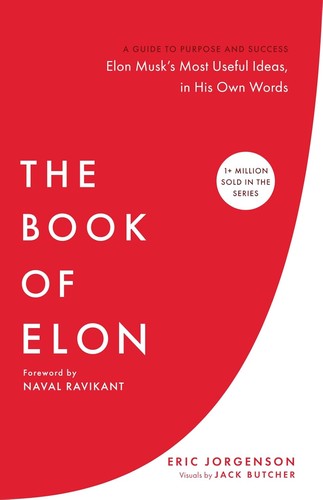

delivered
Get David's key takeaways from each episode delivered to your inbox.