Evan Spiegel
Evan Spiegel is the co-founder and CEO of Snap Inc.

Summary
Evan Spiegel is the co-founder and CEO of Snap Inc., the company behind Snapchat.
At Stanford, he enrolled in the product design program. In 2011, in a class project, he and two classmates — Reggie Brown and Bobby Murphy — sketched out the idea for an app where photos disappeared. The insight was counterintuitive: in an era when everyone was obsessed with permanence and curation online, ephemerality might be the point. They built it. Spiegel dropped out before graduation to run it full time.
What followed was one of the most turbulent ascents in Silicon Valley history. Facebook tried to buy Snapchat in 2013 for $3 billion in cash. Spiegel, 23 years old, said no. The decision was mocked at the time and later vindicated. Snap went public in March 2017 at a $24 billion valuation, making Spiegel — still in his mid-twenties — one of the youngest self-made billionaires in history.
Spiegel has always argued that Snap is a camera company — that the camera is the starting point for how the next generation communicates, not a feature, but the interface itself. Snapchat pioneered Stories, a format that Instagram, Facebook, WhatsApp, and YouTube all copied within years. It pioneered augmented reality filters at consumer scale. It built a maps product that shows where your friends are in real time. Every one of those ideas was imitated.
Now he's making his biggest bet yet. Snap's sixth-generation Spectacles are AR glasses — a genuine attempt to build the successor to the smartphone. They overlay digital information onto the real world in real time. Spiegel believes the camera on your face will eventually replace the screen in your pocket.
He and his wife Miranda Kerr run the Spiegel Family Fund, focused on arts, education, and human rights. In 2022 alone, he gave $20 million to a scholarship program in Stockton and wiped out the student debt of an entire graduating class at Otis College of Art and Design.
Episode transcript
David Senra: Super excited to talk to you. We've been talking a bunch before we started recording. I did a podcast on you almost 10 years ago. It's episode, I think, 22 of Founders, based on this book on how to turn down a billion dollars. The thing that stuck out to me the most, when I read that book, because a lot of that story takes place when you're still in college, and you're talking about two of your entrepreneur heroes. And Steve Jobs makes sense, my entrepreneur hero, too. But you mentioned this guy named Edwin Land. And I'm reading this, and I'm like, "How the f*** does a 21-year-old kid even know who Edwin Land is?" I've done 10 podcasts on him, read every single biography. Tell me how you discovered Edwin Land and what you admired about him.
Evan Spiegel: Yeah. I think he's so central to the history of photography. And so, as we've set out to try to reinvent the camera and how people express themselves with the camera, we studied a lot about the evolution of the camera over time. I mean, one of the funny stories that we found out, the first selfie ever was taken by a guy named Robert Cornelius, and my co-founder, Bobby, his name is Robert Cornelius Murphy.
Evan Spiegel: So, we found just by unpacking the history of photography, a lot of interesting similarities and parallels, and we've learned a ton from founders like Edwin Land, who transformed photography really by focusing on building amazing products and thinking about how to make sure those products fit into people's lives and uplifted humanity. I think if you look at instant photography and the role that that played in people's lives, Edwin thought of the camera as something that was incredibly personal, right?
Evan Spiegel: And I think, as we've looked at the sort of trajectory of technology over the long arc of time, technology gets more and more and more and more personal. And so, I think as technology gets more deeply interwoven in our lives, the founders who are thinking about making technology more personal and how the things they're inventing fit into and support humanity, I think that's a real advantage.
David Senra: But how does a 21-year-old kid decide, because you even said it in the book, that you're like, "I want to build a company at the intersection of technology and liberal arts." What was happening that you were interested in doing that?
Evan Spiegel: Part of it was my background growing up. So, I went to school in Santa Monica here at a school called Crossroads. Crossroads, the full name for Crossroads is actually Crossroads School for Arts and Sciences, so it actually is the intersection of science and art together. And actually, a lot of what the school is focused on is developing empathy, building empathy. And they have this thing called council, for example, where you sit with about 12 other students and speak from the heart, and take turns expressing yourself.
Evan Spiegel: And the school is really oriented on how you build strong relationships, build empathy with other people. And so, literally, I grew up at a school that was so focused on the intersection of art and science, but then also wrapped all of it in a commitment to humanity, to understanding one another, to building relationships, to giving back. I mean, the school is very anchored in community service. Three of our kids go there now, which is fun. Some of the teachers are still there. But I think a lot of it was from my upbringing, and that being a real focus.
Evan Spiegel: And then, as I got a bit older and I got into things like graphic design and I built my own computer, I was always sort of working at that intersection of art and technology.
David Senra: Yeah. I think the perception of you is you're like this cool designer, but you were actually self-described as a nerd growing up.
Evan Spiegel: My wife and I always joke, "It's cool to be uncool." So, I definitely don't think of myself as cool. And my background really was in a computer lab. It's one of the things that also inspired a lot of the work that we do. Because, as I reflect on growing up, one of my frustrations or disappointments with the way that computers have been built over time is that they actually pulled us away from one another.
Evan Spiegel: So, growing up, during lunch, rather than being on the recess yard running around with my friends, I was so inspired by what computers could do, I was obsessed with computers, so I was in the computer lab all day long. And computers, I think, whether it was the mainframe or the desktop, have sort of pulled us away from one another, away from society, brought us indoors, right into this very single-player experience.
Evan Spiegel: And so, a lot of what I've thought about and a lot of what has inspired me is how do we take all these extraordinary benefits that computing brings to the world, but actually use it to support our connections with one another, our connections to the world? Can we build a computer that brings us outside, right? That we use together with friends. Because I think one of the side effects of my love of technology growing up was that it pulled me away from more social relationships, or just running around playing on the schoolyard.
David Senra: So, wait, you had that philosophy even back then when you were in your 20s?
Evan Spiegel: Yeah. I mean, that's a lot of what inspired how we thought about the evolution of Snapchat. I mean, even basic things like opening into the camera, right? It opens into your experience of the world, right? Not a feed of content from other people, not a messaging feed alerting you to what other people are sending you. It literally opens into your experience. And so, from the very beginning, we've thought about how do we ground your experience of computing, like what is right in front of you in the present moment, and inspire you to create from that?
David Senra: Why do you think that the way computing was before, it would just isolate you, so essentially you're just staring at a screen, getting materials pushed to you?
Evan Spiegel: I think the early versions of computers, just given their physical and technological constraints, right? Like whether it was a mainframe, you had to go to a building to use the computer, right?
David Senra: Yeah.
Evan Spiegel: Or a desktop that you had to keep plugged into the wall. I think those physical constraints pulled you out of whatever environment you wanted to be in. I think the laptop and the mobile phones are representative of this continuum of computing getting more personal. But I think today people feel like... I think they're spending seven or eight hours on average staring at screens, they feel like screens are pulling them out of the moment or away from friends. Or when they're at the dinner table, they're looking at a phone instead of connecting with one another.
Evan Spiegel: And so, to me, there's this big question of, how do we get all these amazing benefits of computing, but in a way that actually connect us with one another, connect us to the outdoors, connect us to the world? And that's so much of what we're working on.
David Senra: If you were an alien and you came to Earth. I remember walking to pick up my daughter from school, you could either sit in the car line, right? Or you could get out and pick them up. And this is many years ago. I was like, "I'm going to walk," and I pass by 30 cars. And every single person in the line waiting to pick up their kid was staring at the phone. That's an addiction. That is a crazy thing.
David Senra: I was walking on the beach here the other day. This lady almost ran into me. This is a beautiful freaking beach, and she almost ran into me because she was looking at the phone. I was like, "There's mountains and the Pacific Ocean here. What are you doing?" That's a crazy thing to do. Is there anything else from Edwin Land that inspired you or that you think you used either in the beginning of Snap or now?
Evan Spiegel: Before we jump into Edwin, two things you said just really inspired me.
David Senra: Yeah.
Evan Spiegel: The first was school drop-off. Our kids insist that I walk them in every day. So, I'm used to doing the long walk in while everyone's in the carpool line.
David Senra: Yeah.
Evan Spiegel: But I think to your point, what's fun about that is you get to connect with everyone and say hi to other parents and teachers, and as I mentioned, some of the teachers that actually taught me when I was there.
David Senra: Yeah.
David Senra: Yeah.
Evan Spiegel: But the second thing you said, which is so funny, my daydreaming right now, especially as we think about glasses and the future of computing, is really, what if aliens are watching Earth right now, and they're terrified that smartphones have taken over humanity? That we're spending all day long caring for these things and plugging them in and tending to them, and our lives are all oriented around these little screens.
David Senra: Yeah.
Evan Spiegel: And what would aliens do? And so, part of my imagination has been, what if aliens are sending specs, sending these glasses to save people from their lives that I think have become so oriented around screens. So, it's funny you mention that. I love thinking about that, the alien perspective of humanity right now. I think for Edwin Land, I mean, there's a couple other things that really stood out to me. One, he was a statesman, right? And behind the scenes, people really relied on his advice, and he gave it freely.
Evan Spiegel: I mean, he was a big supporter of the US government. For example, was very thoughtful behind the scenes in providing advice to the US government, including technological advice. And so, I like that he had a commitment beyond just his customers and creativity and these sorts of things. He really wanted to participate in building a better world and took that really seriously.
Evan Spiegel: And then I think if you look at a lot of the investments he made around his laboratories and around his innovation, he was famous, actually, and back then this was quite unique, famous for uplifting women in those research roles, right? And I think he was a real champion of talent. He saw talent very clearly. And I think at a time when people weren't as focused on that, weren't investing as much in that, he was really focused on uplifting the best possible talent, regardless of folks' background.
David Senra: I was just on stage at an event with my friend Eric, who's the co-founder and CEO of Ramp. When I looked over to my right, I noticed that on the sleeve of Eric's jacket it said, "We win when our customers win." Ramp is the presenting sponsor of this podcast, and the way that Ramp helps their customers win is by helping you save time, save money, and grow revenue. The median company running on Ramp cuts their expenses by 5%. The median company running on Ramp also grows their revenue by 16%.
David Senra: So, when you're running your business on Ramp and your competitors are not, you have a massive competitive advantage that compounds over time. Ramp is the only all-in-one platform designed to make your finance team faster and happier. Many of the top CEOs and founders that I know run their business on Ramp. I run my business on Ramp, and you should too. Go to ramp.com today to learn how they can help your business save time, save money, and grow revenue. That is ramp.com.
David Senra: We're both in LA. We both kind of avoid San Francisco. And we were talking, it's like, the people I admire the most, like Steve Jobs... Steve Jobs was trying to create technology that enhanced humanity. Some of these weirdos in San Francisco are creating technology to eliminate humanity. Why is it so important for you to build technology that actually enhances humanity?
Evan Spiegel: Well, I think fundamentally my source of inspiration is humanity, right? I'm inspired by other people. I'm inspired by the extraordinary world that humans have created. I'm inspired by the relationships between people and my relationships with other people. And so, so much of what motivates me and animates what I like to do is about making people's lives better and solving their problems. We all get to choose what we do when we get up in the morning.
Evan Spiegel: That's what I like to do and what I want to contribute to the world. The challenging thing, I think, is sometimes when you're working on new technology, it's so exciting and inspiring that you can lose focus on its impact on people. And I think we try to start with people, right? And really listen to people and what they respond to, how they're feeling about the products they're using.
Evan Spiegel: That was the core inspiration of Stories, right? Was people were saying, "Why is my social media feed in reverse chronological order? Why is it permanent? Why am I feeling judged all the time by how many likes or comments I have?"
Evan Spiegel: That made us realize, the way that people have told stories forever is in chronological order. They're not permanently saved forever and publicly judged and liked and that sort of thing. And so, it was just very easy for us to develop a product where everything, all the images and videos, were in chronological order. They deleted after 24 hours. You could start your day fresh the next day. They didn't have these likes and comments, which opened up this whole new world of self-expression, right?
Evan Spiegel: Because instead of just trying to post what would look pretty or popular or perfect, people were sharing this whole range of human emotion. So, so much of what we do and what we're inspired by is just by the way people feel, what they share with us, and really, this desire to help people build stronger relationships with one another.
David Senra: I read this book about you, the one I did the episode on eight years ago. I think it's, "How to Turn Down a Billion Dollars" or something. You said something funny in the... There's a quote from you in the book where you're like, "Whoever invented the internet, why did they decide to make everything permanent?" It's completely opposite. This conversation, we happen to be recording it, but the conversation we just had earlier, it's like, that wasn't recorded. It was just a moment in time. We'll have memories of it, different interpretations of it, but then we just move on to the next.
Evan Spiegel: I think that's a really good example of the way technology ends up shaping human behavior. So, if we're not thoughtful enough about the technology we're building, it can have unintended consequences. In this case, one of the reasons why everything was saved forever is because hard drives, disk-based hard drives, were expensive to write over. And so, it was actually more expensive to go back and write over something enough to delete it than it was to just leave it there and write over it again, maybe sometime in the future when you want to save something new.
Evan Spiegel: And so, no one was thinking about how to erase things because it was just much easier to leave it there and maybe write over it when you had something new to save. And so, a lot of the early work we even did with Snapchat was asking about how we can be certain that everything is deleted, and how we can make sure that everything is being written over, because that wasn't a consideration for a really long time.
David Senra: So, in a very Edwin Land-ian way. You seem to observe what everybody's doing, and you have this natural inclination to go your own path. But you had it at the very beginning. How old were you when you started Picaboo, which turns into Snapchat?
Evan Spiegel: I was probably, I think, 20.
David Senra: Where did this desire to do something different come from?
Evan Spiegel: My dad was always pushing me to get a job when I was younger. If I was ever around the house, he'd be like, "What are you doing here? Get a job," right? So, I interned at Red Bull, for example. I interned at Abraxis BioScience. I mean, this was back in the day when we were racking GPUs to do early-stage drug discovery. I mean, that was my first experience with GPUs, however many... When I was in high school.
Evan Spiegel: And then I had a couple other really cool internships, but really my first more serious job was working at Intuit, and working on this service called TextWeb, which was basically designed to help people with touchpad mobile phones build little micro websites, essentially, and access them, primarily in India at the time.
Evan Spiegel: And so, I had learned all these really interesting things about business during these internships, but fundamentally, I didn't really want to have a boss. But until I saw how possible it was to build something amazing, like with TextWeb, I think there was three of us on the team. I did the least out of the team members. But the three of us on the team, or four of us on the team, were actually able to build and launch a service in India, right?
Evan Spiegel: I was like, "Wow, it's actually a lot easier than I thought to build things and to create things that can reach millions of people." And so, that really inspired me. And simultaneously, I had lived across the hall from Bobby, who I ended up starting Picaboo/Snapchat with. He had a job at the time too, and we both just loved building things. So, we started working on this thing called Future Freshman, which was designed to help people get into college. It was a total failure, but we had loved working together.
David Senra: This is the important part. Can you say why, because I think you took an idea from there for your next business, why it failed?
Evan Spiegel: Yeah. I mean, there were a number of reasons why it failed. I think, first of all, we really focused on building the perfect product for way too long before we got feedback. So, I think we worked for 18 months to build this perfect, full-featured product, which was in direct contravention to how I was always taught to build things, right? Which is, build a prototype, build an MVP, get it in front of people, learn as quickly as possible.
Evan Spiegel: But we had spent all this time building this perfect piece of software, and we hadn't thought enough about distribution. And so, while we'd built this great piece of software, our competitor at the time, called Naviance, which I think still today is probably the leader in this college application sort of software world, they had secured distribution through all the different college counselors, right? So, what piece of software are you going to choose to help your kid get into college? The one recommended by the college counselors or the one from two kids at Stanford? I mean, I think it's a pretty easy choice.
Evan Spiegel: So, we just saw very early that we had no distribution advantage. And even if we loved our software, that people weren't going to use it, because we didn't really have a scalable way to get it in people's hands. And so, around that time, when we saw the emergence of the App Store on iPhone and all this sort of thing, it was very clear that that was a distribution channel that we could really use and benefit from. But that we also needed to build things that we could build quickly, things that we really were going to use together with our friends, so that we could be the first early customers. And ultimately, Picaboo and Snapchat represented that.
David Senra: Yeah, because in the book you talked about, "We built a product, no one used it."
Evan Spiegel: It's tough when no one uses it.
David Senra: Yeah.
Evan Spiegel: Except my mom.
David Senra: Move on to the next thing. So, is Picaboo, which turns, obviously, Snapchat, was there anything in between those two? Or was it...
Evan Spiegel: There were a couple other failed sort of experiments, I would say, in between that. We were playing around with different ideas for sort of more private, I wouldn't say social networks, but more private groups and social sharing and things like that. But nothing that really pushed through.
David Senra: But it seemed like it was a direct counter to the existing social networks at the time.
Evan Spiegel: Yeah. I mean, the problem that we were experiencing was that the way that everyone was socializing at the time on Facebook, and I think Instagram was sort of just getting started at the time. But the way that everyone was socializing on Facebook was like a giant popularity contest, so it wasn't fun, right? I mean, everyone was competing for how many friends they had, how many likes they had. Everything was about pretty photos. And in college, we wanted to have fun with our friends. But the alternatives at the time, with text messaging, for example, were so clunky.
Evan Spiegel: People forget, sending an image via text message back then took a minute, two minutes, right? To send a MMS. It was crazy. And so, part of the core invention of Snapchat was actually just making it really fast to send images, which made a huge difference in people's ability to use images to communicate. Because back then, images were for documenting things. They were for saving memories forever, right?
Evan Spiegel: And the reason why photography has exploded, and I think there are more selfies taken on Snapchat than on iPhone in total, right? Which is a crazy stat. But that's because people are using images to communicate.
Evan Spiegel: And so, in inventing Snapchat in response to kind of this documentary culture around photography and this feeling of public pressure about the way that people were expressing themselves and communicating online, Snapchat really especially because the camera was on the smartphone, transformed the way that people communicate by allowing them to communicate with images.
David Senra: So, did you think you were building a messaging app or a social network?
Evan Spiegel: I mean, it's a messaging service.
David Senra: But even back then.
Evan Spiegel: Yeah. Yeah, yeah. Yeah.
David Senra: You thought about it as a messaging app.
Evan Spiegel: Yeah. I mean, it only had messaging for the longest time until we introduced stories. I mean, it was only a messaging.
David Senra: Stories has got to be one of the best inventions ever in terms of the apps that we use. I mean, now, obviously, it's on every single app. You were the first one to come up with that. I think there's stories on LinkedIn and, like, Pinterest or some shit now. It's just places they shouldn't be, it's there.
Evan Spiegel: Going back to the early days of the smartphone, if you remember, Apple was really talking about, "Hey, when you're going to watch video on your iPhone, you're going to turn the phone sideways and watch horizontal video." And a lot of... In the the first several years of Snapchat, almost all video online was horizontal video in the feed.
Evan Spiegel: And so, when we came out with vertical video, and we said, "No, we think everyone's gonna watch video the same way they hold their phone all day long, vertically." Where people were like, "What?"
David Senra: Mm-hmm.
Evan Spiegel: We spent a ton of money back then without AI, right? Like, just helping advertisers recut their video to make it vertical. And we had to convince them, showing them that the completion rate was nine times higher when they used vertical video instead of these little postage-stamp-sized horizontal videos. But for us, it was just obvious, right? That people were going to want to watch video the same way they hold their phone. They don't want to turn their phone to watch video.
David Senra: But do you see what I keep trying to get to? And this is not normal, though. You're very comfortable. I'm trying to figure out, because the whole point of me having these conversations, this entire show is just, who am I intensely interested in talking to? And there's something interesting. I still don't understand. Where the hell did this confidence in your own judgment and disregard for the need to conform come from? Because it's obviously still there today. Let me give you some background.
David Senra: I remember the first version of Spectacles, the ones you bought in a vending machine. I bought them. I wanted them so badly, and you were out of stock. I bought the ugly f***ing blue color. I did not want bright blue f***ing glasses. I'm a grown-ass man. But I was like, "This is so weird. This is so interesting." And you were 10 years ahead of everybody else. Where the hell does that come from?
Evan Spiegel: I'm not sure exactly. I think a lot of this stuff just really appears obvious to me and to us, right? It was obvious to me that if you looked at the evolution of computing, holding this tiny little screen in your hands was not the future of computers. It makes absolutely no sense, especially for humans that want to live and work hands-free, right? They want to be able to see one another and interact with the world.
Evan Spiegel: And so, I think things like that just seem so obvious. And we're fortunate to be able to invest consistently behind that vision, because I think the hard part is not necessarily seeing what the future could look like. I think a lot of people have different visions for the future. I think the thing that's been maybe different about Snap or Snapchat is our determination and consistency in pursuing that vision. I mean, with Stories, the first six months of Stories, no one used it.
Evan Spiegel: I mean, I remember sitting in a board meeting, and we were like, "We think Stories is going to be a big thing." You know what I mean? We think this is the future of how people are going to want to share on internet services, on Snapchat. And the board's like, "Well, no one's using it." And we're like, "Okay, but it's new, so it's going to take time. So, let's give people time to discover it, to learn about the feature, et cetera." And then, maybe by the next board meeting or the one after that, it was growing super rapidly.
Evan Spiegel: So, I think the hard part is not necessarily having the vision for the future, and oftentimes it just seems very obvious. The hard part is delivering it, right? Getting there.
David Senra: Were you disagreeable when you were a kid?
Evan Spiegel: I think so, probably.
David Senra: If I ask him, the people you have working with you, is Evan disagreeable? Would they say yes?
Evan Spiegel: Strong opinions, loosely held. No, I think I've always felt comfortable seeing something differently or advocating for something different.
David Senra: Would people that work with you describe you as uncompromising?
Evan Spiegel: I think so, yeah.
David Senra: Okay. There's a Steve Jobs element.
Evan Spiegel: Yeah, but at the same time, we've tried to build a really different culture. You've mentioned the Walter Isaacson book. That book broke my heart, right? Because I think that that book essentially called Steve a bad father. Which I thought was not only unfair, but it also sort of made the case that Steve believed that you could only achieve these sorts of things if you were uncompromising, but uncompromising with a taste of mean, essentially.
David Senra: Mm-hmm.
Evan Spiegel: And for me, watching Steve and seeing how people spoke about him, and there are plenty of stories of folks who felt really close to Steve and felt really inspired by Steve, and also stories of people who felt like Steve was mean, right? And my big question to our team was could we achieve something really extraordinary? Could we build a culture that was incredibly creative, but at the same time is kind, right? So, with our three values, it's kind, smart, creative. And kind is the first one for a reason.
Evan Spiegel: And what we really wanted to do was create a culture that's uncompromising, but at the same time very kind and supportive. Because we think that that is the best and most fertile ground for creativity. If people feel afraid, it's very, very hard to be creative. I mean, fear is almost the opposite of creativity.
David Senra: There's actually... Did you ever read Ed Catmull, the founder of Pixar, his autobiography called "Creativity, Inc."?
Evan Spiegel: No, I always wanted to. I haven't. No.
David Senra: Okay. That's another book. I just gave you one book. I'll give you another one. Ed's actually doing the show, and I can't wait to talk to him.
Evan Spiegel: Cool. Yeah.
David Senra: Because he worked for Steve Jobs, or worked with Steve Jobs longer, more consecutive years than anybody else. I think they worked together for like 24 years. I would just buy the book today and just skip to the end. There's a 20-page afterword called "The Steve We Knew," and his whole point after the Isaacson book came out, he's like, "That's not the Steve I knew." And his point was that, earlier in his career, there was a lot of these stories. Yes, he was like that, but he learned and evolved on how to be a better leader. And so, in that 20-page afterword, Ed is telling the story of how he evolved over time.
Evan Spiegel: Mm.
Evan Spiegel: Mm.
David Senra: F***ing 45-year-old Steve Jobs, of course, is not going to be the same as 21-year-old Steve Jobs. So, I think that's a very important point to make. How do you reconcile, though? Because there's a lot of people that are famous about this, like Elon. I just heard, somebody was telling me a story, Michael Moritz from Sequoia said the same thing.
David Senra: Camaraderie is dangerous, and kindness is dangerous for your teammates because you can't deliver honest feedback and tell them if their work isn't up to par or whatever. How do you balance that? Be kind but also honest if the quality of the work isn't there?
Evan Spiegel: Well, I think there's a big difference between kind and nice.
David Senra: Okay. Explain.
Evan Spiegel: Huge difference. When you're being kind, it means you really want the best for somebody, right? And sometimes that means a tough conversation. Sometimes this means saying, "We're just not there yet on this project we're working on." Or, "Hey, the way that you delivered that really isn't working." Or whatever it is. Nice is about making people feel good, right? Kind is about wanting the best for them. And so I think for us, our culture is oriented around kindness, which is a much deeper expression of care for somebody else and involves tough conversations.
Evan Spiegel: One of the great things about having a best friend or a partner is that they're honest with you about your shortcomings, and help you evolve and make you better, and that comes from a place of love, right? And so, I think kindness, in many ways, is essential because it allows people to hear that feedback. So, one of the big problems, I think, in a more hostile work environment, is people are more resistant to feedback because they don't hear it coming from that positive place of wanting you to grow and develop.
Evan Spiegel: And I think that expression of kindness for us is one of the things that helps people grow fast, right? And ultimately, at a company like Snap, our goal is just help people grow as fast as humanly possible, so that we can meet the needs of our customers and evolve our business, et cetera.
David Senra: Who plays that role for you? Who tells you the truth?
Evan Spiegel: My wife is brutally honest in a very loving way. In a very loving way. And it's super important. I grew up with... And one of the things I love about being in LA is a lot of my high school buddies are here, right? So, I have friends who I've grown up with who've always been real with me, and that's a huge benefit of being here in LA. Because when I get to hang out with my friends and talk to them about what I'm going through or what's going on, I can count on them to be honest.
David Senra: I think of what Charlie Munger said. He says, "Anybody engaged in complex work," this is a paraphrase of his quote, "anybody engaged in complex work, it's very useful to find somebody to help organize your thoughts with." And I think he was referencing really the role he played with Buffett, where Buffett was the main guy, obviously was 100 times richer than Charlie, but Buffett knew that Munger was special, and he let Munger shape his mind. Do you have anybody like that? Not like a... High school friends are different. They were more like peers or have a understanding. You have a very unique lived experience for somebody that's still in their mid-30s.
Evan Spiegel: Yeah. I think Bobby, who is my co-founder, has really been that for me. And I think we approach the world differently and see the world differently, so I think that's really valuable. But I would say, I rely on our leadership team and broadly our company to help me do that. I mean, that's the fun part about innovating is it's a dialogue, right? It's not like issuing commands, like, "Let's go build this." It's like having a real intense debate and dialogue about what's best for our customer and what we should do, what we should prioritize.
Evan Spiegel: So, I think, for me, it would be a real shame if I only got that from... Maybe if it was Charlie Munger, I'd feel differently. But I think for me, what's so important is to make sure I'm getting that sort of feedback and having that kind of dialogue with lots of members of our team, or mentors as well. That's hugely valuable.
David Senra: What does the leadership team look like?
Evan Spiegel: It's probably on the Snapchat side, it's roughly 10 or so people, and it's funny, even in the architecture of our building, right? We have a circle table for a reason. I really like everyone to sit around a circle and have a dialogue where we're all talking from an equal position around that table, right? So, it's that sort of mentality where everyone is expected to contribute, everyone has an equal seat around the table, that you get that sort of really helpful dialogue.
David Senra: Are these people that started at Snap and got through the ranks? Are they former founders? The reason I ask you is because one of the most interesting ideas or surprising ideas I've had so far, having these conversations, is I talked to Tobi Lütke, the founder of Shopify, which was like that conversation blew my mind, the way this guy thinks. And he was going through a very difficult time, and he didn't know what to do.
David Senra: And he actually tells a story on the podcast, I think, where he's like, he went to the Slack channel, and they had like former founders, and he's just like, "I need your help." And he essentially built, very much like Rockefeller did, the team around him is just founders. Is that what yours look like? Is it people that you poach from other companies? What does this look like?
Evan Spiegel: I would say it's incredibly diverse set of backgrounds. Some folks are from other companies. Some folks have spent their entire career at Snap, more or less. Some folks around the table are founders, right, who joined Snap. So, there isn't a one-size-fits-all model. I think we're really fortunate to draw from lots of different backgrounds.
David Senra: Is there a lot of turnover?
Evan Spiegel: I would say at points in Snap's history, there has been a lot of turnover. Not currently. I mean, knock on wood. But the business changed so quickly, right? There were periods of time when we went from having a hundred people to over a thousand people in 18 months, right? And the skill sets that...
Evan Spiegel: We were slow to build what we needed to support that scale of a team. And back then, there weren't the AI tools that are available today that make a lot of those things easier, right, to operate at that scale, and that quickly. But yeah, there are periods where the company has just changed a lot, and it's required a different skill set. And during those periods of intense change, we have seen turnover. Sometimes intentional, sometimes unintentional, because folks, maybe, are misaligned with where we're trying to take the company.
David Senra: Yeah, the reason I asked is because I think conversations like these, like the other podcast, "Founders" podcast that I'm doing, I think it's important for entrepreneurs to realize that there's not one right way to do things. Tobi told me. He's like, "There's probably a 100 right answers here. You got to do the one that's best for you." And so, I'm just curious, do you have a philosophy on turning over the top people at the team?
David Senra: Because if you look at Larry Ellison, you read biographies of him, he thought the fact that he kept the core product team on Oracle together for multiple decades was a huge advantage. Person he mentors, if you ask Elon who he admires, he says Larry Ellison. He's like, "I want fresh blood," I think is the term, over and over again. Do you have an opinion here?
Evan Spiegel: Mm.
Evan Spiegel: I think it's different in different parts of the organization. If you look at the core product and design team, that's a very small team. I think it's currently, like, nine people. It usually fluctuates between eight and 12 people at any given time. Many of the folks on that team have been at the company for an incredibly long period of time, and they usually join out of school, right out of high school. Or sorry, right out of college. We've had some interns, but no one joined right out of high school.
Evan Spiegel: They typically join right out of college, and we spend a huge amount of time investing in their growth and building things together, and so I think it's really important to have that longevity because those are folks who really understand how we build products at Snap, and that's something that I think really has to be learned. I haven't found anyone who'd just been able to enter Snap. And I mean, certainly folks can contribute right away, but it takes time to learn what makes Snap.
David Senra: Say more about that. That's interesting. Why does it take so long?
Evan Spiegel: Because ultimately, I think the way that we build products at Snapchat is just fundamentally different than anywhere else in the world. And so, I've yet to see someone come into Snapchat with all the skills and all the understanding necessary to be able to really deliver value in that role.
Evan Spiegel: The closest we come are probably folks out of art school, because they're used to such a rapid iteration process, and are used to making things in extremely high volume. And so they are a good fit for the design culture at Snap, which is really about very rapid idea generation and creation. Every week, I'm with our design team for several hours, and we're just looking at new work. I mean, new work every week, hundreds of ideas, right? Hundreds of concepts, iteration, et cetera.
Evan Spiegel: And really, kind of together as a group, working through a critique process. And so I think the art school folks adapt the easiest to that culture, because they're used to such a rapid velocity of work. But at the same time, we're really trying to overlay that deep empathy for people, right? That deep connection with how our community feels and what they're looking for.
Evan Spiegel: We're also trying to cultivate a very positive and fun environment around that. We're laughing half the time in these design meetings, right? And playing around with ideas. And I think creativity can really thrive in that environment of levity and fun. And so, I think that combination and that velocity of creativity and product development is something that people have to adapt to, typically when they come to Snapchat.
David Senra: Deel will help your business hire, pay, and manage any worker anywhere in the world. Deel is the best company in the world at building infrastructure for global hiring. Deel is one platform for payroll, HR, benefits, and device management across a 150 countries. Deel gets you everything you need to run a high-performing global workforce on a single AI-native platform. From first offer to final off-boarding, Deel handles the complexity, so you can stay focused on your business.
David Senra: The best founders and operators in the world have one thing in common: They control as much of their business as possible, and the founders of Deel do exactly this. When you use Deel, you aren't using a third-party payroll processor or a messy network of in-country providers. Deel built and owns the rails. That means faster speed, better service, and total accountability. The founder of ElevenLabs, who I use to make transcripts for this podcast, has a great description of the value that Deel can give your company.
David Senra: He said, "We built ElevenLabs to break down language and communication barriers. With Deel enabling us to hire and support exceptional talent anywhere, we can accelerate our innovation and bring more voices, stories, and ideas to every corner of the world." Deel is trusted by over 40,000 customers and growing fast. Learn how they can help your business by going to deel.com/senra. That is deel.com/senra.
David Senra: If I was to sit in on one of these design meetings, you said there's nine to 10, 12 people, and you. What would I see?
Evan Spiegel: You would just be looking at a ton of work. I mean, we would just be talking through a huge volume of ideas across the service or maybe even ideas for new services, and that sort of thing for a couple of hours.
David Senra: These last a couple hours? You're going over...
Evan Spiegel: Yeah.
David Senra: When you say volume, like, hundreds of ideas?
Evan Spiegel: Yeah. Yeah, easily. Yeah.
David Senra: In a few hours?
Evan Spiegel: Yeah, yeah.
David Senra: And are you leading this discussion?
Evan Spiegel: Yeah, but we're all contributing, batting stuff around. You know what I mean? Laughing, and iterating, you know.
David Senra: Why is the volume part so important?
Evan Spiegel: Because the best way to have a good idea is to have lots of ideas. It is critical. And the most toxic thing you can have is people attached to an idea instead of constantly thinking about... Like, ideas are free, right? There should be a zillion of them. And if we can do that and create that culture where there's just an endless flow of ideas, you're very lucky. You're much more likely to get lucky by finding good ones.
David Senra: So, how many of these do users of Snap ever see?
Evan Spiegel: A tiny, tiny fraction... I mean, less than 1%, probably. Maybe 1%.
David Senra: And what's the process? Like, how soon from when an idea comes up in the meeting to you liking it to it getting in front of one of your users?
Evan Spiegel: Well, now that's happening incredibly quickly, because designers can ship code with all these new AI tools. So, the whole world of design is changing, I think, very rapidly. Because now, many of our designers are just empowered. If they've got something, we think it's cool, let's get it in the app and test it immediately. So, I think design to code is happening way faster than ever before.
David Senra: So, there's an intense design culture at Snap. There always has been. Do you describe yourself as a designer?
Evan Spiegel: Yeah, I think. I mean, that's my background. Yeah.
David Senra: And that's what you described. When you started, that's... Right?
Evan Spiegel: Yeah.
David Senra: And so, talk a little bit about what you think AI will do to a company like yours, where it seems to be a design-first culture.
Evan Spiegel: I think AI is probably the best thing that's ever happened to Snapchat, which is great. I think the reason why is because we've always had a ton of ideas and a deep connection with our community and our customers. But we've always had very limited resources, and we're up against monopolistic companies. And so we've essentially been engaged in trench warfare with monopolies for 15 years, right?
Evan Spiegel: And I think what's so funny is you look at the last 15 years, we learned very, very early on that there's no moat in software, which was an incredibly powerful lesson, right? All of our ideas, the things that we invent, people just try to copy right away, and it's easy to do that with software. But what's fascinating about the world today is that it has never been easier, right? I mean, almost instantly, you can copy nearly any piece of software.
Evan Spiegel: And so, because we learned that lesson very early on, we've evolved our business to really focus on the things that are hard to copy, right? A network effects business of people communicating with one another. These platforms, right, like our Augmented Reality platform, or our content ecosystem that are not just pieces of software that you can easily copy, but ecosystems of people communicating with one another, or creators making content that people are watching, or people building Augmented Reality experiences. All of those sorts of things are very hard to copy.
Evan Spiegel: So, over the last 15 years, we've really honed our business perspective for this moment, right? Because we saw how easy it was to copy software. So, in terms of our business and the way it meets our customers, I think we are well-positioned for the huge transformation that's happening.
Evan Spiegel: At the same time, our core business is software development. So we're able to get a lot of the benefits of the extraordinary transformation in software development without the same risk to our core business, because we build network effects over time and thought about how to position ourselves for this moment.
Evan Spiegel: So, AI is changing every single team at Snap. It's changing the way that everything gets done at Snap. And because our core business is software development, I mean, in the last three months, there's been a profound change, but to imagine 18 months from now, the way that Snap operates will be completely different than the way it operated last year.
David Senra: There's so many founders, and I don't know how many... Almost none of them are saying this on the record, but they tell me, they're like, "I should not be running my company anymore. I'm trying to figure out how to build AI to run my company." They are trying to literally replace themselves. They're like, "It's just going to be so much better than I am at doing this. It should be doing this. I should not be doing this."
Evan Spiegel: I think that's certainly true in terms of the operational lift, but at the same time, right, the vision, and creativity, and connection to your customer has never been more important. And so, I think if anything, it's going to enable founders to run teams that are much more operationally effective and require less of their time to operate the business, and instead, hopefully, pivot more time towards that sort of creativity and ideation and meeting customers where they're at.
David Senra: What's one of the most surprising ways that AI has changed how Snap operates internally?
Evan Spiegel: I don't necessarily think this is a surprise, per se. But I do think, and I feel like this is old news because everyone in the world has been saying it, but the change in how software is written since the beginning of this year is profound. Our core business is writing software. And now that these models are good enough to write, more and more complex pieces of software on their own, the job of a software engineer at Snap is profoundly and forever changed, right?
Evan Spiegel: And I think the more that we can embrace that, and make that easier, and teach people how to do that really effectively, it's just transformational for our core business. Because, as I mentioned, we have been up against companies who don't have new ideas but have infinite resources, right? And we've got lots of new ideas, but very limited resources. And that's been a real challenge.
Evan Spiegel: And so, it's been hard to see a path forward for Snap up against these giants without AI tools. And now with AI tools, you're like, "Wow, we could basically have an infinite number of engineering resources?" That's a pretty profound change for Snap. I guess I would say the rate at which that has happened has surprised me.
David Senra: You said something very interesting. You said you realized a long time ago that software has no moat. The experience that taught you that lesson was it Stories?
Evan Spiegel: No, the first time the big sort of wake-up call was when Facebook, at the time, carbon copied Snapchat to make Poke. Do you remember this?
David Senra: Yes.
Evan Spiegel: And Mark Zuckerberg recorded him saying the word "Poke," as the notification sound. He was so excited about this. And we were like, "Wow. Okay, this is a really good lesson for us." It ended up being super helpful to Snapchat.
David Senra: In the book, you call it "the greatest Christmas present you ever received."
Evan Spiegel: Ever.
Evan Spiegel: The nervousness going into that holiday period, right? I mean, they literally put a "Download Poke," at the top of every single Facebook app, right? And it was just a clone of Snapchat. And then on Christmas Day, see Snapchat number one in the App Store in that context, it was huge, huge for us. But that was the first time we realized, okay, we're going to have to be really smart about how we build this business and invest in the things that are hard to copy.
David Senra: Do you remember how old you were when this was happening?
Evan Spiegel: When would that have been? That would've been 2012, 2013, so 22 probably.
David Senra: Yeah. Super young.
David Senra: Super young to take on... That had to be terrifying.
Evan Spiegel: I mean, to be living in my dad's house with three of my buddies from college, and this huge company set their sights on us. I mean, it was definitely a formative experience, I would say.
David Senra: So then, realizing software has no moat, is that direct insight leads to bizarre decision, I think correct in hindsight, for a, what people consider a social network app or a messaging app to get into hardware and make glasses. Those two things are related?
Evan Spiegel: Absolutely. And I think, but even before that, right, a real focus on messaging. So the other key foundational insight of Snapchat, that really changed the company, was at that time, if you recall, people were very focused on a very simplistic model of network effects. And their very simplistic model was basically, the more nodes you have in the network, the more valuable the network is, right? And what we realized was that wasn't really true if you weren't using those network connections.
Evan Spiegel: So, actually, what reflects the value of the network is: Are the people that you actually talk to and communicate with, especially the ones you communicate more frequently, are they a part of your network? And if they are, then you can accrue the vast majority of the value in that network very, very quickly, without having the same scale or the same size, right? So what Snapchat showed was that if you just have one good friend on Snapchat, right, they might represent half of your communication, right? Because they're super important in your life.
Evan Spiegel: So you don't need 500 friends on Snapchat. You just need your best friend on Snapchat. And that's what helped the service really grow and take on these much larger competitors. What really prompted the work on glasses in the beginning was the feeling that we were always competing with that lock screen camera button, right? And so...
David Senra: What do you mean?
Evan Spiegel: Do you know on the iPhone, there's a lock screen camera button?
David Senra: Yeah.
Evan Spiegel: So, Snapchat opens to the camera. Right?
David Senra: Yeah.
Evan Spiegel: And we always want you to choose to open Snapchat to share a moment with your friends and your family. And you're making a choice between having to unlock your iPhone and go and open Snapchat and take a snap, or just using that lock screen camera button. And that lock screen camera button is on your phone, and it's in your pocket.
Evan Spiegel: And so, when we were trying to reinvent the camera and change how people were using their camera to help them communicate, one of our fundamental questions was: How do we get the camera out of your pocket, off your phone, to make it easier for you to share and express yourself or communicate your point of view or communicate what you're doing? That was really the prompt that led us to explore glasses. Because back in the day, we just made camera glasses.
Evan Spiegel: But I think, as part of that journey and as part of starting to work on camera glasses, not only did we realize, first of all, that the market for camera glasses is very small, right? That ultimately your phone is very good for taking photos. Even if you're on a jet ski or even if you're rock climbing, people still use their phone to take a photo. So that meant that we had to push way harder and faster to our full vision for glasses.
David Senra: When did you learn the market was small? Because you couldn't even keep these things in stock. I told you I had the big, ugly blue color.
Evan Spiegel: Yeah
David Senra: It was a fine color, but you know what I mean.
Evan Spiegel: Yeah, but I think we were shipping hundreds of thousands of units. And I think 100,000 units in hardware is kind of like the first threshold of like, okay, you've got a product people are interested in and want to buy. But even at a couple hundred thousand units, I just didn't see a path to it being like a hundreds of millions of units.
Evan Spiegel: Because ultimately, at the end of the day, the bar that we set for any product we develop is that it has to be 10 times better than the next best alternative. And when we looked at how people were using specs at the time, it just wasn't 10 times better than pulling your phone out of your pocket.
Evan Spiegel: And maybe in some use cases, it was if you really wanted to be hands-free or that kind of thing. But it just wasn't 10 times better than the amazing camera you had on your phone. And so, we really then set out to try to push towards as fast as we could, our true vision for computing.
David Senra: That was how many years ago, when you started this?
Evan Spiegel: That would've been 20... Like, 2016, 2017, we were really pressing into the more advanced parts of Augmented Reality glasses. And I think, if you look at the step-by-step approach we took, the first generation had one camera, right? The second generation had two cameras with depth. The generation after that added a display. The generation after that added an operating system and developer platform. That's the version that's currently in the...
David Senra: What's the generation I used yesterday?
Evan Spiegel: That came out in 2024.
David Senra: That's generation four or five?
Evan Spiegel: Four or five, yeah.
David Senra: Okay.
Evan Spiegel: And that was the first time we really offered a developer platform, so that folks could start building and creating all these experiences.
David Senra: Okay, so can you explain your evolution of glasses? You said basically you don't think of it as glasses. It's just another form of computing?
Evan Spiegel: So, to go all the way back, the initial thesis was let's get the camera out of your pocket, right? But at the same time, on the phone, we were so constrained in what we could build, right? I mean, you have this tiny little screen. We're watching Augmented Reality just take off on the phone. Hundreds of millions of people every day are using these Augmented Reality experiences on this tiny little screen.
David Senra: Let's pause real quick there because this is another, I think, example of what I was trying to freaking figure out about you earlier, and I kind of went crazy.
Evan Spiegel: We still haven't figured it out.
David Senra: I know. Well, it might take a few more conversations. You're talking about all these people using Augmented Reality. You're talking about the filters you added or the lenses and stuff to Snapchat.
Evan Spiegel: Yeah.
David Senra: Did you get that idea from another company? Where'd that come from? Were you the first one to do it?
Evan Spiegel: We bought a startup called Looksery, that was working on those lenses, and then Bobby really pushed the vision of turning that into a platform. And once we turned it into a platform and built these developer tools called Lens Studio so that anyone could build lenses, then it just took off because...
David Senra: That's what got me using Snapchat. Because I was a little older than the typical people using it. But did this launch after Stories?
Evan Spiegel: That must have launched after Stories, yeah.
David Senra: So, how many years into Snap do you think that you've added this other feature?
Evan Spiegel: Probably three or four years, something.
David Senra: Okay, that's actually way sooner than I thought.
Evan Spiegel: Five years. Something like that.
David Senra: That's way sooner than I thought. Because you've been working on Snapchat for how long? 15?
Evan Spiegel: About 15 years, yeah.
David Senra: Okay, 15 years. Okay, so go back to what you were saying. Then you found hundreds of thousands or millions of people now using AR?
Evan Spiegel: Hundreds of millions of people are now using AR everyday.
David Senra: Hundreds of millions, okay.
David Senra: But back then, they're engaging with AR through this feature, but this is before you did the glasses.
Evan Spiegel: Yeah, sort of concurrent with the glasses, and maybe concurrent with the second generation, I want to say, by the time we really had an Augmented Reality platform.
David Senra: Okay.
Evan Spiegel: But the original thesis behind creating lenses was just that a lot of people thought it was weird to just take a selfie, right? Tons of folks were taking selfies to express themselves, but a lot of people were like, "Why would I just take a selfie?"
David Senra: Especially, if you're ugly.
Evan Spiegel: Yeah.
David Senra: I don't want to be reminded what I look like.
David Senra: Could put some dog ears on me.
Evan Spiegel: Yeah, yeah.
Evan Spiegel: You know, or vomit a rainbow, right? So people had a reason to...
David Senra: I always covered people in flowers. That's fun. On the glasses, especially.
Evan Spiegel: Yeah, that's fun.
Evan Spiegel: So, I think lenses really gave people a reason to express themselves and to share with their friends. But then, after we built out the Lens Studio developer tools and this kind of thing, the platform just exploded. Now, people have made millions of lenses, all sorts of different ways for people to express themselves, not only with selfies, but also lenses that change the world, as you experienced.
Evan Spiegel: And we just found that people were incredibly constrained by this tiny little smartphone screen, and needing to use their thumbs to interact with augmented reality. And it was so clear that we needed to embed it in the world for it to be successful, and we were going to need to create the device to do that. Because no device even came close to the vision that we had. So, we've really just pushed over the last decade to make that vision possible, and then later this year, we're launching the first consumer version, which will be a big step for us.
David Senra: One of my all-time favorite quotes is from the book "Zero to One." It says, "The single most powerful pattern I have noticed is that successful people find value in unexpected places, and they do this by thinking about business from first principles instead of formulas." This is exactly what AppLovin has done with their new advertising platform, Axon.
David Senra: Axon is the most powerful advertising platform in a generation. Axon allows you to capture undivided attention. Axon ads are full-screen videos that are watched for an average of 35 seconds, a retention that blows other ad platforms out of the water. And you can launch in minutes. You set the goal, and Axon achieves it. No complex setup, no expertise needed. And Axon scales quickly. They can put your ads in front of over a billion potential customers.
David Senra: Other businesses have seen immediate results, scaled to hundreds of thousands of dollars of spend per day, and increased their revenue by millions. And most advertisers aren't even thinking about this channel yet. Less than 1% of advertisers have access to Axon, so you want to get started quickly. And you can do that by going to axon.ai/senra. That is axon.ai/senra.
David Senra: You used the word 'vision' when we were talking, before we started recording. I think this is interesting. You literally see it. See what you want. You said you have a problem designing a product if you can't see it in your mind. Can you explain more about that?
Evan Spiegel: Yeah. I think in general with my life thus far, with the things that we build, I see them very, very clearly even before we've built them. And I kind of know what I want. I know how I want it to work. And I also know that if I can't see it, then we're off track. And so I think really trying to stay true to that feeling, and that vision, and that focus is just so, so important. And that doesn't mean not being open to other people's ideas, other people's creativity, et cetera. But I think, yeah, I just very, very vividly can see what we're trying to create.
David Senra: I'm going to explain or describe an experience that I read about. You tell me if it's similar to the one that you experienced, when that legendary meeting that happened when Edwin Land's 70, Steve Jobs is 25. They're in a conference room sitting across a table from one another, and they talked about... They're like, they don't really consider themselves inventors. It's kind of funny, because Edwin Land had the third-most patents in human history.
David Senra: They said they discovered products that they would literally be looking at an empty table and see the final form of what they're doing.
Evan Spiegel: Yeah.
Evan Spiegel: Yeah.
David Senra: And then they reverse-engineer from that, and essentially, their brought entire organization to invent the technology, to invent the product. Is that the similar experience that you're having?
Evan Spiegel: I really, really like that because I think what they're describing is technology in service of a product vision. So instead of chasing a technology, being crystal clear about what you're trying to create and then organizing everyone to invent everything needed to create that product. So yeah, I mean, yeah. Yes, I guess. Yeah.
David Senra: Is that not what you've been doing the last decade with the glasses? Because you made a choice. Other people are partnering with existing companies, like Luxottica, who I think is a very fascinating story. I told you before, I did this crazy episode of "Founder's" podcast, I think it's episode 394, on Leonardo Del Vecchio, which was just one of the... He's an orphan, and he built, to this day, one of the most powerful and such dominating companies in his industry. But you chose not to do that.
Evan Spiegel: There's a lot of reasons why I don't think that's right.
David Senra: Let's go into them. We don't have an end here.
David Senra: As much as you can share that. But I'm very interested in your philosophy behind the decisions you're making is what I'm trying to get to.
Evan Spiegel: Yeah, yeah, yeah.
Evan Spiegel: I think there's a number of challenges. Obviously, I think it's much more harmful for Luxottica than it is for Meta. I think Meta needed to partner with Luxottica because the Meta brand, I think, is not something that people want to put anywhere near their face. So I think that Meta really needed it. I think what's challenging for Luxottica is they took the most iconic, crazy high margin product and they destroyed the margin, and then they associated it with Meta.
Evan Spiegel: So, I think that we'll see if that pans out over a longer period of time, if that was the right brand choice for them. But I can definitely see why Meta needs to camouflage their brand, which I think a lot of people don't resonate with, and don't like with the Ray-Ban brand. But I think people are misreading, I think, the dynamic of what's happening when you have Meta Ray-Bans on the shelf next to a regular pair of Ray-Bans, and they're both about the same price, right?
Evan Spiegel: And I love to just walk into a Sunglass Hut or whatever and talk to them. "Hey, what's going on? What's selling? What's not?" It's like, "Well, you can get the Meta Ray-Bans that have a camera for about the same price as the regular Ray-Bans. Why don't you try it out for your upcoming vacation?" I think that's a smart strategy if you want to move a lot of volume, but I don't know if that builds a durable business over time.
Evan Spiegel: And the reason why I don't know if that builds a durable business over time is if I look at successful hardware companies over a long period of time, we can look at Apple, we can talk about Tesla, for example. Early adopter is the wrong term, but they really try to start with premium or even luxury positioning around a very passionate early adopter group that believes in their vision, right? Think like the Tesla Roadster, right? Or the early iMac or the early iPhone.
Evan Spiegel: And they build a brand by starting with those early enthusiasts who believe, right, in the electrification of the world, the transformation of the power, the power grid, how we're going to move things around. Or in the case of Apple, a revolution in the personal computer, right? That everyone's been doing phones wrong, and that having this personal computer in your pocket would be really transformational.
Evan Spiegel: And they really activate that passionate group of enthusiasts. And then over time, they work with that really passionate group of enthusiasts to grow into the mass market while preserving their premium positioning, which means high gross margins. Then they take those high gross margins and they reinvest in R&D, which widens their lead.
Evan Spiegel: And that is the story, I think, of successful hardware companies. And I think it's very, very hard to start with a super broad-based, low-margin consumer product, and try to work your way into premium positioning. So I think if you look at Specs and what we've tried to do, even like your early experiences with the brand, right?
Evan Spiegel: We're innovative and different and oriented around a group of enthusiasts and early adopters who want to see the world differently, who want to participate in the cutting edge of technology. And I think if we're able to build the brand that way and build our own brand around that, that will allow us to sustain our margins over time, which will allow us to reinvest, which ultimately will give us a big competitive advantage.
David Senra: I want to go back to wanting to control most of, like, actually building your own hardware. You said something, even the marketing, though, the thing, like, got to give you credit to the marketing you guys were doing back in the day for the first spectacles.
Evan Spiegel: Mm-hmm.
David Senra: Where there wasn't a store, you could just walk into. It's not the experience you just described. It's like you would AirDrop these vending machines.
David Senra: And then I remember there's a website. And I'm not a f*****g power user of Snapchat.
Evan Spiegel: Yeah.
David Senra: I was just like, "I want these glasses." And I would be refreshing the website to figure out, it's like, "Oh, okay, here's a new drop," and you'd have a countdown, like, "It's dropping," and you wouldn't say where it is.
Evan Spiegel: Yeah.
David Senra: And I'm in Miami at the time. It's like, "All right, it's dropping in Venice." I'm like, "Oh, Goddamn it." And then I wind up, the way I got them is, you did a drop in New York and a friend of mine, I called him, and he went and stood in line and got them for me. It was like a really unique and fun... Like, you just made it... I was just talking to Brian Armstrong about this, the founder of Coinbase.
David Senra: Where he's like, "Everybody has shareholder letters. Everybody has to write a shareholder letter. Everybody has to do these analyst calls." And he's trying to find a way to make them fun and kind of like internet native, and there are forms of marketing.
Evan Spiegel: Yeah.
David Senra: They're not just analysts that are reading these things. If you think about them and think about doing creative marketing, you could just drastically increase the amount of people that are getting information about your company. Why is it so important to you, though, to control so much of the hardware that you're making?
Evan Spiegel: Control of the hardware is necessary to deliver an extraordinary customer experience in this space, and the intersection between the hardware and the software to deliver that customer experience is essential. So, as we look at how other people are approaching this space, trying to cobble together components from a ton of different manufacturers and get them to all work really well in a super small, lightweight form factor that's incredibly performant is just really, really hard to do.
Evan Spiegel: And so, I think for us, if we want to really deliver this cutting-edge computing experience, doing that requires us to have a very high degree of control of the areas we can really differentiate. So, for example, for us, the display components are an area where we really differentiate. We have an incredibly performant waveguide, which is the glass is part of the lens, right? Basically, the lens of the glasses.
Evan Spiegel: And we've developed our own projector that's incredibly small that beams light into this waveguide. That's a big strategic advantage for us because the display components draw a lot of power, right? They're really important in terms of having that immersion and being able to have a very wide field of view. When you're using the glasses, you can interact with the world. And then of course, the resolution, the sharpness, those are the things that really, really matter.
Evan Spiegel: And so, for us, in order to push those boundaries, there's no one that comes close to our ability to deliver on that project experience. So by doing it ourselves, I think we've created a competitive advantage that will show up in the product that consumers will experience.
David Senra: Say more about that line where you said it's important to control the parts that you can differentiate on.
Evan Spiegel: Essentially, you're going to burn yourself out if you try to control everything, right?
David Senra: Mm-hmm.
Evan Spiegel: So it's really important to identify very early on where are the strategic points where you can create a totally unique customer experience by really investing and doing things differently. And for us, we've really thoughtfully picked out where can we play and do something that's really hard and do it differently that creates a sustained competitive advantage because it delivers such an awesome customer experience.
Evan Spiegel: So, the display components are one, I can talk about that because it's public, but later this year, people will see a lot of these areas where we've invested and fundamentally invented new ways of doing things that I think consumers are going to love.
David Senra: Another thing that Edwin... Again, people should study Edwin Land. They should study all these history's greatest entrepreneurs because you just realize they come up with ideas too. We were talking earlier, he realized if he did not have control, because he wanted to be an inventor, not an entrepreneur.
Evan Spiegel: Hmm.
David Senra: He had to learn to be an entrepreneur just so he could actually make money on his inventions, so therefore he only wanted to make money so he could invent more things. He was not after just having piles of money. And anytime he tried to outsource, one, he let other companies get in between him and the end consumer, which he fixed that when he did Polaroid and the cameras. But when the manufacturing, he owned... The factories were in Massachusetts, for God's sake.
Evan Spiegel: Yeah.
David Senra: He was manufacturing high-end technology in America, and his whole point was just, he didn't want to be a manufacturer, but he needed to control the things so not only to get the cost down, but to be able to influence the end unit of the product.
Evan Spiegel: Yeah, people I think would be stunned to learn that we manufacture core components in the US and the UK in our own facilities, which allows us to do this really advanced R&D that push the boundaries of what's possible with these components.
David Senra: Yeah, it's the same exact idea. So, how are you going to distribute them?
Evan Spiegel: I can't share all of our secrets.
David Senra: That's fine.
Evan Spiegel: But we can regroup after the launch and deep dive into all of it.
David Senra: Okay, but I have a sense that you want to control that, too.
Evan Spiegel: I think it's important in terms of the customer experience.
David Senra: What a surprise. All right. You described, you wrote this, I think it was your annual letter recently, and I forgot the term, you're basically the way you're positioning Snap. It's not like a little brother, but you described essentially like, you have the scale of some of these big players, but you don't have the trillion-dollar market cap, right? And you were, I think, at least once in this conversation, you described that you've been engaged in trench warfare. Why do you call it trench warfare, and tell us some stories about this?
Evan Spiegel: Yeah. I mean, I think the term I used in my letter was like the middle child, right?
David Senra: There it is.
Evan Spiegel: Because we're so much bigger than smaller competitors like Reddit or Pinterest or something like that, right? But we don't have the...
David Senra: Did you just call Reddit small?
Evan Spiegel: We're almost a billion folks using our service. If you look at our daily active engagements, about half a billion folks. So I think, just in terms of the scale of engagement.
David Senra: So there's half a billion people using Snap every day?
Evan Spiegel: About half a billion every day, yeah.
David Senra: And a billion overall.
Evan Spiegel: Almost a billion worldwide.
David Senra: How many other services are that size?
Evan Spiegel: Maybe 10, maybe.
David Senra: Okay.
Evan Spiegel: Seven to 10, depends if you include China.
David Senra: No, we don't. America, baby. All right, so wait. You're not the... I keep saying, little brother. You're the middle child. Say more about that.
Evan Spiegel: We're the middle child. I think what's interesting about that is that, and it's funny, we've got four kids at home, right? So part of it was based on my own experience with our kids, where a lot of attention is paid to the eldest child, right? And they've gotten so much bigger, and they've grown up, and our 15-year-old. And then the baby is growing so fast, it's so exciting.
Evan Spiegel: And then I think somewhere in the middle, and hopefully this isn't the case in our house, there's this period where you're changing and evolving, and people don't know what are you becoming, right? Maybe in the case of Snap, people are trying to understand what is this glasses thing they've been doing for 12 years that they're about to launch to the world? What is the role? Snapchat's core business is evolving. We're growing this huge direct revenue business that's growing really, really rapidly, and we're diversifying our advertising business with small and medium customers.
Evan Spiegel: So we're in this period of very intense change, I think, for Snapchat. And as I mentioned, we're not as big as the giants, and we're not as small as our smaller competitors. And so, it's that really interesting moment that I think middle children also, maybe experience, where there's all this change happening. And you're sort of stuck in the middle.
David Senra: Is this a stressful time for you?
Evan Spiegel: It's so funny. My wife loves the Oura Ring. She's obsessed. She markets this thing to everybody, right? Wants to compare scores and all this kind. So she finally, years and years later, went, "I'm going to try the Oura Ring." And she was shocked to learn that there's sort of the relaxed and stressed state, and I'm just in the relaxed state all day long. And so I wore it for a week, and it basically was like, I sleep seven or eight hours. I'm in the relaxed state all the time. She was like, "How?" Like, "What?"
Evan Spiegel: So I think I really love periods of intense change. I'm inspired by it. I enjoy it. And so, yeah, it is stressful to some degree, I think the question is, how do you turn that stress into opportunity, into growth, into change?
Evan Spiegel: But I think what's really important is for our entire team and our organization to know what a high-stakes moment this is for our business, right? At this moment in time, what will we become? We are in a transitional moment. And that's super, super exciting, and it means every second, every minute counts. I would say more exciting than stressful, but it's a really cool moment for our company.
David Senra: When you write something like that, obviously, is it more aimed at the broader investor community, or is it aimed for internal consumption?
Evan Spiegel: I always wrote them internally, but then they kept leaking, and people liked them.
David Senra: Yeah.
Evan Spiegel: So then I was like, you know what? We'll just publish it publicly going forward.
David Senra: Brad Jacobs has started eight separate billion-dollar companies. He said, "I've come to know a lot of extremely successful people in my life, and they all have one thing in common: They think differently than most people. All of them, to a person, have rearranged their brains to prevail at achieving big goals in turbulent environments where conventional thinking often fails."
David Senra: What Brad noticed is that great business leaders are pattern spotters, but you can't spot patterns if you can't see all of your data. Most businesses only use 20% of their data. Why? Because 80% of customer intelligence is invisible.
David Senra: It's hidden in emails, transcripts, and conversations. That's where HubSpot comes in. With HubSpot, all of your data comes together so you can see the patterns that matter. This is important because when you know more, you grow more, and that is a pattern that never fails. Visit hubspot.com today. That is hubspot.com.
David Senra: I had this great conversation with Michael Dell, who's just awesome. A great human being. Absolute love that I get to spend time with him. I can't believe it. And he has that thing where it's like he actually thinks it's important to, even if you don't have a crisis, to induce one, to create one.
Evan Spiegel: Yeah.
David Senra: And he gave this fantastic... He's reimagined his company. I mean, have you spent any time with him?
Evan Spiegel: I have, yeah.
David Senra: Okay, yeah. So, if I was you, I'd be picking his brain. I'm friends with his son Zach, and everybody has access to the Bloomberg Terminal, and Zach's like, "I got the dad terminal."
Evan Spiegel: Mm.
David Senra: And it's just like, I could type in any question and get some crazy response from this 40... Essentially, he's been a world-class entrepreneur for four decades. And so, "I have an issue with supply chain." Well, guess what? Dell's seen everything about supply chains, and can be very helpful. But his whole point was, he knew that his company was at an inflection point a few years ago, and he stood up and gave this, I guess, this talk.
David Senra: I think it was a talk, and he might have wrote it down, but it's just like, there's a company out there that is going to be faster than us, have better products, have cheap products, and essentially they're going to come for us, and he's like, "That company's us." We are going to reinvent. We're going to figure out what our weakness is. And instead of waiting around to be somebody else's meal, we're going to figure out how to reinvent our company. And on the podcast, the episode we did together, he was just like, "If you don't have a crisis, you need to invent one."
Evan Spiegel: I would say yes with the caveat that I don't want our team to always feel like they're in crisis mode. I think I always try to be really cognizant of where the team is at, and when we should sprint and run hard, and when we actually need to take a step back, and adjust. So I think staying in touch, especially at our size, right? We're like 5,000-ish people.
Evan Spiegel: You can really stay in touch with the feeling of the organization and knowing when to really, really push, and when it's better to create a little more space for ideation or experimentation.
David Senra: So 5,000 people serving a billion users. You mentioned you have a bunch of different revenue lines, or ones that are growing. Tell me about the ones that are new.
Evan Spiegel: One of the new ones is our subscription business, which is growing really, really rapidly, called Snapchat+. And I think it's a really good fit for Snap's culture. We adopted the advertising model very early on. I think it's well understood. It's a huge opportunity, and we have a ton of engagement on Snapchat. So advertising is a big opportunity for us, and allows us to offer our product for free, which is great.
Evan Spiegel: But I think the heart of Snapchat and our company is about building stuff that people love and that they want. And we were getting so many requests for all sorts of new and different features from the most passionate members of our community. And we could never really find time to resource and invest in them because we were focused on things that everyone would use, not just the most passionate Snapchatters.
Evan Spiegel: So, we decided to build Snapchat+, which essentially gives you access to new, fun features on Snapchat. We listened to our community and the things that they want, and we'll test stuff and release new things for Snapchat+. And for four bucks a month, you can join Snapchat+ and get access to all of these new features. That's now grown to 25 million subscribers, which is ESPN's scale of subscribers, and I think in the last quarter it was growing 60% year over year at a billion...
David Senra: Don't make me do public math. Is that a billion run rate?
Evan Spiegel: We're doing a billion run rate, growing 60% year-over-year.
David Senra: That's incredible.
Evan Spiegel: And it's a really good fit for what we're great at, which is making new stuff that people love and want to pay for. So, I think it's culturally been a great fit for our company.
David Senra: It kind of ties to what we were talking about in your design meetings earlier, where it's just like we're looking at hundreds... How often are you doing these design meetings, by the way?
Evan Spiegel: Once a week.
David Senra: Okay. So, every week you're going through hundreds of new ideas.
Evan Spiegel: Yeah.
David Senra: Some of which wind up for features for Snapchat+.
Evan Spiegel: Yeah, exactly. Yeah.
David Senra: Okay. So that's perfectly in time. What did you say earlier about what else are you going to do with... Do you think you're going to add to that or do in the future, if you want to talk about it?
Evan Spiegel: For the subscription business? I mean, we got a zillion ideas in the backlog, so we're just going to keep shipping new additions and features.
David Senra: Do you think you'll eventually increase the price?
Evan Spiegel: Maybe, but I think it's so early right now.
David Senra: Or different tiers?
Evan Spiegel: Yeah, we have done tiering. So one of the things that has been really popular, we released something called Lens+. So I think Snapchat, the camera itself, it's probably the most used gen AI camera service, in terms of image, video generation, this kind of thing, just because of how many people are using our camera every day. So we release a bunch of these gen AI lenses, and we give a number of uses for free.
Evan Spiegel: But then if folks want to upgrade to Lens+ because they're loving it and using them all the time, they can do that, and that's grown nicely for us too. So, Lens+ is at a slightly higher price tier. And then we have the platinum plan, or whatever, that you can get rid of ads and unlock more features, and that kind of thing.
David Senra: What did you change about the advertising business? You said something about you just had basically adopted at the beginning of what was there and available and maybe known, and how has that changed over time?
Evan Spiegel: There's been a couple huge shifts for us in the past couple of years. So, the core of our advertising business from the early days really grew around a small number in the hundreds of large customers in the United States, really built around a brand business. And it grew very, very quickly throughout the history of the company. But our advertising mix almost looked like the inverse of a Google or a Meta.
Evan Spiegel: So, Google or Meta, the vast majority of their revenue comes from small and medium-sized customers, and a small amount of their revenue comes from large customers, especially here in the US. We had the inverse. We had most of our revenue coming from this small group of large customers, and then a very small amount of money coming from small and medium customers.
Evan Spiegel: Part of that was because, at the time, many years ago, we didn't have a really robust lower funnel advertising business. Where people can optimize against events that happen in their app, or people making purchases on their website. And we hadn't really built out a lot of those capabilities. And small and medium customers really care about that. They want to see their return on ad spend right away. So despite having this enormous scale and all this engagement, the ad offering, especially in the lower funnel, was immature.
Evan Spiegel: So, over the past couple years, we've built out that entire lower funnel advertising offering, so we can really drive performance for customers, for small and medium customers. And we've been really rapidly growing that that small and medium customer segment.
Evan Spiegel: So, we're doing this really difficult transformation to make our sort of inverted mostly large US customers advertising around upper funnel and brand goals into mostly small and medium customers. Advertising against lower funnel goals. And that's just been a transformation of every part of our advertising business. The way that we go to market on the sales side, the engineering and product work that's happening.
David Senra: Yeah, I'd be curious what that looks like. Because if you're doing the inverse, you have these giant brand deals. I'd have to imagine these giant brands spending a ton of money, right? I'd have to imagine then you have to employ a ton of salespeople, right? In a way that Google and Facebook do not.
Evan Spiegel: Yeah, that's certainly one part of it, for sure.
David Senra: So they'd be more profitable too, because they kind of have like a self-service product.
Evan Spiegel: Yeah. And I think large customers rightly want a lot of bespoke service as well. So our engineering team was spending a huge amount of time building bespoke solutions for really large customers who want to measure things in a specific way or want a really unique integration or unique offering. And now our engineering team is spending a huge amount of time serving lower funnel customers at scale, right? And so, rather than doing like...
David Senra: Building a product they need to adapt to.
Evan Spiegel: Yeah, that small and medium customers can really easily sign up for and use.
David Senra: Are you getting rid of the bespoke? Are you trying to like...
Evan Spiegel: We're doing a lot less bespoke, but we also find that these large customers, they want to drive lower funnel outcomes, too. So, a lot of it is teaching our sales folks who were used to living in this more brand upper funnel-oriented world, to sell into lower funnel objectives for large customers.
David Senra: There's actually a weird idea that just came to mind because I just did this episode called "How SpaceX Works." So there's this guy named Max Olson, he still needs permission to publish a book, but essentially he's like, "Hey, I want to tell this story of the history of SpaceX as it happened, and I'm going to use their internal memos to do so." So he's got access to the first 10 years. I hope SpaceX allows him. I've seen the advanced copy that you can't sell yet. It's called "SpaceX Foundation."
David Senra: So he's like, "Well, in the meantime, I'm going to write an essay that tells the story of why this is important." And so, I read the essay three times, this is f*****g crazy, so I just did an episode of "Founders" on it. And one of the most interesting things I never thought of is, essentially, the aerospace industry, everything was bespoke. Everything was custom to the customer. And it's just like, well, if you do that, you can't scale.
David Senra: And Gwynne Shotwell was a huge driver behind this. It's like, we're going to build a basic, good enough launch system that you adapt to. And then it took a while to educate them to adapt to it, but once they're adapted, now they're doing, I think most launch providers would do two to four launches per year, they do one every two days.
David Senra: They did more load last year than every single other launch provider in China, Russia, America, everywhere else combined. And that one idea where it's like, we can't do bespoke. We have to get this uniform if we're going to scale this, and we can't get to our goals if we don't scale it.
Evan Spiegel: And to take it a step further, they didn't have to deal with all the political pressure that NASA is under to put a certain factory here or a plant in this state. And you know what I mean?
David Senra: Yeah.
Evan Spiegel: I think, just out the gate, they were able to deliver rockets at a tenth the cost of a NASA or something like that.
David Senra: Did you intentionally invert, where you're like, Google and Facebook are doing it this way, we're going to try a different way, and then realizing, "Oh, we need to change"? Back then, did you make that decision consciously?
Evan Spiegel: We saw that if we really wanted to grow the ads business to be double-digit billions over time, that we needed to have a lower funnel business with a diversified set of small and medium customers.
David Senra: But did you hope that wasn't true at the time, at the very beginning?
Evan Spiegel: No, I just think we grew really fast on large customer brand advertising. They can move dollars very, very rapidly, right? That's one of the benefits. If you're working with a large customer, they can move millions of dollars very quickly. If you have a couple of hundred of those customers, you can build a very large advertising business very quickly. The question is, how do you build a diversified, very, very big one over time?
David Senra: Okay, so you can get big, but you can't get huge without it. Oh, okay. And you needed to get big. That was almost like stage one. You had to do it that way.
Evan Spiegel: And I'd say almost all of these platforms, stage one looks like that.
David Senra: Okay.
Evan Spiegel: Right? I mean, even Facebook in the early days, it was display advertising, right? And then over time, they built out way more advanced systems, optimizing against lower funnel goals. I'd argue a Reddit or a Pinterest today, I mean, to some degree, Pinterest is building out lower funnel objectives and this kind of thing, but a lot of it is still large customer, upper funnel dollars. So I'd say almost all ad platforms start with that because you can grow very quickly, and then you use that to invest in building out much more sophisticated systems.
David Senra: Yeah, and at the beginning, you said you really thought you were building a messaging app, not a social network. You studied the way messaging apps in other countries monetized. I feel like you have a lot of soul, and so you prefer... I don't know if you could say this, but you would prefer almost if you had an all subscription business because the incentives are more aligned.
Evan Spiegel: I really love the subscription business. I wish we had done it earlier. I love it. I love the direct connection to our customers. I love that it's directly related to the value that we provide them. And I think it's been really exciting to see that, I think, unlike some of these other internet services, people are getting a ton of value from Snapchat. So much so, they're willing to pay for it, right? And I think it's also a sign to me that we're building something that's valuable.
David Senra: I spend a lot of time with the Spotify team, Daniel, Gustav, Alex, the top three people there. And they just have this like soul in the game, and they're really trying to build an app. Their whole thing is just like, when you're done using Spotify, do you feel good?
Evan Spiegel: Mm.
David Senra: And I'm like, well, I spent an hour listening to music. I feel great. I spent an hour listening to "Founder's" podcast or any other podcast, I feel great. Now, they have audiobooks. Do you feel great? It wouldn't have worked any other way. They obviously have somewhat of an ad business, but I think they told me they're the second most paid subscribers in the world, I think behind Netflix. And they did that in a relatively short amount of time. I'm friends with Jim Iovine, he was on the show, and he told me some outlandish shit.
David Senra: He's just like, "When Apple bought us, Spotify only had three million paid subscribers. I wanted to take a run at them." And now they think of 250 million. But there is something about, if you do have this soul, if you are trying to put something good into the world, that is not just trying to maximize usage on an app that's not good for you, it's just more in line.
Evan Spiegel: Wow!
David Senra: I didn't ask you that before, but I just got the sense that's how you were. Do you have any idea the size that you think it could get to? Because you have how many paid? You said 20?
Evan Spiegel: 25 million subs.
David Senra: When did you start it?
Evan Spiegel: Was it two, three years ago, something like that?
David Senra: Still, it's pretty goddamn fast.
Evan Spiegel: Let's see. I'm excited. It's obviously grown quite rapidly, and I think it'd be a big revenue driver for us.
David Senra: All right, let's go back to the more difficult times in Snapchat's history. I want to know more about this trench warfare. That's a great line that you had.
Evan Spiegel: I think, given that we're up against such large monopolistic competitors, every day is a fight. Every day is about putting one foot in front of the other because they just have so much scale. And I think for us, creativity has been historically the force multiplier that's allowed us to break through and take ground, right?
Evan Spiegel: But I think, as I look towards the future, what makes me so excited and the reason why I brought that up is creativity combined with AI should allow us to move incredibly quickly in this environment and overcome a lot of the resource constraints that we've had historically. And that's something that's really different about the next decade for Snap.
David Senra: Do you ever foresee the hardware being a separate business?
Evan Spiegel: It essentially is. So, it's a wholly owned subsidiary today. The brands themselves, they're adjacent to one another, but they're different brands. In many ways, it's a different customer, although not entirely different. So I do think that they'll grow in different ways over time.
David Senra: Why did you make the decision to start a separate company outside?
Evan Spiegel: The hardware business at its core is just so different than the internet service business that we operate with Snapchat, and even requires a different execution style. With hardware, you cannot make a mistake, right? The things that we are doing today will show up in two years from now. And if we made a mistake, it's a huge problem, and it'll cost us another year or whatever to fix it. I mean, that type of precision and operational rigor is just night and day different than Snapchat, right?
Evan Spiegel: Where if we break something today because we're moving quickly, it's fine. We'll fix it this afternoon, right? And move on. And so culturally, they have to be different companies and different operating styles. And then I think in terms of the brand and where we're trying to take the specs brand, I think Snapchat has always tried to be fun and whimsical to make sure that you feel comfortable expressing yourself, right? Snapchat never takes itself too seriously.
Evan Spiegel: And while I don't think Specs is going to take itself seriously necessarily in a way that's weird or not true to who we are, what we're trying to do is incredibly serious. We are trying to reinvent the computer. We think that the way that people have... And trying to make it more human, and we think the way that people have designed computers for the last 50 years is robbing us of who we are and our humanity. And that people are going to want a new type of computer.
Evan Spiegel: They want a computer that allows them to use AI and access AI in different ways, that brings them closer together with their friends and the world. And so that vision and mission, I think, deserves real focus and dedication. And in some ways, while it shares that same root and philosophy and idea that animates Snapchat, it's approaching it from a very different perspective.
David Senra: When did you in your mind realize that this had to be two separate companies?
Evan Spiegel: In a lot of ways, they've operated quite separately, right? They have the same sort of GNA support, but Snap Lab, which was the precursor to Specs Inc., has operated as a relatively independent part of Snap for a long time.
David Senra: Different location? Separate, not shared office space? Explain the organization.
Evan Spiegel: Yeah, I'd say, nearby. It's in some cases, shared office spaces. In some cases, definitely not, depending on what we're working on. Leadership team, all that sort of stuff, I think, historically has been quite separate.
David Senra: Yeah. Did you ever read about... I'm sure you did, but Steve Jobs was very adamant about, when he was inventing something new, it could not be in the same building. Had to be a completely different team. I don't think they separated out. I don't think he spun out different entities inside of Apple, but he's like, "You can't even be in the same building." That was really, really important.
Evan Spiegel: Yeah, it makes sense to me because I think focus is just so critical when you're trying to build something new.
David Senra: And differentiation. You don't want the opinions of other people outside of the people working on it. What was Snap Lab?
Evan Spiegel: Snap Lab really incubated a lot of the spectacles and specs stuff.
David Senra: Why'd you make the decision to start something like Snap Lab?
Evan Spiegel: It was to house all the hardware development.
David Senra: Okay. So it's not like Snap Lab was created and then you realized, "Hey, let's do hardware." It was the vehicle to do hardware or like...
Evan Spiegel: I think it was sort of concurrent. I mean, when we started working on spectacles back in the day, that was really the genesis of Snap Lab. I mean, that's what it was called initially.
David Senra: Do you still have some kind of R&D separate thing to dream up new products? Or you just only focus on the app and the glasses?
Evan Spiegel: One of the things we're thinking a lot about now, and this is sort of what I mean about the sort of force multiplication of AI and creativity. The core Snapchat business is really well-positioned to launch new app categories today, right? Because we have a massive amount of distribution. We've got tons of great ideas and brilliant creative people. And now with AI, we actually have the resources to make that possible. So, inside of Snapchat today and in our design team, we're thinking a lot about what types of new apps and services, internet services.
David Senra: But a separate app from Snapchat or an app that's...
Evan Spiegel: A separate app from Snapchat. But we can use Snapchat as a launchpad for these new services because it reaches almost a billion people.
David Senra: Do you have any other apps? I don't even know.
Evan Spiegel: There's an app called Saturn, which we acquired, which is a totally new way to think of calendaring. So if you look at calendars today, not only are they kind of really entrenched into the business world, but because they are, it makes it almost impossible to easily share calendars with friends, right? And calendars are all today oriented around email, right? Rather than your phone number and your text messages. But all of your planning and the way that you're working together with your friends is happening in your text messages, and around your phone number.
Evan Spiegel: And so, the Saturn team had a lot of really great insights about what the future of a calendar should look like. And so, that's a separate app that's now owned by Snapchat, that's integrated with Snapchat, and gets distribution through Snapchat, but is a standalone service.
David Senra: Why would people use it? Like give me a use case.
Evan Spiegel: Because it's a calendar built for your friends. It is so difficult, I mean, I don't know if you've experienced this with your partner, but with my wife, it's so hard to get my work calendar to match with her work calendar. It's almost impossible, and let alone get that to map to our 15-year-old's calendar, right? And everything he's got going on after school. And so I think all of a sudden there's a solution that works really well for our 15-year-old who doesn't have a whole corporate email and whatever, but wants to share his calendar with friends, right?
Evan Spiegel: We can have visibility into each other's calendars, and it all works centered around your phone and your mobile number, right? So it actually is a social calendar rather than being a work-oriented calendar, and that just makes things easier.
David Senra: How much do you use email?
Evan Spiegel: All the time.
David Senra: I push everything text or WhatsApp.
Evan Spiegel: Really? I push everything to email.
David Senra: Yeah.
David Senra: Oh. Well, you probably have an army.
Evan Spiegel: I use email like text message.
David Senra: Okay. Oh, no.
Evan Spiegel: No, there's no army. No, I use email like text. Yeah.
David Senra: How do you balance focus? Obviously, Snapchat's working, the app. Specs working and will continue to grow. How do you balance inventing new things with focusing on what you already have? How do you think about that? Or you just need to invent new things. That just you have a compulsion for this?
Evan Spiegel: It's a really great question. I see a huge amount of opportunity in the products and services that we have today, and I think we need to continue to constantly iterate and evolve them and make them better. And that ultimately, that's what our customers, our community, expects, right? They want us to constantly innovate for them to make their lives better. So I think we have to tirelessly do that.
Evan Spiegel: At the same point, there's nothing more valuable than focus. I mean, arguably, my primary role in our company is helping to drive focus and prioritization. So I almost don't see them necessarily as trade-offs, but as just an ongoing part of running our business, right? Making sure that we're being really clear about focusing on the areas where we see the biggest opportunity.
David Senra: Yeah. If somebody would ask me, "Okay, you've read 400 biographies on history's greatest entrepreneurs." They always want to, like, "Give me a top 10 idea list." And it's like, I can do one better. I can distill everything down to one single word: focus. And so while you were talking, I was just looking up because I save all my notes and highlights for every single book I read.
Evan Spiegel: Wow.
David Senra: I have a personal AI that is only trained on all the transcripts for my podcast, every single highlight from every book, every single note.
Evan Spiegel: Mm.
David Senra: And Edwin Land, one of my favorite quotes of his, he says, "My whole life has just been trying to teach people that intense concentration for hour after hour can bring out in people resources they didn't know they had."
Evan Spiegel: I love it.
David Senra: He was obsessed with focus.
Evan Spiegel: That's awesome.
David Senra: The reason I ask you this is because, you spent any time with Tony from DoorDash?
Evan Spiegel: Not a lot, no.
David Senra: Okay. We just recorded this intense conversation, and I'm going to have to do it again every six months, because I still can't... The guy's got so many ideas. I don't buy individual stocks. I don't really give a shit about anything but making podcasts and trying to do this intense focus, so I don't think about investing, I don't think about anything else, just do what I'm doing every day, wake up and do it seven days a week. But I don't know anything about the finances of DoorDash. All I can tell you is, he's, I think, 41 years old. I've never come across another person that gives me young Jeff Bezos vibes.
David Senra: And I'm so tempted to just back up the truck and be like... There's a vibe. I'm going to vibe invest just because everybody's like, "Oh yeah, you got 60% of..." I think right now he has 60% market share of food delivery. You're out of your goddamn mind if you think that that guy is just thinking about food delivery. He's going to build, and he already is... I think they launched six new products, including their own hardware.
David Senra: There's something about this conversation that's reminding me of this, where it's just like, he's going to be focused on what they're excellent at. But he's got grandiose ambitions to the point where just like, there's no way in hell Bezos was going to stick with books and CDs and movies. It's impossible for that kind of personality type to be that way. So yeah, I was just curious if there was something in you that, basically, like your level of ambition.
Evan Spiegel: I think ambition is the wrong word.
David Senra: Okay.
Evan Spiegel: I think creation and problem-solving is really what I love to do.
David Senra: I think you're right. Ambition is the wrong word. It's like, they see a series of problems, and they think they can solve it better than anybody else.
Evan Spiegel: Yeah, and I think there's something so incredibly gratifying about doing that. It's awesome. And to see the way it makes people's lives better, the way they respond to it, that's like the best. It's awesome.
David Senra: Your focus basically every day when you wake up is you're attacking what you feel is the biggest problem in Snapchat. Is that how you organize your day? How do you go about this? I heard you on another podcast say that you kind of get turned on. You didn't use these words, but you're attracted to hard problems. You want difficulty. You want to spend your time solving the hardest problems.
Evan Spiegel: I think it's absolutely essential for us to go after solving hard problems, especially as we look at the long-term success of the business. I think that ultimately, that is where value is created. So I think a huge amount of what I'm thinking about is how can we make our community, our customers' lives better? And what are some really, really hard problems that we think we can uniquely solve?
David Senra: I meant more about the existing problems in how you spend your time, how you allocate your time, is a better word. Like, the existing problems in the business.
Evan Spiegel: How do I allocate my time across the existing problems?
David Senra: Yeah, exactly.
David Senra: So like, Elon's famous for, what is the bottleneck here? And like, "I'll find out in my entire empire where the bottleneck is. I'm going physically there, and I'm going to sit there and dedicate all our resources." In that essay I told you I read about the history of SpaceX, there's a NASA guy, a guy from NASA visiting SpaceX, and they're like, "When there's a problem, a flash mob appears." So Elon has a very specific way.
David Senra: And I heard you on another podcast saying you're attracted to problems. So I'm just curious, I'm not talking about problems you could solve in future product development.
David Senra: I'm saying literally, you're running a giant company. There's all kinds of stuff that's not going well.
Evan Spiegel: Yeah.
Evan Spiegel: Yeah, so, my Monday morning, for example, is two to two and a half hours in the specs business, going through the risks and dependencies. Red, orange, yellow, green. What are we doing to solve it, right? And what progress are we making? And how can I help? I mean, that's how I start my week.
David Senra: You and I were looking at this book I gave you before we started recording, and it was a photographic history. I think it's called "Fearless Genius" or something, or "Ferocious Genius," and it's about Steve Jobs. And you open to a page, and Steve had a shit list. And you're like, "I have a shit list too." It's the five hardest problems he's got to solve, and many of them don't have solutions yet. So it's similar to that.
Evan Spiegel: Yeah, and I think what's most important for me is creating a culture where people are raising their hand and bringing those problems early and often, right? That is mission-critical across the organization, right? We can't solve a problem that we don't know about. We can't solve a problem that someone isn't escalating quickly. And so I think it's really beyond just making sure that we're staying focused on the issues that we need to get resolved and launch blockers or whatever they are, culturally, we have got to make sure that that is how the team is operating all day, every day throughout the organization.
David Senra: How do you ensure that information gets to you, though?
Evan Spiegel: I think one of the things that's really... I stole this from Walmart, which I thought was great. They have a Friday meeting called In It to Win It. They have their leaders from across the company, not just super senior leaders, but leaders from across the company around the world, all get together for about an hour, and they essentially raise their hand and say, "Hey, the shopping cart ball bearing is not working properly. We got to get this thing fixed," right? And who's ever in charge of the shopping cart ball bearing can raise their hand and give a response, or they can say, "I'll get back to you," or whatever it is. But that's multiplied across the entire company.
Evan Spiegel: And the thing that they found was their leaders would go out into stores, into the community, and they would hear about problems, and then they'd solve the problem just for the store, but they wouldn't solve it for the company. And so In It to Win It allows them to solve these problems company-wide. And so we do the same thing for Specs, for Snapchat, like, bring the problems forward, right? I mean, you can also... The even simpler way to do it, I love to just walk around and talk to our people, right? And just hear about what's going on, hear about the issues impacting them.
Evan Spiegel: But I think unless you create these structures and processes in the company to actively surface it and build that culture, it's hard to do that. And I think it's just so important.
David Senra: So, I heard you describe the design team as a very flat, just no hierarchy. Is the rest of the company like that? How do you actually organize?
Evan Spiegel: I'd say the rest of the company is certainly flatter than most, but the design team is actually flat, right? Everyone's got the same title, that kind of thing. But I think what's so important for Snap is that we're a ruthless meritocracy. In the beginning of the early days, this is kind of silly now, but in the early days, we would just make up people's titles, just make them hilarious. You could come and join Snap and make up whatever you wanted to be called, because the whole point was, who cares about your title?
Evan Spiegel: And if you're focused on your title, you're focused on the exact wrong thing, right? We are going to die if we are a company that's focused on title and hierarchy and getting ahead, rather than focusing on the customer. I mean, I think that's a huge, huge problem. So I'd say, the company, yeah, of course, we've got great leaders, we invest a lot in our leaders, but one of the things that I think makes Snap so unique is, no matter who you are or where you are in the company, you can have a huge outsize impact.
Evan Spiegel: I mean, it was fun. I got some great intern feedback. One of our interns came to me and was like, "It's funny, I came to Snap, and it wasn't even really clear who my manager or leader was, because everyone was so helpful. And everyone was guiding me and providing mentorship and working together with me." And so I think that sort of one-team feeling is really important.
David Senra: So how do you make sure that anybody in the company can make a major impact, though?
Evan Spiegel: First of all, setting that expectation, that's what we expect at Snap. It's not just that we try to enable it. If you see a problem, and you can fix it, you can solve it, we're going to celebrate that and lift that up and not be precious, like, "Oh, this is my thing, my territory." I think people respond really negatively to that in our culture. So I think sometimes that creates problems because the swim lanes are less clear.
Evan Spiegel: I mean, people are solving problems across the organization, across teams, they're working together, and I think just making sure that we have culture and leaders who are rewarding that and reinforcing that behavior is so important.
David Senra: Have you studied how Jensen organized his company?
Evan Spiegel: Not in depth. I mean, you would be the expert, I'm sure.
David Senra: Not nearly, but I did do two podcasts on him. There's a great book called "Nvidia Way" that goes into this. But yeah, I haven't found anybody else, especially at that size, that has a completely as flat an organization as possible. I think he's got 60 direct reports. I mean, it's pretty wild. And he describes this as people are worried about being able to manage AI that's smarter than them, and AI agents that are smarter than them.
David Senra: He's like, "I do this every day. All my 60 direct reports are smarter than me in their domain, and I would be able to manage them and orchestrate them perfectly." It's just very fascinating. I'm always curious... Again, I think the companies are a reflection of the personality of the founder. The founder is the guardian of the company's soul, and it only works if it is built around who you are and the philosophy that you have.
Evan Spiegel: Yeah, and I think generally speaking, I would expect the world to move towards flatter structures and much larger spans of control, because the communication and organization tax today is night and day what it was 20 or 30 years ago. So I think companies are still thinking in this sort of industrial mentality, where communication was very high friction. That doesn't make a lot of sense in terms of the way that companies are organized and operate today.
Evan Spiegel: So, I would imagine that more people will move to much, much wider spans of control, much flatter organizations, and I think that'll be helpful.
David Senra: I'm not really interested in people's first company, I'm interested in their last company. You feel like this is your life's work, this is your last company?
Evan Spiegel: I think Specs is probably my last company, I would guess. I always said I would never do it again, and now I find myself doing it again with Specs, and it's just... I hope that in the not-too-distant future, I can also think about more ways to give back to society. I mean, our family does a lot. We have a family fund. We've got the Snap Foundation. We are constantly thinking about how to support LA, and hopefully, in the future, more broadly.
David Senra: I love charity, but the best way to be charity is to build a company and a product to make somebody else's life better.
Evan Spiegel: I think that's one way to contribute, for sure. But I think there are lots of ways to contribute to making the world better. The biggest problem that I see today is people spending seven or eight hours a day on their computer and spending their life operating a computer. I think that is a disaster for our society. And I think we have to change that. And if we don't, we are headed in a really bad direction.
Evan Spiegel: So I think Specs, if we can attack that problem and even shift two hours of the eight hours a day you're spending hunched over like this to you looking out at the world and going for a walk and spending time with your friends and playing together with them, that's massive for the world. So I think I really want to land the solution to that problem for sure. But I think there are a lot of problems out there, and I think over a longer period of time, I want to think about more ways that I can make an impact.
David Senra: You just reminded me, I want to go back to this interesting decision for you to go in on AR at a time when almost everybody was thinking that VR was the path. And I've heard you say some funny things about that, so don't let me forget that. But I guess this line of questioning that I'm on right now is really... What I'm trying to get to is just, you're famous for turning down billions and billions of dollars real fast to sell the company.
David Senra: I think the book that I read on you eight years ago was called "How to Turn Down a Billion Dollars" or something, like they made reference to it. I'm trying to get to what is motivating you? I study entrepreneurship. Obviously, my entire life is founders. During the day, I make Founders podcast. At night, I hang out with founders. This is my whole life. And I think the common misconception is that entrepreneurs are driven by money, and I would argue they're driven by control. And if you're talented, and you want to build a product that makes somebody's else life better, and you maintain control, you wind up with money anyways.
David Senra: But their primary motivation is not money. Clearly, your primary motivation was not money. I think there's a line in the book said that you would never work for anybody else. Take us through the decision of just, "I don't give a shit about your billions of dollars. I want to do this."
Evan Spiegel: Well, I think... I would never underestimate the fact that Bobby... Our investors were smart. They allowed Bobby and I to both sell 10 million bucks of stock very early on. Obviously, that would've been worth maybe a lot more now. But very early on, which meant that we were able to just support a family, buy a house, whatever it was, right? So I think, very early on, money was no longer a consideration.
David Senra: But 10 million is not a billion.
Evan Spiegel: But 10 million is more than enough money to live a really great, comfortable life.
David Senra: Yeah. Yeah.
David Senra: But do you see what I mean here? It's still an unusual decision on your part, especially when you were... How old were you the first time you turned down a multi-billion-dollar acquisition offer?
Evan Spiegel: Probably 20... I don't know. Young 20s. Yeah.
David Senra: Okay. Don't downplay. See, we've gone over a series of unusual decisions that you keep making. So, explain to me, why? I wouldn't do it either. I'd hope I wouldn't do it, because I guess the work I'm trying to do on Founders podcast, to the degree that there is any influence that the podcast has on future generations of entrepreneurs, it's like right now, the entrepreneurship ecosystem they celebrate because the incentive structure is f***ed up. They celebrate start, scale, sell.
Evan Spiegel: Hmm.
David Senra: You started, you scaled, you didn't sell. The 400 biographies, there's not a single biography that I've read where it's like, a guy started a company, two years later, he sold it for billions of dollars, and he spent the rest of his life as an investor. I'm sorry. Almost threw up in my mouth at the thought of this. They don't write books about that. Why did you take yourself out of the game? The whole point. Like, Elon's the richest person on the planet. You think he'd ever do that? No. He puts his chips back in there. He wants to build shit.
Evan Spiegel: Yeah.
David Senra: This is one of the things I admire about you. So, how the hell do you make that decision at 22, 23, 24?
Evan Spiegel: Well, I think we loved what we were doing. I mean, Bobby and I just loved working together. We loved making stuff. We saw a huge opportunity for the service. And fundamentally, the service was so different than what else was out there, and it was very clear that we would have had to compromise on our vision and values if we sold the company. I mean, you think about almost every choice was the opposite of what was happening at the time, right? It was permanent, public social media on a feed. We were doing private messaging, private ephemeral messaging, right?
Evan Spiegel: No public likes and comments, right, with opening into the camera, not a feed, investing in things like augmented reality when everyone was investing in virtual reality, thinking that people were actually going to wear a TV on their face. It was insane. And I think it makes no sense, and I think we looked at that and we were like, "Wow," if that's the direction people want to go, that's scary for the world. Now, it's great in many ways that all of these services have adopted our inventions.
Evan Spiegel: I mean, when we talked about in 2012, 2013, the importance of privacy, people looked at us like we were insane. I mean, literally, they were like, "What are you talking about privacy?" Like, "What?" Remember Mark Zuckerberg being like, "The world's going to be open and connected. Everyone's going to share everything." What? And it was just so wrong in terms of the direction of the world and what people actually wanted. And so I think you could imagine a world without Snapchat, without these inventions, I think the world would be a worse place.
Evan Spiegel: It's so interesting right now, there's a lot of concern about social media and the way that it makes people feel, right? What's fascinating is when Snapchat is studied separately from social media, there's study after study, independent studies, that show that Snapchat makes a positive impact on people's friendships, on their well-being, that is fundamentally different from social media. Because in those same studies, it shows that Instagram, TikTok, whatever, make people feel bad, right?
Evan Spiegel: And so, what I find so interesting is that Snapchat itself represents something different, and a connection to your friends and family that actually makes your life better. And so, even though it's challenging to continue operating a business, to compete with these folks who have a very different worldview and a very different direction for how they want the world to move, I worry about a world without Snapchat. I worry about a world that doesn't try to fight for this different set of values and this different way of thinking about things.
David Senra: One of the benefits of reading a biography is you see the evolution of an idea over time, where your decision not to sell as a young man in his early 20s, right? You might have had a faint idea that, first of all, I think you love being an entrepreneur. Entrepreneurs need businesses. What is an entrepreneur who sold his business? It's nothing. You're just sitting on the sidelines doing nothing.
David Senra: So you shouldn't ever sell your best idea. That's what I said back in 2018 when I made the first podcast about you. I think you even said this. Like, "I don't think I'm going to come up with a better idea than this. So I'm going to now dedicate my life to working on my second-best idea?" How the hell does that make sense? "For money that I'm going to get anyways in the future, and most of which I won't even spend in my lifetime?" But you had that kernel of the idea, but now you just said this great articulation of that.
David Senra: It's just like, that idea almost grew and solidified over time, and then there are things in the future that had to happen that you didn't know were going to happen, and you realized that was the right choice, such as, social media gets a really bad rap. It has terrible PR. All the polling is just people, even though they're addicted to these things, they seem to not make their lives better.
David Senra: Where, if you separate that out, and you've built something where people are actually happy and feel good about using the product, that's worth more than money.
Evan Spiegel: 100%. Yeah, and you get to have an impact at the scale of a billion people around the world who use our service to talk with their friends and family, build stronger relationships, that's inspiring to me.
David Senra: There were two conversations I had on this podcast that surprised me. The first one was with Daniel Ek of Spotify, and the next one was Tobi Lütke of Shopify. I get those confused all the time. Daniel said something interesting, where he was even willing at the beginning, he thought Spotify needed to exist in the world. That he didn't want to sell it, but if he thought selling it would increase the likelihood that it continues on in this world, then he was willing to do so. So that shocked me.
David Senra: And then Tobi Lütke said something that was fascinating, where he thought, if it was not for this new invention of AI in its current format, he didn't think he would be the best CEO of Shopify, so he'd find somebody else to do that. Because in both cases, they wanted what was best for the company.
Evan Spiegel: I think for me, I see Snapchat as the best possible vehicle to reinvent the computer. So if you think about Snapchat, we have this core cash-flowing profitable business in Snapchat that we're able to then use to reinvest in what has been a very long-term, speculative project to reinvent the computer. And Snapchat has really been, in addition to changing the world in its own way, a real vehicle for enabling this evolution of computing.
Evan Spiegel: And so I think for me, that's one of the real benefits of running and controlling Snapchat today, is that we've been able to very consistently invest in advanced technology and R&D over an incredibly long period of time to build a real competitive advantage, but also to build a world-class product that we wouldn't have been able to do without Snapchat.
David Senra: Oh, I never even thought about it like that. So you view Snapchat as a means to reinvent computing?
Evan Spiegel: It's an incredibly important part of it, because without a hugely profitable cash flowing... I mean, Snapchat's almost a 7 billion dollar revenue business, right? Almost in the Fortune 500. People make fun of us for not being profitable enough. We're taking a lot of that core cash flow from Snapchat and using it to reinvest in winning this future of computing. What's very unique about Snapchat is we've been able to do that now, we've invested in glasses for 12 years. We've been able to very consistently invest in a way that no VC would ever in a million years support.
David Senra: Would there ever have been a world where you only built software?
Evan Spiegel: Um...
David Senra: There's too much of this art design background with you, and then I'm sitting here as you're talking and describing this to me, and I didn't even think about your business in those terms yet, which is why it's valuable to sit down and have conversations like this. It's just this guy's two heroes built the best hardware of all time in both of their industries.
Evan Spiegel: Yeah. I think ultimately-
David Senra: And Jobs is famous for saying, "If you want to build great software, you have to control the hardware."
Evan Spiegel: 100%. Yeah, I think ultimately if you think about the customer experience you're trying to create or what you're trying to create in the world, ultimately you realize that hardware is a necessity in realizing that vision, essentially.
David Senra: So the answer is no, there is no world in which Evan only builds software.
Evan Spiegel: Think about how early we started doing it. I mean, this was back in 2014, we started investing in hardware.
David Senra: Yeah, I think you're really misunderstood. Because I did an entire podcast about you, I've listened to all your interviews, and I'm still learning things right now from talking to you.
Evan Spiegel: No, it's fun, right?
David Senra: Yeah. No, it's definitely a lot of fun, but we need to do a better job of telling the story, man.
Evan Spiegel: Well, I think the best way to tell the story is through the product, right? And I think that's what's so exciting about this year, and why I articulate it as a crucible moment, because we are inflecting and transforming Snapchat at the same time that we're launching a whole new product category that we've invented. So this will be a seminal year for our company.
David Senra: So what does your schedule look like during a year like this? I've heard, like-
Evan Spiegel: It's insane. Yeah.
David Senra: Okay. So...
Evan Spiegel: It's completely insane.
David Senra: Tell us more.
Evan Spiegel: Untenable. No, this is a seven-day-a-week job.
David Senra: How do you balance that, though? Because you have young kids at home, and I heard in very intense times, you were talking about sometimes you had to get up before they were awake, and you went home every day after they were asleep.
Evan Spiegel: There are a lot of days like that right now. I mean, I'm back in, definitely in that mode. I always try to keep Sunday protected. We go to church as a family, we go to brunch, and then I spend the afternoon with our kids, and that's super important to me. But other than that, it's full on.
David Senra: So early mornings, late nights all the time.
Evan Spiegel: Yep.
David Senra: And your biggest issue is that you're inventing new hardware. I don't want to diminish Snapchat, but it sounds like it's at scale, it's profitable, you're adding a lot of product features.
Evan Spiegel: With Snapchat, we do need to re-accelerate the advertising business, but I think given the transformation we've undertaken over the last three years of the advertising platform, that is coming, right? We're seeing the growth in the small and medium customers. We're diversifying the advertising business. We've built this direct revenue business. So I look at Snapchat, and I see a path to a lot more revenue over the coming years. And so, I think that certainly has been a huge focus over the last several years.
Evan Spiegel: And then I think the core Specs business, this year will mark the real beginning of the next chapter of that story as we transition from being a developer platform to a consumer product, which is a really challenging thing to do.
David Senra: All right. So you have an insane schedule. I have a feeling based on... You have this simmering intensity about you. Are these actually your favorite times to be running the company?
Evan Spiegel: Absolutely. Yeah.
David Senra: Why?
Evan Spiegel: Because every decision, the way you spend every minute, really matters. And I think that's exciting, because I think we're at a real inflection point in the company in terms of, if you think about the last 12 years of my life that I've invested in creating this new vision for what a computer can be, and I almost said the number of days. In some number of days, we're about to share that with the world, and that's incredibly, incredibly exciting.
David Senra: How do you handle the stress, though?
Evan Spiegel: Huge on meditation. Kriya meditation changed my life.
David Senra: What's it called?
Evan Spiegel: Called Kriya.
David Senra: Okay.
Evan Spiegel: Unbelievable. Meditation was never a fit for me. They're like, "Try TM." Like, "Learn your mantra." It just never clicked. Kriya is incredibly energizing. It involves breathwork. And to me, it's like, I mean, wow. It's super powerful.
David Senra: Is this like a daily practice?
Evan Spiegel: When I can, yeah. And I try to exercise every morning, Kriya as much as I can, a couple days a week. And obviously playing with our kids and hanging out with my wife. That's the stress management regime.
David Senra: Yeah. I feel like all the great entrepreneurs... The best quote I've ever heard describe this kind of mentality was this guy named Herb Kelleher, who was the founder of Southwest Airlines, which is the most successful airline. And think about it. He's selling a commodity product, right? Most successful airline of all time. I think it was profitable for forty straight years.
Evan Spiegel: That's awesome.
David Senra: And he was asked one time, they're like, "How do you handle the stress?" He's like, "I don't handle it. I like it." He's like, "I'm not doing this..." Like, "I wouldn't start a company in a hugely competitive environment if I wanted to take an easy path through life."
Evan Spiegel: But I think what he did there and how he explained that, what's really powerful about that, and I think this is what a lot of founders do, is they reframe it, right? If you can reframe stress as an opportunity, it's going to be great. I hated speaking publicly when we created our company. I didn't like it. My innate nature, I mean, this goes back to growing up in the computer lab, right? I just did not want to do public speaking. I didn't want to do company-wide Q&A. I'm like, "If I want to communicate with the company, I'll send an email," kind of thing, right? Like, crazy.
Evan Spiegel: And one of our board members was like, "Evan, it's your job. Too bad. Figure it out." And literally, I was like, "Okay. I'm going to learn how to love it." I'm going to learn how to love public speaking. I'm going to learn how to love doing a live Q&A with our team, and I do now. I love it. I love doing Q&A with our team. And so I think that ability to reframe things that appear like a challenge or feel like something you're uncomfortable with, that's really important.
David Senra: Yeah. You'll see this in the history of entrepreneurship. Thomas Edison, Henry Kaiser, Edwin Land, they viewed problems as just opportunities in work clothes. It's like, this is an opportunity. We just have to get to work to actually do it. There's been this new thing that's popped up where... I'm glad you actually developed a skill set and to tell your own story, to communicate this, because companies are trying to hire a chief storyteller. It's like, yeah, that's the founder. Edwin Land, go back... Again, we talked about Edwin Land and Steve Jobs a lot today.
David Senra: It's just like they would tell you the person that is best able to... And it's not even that you have to be that articulate. It's just you care more about it than anybody else.
Evan Spiegel: Yeah.
David Senra: You know more about it than anybody else. Just educate us on why your product exists and what makes it special. And who else could do that but the person that was there when it was just one person, two people, and a laptop?
Evan Spiegel: Yeah. I'll never forget. When I was a lot younger, when I was starting the company, I had the opportunity to meet President Clinton, right? And his advice was like, "The job is explainer in chief." "That is the job. You've got to go around and explain this stuff to everybody so they understand," their role at Snap or Snap's role in the world, and I think that's super valuable.
David Senra: Well, you're doing a good job at it. I appreciate you taking the time for this. I do want to end on one of my favorite quotes. This is from that book that I read about you almost a decade ago. I guess I'll give a little context here. You dropped out of Stanford with five classes, six classes left, but you decided to walk for an empty diploma, right? And you regretted it, and then you told this beautiful...
David Senra: This is a direct quote from you. It says, "It only recently occurred to me while preparing this how totally absurd this whole charade was. It reminded me that oftentimes we do all sorts of silly things to avoid appearing different. Conforming happens so naturally that we can forget how powerful it is. We want to be accepted by our peers. We want to be part of the group. It's in our biology. But the thing that makes us human are those times we listen to the whispers of our soul and allow ourselves to be pulled in another direction."
David Senra: It's very obvious that you listen to the whispers of your soul. I'm very glad that people like you exist. Thank you very much for taking the time to have this conversation.
Evan Spiegel: Thanks so much for having me.
David Senra: Yeah. Awesome, man.
Evan Spiegel: Thanks.
David Senra: I hope you enjoyed this episode. Please remember to subscribe wherever you're listening and leave a review, and make sure you listen to my other podcast, Founders. For almost a decade, I've obsessively read over 400 biographies of history's greatest entrepreneurs, searching for ideas that you can use in your work. Most of the guests you hear on this show first found me through Founders.
Books mentioned
Every book mentioned in the episode

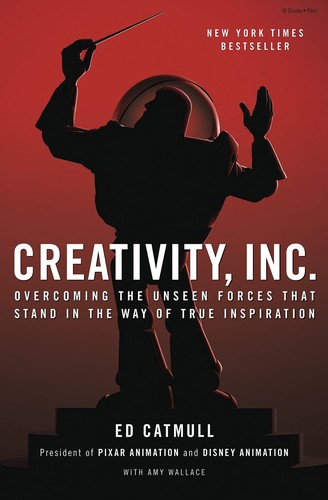

delivered
Get key takeaways from each episode delivered to your inbox.