Jimmy Iovine
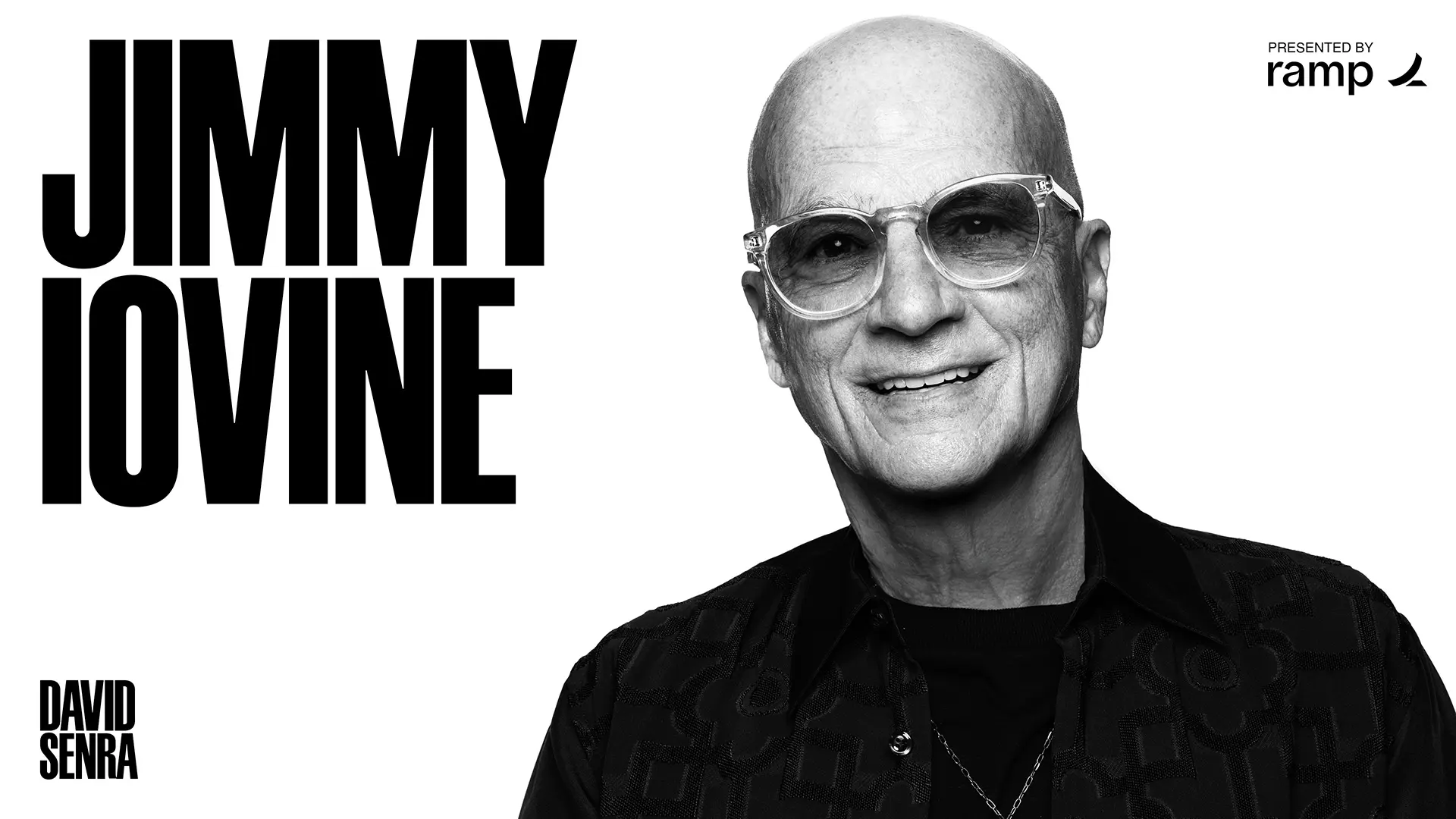
Jimmy Iovine is the co-founder of Interscope Records and Beats by Dre.
Summary
Jimmy Iovine is the co-founder of Interscope Records, Beats by Dre, and the USC Jimmy Iovine and Andre Young Academy. Iovine is widely regarded as one of the most influential figures in the modern music industry.
Growing up in the Red Hook neighborhood of Brooklyn, New York, Iovine was raised in an Italian working-class family. He began working as a recording engineer in the early 1970s, and went on to engineer landmark albums including Bruce Springsteen's Born to Run and John Lennon's Rock 'n' Roll and Walls and Bridges, before transitioning into production with Patti Smith's Easter, Tom Petty's Damn the Torpedoes, Stevie Nicks' Bella Donna, and U2's Rattle and Hum.
In 1990, Iovine co-founded Interscope Records with Ted Field. Under his leadership, the label became one of the most dominant forces in popular music, launching or elevating the careers of Dr. Dre, Tupac Shakur, Nine Inch Nails, No Doubt, Eminem, 50 Cent, Lady Gaga, and Kendrick Lamar. He rose to become chairman of Interscope Geffen A&M Records. In 2006, he and Dr. Dre co-founded Beats by Dre, which Apple acquired in 2014 for $3 billion — the largest acquisition in Apple's history at the time. Iovine subsequently helped launch Apple Music in 2015 before departing Apple in 2018.
His accomplishments include being inducted into the Rock & Roll Hall of Fame in 2022 with the Ahmet Ertegun Award, being honored by the Recording Academy's Producers & Engineers Wing during Grammy Week 2012, co-founding the USC Jimmy Iovine and Andre Young Academy in 2013 with a $70 million donation alongside Dr. Dre, launching the Iovine and Young Center high school program in Los Angeles in 2022 with additional locations in Atlanta and Inglewood, and donating to the city of Compton during the COVID-19 pandemic to fund medical supplies, testing, and meals for residents.
Episode transcript
David Senra: I want to start with what you were just saying before we started recording. I was like, "Rob, hurry up and run the tape." You said, "We live in a corny world."
Jimmy Iovine: We've gone from fame replacing great, right? So it became more important at one point to be famous than to be great, because there's a currency. You had to be great at one time to get a record deal, to do all that stuff, and then that sort of dwindled as time went on, which is fine.
Jimmy Iovine: But it has absolutely replaced great, and what you can do on the internet, and market yourself, and all this other stuff, because you can make a lot of money just being famous. But now, it's taken another leap, which is fascinating. It's gone to attention, and sometimes that leads or contributes to a very corny world. I think social media has the biggest impact that I've seen in my lifetime, you know?
David Senra: Mm-hmm. And that contributes to people being corny for attention on social media, you think?
Jimmy Iovine: Yeah! Well, because you can make money, and the people that don't need money want attention, and they want to be the top of the news, or viral. Most of my friends, if they go viral, they're devastated. Do you know what I'm saying? They're like, "Oh, sh*t!" Or they don't even know.
David Senra: I think not even knowing would be the place that I would aspire to be in. Like, I want to make great work. Obviously, I'm public-facing because I happen to be obsessed with podcasts, and I want to make some of the best podcasts in the world. But I try to just... I mean, it comes from you. I did this video... I obviously did the Founders episode on you because you've been one of the people I most admire for a long period of time. And we did this clip that got almost two million views of your advice about why do horses have blinders on them?
Jimmy Iovine: Yeah.
David Senra: And it's one of my favorite things. Every time I post it, it still resonates. And I post things to remind myself, where it's like, "Hey, I'm chasing after greatness," right? "And it doesn't matter. I can't look left, and I can't look right, and worry about what other people are doing." This is one of the things I most admire about you. We spent a few hours together at your house yesterday. You were very kind to invite me over there again.
David Senra: And you pulled up this insane video from you from 2004, which is four or five years before Spotify was founded, and you essentially were talking about what you saw as the technological shift happening in the music industry. What was that video about?
Jimmy Iovine: I always wanted Interscope to move laterally. I didn't want to keep drilling the same hole. I hate drilling the same hole. That's just me. I get bored drilling the same hole. That's kind of why I've jumped around industries a little bit and got to learn on the fly a lot, you know? But that was around 2000. We had this little TV show called "Jimmy and Doug's Farm Club."
Jimmy Iovine: It was about uploading your music to Interscope, and we would put you on our TV show. And it was fantastic, and it worked. And what I really wanted to do was have a music streaming service of all you can eat.
David Senra: But this is before it was invented. You were talking about the ideal situation before it was actually founded.
Jimmy Iovine: Yeah, but I see online all the time, people talk about shit before it happens.
David Senra: Mm-hmm.
Jimmy Iovine: You know what I mean? That's 10% of the game. The game is getting it right. MySpace was ahead of its time, but it lost the race.
David Senra: Mm-hmm.
Jimmy Iovine: So, I was very fortunate to be at least early enough to have Apple Music get on the board. I had Beats Music, and it went to Apple Music, so at least we became number two. Daniel, who's extraordinary, had the wherewithal and the ability to get the licenses from a record business that didn't understand at all what he was talking about.
Jimmy Iovine: The fact that he wrestled those licenses out... I mean, you can prove it. Because if you look at those deals, those deals are reflective of the iTunes download market, 70/30. That was the same business as the download market. So they just copied that, which is not a great bit model for that.
Jimmy Iovine: Why? Because you have not enough money in the streaming service in order for it to really live, so they got to now go out and find different versions of revenue, right? And they pay 70%, or whatever it is now, 72%, 70, 60. I don't know what the negotiations have been since then.
Jimmy Iovine: And structured in a really odd way, because, let's say, for example, you're married, you have two kids, and you have a family plan. And you and your wife play The Clash, The Police, et cetera, but your kids play Drake and Kendrick Lamar all day.
Jimmy Iovine: Most of the money from your house goes to Drake and Kendrick Lamar. What you're hearing about is that the artists are like... They used to be able to earn a living like that. But now, unless you're in that top chunk of heavy, heavy, heavy, heavy streaming, the money's not really meaningful. So, that's a problem they have to fix. There's no question about that.
Jimmy Iovine: But there's a lot wrong with streaming, in my opinion. It's one-dimensional. It's an ATM machine. You put your money in, you get your music. They don't do anything for the artist. See, the artists want to communicate with their fans, period. That's what they want.
Jimmy Iovine: They want to communicate, they want to market themselves, and the streaming services are still saying, "We'll put you on our list if you're nice to us or if you like us." That's bullshit! You got to allow them to have your audience and let them breathe. Which is what... Not for philanthropic reasons, but this is what TikTok does, that's what Instagram does. You could somewhat promote yourself.
Jimmy Iovine: So the streaming services, to me, are minutes away from being obsolete because of that. You can't rub against the artist like that. You just can't. You've got to give them what they want. They're driving this ship. I learned that in 1973. I came from Red Hook, Brooklyn. My dad was a longshoreman. I walked in the studio with John Lennon, I did three albums with him, and I got my own apartment.
Jimmy Iovine: I realized, "Okay, the rest of my life, I'm going to try to meet, maybe not John Lennon, but people that can do this, and with real talent, and my life is going to be okay. All I got to do is not get thrown out of the fucking room."
David Senra: And you looked at it even back then as like an act of service to the artist that you're working with?
Jimmy Iovine: If not for that person on the other end of the glass, what the hell do I know how to do?
David Senra: You have this great line in "The Defiant Ones," which I've told you I've watched probably at least 10 times, and you're like, "99% of this, when people say, 'Oh, I did this,' or, 'I did that,' in the music business," you're like, "It's complete bullshit. It all comes down to the artist that you're working with."
Jimmy Iovine: Yeah, and today, by the way, a lot of artists are producers. Like Dr. Dre, Timbaland, and some of the younger guys, which I'm just not that familiar with. I've been out of the music business a while. They write the songs, they make the records, but in my day, 80% of it was the artist. Bruce Springsteen wrote the songs, had the idea, had the vision, and you helped. So that's where I was coming from.
David Senra: There's a great point. I'm glad you brought up Bruce, because me and you were talking about that yesterday. I told you I went through his autobiography, and I really think that book changed my life in many ways. I watched one of your interviews. You said one of the best pieces of advice that you ever got was from Jon Landau, because they were working you like a dog, and you were thinking about leaving, and he's like, "Let me tell you." He's like, "Stay in the saddle."
Jimmy Iovine: Well, Bruce was torturing me. He said himself in an interview, I think maybe in that documentary, he said, "An artist needs to be indulged."
David Senra: Yeah.
Jimmy Iovine: Right? Or something like that, when you're striving for something. Well, the truth is that we would try to do something, and I couldn't get it right, and it took three weeks to get a drum sound, like a simple thing, you know?
Jimmy Iovine: But it was really hard, and I got... They brought somebody in to help, and I let my pride get in the way. So I went to Jon Landau, and he said, "I'm going to tell you something you didn't learn in that neighborhood of yours. Your mother and father didn't..." Because he knew my family. "Your mother and father didn't tell you this. This is not about you. This is about Bruce Springsteen and about the record we're making."
Jimmy Iovine: And I'll tell you, for the rest of my life, that just stopped me in my tracks. And because the rest of my life, if you apply, "This is not about me," you could really get somewhere, even if you're not that good.
Jimmy Iovine: Just being humble enough to say that, and not thinking that because you had one success that you're The Beatles, or Elon Musk, or Steve Jobs, or whatever, is that it's not about you. And if you could follow that, it's really good.
David Senra: One of my favorite lines from the history of entrepreneurship actually comes from Henry Ford, and he said that. He's like, "Money comes naturally as a result of service." And some of my favorite entrepreneurs, and what I'm trying to do in my life, too, is like, I'm just going to focus on making something valuable that makes somebody else's life better, and so create an act of service. And then once you do that, just try to serve more people, right? Spread the product, the service, in this case the podcast, to as many people, and then the score will take care of itself. I won't worry about the value coming back to me.
Jimmy Iovine: Yeah.
Jimmy Iovine: The whole thing you got to do is... Look, there's a certain amount of feigned humility that's good, and it works. If you practice it long enough, you actually become somewhat humble.
David Senra: Do you consider yourself a humble person?
Jimmy Iovine: I think I have a humble side.
David Senra: Say more about that.
Jimmy Iovine: I do! Well, I come from a family... My father was a humble guy. He was a dockworker, a longshoreman, manual labor. I don't know a lot of people whose fathers really work manual labor. Where, if it's 90 degrees down the pier, it's 120 in the hull of the ship. When you're carrying coffee bags, they were 100 pounds apiece, right?
David Senra: Mm-hmm.
Jimmy Iovine: All day. But he had pride, but he was humble. And if you're willing to give yourself up for a greater cause, and, in my case, when I was younger, it was an album, right? If you're willing to do that and set your bullshit aside to get someone else's vision, it takes humility to do that. And if you're truly doing that, yeah, I have some humility that I'm proud of.
David Senra: One of the things I love most about Jimmy Iovine is the fact that he spent his career working with the very best people he can, people like John Lennon, Bruce Springsteen, Tom Petty, Bono, Dr. Dre, Trent Reznor, Eminem, and Steve Jobs. Jimmy knew, just like Steve Jobs knew, just like Jeff Bezos knew, that you always bet on talent. In fact, Steve Jobs said so.
David Senra: He said that you must find the extraordinary people, and that a small team of A-players can run circles around a giant team of B and C-players. Jeff Bezos set the tone from his very first shareholder letter when he said that, "Setting the bar high in our approach to hiring has been, and will continue to be, the single most important element of Amazon's success." You must build a team that pursues the A-players. That is exactly what Jimmy Iovine did, and that is exactly what Ramp did.
David Senra: Ramp is the presenting sponsor of this podcast, and Ramp has the most talented technical team in their industry. Becoming an engineer at Ramp is nearly impossible. In the last 12 months, Ramp has hired only 0.23% of the people that applied. That means when you use Ramp, you now have top-tier technical talent and some of the best AI engineers in the world working on your behalf 24/7 to automate and improve all of your business's financial operations, and they do this on a single platform.
David Senra: Ramp gives your business easy-to-use corporate credit cards for your entire team, automated expense reporting, and cost control. That means the longer you use Ramp, the more efficient your company becomes. I run my business on Ramp, and so do most of the other top founders and CEOs that I know. I hear from people that listen to this podcast every day that have switched to Ramp and rave about the quality of the product. Businesses are saving millions of dollars a year by switching to Ramp.
David Senra: Make a wise decision by going to ramp.com to learn how they can help your business save time and money today. That is ramp.com.
David Senra: Every single person that I've either read about that worked with you or has given interviews, they say that you want Jimmy in the room because he'll tell you the truth.
Jimmy Iovine: Yeah!
David Senra: I want to tell this story because it's hilarious, and then I want to ask you about this. I'm reading Bruce Springsteen's 600-page autobiography. The book's so big, you can work out with the goddamn thing.
David Senra: And there's a story in there where he's struggling, and he's trying to do something new, and he's in LA, and he invites... He's like, "My good friend Jimmy Iovine comes over. We play this new album for him, and no one else has heard it." He said you sat there silently for 80 minutes. He turns it off, and then you just say one thing. He goes, "So when are you going to record the vocals?" Because the music was so loud.
Jimmy Iovine: Right. Well...
David Senra: But he said, he goes, "That's why you want Jimmy in the room, because he'll tell you the truth."
Jimmy Iovine: I'll give you the setting. He was doing the album for about two years. It was "The River." And they worked really, really hard on that. And he was doing it, but because I engineered his album, I knew he had a tendency to bury the vocal, right? And I knew those guys really well. I knew Landau and Bruce pretty well by then.
Jimmy Iovine: Actually, part of the story he didn't tell, which was funny, is Tom Petty was sitting next to me.
David Senra: Oh, he shouldn't have left that out.
Jimmy Iovine: Because I was producing Tom Petty at the time. We went over and visited, right?
David Senra: Yeah.
Jimmy Iovine: So he plays us a double album, and the vocal was buried. So I just said to myself, "I got one line to penetrate," because I saw Bruce's face, and he was serious as a f***ing heart attack. You know what I mean? He's at the end of an album, he's exhausted.
Jimmy Iovine: So I just said, "When are you going to sing it?" Right? And it was very funny, but it was very clear. And they did, they went back in, and they remixed the whole album, which was the right thing to do.
David Senra: But where did you get the self-confidence? How old were you when you started working with John Lennon, 20, 21?
Jimmy Iovine: 20.
David Senra: Yeah. You told him the truth, too. Like, where did that come from?
Jimmy Iovine: Yeah.
Jimmy Iovine: Because... Not out of arrogance or confidence, it's comfort. My father really drilled in me from when I was a little kid that wherever you go, the place is better because you're there, because you're a decent person. He used, "You're a humble person, you're a decent person, you're a good person, and you're not going to screw anybody," in his language, right?
Jimmy Iovine: So wherever I went in my life, I always feel comfortable. I'm very insecure in my personal life, which I've grown out of in the last... At 72, hello? Right, thank God, you know? Who the f*** wants to die that insecure, right? But in work, I always had a certain amount of confidence because it came natural to me.
Jimmy Iovine: Nothing came natural to me before that, but when I sat at a console and I put the faders up, the balance came very, very naturally, and people liked it. So, that's kind of where I got some of the confidence from, but I don't know. I was always willing to say what I felt about music, and to anybody, at any time.
Jimmy Iovine: I mean, what's the point of asking me a question if I'm not supposed to give you my answer? I don't understand that philosophy.
David Senra: It's one of the funniest things. I played this clip for you.
Jimmy Iovine: Because, one second.
David Senra: No, go for it. Interrupt as much as you want.
Jimmy Iovine: One of the reasons is, I really don't think I walk in trying to get you to like me, because I believe you do.
David Senra: Say more about this. You told me this yesterday. I feel the same way, by the way. Explain.
Jimmy Iovine: I mean, that shouldn't sound egotistical, because let me tell you something. The people that walk in a room, when you meet a lot of angry people, they think people aren't going to like them, and it's not true. So I'm not saying that I'm arrogant. What I'm saying is that I deal with a lot of people that are very defensive and are aggressive because they think people don't like them. And you know that.
Jimmy Iovine: We know a lot of people that are very visible right now that I can smell they think everybody hates them.
David Senra: And some of them say that privately.
Jimmy Iovine: I'm sure.
David Senra: Yeah.
Jimmy Iovine: I'm sure.
David Senra: Yeah.
Jimmy Iovine: But you can smell it.
David Senra: Mm-hmm.
Jimmy Iovine: And that's not ego, thinking that people are going to like you. It's because I came from a home in a neighborhood where that was it.
David Senra: You have this brutal honesty.
Jimmy Iovine: Well, you're leaving one word out.
David Senra: What's that?
Jimmy Iovine: Brutal honesty, but an enormous amount of respect.
David Senra: Yeah, I don't think you do it in a disrespectful way.
Jimmy Iovine: No, you can't do it in a disrespectful way.
David Senra: I don't even think you'd be in a room with somebody you didn't respect, because you have complete control over your environment.
Jimmy Iovine: What happens is, you think you build these walls, and you get over these fences, right? And you go, "Okay, I'm on the other side. I'm insulated. I'm this, I'm that," and then you have kids.
David Senra: Mm-hmm.
Jimmy Iovine: And the kids bring the world back in, and all of a sudden, if you want to get your kid into school, sometimes you're going to sit across an asshole. You know what I mean? So, the answer to that question is no. So once you have kids, you just go back to zero, because you're... Whatever. But Bruce Springsteen said it best. He says a lot of things best.
Jimmy Iovine: He said, "When I was making music, when I was on 'Born to Run'," in particular, when he was flat broke. I knew Bruce... See, when I met John Lennon... John Lennon was three years after The Beatles broke up, right? So I did three albums with him, but he was already John Lennon. He had "Imagine" already, so he was John, right? Bruce was broke, I mean, dropped from his label, and his career was in trouble, right?
Jimmy Iovine: Publicly, he said, "I didn't want to be rich. I didn't want to be famous. Man, I didn't even want to be happy. I wanted to be great." And when I was 20 to 27, really 20 to 25, I got to work with Bruce Springsteen on two albums, John Lennon on three, Patti Smith on one, and Tom Petty, at that point, on one.
Jimmy Iovine: So I learned, my college years, those impressionable years of college, I spent with those four people. And it was unbelievable. It was such an education about culture, about life, about what's important, about all those things, and I just sucked it in because I was a really... You know Etch A Sketch? I had nothing going on.
Jimmy Iovine: I didn't understand anything. So everything that they taught me, I just breathe in. I was lucky that it was them. And I just took it all in, and it really set the tone for my life about what I-
David Senra: Why?
Jimmy Iovine: Because these are some of the most culturally relevant poets of the 20th century. And when I say poet, I mean the person. I mean, not just that they write lyrics. And they had the right attitude about their work and their product.
David Senra: What was the right attitude about their work or their product?
Jimmy Iovine: Well, they weren't thinking about how to promote it. They were thinking about how to make it. And it's kind of what I liked about Steve Jobs when I met him. I met a lot of these guys since the year 2000, because I'd gone on the road. Once Napster came out, I was like, "Oh, shit, what's going on? I better learn something new," because this trick isn't going to work anymore. The whole music business, I felt, was going to be upside down, and it has been.
Jimmy Iovine: But in those days, I wanted to get a feel for what I called, at that time, the other side. So I met with a bunch of tech companies, and then I met Steve. And he was the only one that had soul.
David Senra: Similar to the same soul of the artists that you worked with in music?
Jimmy Iovine: Yes, absolutely, but the only one. He had soul and feel. And we bonded on John Lennon and Bob Dylan. We would talk about that all the time. And he had the same attitude that they had. Now, he was a businessman. He was a lot of things that they're not, and they were a lot of things that he isn't. But how it translated to me was, you can be in this world and have soul, and you don't find that a lot.
David Senra: Why did you say that when you met him, you're like, "He's the only one that's going to get this done"? Meaning... I think this is pre-streaming. This was, I think, the iTunes.
Jimmy Iovine: Yeah. It was iTunes.
David Senra: Yeah, so you said, "Why did you-"
Jimmy Iovine: I helped him get the licenses for iTunes.
David Senra: You did?
Jimmy Iovine: I helped him, but yeah.
David Senra: But why could he do it and no one else?
Jimmy Iovine: Because he understood. He understood what made artists tick. He understood the why. Most engineers that I've met in my now 25 years of playing in that world, is they don't understand the why of the people that do what I used to do. And that's why it was so interesting.
Jimmy Iovine: I knew from then that tech was going to buy all the media companies. Media companies move in different ways. They don't move like the tech business. And when I met him, I said, "This guy gets it." Now, is he tough? Is he, I don't know, ruthless? Maybe, I don't know. But I can tell you what, he gets it. He gets "it."
Jimmy Iovine: And most of the people I meet in that world know how to do what they're doing, but as far as the particular thing that Steve had, I haven't met another one that has that.
David Senra: Mm.
Jimmy Iovine: Not that they're bad people or anything. They just don't have that. By the way, you can like music. Like, all these guys are always saying, "I love music!" I love chocolate, but I don't understand Hershey's. You know what I mean? I really don't understand who makes chocolate and how they make it.
David Senra: Yeah.
David Senra: Yeah.
Jimmy Iovine: So, you could like music all day, and it's completely... One engineer told me once... We were working on something, there was going to be video involved. He said to me, "I know how that should end. I love television."
Jimmy Iovine: I mean-
David Senra: That's not the same thing, man.
Jimmy Iovine: So, but anyway.
David Senra: Steve called you one day to congratulate you because he said there are all these people trying to make hardware, and they're not successful at it, and you were one of the few people that had no experience, by the way, making hardware that made hardware successfully. The interesting part about that... One, I want to hear more about that, but two, why did he call music "software"?
Jimmy Iovine: You'd know that answer better than me.
David Senra: I've never heard anybody... I mean, I guess it is.
Jimmy Iovine: I mean, it's treated like ones and zeros or whatever, because that's how it comes across, and whatever that is.
David Senra: Yeah.
David Senra: Yeah.
David Senra: He's like, "All these software guys want to make hardware, and they can't."
Jimmy Iovine: Well, he always felt that what was unique about Apple, which was, is that a software company can make hardware.
David Senra: Let's talk about the schools.
Jimmy Iovine: Why are the schools important to talk about? Because it ties into all that is. Occasionally, I run into someone who says, "He's the next Steve Jobs. She's the next Steve Jobs." Well, let me tell you something. There's not going to be another Steve Jobs. There'll be some great people, and there are some incredible people around today that are doing something extraordinary, inventing, creating these companies, et cetera.
Jimmy Iovine: But to be Steve Jobs, you have to truly understand the cross between technology and liberal arts, where those two things meet and interact. When I had Beats, I realized that engineering, design, and culture, the collaboration was not happening the way I thought it would.
Jimmy Iovine: I thought everybody in the world in tech was like Steve Jobs, because he got it. He got the why of everything that I was doing and the people around me were doing. He understood it at its core. It was in his instinct, right?
Jimmy Iovine: What I realized, when I met a lot of other people in the tech business, all the companies and every... They're engineering societies, fundamentally. And I find, you can't generalize it. There are people that aren't like that. But for the most part, why software companies don't make hardware is, they don't truly understand design, right?
Jimmy Iovine: And they can't communicate with it, right? And that's what I think. What the f*** do I know? But that's what I think. That's what I've observed, right?
David Senra: How did you know there was a need for a new school, though?
Jimmy Iovine: Because I realized it was education, because I realized it was siloing in education. Again, what do I know? I know the feel of young people, culture, right? So I see the way kids are being brought up. They're brought multidisciplinary right now. For the last 15 years, they're all being brought up with multiple disciplines. Tech, music, culture, design, they're all fascinated by that.
Jimmy Iovine: So when you go to school, when you go to college, you get siloed. You go to Wharton, you're an accountant. Yeah, they have classes in other... They have an engineering course you could take, but you take that engineering course with 50 other engineers, right? So now you're seeing school... Remember, we started this school 14 years ago.
David Senra: That long ago?
Jimmy Iovine: Yeah.
David Senra: Wow!
Jimmy Iovine: Absolutely.
David Senra: And it was you and Dr. Dre. You endowed it with 70 million dollars to get started.
Jimmy Iovine: Yeah.
Jimmy Iovine: Yeah.
David Senra: Okay.
Jimmy Iovine: Neither one of us went to school.
David Senra: Good point.
Jimmy Iovine: So we had no idea. We're not afraid to do things we have no idea we're doing, and we put our own money up, right? So, I don't care who you are, that's a lot of money, right? But I knew there was a problem, and we wanted to fix it.
Jimmy Iovine: And siloed learning, and you're hearing a lot of people doing it now, trying to bring all the disciplines, but what they do is, they bring it in through the side door. You could take a course at any other school. Our school is a school of collaboration, which you saw.
Jimmy Iovine: So, if you lean towards tech, or if you lean toward the arts, or if you lean toward entrepreneurship, or if you lean toward design, you get to work in concert. You innovate collaboratively, which is what these big companies don't have. They don't really sing in concert, in harmony, and that's what I observed, right? I observed that. I don't know that. I observed that. It's the problems that I had communicating, and the problems they had communicating with me.
David Senra: When's the first time you had that problem? Was it when you were trying to build a product?
Jimmy Iovine: Beats.
David Senra: Beats.
Jimmy Iovine: Beats was a product, not by accident, like the iPod. I wanted culture, design, music, right? I wanted it all connected. So I met Steve Jobs, and he was like, "Oh, this guy gets it all." So I figured everybody did.
David Senra: Did you pitch him on doing the headphones?
Jimmy Iovine: Yeah.
David Senra: Together?
Jimmy Iovine: Yeah.
David Senra: What'd he say?
Jimmy Iovine: He just said, "I don't want to do headphones. You do them." So we went out to a restaurant once, I'll never forget it. We went to this Greek restaurant, and it was after he was sick. But we went out to a restaurant, and it was one of those restaurants where they put the paper thing. They give you the crayons for the kids, and they could draw. And so we're in the middle of lunch. I said, "You know, I want to build this headphone company." He goes, "You can do it. You build a headphone company."
Jimmy Iovine: I said, "Why don't we just do it together?" "I don't want to do a headphone company. You build a headphone company," right? So I said, "Okay." He goes, "Let me show you how." And he called a guy, took all the food. Good thing I don't care about eating one way or the other. I mean, I like food, but it's not the most important thing in my life. And he said, "Give me a marker," and the guy gave him a marker, and he drew distribution, inventory, "It'll kill you."
Jimmy Iovine: On China, you can make things that are made in China, but they can't look like they were made in China. I said, "Holy shit!" I was like, "Holy shit!" And then he would guide me along the way, and he was fantastic, right? But I thought when I started Beats... I'm naive in a lot of ways, and I thought I could find people like that.
Jimmy Iovine: But I found people that are design, I found people that are engineers, and I found people in popular culture. I wanted them all to understand how to collaborate, and I just said, "Siloed learning is bullshit." And now we have five, six high schools, and it's a great place. It's considered one of the best interdisciplinary schools in the country, and I'm really proud of that.
Jimmy Iovine: But again, what do I know about education? Not a lot. I learned a lot in the last 15 years, but really not a lot.
David Senra: Yeah, it started with the instinct that you just didn't think it was being done correctly, and you'll just learn...
Jimmy Iovine: I know how to get something done.
David Senra: Yeah, because this goes back to you just being a natural-born entrepreneur, and you're just like-
Jimmy Iovine: I just know how to get something done. I met this great dean, Erica Muhl. I met her. I said, "Oh, she could do this." She was from the Roski school, but I just felt instinctively that she could do.
David Senra: What's that?
Jimmy Iovine: It's an art school at USC.
David Senra: Okay.
Jimmy Iovine: And then there was the president, Max Nikias. He was an engineer, but I knew he got it. And we built it, and now it's a fabulous school. It's a really fab... A lot of people want to go there. It's fantastic. Look, I work on a lot of things I don't know how to do, but I can get it done. I don't claim to be some great technologist, but I made a great headphone.
David Senra: I think I've studied you a lot. I've talked to you now for hours and hours and hours. I still am trying to figure out, you have this collection of... I'm trying to think of what is your highest talent? I just ran into Steve Stoute at a friend's birthday party, which was really funny, because he worked for you for a long time. I was like, "Dude, I'm seeing Jimmy soon. Can you give me some stories?" And I think you're obviously a phenomenal marketer. Let me ask you, what do you actually think your talent is? And then I want to tell the story that Steve told me.
Jimmy Iovine: My talent, whatever it is, I'm learning more about now, because I'm not running the companies. So, when I used to run the companies, like when I ran Interscope, when I ran Beats, and when I ran what became Apple Music, I just woke up in the day and did everything by my instinct, whatever that was in the morning. It's a little more difficult to do that at Apple than it was when they were my own companies, because they have a giant infrastructure, and they have... I always felt like I was a bit on the tail that's wagging the dog. I used to live on the dog, and I... The whole thing about...
David Senra: But when you were running the company, you'd wake up and just instinct.
Jimmy Iovine: Purely, or listen to people, and grab a piece from here and a piece from there, and just synthesize.
David Senra: Did you go after difficult things on purpose?
Jimmy Iovine: I only went about what I felt. When Dre said to me...
David Senra: That was one example, because Dre comes to you, he plays, is it "The Chronic"? What is he playing for you the very first time, or is it, like, some song?
Jimmy Iovine: "The Chronic." Finished.
David Senra: And I think you ask him, "Who engineered this?"
Jimmy Iovine: Right.
David Senra: And he's like, "I did." And he's like, "Well, who produced it?" And he's like, "I did." And then you're like, "Oh," within a few minutes of meeting him, you said something like, "He's going to define Interscope."
Jimmy Iovine: Right.
Jimmy Iovine: Right.
David Senra: But then he had a very hairy situation you had to get him out of, right?
Jimmy Iovine: It was impossible. It was everything you... Watching these shows and stuff, you think it is.
David Senra: Okay, so what was going on?
Jimmy Iovine: Tenfold.
Jimmy Iovine: Well, what happened was, I connected dots, which I think I do really well. I saw him and Snoop. I finally heard hip-hop with the 808 bass, that big bass sound. Producers couldn't harness it. All the records, whether it was Public Enemy or any of those records made in New York, they couldn't harness that, and to where I understood it. Dre was the first person to really harness it and give it the power that it deserved, because he gave it the clarity that it deserved. It's very hard to do. So, I understood that, and when I saw that, combined with Snoop and Dre, and the image that they were projecting, and they were talking about, I said, "This is The Rolling Stones." I said, "This is Mick and Keith. It scares you, but the music brings you in." So, I'm like, "This has to work." I didn't have to understand the music, which I didn't in the beginning. Now, I think I do, you know? I mean, not as much as some of the pioneers of hip-hop, but I understand it.
David Senra: Were there lawsuits? Were they signed? What did you have to untangle?
Jimmy Iovine: There were three lawsuits. There was a RICO lawsuit, right?
David Senra: RICO?
Jimmy Iovine: That came with Sony. Yeah, yeah, yeah. There was...
David Senra: Wait, I thought... Is RICO money laundering? What is...
Jimmy Iovine: About gangsterism.
David Senra: Gangster. Okay, okay, that's right.
Jimmy Iovine: That was from the Eazy-E thing.
David Senra: Oh, okay.
Jimmy Iovine: Right? This is in the older movies. I'm not talking out of school. So, there was a RICO lawsuit. There was a guy in prison who supposedly put up the money for one of the albums, the first album.
Jimmy Iovine: So, he was suing them from prison. There was Sony, and there was a company that distributed Eazy-E's label that was suing as well, or challenging as well. So, I had to settle all those things out, which is kind of like if you see something great, but there's T. rex sitting on it. And most people would avoid, say, "Look, there must be something else to eat."
David Senra: And you just know, "I only want to work with great"?
Jimmy Iovine: If I see something new and great and unusual, I can't stop. That's why Beats attracted me so much. I looked at it and said, "Oh, shit, people are wearing these things on their head, and they look like medical equipment." There's nothing attractive about a headphone.
David Senra: The funny thing about that is there was opportunity hiding in plain sight, and you're like, "What's our competition, guys? Bose? It's... They want to... There's no music. It's, like, silence.
Jimmy Iovine: Well, their marketing thing was you can go to sleep with us.
David Senra: Yeah.
Jimmy Iovine: I'm like, "That's ridiculous." What a marketing thing, right? You know, so I said, "No, no, no, no. We want to wake you up."
David Senra: Okay, hold on. I want to pause here, because I text Daniel Ek, right, founder of Spotify, and I was like, "Tell me, give me some ideas," because he's known you forever. He told me the first time we ever had dinner, he's like, "I only lost two deals in my life, and both of them were to Jimmy Iovine," which is hilarious.
Jimmy Iovine: Well, that just means my bullshit was better than his. You know, it doesn't mean... He's so... What he did in the music business, man, no one has any idea how hard it was. Patti Smith had an incredible line. It is, "People have the power, the power to dream, to rule, and to wrestle the world from fools."
David Senra: Ooh, that's good.
Jimmy Iovine: Okay? That's what Daniel Ek did, okay? So, anytime you get a guy like that, I didn't beat him at anything. I just must have been slicker than him, that's all.
David Senra: To me, in my opinion, wildly underrated still to this day, one of the most fascinating people to me. But he's like, "Ask him about the origins of Beats." Did you do the headphones before you did the streaming service?
Jimmy Iovine: Yes.
David Senra: So, hardware first, that was the initial idea?
Jimmy Iovine: Yeah.
Jimmy Iovine: It was all about moving Interscope laterally. I think companies should move laterally, and they don't. Most companies don't move laterally out of fear. That's why what I'm doing with Complex right now, which we'll talk about in a minute. I got the opportunity, I came out of retirement a bit because I got another bite at the Apple, because I couldn't finish my thought on streaming.
David Senra: Well, what do you mean by lateral, though?
Jimmy Iovine: Like, for example, Interscope was a music company, right? I wanted to make the hardware to listen to it. I wanted to have a streaming service. I wanted to distribute my own music. So, I wanted to have the complete thought. I wanted to make the music, have the artists that make the music, distribute the music, and then have the instrument you listen to it on. So, that's moving laterally. I would've also wanted, which I'm doing now with Complex, to have e-commerce, so artists can communicate in different ways with their audience.
David Senra: So, these businesses that other artists, let's just use musicians for example, are starting now, you were the only one that did it inside of a record label.
Jimmy Iovine: That's right.
David Senra: So, you have this idea for Beats. You see this opportunity. Obviously, Dre's known for the best sonics ever, so it makes perfect alignment with him.
Jimmy Iovine: Right.
David Senra: This was Steve Stoute's point to me, where he's like, "Jimmy's just a phenomenal marketer." I'm going to come back to Beats real quick, I want to close that loop, where he's like, "Ask him about the fact that he's bringing these super controversial artists at the time." They're not that well-known, I think it was Dre and Snoop, and they wouldn't play them on the Top 40. And he says, "Jimmy did something genius to get Dre and Snoop played on the Top 40." What did you do?
Jimmy Iovine: Well, I just considered it reflex. What we did was, I said, "Okay..." You got to understand, whenever there's gatekeepers on anything, your job is to figure out a way around the gatekeeper with something you really believe in. Whether the gatekeepers are people at your own company or people at radio stations, or wherever the gatekeepers are, your job is to skate around them, right?
Jimmy Iovine: So, I said, "Okay, let's do this. Let's make a minute commercial of "G Thang"," which was Dre's first single with Snoop, right? I said, "Let's make a 60-second spot. Now, I don't want anything said before it or after it. I just want it to play."
David Senra: The radio's not going to play my song, that's fine. I'm going to buy ad space on the radio, and play the song.
Jimmy Iovine: Yeah.
Jimmy Iovine: Yes, and we did it on the 50 top markets. Spent a fortune doing it. And then simultaneously, we got it on MTV, because they didn't play rap music, either. They played MC Hammer, but they didn't play, I guess you'd call it gangster rap or whatever music is today, they didn't play that then, right?
David Senra: How'd you get on MTV?
Jimmy Iovine: I said, "This is the same thing as Guns N' Roses, period."
David Senra: You've said that twice now. You said Snoop and Dre is Mick and Keith. You say, "This is just like Guns N' Roses." What does that mean?
Jimmy Iovine: It means that it's counterculture, that people are going to relate to it, people that feel marginalized, and feel isolated, and feel angry. And it represents an entire culture that people are going to relate to. And that's what Guns N' Roses did, that's what The Rolling Stones did, that's what Nirvana did. That's what James Brown did. It's that thing that moves people. So, yeah, I instinctively felt that.
David Senra: So, who do you go to at MTV? You just go to the top guy? How do you actually get it done?
Jimmy Iovine: Yeah.
Jimmy Iovine: I said, "Play this." He goes, "I can't play this," and he had the remote in his hand, his TV was on behind him. I said, "I can't, because we play this," and it was three women singing, and then the next video was a guy, and all this, but it was pure pop music, right? And he said, "I don't know how to program it." I said, "Put it next to Guns N' Roses, and if it doesn't work, please, never play an Interscope record again."
David Senra: Wow.
Jimmy Iovine: So, he put it on.
David Senra: You had that much belief?
Jimmy Iovine: You don't have to be talented to know that. I mean, it's just f****** obvious, you know what I mean? Ask Rick Rubin, he knew it before me, right? So, but what it caused was all these kids, sons of senators, daughters of senators, Congress people, business people, they came home and wanted those records.
Jimmy Iovine: And when that happened, that's what led to the whole falling out with Time Warner that we had when Interscope got thrown out of Time Warner over lyrics. Because Bob Dole, DeLores Tucker, Bill Bennett, right, who was the education czar, or whatever he was at the time, you know, all those guys... Bill Clinton went on the floor of the Senate, and Bob Dole said we were... Well, somebody said we were a mustard gas factory or something like...
David Senra: Yeah. I remember that.
Jimmy Iovine: But I've been involved with... And I was involved with John Lennon. They tried to throw him out, but when I was doing his album, he had to go to court every day during "Walls and Bridges," because Nixon was trying to throw him out of the country. That was real.
David Senra: Yeah, that's insane.
Jimmy Iovine: That was real.
David Senra: Yeah
Jimmy Iovine: Because he was against the war, right? So, I'm used to that. I'm like, "So what?" I mean, yeah, I didn't care what those people were saying.
David Senra: So, you got him on MTV, you got him on the radio. Once you play the ads on the radio, then people start calling the radio stations like, "Play that song that is an ad."
Jimmy Iovine: Of course.
Jimmy Iovine: Of course.
Jimmy Iovine: Of course.
David Senra: No one else is doing this.
Jimmy Iovine: Only because I wouldn't do anything illegal, because I'm psychotic about doing anything that is illegal or anything. So, I just said, "This is legal. Let's do this." I mean, the record business, God knows what they did to get records played. But they weren't going to play these records, there was no chance. And look, there's nobody better at this, no one. The greatest record executive of all time, of all time, is a guy named Berry Gordy.
David Senra: I've heard the name, but know nothing about him.
Jimmy Iovine: Well, he founded Motown.
David Senra: Oh, okay.
Jimmy Iovine: During Jim Crow, you know what I mean? So, his artists weren't even allowed off the bus. They were considered race records. He had to get those records played. He had to get that into the white market. What he did, talk about wrestling the earth from fools. Berry Gordy, miracle what he did, and he made the greatest music in the world. So, when he pushed, it stuck. See, if you know what you have is going to stick and if you are passionate about it, then just break through that wall, because there's going to be a lot of resistance, but if it sticks, you win.
David Senra: Yeah.
Jimmy Iovine: It has to stick, though.
David Senra: There's actually a lesson for entrepreneurs in there, too, because, I re-read Jeff Bezos' shareholder letters, three or four times. He's one of the entrepreneurs I most admire, and he realized he had a "sticky product" with Amazon because he saw that once you become an Amazon customer, not only do you order, but you reorder, and then you ask Amazon to carry more things. And so, he tells a story of this guy emailing him, or he emailed, like a thousand customers saying, "Hey, you know, you bought a book. What else would you buy?" And one guy goes, "Can you sell me windshield wipers?" And he's like, "Oh, my God, we're going to be able to sell anything like this." And so he goes, "Okay, if we have high retention with my product," which he knew at Amazon, "that means I have a winning system. That means I need to invest heavily in introductions to new customers, because the ten million or whatever the number is, let's say you spend a hundred million in new customer introductions and advertising, marketing in this year, it's like, these people are going to be with me next year, the year after, a decade."
Jimmy Iovine: Right.
Jimmy Iovine: Well, if you're an entrepreneur and you see something work, you can extrapolate what else will work, right? And that's what he did. But, I mean, these guys have built businesses that dwarf anything I've ever even dreamed of, you know? But they can extrapolate. Like, for example, Beats, right? I was always frustrated that the music industry didn't have customers. It drove me crazy.
David Senra: What do you mean they don't have customers?
Jimmy Iovine: They don't have a customer. They still don't have a customer.
David Senra: They don't have the relationship with the end user, you mean?
Jimmy Iovine: Right. Instagram does, TikTok does, MTV did.
David Senra: Right.
Jimmy Iovine: Constantly, the streaming services do. For some reason, the music industry is allergic to a customer, okay? And I don't know why, but they don't have an end user.
David Senra: What was the first time they outsourced the relationship with the end customer? Is this just...
Jimmy Iovine: Always.
David Senra: So, even when you're selling it through record stores back in the day?
Jimmy Iovine: Record stores, radio, MTV.
David Senra: So, you would've controlled... So, when you said you want to go lateral, the entrepreneurial version of this, the business version, you want to vertically integrate. You want to vertically integrate all the way down.
Jimmy Iovine: Yeah, yeah.
David Senra: So, you would've even had Interscope if there's...
Jimmy Iovine: Yeah, but I want to vertically integrate, if you call it that, to fashion. I mean...
David Senra: Because you guys are controlling the culture. They're having the influence.
Jimmy Iovine: We're causing it.
David Senra: Causing it, ooh.
Jimmy Iovine: My artists are causing the culture. Artists that I work with, rather, putting it clearly. For example, we put Beats in all of our music videos, when we first started.
David Senra: You were insistent and relentless with this.
Jimmy Iovine: So what? But, you know, I...
David Senra: No, I'm not criticizing.
Jimmy Iovine: But I put a lot more money in the videos. Everybody benefited, you know what I mean?
David Senra: Yeah.
Jimmy Iovine: And, it was a time that the industry was desperate. So, yeah, man, we did that, and it worked.
David Senra: Worked is an understatement.
Jimmy Iovine: Yeah, yeah. It worked, and we built the number one headphone company in the world. When we sold to Apple, we were number one in 50 countries. Man, we were number one in Germany, and Sennheiser was number two. We were number one in Japan, and Sony was number two. I still can't believe it, to be honest with you.
David Senra: This goes back to, like, you have this instinct. I'm still trying to figure out, your web of really special talents, and marketing is definitely one of them. You have this weird instinct to just make the right decision.
Jimmy Iovine: Marketing is empathy.
David Senra: Say more.
Jimmy Iovine: It's empathy. Marketing is understanding who you're trying to communicate with, and understand them, and understand from where they click and come. That's all marketing is. You can call it marketing, what I do. I don't think it's marketing. I guess I have a feel for the market, of who I want to sell things or communicate with, right? I'm not Bob Dylan, by any stretch of the imagination, but Bob Dylan, to take it to an extreme, had a feel for an entire generation, and he made his product. He made it because he was a purist. He wanted to do something great, but it turns out that was marketing. The product is marketing if you make the product great. Steve Jobs is a great marketer. So, yeah, if you know your product and you know your audience, I guess that's a great marketer, but all it is is empathy, understanding what somebody else is feeling on a massive scale.
David Senra: All of the founders and extreme winners that I have studied have this one trait in common: they have excessively high energy levels. If you're going to be the best at what you do, you need to maximize your energy and output, and that's why I've partnered with Function. I signed up for Function long before they were a sponsor of this podcast, and when you sign up, they ask you what your health goals are, and my response, in all capital letters, was MAXIMUM ENERGY. Function provides access to comprehensive blood tests and other lab testing to help you improve your health, so you can perform at your highest level.
David Senra: Function has made it easy for me to monitor and improve my internal health markers so that I feel at my absolute strongest. As a member of Function, you get access to test over 100-plus biomarkers, from hormones, to toxins, to markers for heart health, inflammation, and stress. Function gives you a straightforward analysis of all your results, along with advice from expert doctors on how to improve things like your testosterone, your stress hormones, how to reduce toxins in your body, and much more. The platform is absolutely beautiful and provides an easy-to-understand picture of your overall health.
David Senra: Once you try Function, you will immediately understand why it's the fastest-growing health platform in the country. You can now join Function for just 365 dollars a year. That's a dollar a day. Learn more and join by visiting functionhealth.com/senra, and use code SENRA25 for a 25 dollar credit towards your membership. That is functionhealth.com/senra.
David Senra: So, how long did you have the headphones before you decided... You bought like a small streaming service, right?
Jimmy Iovine: Yeah, it was about... I bought it in probably 2011.
David Senra: Like, how long were the headphones going?
Jimmy Iovine: Three years into it.
David Senra: So, three years into it, and it's called... What was the... I forgot the...
Jimmy Iovine: MOG.
David Senra: Okay.
Jimmy Iovine: Yeah.
David Senra: And you rename it Beats.
Jimmy Iovine: Yeah, Spotify had three million subscribers at the time we sold to Apple. I renamed it Beats Music, but I realized I couldn't scale it on my own, because as you know, with Spotify, it costs a lot of money to do that. And I realized I can't do this on... Me and Dre, we can't do this on our own. So, we brought Trent Reznor on, right, who's an incredible talent. Talk about understanding technology and the arts and culture, and his partner, Atticus Ross, they make some of the greatest music in the world right now. So, there's all the movies and everything he's doing.
David Senra: So, you try to run it, and then you realized you had a...
Jimmy Iovine: I can't scale it on my own.
David Senra: Can't scale it on your own.
Jimmy Iovine: I wanted it to be at Interscope, and for one reason or another, we couldn't get that done. The guys running it at the time weren't in charge, really. There was the whole Vivendi thing and all that stuff. I went to them early on. I said, "I want to build businesses with your artists." And the guy actually said to me, he goes, "Jimmy, I hear you. We paid a lot for your company, I have respect for you, but we want to sell CDs, and that's what we do." So, that's how...
Jimmy Iovine: Part of my story that not a lot of people know is, I was the CEO of Interscope. I had to get the right to start another business. I asked Vivendi to give me 100 million dollars to Interscope, to start businesses with the artists inside Interscope. And in fairness to them, they didn't see that. They didn't want to do it. So, I said... My contract was up, and I said, "I'm not going to be the guy to sell the last CD. I got no interest in this. You know, I'm going to do something else."
David Senra: They didn't see it at the time, that they were in a dying or a dwindling business?
Jimmy Iovine: Because it wasn't. This is 2003.
David Senra: So, you saw it early?
Jimmy Iovine: It scared the hell out of me. For some reason, the day it started, Napster, I said, "This is toast," because I understand the market. I understand why the audience would say, "I'd much rather be doing my homework and not have to ask my mother to take me to a record store," okay? That simple impulse, and it's free? That's a feel that an entrepreneur has.
David Senra: Once you see it, you can't put the genie back in that bottle. There's just no way it's going away.
Jimmy Iovine: So I knew that, and then I went and met with people at Intel and places like that, and I heard these guys talk, and I'm like, "Holy shit!"
David Senra: What were they saying that made you say, "Holy shit?"
Jimmy Iovine: One of the things the guy at Intel said to me is, "Jimmy, I got to tell you something. Your story is compelling." He said, "But not every industry was built to last forever." I was like, "This guy's smarter than me." You know, where do you want to start, right? So, I'm like, oh, shit, right? So, I went to them and I said, "I can't just be in the record business."
David Senra: The music almost goes like something you sell to something that markets another product, is how you actually monetize it.
Jimmy Iovine: I don't know what it is. I just call it lateral. I can't break it down to what it is. I just know the feeling.
David Senra: You told me yesterday, you're like, "I'm just a hustler."
Jimmy Iovine: I know how to hustle. That's not a bad word.
David Senra: Oh, I do, too. I know. I love it.
Jimmy Iovine: By the way...
David Senra: I feel the exact same way.
Jimmy Iovine: The greatest baseball players in the world were hustlers. That's what I call a hustler.
David Senra: I don't think it's a pejorative. I don't think it's a negative term.
Jimmy Iovine: Well, people think it is.
David Senra: Oh, not me and you, though.
Jimmy Iovine: It's not. What I'm saying is, I know how to hustle, meaning I'm willing to work harder than the next guy.
David Senra: What you did for Dre, when you first met him, Dre and Suge, you're like, "Well, this guy's great. There's an asset in front of me, and the asset is a big hairy problem that no one else wants to solve, and if I solve, if I can kill the T. rex that is sitting on top of this genius then I get to work with the genius."
Jimmy Iovine: Right.
David Senra: And that is hustling.
Jimmy Iovine: That's right.
David Senra: That is being resourceful. That's the same thing.
Jimmy Iovine: As Dre would say, "It's a little bit of street knowledge."
David Senra: Yeah.
Jimmy Iovine: You know?
David Senra: And what is street knowledge? It's an understanding of people as they actually are.
Jimmy Iovine: Well, because you have no... What street knowledge is, is you have to move around because the world isn't... It's tough. You know, in any neighborhood, I don't know what you call it, lower class or whatever it is, my dad was a longshoreman. We lived in an Italian neighborhood in Red Hook, Brooklyn. You know what I mean? So...
David Senra: You lived in a neighborhood with actual gangsters, mafia.
Jimmy Iovine: Well, yeah, but I wasn't... I mean...
David Senra: No, I know you weren't, but like...
Jimmy Iovine: My family weren't, you know?
David Senra: Yeah, I know, but you were in the neighborhood that you know, the mafia was everywhere.
Jimmy Iovine: Yeah.
Jimmy Iovine: Oh, yeah. Well, my neighborhood was an Italian neighborhood. Only in America. I mean, everything was the same. There's four fish stores on a restaurant. There's three pizza places on one street. You know, it was like that. And my father worked down at the docks, and everybody worked down at docks.
David Senra: I know you were saying it's instinct. Maybe there weren't words around this idea, you just understood it, but you saw it's like a... If I'm a college kid, and I was at this time, and I was using Napster and Kazaa, LimeWire, and all the other ones, I don't have to go to the store. I'm definitely downloading this, and now we have MP3 players, so the record store's gone.
Jimmy Iovine: But one of the hardest things that I had to do when I look back on my career, life, whatever it is, I've had a lot... Well, we all have a lot of hard things. One of the hardest things was getting Universal, Vivendi to give me permission to build Beats. To build products with my artists. Beats came three years later.
David Senra: This is when you... Your response to them was, "I don't want to be the guy that sells the last CD."
Jimmy Iovine: That's it. This thing is not going to work the way it is right now. We have to move laterally, and I just instinctively knew that, and I wasn't going to do it. I was going to quit.
David Senra: But it's an interesting idea if you sit down and actually think about what's happening. For the whole time of recorded music industry, you made the music, you record it, and then you sold it physically, right? And you're already understanding, oh, once it's digital and free, that means we have to sell something else, that we're not going to be able to sell the music anymore.
Jimmy Iovine: No, I knew we were invaded.
David Senra: Invaded.
Jimmy Iovine: Okay? And I knew that something had to change, and I didn't know what it was, but I knew we couldn't just do only what we're doing. And that's like a music instinct. You know who knew that? The Beatles knew that. If you listen to The Beatles, every album was new and different. They reinvented themselves on every album, you know? And they keep it moving. You know, the great company, that's why Apple was so great, it kept it moving, kept innovating and moving it.
David Senra: Mm-hmm.
Jimmy Iovine: And I felt that the record business needed to stop doing... Not just do what they were doing. And that was really hard, because they were paying me a lot of money, they just bought my company for, I don't know, hundreds of millions of dollars, right? But I wasn't going to do it. I knew it was not what I wanted to do. And the problem is, people say, "Well, the record business turned out okay." Well, it did, and it didn't. Of course, Spotify is worth 150 billion, and the entire record industry is worth half that together.
David Senra: I think it's really smart. It's like, for the longest time, we sold it. Now, you can't sell it anymore, I'm talking about music, so it... And you're not going to agree with this, it becomes advertising or marketing. These songs become advertising or marketing for another product you can sell, whether it's concerts, they were selling concerts back in the day, products, all this other stuff that they're doing. You had that insight in the music industry, before anybody else.
Jimmy Iovine: No, not before anybody else. Hip-hop saw it.
David Senra: You're right, because they were doing the shoes, the sneakers, the alcohol.
Jimmy Iovine: Yes.
Jimmy Iovine: Yes. Def Jam, Adidas, man, all these...
David Senra: Did they influence your thinking on this?
Jimmy Iovine: Absolutely.
David Senra: Oh.
Jimmy Iovine: I owe African American culture so much. I have a debt to Black culture.
David Senra: Why do you think rap... Because I grew up on hip-hop. I told you, it's still almost all the stuff I listen to now. Why did they figure out how to monetize, I hate using that word, or make money off music through other, besides selling music, before anybody else did?
Jimmy Iovine: Because they're practical, and they see the truth, and they saw what it was.
David Senra: What's the next bite at the apple?
Jimmy Iovine: The record industry now gets the luxury of rewriting the book with AI. They can...
David Senra: AI-created music?
Jimmy Iovine: Yeah, created music, many things. It isn't just creating a song. It's how you listen to music, everything. It can affect everything. So, there is, let's say, hypothetically, I'm right in the record industry, the word wrong is not fair, didn't take advantage of it as... Didn't optimize the streaming thing. What would optimizing be? They would have their own distribution. That would be optimizing, and they don't, right? They have another bite at the apple right now. It could start to ring the bell all over again, Etch A Sketch, and go back into it. But where they can make a giant mistake, in my opinion, okay, is if they start licensing their music to every dog that comes in the door.
David Senra: Which is their normal route of doing things.
Jimmy Iovine: Yes. You got to build enterprise around AI now. You can't just give the enterprise to someone else.
David Senra: But you know everybody in the music industry. When you tell them this, what's their response, the people in power right now?
Jimmy Iovine: Well, all I can tell you, well, I can't tell you everything that I'm doing, because I think the labels are now realizing it, and they're getting really... All I can tell you is Universal Music has invested in a project that we're doing called Complex, that has the ability to go on and do a lot of these things that I'm talking about. It's media, it's live, creating Complex Con, and it's e-commerce, right?
Jimmy Iovine: I want to help the labels, if I can, build enterprise around AI, and not just be licensors. I felt that way about streaming, and I feel even stronger about that. They shouldn't be afraid of the tech. They shouldn't be. You don't have to understand something fully to do it, and I'm proof of that. I don't understand f***** anything, you know what I mean? But I know how to get it done, you know? I knew how to build a... I didn't know how to build a headphone. People say to me, "Well, you're a recording engineer." I said, "Bruce Springsteen and Keith Richards are the greatest guitar players in..." You know, my favorite. You know, Keith Richards is incredible. If you gave him two pieces of wood, he's not going to come out with a guitar. You know? So, building a headphone was as far from me and Dre as you could possibly imagine, but we figured out how to do it.
Jimmy Iovine: So, that's how I think is a possibility now to rewrite the book. But if you start seeing licenses pop up to all these other companies, they're going to feed a dragon that is absolutely going to eat them. Absolutely.
David Senra: Five years from now, do you think we're going to have complete AI-created music that is at the top of the charts? Isn't it already happening?
Jimmy Iovine: I don't know. Let me tell you, though, I don't f***** know. If I could predict the future, man... You know what I mean? I wouldn't have health insurance. I have fire insurance on my house. I can't predict the future. I overpay for everything. I'm a retail guy. But, it's like I do know one thing, but I don't understand. I hear a lot of these artists coming out against AI. So, I come from a place where to get a record deal, I'm going back to when I was a kid, right, in the music business, you had to sing. You had to really sing. Sometimes you had to write, but if you're Barbra Streisand, you had to sing. You're Frank Sinatra, he had to sing. Those people could really sing.
Jimmy Iovine: You know, Sam Cooke, woo, could he sing. He could sing and write, you know what I mean? Incredible, right? Stevie Wonder. There's a lot of people out now on the charts right now, or being really successful, selling out arenas, that can barely sing "Happy Birthday." So, what I say to the people that are challenging AI, and they're doing that because of technology...
David Senra: They're like, Auto-Tuned and stuff like this.
Jimmy Iovine: Whatever the technology is.
Jimmy Iovine: So my question is, what's the difference between somebody who can barely sing "Happy Birthday," which is all over the charts right now, to someone who can't sing "Happy Birthday" at all, who's just a marketer, and a really clever guy or girl that sat in their mirror and did all the moves that everybody does? They watched Madonna like everybody else and said, "I could do that. I can act like that." So I don't understand the difference.
David Senra: Yeah, because the amount of technology invented for the music industry since you've been in it is... You told me yesterday that Prince did a whole album without a drummer. And I was like, "What does that mean?"
Jimmy Iovine: Well, he's one of the first people to use the Linn drum machine. See, the Linn drum machine... I was producing an album in the '70s, and I brought this guitar player in, who... I think it may be the first computer I ever saw. But he had a computer on the session. It was 1977, right? And he had a computer on the session. And in between takes, rather than listen with the rest of us, he'd go put a pair of headphones on and go on the computer and do all that.
Jimmy Iovine: And finally, I said to him, I said, "Hey, man, what are you doing? I mean, this is a session. We're paying attention to the music." He says, "Well, I'm creating a drummer. I'm creating a machine that's going to play the drums." I said, "Well, thank God," because I always had difficulty with drummers. I always felt the way you sit on the beat is impossible. You know what I mean?
Jimmy Iovine: Because everybody hits the one, hits it on, or before, or after. It just drove me crazy working with drummers my whole life. And he said, "I'm making a drum." The guy's name was Roger Linn. Roger Linn's a guitar player.
David Senra: That's who made the drum machine?
Jimmy Iovine: The Linn machine.
David Senra: I didn't know that.
Jimmy Iovine: The Linn drum machine.
David Senra: Oh, wow.
Jimmy Iovine: Yes. I've seen technology. I grew up with it, so everybody's afraid of AI. AI is going to make music better. AI is not going to thwart great people. There will always be the next Billie Eilish. There will always be the next Kendrick Lamar. There will always be the next great talent. But there's also going to be a lot of bullshit.
David Senra: Yeah.
Jimmy Iovine: Right? So I think the bullshit will get better. I really do. I think AI's going to help those people that work like that. And by the way, a lot of people that we know right now, great talent, are using AI. They're just not telling anybody.
David Senra: Mm-hmm.
Jimmy Iovine: AI will never be able to write "Blowin' in the Wind" by Bob Dylan, not in anyone who's listening to this, or in my lifetime, for sure. AI will take the middle of music, the average music, I believe, and make it better, because they're great tools. I'm all in on AI music, all in, and I don't think it's going to hurt the greats.
Jimmy Iovine: But more importantly than anything that I think, is that now it's time for the artists and the labels to get on the enterprise side of it.
David Senra: And this is what I wonder if you would agree with or not, because when you were just telling the story of the person who invented the drum machine, he was inventing it out of necessity. He needed a sound for what he was making. I worry that if these are professional managers in the music industry... Think about the difference between a professional CEO and a founder.
Jimmy Iovine: Yeah.
David Senra: Right? You thought completely different, because you're an entrepreneur. You were instinctively an entrepreneur. You were an entrepreneur before you even knew you were an entrepreneur.
Jimmy Iovine: Well, a record producer's an entrepreneur.
David Senra: Record producers, but the people running the big companies-
Jimmy Iovine: But I was a record producer.
David Senra: Yeah, exactly. You had that instinct. But there's one, almost they don't see the necessity for it, and two, I don't even know if a professional manager can then reinvent their business to survive the next technological wave. You disagree with that?
Jimmy Iovine: I think what's happening is, the music industry is finally moving into things they're afraid of. They just need some light. What you don't want to do is license the next "AI Spotify" and say, "Give me 3% of your company." That is the greatest deal anyone's ever made. Who gives a shit who owns 3% of my company if your company's Spotify, right? I mean, it's absurd. So, they have to grab the enterprise value of the new technology.
David Senra: But don't you think it's going to come outside? One of my heroes is James Dyson, who I told you about.
Jimmy Iovine: Who?
David Senra: James Dyson, the vacuum cleaner guy.
Jimmy Iovine: Oh, yeah.
David Senra: And one of his... "Who?" I love it. And one of his heroes was Buckminster Fuller, and Buckminster Fuller has this quote where it's like, "If you want to change things, you don't fight the existing system, you build your own. Like, you build a new version of that." And I almost feel like what you're talking about has to be done outside.
Jimmy Iovine: Anywhere there's not a founder, usually it has to be done outside. You don't usually see big companies innovate.
David Senra: That's my point.
Jimmy Iovine: I'll tell you what, I don't know this company. I don't know the guy. I don't know anything, but I tried a pair of those new Facebook Ray-Ban glasses. They made a good product.
David Senra: Yeah.
Jimmy Iovine: But that's a founder. Big companies always have the advantage. They have bureaucracies, and they don't have the entrepreneur as the leader anymore. So, can they innovate? That's the question. Can they innovate? And look, I'm a terrible businessman. I had to learn business at Interscope.
David Senra: You are not a terrible businessman.
Jimmy Iovine: I know how to do what I know how to do, but I had to learn business for defense when I got into the record business.
David Senra: Oh, that's interesting.
Jimmy Iovine: 1990, I had no f***ing idea how to run a company. None, zero.
David Senra: Is this when David Geffen sold Geffen?
Jimmy Iovine: Geffen, yeah.
David Senra: Can you tell that story?
Jimmy Iovine: Well, David Geffen is brilliant, right? He comes from right near my neighborhood in Brooklyn. He's exactly 10 years older than me. He's like 5'7". I'm 5'7". He's Jewish. I'm Italian. We were buddies, right? He was great with artists. He signed Joni Mitchell, and The Eagles, and all this great shit, right, in his life. So I felt real camaraderie with him. I'm producing records.
Jimmy Iovine: I'm actually in the studio for 20 years making music. They go on, they sell all these records. I wake up one day, he sold his company for 500 million dollars. I'm like, "I'm from Brooklyn, you know, I want to make a lot of money!" I'm not embarrassed by that. My whole life, I've been like... But I didn't have any money.
David Senra: Yeah.
Jimmy Iovine: I had money as a record producer, but that's a certain amount of money. I wanted to live like I saw on TV.
David Senra: But you were like... Hold on, what I love in "The Defiant Ones," because everybody feels this way, especially if you didn't grow up with money. I know exactly what you're talking about. And I think you might've been an engineer before you were a record producer. This story comes from when you were an engineer, not a record producer. The producer comes in, he's got a leather jacket. You're like, "What the hell is this?" He's got a fancy bag, and then he's got a beautiful girl.
Jimmy Iovine: Yeah!
David Senra: And you're like, "That's-"
Jimmy Iovine: That's it. Yeah, you bet that's it. Look, let me tell you something, man. You got to tell yourself the truth. I'm not Bob Dylan, Mick Jagger, Bruce Springsteen, Stevie Wonder, Marvin Gaye, so I felt the next best way in. I got into producing and engineering, right? That was my next way in, right? So, I'm like, "Well, this feels really good." Then I saw Geffen, and I said, "Oh, shit! He's doing the same thing..."
David Senra: That feels better.
Jimmy Iovine: He's not even in the studio all night. He goes home at six o'clock. I'm at 3:00 in the morning, still working on the drum sound, doing that. So I said, "I bet I can do that."
David Senra: And then you go talk to him, and what does he say?
Jimmy Iovine: He said to me, "Oh, you can start a record company. Do you know how many stupid people there are that have record companies?" I said, "Okay," so I started a record company.
David Senra: I read something Jeff Bezos said that changed my perspective on the importance of high-quality sleep. He said that he makes sure he gets eight hours of sleep a night, and as a result, his mood, his energy, and his decision-making is improved. His point was that you get paid to make high-quality decisions, and you can't do that if you're sleeping terribly. And the product that has made the biggest impact on my quality of sleep for years is Eight Sleep. I'm lucky enough to be friends with the founder of Eight Sleep, Matteo, and we live in the same city.
David Senra: A few months after I started using Eight Sleep, I randomly ran into Matteo at a restaurant, and I was with some friends, so I go over and say hi. When I got back to my table, my friend asked me who was I talking to, and I said, "That's Matteo, the founder of Eight Sleep." And my friend replied, "He looks like he gets good sleep." Matteo is living and breathing his product. I had never had the ability to change the temperature of my bed before I had an Eight Sleep. I had no idea how much that would improve the quality of my sleep. I keep my Eight Sleep ice cold.
David Senra: It's cold before I get into bed, so I fall asleep faster and wake up less during the night. That feature alone is worth 10 times the price. There are very few no-brainer investments in life, and I believe Eight Sleep is one of them. That is why elite founders like Mark Zuckerberg and Elon Musk have all said publicly that they use Eight Sleep. I would recommend getting the Pod 5, which is the newest generation of their signature product. It is a smart mattress cover that you place on top of your existing mattress, and it is next-level sleep tech.
David Senra: It automatically regulates your body temperature throughout the night, independently for each side of the bed. The result is you get up to a full hour of additional quality sleep per night. Make the no-brainer investment in your sleep by going to eightsleep.com/senra, and use the code SENRA to get $350 off. You can try it for 30 days at home and return it if you don't like it, but I'm confident you will love it. I will never let anyone take my Eight Sleep from me. Make sure you get yours at eightsleep.com/senra.
David Senra: People were willing to give you money and back you right away. Why? Did you have previous relationships with them? What did they know about you?
Jimmy Iovine: No. Well, Doug put up half the money.
David Senra: Yeah.
Jimmy Iovine: Geffen was going to put the money up, but he sold his company, so he was very generous with me. No, Geffen was going to distribute the money, and Ted Field was going to put the money up. But Doug volunteered to put up half the money, Doug Morris at Atlantic. So I went to David, and I said, "David, he only put up half the money." He goes, "Jimmy, I want what's good for you. Go do it over there." All good. Really helpful to me.
Jimmy Iovine: But I knew nothing about running a business, or I didn't know you buy vegetables for less money than you sell them. I had no idea of anything regarding business. I had an instinct of how to move and what was important.
David Senra: I want to pause this story, because then, when I went to your house the first time, just a few months ago, you told me something I haven't stopped thinking about. You said, "Anybody that's great is bent."
Jimmy Iovine: Yeah.
David Senra: What does that mean?
Jimmy Iovine: Well, to be really brilliant, I call it, there has to be a bend in the pipe. Whether it's through trauma or through your interpretation of yourself... It could happen, you can come from the greatest family in the world and have trauma. It's your sensitivity compared to the environment, and put it all together. So the ones that I know that are truly brilliant have a bend in the pipe.
David Senra: What's the bend that you see normally?
Jimmy Iovine: It's usually trauma from when they were younger, family stuff.
David Senra: It's always the childhood?
Jimmy Iovine: Yeah. But they had the gift to write or produce or film or paint, right? I mean, they were the chosen ones. You put that trauma, compared with an innate talent, and it makes Picasso.
David Senra: But your bend was, "It has to be," which brings us to the founding of Interscope, because there were a ton of people after Geffen that had your same idea, where like, "Well, I can do that."
Jimmy Iovine: Fourteen labels started with 50 million dollars in funding in 1989, '90.
David Senra: And how many survived?
Jimmy Iovine: None.
David Senra: You.
Jimmy Iovine: Interscope.
David Senra: Yeah.
Jimmy Iovine: Me, Ted, John, and Tom Whalley.
David Senra: When you say, "It has to be," what does that mean?
Jimmy Iovine: When you grow up like I did, and you did, and other people that I know.
David Senra: Yeah, the first time we met, you're like, "You're definitely bent." Is what you told me.
Jimmy Iovine: When you're walking forward, right, the sidewalk behind you is caving in, so you have no choice but to walk forward, no matter how scary it is, how much it hurts.
Jimmy Iovine: So what you have to learn at that moment is, "How do I take this fear and make it a tailwind instead of a headwind?" A lot of my friends and people I know and I watch, the fear stops them. And the ones that succeed is the fear that propels them forward. If you can harness it, learn how to harness it, and take that, because fear is energy.
Jimmy Iovine: It's massive energy. It controls your entire system. And if you can learn to take that fuel and have it propel you forward, it's a powerful thing.
David Senra: Some of the most successful entrepreneurs on the planet that I've met, what drives them is not a love of success, it's a fear of failure.
Jimmy Iovine: Whatever your fear is, you know what I mean?
David Senra: When did you have the insight about fear, though? You said, "I trained myself that when I feel fear, just to take a step forward." When?
Jimmy Iovine: Well, look, I was the kid in right field playing baseball, right? I come from a neighborhood where physicality, sports, and tough were the currency. I didn't have any of those things, so I had to go learn a whole new set of tools for my toolkit.
Jimmy Iovine: But when I got to the studio, and I sat there with the guy, Roy Cicala, who was my boss, who taught through me, and they put me in with John Lennon, and all of a sudden, all that fear, I was able to, I don't know why, flip it into energy to learn.
David Senra: So you're like 20 at the time?
Jimmy Iovine: 20.
David Senra: You have a simple genius about you. I want to go back to, "It has to be," and the bend. And this is why I think it's so important to make the documentaries that you made, to do the podcasts that you do, because then somebody that you've never met, that is in a different industry, that's lived at a different time, reads that and is like, "I'm like that, too." And you said something about your early life where you just felt it was all f***ed up, but all you knew was that if you just went to the studio, the more time you went to the studio, the better your life got. That is exactly how I feel. Like, all I can control-
Jimmy Iovine: Here, let me tell you something. That's not genius.
David Senra: No, it is a simple genius. It's practical wisdom.
Jimmy Iovine: People talk about genius. There are real geniuses out there that are freaks, but people talk about people that are successful and stuff like that. It's basically, you're blessed that your instinct drives you in the right direction, and your instinct... Bob Dylan's instinct... Well, Bob Dylan is a genius. But Bob Dylan's instinct drove him for an entire generation to lead. Steve Jobs, or even people that I know, my friends, their instinct is commercial or works.
David Senra: But that simple genius of, "I do more of X, and my life gets better," it's very, very smart, especially when you're 20, you're not experienced. You're in the room with legends. I heard the interview, the conversation you had with Rick Rubin, and you both agreed, there's never been other famous people like The Beatles. It's not like, "Oh, yeah, Taylor Swift's kinda like The Beatles."
Jimmy Iovine: Right.
David Senra: Like, no, you don't understand how big this phenomenon is. And you're, by your own admission, know nothing, insecure, and you're in the room with them, and you still... There's something very... Again, I'm going to use the words "simple genius" of your ability to, "Just stay here, and my life will get better."
Jimmy Iovine: It's also to know which pole to start reeling in... When I got permission at Interscope to make our own businesses with the artist, I had a bunch of things going. But as soon as Dre said to me, "I want to sell sneakers," and I said, "No, speakers," right?
David Senra: Yeah.
Jimmy Iovine: And I saw him, and I saw his credibility in sound, and I said, "Oh, shit," and it all came together. I dropped all the other poles. I just said, "Okay, let's go."
David Senra: But there's also a simple genius of the way you move that I admire, and I'm not trying to just overly compliment you here. Like, I really learn from it. Where that story, Dre tells the story of that conversation. He said this conversation, the entire time was like 10 minutes. Once you had that realization, you dipped out, you just left.
Jimmy Iovine: Mm-hmm.
David Senra: And you call him a week later to come to the office, and you have 30 prototypes already done.
Jimmy Iovine: Well, because I'm very lucky to be able to connect the dots. I can see something, and my little computer in my brain connects all the dots. And the things that I can see... And I don't do the things I can't see, but I saw the headphone thing, and I said, "Okay." And then I started to see, oh, man, not only do these guys make ugly products, they don't know how to market, they're not cool, they don't...
David Senra: Back to corny.
Jimmy Iovine: Oh, the corny is a curse. Some people that are corny are really nice, but too corny is just... I don't know, it's not for me. I mean, I'm not...
David Senra: It's not for me.
Jimmy Iovine: It's like, they don't know how to lay in the cut, you know?
David Senra: What does that mean?
Jimmy Iovine: That means they don't know how to lay back and just watch something happen. They always kind of want to be noticed, and they don't have a natural feel for themselves, I think. But what do I know?
David Senra: I think that's it right there. Let's go back to the Interscope. When you started Interscope, you're like, "My bend is, 'It has to be.'" The way you described it to me is just like, failure wasn't an option. You said plan B didn't even enter your mind, where it's just like, "I'm doing this. This will work."
Jimmy Iovine: Because if you think like that, it's an uncomfortable life. So that's kind of why at 65, I'm 72 now, I was at Apple, and I said, "I can't... It's just not for me anymore." First of all, Apple's a great company. They treated us great, and we did some great stuff together.
Jimmy Iovine: But I couldn't just wake up in the morning and do whatever I wanted to do, because they're a giant company. I'm in the music side of it, they don't want the tail wagging the dog, you know? And I don't blame them, right? Because I come from a world of breaking things. I would try anything, you know? And they have a very structured, fabulous business, right?
Jimmy Iovine: And so I said, the combination of it having to be successful, how I see it, plus my team, like Trent Reznor, et cetera, and Dre, and not being able to do anything to get it to work... And that combination said, "You're 65." I met Liberty, and we want to be together, and I just said, "You know..."
David Senra: Were you already married at that point?
Jimmy Iovine: Yeah.
David Senra: Okay.
Jimmy Iovine: I had retired in 2018. I got married in '16.
David Senra: Okay.
Jimmy Iovine: But why I started working again, I was dabbling, but why I started... I'm not running any companies right now.
David Senra: You said you don't want the bit in your mouth anymore.
Jimmy Iovine: Yeah, I don't want it in my mouth. I have to have somebody with that energy that's crazy, that runs the companies.
David Senra: Do you feel the version of you that started Interscope was crazy?
Jimmy Iovine: No, was obsessed. We're all sort of obsessive people. I was really obsessed.
David Senra: You considered Interscope a very intense mission that had to succeed.
Jimmy Iovine: I had to be obsessed. And you know what? Obsession doesn't make for a great partner at home.
David Senra: No, for sure.
Jimmy Iovine: You know what I mean?
David Senra: Yeah.
Jimmy Iovine: So I'm like, "Okay, I'm 65 years old, how many summers do I have left?" As Tom Waits would say, you know what I mean?
David Senra: But how old were you when you started Interscope? In your 30s?
Jimmy Iovine: I was 38, 37, 38?
David Senra: And so does that mean every minute of the day is on making sure...
Jimmy Iovine: Yeah. Interscope, yeah.
David Senra: When did you feel the relief... Was there any sense of-
Jimmy Iovine: No.
David Senra: I love that you didn't let me finish the question.
Jimmy Iovine: No.
David Senra: Until when?
Jimmy Iovine: Until I was 65.
David Senra: We talked yesterday, you said something like, you're always a happy, optimistic person, but miserable at the same time.
Jimmy Iovine: Yeah.
David Senra: Explain that, though.
Jimmy Iovine: Because I remember waking up with Liberty one morning, about months after I left Apple and decided I wasn't going to run companies anymore or anything, start, whatever. I said to her, "Do people wake up not thinking of something?" Because I was waking up, and I had nothing on my mind, and I'm like, "Do people really do that?"
Jimmy Iovine: And that's when I started to feel... I felt really good, and I feel really... See, the whole goal to me in life, I think it's most people, but some people don't admit it, is the search for peace. And a lot of people lie to themselves about what peace is. I meet somebody, they run companies, and they don't want to quit, and, "I love what I do!" You love that more than sitting on a beach somewhere?
David Senra: I do, for sure. I don't want to sit on a beach.
Jimmy Iovine: Right now you don't.
David Senra: Okay.
Jimmy Iovine: I'm talking about people that are 75, that can't give up the badge.
David Senra: Okay.
Jimmy Iovine: They have to have that badge to walk into a room. They're not that person. When I left Apple, I wasn't the head of Apple Music anymore, or the head of Interscope anymore, or blah, blah, blah, head of Beats.
David Senra: So you lose the status part, is that?
Jimmy Iovine: Whatever the f*** it is, I didn't care about any of that shit. I just wanted to stop feeling that feeling, you know what I mean?
David Senra: Yeah.
Jimmy Iovine: So I didn't have that. That wasn't a currency for me. It's a blessing and a curse. I just said, "I don't give a f***. I want to get rid of the obsession." I mean, if you want to work past 70, 75, 80, if you're a founder of a company like Phil Knight, I understand that he's still involved with Nike, do it, if you're feeling it. It's not what I wanted to do, and it's what I had to do for my own sanity.
David Senra: So this is where I want to talk to you about. So, from the time, let's say, you're 20, you start, to 65, you did not feel peace?
Jimmy Iovine: No, not for one second.
David Senra: But you become a billionaire. You sell Beats to Apple. What'd that feel like?
Jimmy Iovine: Felt great.
David Senra: Okay. No peace, though?
Jimmy Iovine: Well, because a company like Apple pays you a lot of money, I'm my father's son, I got a job to do now.
David Senra: But you have a billion dollars in your bank account.
Jimmy Iovine: That doesn't matter. What matters is there's a job that you're going to do, that you're not going to be... I have to get the job done right.
David Senra: But money is a piece of peace.
Jimmy Iovine: Money is a piece of it. It's really great, you know what I mean? But if I have your money, I'm f***ed, because I got to do the job. And that's kind of one of the reasons I left, because I really couldn't do... This sounds really corny, I couldn't do me there.
David Senra: That's not corny at all.
Jimmy Iovine: It's a great place.
David Senra: That's not corny at all.
Jimmy Iovine: It's a great place, but I'd twitch.
David Senra: It's a big f***ing company.
Jimmy Iovine: Yeah.
David Senra: You're an entrepreneur.
Jimmy Iovine: I couldn't have that compulsion, obsessiveness, insanity, and not have the wheel completely. Meaning to make any mistake I wanted to make, to experiment, to just go. I couldn't do it.
David Senra: How does it feel when you're going through... When your version of bend is, "It has to be." Is it just you wake up with overwhelming pressure every day? Like, what is that?
Jimmy Iovine: You wake up seeing it. Yeah, I mean, you wake up seeing what's wrong. Every day, you wake up seeing what's wrong. I've never had a victory lap in my life.
David Senra: You don't have any rear view mirror?
Jimmy Iovine: I didn't have a victory lap. When we sold Beats... I mean, it was very public. Dre felt great.
David Senra: Oh, the video with Tyrese?
Jimmy Iovine: Yeah, I mean, Dre felt great. I felt great, but I'm like, "Oh, shit, these guys gave us all this money, and now we've got to make a streaming service work, and Spotify's got the lead." And I'm like, "Oh, shit!" So then the next minute, I was thinking about that.
David Senra: How different are you and Dre in the way you approach your work? Because when I watched "The Defiant Ones" over and over again, and there's a lot of things about him that I personally identify with, and there's a lot of things about you that I-
Jimmy Iovine: Well, we're both record producers.
David Senra: Okay.
Jimmy Iovine: Okay, so...
David Senra: He seems to need more solitude, though. Is he more comfortable? Well, I bet...
Jimmy Iovine: Dre... I mean, solitude? Dre doesn't go anywhere. Every time Dre and I have to go do something, he calls me the night before and says, "We really have to do this? This is 32 years of it. Do we really have to do this? Why are we doing this?" So, yeah, no, he's much more like that than me.
David Senra: I feel that way, too. This is why I like small conversations like this, but if you say, "Hey, come to this group dinner or come to this public event," I'm like, "That's just not going to happen. Like, there's just no way."
Jimmy Iovine: Yeah. Well, Dre's like that, but you got to have a yin and yang to be partners. It works. So we're very different, but we're both record producers. I can't explain it. There's a certain kind of person that's... I get along with every record producer I ever met.
David Senra: Yeah.
Jimmy Iovine: Swizz Beatz, Timbaland, Pharrell, I love all these guys, man. I get along really well with record producers.
David Senra: And you can't explain why? It's just the same kind of personality? What is it?
Jimmy Iovine: I don't know what it is, and I don't think about it. But I know that if I meet a record producer, it's always my favorite people I meet.
David Senra: Yeah, I feel the same way about founders. There's the founder of NVIDIA, Jensen Huang. I read his biography. He said something that was interesting, where, I think, reading between the lines, he tortured himself into greatness. I want to go back to the bend of, "It has to be." Were you torturing yourself into success?
Jimmy Iovine: I don't think it's torturing myself, I just felt tortured. I don't know who was torturing me, but all I knew was that every day, I would see what's wrong. What's wrong with the product? What's wrong with the business? What's wrong with the record? What's wrong with the guitar sound? What's wrong with how the headphones are being sold? What's wrong with the sound of them? I wake up every morning with seeing what's wrong.
David Senra: Your example is very different than most of the founders that I talk to or profile, because Steve would be working on Apple no matter what. He just absolutely loved it. Work for you was always work.
Jimmy Iovine: Yeah.
David Senra: It's like, I shouldn't say you can't wait till it's over. Is that the right way to think about it?
Jimmy Iovine: Well, you see, the problem that I had was, if it sounds possible, it was the only place I felt relief, but I was still tortured. So I don't know what the rest of my life was.
David Senra: But we had this conversation yesterday, and I told you I was on the phone with a friend, driving to your house, and we had the same conversation, where he was just, "How are you?" And I'm like, "I'm fantastic and miserable at the same time."
Jimmy Iovine: Yeah. Well, that's possible.
David Senra: Yeah, I know, and we talked-
Jimmy Iovine: I'm always in a good mood. I don't think I've ever woken up in my life in a bad mood except after my father died. I don't think I ever woke up in my life in a bad mood. I wake up in a great mood every day. I wake up happy.
David Senra: The two words you used are happy and miserable.
Jimmy Iovine: Yeah, but there's a whole other side of you that wants to accomplish something, and accomplishing something in the world is not easy. There's everything working usually against you. The world doesn't want to go the way you want to go most of the time, right? So, I'm really happy as a person. I got my kids, and I'm really happy, and... I mean, now I'm really happy.
Jimmy Iovine: I'm with Liberty, and we have six kids together, and everything is fantastic. I'm really happy. I'm at peace for the first time. But when I was running the companies or producing the record, I'd just see what's wrong, and it would just drive me bananas.
David Senra: You're the first person I think actually could explain that to me, about how I feel, because everybody's like... I was just interviewed on another podcast, and he's like, "Are you happy?" And I was just like, "Yeah, I'm happy, but I also am striving to do something."
Jimmy Iovine: I think Steve Jobs was tortured.
David Senra: Oh, for sure. Most of them are. But my whole thing is like, I don't also want to go through life like that. This is where Bruce Springsteen... I mean, you kind of pushed me in this direction, too, when you were like, "Go watch that movie."
Jimmy Iovine: Yeah.
David Senra: When Jimmy Iovine says, "Go watch a movie," I'm like, "Okay, I'm going to go watch a movie." I thought I was going to watch a biopic of his life. I thought it was going to be, he was born, and then he did this, he did that.
Jimmy Iovine: Yeah.
David Senra: No! It's about the darkest time in his entire life.
Jimmy Iovine: That's the only movie he would make.
David Senra: Why?
Jimmy Iovine: He's not going to make the "Born in the USA" movie. What I'm talking about is, I've always been a positive person, and I wake up in a good mood. So, you never met me in those days, when I was running Interscope and stuff, but you would say, "Oh, he's having a great time." You know what I mean?
Jimmy Iovine: But there was always this thing, this compulsion and this insanity that was just driving me constantly, and eventually I wanted to shake that. So, I could say to you, "Yeah, I'm happy," in 1980, or something like that, but I wanted to be at peace.
David Senra: Yeah.
Jimmy Iovine: And I didn't give a shit about being the head of Interscope or being the head of Beats, I mean, that nonsense. I just wanted peace.
David Senra: Do you think Bruce is at peace?
Jimmy Iovine: I think Bruce has found a lot of peace. I don't want to ask. I don't speak for him, but I think he's incredible.
David Senra: I feel that's what he's searching for, too, in the book, where he's like, "I got this thing. I still don't have-"
Jimmy Iovine: Well, I mean, in the words of John Lennon, "I'm just trying to get me some peace, and Christ, you know it ain't easy."
David Senra: Yeah.
Jimmy Iovine: So, I mean, I didn't invent this.
David Senra: No, you didn't invent it, but I think you just said something that I think is important. It's like, most people lie to themselves. And Bruce, in that book, was lying to himself for a while, and then he realized, oh, the actual source of his unhappiness.
Jimmy Iovine: Well we all lie to ourselves, and then...
David Senra: Are you still lying to yourself today?
Jimmy Iovine: I'm sure, about some things, but I try not to.
David Senra: You think so?
Jimmy Iovine: I just want to find peace, you know what I mean? And every day is a search for it, and the monsters want to come in, and you got to make your shit bigger than the monster's shit. My father would say, "As long as the cat's bigger than the shit, keep the cat. The minute the shit gets bigger than the cat," he went like this. I must have been 13 years old, 12 years old when he said that to me, and he was right.
David Senra: When you were building Interscope, or really any time in your career, when you were younger, what was your inner monologue like? Was it negative to yourself? Were you overly self-critical?
Jimmy Iovine: Only the product. I felt like...
David Senra: So, it wasn't... You're like, "This product's not good enough."
Jimmy Iovine: Well, first of all, when you grow up not having a lot of money and money being a concern, and the family and all that kind of stuff, you know, the...
Jimmy Iovine: My family was very generous, but we had reality, right?
David Senra: Yeah.
Jimmy Iovine: When you grow up like that, that plays a big part in your brain. You know what I mean? You think, "I'm going to be broke." That's what you think of. So, that was a big driver of me.
David Senra: When did you lose that fear of being broke?
Jimmy Iovine: I don't know, but I just know that when I sold to Apple, it didn't fix it.
David Senra: Dude, I thought you were going to say when you were making tons of money at Interscope. That's wild.
Jimmy Iovine: No, because I had to get something right. That overrides... I knew I had a lot of money. I knew I didn't need money. I knew I was never going to be broke, but what overrode any of it was having to get the job right. That overrode everything.
David Senra: You were able to separate criticism that the work isn't good enough or isn't done to, "I am not good enough," in your mind?
Jimmy Iovine: No, because you beat yourself up. You feel that if you can't...
David Senra: So, you were still beating yourself up, even when you were in your 50s and 60s?
Jimmy Iovine: Oh, yeah. Oh, yeah. Oh, yeah. Oh, yeah. Yeah, yeah, yeah, yeah, yeah, because...
David Senra: Do you do it today?
Jimmy Iovine: No. No, I don't.
David Senra: Fist bump on that.
Jimmy Iovine: Right. Today I actually approach the job. Now, I get cranky, but when I get cranky...
Jimmy Iovine: When I put the phone down, it doesn't travel with me.
Jimmy Iovine: Like, right now, I do what I need to do with the CEOs that are running the companies and the people that work... I do stuff that I need to do personality-wise to get the job done, and it annoys me when people don't see things clearly or whatever, but when I put the phone down, I don't feel it. When I used to do that, I never stopped feeling it, because I had to get it right.
David Senra: I felt like that for a while. This just changed as a result of the work that I've been doing. There's this guy named Brad Jacobs, who started eight separate billion-dollar companies. I did a bunch of episodes of Founders on him. He came to do this show. I've spent a bunch of time with him. And he's 68 years old. He's been an entrepreneur for longer than I've been alive. Like, the guy is just absolutely incredible, and his whole thing is he just used to beat the shit out of himself mentally. And he's like, "You know what? This is not helping my performance."
David Senra: And talking to him, and then using some of the strategies in his book, now, I used to have a very negative fuel source, which is, I didn't like the way I was born, the environment I was born into. I'm going to channel that, just like Bruce Springsteen, just like you. It's like, I'm going to channel that into achievement. I thought for a long time that constant self-criticism of the work that I'm doing will only make it better, so therefore, that'll increase my likelihood of achievement. And now I'm like, "You know what? I just obsess with what I'm doing."
David Senra: Like, when I woke up this morning, I was giddy, because like, "This is going to be one of the best days of my life. I get to freaking record a podcast with Jimmy. This is going to be insane." My self-talk is just like, "Just love what you do and follow your curiosity, and you're going to be obsessed anyway. You can't work any other way."
Jimmy Iovine: Just know that you've handled, to a certain extent, a monster in your life, but the next monster is going to come in a disguise, a different look, a different way. It's going to come in through this door, and you'll wake up one day, and that monster will go, "Oh, f***. I thought I killed that monster, but this is a new monster, only it's changed its shape."
David Senra: Where do you think that would happen?
Jimmy Iovine: It just happens to everybody in life. Just some people like to admit it, and some people don't.
David Senra: So, it might not be in your professional life, but it might be in your personal life, or something like that.
Jimmy Iovine: It could be anything.
David Senra: Okay.
Jimmy Iovine: Yeah, man, it could be anything. It could be one of your kids. It could be anything. And for the first time in my life, I feel balanced. I feel kind of like... I feel okay. I feel like I'm at peace, but I'm also not running a company. If I was running a company, I know that it's not for me. I know that I couldn't do it. I'm not that cured.
Jimmy Iovine: Well, I take what I do serious. I don't take myself too serious, because I love having a sense of humor. I think laughing extends your life. So, my father was a really funny guy, and we lived like that. Growing up, everything was like, we saw a sense of humor in everything.
Jimmy Iovine: I remember when he was dying, right before he died, something happened. And it was like a person came in and did something wrong, and he just looked at me, and he made a joke, because he knew it was funny, and he grabbed the moment. He had 28% of his heart left, but...
David Senra: Did he know he was dying?
Jimmy Iovine: It was a crazy time in my life. I was 31 years old, and I went to my grandfather's funeral, his father, and the next morning, my father had a heart attack. And then he died probably seven weeks or eight weeks later, and then my grandmother, his mother, died the next week.
Jimmy Iovine: So, all three of them died within eight weeks. So, it was really a pretty crazy time. And my father, I was so close with him. It just devastated me. But he always had a sense of humor, so I take what I do really serious, but I don't take myself too serious. I really don't.
David Senra: And you learned that from him?
Jimmy Iovine: Yeah, my father was always a hard worker.
David Senra: He was your best friend?
Jimmy Iovine: Still is.
David Senra: Wow.
Jimmy Iovine: Still is. It's his voice that really if I ever get on the right page, it's always his voice that makes me on the right page. Yeah.
David Senra: That was the worst day of your life?
Jimmy Iovine: It still is. Yeah, worst day of my life by far. By far. Yeah, man. When he died, I made a Christmas album about him. It was called "A Very Special Christmas." And we raised over 100 million dollars for Special Olympics.
David Senra: I want to ask you some advice unrelated to work. I just saw that you have on your wrist a bracelet with your wife's name on it.
Jimmy Iovine: Yeah.
David Senra: How important has that relationship been in your life compared to your work?
Jimmy Iovine: Well, again, I don't look back, right? So, I can only go by how I feel now, and right now, it's more important than my work. And that's part of why I have peace, because we connect. We work on our marriage, we work on our friendship, we work on our bond. And I'm not kumbaya about anything. I realize anything can happen at any moment.
David Senra: No, you're super intense.
Jimmy Iovine: So, right now it's more important than my work.
David Senra: You get more satisfaction out of that?
Jimmy Iovine: Yeah. It's the only place I find peace. And I'm really in search of peace, man. The rest of the shit... But I do think we can crack the code at Complex. I really believe that. And I believe that we can really do something in education. I really believe that, so I'm very passionate about that.
David Senra: Yeah, you need something to work towards.
Jimmy Iovine: And not only that, I want to see that I can get something done without being nuts. Without feeling that horrible feeling. I mean, I want to feel like I can get something done without feeling like that.
David Senra: Yeah, I do too.
Jimmy Iovine: It really is the truth. But, by the way, not everybody feels like that. There are some really talented people who are completely happy about their work.
David Senra: Who?
Jimmy Iovine: I don't know, but... I don't know any of them, but I'm sure they're out there.
David Senra: Your entire life was surrounded by top performers, by geniuses, by people that are at the top of their profession. And that's why I would light you up with questions the last two times that we saw each other about what these people are like. Because what you just said, "I want to try to create something great without being nuts." Yeah, me too, and I want these examples of that.
Jimmy Iovine: Yeah, but I wish I could have learned it at 52, but I think I got it at 72.
David Senra: Why do you think it took you longer than you wanted it to take you?
Jimmy Iovine: I didn't go to therapy long enough, early enough in my life, because to unring the bells of your childhood takes a lot of work. I'm very pro-therapy. I really am.
David Senra: "To unring the bells of your childhood takes a lot of work." That's a great line.
Jimmy Iovine: It's true.
David Senra: And you think the only way to do that is through...
Jimmy Iovine: It's not the only... It's my way.
David Senra: Okay.
Jimmy Iovine: It's mine. It's not the only way.
David Senra: When did you realize, "Oh, shit, I need to..."
Jimmy Iovine: I didn't take therapy really serious until my 50s, and I wish I had done it earlier, honestly.
David Senra: And what does "really serious" mean to you?
Jimmy Iovine: I mean, twice a week, but take it in, not just...
David Senra: Not just show up at the appointment and listen, but actually change your behavior?
Jimmy Iovine: Yeah.
David Senra: Were you doing it in your 30s and 40s?
Jimmy Iovine: I started in my 30s and 40s, but I wasn't a good patient or customer or client.
David Senra: Yeah.
Jimmy Iovine: Whatever the f*** they call it.
David Senra: So you'd go, you'd show up.
Jimmy Iovine: Yeah.
David Senra: You would talk. They would talk.
Jimmy Iovine: Yeah, the minute I walk on the phone, I grab the phone, then it was like...
David Senra: You just weren't ready to take in information?
Jimmy Iovine: No. No, no.
David Senra: What do you think made you ready, other than age?
Jimmy Iovine: Well, my divorce. Very simple. I was in a marriage, and we were married, and everything was going along. And then when we got divorced, which people do, I realized that that was a time that I needed to get my shit self-contained. All of a sudden, I got an idea about life that I didn't see before, so I pursued that. It's no different than the school, or Beats, or streaming, or any of the things that I...
David Senra: That's a great way to think about it.
Jimmy Iovine: Yeah. If I had the idea earlier, I would have did it earlier.
David Senra: Why did you tell me yesterday that you think I need to talk to somebody?
Jimmy Iovine: Because of some of the things that you told me. So, some of the personal stuff you told me. I said, "It's a lot easier to go with a guide." It's a lot easier to learn how to play tennis with a tennis teacher. It's good to have somebody in your life that doesn't have an agenda. Everybody in your life has an agenda. If you find a person without an agenda, you can get a lot further. You can have those other people who love you very much and care about you, but to have the one without the agenda, for me, I don't know, was very helpful.
David Senra: Like, why do you think it works with that, with this particular person?
Jimmy Iovine: I believe this person.
David Senra: You trust their judgment?
Jimmy Iovine: So, everything in my life is guttural.
David Senra: Steve was the same way, though.
Jimmy Iovine: But you have to know you're wrong. A lot of times, you're doing things for reasons that are controlled by that childhood, right? So, as you work through that, you start doing things for more of a reason, more honest reasons that are not driven by that voice of your childhood.
David Senra: There's another thing that you said to me about you always kept a small circle of...
Jimmy Iovine: I still do.
David Senra: These are true friends.
Jimmy Iovine: I try to have an infield.
David Senra: That's how many people, seven?
Jimmy Iovine: No. Five, four.
David Senra: Oh, okay.
Jimmy Iovine: Yeah.
David Senra: I haven't seen baseball. I don't know.
Jimmy Iovine: And by the way, I don't need another shortstop until the other one dies, you know what I mean? I limit it. I don't go for six.
David Senra: And it just takes time to develop trust with these people.
Jimmy Iovine: Yeah.
David Senra: Yeah.
Jimmy Iovine: Yeah. I trust other people, but not like that, not to where I connect like that.
David Senra: Yeah.
Jimmy Iovine: I'm very lucky. When you get to be 72 years old, you have some friendships that are 50 years old.
David Senra: That's incredible.
Jimmy Iovine: Yeah. Yeah, it's nice. It's nice. But on the school thing, we're onto something, and I like to do something which goes back to all the business stuff that's going to catch on and going to grow on its own. So, I think the stuff we're doing in the inner city, we have five schools now.
David Senra: These are high schools now?
Jimmy Iovine: Yeah.
David Senra: Okay.
Jimmy Iovine: Because, again, my debt to Black culture is enormous. I want to really help the inner city and give these kids an advantage of an education that no one else is thinking about. And I think we're going to build some extraordinary people that companies are going to really want.
David Senra: So, that's the way you want high schoolers and people in college to learn. What's the best way for you to learn something new now?
Jimmy Iovine: I was terrible in school. When I had to learn something, I just couldn't do it.
David Senra: How the hell did you learn to produce records, then?
Jimmy Iovine: Well, like anybody my age that's in music or around culturally, there was the Big Bang, which was The Beatles on "Ed Sullivan." I was probably 11 years old, right? And I didn't have a currency in my neighborhood. I wasn't an athlete. I wasn't physically big. I wasn't any of the things that worked in the neighborhood. And when I saw The Beatles, I said, "Oh, there's a currency I can have."
David Senra: Because you tried to create music first, right?
Jimmy Iovine: Yeah. It was terrible. I mean, I was in a band.
David Senra: Yeah.
Jimmy Iovine: But I realized quick I wasn't going to be in The Rolling Stones. Then I met this woman through my cousin, this woman, Ellie Greenwich, who took me to recording sessions, and that's where I saw that guy with the leather bag and the candles and the pretty girl coming to meet him, and I said, "Oh, that's it!"
David Senra: And the beautiful woman. Yeah.
Jimmy Iovine: I never saw anybody with a leather bag before.
David Senra: And so you just learned by observing?
Jimmy Iovine: No, then I went to get a job cleaning up the studio, setting up the studio, repetition, putting this over there, figuring out, being around it, the ability to observe.
David Senra: I can see how you can learn to be an engineer, right, in a recording studio that way.
Jimmy Iovine: Mm-hmm.
David Senra: But then you go to a much more almost creative part of it, which is producing.
Jimmy Iovine: Producing.
Jimmy Iovine: Well, because I had an instinct. I had an instinct, again, for what the audience would like and what they wouldn't like, and what was good and what was not.
David Senra: Based on your own personal taste?
Jimmy Iovine: Based on my taste, influenced by John Lennon and Bruce Springsteen.
David Senra: Okay.
Jimmy Iovine: An intense, intense therapy, sitting next to them every day for five years.
David Senra: And you were up close, and you saw what true excellence looked like.
Jimmy Iovine: Yeah, and they taught me what was cool and what was not cool, and what was good and what was great. The difference between good and great, and what you do to get there. And so, then I was able to produce records because of those two people. I watched them. I watched Landau, I watched John, I watched John Lennon, I watched Bruce. I said, "Oh, shit," and I just absorbed it, and I applied it.
Jimmy Iovine: That's how, when Bruce gave me the song "Because the Night" for Patti Smith, I was able to translate that into a record where I was the producer. I always wanted a song that sounded like The Animals "It's My Life," and other... That, and "We Gotta Get Out Of This Place," right? So, when I heard that song, and I heard the chorus, because he had the chorus, right?
Jimmy Iovine: I said, "Shit." And then I heard, "Because the night belongs to lovers." I said, "Wow, if a woman sings that, that's powerful." So, I said to him, "You going to use this song?" He goes, "No, it doesn't fit on this album." I said, "Okay, can I use it for Patti?" And he was great, and he said, "Yeah," and she rewrote the verses and killed it.
Jimmy Iovine: But connecting the dots, and you could learn a little bit how to connect the dots, but you got to be that kind of person that just sees you can connect the dots. And that's as simple and as difficult as it is. I was always able to connect the dots and see what could be. What this is, and what it could be. But that's what always tortured me, because I would see something and see what it could be, and then try to get it to be that, is maddening.
Jimmy Iovine: Even with Beats, I saw the iPod, and when we finally decided to do it, I said, "Oh, wow, it could be that. It could be as cool as that. We got to make it as cool as that." Because the iPod was really cool.
David Senra: Did you ever meet Akio Morita, the founder of Sony?
Jimmy Iovine: No, but I did...
David Senra: But you observed him.
Jimmy Iovine: I observed him, and Steve would talk to me about him, and I saw... But I was always very into the fact that he... When I met Steve, I never understood instinctively why Sony had Columbia Records, the Walkman, PlayStation, and then the CD, and all this stuff, and how did Apple become Apple and not them?
David Senra: It's almost like they had all the components, but it was siloed.
Jimmy Iovine: No, Morita died.
David Senra: Okay, but it goes back to your... I see some kind of connection to the school you're doing.
Jimmy Iovine: Yes, yes.
David Senra: Because it's like you had it all, you just had to have one person, like an Akio, if he was alive, or a Steve or a Jimmy, to put it all together.
Jimmy Iovine: Yes.
Jimmy Iovine: Yes.
Jimmy Iovine: I am not as smart as those two people. And I'm just telling you the God's honest truth, man, they knew how to do what they were doing. I don't know how to do what I... I don't really know.
David Senra: Yeah, but you know how to put shit together.
Jimmy Iovine: I do. I know how to put shit together, so that's really cool.
David Senra: Yeah.
David Senra: Did Steve talk to you about the influence of...
Jimmy Iovine: Absolutely.
David Senra: What was he saying about Sony and Akio?
Jimmy Iovine: He would say that guy really knew what he was doing. He really had a feel. And it was obvious to me Morita bought Sony, bought Columbia Records, bought Columbia Pictures. He saw the distribution, the hardware, the software, he saw it all. But Steve took it, not literally, but it was part of the inspiration behind his chain of thinking, right?
David Senra: No, it for sure was.
David Senra: In interviews, he talks about what he loved about Akio, and the Walkman in particular, because Akio had to fight to build the Walkman in his own company. They were like, "This is the stupidest thing."
Jimmy Iovine: I remember being with Bruce Springsteen, and he told me, he said, "This guy from Sony came up to me, and he runs the company." And he says, "The guy asked me to put these headphones on if there was enough bass." And it was him. You know what I mean?
David Senra: Yeah.
Jimmy Iovine: So, this guy got it.
David Senra: Yeah.
Jimmy Iovine: And I never met him, but I know he got it. I learned a lot from Steve. I learned a lot from John Lennon. I learned a lot from Bruce Springsteen. I got really blessed.
David Senra: Were you able to learn... Those are people... Well, I guess Bruce was your age, right? You guys, or he's a little older.
Jimmy Iovine: He's three years older than me.
David Senra: Were you able to learn from younger people than you? Like, will you learn from your artists when you were...
Jimmy Iovine: Yeah. I learned from Bono. A lot from Bono. Bono was 10 years younger than me. When I met Bono in 1983, and we did "Under a Blood Red Sky," I said, "Holy shit, the framing of how artists are thinking is changing." I said, "Wow, look at this." The music was different. And the kind of music that was going on, that they were doing, was different. It was a take on punk, but it was more ethereal and different. And also, he's an extrovert, whereas the other guys, a lot of the guys I worked with, weren't.
David Senra: They're introverted? Really?
Jimmy Iovine: Dre?
David Senra: So, what did you learn from Dre?
Jimmy Iovine: Well, Dre brought back the Springsteen thing in me, which was the commitment to a vision and sticking by the culture that you came up in and servicing that culture. And it was something that I really didn't understand in the beginning, so I was really hungry to learn about it, about hip-hop and the culture and what it was doing and how it applied, and the true power of it. So, I mean, I learned everything that I know about hip-hop from Dr. Dre, period.
David Senra: I feel like he was some kind of prodigy as a young person, but then he just has this relentless work ethic. So, he took innate talent and seems to just through an insane day after day after day after day dedication, and made the...
Jimmy Iovine: Yeah.
David Senra: Because he's the greatest hip-hop producer of all time.
Jimmy Iovine: Well, Dre and Bruce have a lot in common.
David Senra: How so?
Jimmy Iovine: They are completely uncompromising, okay? Completely uncompromising. They will not compromise. You have to convince them to move to the left or right. They know completely what they do, and they don't compromise. It's just that simple. When I met Dre and Bruce, it was very similar. They were both broke, and Dre was in trouble and broke. And they would, with that vision...
David Senra: And even back then, they weren't compromising?
Jimmy Iovine: Not even close. You couldn't rent Bruce Springsteen. You couldn't buy Bruce, nothing. You could rent me in those days, you know what I mean? Absolutely. But you couldn't anything with that guy. He didn't think about, "Well, where am I going to sleep tonight?" It was like this. I learned that from him. It was really, a really powerful thing. There was nothing that anyone had that he wanted. Nothing. That's powerful. That's powerful when you're broke, right? It's like, well... So, I admired that.
David Senra: So, Bono is an extrovert.
David Senra: I interrupted you there.
Jimmy Iovine: When I say extrovert, meaning he'll go out, he'll talk to people, and he's passionate. And by the way, in his book and in his play, a one-man show, he talks about the issues he had at home with his dad and all that stuff, but he is the most positive person I met in music.
David Senra: So, his bend, same thing, comes from this childhood trauma, but somehow didn't... He fixed it along the way.
Jimmy Iovine: Yeah.
Jimmy Iovine: No, no, no. He just is a naturally positive person. He's tough. He can plow through things. He works, he has incredible work ethic, incredible writer, incredible lyricist, incredible performer, but he's positive. Whenever you see him, he's got an idea, he wants to do this. He's got very broad interests. I mean, I didn't go on a vacation until I met him.
David Senra: Say more about that.
Jimmy Iovine: I'd never been on a vacation, really, until the year 2000, because I was doing "Rattle and Hum" with him in 1988, and I went to the south of France. I remember, and I was like, "Whoa, what the f***?"
David Senra: So, you were just myopically focused on achievement?
Jimmy Iovine: Yes.
Jimmy Iovine: Yes.
David Senra: I love this story where you fly to California for the first time, right?
Jimmy Iovine: Right.
David Senra: I don't think you'd ever been on a plane.
Jimmy Iovine: No.
David Senra: You were 20? How old were you?
Jimmy Iovine: Twenty.
David Senra: You're 20.
Jimmy Iovine: Never been on a plane, never been in a hotel.
David Senra: Never been in a hotel, and then I don't know if this is the same trip or later, I think Tom Petty put you in a house. You had never...
Jimmy Iovine: No, no, Lennon put me in The Beverly Hills Hotel.
David Senra: But that's when you start to be like, "Oh, wait, the world is huge, and there's a lot in front of me if I focus on this [unintelligible] accomplishment."
Jimmy Iovine: Well, I remember John took me to a guy named Richard Perry's house.
David Senra: Okay.
Jimmy Iovine: A very famous record producer. And John took me to his house with Harry Nilsson. They were going out. They said... He just was really nice to me. He said, "You want to come?" I said, "Sure."
David Senra: Yeah.
Jimmy Iovine: I had nothing to do. I was in the hotel, right? Takes me there, and this guy's got a house in the hills in Laurel Canyon, or Doheny or something, overlooking the city. It was at night. He had a tennis court that as lit up. And I was like... It's like seeing the guy with the bag. Then I was like, "Holy shit." Like, "Wow."
David Senra: Yeah, just opens up the scope of possibilities.
Jimmy Iovine: Yeah. Yeah, you see it for the first time. I'd never been on a plane. I mean, I'd only been to Manhattan because of the work.
David Senra: Did you know this is where you were going to spend your life? When did you...
Jimmy Iovine: Yeah. The minute I got off the plane, and my boss, Roy, said, "Let's rent a car," and we rented a Cadillac, right? And we drove down Sunset Boulevard, and it was December, and it was 78 degrees or something like that. I said, "Are you kidding me?" He said, "No, this is the weather in California." So, I went to pull into The Beverly Hills Hotel.
David Senra: First hotel you ever stay in is that.
Jimmy Iovine: Yeah.
David Senra: That's wild.
Jimmy Iovine: Ever.
David Senra: That's wild.
Jimmy Iovine: Except the Host Motel in Pennsylvania, where the car pulls up to the door. One of those places.
David Senra: Yeah.
Jimmy Iovine: And the pool's on the highway, right? So, other than that, this was the first time.
David Senra: A little different from where you're at in a bungalow.
Jimmy Iovine: And so, I go to my room, and I come back, and I talk to the doorman. I said, "Can I ask you something? Do regular people live here?" And he said, "Yeah, I'm a regular person. I'm a doorman." I said, "I live here." I said, "My father's a longshoreman. Are there docks here?"
David Senra: Yeah.
Jimmy Iovine: He said, "It's the port of California. Yes, we're one of the biggest ports in the world," or whatever. I said, "Thanks." I go back to my room, I call my mother, I say, "Mom, how did you get this wrong? We land in Ellis Island, and we live 30 feet from Ellis Island. It's freezing. It's cold."
David Senra: Yeah.
Jimmy Iovine: "Why don't we live in California?"
David Senra: Yeah.
Jimmy Iovine: So, yeah, I knew I wanted to live in California from that day.
David Senra: So, how long did it take for you to move here permanently?
Jimmy Iovine: '79, Tom Petty. My whole life was controlled by, was documented by albums. That was "Damn the Torpedoes" when I moved.
David Senra: How many years later was that?
Jimmy Iovine: Six.
David Senra: Six years, and that's when Tom Petty put you up in a house.
Jimmy Iovine: Yeah.
David Senra: And you were kind of freaked out. You're like, "I'm in the..."
Jimmy Iovine: Well, because, again, I never had a house.
David Senra: Yeah.
Jimmy Iovine: I lived in an apartment, right?
David Senra: Yeah.
Jimmy Iovine: There was noises outside the window, you know what I mean? So, I was completely freaked out. But Petty was incredible.
David Senra: What'd you learn from him?
Jimmy Iovine: He was the first guy I worked with that was my age. He was only two years younger than me or something. But he was more of a contemporary of mine at that point. We were both trying to prove something, right? So, we locked in, and he was just a great songwriter, and again, perfectionist in his art. He would never bring a song in... Tom Petty never brought an average song into the studio. He was a great self-editor. He would come in, and that song would be complete and done. Bruce is like that as well.
David Senra: But that's another thing, his motivating factor was creating the best possible song, art that he could make.
Jimmy Iovine: Yeah, he wasn't thinking about... And then again, like everybody else, he wanted to have a better life.
David Senra: Yeah.
Jimmy Iovine: And here another guy that had issues with his father.
David Senra: But you had commercial instincts, because there's a great line in the documentary where he writes some song, and you're like... I think he wrote a great song and two other ones, and you're like, "Get seven more, we're done." Or like, "This song's going to buy you a house."
Jimmy Iovine: Yeah.
David Senra: And Tom's like, "I've never heard anybody talk that way before."
Jimmy Iovine: Well, because sometimes I sound crass or whatever, just that I have a sense of humor. I know how funny that would sound.
David Senra: Yeah.
Jimmy Iovine: You know what I mean? Bono, one day, I didn't work on "Joshua Tree". I wanted to do it, but they chose Brian Eno and Danny Lanois, which was a better choice, because they wanted to change their sound. But that was the right choice, but they would always bring me in to listen to the songs, like Bruce did that day on "The River."
David Senra: Yeah.
Jimmy Iovine: So, I go in, and he plays me this song, and he says... This was the beginning of it. He says, "Jimmy, this is house music." I said, "Really?" I said, "I don't know if I like house music that much," right? So, he plays me "With or Without You." I said, "Bono, that's house music." He said, "No, it's not. You don't know what you're talking about." I said, "Bono, that other song, that's apartment music. You put this song out, you're getting a house." Okay?
Jimmy Iovine: So, it's just the way I express myself, it's just kind of, I try to... I can't help it. If the line is good, I say it, even if it makes you look, "Wow, you're going to buy a house with this song, Tom Petty?" I knew when I was saying it that it sounded like that. But my father was like that. He couldn't resist a good line.
David Senra: It goes back to one of the first things we talked about, is the fact that they want you in the room because you tell them the truth. And what I love about you is before I met you, exactly how I thought you would be, you are in person. And this started with when I sent this clip when you're on Ari Emanuel's podcast, and at the end, I sent the clip to Daniel Ek, and me and him were just laughing about it, because you're like, "The production..." He goes, "This is Ari's podcast. There's a production value..."
Jimmy Iovine: There was a velour couch. And he says it's not a velour couch. I grew up with velour couches, okay? Only my velour couch had plastic on them.
David Senra: No, but you're like, "Production value sucks, it's hot. I don't got any tea. The water's warm. You got this goddamn light in my face."
Jimmy Iovine: Yeah. No, it felt... And Rick Rubin's sitting there in Italy, in this incredible house, backlit, and he looks like Moses. I'm like, "What the f***?"
David Senra: Last thing, what did you think of the production value today? You happy?
Jimmy Iovine: I thought it was good. When you finally get going... I mean, the wood paneling is just not really for me. Because I had wood paneling growing up, you know what I mean? Everything was not real.
David Senra: Well, we got you the tea. I sent that clip to the team. I was like, "Jimmy's coming. We're not going to disappoint him." We have the air going.
Jimmy Iovine: It's a very nice place. It's perfect.
David Senra: I absolutely love you. I tell you this all the time. You're one of the people I most admire.
Jimmy Iovine: This was fun.
David Senra: One of the people I want to most be like. Thank you so much for taking the time, dude.
Jimmy Iovine: This was fun.
David Senra: It was so great. Thanks, man.
Jimmy Iovine: Hey, look.
David Senra: Oh, don't leave me hanging. Don't leave me hanging, Jimmy. Come on.
Jimmy Iovine: Oh, I'm sorry, I didn't see that. I was looking for my microphone.
David Senra: No, you're good. Thanks, man.
David Senra: I hope you enjoyed this episode. Please remember to subscribe wherever you're listening and leave a review, and make sure you listen to my other podcast, Founders. For almost a decade, I have obsessively read over 400 biographies of history's greatest entrepreneurs, searching for ideas that you can use in your work. Most of the guests you hear on this show first found me through Founders.
Books mentioned
Every book mentioned in the episode
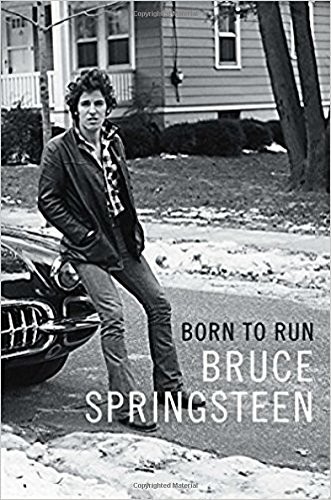
delivered
Get David's key takeaways from each episode delivered to your inbox.