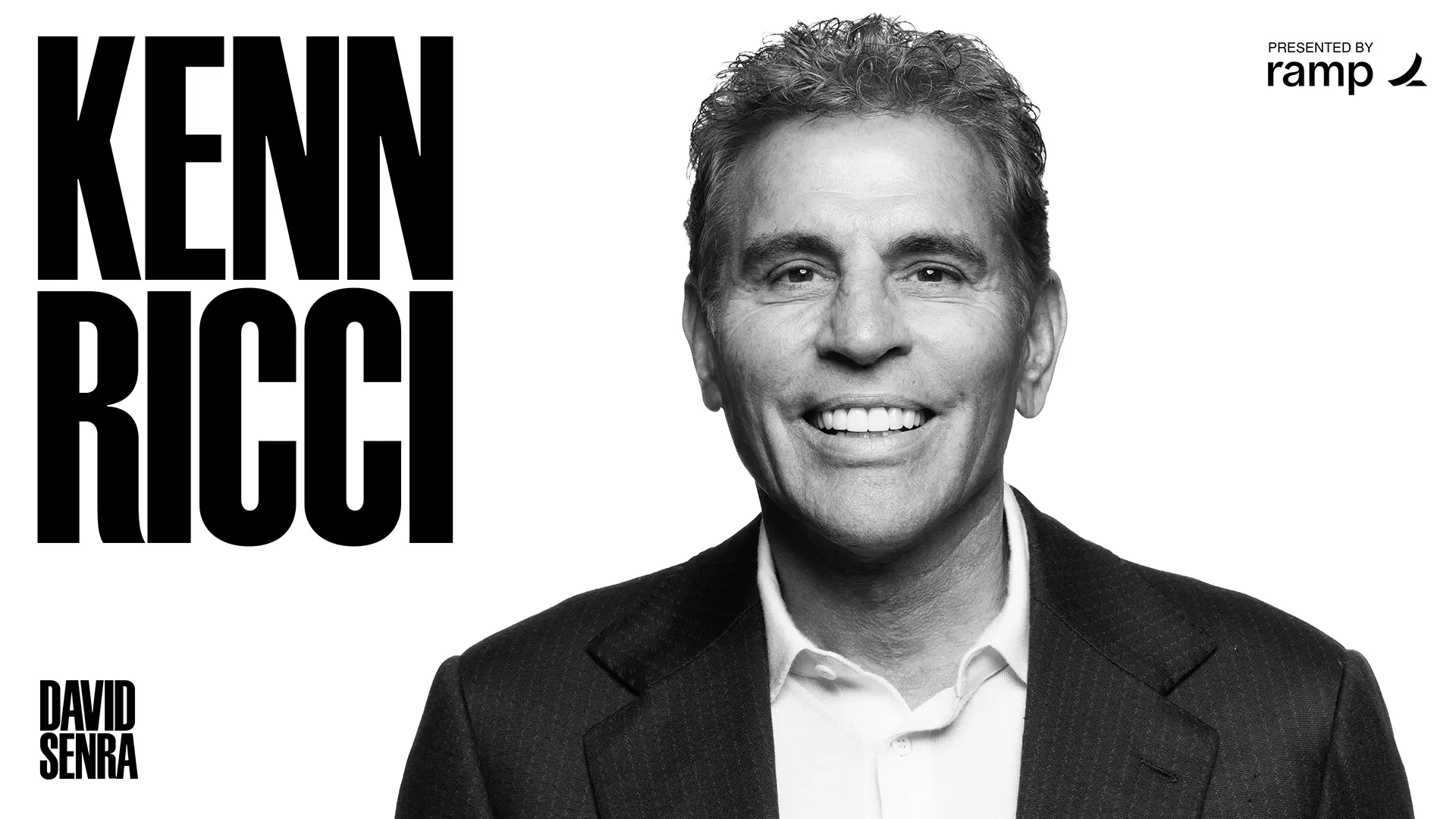
Kenn Ricci
Kenn Ricci is the chairman of Flexjet.
Summary
Kenn Ricci is the chairman and largest shareholder of Flexjet, a fractional private jet company that operates more than 360 aircraft and is the largest Gulfstream operator in the world. A former Air Force-trained pilot, Kenn bought a small Cleveland charter company in his twenties so he could keep flying, built it into Flight Options, lost control of it to Raytheon in 2002, and bought it back during the 2008 financial crisis before acquiring Flexjet from Bombardier in 2014. He explains how Warren Buffett’s purchase of NetJets unlocked his financing, why he avoids mergers, why he has kept Flexjet private, and why he gave his children their wealth early through a family limited partnership. He also shares the advice from Notre Dame’s Father Ted Hesburgh that shaped his idea of a life of significance, and why every Flexjet employee can fix a customer’s problem without approval.
Episode transcript
This transcript was generated using speech recognition software and may contain errors. Please review the episode audio before quoting from this transcript.
[David Senra]
I just interrupted you before we started recording.
[Kenn Ricci]
Yeah.
[David Senra]
I wanted... You brought up your kids.
[Kenn Ricci]
Well, you were talking about the addiction of flying privately.
[David Senra]
Okay.
[Kenn Ricci]
And I have three children, and they're six years apart, so there's 12 years from the oldest to the youngest. And when I was building the business, and of course, remember, I started the business, I was flying too. So, I would fly and run the business. When you raise a child, you start on Braille, and you start to figure out, what's the relationship going to be like? Did I spend enough time? Did I miss Little League games? But I decided I was going to give them a love of travel, so I had them all skip eighth grade, and we traveled during their eighth-grade year. And we didn't leave for the whole year. We'd go on six three-week trips, and during that time, I would homeschool them.
[David Senra]
Mm-hmm.
[Kenn Ricci]
And I'd make them build a curriculum around where they wanted to go. And we didn't take them to Paris and London. We took them to places around curriculum. Who wanted World War II? Who wanted to go to India? Who was fascinated with Asia? So, we built these curriculums around... Actually, the two places I made them all go was Auschwitz and North Korea. So, I'm probably the only person that's been three times to North Korea. But life changed, so starting at 2005 to 2017, think of the 12 years between. The youngest one,
[Kenn Ricci]
when he did his trip in 2017, I realized had never been on an airline. And I realized-
[David Senra]
Oh, an air... You mean a private jet?
[Kenn Ricci]
No, no, no. He'd never been on an airliner because life for me had changed.
[David Senra]
Oh, he'd never been... He'd never flown commercial.
[Kenn Ricci]
He'd never flown commercial.
[David Senra]
Okay.
[Kenn Ricci]
And so, I decided that's a bad way to raise a child.
[Kenn Ricci]
So, I decided, his name's Austin, so I said to Austin, "We're going to go commercial." We were going to Tokyo. And we go to the airport, never done this before. We wait in line, check our baggage, wait for our seat to be called, sit down, don't take your shoes off. But all the things you do, right? Security and so on. We sit down, and finally, we're getting ready to take off, and I look over at Austin, and I go, "Austin, what do you think?" He goes, "Hey, Dad, there's people on this plane I don't know." So, what he didn't get was the commercial, the public part of commercial transportation.
[David Senra]
It's funny that you... We were talking about this right before we started recording. I was like, "We got to hit play," because I'm so interested in... You started talking about a lot of people that build successful companies like you do,
[David Senra]
there's this huge doubt in their mind. Like, "I'm hugely driven. I have a goal in my life, but there has to be things that are sacrificed for that goal." Obviously, time with the children is one thing that people do. But one of the things you didn't even know I was going to ask you first was, I heard you talk about something that's interesting to me.
[David Senra]
That is, you decided to share your wealth with your kids, not when you die, not when they're older, but right now. You have a very interesting perspective on this. Can you explain what you're doing?
[Kenn Ricci]
I came to believe that we have the wrong perspective on raising children. We seem to think it's about this time we spend with them, so therefore, we kind of raise this helicopter mentality, right? We go everywhere with the kids. We don't let them out of our sight anymore. When I was growing up, I left at 9:00 in the morning on my bike, and I just had to be home for dinner. And mom didn't chase me around-
[David Senra]
Me too
[Kenn Ricci]
... Cleveland, Ohio, right? Those days are gone. We tend to think that we put time into them, that's the essential, when what we really need to put with them is we need to show them that we trust them, and they can trust us. Think about wealth transfer, and if you don't tell your kids about their financial arrangement, you're saying you don't trust them. And I told my wife, when the kids were young, I go, "We're thought as parents to talk more about sex than we are about money, and the reality is money will get you in a lot more trouble than sex will." So, I had three observations about wealth transfer. One is that there's a whole cottage industry around trusts and the management of generational wealth transfer, and there's big money in it. The system wants you to think you have to control wealth because that brings in the trustees.
[David Senra]
Mm-hmm.
[Kenn Ricci]
That brings in the law firms and the banking firms and all those necessary professionals to kind of skim away your wealth. Second of all, the Chinese have a saying, "The son of a lion is a lamb." And so,
[Kenn Ricci]
I think people that create a lot of wealth, particularly if it's entrepreneurial wealth, tend to have... They're lions.
[David Senra]
Yeah.
[Kenn Ricci]
And lions control things. And so, why not buy into the system where you control your children? And so, this is why these trusts are set up. At 25, they get this. At 35, they get that. At 45, they get this, right? And this is kind of a way to control from the grave, or for the patriarch or matriarch of the wealth to still be influential even when they're not around, because-
[David Senra]
They're used to being in control
[Kenn Ricci]
... you can put this to pick...
[David Senra]
Yeah.
[Kenn Ricci]
They want to be in charge. They want to be important. They don't want to lose their relevancy. And then finally, there's the most bizarre one to me, is if we tell our kids, if we give our kids wealth and we tell them about wealth and they know about this, they'll become lazy. Well, man, does that say you must have been an awful parent if that was the one thing that flips the switch. You couldn't parent through that? So, I decided, A,
[Kenn Ricci]
number one, most importantly, I love my children, and I love watching them be happy. I want to watch them spend their money. I want to watch them be wealthy. But most importantly, I want to help them. I know a little bit about wealth. I knew a little bit about... Now, I'm accidentally wealthy. I didn't get here with some strategic, some monetary plan, financial plan.
[David Senra]
Hold on. We're going to dive deeper on that. But give me some background. Did you grow up middle class, poor? What was your childhood like?
[Kenn Ricci]
Oh, my father was a grade 12, worked for the US government. He was actually a spy.
[Kenn Ricci]
He had a fascinating background. He came out of World War II, worked in the OSS, worked in Naval Intelligence, and then,
[Kenn Ricci]
in the early '60s, Bobby Kennedy- ... set up the OCD, the Organized Crime Drive, through the Treasury Department, and my dad was a part of that group that investigated domestic, mostly mafia, mostly organized crime-
[David Senra]
Yeah
[Kenn Ricci]
... in that era. His undercover name was Richard Dill. He was investigating, in a lot of cases, Italian. He was Italian.
[David Senra]
Yeah.
[Kenn Ricci]
They changed his name to Dill. Think of that's the government at work.
[Kenn Ricci]
I remember one time, by the way, in 17 years of undercover work, he only worked on three cases. So, shows you the time it takes, right, to work.
[David Senra]
So, his undercover name was Dick Dill?
[Kenn Ricci]
Richard Dill.
[David Senra]
Hey, Dick Dill. Richard's always shorter than Dick.
[Kenn Ricci]
Yeah. He was investigating the police chief of Lincoln, Nebraska, and-
[David Senra]
For ties to the organized crime.
[Kenn Ricci]
I'm seven years old at this point.
[David Senra]
He can't tell you.
[Kenn Ricci]
I don't know much about it, but I knew that we had to go live in Nebraska for two months, because he was there undercover as a family. This was the greatest time of my life. We stayed at a Holiday Inn, it had a pool. I'd never been any place where they had a pool outside your front door.
[David Senra]
Okay, so that hits on it. It's like middle class, somewhere around there-
[Kenn Ricci]
Yeah, exactly
[David Senra]
... didn't have a pool. The reason I wanted to start on this, and I want to still pull on this thread, if you don't mind, is because I have this other podcast called "Founders." I read biographies of history's greatest entrepreneurs.
[David Senra]
People struggle with this all the time. It's in these books for going back 200 years. Essentially, the problem is, "I was the son of a poor man. My kids are the son of a rich man. What do I do here?" And so, I had the luck of a lifetime to be able to go and have dinner at Charlie Munger's house right before he died.
[Kenn Ricci]
Mm-hmm.
[David Senra]
Probably six months before he died. And one of the questions I asked him was, because me and him had run... He read hundreds of biographies. I was doing the same. That was
[David Senra]
my craft and the main, before I started this show, all I was focused on. And I was just like, "What's your answer to that? You read the same books I do. What's your answer?" He grew up, he wasn't poor, but they were in a home all. It was like a normal life. And he goes, "You give them the money." Because Munger is just no bullshit.
[Kenn Ricci]
Right. Yeah.
[David Senra]
Like straight to everything. And I go, "Why?" He goes, "Because they'll hate you if you don't." And he goes, "And what's the point of building a relationship and making all this money, and then at the end of your life, your kids hate you?"
[Kenn Ricci]
Right.
[David Senra]
And that was his very simple way of looking at this.
[Kenn Ricci]
Fantastic insight, right? Like I said, I want to watch them enjoy their wealth.
[David Senra]
He did say one funny thing, though, because I think I may have asked him a follow-up. Either me or somebody else had a follow-up, and I go, "Yeah, but won't that make them a little less ambitious?" He goes, "Yes."
[David Senra]
And in his case, I think he gave a couple hundred million to, I think, nine kids or something like that.
[Kenn Ricci]
Yeah.
[David Senra]
And he's like, "Yeah, some of them have $250 million, and they're not as ambitious."
[Kenn Ricci]
Right.
[David Senra]
Like, so what?
[Kenn Ricci]
They're different. Every kid is different.
[David Senra]
Yeah.
[Kenn Ricci]
In fact, one of the things, we have these family meetings once a year where we talk about wealth. And one of the things I start out with each project, because when I look at why families rip apart over wealth, right, it's really in two areas. One of them is that they feel somehow they're entitled to be equal, but they're not. I have a child that started inheriting wealth 12 years before the youngest one. You don't think his estate, you don't think what he has appreciated at different rates than the youngest one? So, I start every meeting, I go, "Look, guys, you're not equal. It doesn't mean I don't love you. It doesn't mean... It's just how things are. And the sooner you get over that fact, the happier you'll be. It
[Kenn Ricci]
wasn't set out that way."
[David Senra]
So, have you already given all the wealth you're going to give to them, or do you keep... How does that-
[Kenn Ricci]
Well, yes, pretty much so, because we gifted shares of a family limited partnership when they were very young.
[David Senra]
Did you get this idea from Sam Walton?
[Kenn Ricci]
No.
[David Senra]
Do you know that's how Sam Walton avoided a lot of... He didn't do it to avoid estate tax.
[Kenn Ricci]
Yeah.
[David Senra]
He'd wind up... He's like, "Well, if you want to avoid estate tax, you give-
[Kenn Ricci]
Very early
[David Senra]
... your kids the asset before it appreciates."
[Kenn Ricci]
It appreciates. It's so logical.
[David Senra]
Yes. The crazy thing is, he did this, his father-in-law gave him the idea.
[Kenn Ricci]
Uh-huh.
[David Senra]
I've read every single book on Sam Walton, and his father-in-law gave him the idea. They did this when the value of Sam Walton's company was like... I think the shares that he gave to his four kids were $5,000 each.
[Kenn Ricci]
Ditto. Okay? I started the family limited partnership in 1990. I had my first child in 1995. So, I have the vision of what it's going to do five years before it happens, right? And as soon as I
[Kenn Ricci]
could, I gifted shares. When they were born, I gifted. It's a family limited partnership, so the general partner, which is me, still can... I have all the flexibility in the world to make distributions. It's a phenomenal vehicle. So, Walton had it right. It's a great vehicle. So, they're not created equal. I want to watch them happy. I want to watch them use their money. But also, I want to guide them. I want to be here alive-
[David Senra]
Yeah
[Kenn Ricci]
... when they're making stupid decisions with their money or making good decisions with their money.
[David Senra]
Yeah.
[Kenn Ricci]
I've made stupid and I've made bad decisions with money too. So, why can't I be the one to guide them? Otherwise, assuming they still love me when I'm dead, they tend to love you more when you're dead, but in any case, assuming they still love me, well, they're going to go, "Well, what would Dad have done?" Well, isn't it better to be here alive when they ask you, "What should I do, Dad?"
[David Senra]
Yeah.
[Kenn Ricci]
That's the foundation of it. So, I think sometimes we want to rule from the grave. You have this trust environment that's there, and then if this is going to spoil your kids, then you really weren't that good of a parent, if that was the one thing that did it, they couldn't handle this. Or maybe the alternative is, it's all the more reason to give it to them when they're alive, so you can guide them through it.
[David Senra]
Yeah.
[Kenn Ricci]
Right? As opposed to when they're dead and you can't do anything. When you're dead and you can't do anything about it.
[David Senra]
I want to tell you about the presenting sponsor of this podcast, Ramp. I have been reading a lot about SpaceX lately. SpaceX is one of the most valuable businesses in the world, and one of the main themes in the history of SpaceX is constantly attacking and questioning your cost. Ramp helps many of the most innovative businesses in the world do exactly that. The median company running on Ramp cuts their expenses by 5%. And one thing SpaceX has demonstrated is that a religious dedication to controlling costs can help actually increase revenue, because you can pursue opportunities you couldn't otherwise. And we see that in the Ramp data too. The median company running on Ramp also grows their revenue by 16%. So, when you're running your business on Ramp and your competitors are not, you have a massive competitive advantage that compounds over time. Ramp is the only platform designed to make your finance team faster and happier. Many of the top founders and CEOs I know run their business on Ramp. I run my business on Ramp, and you should too. Go to ramp.com to learn how they can help your business save time, save money, and grow revenue. That is ramp.com.
[David Senra]
I found one of my all-time favorite quotes when I was reading the book "Zero to One." The quote says, "The single most powerful pattern I have noticed is that successful people find value in unexpected places, and they do this by thinking about business from first principles instead of formulas." That is exactly what AppLovin has done with their advertising platform. AppLovin connects you with over a billion potential new customers in mobile games. AppLovin allows you to capture undivided attention. AppLovin ads are full-screen videos that are watched for an average of 35 seconds. That is retention that blows other ad platforms out of the water. And you can launch on AppLovin in minutes. You set the goal, and AppLovin achieves it. No complex setup, no expertise needed. And AppLovin scales quickly. They can put your ads in front of over a billion potential customers. Other businesses have seen immediate results, scaled to hundreds of thousands of dollars of spend per day, and increased their revenue by millions. So you want to get started quickly before all of your competitors are on AppLovin. And you can do that by going to applovin.com. That's applovin.com.
[David Senra]
Have you seen any downsides to this decision?
[Kenn Ricci]
Not one. Not one. In fact, I've seen many things I didn't think would happen. So for instance, I asked them... Now remember, this is going back. When they were young, I started talking to them about money. Now, at five years old, six years old, now we're not talking about tax-effective or compounding interest. But what I taught them early on was giving. So our early family meetings were all about who should we give money to and why. My daughter loved animals, my son loved Catholicism, and my youngest son, I remember the first time we were giving, he was maybe six years old, he always wanted to give it to Disney. And I was like, "Well, Austin, Disney's not really a non-for-profit."
[David Senra]
Yeah. They're doing okay.
[Kenn Ricci]
Yeah, they have their own methodology. So I taught them first to give.
[David Senra]
Mm-hmm.
[Kenn Ricci]
Then, before we started really diving into the estate, and I really went into that when the youngest one was around 16, where we really started going through, like every year we go through a spreadsheet. Where's the money? How does it transfer? Who has control of it? Where's the bank? Like, all the stuff you need to know. Everything. But before we did that, we did a personality test, and everybody reported on their personality, because kids are different.
[David Senra]
Mm-hmm.
[Kenn Ricci]
Who thinks left brain, who thinks right brain? So, I wanted the kids to understand how they could get along, so I started with that. So then we started talking about money, how it transfers, like what we would do with it. Two surprising things. Number one is that it creates this trust. And I have this amazingly trusting group.
[David Senra]
Mm-hmm.
[Kenn Ricci]
Now, the kids, in the group of five, my wife and I and the three children, they report. They show us their estate and what they spent money on, and we share this.
[David Senra]
How old are the kids now?
[Kenn Ricci]
So, 37,
[Kenn Ricci]
31, and 25.
[David Senra]
Okay.
[Kenn Ricci]
Yeah. Okay. So it's been going on for a while. But the other thing, like I mentioned, I'm accidentally wealthy. You have to realize that even when we were talking about this, we weren't talking about it at the volume we're talking about today. My personal net worth has accelerated in the last six years, along with Flexjet, which is the asset I own and one of the largest assets I own and protect.
[David Senra]
One of. It's got to be the largest asset you own.
[Kenn Ricci]
Well, it's the largest one, yes.
[David Senra]
Okay. What else you got that I don't know about?
[Kenn Ricci]
Well, I always say I'm an inch wide and a mile deep. I've made a lot of investments only in aviation.
[David Senra]
Yeah.
[Kenn Ricci]
I probably know more about the area of aviation. I've invested, I own Simcom, which I sold to CAE. I own what is today Atlantic Aviation.
[David Senra]
Hold on. So, this is exactly... So I want to start talking about the business, because I think I understand what you did with your kids and why you did it, and think, again, anybody who's wealthy has to think through these things. I think discussing them openly is a service to other people.
[Kenn Ricci]
Oh, I'm sorry. Let me finish what I learned.
[David Senra]
Go for it.
[Kenn Ricci]
Okay, so number one, this amazing trust that they got amongst themselves, right? They started investigating and reading about biographies and families that blew it.
[David Senra]
Right.
[Kenn Ricci]
And they came to realize that the third transfer of wealth, the third generation's the tough one. And so they've started to talk amongst-
[David Senra]
Shirt sleeves to shirt sleeves in three generations.
[Kenn Ricci]
Right. They're the ones that talk about that.
[David Senra]
This is something very durable throughout human history.
[Kenn Ricci]
So they've come together to talk about the next passing of wealth and generational. And two things that they've come up in the last year. One is they decided not to include spouses in these meetings. They decided that each one of them, two of them have spouses, one doesn't. They decided in these meetings that each one of them will decide how to share financial information in their own family.
[David Senra]
Mm-hmm.
[Kenn Ricci]
That this isn't a group share. This is us five, and we've been doing this for 10 years, 12 years, and it's not something, we're not just going to toss people into the middle of it, because we don't know their personalities. We didn't have 10, 12 years of grooming to get them to this point. So that was number one. Number two was when they look at generational wealth transfer and why families come apart, one of the things that happens, other than they all feel like they weren't treated equal, they're mad at the patriarch for not treating them all equal, which we've gotten over. But the other thing that happens is one of them does really well, takes the money and makes a great investment, and the other ones do less, and then there becomes a little jealousy amongst them. So they decided, they came to the idea that any investments they all make, they're going to share. And the person who has the investment-
[David Senra]
The three kids between the kids.
[Kenn Ricci]
The three kids.
[David Senra]
Wow, okay.
[Kenn Ricci]
The person that has the investment can put 60% of it in, but has to offer, but not required, 20% to each of the other siblings. And they can participate or not, thereby alleviating the opportunity for them to be jealous. "Look, I gave you the opportunity to come in. You came in or you didn't, or we share the upside together." That was their idea, not my idea.
[David Senra]
That's really interesting. Okay, so let's go to the source of the wealth.
[Kenn Ricci]
Yeah.
[David Senra]
You were a pilot, okay?
[Kenn Ricci]
Mm-hmm.
[David Senra]
Take me back to, like... Well, first of all, how old were you when you learned how to fly planes?
[Kenn Ricci]
You talked about my upbringing with my parents a little bit. My dad was a government employee, and I went to a Jesuit high school, St. Ignatius, and they sent, at the time, in the '70s, they sent 30 people to Notre Dame. They moved them right from there to Notre Dame, and I loved it. I wanted to go there, and I
[Kenn Ricci]
got admitted, and then I'm going up for a visit. And I grew up in a, you know how houses have two-by-fours? Ours had one-by-twos. So I could hear my parents. I'm an only child, and I could hear my parents talking the night before I'm going to Notre Dame, and they say, "You have to tell him we shouldn't let him go, because what if he goes up there and he likes it, and then he wants to go, and we tell him we can't afford to send him?" My mom was saying, "I wouldn't let him go." And my dad would go, "Let him go. Maybe he doesn't like it, and then he comes back and says, 'I don't want to go anyhow,' and then we don't have to have the subject." But I knew going up for that class visit that it didn't matter how much I liked it, I knew it was coming when I came home and said whether I wanted to go or not. So, I was inclined not to go and put my parents in a bad position. When I get there, I ask them on campus, "Is
[Kenn Ricci]
there financial aid available?" "Well, you missed the deadline. This is March." But the Vietnam War, this is 1974, the Vietnam War was still very ripe, very raw, and people did not like the military. And so they said, "If you're willing to go into ROTC, they're always short of the candidates. They're never fulfilling their quota." So for some reason, don't ask me why, I decided I wanted to be a Navy pilot. Maybe I liked the double-breasted suits, whatever. So, I go down to the ROTC building, and there's no cell phones, and I'm looking through the glass window. I'm trying to read upside down on the phone what number to call on Monday morning to tell them they had a new naval aviator.
[David Senra]
Why'd you pick aviation? You'd never flown a plane or anything?
[Kenn Ricci]
No, I had to go in the military.
[David Senra]
So you did?
[Kenn Ricci]
I knew I had to go ROTC.
[David Senra]
Okay.
[Kenn Ricci]
I figured, if I got to go into the military, flying looks like a lot of fun there.
[David Senra]
Yeah.
[Kenn Ricci]
I'm copying the number down, and somebody taps me on the shoulder, and they said, "Can I help you?" And I said, "Yes, sir. I'm an incoming freshman at Notre Dame, and I would like to join the Navy because I want to fly." And he said, "You've been admitted to Notre Dame?" I said, "Yes." He goes, "I'm shocked because they usually admit smarter people than that."
[Kenn Ricci]
He said, "The Navy has ships, and the Air Force has planes. I'm Colonel Mueller. I'm head of the Air Force detachment, and I'm enrolled in the Air Force." And I never knew how my parents reacted, but I came home-
[David Senra]
Because then they'll pay for school.
[Kenn Ricci]
Yeah. I don't know that I've ever told this story. It's the first time I learned how to defraud the government.
[Kenn Ricci]
I'm a freshman at Notre Dame. I'm enrolled. I've got my hat, got my uniform, and the sergeant who administered that said, "Now, I know you're a plebe here, but here's how you... You get $100 a month stipend for general expenses." He goes, "But there's other income." He goes, "Here's what you do. You go to the bookstore, you buy all brand new books. You bring me the receipt. I'll reimburse you for the new books. You take them back to the bookstore, and then you buy the used books."
[Kenn Ricci]
So, my first interaction with the military is I was taught how to take advantage of the US government.
[David Senra]
Did you take time off from Notre Dame to learn how to fly the plane?
[Kenn Ricci]
No, you learn it concurrent.
[David Senra]
Okay.
[Kenn Ricci]
One day a week, and this was the tough one, one day a week you have to stay in uniform. And believe me, at that time, post
[Kenn Ricci]
that Vietnam War era, that was not an easy task because people did not like the military at all at that time. So, you have all these courses around the Air Force. In the summer, you go to whatever your summer program was, your summer school, and so on. And then, so that's where I learned to fly.
[David Senra]
So what kind of planes do you fly the first time you fly?
[Kenn Ricci]
Oh, the Cessna 152, Cessna 172s.
[David Senra]
They're not putting you in the F-16 or-
[Kenn Ricci]
No, that comes after grade. No. No. In fact, when you graduate, what happens, then you go to general flight training, which at that time was done in T-37s and T-38s, and then you get assigned... It's a year and a half before you get control of a jet in the Air Force. There's the primary training, then there's the training you go into.
[David Senra]
Okay. So, you mentioned, "Hey, I'm an inch wide, but I'm a mile deep."
[Kenn Ricci]
Yeah.
[David Senra]
"All my businesses focus on this." We've mentioned Buffett and Munger. I don't know if we said it on the show or if we were talking before, but we've both mentioned Buffett and Munger a bunch of times, and their whole thing is, know your circle of competence and just stay inside that circle.
[Kenn Ricci]
Right.
[David Senra]
So this sounds like what you did. Your first-
[Kenn Ricci]
I always say, my portfolio of investments is unbelievably diversified. It's cash and airplanes. That's my diversification strategy.
[David Senra]
So, what's the first business you do in aviation?
[Kenn Ricci]
So first of all, I don't think of myself as a businessman.
[David Senra]
Okay.
[Kenn Ricci]
In fact, I'll often say there's two people that are very successful in business. One is a person that just gets business. They could run a yogurt store, they could run a steel manufacturing plant. They just get business. They understand how they're connected, they see market strategy, and business is just very clear to them. And the other ones that are just passionate about what they do. You're passionate about your podcast. You're successful in business because this is what you love to do.
[David Senra]
Yeah.
[Kenn Ricci]
I'm successful because I love to fly, and I learned everything airplane. Right? That's what put me here. But I never had a goal to become wealthy or to build a business, so-
[David Senra]
That's the accidental wealthy part you're talking about.
[Kenn Ricci]
Sure, of course. In many ways, right? Accidentally that I even formed a business. Accidentally that,
[Kenn Ricci]
when I go into private aviation, there's only 5,000 jets in the world, and today there's 35,000 jets. So, part of my luck-
[David Senra]
Wait, wait, wait. Say that part again.
[Kenn Ricci]
Yeah.
[David Senra]
When you started, what year is this?
[Kenn Ricci]
So, what is it? 1985, figure about-
[David Senra]
There's only 5,000 jets?
[Kenn Ricci]
Five thousand jets in the world. And today, there's 35,000 private jets in the world. So, part of my luck was just to be when this industry grew up. I entered an industry... Because I could have been an airline pilot. I could have stayed in the military, but I was attracted to private aviation. It was more free to me. It was more spontaneous. It was more interesting. The people you would meet, that there's no cockpit door. I could have conversations with passengers and learn from them. So, who knew in 1985 that private aviation would be this unbelievable growth industry in the next 40 years, right? Didn't know that. So, that's part of it. But what I'm really doing is flying. I leave the military, I become a cargo pilot, flying air freight. Then I go to Northwest Orient. I'm at Northwest Orient a very brief period of time. They have a furlough, so I lose my job.
[David Senra]
So wait, Northwest Orient doesn't exist anymore?
[Kenn Ricci]
No.
[David Senra]
It's a, it was an airline.
[Kenn Ricci]
It was an airline, yeah.
[David Senra]
So you're an airline pilot.
[Kenn Ricci]
It was, the airlines were Pan Am, TWA, Northwest, the airlines that flew all around the globe. They were the good airlines. They were the airlines that were the prestigious ones.
[David Senra]
Okay, so you're at Northwest Orient. You said you got furloughed, which is another name for fired.
[Kenn Ricci]
Yeah, it's a fancy term for I don't have a job.
[Kenn Ricci]
So, I came back to Ohio.
[David Senra]
Ohio, birthplace of the Wright brothers or something?
[Kenn Ricci]
Yeah, well, that's in Southern Ohio, but-
[David Senra]
Yeah, but I think Dayton, right?
[Kenn Ricci]
Yeah.
[David Senra]
Something like that. Okay.
[Kenn Ricci]
But my father was...
[Kenn Ricci]
He didn't see it as a very stable career. He said, "I know a lot of pilots, and they're all airport jockeys. They just kind of move from place to place, and they end up taking whatever job they can. It's just not a stable industry." So, it was at that time that I went to law school. And,
[Kenn Ricci]
really-
[David Senra]
So you love flying and pilots.
[Kenn Ricci]
Yeah.
[David Senra]
Your dad's giving you what-
[Kenn Ricci]
I'm a little scared
[David Senra]
... in hindsight, bad advice, considering where your life has turned out.
[David Senra]
And you're going to do something you don't love.
[Kenn Ricci]
Correct.
[David Senra]
Okay. For prestige or money, what was your-
[Kenn Ricci]
He even said you needed something to fall back on in case this aviation thing doesn't work out. Well, the aviation thing worked out okay, but-
[David Senra]
Did he live long enough to see it?
[Kenn Ricci]
He died in 1991, so kind of.
[David Senra]
Okay.
[Kenn Ricci]
Kind of.
[Kenn Ricci]
He saw me have a business. He saw me fly. He flew on one of my first Learjets, loved it. Okay, but he never saw...
[Kenn Ricci]
He never saw this coming.
[David Senra]
Got it.
[Kenn Ricci]
The only job I can have in law school is a part-time pilot, so I'm a fill-in pilot for a company called J&J Aviation. And J&J Aviation was a fraud. I'm just an employee there, but what they did was, in the early '80s, they had investment tax credit of 10%. And if you bought an aircraft, you got an immediate 10% credit. So they would sell these Citation jets for $750,000. So they had a fleet of about six airplanes, and then they'd sell these Citation jets to investors on the West Coast, a long way from Cleveland. And they'd get the $75,000 investment tax credit, and then they'd pay the $750,000 for the plane. And then the head of J&J was a guy named Jeff Tolk, and every month he would pretend that these aircraft were on lease, but they weren't. The aircraft didn't even exist. He would make up a dummy statement. He would say, "It flew 40 hours this month. The revenue was $90,000. The expenses were 78,000. Here's your $12,000 check." So he simply put the
[Kenn Ricci]
million five, the two aircraft, he put the million five in the bank and kind of dribbled out the interest in a fake statement. Well, finally, after about a year and a half, the owners said, "We got to see our jets." And they were always in the air. They were never around. But one day, they caught him, and he flew the coop. So this little company, J&J Aviation, had three employees, a secretary, a dispatcher.
[David Senra]
And is this just charter? What's the-
[Kenn Ricci]
Yeah.
[David Senra]
Okay, just charter.
[Kenn Ricci]
So using these managed airplanes or these phantom airplanes. But there were six of them. There were Navajos and these little tiny piston engine aircraft. And the dispatcher there, Rick Michaels, calls me up, and he said, "You know, nobody here wants to do this, and I'm not smart enough to do it, but you seem to know a little about aviation. You should buy the company." So I call my dad.
[David Senra]
And you're how old at the time?
[Kenn Ricci]
Twenty-six.
[David Senra]
And you never thought you were going to be an entrepreneur?
[Kenn Ricci]
No. In fact, I didn't even buy this company to be an entrepreneur. I bought it so I could still have a job. I needed to make sure these airplanes didn't go away so I could keep flying. That was the whole goal. And Rick said he could do it by himself, so I left. I knew I had to employ the dispatcher and run... It ended up, two of the planes left, so I had four airplanes when I started. And I called my dad, and I said, "Dad, I want to buy this company, J&J Aviation. I'm actually going to name it Corporate Wings." And he goes, "Oh." I go, "It's $27,500." And he said, "Well, how are you going to pay for it?" And I said, "Well, the company has 27,000 in the bank, so I think I can just use their own money to buy them." And he goes, "Oh." He goes, "Well, what are you doing for the other $500?" I go, "Why do you think I called you?" So that was really how I bought Corporate Wings, and that company's still here today.
[David Senra]
Explain how you get from Corporate Wings to FlexJets.
[Kenn Ricci]
Right away, I decided, where is the niche for this Corporate Wings? Everybody has a charter plane, but how do I get bigger niches and so on? And life is timing. I met someone who worked for Chapman Freeborn. I don't know if you know this company.
[David Senra]
No.
[Kenn Ricci]
They move all the rock stars around. So they move the freight. Every rock star comes with a stage, and part of that stage can go on the land. Part of it has to go in big aircraft, depending upon what... But it's a cargo moving system. And along with it, they had this ancillary business to move the star, to move the celebrity.
[David Senra]
I'm watching this documentary on The Eagles, the band The Eagles.
[Kenn Ricci]
Uh-huh.
[David Senra]
And they have a bunch of success early on.
[Kenn Ricci]
Yeah.
[David Senra]
And one of their favorite things about being in a band and being a rock star is that they have this private plane.
[Kenn Ricci]
Absolutely.
[David Senra]
It's like little turbo prop plane they're on.
[Kenn Ricci]
Yeah. The big groups went in those turbo props because they needed 15, 18 seats.
[David Senra]
Yeah.
[Kenn Ricci]
It's the single performers that went in the corporate jets.
[David Senra]
Okay.
[Kenn Ricci]
I flew Elton John, Bryan Adams, Bruce Springsteen, Tony Bennett, Barbra Streisand. Those were the ones. Those were my clients. So with Chapman Freeborn, whenever they would get a cargo movement and they needed to move the celebrity, I made a deal with them to do that. And that was really how-
[David Senra]
That was your initial niche.
[Kenn Ricci]
But it was really because I wanted to fly, and I thought it'd be-
[David Senra]
Oh, you're piloting them?
[Kenn Ricci]
Yeah, of course I am. Of course I am. Sure. And you know what? It was a good gig because when you flew those celebrity tours, say a pilot at that time got 7,000 a month, if you flew a three-month tour, you would get 20,000 a month. Of course, you had no work for that. And it was kind of perfect because I could fly the tour for three months, and then have the rest of the time, I'd work on the business or kind of learn the business and figure it out. So, I'm building the business concurrently with doing these celebrities. Then I have these big planes, so I start to go more international. I flew Richard Branson for a year and a half. I live in London. Best flying because I got to learn the world.
[David Senra]
Wait, wait. So you're flying Richard Branson. Now, this is a corporate private jet.
[Kenn Ricci]
Correct.
[David Senra]
And you're just-
[Kenn Ricci]
Well, remember, to get the celebrities, I had to go to people that wanted to buy a large, like a Gulfstream, a Gulfstream II at the time.
[David Senra]
Okay.
[Kenn Ricci]
And I had to tell them, "You use the aircraft. I'm going to lease it out three months a year, which will pay for the aircraft for the whole year."
[David Senra]
Mm-hmm.
[Kenn Ricci]
And so I got people to give me airplanes on that financial agreement.
[David Senra]
They're putting up the money?
[Kenn Ricci]
Yes, correct.
[David Senra]
Okay, so that's how you're doing this very limited amount.
[Kenn Ricci]
Correct. Yeah, correct. I'm doing it without any... There's no Ken capital at this point in time. I got the $500 from dad. So now-
[Kenn Ricci]
... go into the '90s, and along concurrent with building this business, once you have the large cabin, filling in the rest of the fleets, kind of easy, because people think if you can do the big stuff, if you can travel the world handling my airplane,
[Kenn Ricci]
you must be qualified. So we start to build a managed fleet of aircraft till it gets to in the low 20s. And when you build businesses, there's these steps, right? Like, without any other help, I could run three airplanes myself.
[Kenn Ricci]
But then if I want to run 15, that's kind of the next step. I need 17 people to run 15.
[David Senra]
Mm-hmm.
[Kenn Ricci]
And then I need 17 till I get to 30. And then when I get to 30, I need 35 people. There's these steps of infrastructure. So I'm about where I need to be, and so in the early '90s, we don't even realize this today, but today, big manufacturers, Gulfstream, Bombardier, Cessna, they pre-sell their aircraft, and they don't build them if they're not sold. But going back to the '90s, they looked at it like the car industry. Cessna had a dealer network where people, to be a dealer, you had the level of dealer, if you bought three single engines and one twin engine, you were this level. If you bought four twin engines, you got this commission structure, and you were a larger dealer. But when the business didn't sell, there were all these whitetails. And so-
[David Senra]
Wait, what's that?
[Kenn Ricci]
A whitetail. So a whitetail is a plane that doesn't have an N number on it-
[David Senra]
Mm-hmm
[Kenn Ricci]
... because they don't know who to title it to, because it's not sold.
[David Senra]
Okay.
[Kenn Ricci]
So it was like the auto industry. They kept building, kept the manufacturing run going, and if sales couldn't keep up, then they just parked them in a lot and called them whitetails. Well, the Gulf War I happens in 1991, and it goes ahead that these whitetails, Hawker has these whitetails, and Richard Santulli, who was the founder of NetJets, goes to Hawker and says, "You can't sell the airplanes. I'll take 20 of them and sell them on consignment fractionally."
[David Senra]
Is that the first?
[Kenn Ricci]
This is how fractional aviation-
[David Senra]
That is the invention of... Okay.
[Kenn Ricci]
That's the invention of fractional ownership. Rich Santulli, brilliant, realized that the average company flies an airplane 300 hours a year. A plane wants to fly 1,200 hours a year, so why don't we get four people to share them?
[David Senra]
What does it mean a plane wants to fly 1,200 hours a year?
[Kenn Ricci]
Well, because if you look at a lot of things. Number one is an airplane doesn't like to sit around. They break when they don't fly.
[David Senra]
Mm-hmm.
[Kenn Ricci]
The fluids leak out, so they want to fly, number one. Number two, they had the capacity to fly 1,000 to 1,200 hours a year. So an average corporate owner at that time was leaving the plane in the hangar five days a week. And so why not utilize that dead asset? That was his vision. And so he initially thought, "Well, if I get four people to each put 200 hours on the plane, that's kind of the perfect... So I'm going to sell the planes in quarters," which is why if you see NetJets' N number today, it still ends in QS, quarter share.
[David Senra]
Ah.
[Kenn Ricci]
Because originally, they only sold 200 hours. Now, today, you can buy 100 hours, 75.
[David Senra]
Yeah.
[Kenn Ricci]
But that was his vision, and he sold these whitetails, these consignment aircraft. So he never put up any capital. He said, "If I sell them, I'll give them back to you." So all of a sudden now, this becomes in vogue, and where is he stealing customers from? Me, the charter operator.
[David Senra]
Oh.
[Kenn Ricci]
Because in the charter business at that time, if you took my plane and went to Florida, I had to charge you to return the plane back to Cleveland. Otherwise, how did I get it home?
[David Senra]
Yeah.
[Kenn Ricci]
He had the idea of this floating dispatch. "I'll drop you in Florida, and then the next client, I'll figure out how to get them from here to there." Well, that was attractive to a lot of different companies. And so he was starting to steal business. I got a little nervous. So between 1993 and 1996, I'm watching this unfold, and I say, "Well, he's selling these brand new assets because he's getting them from the manufacturers on consignment. I'm going to go into the used market, and I'm going to buy them used, pre-owned, previously enjoyed, I like to say, and I'm going to go ahead, and I'll have the exact same airplanes he did." So whatever NetJets had, if they bought brand new Hawkers, I had a used Hawker program. If they brought brand new Citations, I just emulated them, had a used Citation program. That was my vision.
[Kenn Ricci]
I would be buying them used at half price, so the service is the same. It's still, you can fly. You only pay for it when you're on board. It's just the buy-in is going to be 50%. That was my vision. But unlike him, I couldn't buy these on consignment. I had to have capital to do it. So in 1996, I put together the... This is my first time really starting to look at a business. It's the first time I kind of understand the depth that I have to present, the presentation, looking at cash flow and projections. And I go out to different banks, probably 35 or 40 of them, with this idea of fund me the amount of money I need to start the business. I think I needed 30 or 40 million dollars. I wanted to borrow it. And they look at me, and the banks were like, "We don't get it. Like, where's our collateral? We have the tail of the airplane you're selling. Now, like, how do I have a quarter of a plane?" So
[Kenn Ricci]
none of them were a buyer. I think at the end of 12 months or 15 months of being on the road, I had maybe seven million of opportunities if I put up assets equivalent to seven million. It was the worst financing ever. In June of 1998, Warren Buffett buys NetJets for $750 million,
[Kenn Ricci]
and he christens the industry, and I just happened to be the guy who saw the banks last. And that summer, I got almost $300 million of debt financing. So again, accidentally wealthy.
[David Senra]
Because they're like, "Well, Warren is doing what he did."
[Kenn Ricci]
Warren's doing what he did.
[David Senra]
It's a good idea if Warren's doing it.
[Kenn Ricci]
That kid had a good idea.
[David Senra]
Yes.
[Kenn Ricci]
Yep. And all of a sudden, Bombardier Capital, Boeing Capital, Fleet Bank, all 50 million here, 50 million there, gave me these lines of credit. That then allowed me to buy the initial fleet, which I went active October 13th, 1998.
[David Senra]
But what is the company? Is it still Corporate Wings?
[Kenn Ricci]
No, I
[Kenn Ricci]
branded that product Flight Options.
[David Senra]
Okay.
[Kenn Ricci]
That was the brand.
[David Senra]
Deel is how the best founders turn the world into their talent pool. I've been studying how history's greatest founders operate for a decade, and one thing they all have in common is they understand that recruiting and hiring the very best talent is your most important priority. A players recognize other A players, which is why top companies like Ramp, Shopify, ElevenLabs, Uber, and DoorDash all use Deel. Many of the top founders I know have personally invested in Deel after using their product, and what they discovered is that Deel is the best company in the world at building infrastructure for global hiring. Deel will help your business hire, pay, and manage any worker anywhere in the world, so you can retain the best talent anywhere and spend the rest of your time focusing on what you do best, delivering value to your customers. The founder of ElevenLabs has a great description of the value Deel can give your company. He said, "We built ElevenLabs to break down language and communication barriers. With Deel enabling us to hire and support exceptional talent anywhere, we can accelerate our innovation and bring more voices, stories, and ideas to every corner of the world." Deel is trusted by over 40,000 companies and growing fast. Learn how they can help your business by going to deel.com/senra. That is deel.com/senra. So that's Flight Options. You start with how many planes with Flight Options?
[Kenn Ricci]
Well, once I get the financing, probably-
[David Senra]
Yeah
[Kenn Ricci]
... 25.
[David Senra]
Okay. Why'd you pick a number like that?
[Kenn Ricci]
There were three different fleets.
[David Senra]
Mm-hmm.
[Kenn Ricci]
Okay?
[Kenn Ricci]
Two light jets and a medium jet, and you need about eight aircraft to be your core fleet. In other words, if you and me are both going to buy a share of an aircraft, we recognize there can only be one, because if you and I want to fly the same day, who gets the plane?
[David Senra]
Yeah.
[Kenn Ricci]
So you had to show the potential prospect that you had a fleet, and eight was about the number that people went, "Oh, you have eight Citations. I'll buy one, and then you can service us."
[David Senra]
So if you had 25 planes to start out, how many customers... When do you hit your limit? Like a-
[Kenn Ricci]
Well-
[David Senra]
... 100 people's too much? Like, what's the...
[Kenn Ricci]
No, because remember, these are core fleet. These planes never get sold. What I do from this point on is if four people buy the Citation, I buy another Citation.
[David Senra]
Okay.
[Kenn Ricci]
So these 24 aircraft were all-
[David Senra]
So you don't stay with 24, 25 for very long?
[Kenn Ricci]
Yeah, and you know what? That's still a model we use today. If we look at our fleet of 365 aircraft, we would tell you that about 70 of them are core fleet. They don't get sold. They're just there to support our customers' ownership in a share of a jet.
[David Senra]
Okay.
[Kenn Ricci]
Yeah. Because we need that, because on peak travel days, we're going to have more demand than... There's just not enough airplanes to go around, so we still have that core fleet model.
[David Senra]
Okay, but this is called Flight Options.
[Kenn Ricci]
Yes.
[David Senra]
How do we get from Flight Options to FlexJets?
[Kenn Ricci]
Okay, so it's a little longer than you probably hoped, but 100 million dollars in sales between October and December. Four hundred-
[David Senra]
Wait, wait, wait. First three months of...
[Kenn Ricci]
David, this was the most amazing thing I've ever seen in my life. People thought it was such a great bargain that they would send me a check. I think the buy-in at that time was like 800,000 dollars. People would send a check for 800,000 dollars and say, "Send me the paperwork. I want to fly tomorrow." In other words, they loved it so much, they knew they couldn't fly till I had the money, they'd send me the checks, and they'd go, "Send me the paperwork. We'll get to that stuff later. Just let me fly."
[David Senra]
Yeah.
[Kenn Ricci]
So, 100 million in the first three months, 400 million in the next year, and now all of a sudden, I've got a tiger by the tail and no clue, right? Because a business that grows that fast is immensely complicated, particularly for cash flow. And I think at that time, I didn't really realize that in capital-intensive industries, particularly aviation, the balance sheet is the whole game. It's not the income statement. It's the balance sheet. Forget income, forget EBITDA. It's free cash flow and how strong is your balance sheet. That's what drives that business. I didn't know that in 1998. I hadn't figured that all out yet. I'm in my early 40s when this is happening, and so then I bring in an equity partner, so now I have some equity partners around the table. 2000, we have the dot-com bomb.
[David Senra]
Mm-hmm.
[Kenn Ricci]
So I've been through four recessions. That was number three. So now the business is struggling a little bit. Cash flow's struggling, not volume struggling. And we decide, when a business is in trouble, there's two things you can really do. Well, three things. I guess you could close it down. Two is that you can sell it for a song, or three, you strategically change direction. So you go to the bankers, because your problem is always the credit markets. It's always who's out there for you. And you say, "Oh, I have a new strategy. I'm going to merge with this company. Here's the projections." And you buy yourself time to see if you can put these companies together.
[Kenn Ricci]
Acquisitions, mergers are incredibly difficult. I hate them. I don't do them very often. I think they're immensely, culturally, they're damaging.
[David Senra]
Why do you hate mergers?
[Kenn Ricci]
I hate them for me, because for me, I think they're a sign of weakness, because you can't build your business on your own. Whatever this company is offering you in terms of, let's say it's market share. Let's say they have a part of the market, and you have a part of the market, and you say, "Gosh, we'll capture the market." Well, do you really need to spend 12, 10 times cash flow to gab the market? Would you invest that money yourself and grab the market share, or do you not have a good enough product to do it? So I think we don't analyze enough what it costs for whatever your logic is for bringing that in.
[Kenn Ricci]
Give me the logic for why you're doing that, and I would tell you 90% of the time, you could probably do this yourself without the acquisition. Now, once you do the acquisition, culturally, if you have a business built on culture, which is essential for me, it's essential for us, it's impossible. Bringing it in... You can integrate a culture if 10% of the workforce is being added. Adding 30%, 40%, culturally impossible. And then you're going to destroy your culture. So you probably overpaid. I don't know if the business reasoning is sound, and you really put your culture at risk. So that's why I don't like them.
[David Senra]
Okay.
[Kenn Ricci]
Yeah.
[David Senra]
So, but you were... This was the-
[Kenn Ricci]
I'm in trouble. I'm in trouble financially.
[David Senra]
So you have to.
[Kenn Ricci]
Yeah, I haven't figured this out yet.
[David Senra]
Okay.
[Kenn Ricci]
You're asking me, this is 26 years ago.
[David Senra]
Yeah.
[Kenn Ricci]
I have knowledge that's accumulated since then. So we merged with a company that's also in trouble called Traveler. It's a division of Raytheon. And we slap it together 50/50.
[David Senra]
Are they in the same business? What do they do?
[Kenn Ricci]
Yes, they have a company called Traveler-
[David Senra]
Mm-hmm
[Kenn Ricci]
... that has a brand new product line, but also fractional ownership.
[David Senra]
Okay.
[Kenn Ricci]
And Raytheon owned Beach Jet at the time, Beechcraft-
[David Senra]
Mm-hmm
[Kenn Ricci]
... Beech Aircraft. And they had merged it with Hawker Beech, it became Hawker Beech. And so they were trying to see... They had Traveler as a distribution channel for their aircraft. So, it's not making money. It's losing $30 million a year. They slap it together with Flight Options, which was marginally breaking even. We were making money, but not free cash flow.
[David Senra]
Mm-hmm.
[Kenn Ricci]
So we put these two company, consolidate, get rid of the back office. Raytheon wants to focus on missiles and submarines. And in the concept of putting these two together 50/50, we come up with shareholders' roulette. Are you familiar with that term?
[David Senra]
Yeah, where you have to-
[Kenn Ricci]
You have to make an offer to buy-
[David Senra]
Either you buy or sell at-
[Kenn Ricci]
At the same price.
[David Senra]
Yes.
[Kenn Ricci]
So I had 18 months to underwrite the transaction. I go to Warburg Pincus. I need an outside... I need an investment partner to do this. They see the model. They value the business at 360 million. I go running up to Lexington, Massachusetts to go into Raytheon to tell them, "I'm here with your $180 million. This company was a piece of shit, and now I'm here. I figure, where are you putting the Ken Ricky statue that I found, like, I found all this money for you?" And they looked at me, and they thought I was stealing the business, and they bought me out.
[David Senra]
Oh.
[Kenn Ricci]
And I'm gone. 2002, I've lost my throne. It was the worst day of my life.
[Kenn Ricci]
I was passionate. I loved this business. My friends were in the business, right?
[David Senra]
Hold on. We got to pause here because this is very interesting. How much of the 180 goes to you personally?
[Kenn Ricci]
You hit the nail on the head. You have a knack for asking the exact right question. I own 16% of the company.
[David Senra]
Okay.
[Kenn Ricci]
Fast-forward today, the punchline's going to be I bought this company back, and now I have a controlling interest. So, who thought the worst day of my life?
[David Senra]
But still, like, you thought... Let's go back to, like, you
[David Senra]
learned how to be a pilot when you were in college. You grew up middle class in Ohio.
[Kenn Ricci]
Yep.
[David Senra]
Now you have millions of dollars, and you just said it's the worst day of your life. This is really, really important because-
[Kenn Ricci]
Correct
[David Senra]
... the whole point of this show is, like, I usually talk to people that do things for a very long time.
[Kenn Ricci]
Uh-huh.
[David Senra]
And there's, like, this new industrial, like, entrepreneur ecosystem, and it's driven by investors. And they tell, they give the worst advice to founders ever. They're like, "Start, scale, sell."
[Kenn Ricci]
Yeah.
[David Senra]
It's like, I've talked to all these investors, or excuse me, these entrepreneurs who sold.
[Kenn Ricci]
Yeah.
[David Senra]
They all talk about like this.
[Kenn Ricci]
No, no, no.
[David Senra]
If you sold something you loved, they're like, "Yeah, but you're..."
[David Senra]
Travis from Uber-
[Kenn Ricci]
Yeah
[David Senra]
... was in that chair, and he made billions of dollars and lost Uber.
[Kenn Ricci]
Yeah.
[David Senra]
Ask him how he felt when he had four or five billion dollars dropped in his head. He didn't give a shit.
[Kenn Ricci]
Didn't give a shit about it. Absolutely didn't give a shit about it. Start, scale, get a new investor.
[David Senra]
It's crazy. Okay, so worst day of your life. Let's take me to that. You were like, "I thought I was going to have this company." They bought you out.
[Kenn Ricci]
First of all, no one was going to be more passionate about building that business than me. I don't care who Raytheon put in there. It was never going to... These businesses are small margins. They're highly technical. There's not an MBA program at Harvard on how to run private aviation. At least there wasn't at that time. It's become a lot more popular now.
[David Senra]
You're in your 40s at this point?
[Kenn Ricci]
Yeah, 42.
[David Senra]
Married with children?
[Kenn Ricci]
Yes, at the time.
[David Senra]
How many kids?
[Kenn Ricci]
Two children at the time.
[David Senra]
Okay.
[Kenn Ricci]
Yeah.
[David Senra]
So you got
[David Senra]
tens of million dollars, whatever the number is.
[Kenn Ricci]
Yeah.
[David Senra]
What's your thought process? Like, where...
[Kenn Ricci]
Well, first of all, I always say it was the worst day of my life. I lost my throne. I lost my passion for living. I lost the vision. I didn't have any vision, like, "What am I doing now?" And then, when you do this, it's horribly conflicting because you don't want the company to succeed without you, right? You had to be the binding force. So, you really don't want it to succeed. But on the other hand, you don't want it not to succeed. You built this baby. Your friends are there. If it doesn't succeed, then your whole idea was for shit. So, it's very conflicting. And I got so tired, like, of being in Cleveland and at a restaurant. What happened? People wanted to hear this story, because at the time, there's 800 employees, so all in, mostly in Cleveland. So I decided I was going to move.
[David Senra]
This is what we were talking about before. I was like, "Where do you live?" You're like, "Arizona."
[Kenn Ricci]
Yeah.
[David Senra]
I was like, "How the hell did you wind up in Arizona?"
[Kenn Ricci]
Yeah, I just decided I was going to go west of the Mississippi. I was going to be in a big town. It was Denver, LA, or Phoenix. And LA was a red-eye to get back east, so I decided, and Denver's a little cold, so I ended up in Phoenix, and been there since 2003. So, now, nothing to do. I'm in Phoenix. At least I'm not being asked what the hell happened. And Warburg Pincus obviously took a liking to me. That's why they backed me. They said, "We want to get more into this space. We'd like to give you $250,000 a year to be our executive in residence. You'll find deals for us, and we'll give you a little piece of the action on whatever you do in private aviation."
[Kenn Ricci]
And I was like, "Well, wait a second. Why would I do that first? Why don't I go find the deals and then decide who I want to bring in? Why would I just line up with Warburg? Because then they get to say yes or no on a deal." In other words, I come to buy your company, and I have to call Warburg and go, "Can I buy them?"
[David Senra]
Mm-hmm.
[Kenn Ricci]
Whereas if I just do this myself, I could come in, make the deal, and then go find the capital. So that's when I started Directional Capital, which was a company, again, an inch wide and a mile deep. Our website went out. We only invest in an area we know a lot about. I knew people in the industry who needed capital at the time, and they came to me because they knew they didn't have to explain to me what was our cost per hour, what was dispatch availability-
[David Senra]
Yeah
[Kenn Ricci]
... what was occupied rate.
[David Senra]
You knew the ins and outs of the business already.
[Kenn Ricci]
Yeah, and they trusted me, and then-
[David Senra]
And you're getting equity in return for cash? Is that what you're doing?
[Kenn Ricci]
Well, you mean when I-
[David Senra]
Yes, when you invest the cash.
[Kenn Ricci]
Yeah, absolutely.
[David Senra]
Okay.
[Kenn Ricci]
Absolutely. It's venture. It's private equity, right?
[David Senra]
Okay, got it.
[Kenn Ricci]
And then they always like my story. "Well, Ken, what mistake did you make that helped me finance my company? And don't make that mistake."
[David Senra]
Yeah.
[Kenn Ricci]
I played on that, "Look, I can tell you where the bodies are buried."
[David Senra]
Mm-hmm.
[Kenn Ricci]
And lo and behold, I was working two or three different deals. My partner, Mike Rossi, who came in with me in the early '90s, when I kind of transitioned out of pilot into starting to work more on the businesses. We get approached by Allied Capital, who there was a company called Mercury Air Centers based mainly on the West Coast. They're in default on their debt with Foothill Capital, a division of Wells Fargo, and we buy this company for $80 million
[Kenn Ricci]
in concert with Allied Capital.
[David Senra]
What does Mercury do?
[Kenn Ricci]
They're FBOs. They own only FBOs.
[David Senra]
Interesting.
[Kenn Ricci]
Fuel, private fuel facilities for private jets.
[David Senra]
A lot of people are buying up FBOs right now is what I hear.
[Kenn Ricci]
It's horrible.
[David Senra]
Why?
[Kenn Ricci]
Well, here's the problem. I started the industry, so in many ways, I created this monster.
[David Senra]
Mm-hmm.
[Kenn Ricci]
Well, because they're only going to private equity, and we could get into my whole philosophy on private equity. I don't think it's really good. Sarbanes-Oxley changed in 2000, right? Those Sarbanes-Oxley rules made it so hard to be a public company. But even those companies that are public, still, if you read their annual reports, they have some master besides greed. They have environmental policies. They have social policies. They have policies regarding their employees and their leadership. Private equity has to disclose none of that. They are solely based upon a return to investors, so they're solely about greed. And so they've taken an industry and just tried to monopolize it. It's a duopoly now in the FBO industry. Again, I started it because I sold the business to Atlantic Aviation, which is one of the duopolists. They're just pushing the envelope, and what's the most amount of money we can abscond with from these wealthy people that buy jets? And they've had this new thing called event fees, which they make up in the morning. A lunar eclipse, let's charge an event fee.
[Kenn Ricci]
It's just horrible, and I think there's been a real repercussion into the industry now, but we digressed.
[David Senra]
But you buy it in early 2000s, Mercury-
[Kenn Ricci]
I buy this Mercury Air Center, these FBO chain-
[David Senra]
Okay
[Kenn Ricci]
... the 18 or 19-
[David Senra]
What did you like about their business that you wanted to buy it?
[Kenn Ricci]
Well, first of all, it was in the vertical I knew, so I knew how to market to corporate pilots. I knew why people wanted an FBO. The business made money on the spread between what they bought fuel for and what they sold it for, so relatively easy business to understand. I had a non-compete. I couldn't necessarily compete in the operating side of the business, so it was available. The non-compete didn't cover fuel distribution or hangar and so on. I can see where it was a very fragmented industry. We had 18 FBOs. It was one of the second-largest at the time. And so going out and buying these little mom and pops and giving them four million, three million, we were buying it six times EBITDA at the time. Today, these businesses, an FBO business will trade at 15 to 20 times today.
[David Senra]
Mm-hmm.
[Kenn Ricci]
Did that, bought it for $80 million in 2005, and then sold it in 2007 to Macquarie, which now is called Atlantic Aviation. So we built it, about doubled the size of it, and sold it for 615 million.
[David Senra]
Oh, so that's where you're getting a huge chunk of cash now.
[Kenn Ricci]
Right. I own 20%. Allied Capital had 80.
[David Senra]
Okay.
[Kenn Ricci]
Okay, so Mike and I-
[David Senra]
That's really good in two years, considering you had to do something, and you couldn't do what you really wanted to do.
[Kenn Ricci]
Right. So again, the worst day in my life,
[Kenn Ricci]
let's just have faith in the future. I'd seen none of this coming.
[David Senra]
Mm-hmm.
[Kenn Ricci]
Right? I'd seen none of this coming. But that's where I get the capital, and what do you think happens next? Raytheon's had enough fun with Flight Options. They've lost $600 million in the years they've owned it. The company's become unionized, and it's a problem, and it's going to crap. So who do they call? "Ken, you want to take this piece of shit off our hands?" And what do I say? "Of course I do."
[Kenn Ricci]
I want my company back. I don't care what shitty position it's in. I want my company back. Think about this one. Financial crisis happens in September. I buy it in December. So how dumb am I?
[Kenn Ricci]
I'm the dumbest guy in the world. I buy this company back in the nadir of the financial crisis.
[David Senra]
And what do you have to pay for it?
[Kenn Ricci]
135 million.
[David Senra]
Okay.
[Kenn Ricci]
Okay? Of which the reality is, because there's payables, there's liabilities we're assuming, the reality is it was around 42 million, and I
[Kenn Ricci]
gave a $27 million personal note and 15 million in cash.
[David Senra]
What'd you back up that personal note with?
[Kenn Ricci]
Just me.
[David Senra]
How'd you do that?
[Kenn Ricci]
The seller took a note-
[David Senra]
Oh, okay
[Kenn Ricci]
... for 27 million.
[David Senra]
Okay.
[Kenn Ricci]
Not a long note, I think three-year.
[David Senra]
Okay.
[Kenn Ricci]
A three-year note. But
[Kenn Ricci]
I had invested in a couple other small businesses at the time. I had assets. I had a home. I hadn't-
[David Senra]
Did you have to pledge the home or no?
[Kenn Ricci]
Oh, yeah.
[David Senra]
Okay, that's what I was going to ask.
[Kenn Ricci]
Oh, yeah. I have personal guarantee of everything.
[David Senra]
That's what I thought.
[Kenn Ricci]
Yeah.
[David Senra]
Okay, that's what I was getting to.
[Kenn Ricci]
Yeah. And I did have the $100 million that from the... I used some of that.
[David Senra]
Yes.
[Kenn Ricci]
But I had
[Kenn Ricci]
some net worth out there that was viable.
[David Senra]
Is this the company that becomes FlexJets?
[Kenn Ricci]
Yes. One more step and we're done.
[David Senra]
Okay.
[Kenn Ricci]
So I inherit Flight Options back. I decide
[Kenn Ricci]
no capital's been invested. I need a new fleet of planes.
[Kenn Ricci]
So I look around the industry, who's got the best fleet? It's Bombardier. They have these Challenger 300s, which are super mid. This is where the market is going. There's these eight passengers, transcontinental, kind of the perfect fit for the shitty planes I have at the time that are-
[David Senra]
Can I pause there?
[Kenn Ricci]
Yeah.
[David Senra]
Because you said earlier there was 5,000 private jets when you started in the industry in the '80s or whatever that was. Then there's 35,000 today.
[Kenn Ricci]
Yeah.
[David Senra]
I think I read almost all of them are in America. What is America's share of that?
[Kenn Ricci]
85% of the market.
[David Senra]
That's incredible.
[Kenn Ricci]
Yeah. People always ask me, "What's your strategy for Asia?" Don't need one.
[Kenn Ricci]
Don't need an Asian strategy. There's three flights a day over there. I'm doing 800 flights in the US. What are my strategy to get those last three flights? What are you thinking?
[David Senra]
Okay. So you need a new flight, or you need new planes, and you go to Bombardier.
[Kenn Ricci]
Right.
[David Senra]
Okay.
[Kenn Ricci]
So, what I really want is the Challenger 300, but they have a company called Flexjet, and they have exclusivity. They only have Challenger 300s.
[David Senra]
Okay, but Flexjet is also fractional ownership at this time?
[Kenn Ricci]
It's a fractional ownership.
[David Senra]
But it's owned by?
[Kenn Ricci]
By Bombardier.
[David Senra]
Okay.
[Kenn Ricci]
Based in Dallas. But I caught a good sales guy. I caught a guy who was head of sales that when I told him I wanted to buy 20 Challengers, and at the time they were about 15 million apiece, so when I came up with $300 million order, he scratched his head and was like, "Am I really going to lose a $300 million order because there's this non-compete with a company we own?" So he goes to Pierre Beaudoin, who was the head of Bombardier, the family's own Bombardier, the Beaudoin family's own that company for years, still does control it. And I had known Pierre through YPO. He liked me, and he said, "Well, Ken knows aviation, and why don't you..." He tells Steve, the head sales guy, "Why don't you see if he'd buy Flexjet?"
[Kenn Ricci]
So I went to buy planes, and they sold me Flexjet in 2014.
[David Senra]
Why did they want to get rid of it?
[Kenn Ricci]
Well, because again, they're in the manufacturing business. To be honest with you, they were financially struggling after the crisis, so picking up, I paid 180 million for Flexjet. Picking that up was 180 million they probably needed at the time. With the 180 million came an order to buy 20 more aircraft.
[David Senra]
Mm-hmm.
[Kenn Ricci]
By the way, with the deal, they made me expand the order to have Globals, which I had no idea how I was going to pay for. I had to buy 15 Globals, and they were 40 million apiece, and I did not have that $600 million.
[David Senra]
So where'd you come up with that 600?
[Kenn Ricci]
Well, that's again, life is funny. So we sign the deal, we're going to buy Flexjet.
[David Senra]
Sign the deal not knowing how you're going to pay for the Globals?
[Kenn Ricci]
Well, I knew how to pay the 180. No. It's like, I did not know how I was going to pay for the Globals. I did not know how I was going to pay. So with the buying of 180 million, I placed a billion-dollar order for Challenger 300s and Globals, and actually some Learjets, which they owned at the time too. So I placed the order, fingers crossed that we'll ever be able... We'll figure out how to pay for those airplanes later. I got to get Flexjet in here. They call me up. We're going to close in October. They call me up in September, and I get the, "By the way, I need to come see you." And I'm like, "I'm toasted. I'm fucked on this deal," because they're coming to tell me NetJets has beaten my offer, because there's only three companies left at the time. There's Flexjet, Flight Options, and NetJets. Or there's CitationShares too, but there's three big companies.
[David Senra]
Yeah.
[Kenn Ricci]
And the number two and number three are about to merge, and I figure Warren Buffett isn't going to let this happen. He's in there. He's coming in to take my bid. So I know they're coming to tell me, and sure enough, they sit down and they go, "We have a problem with NetJets." And I'm like, "Oh, no." They had Globals there also, and
[Kenn Ricci]
Bombardier claims they were not aware that in the contract when they sold the Globals to NetJets, it prohibited them selling them to me. So the message they had to convey was, "We can't sell you the Globals."
[David Senra]
That's not a bad-
[Kenn Ricci]
Whoa, 600 million I didn't have to worry about.
[Kenn Ricci]
And of course, I went, "Oh, that sucks." Are you kidding me? This destroys everything I've themed a vision of.
[Kenn Ricci]
And now fast-forward, right? Two years later, we do the Gulfstream, and part of that deal, we get exclusivity, so now we're the only people that can operate Gulfstreams.
[David Senra]
Oh, I didn't know this. So NetJets uses Globals to this day?
[Kenn Ricci]
Well, see, what would have happened if they didn't pull that card on me, I would have had to be committed in each category, light jet, mid-jet, and heavy jet, to buying the Bombardier product. That was the deal. They didn't want to lose their distribution channel. But they took heavy off the tarmac. They took that away because they couldn't sell me the Globals. That opened me the opportunity to go ahead and buy the Gulfstreams, which I did in 2017.
[David Senra]
Awesome.
[Kenn Ricci]
And now we still buy them today. I mean, we're the largest Gulfstream operator in the world. We have 85 of them.
[David Senra]
Wow.
[Kenn Ricci]
Yeah. We have more than the US government.
[David Senra]
That's a great stat.
[Kenn Ricci]
So now I own Flexjet.
[David Senra]
Yeah, and then why do you decide, "Okay, I'm going to use that name instead of..."
[Kenn Ricci]
Well, because Flight Options were for shit. Okay?
[David Senra]
Flexjet is a better name.
[Kenn Ricci]
It had a bad reputation. It wasn't paying its bills. I bought the-
[David Senra]
Flight Options, because-
[Kenn Ricci]
Yeah
[David Senra]
... because they had fucked it up.
[Kenn Ricci]
Yeah. They had lost half their customer base because they gave shitty service. The planes lost capital. They never invested in the planes, so the seats were torn. The name had a bad reputation, and they were unionized.
[David Senra]
Yeah.
[Kenn Ricci]
And so they had this bad union reputation, and so Flexjet was the much better way to go forward.
[David Senra]
Okay, what year are you buying Flexjet?
[Kenn Ricci]
2014.
[David Senra]
2014?
[Kenn Ricci]
Yeah. Okay.
[David Senra]
Okay.
[Kenn Ricci]
Takes me the next four years to integrate the two companies, including getting rid of the union.
[David Senra]
Why four years?
[Kenn Ricci]
Well, culturally, the companies were different. Exactly the same size about, like 300 pilots each, 600 pilots total between the two customers. Remember, you got the shitty Hawkers over at Flexjet, and you have the nice Challengers at Flex... I mean, the shitty Flight Options-
[David Senra]
Yeah
[Kenn Ricci]
... and the Challengers at Flexjet, and the Flexjet customer doesn't want to be on the shitty Hawker. So the integration of trying to get the systems, the economics of putting the systems together weren't that easy.
[David Senra]
It was a lot harder than you expected.
[Kenn Ricci]
Yeah, a lot harder.
[David Senra]
Yeah.
[Kenn Ricci]
Culturally, Flexjet was like, "We hate the union," and everybody identified themself, "Well, I'm a Flight Options pilot. I'm a Flexjet pilot." Just think about, how do you get uniforms to 600 pilots?
[David Senra]
Yeah.
[Kenn Ricci]
Right? What do you have to pick? Uniform crossover day. So for a while, you got two different colored pilots flying. You got the blue pilots and the brown pilots. It just was very complicated, unfortunately.
[David Senra]
Okay. But even though you're going through this difficult four-year period, and this makes more sense now I've got the whole history of why you hate mergers and acquisitions and you have a couple experiences that are bad.
[Kenn Ricci]
Yeah. I have good ones too, but-
[David Senra]
But are you still really... You strike me as a supremely optimistic guy. You're just like, "Yeah, I'm going to sell this contract. I'll figure out where the 600 million's coming later," right?
[Kenn Ricci]
Yeah.
[David Senra]
Do you still have a lot of faith in the fractional ownership business?
[Kenn Ricci]
Absolutely.
[David Senra]
So you're like, you know this is what you're going to do for... This is like your life's work.
[Kenn Ricci]
Yeah. Not for this program, but if I showed you the economics of how a charter operator works, how a management company works, and how a fractional company works, and showed you top line, bottom line, and margin, it's the only operationally dynamic model. It's the best model.
[David Senra]
Okay.
[Kenn Ricci]
Rich Santulli, he invented this model, and it was brilliant.
[David Senra]
Okay. So the four-year period, now we're in 2018.
[Kenn Ricci]
Yeah.
[David Senra]
Now you're under Flexjets. You have the uniform pilots.
[Kenn Ricci]
The union's gone.
[David Senra]
The union's gone. You have the plane-
[Kenn Ricci]
Only time a union's ever voted for self-representation in the history of pilots.
[David Senra]
Oh, wow. Okay.
[Kenn Ricci]
Only time. Yeah.
[David Senra]
Now you have the planes that you want.
[Kenn Ricci]
Yeah.
[David Senra]
The kind of planes that you want.
[Kenn Ricci]
Yeah.
[David Senra]
Okay. The state of the business there, though, I feel from, let's say that's eight years ago.
[Kenn Ricci]
Yeah.
[David Senra]
Has the business doubled in size, tripled?
[Kenn Ricci]
Well, quadrupled.
[David Senra]
Quadrupled. Okay.
[Kenn Ricci]
Quadrupled. Okay.
[David Senra]
It's a private company. We're not even going to get into the fact that you almost took it public and then fuck that.
[Kenn Ricci]
Yeah. Well, shoot me, but go on.
[David Senra]
Yeah. And then you paid, I think, 30 million to get out of the deal.
[Kenn Ricci]
30 million dollars to get out of it.
[David Senra]
Yeah, to get out of the deal.
[Kenn Ricci]
It was a 30 million dollar mistake.
[David Senra]
Well, first of all, why is this so important to you? Because I'm obsessed with family-owned businesses, private companies. It's just, to me, the ideal situation. I have a bunch of friends that are public company CEOs.
[Kenn Ricci]
Yeah.
[David Senra]
And they all secretly hate it, by the way. But why was it so important to... In addition to, let's take away the reporting and how difficult it is running a public company.
[Kenn Ricci]
Yeah.
[David Senra]
But why did you want to keep your company private?
[Kenn Ricci]
Because I believe in a higher being. I think there's a purpose we have beyond wealth accumulation. Okay? There has to be. I've always struggled, and of course, I went to Jesuit high school, so of course I have the guilt gene. But I've always struggled with the question, "Why am I here?" It took me till 2018 to really find who I am, why I'm here, to all come into alignment. And it's crystal clear in my life today. I always struggled with it. I could go back to conversations in the late '80s and late '90s when I was starting the business, and I'm asking, "How does this business serve others?" And I think fundamentally, I always knew my life had to be about serving others, but always shied away from wealth because that didn't seem like... Wealth doesn't serve others. It serves me, right?
[Kenn Ricci]
Wealth seems to be very tempting. So, it took me a long time to find my life's mission.
[David Senra]
Before we get to 2018, you figuring this out, take me to some of these conversations where you're questioning this with people.
[Kenn Ricci]
Yeah.
[David Senra]
What's your inner monologue? Are you sharing these thoughts with other people?
[Kenn Ricci]
Yeah. In fact, probably, if you were to ask me some of the most influential people in my life, one of the most influential was Father Ted Hesburgh, who led the University of Notre Dame for 35 years. He ran this amazing institution. He grew it from going broke during World War II because they had no students to becoming one of the most prominent universities in the world today, right? And he did that over his 35-year tenure as president. And he had an amazing business sense as well as being a priest. So, he was an amazing resource and had amazing insights. And I remember going to him at a time... He retired from president, so he was very available. I ran the student government when I was there, so I knew him from my days at Notre Dame.
[David Senra]
And so you go to him.
[Kenn Ricci]
And I asked him a question. I asked him, I said, "I'm pretty sure that Jesus was not a capitalist. I'm pretty sure he had to be a socialist because I don't recognize anything in what I was taught about why we are here in the life of capitalism. I don't see that. I'm not finding that." And I said that to him, and he looked at me, and he said, "I have two thoughts for you. Number one, it can be if it consumes you." I actually said to him, I said, "I got a shitty gift.
[Kenn Ricci]
If I could cure cancer, that would be a great gift. If I could heal the poor. There's a lot of good gifts. There's a lot of very altruistic gifts. I don't have that gift. I got the gift for looking at a balance sheet and understanding how the business can translate to the balance sheet. I understand that. That's my special gift." And he said to me, "Yeah, God thought enough of you to give you that gift. You're going to be tempted your whole life
[Kenn Ricci]
with being selfish with this gift or thinking about how to continuously use this gift for others. But God had enough confidence in you to give you that gift, and so run with it." And number two, he told me, "Don't overthink this." He goes, "Life is really simple. We want to
[Kenn Ricci]
make it so complicated. To have a life of significance, you only have to do three things. Be true to your God, be as good as your parents, and champion the causes of underdogs." He didn't say, "Be a Catholic." He didn't say, "Be a Christian." He said, "Be true to whatever you think is why you're here in existence. Be as good as your parents." Our parents are flawed in so many ways. He didn't say, "Be the perfect parent." But parents come with a genuine acceptance that they want to give life, right? So he said, "Be as good, and then champion the cause of underdogs. Always look around the room, find the underdog, and go to them."
[David Senra]
Okay, so you're having these conversations with people you trust and yourself for several years, and then you said you didn't really figure out why you're here until 2018.
[Kenn Ricci]
Yeah.
[David Senra]
What was the answer that arrived in 2018?
[Kenn Ricci]
I will tell you. You want to know my immediate reaction? So remember, I'm still doing a little bit of flying. I'm flying these rock stars. I'm flying Bill Clinton at the time, actually. And I'm reading, because when you're a pilot, you have a lot of time to read. You're waiting a lot. And I read a biography about an Indian chief, and in order to become head of his tribe, to become chief, he had to prove that he was worthy of the tribe, and that meant giving away all his worldly possessions. Somehow this sticks with me. I have the conversation, and in 1992, I decide to give away everything to prove to myself. I saw one of your guests talk about, I think it was about having a tooth procedure without Novocaine to prove he had courage.
[David Senra]
Everybody's seen this.
[David Senra]
That clip got tens of millions of views.
[Kenn Ricci]
That's okay. That's how I know it. That wasn't my courage. My courage was to give away all of my assets.
[David Senra]
And then to build them back up?
[Kenn Ricci]
Well, it didn't matter. I had to prove to myself that
[Kenn Ricci]
that wasn't what ran my life, that the accumulation of wealth wasn't going to be what ran my life, that I had the courage to use the talent I had, not for self-accumulation.
[David Senra]
Okay, so this is kind of what we were talking about before we were recording. I told you this fantastic lunch I had with Sam Zell, and his whole thing was just like, he's like, "I know all the rich guys. You'd be surprised how miserable most of them are. They have more money than they'll ever spend. They trade time, which they can't get more of, doing things they don't like for more money they can never spend." He's like, "There's only one true luxury in life, and that's like get your private jet money." That's what-
[Kenn Ricci]
Yeah
[David Senra]
... the advice that he gave me, because he's like, he's bought everything in the world, and he's just like, "It doesn't matter."
[Kenn Ricci]
Yeah.
[David Senra]
He's just like, the thing that made him the happiest wasn't his compound in Malibu or his place in Chicago. It was that every year, I think between Thanksgiving and Christmas, he took his entire family, his extended family and everything, and he was able... It was like 35 people, and he would take them to this little village in France for a few weeks and be able to pay and provide that experience for every single person, right?
[Kenn Ricci]
Yeah.
[David Senra]
And his whole thing was just like, you're not going to be happy on the things that you consume. It's the things that you do for other-
[Kenn Ricci]
You're happy if other people give away.
[David Senra]
Exactly, what you do for other people.
[Kenn Ricci]
You're happy in what you give away, not what you take in.
[David Senra]
So, but bring me to this realization. So you did that in '92, but to bring me to this realization in 2018, where you're just like-
[Kenn Ricci]
Well-
[David Senra]
... "Now I know for sure."
[Kenn Ricci]
Well, let's just say two things, right? In '92, even though... Now I'm giving away everything, so I have not... That was a proof of Ken. But again, I didn't have a lot of wealth. I had that nice event. I had the nice event in the mid... Don't get me wrong. I'm wealthy, but I'm not this wealthy, okay?
[Kenn Ricci]
Today, it's a factor of 40 compared to what it was in 2006, right? So, but, [Speaker 2 laughing]
[Kenn Ricci]
well, that just means the temptation gets greater.
[David Senra]
No, no. It's not the temptation. It's just like, one of my favorite lines from the history of entrepreneurship is that, it comes from Henry Ford. He says, "Money comes naturally as a result of service." And so his whole point is like, you want to make more wealth? That's fine.
[Kenn Ricci]
Don't ask me why.
[David Senra]
Find a way to make somebody else's life better.
[Kenn Ricci]
Yes.
[David Senra]
And then the way you make more wealth is
[David Senra]
increase the amount of people's lives that you get better.
[Kenn Ricci]
Correct.
[David Senra]
And if you just focus on service, the money will come back to you.
[Kenn Ricci]
All right. Interview's over. You just captured everything, right? I mean, I will tell you, if you ask me, I would say, look, six things. Be passionate about what you do, compassionate about how you do it. Memories are worth whatever they
[Kenn Ricci]
cost to create. Friendship is a one-way street. It's only what you do for your friends. It's not what they do for you. Don't miss the best five days of your life. These are...
[Kenn Ricci]
You never know what they're going to be, so wake up every day with the idea that, "What a wonderful day this could be," right? So those are the things that cross my mind. And by the way, there's no downside in doing something for somebody you don't like, doing something good for somebody you don't like. No downside in that.
[David Senra]
I think it's excellent advice. That's a perfect place to close our first conversation. I really enjoyed meeting you.
[Kenn Ricci]
Great.
[David Senra]
I was looking forward. I've heard nothing but great things about you. I will end a little different than I normally do. What I will say about your business is a lot of my friends use FlexJets, and they all talk about the same thing. It's like you have remarkable customer service. And these are highly disagreeable, high-powered entrepreneurs that are not easy to please. So you should be very proud of the business that you've built and one that's growing rapidly right now.
[Kenn Ricci]
Yeah.
[David Senra]
And I hope you hold onto it. I know you just sold about 20% of it, whatever the case is. But I think there's good things in the future of FlexJets.
[Kenn Ricci]
Let me say one thing about customer service, because you brought it up. One of the keys to customer service is, if there's a problem, because customer service is about what you do when things go to hell. It's not about what you do when things are going well. Within our organization, there is no approval process. The person you talk to on the phone when you call and schedule your trip, and you say, "We had a breakdown. I got to get this," that person has all the authority to comp your trip, to give you whatever money they need. They don't have to call a supervisor to say, "David needs help." So I empower everyone in the organization at whatever level. First of all, it says trust, which is the foundation of that. I trust us throughout the organization. That carries trust to that person. But this is a person making $80,000 a year that can comp you a $300,000 trip. So that's how we think about customer service.
[David Senra]
I love it. Thanks.
[Kenn Ricci]
Great.
[David Senra]
I hope you enjoyed this episode. Please remember to subscribe wherever you're listening and leave a review. And make sure you listen to my other podcast, "Founders." For almost a decade, I've obsessively read over 400 biographies of history's greatest entrepreneurs, searching for ideas that you can use in your work. Most of the guests you hear on this show first found me through "Founders."


delivered
Get key takeaways from each episode delivered to your inbox.