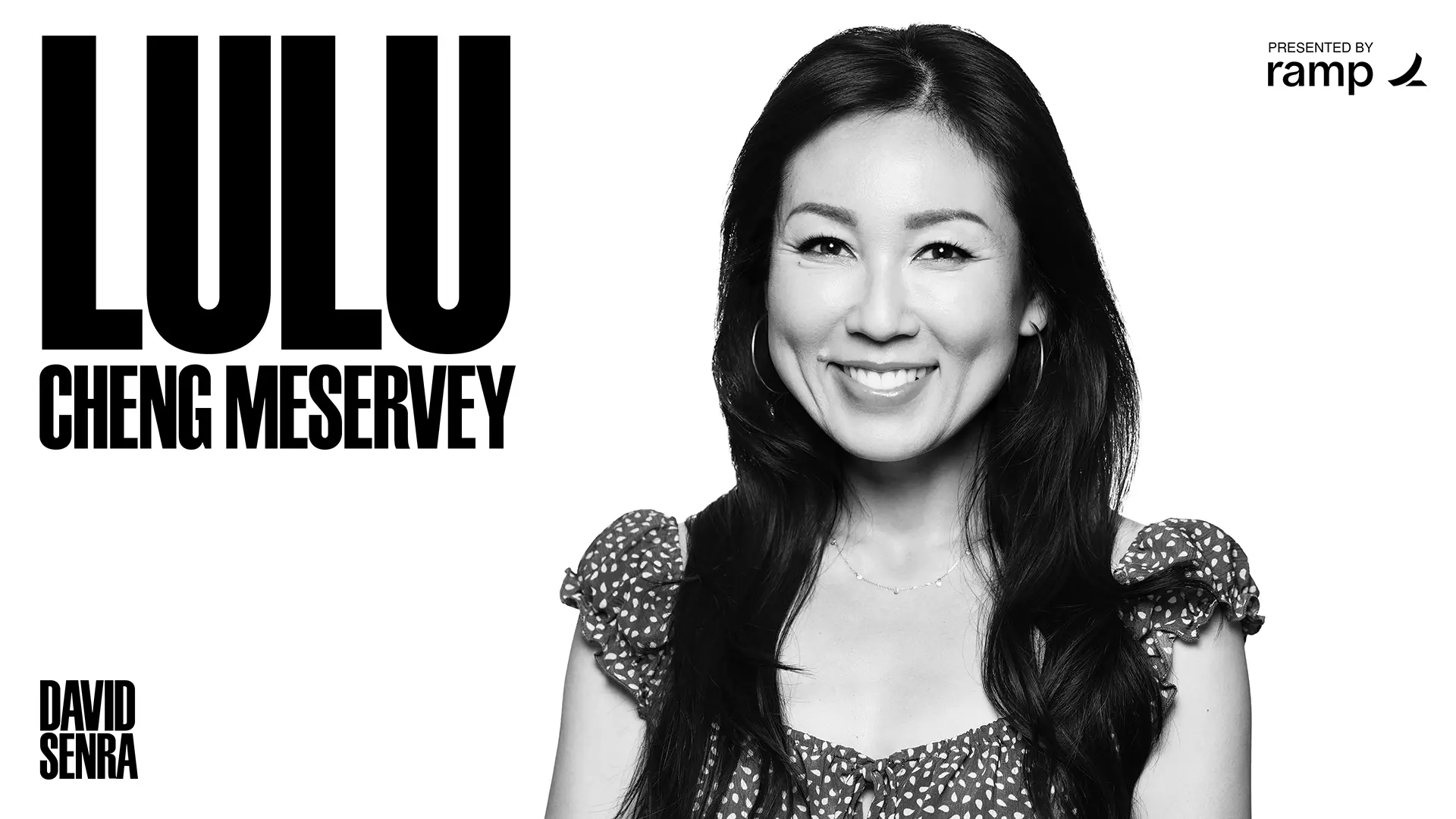
Lulu Cheng Meservey
Lulu Cheng Meservey is the founder of Rostra.
Summary
Lulu Cheng Meservey is the founder of Rostra and one of the world's most trusted communication strategists, supporting companies such as Anduril, Shopify, Cognition, and Coinbase. In 2016, she co-founded TrailRunner International with Jim Wilkinson, who had just run corporate affairs for Alibaba's record IPO. She had never done comms in her life. One of her first clients was Anduril, in the company's first year, when Palmer Luckey had just been pushed out of Facebook, and no reporter would give him a fair hearing. So they stopped asking. They went to Quantico, to Camp Pendleton, to the CIA, and showed people the technology directly.
She left to run communications at Substack, then joined the board of Activision Blizzard—and in October 2022 stepped off the board and into the company as chief communications officer. Microsoft's $69 billion acquisition was under attack from the FTC. She fought back in public, under her own name, which almost no executive in a deal that size is willing to do. It closed in October 2023.
In March 2024, she started her own firm, Rostra, and published Go Direct: The Manifesto. The first project out the door was Cognition's launch of Devin, the first AI software engineer. Shopify put her on its board that June. In December 2025, she raised a $40 million fund to back founders she believes in. She takes about a dozen clients at a time and has a waiting list of hundreds.
She named the firm after the Rostra, the speaker's platform in Rome, where a man could climb up while the city believed one thing and step down after it believed another.
Episode transcript
David Senra: So, you were born in China, yet you speak Norwegian. Can you explain what occurred in your life between these two points?
Lulu Meservey: Yes. I was born in rural China. I was born in a little village where, I think, my mom didn't even know whether I would come out as a boy or a girl, or in 6 months or 12 months, or there was very little knowledge, and so I emerged. And we were able to leave China because my father was sent to Germany to get his PhD in astrophysics. I think at that time the number of people who wanted to leave China far exceeded the number of people who were allowed to.
Lulu Meservey: So technically, we were supposed to stay behind as a kind of collateral to make sure that he came back. However... We end up settling in Germany. My mom and I actually do go to join my father at the University of Heidelberg, where he was getting his PhD, and we started moving around to different universities where he would study at the University of X, to work at the observatory. And so, the University of Oslo is one of the places where he was sent to work on astrophysics, and that's where I did a lot of my growing up, went to public school, and I just became a little bit Norwegian.
David Senra: How many different countries did you live in, then?
Lulu Meservey: Yeah, I grew up in China, then Germany, Norway, Canada, at which point we were able to become Canadian citizens, which was very exciting and welcoming for us, and then grand slam, big dream, the United States. So, I came to the US for college, have been here ever since, and a few years ago, naturalized in the first Trump administration, which was very exciting for me.
David Senra: How long have you known that you wanted to come to America? Was it just for school, or did you think, "No, I'm going to live here after"?
Lulu Meservey: No, I just wanted to live and be here and be American. It was a dream that was sort of inherited from my father. If he hadn't gone to Germany, he would have tried to go to the US. In fact, the only reason he couldn't was because it was oversubscribed as a destination at the time. So, we've had kind of a multi-generational dream to come to the US. And what I'm doing now feels like the culmination of multiple generations of work.
David Senra: I consider you a very singular player on the board.
Lulu Meservey: Mm.
David Senra: I don't know anybody else who has a business like yours. You do the comms for some of the greatest tech founders in the world. You have anywhere, you know, from let's say 10 to 12 clients at a time, but you have a waitlist of 1000 companies that want to work with you.
Lulu Meservey: A little less.
David Senra: Yeah, a little less. They want to work with you. But it's always the elite of the elite. And a few of these people have been on the show, for example, and I've talked to them in private about you. So, it's an unlikely story. I happen to know this because we've spent a bunch of time together over the last year and a half. But can you explain... Okay, you go to college. What do you think you were going to do when you were in school?
Lulu Meservey: I did not know what to do. You and I have talked about friends of ours who've known, maybe from an early age, that they wanted to go in a certain direction. I did not know, and I think because the thing that I'm doing actually has not existed until I started doing it, and there are many other things like this out there that don't exist until someone starts doing it, so I think there's a lesson there.
Lulu Meservey: But what I really was forced to do, and then enjoyed doing, was some version of super-duper reading the room, and then figuring out how to become and speak as someone that the room would accept. And as a kid moving around and always being the weird kid with the weird accent and the weird clothes, it's a forced, almost survival mechanism.
Lulu Meservey: I'll tell you a story about, in Norway, in a second, how I learned this, and when I got to Canada, I actually learned English from a book called "English." It literally was like a green and blue book. I could picture it. It looked like a Greyhound bus seat type of design called "English."
David Senra: Mm-hmm.
Lulu Meservey: I read it, and I was like Neo waking up from "The Matrix." I was like, "I know English." I thought I knew English. I actually did not, because English, there's the book English, and then there's how people actually use it, English. So, while I was in college, I did an interview with BCG or something that the career office funnels you towards, and thank goodness I did not get this role. Part of the reason I didn't get the role was that they asked me if I had any experience doing something.
Lulu Meservey: And I said, "Yeah, I have had quite a bit of experience below the belt." And the difference between below the belt and under my belt is, in some ways, almost nothing, and in other ways, like in that interview, everything.
David Senra: Mm-hmm.
Lulu Meservey: And so, even now, I feel like I'm still learning to speak English, and adapt, and to think about the fine textures of words and meanings in every different setting.
David Senra: So wait, explain the connection between what you do in comms now with jumping around from culture to culture. You said you have a story about this when you were in...
Lulu Meservey: I'll tell you the story.
David Senra: Yeah.
Lulu Meservey: I'm in Norway, and I'm just desperately trying to fit in and be a normal kid. When you get to the public schools in Oslo, they have something called møteklassen, which is like a welcome class. So, it's like a transition halfway house for immigrants who can't speak Norwegian. And once they think you're ready enough, they transition you out. So, I'm in this classroom, and it's October, and I'm trying to fit in. We had talked about Halloween. Halloween was coming up.
Lulu Meservey: And in the US, you wear your costume to school, and you have a little parade, and it's awesome. In Norway, they knew what this was. So, I show up to school in a full-body rabbit costume. And I mean, it's got the gloves, it's got a tail, like, everything. And nobody else is wearing any costume whatsoever. So I'm the new kid... It's like the only thing worse than my normal clothes was a full-body rabbit costume. I sat there. I had to hold my pencils like this the whole day in class.
Lulu Meservey: And it just turned out that it was not customary to wear these things to school. So, how would I have known that from any of the conversations that I'd had where people knew the date?
David Senra: Mm.
Lulu Meservey: I thought we were all on the same page, guys. Like, it's October 31st. We talked about this. And it just wasn't a thing you did at school. So, the takeaway is that there's a lot that is unspoken. There's a lot of context that people just assume that you might have, and if you think you do and you actually don't, it will be exposed in sometimes very dramatic ways.
David Senra: Okay, so let's jump into exactly what you do today, and why you think it is needed more than ever.
Lulu Meservey: Mm-hmm.
David Senra: If I walk up to you, I don't know you at all, and I say, "Hey, nice to meet you, Lulu. What do you do?" How do you describe what you do?
Lulu Meservey: What I describe is that I help founders build a movement to help their company succeed. If you are building like the seventh B2B SaaS in a pretty crowded category, I'm not sure that's the most relevant for you, and it's not necessarily the thing that brings me joy.
Lulu Meservey: But if you are building something as we've talked about Anduril, it's sort of easy to talk about because it's such a perfect case study from the past, but we've talked about Ramp or General Matter, these... You need to build a movement of people to believe something counterintuitive because you are essentially creating something new that, if it were obvious, it would've been done.
Lulu Meservey: By virtue of it not being done, you now have to break through all of the existing biases and rally people to you, and these are people who have lots of great options that they have to say no to, to come join you on this quest, and that is building a movement.
David Senra: So, explain the context of what was going on at the time in the country when you started working with Anduril.
Lulu Meservey: I had accidentally sort of become the co-founder of a communications firm. And I didn't know what comms was, and I didn't know what PR was.
David Senra: Okay, you got to say more about that. If you don't know what comms and PR is, how do you accidentally become the co-founder of this?
Lulu Meservey: For grad school, I studied diplomacy, within which I studied international security, within which I studied counterinsurgency. So, I really wanted to work in and for the government and on security issues, and I could not because I was not a citizen at the time, so it was difficult. So, I ended up in Washington, DC, doing what felt like a pretty close thing, which was political risk, i.e., if Google is entering into Egypt and there's a coup, what do you do? It's not a normal business situation.
Lulu Meservey: Or if Alibaba is having its biggest IPO in the US, the things that they have to overcome are not just normal business things. There are fears about China, which to this day continue and many are warranted, and about data privacy and all these things.
David Senra: Mm.
Lulu Meservey: Anyway, I was working on political risk and ended up partnering with the man who was helping Jack Ma run their IPO. And he was born and bred Texan, had worked in government, and had now become the head of corporate affairs for Alibaba. After the successful IPO, he decided to start a firm, and he asked me to go and do it with him.
Lulu Meservey: Jim Wilkinson, someone whom I consider a great mentor and teacher, took a bet on me, someone who has never done this before. And he said, "I think you can figure this out." I didn't know if I agreed, but I went with him, and so here I was, the co-founder and COO of a comms firm, and I was googling like, "What is PR?" "What is communications? What is this?" And I would learn essentially by embarrassing myself. We would go into meetings, and again, credit to Jim for just throwing me into these situations.
Lulu Meservey: But we would go into meetings with leaders of Citadel and major, serious operations, S&P Global. I would say things. Sometimes they landed. Other times, somebody would pull me aside at the end of the meeting and be like, "You know, maybe fewer like "Power Rangers" references next time." We had a meeting with Gap Inc., where it was very clear that I didn't know what corporate communications was. I thought it was like put on a sale, a summer sale, and just learned the hard way by doing.
David Senra: Your clients, in this case, they wanted traditional PR, correct?
Lulu Meservey: Yes.
David Senra: Which is not what you do at all, today.
Lulu Meservey: Currently, it's not what I do.
David Senra: Yeah.
Lulu Meservey: When I was learning traditional comms, it was very much wipe on, wipe off, what am I doing here? And I didn't have any credentials. You know, like I'm nobody. Nobody would answer my emails. People didn't want to deal with me. Reporters didn't take me seriously, as they probably should not have. So, all understandable. But then, I get to know Matt Steckman, now president of Anduril, and Trae, chairman of Anduril.
Lulu Meservey: We were all in DC at the time, and Trae recommended me to the team to handle their comms, and they had talked to a bunch of people about this.
David Senra: What was the state of their business when this is happening?
Lulu Meservey: It was pretty early. It was in the first year of the company. Our company was founded around the same time as them. Of course, our PR firm didn't become Anduril, but it was around the same age at that point, and they were in the process of defining what the company was. They had actually been in semi-stealth the whole time, where there was the website, and the website provided just enough fodder for all these conspiracy theories about what is Palmer doing, but not enough information to...
Lulu Meservey: It wasn't like today, where you do your launch moment, and you have your cinematic launch video. It was just like the company existed, and there were rumors and gossip about it, but not fully defined. And to their credit, they recognized that it was time to really define it.
David Senra: And you would compare their idea at this time in history to a counterinsurgency, correct?
Lulu Meservey: Yeah.
Lulu Meservey: I believe that they were very much like an insurgent.
David Senra: Okay.
Lulu Meservey: They were going...
David Senra: Can you say why?
Lulu Meservey: Yeah. They had a smaller team than the people that they were up against, like imagine Boeing or Raytheon. They were going against the grain of their community. So, especially in Silicon Valley, it was super-duper not cool to work with the government. That's when Google had employees walking out, protesting any involvement in Project Maven with the DoD, and they didn't have access to mainstream information propagation networks. For example, the media just hated Palmer.
Lulu Meservey: This was when he was kind of persona non grata in tech and mainstream for supporting Trump and not supporting Hillary, while he was at Facebook. So, it was pretty soon after he was pushed out, fired for political beliefs at Facebook, which is kind of mind-blowing to think today. But at the time, it was like, of course, he should be. Of course, he should be a pariah. This is unacceptable for someone to hold these political beliefs.
Lulu Meservey: And so, this was the situation that they were in. And they rightfully decided that they were going to take matters into their own hands and create their own stories and create their own ways to get it out there.
Lulu Meservey: So, they took a massive bet on me, which really changed my life, because Palmer's, sometimes very kindly, is like, "You helped us with comms." And we're like, "Actually, he helped me with comms." You know, I learned how to do comms by working with Palmer, and Trae, and Brian, and Matt.
David Senra: I have a question for you. The way Palmer is now, where, like, he takes the fight to them, he goes direct. I know that's part of your manifesto. Was he like that back then?
Lulu Meservey: Mm-hmm.
Lulu Meservey: He still had that same fighting spirit. Now, the environment was different, and so it would land differently, and his audience was a little bit different. So, it would've looked different on the surface, but I think the fighting spirit and the instinct was there. And that's why I had this wonderful opportunity to work with these great guys at a time when I was objectively really underqualified. They could've gotten the best of the best. They could've gotten anybody. And I will always be so grateful.
Lulu Meservey: This is why I talk all the time about being so grateful to these guys. It's like you don't understand. People don't understand. They enabled me to learn how to do comms. I would not be in this position. I would be at a regular PR agency doing regular PR agency things if it hadn't been for this.
David Senra: Do you really believe that, though? And I definitely believe that, the influence and your appreciation for them, but I know you too much.
Lulu Meservey: Mm.
David Senra: Your personality would not allow you to be a normal person working in a normal company. Even the way the structure of your company is incredibly rare.
Lulu Meservey: Yeah.
David Senra: I actually don't believe that you believe that.
Lulu Meservey: Yeah. I don't know what I would be doing. Maybe I would've ended up here by some other means, but it's...
David Senra: Doesn't mean you would've found this path but you would've...
Lulu Meservey: Yeah.
David Senra: You're too singular of an individual.
Lulu Meservey: I would've rage-quit and ended up somewhere else. I don't know where.
David Senra: Yeah, for sure.
Lulu Meservey: I don't know where.
David Senra: For sure.
David Senra: Yeah.
Lulu Meservey: But that is where the lessons of counterinsurgency and accepting that you don't have the mainstream information networks, and that you don't have a lot of people already on your side. And just not relying on those and building your own came into play. So, we didn't do...
David Senra: And so this is very, like... I think this is, like, the playbook for startups, right? So explain...
Lulu Meservey: Yeah.
Lulu Meservey: Block and pose. Here we go.
David Senra: Yeah.
Lulu Meservey: Let's go.
David Senra: I love this idea of yours. Explain the similarities between somebody who has an idea to start a company or a movement, which I love, the phrase you use, and a counterinsurgent, and what they have in common.
Lulu Meservey: When I was studying counterinsurgency, they made us pretend to be a terrorist group. Because the best way to study the thing that you're fighting is to understand the thing that you're fighting. And so, they had us create these mock terrorist groups. And you had to come up with your mission and vision. You had to create your manifesto. We can talk about the importance of a good manifesto. This is when I got really manifesto-pilled.
Lulu Meservey: I think we're, maybe, now overdoing it. Maybe part of that is my fault. But the value of a good manifesto cannot be overstated.
David Senra: What makes a good manifesto?
Lulu Meservey: A good manifesto looks at the world and says, "The people that we're fighting or trying to replace, they have more numbers than us, they have more money than us, they have more force than us, and today they have more legitimacy than us. But we are going to beat all of that with more intensity."
Lulu Meservey: There's a quote that's maybe apocryphal that says, "One man plus the truth is a majority," and I think that applies to insurgent movements, where a small number of people who are willing to die for the cause, in this case literally, and have that intensity, intensity can overcome everything.
Lulu Meservey: There's no amount of money or incumbency that can overcome somebody who wants it so much more. The purpose of a manifesto is to make concrete that intensity, and paint for people a vision of what the world could be, such that when they see it, they are willing to leave their jobs, families, security, everything, to go and make that happen. And a good manifesto is once you see it, you can't get out of your head. You have to go do it.
Lulu Meservey: So, the manifesto is the magnet. And if you don't have that, you have no right to go up to someone and say, "Leave your comfortable job and leave your beautiful family, and come with me on what is probably a death mission." Who do you think you are? You have no right unless you have articulated that.
David Senra: I want to tell you about the presenting sponsor of this podcast, Ramp. I have been reading a lot about SpaceX lately. SpaceX is one of the most valuable businesses in the world. And one of the main themes in the history of SpaceX is constantly attacking and questioning your cost. Ramp helps many of the most innovative businesses in the world do exactly that.
David Senra: The median company running on Ramp cuts their expenses by 5%, and one thing SpaceX has demonstrated is that a religious dedication to controlling costs can help actually increase revenue, because you can pursue opportunities you couldn't otherwise. And we see that in the Ramp data, too. The median company running on Ramp also grows their revenue by 16%. So, when you're running your business on Ramp and your competitors are not, you have a massive competitive advantage that compounds over time.
David Senra: Ramp is the only platform designed to make your finance team faster and happier. Many of the top founders and CEOs I know run their business on Ramp. I run my business on Ramp, and you should, too. Go to ramp.com to learn how they can help your business save time, save money, and grow revenue. That is ramp.com.
David Senra: So, you've written a great manifesto. It's called "Go Direct."
Lulu Meservey: Yes.
David Senra: Okay? Can you explain the ideas that are contained in your manifesto and why you think it's so important for founders today to do this?
Lulu Meservey: I remember trying to name the manifesto, spent days and days, and then we ended up with "Go Direct: The Manifesto." It was one of those things that you toil over for weeks, maybe months, and then end up writing it in like two hours. The key idea in the manifesto is that traditional PR, as we know it, is dead. Maybe you can see the body, but it doesn't have a pulse. And it's a good thing, because traditional PR meant that you would have to filter your message through somebody else's prism.
Lulu Meservey: You would have to be dependent on somebody else to have the goodwill and the alignment, and the means to faithfully portray to the world what you want to say. That actually very rarely happens. If you're doing something pretty uncontroversial and well understood, that can go fairly smoothly, because it won't be distorted that much.
Lulu Meservey: But if you're doing something unconventional, far outside the mainstream, unpopular, then you do not want this to be filtered through somebody else's prism. And the second thing is, I believe that there's a lot of virtue in being self-reliant for its own sake. For its own sake, even if nothing is on the line. We are sovereign human beings. We should be in control of our destinies.
Lulu Meservey: We should be in control of our narrative destinies and the stories that help us achieve the destiny. This is narrative sovereignty. You never just want to be depending on someone else. And so, the manifesto was a way of giving founders permission and exhortation that nobody's going to do this for you, and that's good. It is in some way scary, but it is in some way liberating because you're the guy. There's no other guy who's going to go do this for you.
Lulu Meservey: And the same amount of seriousness that you apply to the product or the code or the hiring, you have to be applying to your story, and you're the only person who can say it. You're the only person who can do it that effectively. Because you have, at the beginning, especially, not a lot of evidence to back you up. You have your word. And you're going to back it up with your personal reputation, right?
Lulu Meservey: The greatest founders that we know go to the people that they know and say, "I know this sounds crazy. Hear me out. I'm going to do this. We're going to do this together." And the other person's like, "All right. Okay, David Senra. This seems okay because you're doing it, and I trust you."
David Senra: Mm-hmm.
Lulu Meservey: So, there's just no other way around it.
David Senra: So, when I read your manifesto, one thing I love about you, and this, is this idea that it's a very old idea. You take these ideas from history and from the past.
Lulu Meservey: Yes.
David Senra: And so when I'm reading your manifesto on your website, I'm like, "Oh, this is like Julius Caesar. This is like Napoleon. This is like Churchill.
Lulu Meservey: Yes.
David Senra: This is like Abraham Lincoln." You're just applying it to, in many cases, the legendary tech founders of today.
Lulu Meservey: Yeah.
Lulu Meservey: The reason the company is called Rostra is because Rostra was the speaker's platform in Rome from which place history was changed, and there were many times when the mood in the city was A, somebody hauled themselves up there and stood to face the crowd, and then they stepped down, and the mood was B. And this happened after Caesar's murder.
Lulu Meservey: The city completely turned in its perception of what had just happened and who was the good guy and who was the bad guy, and who had legitimacy, because of words spoken from the Rostra.
Lulu Meservey: So, I think that we have figured out how to relate to, and move and rally and gather other people a long time ago, and some of that art has been lost in recent times because we're just distracted and our attention spans are shot.
Lulu Meservey: But these are all things that we figured out a long time ago.
David Senra: Okay, so let's go back to where we were earlier. You started working with Anduril. This idea of go direct comes after your experience with them, correct?
Lulu Meservey: Mm-hmm.
David Senra: Okay. How did the work you were doing with Anduril and Palmer Luckey shape this manifesto that's going to come a few years later?
Lulu Meservey: Mm-hmm.
Lulu Meservey: This is necessity is the mother of invention.
David Senra: Okay.
Lulu Meservey: And a lot of companies now that consider going direct as a default, I believe have Anduril and Palmer and Matt, Brian, and Trae to thank for this because going not direct was actually just not an option. You're going to call some mainstream reporter and say, "Hey, the guy who got fired from Facebook for supporting Trump, that you hate, is doing a thing, and you should hear him out," just very hard to do.
Lulu Meservey: There were a really small number of reporters who were fair during that time that I remember, but it just wasn't the way. And so, we were not going the traditional path of TechCrunch or what Palmer calls trying to get the coolest startup award at one of these conferences. We were going directly to Quantico, speaking to the Marines there.
Lulu Meservey: Palmer went to Camp Pendleton, going to speak at National Defense University, going to speak to the CIA, just going to the people directly, literally walking into their building and speaking to them, and then showing them the thing. And then same for recruiting. Instead of letting some hostile outlet...
David Senra: Yeah, you said this before.
Lulu Meservey: Yeah.
David Senra: Okay, you go to whatever, I'm just going to make it up, New York Times, to get a message out.
Lulu Meservey: Mm-hmm.
Lulu Meservey: Yeah.
David Senra: To get to the actual 200 people you want to reach, you're just assuming, okay, maybe 500,000 people read the story, and hopefully, the 200 people you want to reach that actually matter to what you're trying to... The impact you're trying to have in the world get to that. And we're just like, "Well, let's just cut that out and just go directly to them."
Lulu Meservey: Just tell them.
Lulu Meservey: Just tell them.
David Senra: Yeah.
Lulu Meservey: It's like you and I both care about a really shockingly small number of people's opinions, and these are people that, in our case, are a text message away. Why would you go to somebody else as a supplicant, asking them to carry the message for you so that they can filter it through their worldview, and then their editor, and then put it into their publication, and then hope that that spray and pray reaches some of the people that you care about? Also, by the way, you lose...
Lulu Meservey: We were talking earlier about intensity and the power of intensity to overcome a lot of other things. You lose the intensity along the way because it becomes watered down. So, the founder relays the message to their PR person, who then puts it into their words or tries to remember it, and then relays it to a reporter, who then pitches their editor, and then they write it, and then the editor weighs in, and then it goes out.
Lulu Meservey: And then whoever it's reaching is trying to interpret it. This is why in AI right now, it's so stark. You've got some AI companies who do not need a mainstream audience because all they care about is recruiting five top ML engineers, and they actually know who they are.
Lulu Meservey: And they're going to go, what, to...
David Senra: Good Morning America?
Lulu Meservey: Good Morning America.
David Senra: Yeah.
Lulu Meservey: The Kelly Ripa show.
David Senra: Yeah, what are you doing?
Lulu Meservey: Oprah, and blast out to some big number of, who knows who these people are, as opposed to a podcast with a lot fewer listeners. Brian Armstrong went to a podcast called "Pod of Jake," and it was a guy called Jake.
Lulu Meservey: And he had, I don't know, 100 listeners, and then afterwards, he had 115 or something. But it reached people like Brian. Or there's a few Substacks or there's a few people on X. You know where they're getting their information. Just go there. Work backwards.
David Senra: Does this require... Because I can't tell the conditions in which this occurred, but I had the craziest experience where I wound up spending eight straight hours with Palmer, and I found him... I've never met a mind that was like him. Unbelievably charismatic, crazy storytelling, but he is an inexhaustible mind, in my opinion.
Lulu Meservey: He is incredible.
David Senra: I couldn't reach the bottom of him saying interesting shit that...
Lulu Meservey: You tapped out. Wait, is this when you had to call emergency backup podcasters to come help?
David Senra: Okay.
David Senra: I've told you the story before.
Lulu Meservey: You had to call a friend.
David Senra: So, no. We just happened to be with... It was a weird circumstance.
Lulu Meservey: Ah.
David Senra: I can't even tell you details, but there just happened to be other podcasters, and I was just like, "Dude," after three hours, I was like, "You've got to start asking questions because I can't..."
David Senra: It was so wildly entertaining, and it's similar to, I would say, Tobi Lütke in a different way. It's like you can't predict what his response to your statement's going to be, and that makes a very fascinating... But in this case, it was like, "Holy shit, I got to tap out on this." But he's also one of the most charismatic people on the planet.
David Senra: So, does going direct only work with that kind of founder?
Lulu Meservey: No. It works better with that kind of founder, but you don't have to have traditional personal charisma.
Lulu Meservey: You can be more quiet, more introverted. You can have a whole range of personality types, but you have to have intensity of belief in the idea. So, the idea has to be fleshed out and coherent, and then your belief in it needs to be unassailable.
David Senra: So, how much of your work is working with the founder to make their thinking clear enough? Because there's that idea that Steve Jobs would say, "The simpler the idea, the more it'll spread," right?
Lulu Meservey: Mm-hmm.
David Senra: And so, he would spend... There's actually a book on this, an entire book on this. There's two books called... One's called "Insanely Simple." The other one's called "The Presentation Secrets of Steve Jobs." I've read both of them.
David Senra: And it was like, "He's such a clear thinker, and look at the way he describes his products and the way he does an interview."
Lulu Meservey: Mm-hmm.
David Senra: It's like there's so much work behind the scenes that you're not seeing for him to distill his thinking down to that.
Lulu Meservey: Mm-hmm.
David Senra: Is that a lot of the work that you're doing with these founders?
Lulu Meservey: Yeah. So, I'll give you an example of a founder that I met at an event. I actually don't remember his company. We don't work together, but that's what makes him a good example. We spoke for maybe seven minutes, and for six of the minutes, he's saying, "Okay, I have a business where anybody can become their own cloud kitchen. There's all these people at home who know how to cook really good food, and there's people who want more variety than the stuff they get on DoorDash, and I'm connecting them, and there's a network of a..."
Lulu Meservey: And there's a lot there, and we had to distill it down. And I'm listening to this, and I thought, "Okay, so you're turning a cook into a chef." And he said, "That's it," and he ran with it.
Lulu Meservey: Sometimes it's just having somebody who's not necessarily smarter than you, and I don't know more about the topic, especially some of these AI founders who are just technical geniuses.
Lulu Meservey: But sometimes someone sitting across from you can take your word cloud of thoughts and ideas and suggest for you a synthesis, and for you to see that coming from someone else makes you recognize that that actually is the core of your idea, and now you have the compressed, simple thing that you can share and spread.
David Senra: Okay, so you have a simple idea that can spread.
Lulu Meservey: Mm-hmm.
Lulu Meservey: Mm-hmm.
David Senra: You have to be... You're starting a movement, therefore you have to have some kind of passion or very... It's almost like you're mission-driven. How many clients do you have at this moment?
Lulu Meservey: Over a dozen.
David Senra: Okay, oh, now we're expanding. Okay. So, I didn't know you're expanding your company.
Lulu Meservey: Yeah.
David Senra: So, say out of a dozen, how many of them are not mission-driven?
Lulu Meservey: None.
David Senra: Okay. So, you need to be mission-driven. What other characteristics...
Lulu Meservey: It doesn't work. How are you going to get somebody else to believe it if you don't believe it?
David Senra: Okay. So, perfect.
Lulu Meservey: Right?
David Senra: So, what I'm trying to get to is, what are the things that, if the founder's listening to this, need to do before they can go direct for it to actually work?
Lulu Meservey: They need to convince themselves.
Lulu Meservey: You have to go out in concentric circles, and the dot inside all the circles is just you, the sovereign individual, who believes that you're going to lead this movement. If you haven't convinced yourself of what it is and why it's worth doing, that you're going to dedicate your life to it, it's like if Napoleon's your general, if he's not going to die for it, why would you die for it? If he's not going to charge the bridge, well, why am I, some schmuck, running across the bridge? Same with Julius Caesar, right?
Lulu Meservey: At the battle against Vercingetorix, where he came out and was the easiest target out of anybody because of the way he was dressed.
Lulu Meservey: People saw him, and they rallied back up. He's going to fight, we have to fight. Joan of Arc, everything. You see the leader, or you see a leader doing the thing that you now feel ashamed to not be doing.
Lulu Meservey: The person in the middle has to be the most convicted, the most passionate, and have the clearest idea of the promised land.
David Senra: You know what just hit me while I'm listening to you speak?
Lulu Meservey: Yeah.
David Senra: I think this is a perfect opportunity. Articulate why you're doing this. Why even start the company? You work like a dog seven days a week.
Lulu Meservey: Mm-hmm.
David Senra: I call you 11:00 at night on the East Coast, and you pick up, and you have a bunch of kids, and you have this crazy life.
Lulu Meservey: Yeah.
David Senra: So, why are you... What is your mission? Why even do this?
Lulu Meservey: I think the world is better when we allow new technologies to take root and flourish.
Lulu Meservey: And in my opinion, building the technology is often not as hard as getting people to use the technology. It is not if you build it, they will come. Which, by the way, originated from "Field of Dreams." Did you know this?
David Senra: No.
Lulu Meservey: That's the origin of that quote. I thought it was from the Bible or something. It's from "Field of Dreams."
David Senra: No.
Lulu Meservey: You build it, they will come. They're talking about a stadium. It is not if you build it, they will come. It's you might build it, maybe nobody uses it.
Lulu Meservey: Maybe it gets regulated out of existence. And maybe nobody wants to come work on this thing and you get overtaken.
Lulu Meservey: So, in my opinion, the greatest and most underestimated barrier between technology existing and actually having an impact is people understanding it, welcoming it into their lives, and wanting to go work on it.
Lulu Meservey: And so there are a lot of really brilliant people working on the engineering and in the building.
Lulu Meservey: I don't think there's a commensurate amount of effort and thought being put into the second part, the human part of the equation of convincing people to want it and use it and work on it. You see that with AI today, right? We can build the AI.
Lulu Meservey: Is the government going to allow it to be released? Are people going to use it? We can build data centers. We know how to build a data center.
Lulu Meservey: What are you going to do when there's a moratorium because people don't want it?
David Senra: This is a perfect example. AI right now has the worst reputation. It's the worst favorability rating of almost anything. You've seen people talk about AI at commencement addresses, and they're getting booed out of the room. What would you do differently? Explain the problem they have right now, what they're doing, and then how you would approach it differently.
Lulu Meservey: A lot of the CEOs are describing that AI will cause massive job loss. Most people will look at that and say, "Don't say that it causes massive job loss."
Lulu Meservey: I look at it a little bit differently. If you believe that it'll cause massive job loss, and you're in that rare position, I think you do have an obligation to warn people and to try to get us to prepare for it.
Lulu Meservey: But the really small but really important thing is, don't look happy when you're saying it.
Lulu Meservey: Don't be smiling when you say there's going to be a 50% unemployment rate in a year.
Lulu Meservey: Eric Schmidt doing that commencement speech...
David Senra: Explain the context of that in case people haven't seen it, and then what he did and then what you would do differently, because I'd like your response to this.
Lulu Meservey: Eric Schmidt gave a commencement address, and among other things that were totally fine, he said that AI will change the world, and the question is whether you will help to build it, and that it's going to disrupt all of these jobs, and it will change the landscape. And I forget his exact words, but the vibe of it was "It is taking away jobs. Deal with it, and get on the train or you're on the tracks."
Lulu Meservey: Two things. One is at the center of his story, the protagonist wasn't the human, and it wasn't the person he was speaking to. He wasn't saying, "You can go change the world, and you have the world's most miraculous technology to use. Think of what you could do with this." Instead, he said, "The technology," the protagonist, "is coming whether you like it or not. You are potentially in its way, or you can get on the bandwagon with me," which is just the wrong framing.
Lulu Meservey: And then the second is when he was talking about the possibility of AI essentially taking half the jobs of these anxious graduates in the audience, he didn't seem upset. He didn't share what fear or anxiety or didn't recognize what it would be. He dismissed any potential anxiety that would arise from that.
Lulu Meservey: He sounded completely secure and blasé about this happening. And so, a lot of people have opined on the messaging of how you're going to talk about job displacement. Are you a doomer? Are you over-optimistic? And all of this aside, a human talking to another human should recognize the other human's reaction to that news.
Lulu Meservey: And if I'm telling you that you are potentially going to lose status, purpose, income, and security, and I seem just fine, and I'm smiling as I say it, automatically there's no trust between us. You don't even think of me as... Barely as the same species, but you don't think of me as being on your side. And you don't assume that other things I say are things that you would agree with or relate to.
Lulu Meservey: So, the same way that if you and I are disagreeing, and we're fighting, and we don't know if we can ever get on the same page, the best tactic for me is to find something that you and I agree on and to lay that as the foundation. It can be some anodyne thing, like you and I both really like that hot chocolate. You didn't. Completely unrelatable to me. So, it would be something else.
David Senra: People don't understand. She has hot chocolate in that cup. Every time I see you...
Lulu Meservey: It's what fuels me.
David Senra: It's inappropriate as an adult.
Lulu Meservey: It's what fuels me.
David Senra: You are a grown adult.
Lulu Meservey: It's what fuels me, and that's why there's alpha in the fact that others don't recognize the potential of this as a performance beverage.
David Senra: At every restaurant I'm at with you...
David Senra: You're a grown-up.
Lulu Meservey: See, this is why...
David Senra: You should not be having hot chocolate every dinner.
Lulu Meservey: Well, this is why I don't have to spray my nose with the zinc stuff because I have this.
David Senra: It's not my nose. It's my throat, because I talk a lot.
Lulu Meservey: Yeah, well, the hot chocolate is helping me speak.
David Senra: I speak for a living.
Lulu Meservey: If we were arguing, and I wanted to get us back on the same page, I would say so.
David Senra: This was an argument.
Lulu Meservey: Yeah. Well, now we have to reconcile.
David Senra: Yeah.
David Senra: Yeah.
Lulu Meservey: So, now we have to be like, "This is a really beautiful place. I'm glad we're here."
David Senra: Thank you for the Aman New York for letting us shoot here, by the way.
Lulu Meservey: Shout out, Aman New York.
David Senra: Yeah.
Lulu Meservey: Now that we're back on the same page, you can assume that things I say in the future are things that you will probably agree with because you believe that I'm someone with whom you have things in common. So, a lot of the senior people in AI that the general public sees get introduced to them in a way where they automatically believe, "This person has nothing in common with me, and anything else they say, I cannot assume that I would assess the situation the same way."
David Senra: Deel is how the best founders turn the world into their talent pool. I've been studying how history's greatest founders operate for a decade, and one thing they all have in common is they understand that recruiting and hiring the very best talent is your most important priority. A players recognize other A players, which is why top companies like Ramp, Shopify, ElevenLabs, Uber, and DoorDash all use Deel. Many of the top founders I know have personally invested in Deel after using their product, and what they discovered is that Deel is the best company in the world at building infrastructure for global hiring.
David Senra: Deel will help your business hire, pay, and manage any worker anywhere in the world so you can retain the best talent anywhere and spend the rest of your time focusing on what you do best, delivering value to your customers.
David Senra: The founder of ElevenLabs has a great description of the value Deel can give your company. He said, "We built ElevenLabs to break down language and communication barriers. With Deel enabling us to hire and support exceptional talent anywhere, we can accelerate our innovation and bring more voices, stories, and ideas to every corner of the world."
David Senra: Deel is trusted by over 40,000 businesses. Learn how they can help your business today by going to deel.com/senra. That is deel.com/senra.
David Senra: Something that I've heard you say a few times is that humans crave a story. One of my favorite all-time quotes is from Steve Jobs. He says, "The storyteller's the most powerful person in the world."
David Senra: And something that I think is important, because I was sitting here listening to you when I asked you, "Oh, what's your mission behind, why even do this?" And you were talking about the importance of creating new technology. I think you and I, what you're doing on the PR side and what I'm trying to do with the podcast is this new podcast, this show essentially started out as we should have a love letter to capitalism, right? It's like, I'm the son of a Cuban immigrant. My grandfather was born in Cuba. Castro takes over. He's like, "This is f***ed. We need to get out of here."
Lulu Meservey: Mm-hmm.
David Senra: That one decision by a man I don't ever remember meeting changed the trajectory of my life.
Lulu Meservey: Mm-hmm.
David Senra: And what's weird to me is capitalism seems like one of the greatest inventions humanity ever had, a huge force of good, and one of the reasons that America's the most powerful and prosperous nation on the planet. It should be celebrated.
Lulu Meservey: Mm-hmm.
David Senra: I remember sitting across from Jeff Bezos one time. I got to talk to him for several hours, which was incredible, and I told him, I was like, "The idea that they protested outside of your house and they put a f***ing guillotine in front of your house is insane to me."
Lulu Meservey: Oh, that's wild.
David Senra: And I told him, I go, "You made a magic button that I can press, and anything comes to my house. Used to be two days, now it comes three hours later."
Lulu Meservey: Yeah.
David Senra: And I was like, "That's what..." I was like, "You deserve all the money." He just laughed and laughed and laughed.
Lulu Meservey: Yeah.
Lulu Meservey: Yeah.
David Senra: But I think the other story, you don't displace... You can't just say, "Oh, communism sucks. Look at all the people that have died. Look what happened in Cuba. Look what happened to all these countries." You have to tell a better story. You have to give them a better alternative. I feel the people in AI... I use AI every day. It seems miraculous to me. We use it for the podcast, I use it for learning, use it for entertainment, all these other things. They're not putting forth a better story.
Lulu Meservey: They're not doing it in the right way, also. There are people who have painted really wonderful, optimistic visions of what AI could create in the future, but it feels like PR, and people write it off. And it feels heavy-handed.
Lulu Meservey: The last time there was a really effective techno-optimist message was "The Jetsons," and it's because they weren't beating you over the head with "Technology's going to make your life great." The show was about other stuff. I don't know. They'd go around, they'd go about their day.
David Senra: The family dynamic, everything else.
Lulu Meservey: It was like a family sitcom.
David Senra: But you have a robot in your house doing all your work. You have a flying car.
Lulu Meservey: It was in the background. It was ambient.
David Senra: Yeah.
Lulu Meservey: It was ambient and assumed.
David Senra: That's a great point.
Lulu Meservey: Everything techno-pessimist, the tech is in the foreground, and it's about the tech. So, "Terminator" or "Blade Runner," anything where there's a future that you potentially don't want, the dystopian stories about the tech, the tech is the thing people focus on.
David Senra: Dystopian.
Lulu Meservey: But the utopian stories about tech, when you make tech the thing people focus on, they write it off as PR. And so, I think what we want is for the utopian stories about tech or the optimistic stories about tech to have it in the background, just be ambient. A lot of people have read sci-fi novels or...
Lulu Meservey: And sci-fi novels are usually not about the technology itself. It's about a story. Neal Stephenson's "The Diamond Age" is about Nell and her family, and "Seveneves" is about the people being sent to space, and the fact that they have technology to preserve the human race is in the background as an enabler. And these are the types of stories that make people so inspired that they have now started companies.
Lulu Meservey: You and I have talked to many founders who have started companies based on being inspired by sci-fi. Palmer is obviously one of them.
Lulu Meservey: And it's not because they're bludgeoning you over the head with one specific invention. It's because they're showing the better world and the human stories within it with technology in the ambiance.
David Senra: I feel like if people went back and studied David Ogilvy, Claude Hopkins, Albert Lasker, some of the greatest copywriters and some of the greatest founders of the heyday, like the Madison Avenue of these advertising agencies, they just all say the same shit over and over again.
Lulu Meservey: Mm-hmm.
Lulu Meservey: Yeah.
David Senra: They're just like, "Show the benefit."
Lulu Meservey: Yeah.
David Senra: "Show what you're...
Lulu Meservey: Yeah.
David Senra: Don't show your product. Show the change it enables."
Lulu Meservey: Yeah.
David Senra: I think one of the best examples of this is if you heard the story when Steve Jobs was really young. I think he was in his 20s, and he's like the... He tells a story of the most efficient locomotion for any creature on Earth.
David Senra: And it's like a man is really low on that compared to other animals, but you put a man on a bike, and he's way more...
Lulu Meservey: See, I'm not, because I drink chocolate milk.
David Senra: But he's way more efficient than even the condor, I think, is the animal that Steve Jobs compared it to.
Lulu Meservey: Mm-hmm.
David Senra: But he's like, but if you put him on the bicycle, he goes, "So, what I'm creating is the bicycle for the mind."
David Senra: And then you're like, "Oh, I want a computer because this now makes me more efficient.
Lulu Meservey: Mm-hmm.
David Senra: It takes me from a slow-footed human to the fastest animal and the most efficient animal on the planet."
Lulu Meservey: Mm-hmm.
Lulu Meservey: Mm.
David Senra: That is a perfect illustration of I'm not selling you bits and bytes and RAM.
Lulu Meservey: Mm-hmm.
David Senra: I'm saying what is going to occur after you use my product. So, let's go through some examples, because I think some of your clients, you're on the board of Shopify, for example.
Lulu Meservey: Yes.
Lulu Meservey: Mm-hmm.
David Senra: I think Tobi does this perfectly. The way he conveys what Shopify is, is like trying to create more entrepreneurs in the world.
Lulu Meservey: So, one thing I want to point out is talking about the change in you with the product is exactly the right way, and what we were talking about earlier with showing technology in the background of a human story and not just bludgeoning you with the technology is more effective. The second thing that's really effective about bicycles of the mind is the analogy, because he just saved himself two paragraphs of explaining by saying the word bicycle, because we know what a bicycle is.
Lulu Meservey: So, I was talking to a founder a few weeks ago, where he said, "We take a system that ingests the data and then finds the inefficiencies and identifies..."
Lulu Meservey: And I thought about it, and I said, "Oh, it's Ozempic for companies."
Lulu Meservey: Okay.
Lulu Meservey: And if you know what Ozempic is, then you've just saved yourself two paragraphs of explaining, where you get two birds, one stone. You get the complexity, but you also get the simplicity, and it's the best of both worlds.
David Senra: So, give me some more examples from some of your... Like, the way they described their mission. They distill it down to the existence of their company. What is their company doing for the people, their customers, and the people that use their products?
Lulu Meservey: You asked about Shopify. And Tobi is very good at this, where he talks about there's kind of two levels of Shopify. One is the level of this wondrous technology and what it means for the world, and in some ways, it is the technology backing entrepreneurship, and entrepreneurship is going to be the last bastion of human economic value. If they take everything from us, we will always have entrepreneurship.
Lulu Meservey: So, Shopify is sort of like a hedge against every job being taken because they can't take from us our agency and our ability to start new things. Shopify creates the technology to make that happen. Shopify is infrastructure for entrepreneurship.
Lulu Meservey: That's one level for it. Another level is the merchants. Tobi and Harley do a wonderful job of telling the Shopify story through what it has done for the merchants.
Lulu Meservey: SKIMS, successful company, probably going IPO, was possible because Kim and Jens and the team didn't have to sit down and say like, "Okay, we want to start this store, but first we have to figure out how to individually do a web portal and payments and design and all of these things and patch it together." How many people have that as an insurmountable obstacle before they're able to actually bring their business online?
Lulu Meservey: So, the story of one merchant going from someone's dream, and it might be somebody in a small town who is retiring and has always wanted to open a marmalade shop or whatever, or maybe it's one of the biggest celebrities on Earth launching SKIMS, turning that into what is now a thriving business, is the best way to talk about Shopify, even though they're not the hero of the story. So, again, we're seeing a theme. Same thing as what I said previously with "The Jetsons." The Jetsons are the hero of the story.
Lulu Meservey: It is not called "Show About Robots." "The Robot Maid Series," and then the Jetsons are side characters. They're the heroes, the human story is the hero, and then the technology is ambient. It's the same thing with Shopify. In the SKIMS story, Kim and Jens and their team, they're the entrepreneurs, they're the hero. Shopify is ambient, because without them, none of this would be possible in its current form. But you are not bludgeoning people with, "This is about Shopify."
David Senra: Okay, you wrote this essay called "Standing Out" in 2026, that I absolutely loved. You talked about the difference in strategy that founders should take moving forward. Can you lay out the thesis and the main idea behind what you were writing?
Lulu Meservey: This is my Philippiad for the year, which is this tirade I've been going on, which is that everything seems fake now. Everything is fake. Everything is fake.
Lulu Meservey: You go to some of these launches... First of all, every launch uses the same slop cinematic video, same template. It was original a few times, and now it's just like they're all doing it, and then half of them, you go to the engagement, it's completely fake.
Lulu Meservey: You saw one from today, I think you said, that it had like...
David Senra: It has like a hundred likes but 4700 retweets.
Lulu Meservey: Yeah.
David Senra: It's like, why are you paying for retweets?
Lulu Meservey: Yeah. There was another one from a couple weeks ago, and then another one from the week after that, and the reason we know is because you and I have the eye to look for it, and also, I know who some of these agencies are. I get the messages pitching the paid promotions.
Lulu Meservey: I know the people who get the messages, and you can just start to tell after a while that, number one, the amount of engagement this thing has is completely disproportionate to how interesting it actually is, and then number two, when you look through the people who are engaging with it, it's all some random account in a developing country that has no other tweets than shilling products like this.
David Senra: Yeah.
Lulu Meservey: When that happens, I write off the entire company as fake. I don't think this was a fake video or fake engagement. I think to myself, "It's a fake company with a fake founder." I will never buy their product, do business with them. I would never recommend somebody go work with them. The whole thing is fake.
David Senra: What is the advice that you have in the essay to do... Like, what would you do today?
Lulu Meservey: You can do things that can't be faked. So first of all, it's better to put out something that truly represents the best version of what you are doing that might get lower engagement, but the people who are engaging are actually real people, and they care. So, it's better to get 50 people who feel like this is speaking to them than to get the 4,700 retweets or whatever that you saw that seems obviously fake.
Lulu Meservey: Two is there are things that the fakes can't replicate, and these things are relationships with other humans. You should make sure to be telling your friends about it, telling your contacts, and partnering with the people that you've known and trusted for a long time. That can't be faked by one of these fake companies. Another is doing things in the real world, where you might just bring people over to your house and talk about it. Fake company can't do that. There's a sense of taste and discernment and beauty that I don't see in these fake things.
David Senra: Yeah, you keep...
Lulu Meservey: They're not made with love.
David Senra: Yeah, you keep saying that it's going to be like a return to beauty. What does that mean?
Lulu Meservey: There is a return to beauty.
David Senra: What does that mean?
Lulu Meservey: People are allowed to care about objectively beautiful things again. We had, probably, a decade or the better part of a decade where we had to take this aesthetic relativistic view of everything is beautiful in someone's eyes, and this piece of art that is, like, clearly trash, is just as beautiful as one of the great masters, or somebody who is clearly unhealthy and unhappy, is just as beautiful as someone who takes really good care of themselves and...
David Senra: You're talking about putting obese women on the front of a magazine?
Lulu Meservey: Yes, like the Victoria's Secret had this phase of obese women and men. Men. Victor's Secret. It became...
Lulu Meservey: This isn't Victor's Secret.
David Senra: Yeah.
Lulu Meservey: But it was, for a while. Like, why are we all pretending? It was like the emperor's new clothes, the emperor's new lingerie. Like, we're all pretending that this is still sexy, and we're pretending that this still looks good. Anyway, coming off of the back of that, people are allowed, now, to say, "This is more beautiful than this," and a beautiful building is more beautiful than an ugly building, and a beautiful website is worth creating.
Lulu Meservey: This is what Joe Gebbia and the National Design Studio team are doing is saying, "We believe that more beautiful experiences on the internet reflect the dignity of being an American citizen. And that is what we want, so we're going to put in effort from the best talent in the private sector to go make that for you, because it's worth something. We're not going to pretend that a website has to be ugly."
Lulu Meservey: And anything, big or small, or glamorous or very pedestrian, like a simple government website, can be made more beautiful. And when it is, people appreciate it so much more because we do have this inherent yearning for beauty. And going back to real versus fake things, the fake things don't have beauty. They're orphans in a way. Nobody loves them.
David Senra: Do you think an appreciation for beauty is universal?
Lulu Meservey: Yes.
David Senra: It's interesting. I just read this book. It's the memoir of this guy named Kelly Johnson, who's the one that started Skunk Works at Lockheed Martin.
Lulu Meservey: Mm.
David Senra: And he talked about that. Like, he worked so much, and his work was so stressful and difficult, he wound up having to, like, have part of his... He got ulcers and had to have part of his stomach cut out. Just under unbelievable pressure that he put himself in. He had to find a way to literally take him out of his work, so he'd like to spend time outdoors, and he became a rancher. And he said, one of the most important things that ever happened in his life is just the fact that he liked watching the sunset every night.
Lulu Meservey: Mm.
David Senra: And he's just like, "There's nothing more beautiful on the planet than a sunset." And he's writing those words 40 years ago. He's been dead for 35 years, and it's just like that's still true today.
Lulu Meservey: Mm-hmm.
Lulu Meservey: It is.
David Senra: It was still true in the time of Julius Caesar. Explain to me the connection because you talk about everything's fake, which I agree with, and at the same time, you talk about taste and beauty. So, explain how those things connect, like, almost like taste and beauty. I think the way you described taste was, "Taste is the recognition of beauty."
Lulu Meservey: Mm-hmm.
David Senra: So, explain how taste and beauty is an anecdote to everything being fake.
Lulu Meservey: Well, first of all, just on the thing about sunsets. The one thing more beautiful than a sunset is a sunset with friends, a sunset with the homies, to paraphrase Cicero.
David Senra: Yeah.
David Senra: Mm-hmm.
Lulu Meservey: He would say something akin to, "It's a great joy to be looking at the beautiful stars tonight, but even better to be looking at them with you." Cicero in 50 BC wrote the last great treatise on friendship, and we've been underestimating the importance of it ever since. And so, one of the other things on the list of things that are real that can't be faked is friendship and having your friends come along for the journey and support you.
Lulu Meservey: Now, as to the question of why taste, beauty, discernment, elegance are antithetical to fake things, it's because fake things are not beautiful. It sounds like something that isn't necessarily true. Well, in theory, someone could create something that's fake, and it could be beautiful. In theory, yes, but it hasn't been done.
Lulu Meservey: In practice, I have not seen a company or a project that wasn't real that was also beautiful. So, I can't explain the mechanism, but empirically, it is the case that fake things do not turn out beautiful. And I think it's because no one has put that love and care into them, because why would you put the love and care if you are just going to buy the engagement anyway?
Lulu Meservey: On the flip side, it's that beautiful things can't be faked. You know, beauty is a scoreboard. It's a very obvious scoreboard. Someone who is healthy, who takes care of themselves, you see it right there. You can't pretend. And so, I think beauty is sort of like a stamp of authenticity.
David Senra: What's the business version of that? What is beautiful? Use an example of one of your clients, like the effort they put into making their product more beautiful. What would be something we compare it to?
Lulu Meservey: I would suggest go to General Matter's website. We and they and a talented team that slaved over this website for a long time. You know, some slaved more than others. I'm not saying I was in the minds making the website, but we all put so much thought and so much care into it, and then argued back and forth probably longer than we should have. And you see it, and it's so simple.
Lulu Meservey: And then you go into the mission and the manifesto, and it's so short. And it took a lot of people... I mean, the billable hours and cumulative IQ points that were spent on this are unfathomable. And it ends up with something that is so simple, so elegant, in my opinion, but you wouldn't have gotten there without going through that journey.
Lulu Meservey: Now, if somebody had just thrown up some kind of slop site and vibe-coded the thing and put a bunch of random words that Claude wrote up there, I don't think you would get the same feeling from it.
David Senra: Or even worse, used a template. You're anti-template.
Lulu Meservey: Mm.
David Senra: I've heard...
Lulu Meservey: I'm anti-template.
David Senra: This is one of the most interesting ideas. Explain this.
Lulu Meservey: I do not use templates.
David Senra: Okay. But people come to you and they're like, "Okay. Well, I'm a company."
Lulu Meservey: Yeah.
David Senra: You work with other companies. They had this problem. I'm sure you have some kind of template for this problem. You're like, "No, we're going to start from a blank sheet of paper." Explain your thinking on this.
Lulu Meservey: Two reasons. One is, yeah, I do get asked for templates a lot, and I always say I don't have templates. I actually have to resist the temptation. I have to pass the marshmallow test to save myself time by using templates. I can make my life easier and have 20 more minutes at night to read by using more templates.
Lulu Meservey: And the reason I resist it is, number one, no two situations are the same, and by pretending that they are, we miss that texture. At the beginning of this conversation, we talked about context and texture and respecting that, and I think that alpha comes from the little cracks in reality that only you can see, and that you can exploit. And if you are just plastering over that with a templated version of something else, you are sacrificing the opportunity to be better. And I am sacrificing the opportunity to be better than my own work of six months ago.
Lulu Meservey: Why do I want to settle for the schlubby nonsense of the thing that I did when I was six months dumber than I am now? I'm not going to do that. So, I don't use templates. The second reason is that we've talked about things that are inherently valuable.
Lulu Meservey: Inherently valuable, to me, is the idea that everything deserves originality and that there's a shortage of it in the world. Anything worth doing deserves originality.
Lulu Meservey: Now, if there's a founder that I literally didn't care about, by definition, I would never work with, maybe I would toss them a template. But anybody that I care about, I would be insulting them by taking the shortcut and discounting their originality, and I would be insulting my own ability to continue generating new ideas.
David Senra: I found one of my all-time favorite quotes when I was reading the book "Zero to One." The quote says, "The single most powerful pattern I have noticed is that successful people find value in unexpected places. And they do this by thinking about business from first principles instead of formulas." That is exactly what AppLovin has done with their advertising platform. AppLovin connects you with over a billion potential new customers inside mobile games. AppLovin allows you to capture undivided attention.
David Senra: AppLovin ads are full-screen video ads that are watched for an average of 35 seconds. That is retention that blows other ad platforms out of the water, and you can launch on AppLovin in minutes. You set the goal, and AppLovin achieves it. There's no complex setup, no expertise needed, and Applovin scales quickly. They can put your ads in front of over a billion potential customers.
David Senra: Other businesses have seen immediate results, have scaled to hundreds of thousands of dollars of spend per day, and increased their revenue by millions. So, you want to get started quickly before all of your competitors are on AppLovin, and you can do that by going to applovin.com. That's applovin.com.
David Senra: I don't know if you're going to remember this, but hearing you speak right now, there are actually templates in communication too, which you see this with... There can be auto-complete because we just say the same stuff over and over again.
David Senra: So, you and I were at... We were doing this event. Cognition is a customer of yours. I'm friends with two of the founders. They asked me to come to this, actually, by pure chance, this same hotel we're in today.
Lulu Meservey: Was this the thing where I sent that email?
David Senra: I'm going to get to there. Exactly.
Lulu Meservey: Oh.
David Senra: Good, you do remember this.
Lulu Meservey: Oh, okay, okay. I remember.
David Senra: So they're like, "Hey, will you come to this event and interview two founders for us?" I'm like, "Yeah, I love you guys. That's fine." And I don't check my email. I push everything to text. And my email is just like, I literally just don't read it. And I just happened to see one pop-up, and it says "Lulu." And I'm like, "Oh, I'll read Lulu's email." I'm like, "I'm not reading this other stuff." And in this email, this had gone back and forth for, like, I missed the thread, and I guess this other founder's normal PR person had sent over a list of questions.
David Senra: Like, this is the questions that David... We want David to ask the founder, which is like, first of all, you're f****** crazy if you think you can put control what's going to come out of my mouth. And I jump in this, you're like, "These questions suck, and David would never ask these questions. These aren't good enough." But I realize, and then you read them, it's just the most bland, boring, templated shit that you've ever seen.
Lulu Meservey: They're terrible.
David Senra: It's like, I think there is something... Why are we attracted to people like Palmer Luckey? We had Marc Andreessen on this podcast, and I was like, "I think the two best podcast guests, at least business-wise, in terms of, what comes out of their mouth and how they're able to speak is, " I told Marc, it's like, "You and Palmer Luckey," because they're so fascinating and entertaining to hear speak.
Lulu Meservey: Mm-hmm.
David Senra: And a part of it is because they're not... It's impossible to say that either of them, or any of the good communicators, even Elon or anybody else like that, is speaking in template form. They are truly unique and kind of leaning into what makes them unique.
Lulu Meservey: Mm-hmm.
Lulu Meservey: When you use a template, you are giving up on the possibility that you could be better. And I say this sometimes about AI writing. You know, AI is a wonderful tool, I use it all the time. But if you are relying on AI to write for you and to generate ideas for you, you are putting yourself at sea level, or you're putting yourself at the level of anyone else in the population who wants to pay fractions of a cent for a token to get the same output from the same shared brain.
Lulu Meservey: So, if you are far below average, you should do that. Because average is better than you. But if you believe that you can be even a little bit better than average, you would be robbing yourself to do that. And actually, Ralph Waldo Emerson calls it a form of suicide, because in imitating others, which is what a template is, you are killing your own ideas. You know, what are we...
Lulu Meservey: What are we if not a unique combination of beliefs, ideas, feelings? Like, if you were really to unpack the soul that we have, it's these things. I believe that there's a more special spark of life, too, but if you take that and you mute it, you are killing a really sacred part of yourself. So, I can understand why he would say imitation is suicide. And using templates is robbing yourself of the possibility that you could ever be better than the last thing. And that's a shame.
David Senra: Okay, so you're the world's leading expert in terms of founder, CEO comms, right? You also do crisis comms for the same companies as well.
Lulu Meservey: Mm-hmm.
David Senra: So, I need to make sure I understand the way you think about this, based not only on the work you've done in the past and the clients that I know of, but also this essay that you wrote where... Is the proper reading of that essay, that everything is fake, is that you need to lean into the more distinct parts of yourself?
Lulu Meservey: Mm-hmm.
David Senra: Is that what you're doing with your customers? Or your clients, rather?
Lulu Meservey: Yeah. I am leaning into things that only I can do. And there are people, many of them, who are smarter than me, or more sophisticated, or better connected, or have more experience, or whatever it is, but the combination of things that together I feel uniquely suited to do, I need to do as much of that as possible, and it has to be me.
Lulu Meservey: There are a million ways you could get something else from not me. But if you want to build a movement around a technology that has civilizational importance, this is what I'm here to do. This is what I live to do. You know, it's sort of like your thing. You've got the one thing. I'm not trying to compete with other people doing other things. It's like this specific thing.
Lulu Meservey: And any of the founders that we're talking about, they have been put on earth to do a thing that needs doing. They're the ones. Why would you ever put yourself on the same level as something that can be faked? And now that we are inundated with all of this fake bullshit, it is really important to stand out, so that you can attract your people. You kind of have to fight your way through the fray and through the noise to even get their attention, and that's another part of it, too.
David Senra: Do you know who Dana White is?
Lulu Meservey: Mm-hmm.
David Senra: Okay.
Lulu Meservey: Yeah, I saw your...
David Senra: Yeah, I think he's a perfect example of this. I would tell a lot of founders, like, you should just go watch his press conferences. I don't care if you don't like fighting, that's fine.
Lulu Meservey: Mm.
David Senra: Just watch the press conferences he does after the fights, and that's how you should communicate.
Lulu Meservey: Yeah.
David Senra: There are two things that came to mind when you were just speaking. One, he has this idea where the most important thing is that you have to know who you are. That's step one. He's like, "Don't do anything else until you figure out who you truly are." And two, figure out what you truly want to do in life. And he goes, "Once you make those two decisions..." He's got this simple genius.
David Senra: So then you just wake up every day and get after it. Like, you already know who you are, and what you want to do, so you just do that every day and you never stop.
Lulu Meservey: Mm-hmm.
Lulu Meservey: Mm.
David Senra: And I think those two things, like, knowing exactly who you are, what you want to do, and then finding that opportunity that only you can do, that is the most important thing if you're trying to do great things, and distinct things in the world. You have to do those first.
Lulu Meservey: Mm-hmm.
Lulu Meservey: Yeah. And sometimes when you see repeat entrepreneurs who are successful, it is a version of that company. So William Hockey, who did Plaid, now doing Column, feels like a natural evolution of one big mission for his life. I think that it's possible to have multiple companies, but one meta company, if you will.
David Senra: I always ask these kind of founders, like, what's the last company?
Lulu Meservey: Yeah.
Lulu Meservey: Mm-hmm.
David Senra: You can see it in a lot of these examples. You had to go through these experiences, but there's one company that you wouldn't sell.
Lulu Meservey: Yeah.
David Senra: This is the last thing I work on.
Lulu Meservey: Mm-hmm.
David Senra: And I think that's when you've truly found your mission.
Lulu Meservey: What you said about Dana White reminds me of something, which is I actually use Dana White, shout out Dana, as an example of what we talked about earlier, where you're not hitting people over the head with the overt PR messaging that they're going to write off. You have the human story, and then the thing that you're trying to sell is sort of in the background. So, maybe we call this the Jetsons Rule.
David Senra: Mm-hmm.
Lulu Meservey: He did this with MMA. That was the reality show. Before, watching MMA was mainstream, humans being interested in the lives and striving of other humans was mainstream. It always has been. And so, the reality show gave us a way to follow along on the human journey of people training for these fights, and MMA was ambiently in the background. And if you watched a season of this, you got to know MMA. It's like people who watch, I guess, F1, they just get to know the show. The show.
David Senra: The Netflix... Yeah, whatever it's called, "Driving to..." Whatever.
Lulu Meservey: The series.
Lulu Meservey: Yeah.
David Senra: I watched it, and I can't remember.
Lulu Meservey: Yeah, yeah.
Lulu Meservey: But you learn...
David Senra: That got me in F1. Yeah, I didn't care about F1 until I watched that.
Lulu Meservey: Yeah. This is why I learned drug dealing from "The Wire" in the background.
David Senra: Yeah.
David Senra: Yeah.
Lulu Meservey: I'm kidding. I'm not a drug dealer.
David Senra: No, no.
Lulu Meservey: Many examples of this, where you actually become interested in a thing and absorb it, because it's around the other stuff that you're interested in.
David Senra: The thing with Dana was interesting. We talked about this off-camera, I think, after we recorded, but you and I just had lunch, and we talked about the fact that learning from history is a form of leverage, and that time is really the only filter you can trust, and that if you wanted to know about persuasion or a certain movement, go read Cicero.
Lulu Meservey: Mm.
David Senra: There are just these ideas; everything has been kind of solved. You just have to go find them. One thing that Dana told me that was interesting is that everybody told him, "This isn't going to work. No one's going to watch these people fighting," and he's just like, "It's going to go everywhere," because for all of human history they...
Lulu Meservey: We love watching people fighting.
David Senra: Go back thousands of years, it's like, you have two men, usually two men, like, they're going to come to some kind of combat.
Lulu Meservey: Mm-hmm.
David Senra: And the great thing about his sport, which he realized that he could be global from day one, is that you don't have to speak the same language.
Lulu Meservey: Yeah.
David Senra: It's like, I could watch it as an American, you could watch it as a Brazilian, you could watch it as a Chinese. We're watching the same thing, and we still understand what's going on.
David Senra: And he's just like, "No, of course this is going to work."
Lulu Meservey: Yeah.
Lulu Meservey: Yeah. With my first company, the one where I was learning comms on the fly, for our company retreat, we actually went to go train with UFC fighters, and we trained with the team of Urijah Faber, who is now in the Hall of Fame, and created and pioneered the bantamweight category.
David Senra: Mm-hmm.
Lulu Meservey: And he and his team spent the day training with us, you know, physically, but also just talking about their mindset. And one of the things that stuck with me the most is "Nobody owes you anything." There are guys who show up at their gym with a backpack coming from Brazil, because this is the only thing that they want to do or know how to do, and they're going to do this, and they don't need a lot of infrastructure around them. They don't need something to tell them that they're ready. They're just going to go do it now.
Lulu Meservey: And then the other thing that they talked about was sometimes your big break is being called up for a fight on last-minute notice, because you're not the person in the big letters, but you're hoping to be, and if the person is hurt or drops out or whatever it is, which sometimes happens, you might get a call on short notice, and that is your moment. And you have to be ready for that moment. And so their mantra was, "Don't get ready. Stay ready. And your big fight could happen anytime," which I think is a good guiding principle for life.
David Senra: Okay, so I have these conversations selfishly, because I get to sit across from world-class experts, and essentially just pepper them with questions, and I'm looking for ideas that I can then just apply to my business, and then the people listening hopefully do the same. So, usually, great founders build their careers off a handful of ideas. It's not f****** 20. It's five or four or three. So, when I think about you, I'm thinking about, okay, let me summarize your handful of ideas, and you tell me if I'm missing some or if I'm wrong on any. Number one: Lean into what makes you distinctive.
Lulu Meservey: Mm-hmm.
David Senra: Two: Go direct, and not in any particular order. Three: You have to simplify your message so it spreads, right? And then four: You have to have some kind of mission.
Lulu Meservey: Mm-hmm.
David Senra: What am I missing?
Lulu Meservey: Trust yourself. This sounds very self-help, kind of cheesy, but this is the message that you need to believe in yourself versus 100 other people, 1,000 other people, millions of other people. You need to have the actually insane confidence in your idea that you're willing to trust one person over everybody else. That is very hard to do, right?
Lulu Meservey: If you're looking at any kind of scenario, and there's one guy saying this and a million people saying it can't be done, you might want to side with the million people. But like we said, one man plus the truth is a majority, and you have to believe that you're that person and that what you're seeing is the truth, and you have to pursue it. And then you have to stay with it, because you can't compound something that changes.
Lulu Meservey: The way compounding works is that it has to be a set principle that then compounds, and if you change what that thing is, you start the clock again. You start the compounding over again. It's not compounding. Compounding is incompatible with changing the thing that you're compounding. So, I would say that that's the that's the fifth point.
Lulu Meservey: And then one other, I'll tell you what the takeaway is, but I'll actually illustrate it for you. I'm going to tell you about a sequence of events, and then you're going to react to it. There's a man and a woman, sort of older, and they're immigrants from Europe.
Lulu Meservey: They're living in the US, I forget where, but they don't have a lot of money. Their son is in an insane asylum, and it's his birthday. He's been put in this asylum because he's suicidal. He has this mental illness, a form of schizophrenia or something adjacent. It's called referential mania, and so he's super paranoid.
Lulu Meservey: It means that he thinks that everything that happens has something to do with him, and he sees conspiracies everywhere. And so, he is tortured by this. It's his birthday, and so they go, and they buy him a birthday gift. They're trying to figure out what to get him, so they get these jellies, and they go to take it to him, and the asylum won't let them come in. They say, "I'm sorry. He's had another attempt recently. He doesn't want to see you."
Lulu Meservey: So, they go home, and that night, they're thinking about their memories, and the father says, "We have to get him out of there." So, they're at the kitchen table. It's really late. It's midnight or something, and the phone rings, and they're surprised. The woman picks it up, and there's a little girl. The little girl says, "Charlie? I'm looking for Charlie."
Lulu Meservey: And the woman says, "No, sorry, you must have dialed the wrong number," and she hangs it up, and she and the man continue their conversation, and she says, in the morning, "We'll go get him out." And then the phone rings again, and it's the end of the story.
David Senra: What do you want me to do with this?
Lulu Meservey: Tell me your reactions to the story.
David Senra: I don't have one.
Lulu Meservey: What are your questions? What are your thoughts?
David Senra: It's incomplete. Like, who was the little girl? Who's the person who called back? Was it the same little girl? What happens to their son?
Lulu Meservey: It's not incomplete. It's a complete story. It's a story called "Signs and Symbols" by Vladimir Nabokov, and I think the message from that story is that if we don't have a coherent story, we desperately try to fill it in. If we're not given a story, we try to make a story out of it. What I told you was a bunch of facts, each of which could have stood alone. You know, wrong numbers happen all the time. Who do we care who's the little girl? It's just a wrong number.
David Senra: Mm-hmm.
Lulu Meservey: What happens to the son? I mean, either he lives, or he dies, or what... I just told you a bunch of information. Just take that information and go. But we can't. I read that story before bed, and I stayed up thinking about all of the possible things it could mean, and in the story, there's way more detail. You can pick at things, like the color of the jellies, and he forgot the keys, and all of this.
David Senra: Hmm.
Lulu Meservey: And what it says to me is that we all have a form of referential mania. You know, we actually have what, in this young man, was a severe mental illness, but we have a version of it, which is we need to believe that things around us are pointing to something, and if we're not told what that is, we will try to fill it in ourselves because our brains crave a story.
Lulu Meservey: So if you're a founder and you're giving people a bunch of information, "This is what we do. I hired this person. We're opening an office here. Here's some current events. We fundraised." People will weave that into a narrative, whether you want them to or not.
Lulu Meservey: So, that's not in your control. The thing in your control is whether you get to decide what that story is, and fill it in for them, and give them a sense of satisfaction and completion and feeling like, "Okay, I understand it. Here's where this is going. Therefore, here's what likely comes next." You know, if I had told you this story in a slightly different form, you would have maybe assumed...
Lulu Meservey: I could have told you the same facts in a different way that would make you assume that the son was going to meet a bad end, or that there would be a happy ending, or whatever. I could have made you believe any of those things with the same set of facts.
Lulu Meservey: And this is what the founders often are not paying enough attention to. It's the space in between the facts that ties them into a story that is our responsibility to fill in, because if you let people fill it in haphazardly, they might end up with any conclusion that you don't control.
David Senra: I think it's a perfect place to end. Lulu, thanks for doing this.
Lulu Meservey: Thank you.
David Senra: I hope you enjoyed this episode. Please remember to subscribe wherever you're listening and leave a review, and make sure you listen to my other podcast, Founders. For almost a decade, I've obsessively read over 400 biographies of history's greatest entrepreneurs, searching for ideas that you can use in your work. Most of the guests you hear on this show first found me through Founders.
Books mentioned
Every book mentioned in the episode
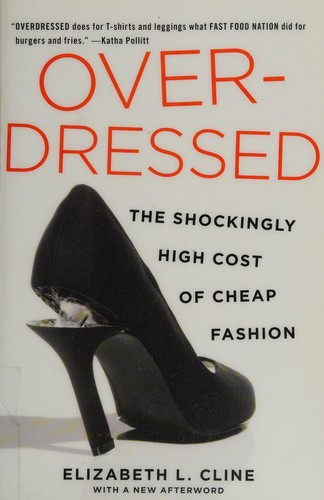
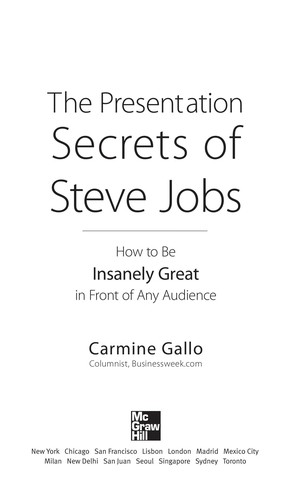
delivered
Get David's key takeaways from each episode delivered to your inbox.