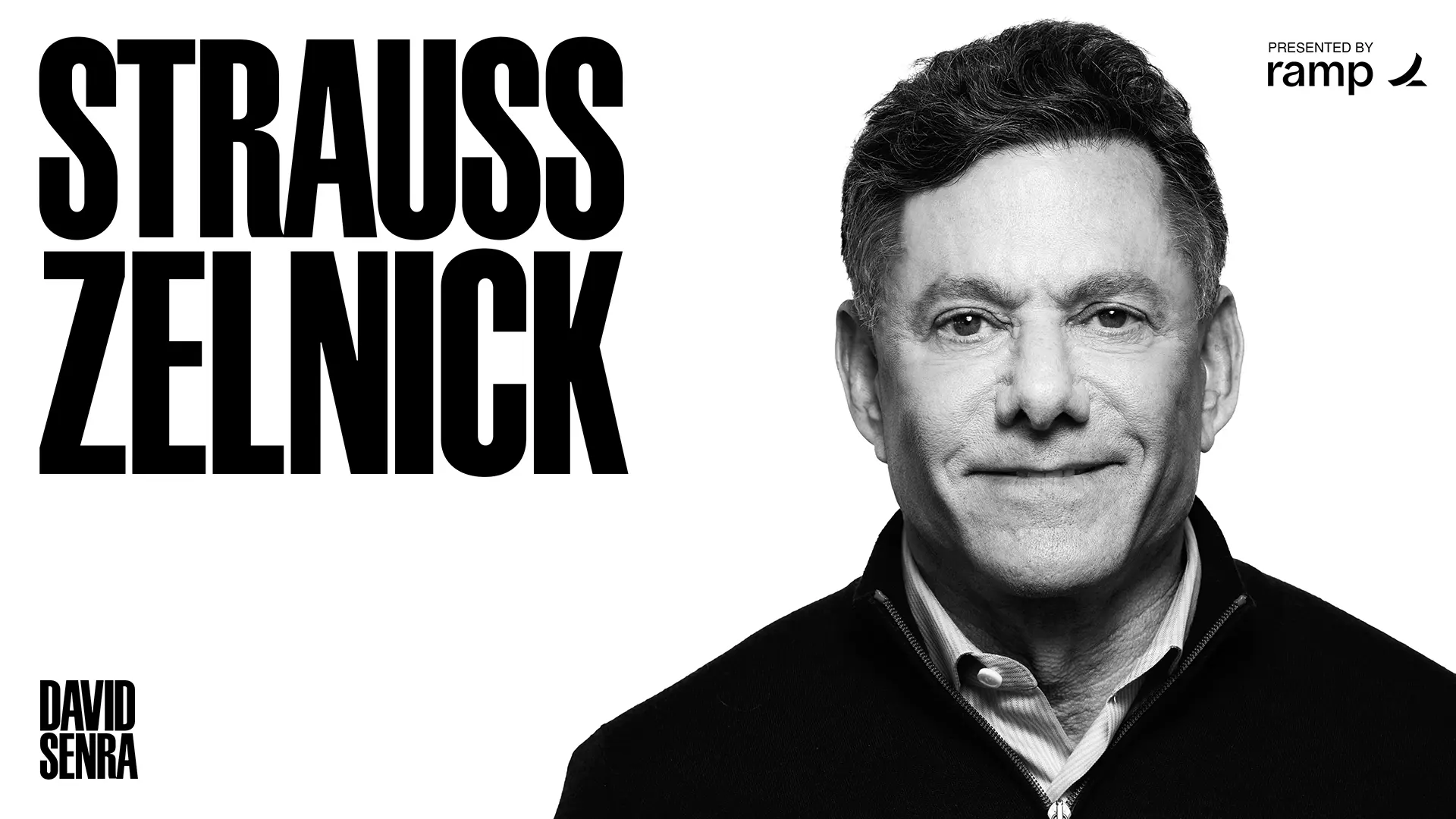
Strauss Zelnick
Strauss Zelnick is the founder, CEO, and managing partner of private equity firm ZMC, the chairman and CEO of video game company Take-Two Interactive, and the former chairman of CBS Corporation.
Summary
Strauss Zelnick has spent 40 years doing the same thing: finding where new technology is about to supercharge an old business, and getting there first.
He started at Columbia Pictures in 1983 running international TV distribution. When the company needed a "new media" person, they looked for the least valuable executive they could spare. That was Zelnick. New media in 1983 meant VHS cassettes. He took the assignment anyway.
By 2001, when he started ZMC, he had one thesis: technology would supercharge media and destroy it simultaneously, and the only companies worth owning sat at that intersection. In 2007, he used it to take over Take-Two Interactive with no money. The company had a chairman under indictment, four government investigations, and six months of cash left. Zelnick had written memos for Carl Icahn twice saying stay away. Then Icahn told him to read the bylaws. A plain vanilla Delaware charter allowed a board replacement if a majority of shares physically present at the annual meeting voted for it. Zelnick met the 10 hedge funds holding 70% of the stock, got commitments, walked in thinking he had 48%, discovered most had loaned their shares to short sellers, and won with 88%.
The only asset worth keeping was GTA. His pitch to creative talent: we will fund your vision, stay out of your way, and run a company where nobody gets indicted. Market cap when he arrived: $700 million. Today: roughly $35 billion.
Episode transcript
David Senra: Can you run through how you wound up buying and taking the deal to get Take-Two Interactive?
Strauss Zelnick: You know, interesting, it's not a story that we've told, and part of the reason is, stories like this tend to be sort of self-serving because it worked out well, and not everything works out well. In fact, most deals don't happen, and deals that do happen don't always work out. But this one did. It's kind of a set of one of one. The way we did this deal has never happened before, and I'm pretty certain it will never happen again because we essentially did a hostile takeover with no money.
Strauss Zelnick: The reason we did that is we had no money, so it was really our only choice. But I had a background in the video game business, and started ZMC with partners, and the goal of ZMC was to buy, in certain instances, turn around, and in all instances, build up and create value, and companies that stood at the intersection of media and technology. And the idea in '01, when we started the business, was that technology would supercharge media and create lots of value and destroy value. And of course, that's a story now that's more resonant than ever. I thought in '01, it was pretty obvious, but it was non-obvious to the entertainment business.
David Senra: I guess we should give some context. By that time, you had already spent two decades in the entertainment business? Longer?
Strauss Zelnick: About that, yeah. And I've been in every entertainment business there is.
David Senra: So, why was it obvious to you in 2001, and not obvious to other people in the industry then?
Strauss Zelnick: I was the new media guy. So, my goal getting out of grad school was to run a movie studio, an old business, even when I graduated from grad school. So, I got to Columbia Pictures in a very junior job. It was the only job I was offered, and by definition, the best I could get in the entertainment business. I was responsible for international television distribution, which was basically the last stop on the train of distribution of film and television.
Strauss Zelnick: In those days, there weren't many outlets. With motion pictures, you went cinemas, and then you went to the beginning, the very beginning of home entertainment, the very beginning of paid television, the very beginning of cable television, and eventually free television. And my job was to distribute to free television. So, I'm sitting around, and new media has come along to the entertainment business. In those days, believe it or not, new media was home entertainment, which at that time was video cassette distribution and paid television.
David Senra: And this is in the '80s? What time period?
Strauss Zelnick: This is in '83.
David Senra: Okay, so that's new media in '83.
Strauss Zelnick: So, that's new media.
David Senra: A term still used all the time, almost 50 years later.
Strauss Zelnick: Amazingly.
David Senra: Yeah.
Strauss Zelnick: So, at big companies like Columbia Pictures, which made their money in film and television production and distribution, and were really old-line companies who were just beginning to modernize. I was one of a small cadre of business school grads who had been recruited into the business, which was atypical for the industry, until the early '80s. So, they realized, we need a new media guy, the way today everyone needs an AI guy or AI army.
Strauss Zelnick: And so, they looked around, and they're like, "Who is the least valuable executive at this company that we can put in charge of new media?" And that was me. So, in addition to my day job, I became responsible for new media, which was the best thing that ever happened to me because I'd always been a futurist. My thesis in grad school was a history of the electronic entertainment business from its inception in 1895 until when I graduated in '83, and I've tried to stay current since then.
Strauss Zelnick: So, the notion of looking ahead sort of came naturally to me, but now I had to do it for my job. Oh, and I had to deliver revenue in that job as well. So, that was my initial exposure to new media. And actually, if you look at my career, it has been the combination of traditional businesses and new businesses driven by technology, which is why this is such an exciting time with all things AI.
David Senra: I want to interrupt you one second. So, you were a futurist, by looking back, though. Did I just hear you were studying...
Strauss Zelnick: Don't you have to be a futurist by looking back?
David Senra: So wait, you started back in 1895. What was happening in 1895? Who were you studying? Edison?
Strauss Zelnick: Well, the very beginning of electronic entertainment, recorded music, beginning of motion pictures.
David Senra: The beginning of recorded music is the phonograph?
Strauss Zelnick: Well, in those days, it was a wax cylinder, but you don't really need to know about it.
David Senra: Okay.
Strauss Zelnick: I'll go into it if you want. But it's actually a wax cylinder. It looks like this. You can see them in museums, and that was the beginning of recorded music. That and player pianos.
David Senra: I'm more interested in what insights you were deriving from the past, and then how you thought you were applying them in the '80s.
Strauss Zelnick: So, there are many insights, obviously, and we can go into them, one after another. But the insight, I guess, that spoke to me, that probably helped me the most, was: you always have to embrace new technologies. If you fight against them, you'll be left behind. Number two, and I've said this at all the companies I've been at: most human beings are wired to believe that which is going on now will never change.
Strauss Zelnick: But the actual state of play is exactly what is going on now will change. It will always change. For example, people, whether they like it or not, think today's political environment is what it is. If they like it, it's going to stay forever. If they don't like it, they're moaning that it will stay forever. But it won't stay forever. It'll change. The economy will change, and media and entertainment will change. And because I've always been wired that way, I was able, when I started ZMC, to make sure... I have an idea. Let's not buy legacy businesses that are under pressure.
Strauss Zelnick: Remember, this is '01, so it was non-obvious. Like, let's not go into the movie business. It's a terrible business. You know, as a business. It's fun creatively, but as a business, it's a bad business. Let's not go into deficit network television production. Just a bad economic business. Different today than it was, but it was really bad then, where you would deficit these shows in hopes of creating enough episodes that you could syndicate them, and if you didn't get there, you had a massive loss. And if you occasionally got there, you had a huge hit, which is what motivated everyone.
Strauss Zelnick: The economics looked a lot like winning the lottery. I don't know, but I don't win the lottery. How about you?
David Senra: Yeah.
Strauss Zelnick: But that's not my life experience. But there are many other lessons as well. But the biggest lesson, I think, is that new things come along and they can grow. Old things in the media and entertainment business take a really long time to die. Sometimes they don't. Sometimes they stay in the business forever. Sometimes they come back.
David Senra: What would be an example of that from the '80s, where we're talking about new media, and that's what your focus is?
Strauss Zelnick: Home entertainment, and which was basically video cassette distribution, which became DVD distribution, which became digital distribution.
David Senra: Which was a tiny market at that time that drastically expanded.
Strauss Zelnick: It was just beginning to boom in the early '80s.
David Senra: And you were an early believer in that?
Strauss Zelnick: Well, so much so that I left Columbia Pictures to go to the largest independent home entertainment company, Vestron.
David Senra: Okay, so tell me about that.
Strauss Zelnick: Well, I'd been very fortunate at Columbia Pictures. I'd figured out how to double the division's revenue in six months, which was good for my boss's career, and therefore good for mine. So, I became the youngest vice president at Columbia Pictures, and then I got sort of a reputation for, like, "Oh, this guy figures stuff out." And I was recruited to a company called Vestron, which was then the largest home entertainment company that had ambitions to become a diversified entertainment company, which was also my ambition. Just refreshing conversation from earlier. I wanted to run a movie studio.
Strauss Zelnick: Vestron wanted to start a movie studio. So, I left to go to Vestron, where, within, I think about, pardon me, about nine months of arriving, I became president.
David Senra: Mm.
Strauss Zelnick: So, I was now president of a public entertainment company, and I was 29, three years out of school. It was not my expectation. And then, I had this ability to take on the new movie division that hadn't actually made any pictures yet, so it was very early. I didn't start it, though. I got there, and the team was already there, but I gained responsibility for it. And we started making movies.
David Senra: Go to the new media part, though.
Strauss Zelnick: So, the biggest part of Vestron's business was home entertainment distribution, which was video cassette distribution. They would create movies and put them on video cassettes, which you would rent in video stores, you may recall. And they would also ultimately make movies and put them through the entire distribution system.
David Senra: Would they buy other content made by other people?
Strauss Zelnick: Yes.
David Senra: Okay.
Strauss Zelnick: Yeah, that was actually how the business started.
David Senra: That was the majority of the business?
Strauss Zelnick: It was the business when I got there until they started their own production.
David Senra: And then the idea is, okay, we're already going to have...
Strauss Zelnick: We got to do this ourself.
David Senra: Okay.
Strauss Zelnick: In the same way that Netflix started as a distribution company and realized how to be in production.
David Senra: I've been a subscriber, never churned from Netflix, and when they were just mailing me DVDs.
Strauss Zelnick: Yeah.
David Senra: So that was, I don't know, 20 years or however long.
Strauss Zelnick: Yeah, me too.
David Senra: One of my favorite things that I've ever heard Strauss Zelnick say was that he said the thing that he's best at is, he has the ability to identify genuine talent in other people, that he can tell the difference between the real deal and not the real deal. The presenting sponsor of this podcast is Ramp, and I think there's a lesson in the way they're building their company that is applicable to anyone who's trying to make something great in the world. The founders of Ramp know, just like Strauss Zelnick knows, that you always bet on talent. Ramp has the most talented technical team in their industry.
David Senra: That means when your business runs on Ramp, you have top-tier technical talent and some of the best AI engineers on the planet working on your behalf 24/7 to automate and improve all of your business's financial operations, and they do this on a single platform. Ramp gives your business fully programmable corporate credit cards for your entire team, automated expense reporting, bill payments, accounting, and more, all in one place. Ramp is the only all-in-one platform designed to make your finance team faster and happier.
David Senra: Many of the top founders and CEOs that I know run their businesses on Ramp. I run my business on Ramp, and you should too. Go to ramp.com today to learn how they can help your business save time, save money, and grow revenue. That is ramp.com.
David Senra: How did you get from new media is DVDs and home entertainment to, "Oh, wow, I think I'm going to a vision on video games, and I want to move myself into that industry?"
Strauss Zelnick: So, I was not a pioneer in the video game business. The video game business started in the late '70s and began to grow in the early '80s. And just by way of background, I was really contrarian about video games because Hollywood had a horrible video game experience, which I'm not sure too many people would remember today. But in 1982, there was a huge hit called "E.T.," and Warner Communications, very forward-thinking, had purchased Atari, which at that time was a leading video game company, and they made both hardware and software.
Strauss Zelnick: And software in those days was cartridges, and cartridges were expensive to make and had a long lead time. So, before you released something, you had to decide how many you're going to sell and order it all, and if you were right, you did great, and if you were wrong, you had excess inventory. You didn't have just-in-time inventory with cartridges. It took too long to create.
Strauss Zelnick: So, Warner's has Atari; they're doing well with it, and they have "E.T.," and they're like, "We should make an 'E.T. game.'" And because they didn't really have a lot of experience in how video games were made, they basically made the game in five weeks and put it in the box, and it was a terrible game. And then they manufactured more games, more cartridges than there were Atari consoles. Not sure what their idea was, but they did. And then, it was a disaster. No one bought the game because it was terrible.
Strauss Zelnick: And there are visuals of the cartridges being plowed into landfills that you can find online today. And the entertainment business is a small business, and everyone was like, "Oh my God, that nearly tanked Warner Communications." I think they took a write-down in '82 of 400 million dollars, which was a lot of money in '82 for Warner Communications. So, the rest of the business is like, "This is a disaster. Like, don't ever get involved with video games. It's a terrible business." Okay, roll the clock forward. I've been at Vestron. I made a bunch of hits.
Strauss Zelnick: The first picture I greenlit turned into a huge hit. That was very good for my career. Sometimes, it's better to be lucky than smart. That got me recruited to become president of 20th Century Fox just a couple years later, when I was 32. So now, I'm at Fox, and we turned around. Fox went from last place at the box office to first place.
David Senra: Who recruited you to Fox?
Strauss Zelnick: Joe Roth, who had been newly named the chairman of the studio with the support of Barry Diller and Rupert Murdoch.
David Senra: Okay, so what was Barry Diller's role at Fox at this point?
Strauss Zelnick: He was the CEO of Fox.
David Senra: He was the CEO, but then Rupert Murdoch owned it.
Strauss Zelnick: Well, he was the owner.
David Senra: Yeah, okay.
Strauss Zelnick: News Corp. owned it.
David Senra: Okay. But this was a flat-out turnaround.
Strauss Zelnick: The studio part was because they were in last place at the box office, and they weren't doing well at all, weren't making a lot of money.
David Senra: Yeah.
David Senra: But you're 32?
Strauss Zelnick: Yes.
David Senra: How do they identify you as the guy to hire for this?
Strauss Zelnick: So, this is sort of a long, complicated story, so I'll try to compress it.
David Senra: We're good. Ton of time.
David Senra: Give me whatever version you want.
Strauss Zelnick: All right. So, in those days, imagine the independent business is over here, siloed, and the major business is here, and never the twain shall meet. So, Joe Roth was an independent producer, and he had never worked in a major studio, and he made movies for Vestron. That's how I knew him. He made "Young Guns" and "Young Guns II" for Vestron, which were hits for us.
Strauss Zelnick: And he and I became friendly in the way that I am, well, first of all, a friendly person, if you don't know that already.
David Senra: Yeah, I know. Yeah.
Strauss Zelnick: Secondly, when I work with people, I want to develop relationships with them, and he was a highly creative person, a good guy, so we became friendly. Not intimate friends, but friendly.
Strauss Zelnick: I'm at Vestron for a couple years. I'm getting very worried about Vestron's business model for an array of reasons, and Vestron's senior leadership, the person I report to...
David Senra: Does it have anything to do with technology?
Strauss Zelnick: It had to do with the fact that the reason for Vestron to exist was that they were a pioneer in home entertainment, but everyone else got into home entertainment. You can never have a competitive advantage in the entertainment business through distribution only. That's why Netflix produces content. You can start with distribution only if you're a pioneer, but you got to immediately go into production, and production's a very tough business, as I said earlier. So, Vestron's not capitalized to be a diversified film and television production company with a video game division. Sorry, a video store division, not video games.
Strauss Zelnick: And it's apparent to me they're going to have problems, so I start looking around, and for a job. And remarkably enough, at the age of 31, people are not exactly lined up knocking on my door to ask me to be president of a major film studio. But Joe gets this job as chairman of Fox, and behind the scenes, and this I was not aware of, but I became aware of it, Barry said to Joe, "Look, you've never worked at a major, and you've never run a business. You're an independent producer." But he needed a creative engine to turn around the studio is where that... Which was true.
Strauss Zelnick: "You got to hire a business guy to support you here, to be your partner in building the business." So, Joe comes from the independent world. Remember, totally different world than major world. He has no relationships in major world. But in independent world, I'm kind of well-known. Like, I'm president of the biggest independent. We've done really well. I green-lit "Dirty Dancing," which was the highest-grossing independent film of all time then, and stayed that way for a very long time until... Pop quiz. What?
David Senra: I don't know.
Strauss Zelnick: "Blair Witch."
David Senra: Okay.
Strauss Zelnick: Many, many years later. So, he's looking around, and he's like, "Well, who's the number one guy to be the business guy at the studio?" Now, to say that I was... I wasn't the number one guy. I was not the number 100 guy. I was the number one guy in this little, narrow, independent entertainment business.
Strauss Zelnick: So, he called me up, and he was like, "Do you want to..." Well, I called him, actually, to say congratulations. He said, "Is that the only reason you're calling?" He said, "Might you want to come here and work here?" I was like, coincidentally, "Yes." And he said, "So, do you think you'll be in LA anytime soon?" I'm like, "Yeah. Like, how's Thursday?" And so, he's like, "Good." So, we met at the Bel-Air Hotel for breakfast, which was a big thing in those days.
David Senra: Oh, I'm very familiar with that breakfast.
Strauss Zelnick: Yes.
Strauss Zelnick: Yeah. And in those days, like, if you were chairman, you went to Bel-Air for breakfast. If you were president, you went to The Polo Lounge.
David Senra: Okay.
Strauss Zelnick: But anyway, separate issue. So, we're meeting at Bel-Air on a Friday morning, because I think I said I'm coming Thursday. Anyway, we're meeting Friday morning for breakfast, and we have a very nice breakfast, and he says, "Do you want to do this thing?" And I said, "That sounds pretty interesting." He said, "Are you free to meet with Barry and Rupert this morning?" And I said, "As it happens..."
David Senra: No, I'm a little busy.
Strauss Zelnick: I'm tied up. Yeah, I have to rearrange my sock drawer, so. So, I go over to the studio, and I walk into a room with Barry and Rupert, and Barry asks the very incisive questions that he does, and Rupert sat rather quietly. I'm not sure he even asked me a question.
David Senra: Is that normal for Rupert?
Strauss Zelnick: Yeah, he's a great listener. And in those days, he was learning the film business. And remember, I was only going to be responsible for film production, and then, worldwide film and television and home entertainment distribution.
David Senra: What year are we in?
Strauss Zelnick: This is '86.
David Senra: So, what is the scope of Rupert Murdoch's business at this point? Is it just the newspapers?
Strauss Zelnick: It's News Corp. No, it's a pretty big business at this point. It's worldwide newspapers. That's a lot of it. And then of course, the Fox assets is pretty much what it was, but it was a big business.
David Senra: Okay.
David Senra: All right, so take me back to you're in a room with Rupert Murdoch and Barry...
Strauss Zelnick: So, I'm in a room, and I can visualize it like it was yesterday, and we have... And Barry is asking these really tough questions. And I leave the office, and the head of HR walks toward me and says, "Okay, would you like to do this?" And I said, "Sure." And I walked into his office and signed the contract, and that was how it worked.
David Senra: But did Barry say you're hired, or they just... It was like implied?
Strauss Zelnick: No, I just walked out, and it was like, yeah, the HR guy was like, "Okay, come on in," and that was how it's... Doesn't happen that way anymore.
Strauss Zelnick: Yeah.
David Senra: I want to go back to the story, but I'm curious, because I just finished reading Barry's autobiography, which I thought was excellent.
Strauss Zelnick: Yeah, it's good.
David Senra: What did you learn? Because you've worked with him and known him for...
Strauss Zelnick: No, let's be clear. I worked for him, and for four years, and I learned an enormous amount. I've stayed friendly with him ever since.
David Senra: Okay.
David Senra: Can you give me some...
Strauss Zelnick: I have lunch with him a couple times a year.
David Senra: So can you tell me some of the things that you've learned from Barry, or things that you think stand out just about him as a person?
Strauss Zelnick: Yeah, I mean, he taught me the entertainment business, so I learned everything from him. Because remember, I knew very little. And thankfully, I knew what I didn't know. To this day, I'm good at knowing what I don't know, and I'm an avid learner, but I never resisted learning more, and I'm comfortable asking questions, including dumb questions. I have to be, because I kept getting thrown into these big jobs much earlier than I should've been.
David Senra: He kind of had that in his career, right? Okay, so...
Strauss Zelnick: He did.
Strauss Zelnick: In a different way. He really came up more on the creative side.
David Senra: Yeah.
Strauss Zelnick: And he also innovated more creatively than I did. If I can give myself credit for innovation, it'd be more on the business side, and less on the creative side.
David Senra: But is there anything that you remember, like, discussions you had or stuff he told you, like implicitly, that you applied?
Strauss Zelnick: No. I just remember the form of the discussion, which was a lot of very robust debate with a lot of heat around it. And I used to say to people, "You know, we argue all the time, Barry and I, and he's right 99% of the time. But 1% of the time I'm actually right." So, that's how I learned from him. And he was patient with me most of the time, but you had to have a strong stomach to... I mean, he was famous and fierce in those days. He was not like junior. He was very senior in the industry already, never mind what he's done since.
Strauss Zelnick: And he was scary. Oh, and by the way, it's not like if this job didn't work out at Fox, there were other people lining up to hire me. Like, I was young, I was newly married, I had a kid, I had a mortgage. I needed to keep my job. But I understood that this was his dialectic, and if you backed down, if you didn't argue, you were done. I understood it wasn't personal. Just wasn't personal.
Strauss Zelnick: Other people took it personally, like a personal attack or criticism. I just knew that it wasn't. It's not like it was personal on the good side either. It's not like if he were sitting here, he'd say, "Oh, yes, I love Strauss. I thought he was so amazing." He might not even remember I worked for him in those days. Therefore, I knew it wasn't personal. It wasn't about me. It was about the thing itself. It was arriving at the right conclusion, and I wanted to arrive at the right conclusion, too, and I wanted to learn.
Strauss Zelnick: I had some really bad days with him, don't get me wrong, and it was very, very taxing. One of the senior execs at the studio was a woman named Lucie Salhany, who ran television. And Lucie and I were very close. And we had a so-called president's meeting every Monday, which was Rupert and Barry and all the division heads, and I was in that meeting, and I was, I don't know, 10 or 15 years younger than the next youngest person in the meeting. And I was the one who would argue. Like, I argued all the time.
Strauss Zelnick: Many other people would just shut up and sit there. And Lucie said, "You remind me... Remember when you were little, and you had that blow-up clown doll that everyone had that you would punch, and it would go over and then bounce back up?" "You remember that?"
David Senra: Yes.
Strauss Zelnick: Everyone had that. I had that. And she said, "That's you. You just get punched, you go over, you keep coming back up."
David Senra: But are you naturally argumentative?
Strauss Zelnick: No, not at all. I'm much more collaborative.
David Senra: I thought so. This is the vibe I get off of you.
Strauss Zelnick: But that didn't matter. I wasn't in charge. It was his style, and I had to comport with his style to get to the right conclusion.
David Senra: What are you learning from Rupert at this time? I mean, you're in these weekly meetings with him?
Strauss Zelnick: Mm-hmm.
David Senra: With maybe the most success...
Strauss Zelnick: He wasn't always there, though.
David Senra: Well, maybe the most successful person in media of all time.
Strauss Zelnick: He was extraordinary. What I learned from him really was in a different moment, which is, he over-leveraged the company during my tenure there by buying Star. And the company had real trouble with its debt facility, and my recollection is they had a diversified debt facility with 150 banks and a whole cross-default mechanism.
Strauss Zelnick: And which was great when things are going well, because they kept the interest costs low, and horrible if things go badly, because of the cross-defaults. Suddenly things go badly, and he was at risk of losing the whole thing. I went on the road show, bank road show, with him for a couple of visits, and what I found remarkable was he was cool the whole time.
Strauss Zelnick: He wasn't overconfident. He just wasn't ruffled. I mean, he was at risk of losing his whole business, which had been his family's business, and it just didn't phase him. He just kept going, and he was laser-focused on the conclusion, and he reached the conclusion just by being focused and calm. That's really what I learned from him.
David Senra: That's incredible. Okay, so you're 32. You're doing this turnaround. What are the insights you're deriving at Fox that you're going to wind up using later on when you do Take-Two?
Strauss Zelnick: So, the biggest insight, well, we can get into how I work with creative people, because that's probably the most important long-term thing. I think going back to your question about video games. So, it's now mid-'80s, because I've been there for a couple years, and I now really understand the economics of the movie business. So, maybe I'm slow to pick it up, but I got it. And they're terrible. They're terrible underlying economics.
Strauss Zelnick: And they were bad, and they've been bad since 1955, since the consent decree that basically disaggregated distribution from production and turned the motion picture business from a studio system into a boutique system. And a rubric for a good versus bad entertainment business is a boutique system is generally bad, and a studio system is generally good or can be good. The studio system was long gone, and studio system means your creative talent, all your talent is on the payroll.
Strauss Zelnick: Boutique system is that they're not on your payroll. They can auction their services. And obviously, if talented people are auctioning their services for every project, it's going to be much more expensive than if they're on your payroll in success. So, you have a structure in the motion picture business since '55, essentially. It didn't happen overnight in '55, but by the late '60s, early '70s, mid-'70s, where it's heads, I win, tails, you lose. If the project does well, the boutique extracts a lot of the value because of the deal they were able to negotiate, so they didn't go across the street.
Strauss Zelnick: And if it's a flop, you, as the studio, bear the entire cost of the flop, obviously. Whereas in the studio system, recorded music before its most recent changes was essentially a studio system. Video games to this day is a studio system.
Strauss Zelnick: In success, you obviously pay your creative people, and we are incredibly generous in the way that we compensate our creative people for success. But the company also has an opportunity to create a return. I was aware that the economics of the film business were really lousy, and that you can't fight that. There was a Buffett aphorism, which I'm going to get wrong, but the aphorism was to the effect of, if you take a management team with a reputation for brilliance.
David Senra: Brilliance.
David Senra: Yeah.
Strauss Zelnick: And a business with a reputation for being bad, it is the business' reputation that will stay intact.
David Senra: Yeah.
Strauss Zelnick: And again, that wasn't an elegant version, but you get the idea.
David Senra: Yep.
Strauss Zelnick: So, I actually saw this in Forbes magazine. Those days, you read magazines. It was in the back. Remember, they had quotes in the back of Forbes, and I read it.
David Senra: Mm-hmm.
Strauss Zelnick: It was like, "That's what I'm dealing with here." And I've been really fortunate. Vestron did well because we made hits, and Fox is doing well because we make hits. But you can't fight the underlying structure of the business. My blinding flash of the obvious was I thought to myself, "See, here's the thing. As it turns out, my ambition had been to run a movie studio, and as it turns out, my ambition should have been to run a movie studio in 1927, not a studio in 1991," whatever it is.
Strauss Zelnick: So, I think to myself, "What is the moral equivalent of the motion picture business in the 1920s?" I thought, "It's the video game business."
David Senra: How did you know that?
Strauss Zelnick: Because I was a student of the business, and I was aware that video games were a thing, and I was aware that they were, despite the issue that Atari and Warner Communications had, it was still a growing business. And by the early '90s, it was a real business. It was a small business, but it was a real business. And I looked, and I said, "I think this is going to be huge." And remember, that was a very unpopular view in the entertainment business because of the Atari disaster, which people still saw in bright flashing neon.
David Senra: So, almost the way you get what you called in the past, like, the religion in video games, is by comparing it to what is the movie studio version of that today?
Strauss Zelnick: Yeah. Back to your point about being a student of the business.
David Senra: Okay, so...
David Senra: Okay, so then you have that insight.
Strauss Zelnick: Yeah. So now, I've been at this studio for, whatever it was, nearly four years, and we've had a great run, and I think, "I got to go do the video game business."
David Senra: So, what's your next move?
Strauss Zelnick: I went to Rupert, and I said, "Next big business is the video game business." And I remember sitting in his office, and I said, "So, I think we should be in that business." He said, "Great. Go start one." And I said, "Yeah, I'd love to do that, while I do my day job," which was now that I'd been promoted. I was now running the creative end business side, working for then Peter Chernin, because Joe and Barry both had left. And he said, "Great, you can do it. We'll give you the capital. You can pursue it, build a video game business." And I said, "Well, the only thing is, I see it as an entrepreneurial venture, so I'd like a piece of it."
Strauss Zelnick: And he said, "No interest." Like, "That's not an offer." So, I was like...
David Senra: Why'd he say no?
Strauss Zelnick: Because Rupert doesn't have partners in his businesses except his public shareholders.
David Senra: Okay.
Strauss Zelnick: You know, there's nothing wrong with that. It was just his approach. And he didn't pause by... It wasn't like he paused, "Oh, let me think about it." He was like, "No." So, I was like, "Okay, I guess I have to think about, am I serious about this thing?" And then coincidentally, I get a call from a recruiter saying, "There's a startup pre-revenue video game business in Silicon Valley that is doing the most advanced video games. They're really going to be the next generation of video games. Are you interested?" And I left.
Strauss Zelnick: I took a 95% pay cut, and moved my family from our beautiful house in West LA to Atherton, to a rental house that was going to be torn down. So, it was maybe a little dated inside. It was about to be torn down for a golf course.
David Senra: Because you wanted equity. You wanted ownership in the...
Strauss Zelnick: I wanted to build something, and I wanted equity. But primarily what motivated me was this notion of being at the cutting edge of media and entertainment, and the fact that it was driven by technology made it even more appealing.
David Senra: Did you think that you were always going to be an entrepreneur? Because at this point, if I understand your career, you've always just had jobs. You're a phenomenal operator; you're the business guy, but did you... In your heart, you're like, "I feel like I should be running my own thing. Should I be an entrepreneur"?
Strauss Zelnick: Yes, and I wasn't ready, as it turns out. But I did think that. And I knew I wasn't really a born entrepreneur because I was a good employee, and I liked running big businesses for other people. But I also knew that if I really wanted to build something meaningful, I had to take a risk.
David Senra: Why do you say you weren't ready?
Strauss Zelnick: I didn't have much money, and I had a young family. And I think there are kind of two stages in life to be an entrepreneur: before you have anything and any responsibilities and obligations, and after you have some protection. And I was right in the middle. I had some responsibilities, and I had no protection. So emotionally, it was very challenging for me. And I don't think I was emotionally ready, so I did it for a couple of years. Crystal Dynamics was very successful. Not hugely successful, but it still exists today.
David Senra: I don't think I know the story of Crystal Dynamics.
Strauss Zelnick: That was the company that recruited me.
David Senra: Yeah. Tell me about the company.
Strauss Zelnick: Well, it was set up by Kleiner Perkins. They were backing two very talented women with backgrounds at Sega at the time. And they needed a CEO, and they wanted a CEO from the entertainment business, so they hired me.
David Senra: And literally, it was a video game studio?
Strauss Zelnick: Yeah. So, I set it up. I got them distribution deals. I raised lots of capital, because they hadn't raised much capital. And then, I was recruited to go turn around a huge record company back in the days when that was not an oxymoron. And I decided I'm really not ready to be an entrepreneur going forward quite yet, given this opportunity. And that record company, which was called BMG, agreed that I could start a video game division inside the company.
David Senra: Before you took the job?
Strauss Zelnick: Correct.
David Senra: Okay, because I was going to say the jump from you got religion on video games, and now we're jumping from video games to music.
Strauss Zelnick: Recorded music.
David Senra: Why'd you do that? Okay, so...
Strauss Zelnick: Another turnaround. It was really interesting. I'd never done music, and they said I could start a video game company.
David Senra: Strauss Zelnick prides himself on running what he calls a rational organization. He said that he tells his talent that the company they build will be efficient-organized. We'll make sound decisions. We will be calm, and we will be well-financed. He tells them that no one will let their ego interfere with what you do, and no one will take credit for what you do. We won't do anything crazy, and we won't go bankrupt.
David Senra: I've spent a bunch of time with Adam, who's the founder of AppLovin, and I would describe the way that he runs his business and the way that Strauss runs his business as hyper-competence matched with ruthless efficiency. Both Strauss and Adam want to build world-class products, and that is exactly what Adam and his team have done with their advertising platform Axon. Axon connects you with over a billion potential new customers. Axon allows you to capture undivided attention.
David Senra: Axon ads are full-screen videos that are watched for an average of 35 seconds. That is retention that blows other ad platforms out of the water, and you can launch in minutes. You set the goal, and Axon achieves it. No complex setup, no expertise needed. And Axon scales quickly. They can put your ads in front of over a billion potential customers. Other businesses have seen immediate results, scaled to hundreds of thousands of dollars a day in spend, and increased their revenue by millions.
David Senra: So, you want to get started quickly before all of your competitors are on Axon, and you can do that by going to axon.ai/senra. That is axon.ai/senra.
David Senra: So, talk about starting the video game company inside of BMG.
Strauss Zelnick: So, I'm going to hire J Moses, who's now on the board of Take-Two, and the model was external development, so making deals with external developers, and we were going to use the BMG recorded music distribution system to distribute worldwide, which was pretty smart because we had this massive worldwide system of local offices, so we could slot right into it without adding any overhead. That was the beauty of doing this.
David Senra: Say more about that.
Strauss Zelnick: Well, in those days, when you distributed records, you actually had to have physical offices to go sell physical discs, CDs, beginning of CDs and the end of vinyl to stores.
David Senra: Very similar to video games at that time because you're buying physical...
Strauss Zelnick: Exactly. You're buying cartridges and then eventually discs.
David Senra: Were any other music companies doing music and video games?
Strauss Zelnick: No. No.
David Senra: Oh, that's smart.
Strauss Zelnick: No. So, we put aside a small amount of capital for BMG because in those days, BMG's revenue was, I don't know, five billion a year, and it was very profitable, and I think we devoted around 40 million dollars to investing in this basket of games, and building up the distribution system, and hiring a team.
David Senra: Can I pause you there?
Strauss Zelnick: Sure.
David Senra: At this point, like, there's no free to play. You can't download anything over the internet, right?
Strauss Zelnick: Correct.
David Senra: So, the economics of the video game is very similar to recorded music. It's you're buying...
Strauss Zelnick: Somewhere between toys and recorded music. It was a top-ten business, and most of the sales were in the fourth quarter. It had a lot of aspects of the toy business, and there were still cartridges. It hadn't shifted entirely over to discs, so you had all the messy inventory characteristics of a cartridge business. So, it had plenty of hair on it as a business that it no longer has.
David Senra: But did you have any inclination at that time that there would be an end to the cartridge or the...
Strauss Zelnick: Oh, sure. No, I knew it was becoming a disc business, absolutely.
David Senra: But you couldn't predict what was going to happen after discs?
Strauss Zelnick: No.
David Senra: Okay.
Strauss Zelnick: No.
David Senra: So, go back to where we were in the story. Sorry.
Strauss Zelnick: So anyhow... By the way, I'm running the record company. That's my day job because it's a big business that J is building up the video game company with my oversight. But it's a skunk works project. It's tiny little product.
David Senra: Yeah, you said 40 million compared to revenues of five billion.
Strauss Zelnick: Yeah, it's like a rounding error.
David Senra: Okay.
Strauss Zelnick: And his team created a whole bunch of properties. And we're getting ready to distribute some of them as they've been completed. And there was a new CEO of Bertelsmann, the parent company of BMG, whose name was Thomas Middelhoff, and he decided the video game business was a terrible business, and he told me to divest the whole thing.
Strauss Zelnick: And I said, "Well, wait, wait. We've already invested. The only thing left to do is distribute the titles. That's the only thing that's left. So, let me do that, and then you decide depending on how it goes." And he said, "No, just sell it to the highest bidder." I said, "But there won't be any bidders. It's like in production, video games, there's not going to be a lot of appetite for this." And he said, "I don't care. Just sell it." So...
David Senra: Why?
Strauss Zelnick: He just didn't believe.
David Senra: Okay.
Strauss Zelnick: He was a person who bet on his gut. It didn't work out very well for him at all, at all. But that's a separate story for another day. And so, we go out to market, not a lot of bids, and we find a buyer, and the buyer agrees. It's a little tiny public company with a, I want to say, roughly a 100 million dollar market cap, and they agree to give us 20% of their company in stock for the business, such as it was. So, 20 million dollars.
Strauss Zelnick: And so, we close that deal. Now, we own 20% of this company. And I go to Thomas, and I say, "Listen, we have five billion in revenue. Like, this is 20 million dollars of stock. It's a rounding error on a rounding error. Why don't we just hold the stock, see what happens?" He said, "No, sell the stock in the open market." So, we sell the...
David Senra: What the hell, dude?
Strauss Zelnick: Precisely. So, we sell the stock in the open market for, wait for it, 14 million dollars. So, a month later, this public company launches the first property that we had completed into the market.
David Senra: Oh, no. Don't tell, don't say it.
Strauss Zelnick: So, the name of the public company was Take-Two Interactive, and the first release was "Grand Theft Auto."
David Senra: We're going to pause right here, though.
Strauss Zelnick: Mm-hmm.
David Senra: "Grand Theft Auto" is the most successful media property of all time. Is that...
Strauss Zelnick: I think so, yeah.
David Senra: Yeah. Okay.
Strauss Zelnick: Mm-hmm.
Strauss Zelnick: Yeah.
David Senra: Oh my God.
Strauss Zelnick: All right. So that's my war story on being in the video game business. Now remember, now I'm out of the video game business. I'm running a record company.
David Senra: You had to be pissed off at this time, right?
Strauss Zelnick: I didn't own the company, and I don't get pissed off easily. I understood I'm on the payroll. This is my boss. He gets to make strategic decisions like this. I knew it was a foolish decision, but-
David Senra: But how could you think that you were going to work... Maybe you didn't. There's no way if you see this person making decisions like that, that you're like, "Oh, I'm going to work for this person one-"
Strauss Zelnick: That's correct. I did leave.
David Senra: Okay.
Strauss Zelnick: I did leave.
David Senra: Okay.
Strauss Zelnick: Yeah.
David Senra: So then what happens next?
Strauss Zelnick: Well, I realize it's time to go, and now I'm ready to be an entrepreneur because I have a vision for what I want to build, and I have a few bucks in the bank, so my family's not going to starve, because I saved well, and I made a lot of money as a professional executive. So I decided to start ZMC.
David Senra: Explain what ZMC is, though.
Strauss Zelnick: Well, today, it's a private equity firm.
David Senra: Okay.
Strauss Zelnick: So we raise capital from institutions in funds, and then we buy companies and build them, and then eventually sell them to create a return.
David Senra: Okay.
Strauss Zelnick: But at that time, that wasn't the vision. The vision was to create an entity that would build a portfolio of media and entertainment properties that are supercharged by technology. That was the thesis. And again, this is '01, and I thought it was a pretty obvious thesis, but in retrospect, it was not.
David Senra: And if that is your thesis, then video games are the perfect thing to choose.
Strauss Zelnick: Well, yes and no, actually. I didn't have an appetite to go back into video games when I started ZMC. First of all, I've been there and done that twice. Secondly, it still was kind of the top 10 fourth-quarter toy-ish business with bad inventory characteristics.
David Senra: Oh, yeah, because it's 2001. Okay.
Strauss Zelnick: Yeah, and no. And it was cyclical, and the console generation would cause the business to sort of come and go. No, I wasn't anxious to get back into that business.
David Senra: Okay.
David Senra: What's the first thing you're doing with ZMC?
Strauss Zelnick: We started...
David Senra: Buying Take-Two stock?
Strauss Zelnick: No. I wish. No, direct marketing companies that were becoming digital, market research companies that were becoming digital. We turned around a Japanese record company, of all things. So whatever deals that we could find, often very, very troubled companies. Because remember, we had no capital. Oh, I left that part out. We had no capital.
David Senra: So how do you start a company with no capital?
Strauss Zelnick: Exactly. So, I put in 300,000 dollars of my own money. I convinced people to work for free. We borrowed offices. We had one fewer chair than we had people, and I'm not kidding. The offices were so horrible that if you went to the restroom, half the time it was flooding. And by flooding, I mean water sheeting down the walls.
Strauss Zelnick: And you couldn't believe this was actually going on. And I would run around and talk to capital providers, professional financial services firms, and say, "Here's our vision. We're trying to buy companies to build them up and create value."
Strauss Zelnick: And they would be like, "Okay. Show us the company you want to buy. We'll consider putting capital in." And then I would go to targets, to companies, and say, "I'd like to buy you." And they'd be like, "Okay, great. Show us the capital that you have to buy us, and we'll have a conversation." So this is going on for six months, and I'm like, "Hmm. There is a problem here."
Strauss Zelnick: Empty suitcase and going to a lot of meetings. It became obvious to me that it was an issue when we were at this very fancy private equity firm, and they said the same thing. They were like, "You guys are great. You all have great resumes, so we'd love it if you would bring us a deal, and we'll put money into the deal." It was at the end of the day, and we're packing up, and they've left the room.
Strauss Zelnick: There was a cleaning person who's emptying the garbage, and I said to my colleagues, "I guarantee you that after we leave, someone who works here is going to go to that person and say, 'Incidentally, if you see a really interesting company, why don't you come talk to us about it?' We'll finance it for you."
David Senra: Hmm.
Strauss Zelnick: I realized these were empty words. They said it to everyone. They were just looking for free options.
David Senra: Yeah.
Strauss Zelnick: So, I had to find this lightning in a bottle where there'd be an opportunity to buy a company with third-party capital, and thankfully one came along. It was called Columbia Music Entertainment. It was a deeply troubled Japanese record company, and I had recorded-music experience. The short story is, amazingly enough, we turned it around, and it was-
David Senra: Because your idea is to buy, improve, and sell.
Strauss Zelnick: Correct.
David Senra: You're not holding for a longer-
Strauss Zelnick: It took us a long time. It took nine years. But it was very difficult because it was recorded music in the early 2000s. It was Japan. It had a 0.5% market share. It had way too much debt. It had no hits whatsoever.
David Senra: So wait, how do you... Because you're saying early 2000s, now you're getting the iPod, now you're getting iTunes, you're getting... Napster was in '99. Why would you even do-
Strauss Zelnick: No, it was early 2000s.
David Senra: Yeah.
Strauss Zelnick: Right, this all has happened.
David Senra: Yeah, exactly.
Strauss Zelnick: Yeah, so why would I want to be in the record business?
David Senra: Yes.
Strauss Zelnick: Yeah, I didn't want to be in the record business. I was like, "Been there, done that." I had no interest, and it was a really horrible company. So it came about because one of the capital providers that we spoke to was a company called Ripplewood, and there was a partner there named Jeff Hendren. And Columbia Music had been part of sort of a two-part company, and essentially Ripplewood wanted to own the good part, and they wanted to find some person like me to run the bad part. I didn't know that entirely, but okay. And I wasn't smart enough to figure that out until it was too late.
Strauss Zelnick: And so Jeff, who I'd had a couple meetings with, and let's buy a company together, called me up and said, "Here's a perfect deal for you, for your first deal. It's recorded music, which you know. Sure, it's in Japan, and they have 0.5% market share and altogether too much debt, and probably there are criminals lurking around. But nonetheless." And so I said, "Well, I know the business," because I was in the recorded music business. I said, "It's a horrible company. It's a disaster. Don't do this deal, and I'm not doing this deal." So he said, "Okay."
Strauss Zelnick: And a week later, he calls me, and he said, "We're still looking at this business. We really think you ought to look at it seriously with us, because you'd be perfect for it and it would be your first deal." And I said, "Okay, listen, it's a public company, so I'll pull all the public docs, and I'll look at them over the weekend." And my partner at the time, Ben Feder, and I spent the weekend poring through the documents. On Monday, I called Jeff, and I said, "It's even worse than I thought. Just run in the other direction. Don't do this deal. It's a disaster." And he said, "Okay, thank you."
Strauss Zelnick: Called me a week later. I promise all of this exactly, there's no hyperbole. I sometimes can be accused of hyperbole. This is not one of those moments. I remember I'm in my dining room, and there's a wall phone, this is a long time ago. This is '01. And he calls, and I pick up, and he says, "Look, we're going to do this deal, and we really want your firm to take it on and be responsible for building and managing it, and obviously we've had an upside in the deal," and they would put up the capital.
Strauss Zelnick: And I said, "Jeff, look, I told you it was really bad. Then I spent a weekend looking at it. It's even worse than I thought. We're passing. You should pass." He said, "Can I ask you a question?" I said, "Sure." He said, "Just how busy are you?"
Strauss Zelnick: I laughed, and I said, "You make a very good point." He said, "I think you should do this deal." So we did. It was the hardest deal I've ever done in my life. It was terrible. Terrible. We could literally take five hours, and I could tell you every horrible problem this company had.
Strauss Zelnick: But I remembered my experience with Rupert, and I became laser-focused on just turning it around and getting to the finish line, no matter what it took, because I realized, correctly, that if someone gave me 300 million dollars to take over a company and I failed, that would be my last deal, and that's true. That's not dramatic. That's true. No one's giving you more money after that.
Strauss Zelnick: So we turned it around, remarkably enough, and got about a 22% IRR in the recorded music business in the early 2000s, which was unheard of.
David Senra: That's insane.
Strauss Zelnick: Yeah.
David Senra: And this is the first deal of-
Strauss Zelnick: That was the first ZMC deal.
David Senra: That's incredible.
Strauss Zelnick: And that's how we began to generate income to build up a team, which I reinvested and reinvested, and build an enterprise, and buy more companies.
David Senra: So take me to Take-Two.
Strauss Zelnick: All right, so it's '07. We started raising our own capital in '07 and '08, so it's the very end of our being what was at that time called a fundless sponsor. Now today, they call it an independent sponsor because it sounds much nicer than "fundless," but I promise you, we were fundless. So even though we'd done six deals at that point, we had very little capital, very tiny balance sheet. I'd become, quote, "friendly" with Carl Icahn.
Strauss Zelnick: I put it in quotes because he is the man who said, "On Wall Street, if you want a friend, buy a dog." But in any case, I had a relationship with Carl, and the relationship took the form of... And I did this intentionally: I'd go over and visit with him. He's a lot of fun to spend time with, and I'd bring him ideas. And I brought him an idea initially for something that we couldn't act on, but he could, because he did public markets investing.
Strauss Zelnick: And he said, "Listen, I just want you to know, I'm happy to listen to your ideas, but I'm not paying you for them." And I said, "Yeah, I know." And I thought, to have a relationship with Carl Icahn, you never know where it could go. So I'd bring him ideas, and they were good ideas. And the first one I brought him was actually Reader's Digest. I had a feeling something would happen there. It was underpriced. He bought, I don't know, for him, nothing. He bought 50 million dollars of stock.
Strauss Zelnick: It immediately went up. I go over to his office three months later, and I said, "Sell your stock," and he made whatever. For him, nothing, but nonetheless, he likes making money. He made like 50 million bucks. Incidentally, at the end of it, he said, "I really need to thank you." He said, "I told you I wasn't going to pay you." I said, "Yes, you did." He said, "But you know what I'd like to do? I'd like to take you and your wife out for dinner."
Strauss Zelnick: I said, "Thank you. That's great." So Wendy and I go for dinner with him and his wife, Gail. He only went to two restaurants in those days: a Chinese restaurant I forgot the name of, and an Italian restaurant called Il Tinello. It was good food, actually. And Wendy and Gail and I get there early because he tends to work late in the day.
Strauss Zelnick: And I remember he comes to Il Tinello, and they know him very well, and as he's sitting, I see the waiter sort of glide over and put a martini in his hand, and it looks like sort of one smooth movement. Martini in the hand, sits in the chair, drinks the martini, puts the empty glass down. That was how dinner started. And we have a very nice dinner, and Carl's a good storyteller, and he's a lot of fun. But about halfway into the dinner, my wife leans over to me, and she said, "Honey, he doesn't know your name."
Strauss Zelnick: Anyway, Carl then started calling us, because I had a team, and he would ask us to research ideas that he had. So we would research ideas, and I remember my partner, Karl Slatoff, who's still to this day the president of Take-Two, got really annoyed, Karl speaks his mind, because I was asking them to do research for Carl Icahn. He said, "He is the richest guy on Wall Street, and we're doing spec research for him. Oh, and incidentally, he has informed us we will never get paid. What are we doing here?"
Strauss Zelnick: I said, "I just don't know, but I feel good about this." So one day Carl calls up, and he says, "Are you familiar with this video game company called Take-Two Interactive?" And I said, "I'm really familiar with it, obviously. It's a really messy company. At this point-"
David Senra: And you've owned 20% of it.
Strauss Zelnick: Take-Two's in very bad shape. It's failing. It's got very bad management. The chairman had been indicted. It was under investigation. They hadn't filed financial statements, and it wasn't even that cheap despite all that, because-
David Senra: Wait. The chairman is under indictment?
Strauss Zelnick: Yes, at that time.
David Senra: Okay, they're being investigated.
Strauss Zelnick: Yes, they did-
David Senra: They cancel their annual meeting.
Strauss Zelnick: Correct.
David Senra: They're not filing financial statements.
Strauss Zelnick: Yes.
David Senra: The company is being investigated by a bunch of different-
Strauss Zelnick: Four entities.
David Senra: Okay, four different entities.
Strauss Zelnick: Yeah, IRS, SEC, New York DA's office, and FTC.
David Senra: They have how much in revenue?
Strauss Zelnick: About 700 in revenue and losing loads of money and no debt, thankfully, and about 50 in cash. And we looked at the numbers, and we said, "They're going to be bankrupt in six months. That's what's going to happen here."
David Senra: And you're like, "Great."
Strauss Zelnick: No, I'm not great. I said, "This is a disaster."
David Senra: Okay.
David Senra: Okay.
Strauss Zelnick: And so we wrote a whole memo, and we said, "Stay away from it." No, I wish I could say I'm so forward-thinking. So I sent over the memo saying, "This is a disaster. Stay away from it. By the way, I've done video games. No interest." And we were doing other stuff that was more tech-driven that we were doing really well with. So he calls up-
David Senra: What was the market cap of the company back then, though?
Strauss Zelnick: About 700.
David Senra: So it went up 7x from when you had to sell, because it was 100 million when you had 20%.
Strauss Zelnick: Correct.
David Senra: Okay.
Strauss Zelnick: So it's not great, frankly, in a growth business. And they had increased their revenue materially. They'd built a business. It was a business, albeit a very bad one. So he calls a month later, and he says, "Listen, I have a friend who's looking at buying a big stake in Take-Two. Can you refresh your memo and do this for the friend?" At this point, Karl Slatoff loses his mind. He said, "All right, so it was bad before when we were doing free work for Carl Icahn. Now he's pimping us out to his Wall Street buddies for free? This is outlandish."
Strauss Zelnick: And I said, "You just never know where this can go. You never know." So we do the memo, which essentially says, once again, "It's a mess. Stay away." Again, not being so forward-thinking. I don't know how much time goes by. Carl calls me, and he says, "Listen, this thing Take-Two, you ever look at this?" I said, "Yes, I looked at it for you, and then I looked at it for your buddy, and I said, 'Don't do it.'" He said, "Yeah, yeah, that thing Take-Two, it's really interesting." He said, "Have you read the bylaws?" I said, "No, Carl, I've not read the bylaws." He said, "Well, you know what you ought to do? Read the bylaws," and he hung up.
Strauss Zelnick: So Ben read the bylaws, and he comes in the next day. He says, "Holy shit, this company has a plain vanilla, unamended Delaware charter, and in this charter, the right exists that if you have 50.1% of the shares vote to fire the board, you can take over the company." And because the company was so troubled, the stock had collapsed into about 20 hedge funds' hands.
Strauss Zelnick: So this was actually mathematically possible. The problem is, you can't go run around and solicit people to vote their stock without creating a group, most likely, and this is arcane stuff. And we didn't have any money, so we couldn't buy stock. It's not like we could go in the market. And we didn't have the money even to mount a proxy fight, which would be the standard way of going about it. In those days, a proxy fight would cost 3 million dollars. We didn't have that, particularly because it was totally spec.
Strauss Zelnick: But under SEC rules, you could solicit up to 10 shareholders, and about 70% of the stock was in the hands of 10 shareholders without triggering any kind of filing requirement. So we put together a deck of what we would do to fix the company, and we go meet the 10 shareholders, who are happy to meet with us, because you're talking about a position they have in a troubled company. And we start getting commitments of who's going to sign the written consent that would give us the company.
Strauss Zelnick: It's all you had to do, sign a consent. So we go through this whole process. We've now gotten all 10 that we can get to. We can't go to number 11 through 20 legally. Oh, and you can't publicize it either. You can't market this at all. So it's all done quite quietly. And Ben comes into my office. He said, "We got 48%." I said, "Okay, it's game over. We're done." And he said, "Well, let me just think about it."
Strauss Zelnick: And Ben's a very smart guy. He goes home. The next day, he comes in. Turns out there's another provision in the bylaws. If you show up at the annual meeting, and you don't have to put an item on the agenda in advance, which is unheard of, you can just raise your hand at the meeting and say, "I want a vote." And if a majority of the shareholders vote in favor of your slate, you can take over the company at the meeting, which is unheard of. Just unheard of. It doesn't exist, but it did exist here.
Strauss Zelnick: But it's not 51% of the people who show at the meeting. It's 51% of the votes in the meeting, but you have to be there physically.
David Senra: Mm-hmm.
Strauss Zelnick: You cannot vote by proxy, because remember, we didn't file a proxy, and we can't solicit anyone. But what we did do was go back to those 10 people and say, "Look, do you want to form a group with us now so we can actually talk and reach an agreement, show up at the annual meeting and vote for us? And we think we can win that way," even though we only had 48%, because we knew not 100% of the shares would show at the meeting.
Strauss Zelnick: So that's what we plan to do, and we get a lot of support, we think, until it's very close to the... They had scheduled a meeting. We form a group. We now announce, or we indicate to the company, that we're doing this weeks before the meeting. The company, not a professionally managed company to say the least, not a good board to say the least. They really didn't even know what to make of this. They'd never seen it before. They didn't understand it. They had bad counsel.
Strauss Zelnick: They just had no idea what to do. So we're like, "We have 48%." We think that's pretty good. If 75% of the shares are at the meeting, we're probably good. Until we find out that these hedge funds had loaned out their stock to short sellers, as one does, and if you do that, you can't vote the shares. And we can't solicit anyone, remember. We've solicited our 10.
Strauss Zelnick: So I said to Ben, "So what percent do we have?" He said, "You're not going to like this, 22%." And I was like, "Hmm." So we don't have to disclose that. We had our prior disclosure about the group, which was at 48%, and we go to the meeting, physically go to the meeting. And at this point, there's been a journal article because no one's seen this before, and there's television cameras out front.
Strauss Zelnick: And we're at the meeting, walking into the meeting in a hotel, and we'd hired the two top proxy solicitors just to protect us, and we'd been smart about the people we hired, and we spent a lot of money for us on fees because we had to. We go to the meeting, and before it starts, a guy waves across the room, and I go over, super friendly, he said, "Hey, I haven't seen you since law school. It's great." I went to law school. He said, "It's great to see you. This is so interesting. How are you doing? How's your family?"
Strauss Zelnick: And we talked for five minutes. I go back, and I said to my proxy solicitors, "Who was that guy?" And they said, "He's Fidelity." Now, Fidelity was a larger shareholder, but they had declined to participate in our group, so we had no idea where they would vote. And Fidelity doesn't typically support anything hostile. They typically support management. So I looked at my solicitors, and I said, "We just won."
Strauss Zelnick: So the company had a new general counsel. We had a room in the hotel. The company had a room in the hotel. Oh, incidentally, the CEO of the company declined to attend the meeting. That gives you a sense of what we were dealing with here. This is the Thursday, by the way. And the general counsel comes into the meeting room that we're in, and he says, "Well, we don't have the final vote, but we have a provisional vote. You have 88%."
Strauss Zelnick: He said, "So will you accept that, or do you want us to keep counting?" I said, "We'll accept that." And the next morning, Friday morning, I walked into the company and walked into the corner office and became chairman of the company.
David Senra: That was what year?
Strauss Zelnick: That was '07.
David Senra: And you're still running it?
Strauss Zelnick: I'm chairman. Now I'm CEO. Ben was the CEO from '07 to '11, then he decided to leave, and I became the CEO.
David Senra: So this is what you described as basically a hostile takeover with no capital?
Strauss Zelnick: Yeah.
David Senra: Deel is how the best founders turn the world into their talent pool. I've been studying how history's greatest founders operate for a decade, and one thing they all have in common is they understand that recruiting and hiring the very best talent is your most important priority. A players recognize other A players, which is why top companies like Ramp, Shopify, ElevenLabs, Uber, and DoorDash all use Deel. Many of the top founders I know have personally invested in Deel after using their product, and what they discovered is that Deel is the best company in the world at building infrastructure for global hiring.
David Senra: Deel will help your business hire, pay, and manage any worker anywhere in the world so you can retain the best talent anywhere and spend the rest of your time focusing on what you do best, delivering value to your customers. The founder of ElevenLabs has a great description of the value Deel can give your company.
David Senra: He said, "We built ElevenLabs to break down language and communication barriers. With Deel enabling us to hire and support exceptional talent anywhere, we can accelerate our innovation and bring more voices, stories, and ideas to every corner of the world."
David Senra: Deel is trusted by over 40,000 companies and growing fast. Learn how they can help your business by going to deel.com/senra. That is deel.com/senra.
David Senra: So now you come in. You went from writing this memo to Carl Icahn, "Stay away from this," to "We just took over the company." What was your plan?
Strauss Zelnick: The plan was there was only one good property, which was GTA, which was in development and was soon to be released, we thought. Ended up getting delayed. And everything else was a total mess except the NBA franchise, which was really tiny. It was making a tiny amount of money. Everything else was losing money. So our plan was meaningfully to cut costs, run a rational company, be friendly to creative talent, diversify the product pipeline, and build an entertainment company.
David Senra: Did I hear correctly that you cut something like 40 to 50 million a year?
Strauss Zelnick: Yeah, we cut about 40 million.
David Senra: Explain how you did this.
Strauss Zelnick: Well, we have an approach.
David Senra: The costs.
Strauss Zelnick: When you're doing turnarounds, you have to cut costs, but our approach is a little different, which is, we don't want to show up and fire people. It's a great way to build ill will. Also, you don't know anything when you show up, and so you might fire the wrong people. And also, who knows, maybe you need everyone. You just don't know. But badly run companies... Oh, we have a rule. We only do turnarounds if we're the first team in.
Strauss Zelnick: If someone tried and failed, we don't do it. You know why? We're not so smart. Smart people all do the same things. So if someone came in before us to do a turnaround and they failed, guess what? They probably did all the stuff that we would end up doing, and they still failed. That's not for us. But we were the first team in. If you're the first team in, the first thing we look at is third-party expenses. Every company, particularly a big company, has deals with third parties. I don't know, these were the days where you put disks and cartridges into boxes, so we had a printing deal, we had a cardboard deal, we had a pressing deal for our disks.
Strauss Zelnick: And we do a top 10 vendor survey. So all the top 10 vendors and how much we spend with all of them. Then we call them all up and negotiate them down, and the reason we do that is, number one, you immediately save money. Number two, you don't scare or upset the team. Number three, you begin to create credibility with the team, because the team's like, "Wow, they just saved all this money, and no one got fired. That's pretty good." We also don't do things like put in new expense policies. That is a great way to alienate everyone.
Strauss Zelnick: Or let's say, "David, let me see your expense report. Why did you have lunch at McDonald's on Tuesday with Mike? Why?" That's a great way to alienate David, and if David has another option, he's going to leave the next day. So we don't do that either. But our top 10 vendor approach saves a lot of money. And then about three to six months in when we know what's going on, then we have to right-size the overhead, and in most instances, of course, sadly, you have to cut some headcount.
David Senra: Yeah, especially at a company like this. How much money was GTA making back then?
Strauss Zelnick: When GTA released, the company would have a meaningful profit, like 100 or so a year, but it only released every four years, so it lost money the rest of the time.
David Senra: Okay, so what was your plan for that?
Strauss Zelnick: Make other hit titles.
David Senra: It goes back to your insight from... Because I don't even know if we were explicit about this enough, but when you were a kid, you're like, "I want to run a movie studio," right?
Strauss Zelnick: Yeah.
David Senra: And then 20 years into your career, you're like, "No, I want to run a movie studio in 1926, not 1987," or whatever it was.
Strauss Zelnick: Right, exactly, and here we are.
David Senra: So then you took that idea and you're like, "We're going to build a movie studio, and it's going to be amazing."
Strauss Zelnick: And how are we going to do it? We're going to try to be the most creative, the most innovative, and the most efficient company in the business, which was the same rubric I used at every entertainment company I ever ran. When I told that story, because Take-Two is public, I had to tell the story, I remember investors saying, "How does that plan differ from your plan when you were at Fox?" I said, "It doesn't. It's the same plan. It's the entertainment business."
Strauss Zelnick: And we have found that that rubric, which we use to this day, if you're honest, and if you're true to the rubric, if your decision-making supports the rubric, tends to work.
David Senra: You take over the company, and the market cap's 700 million, whatever.
Strauss Zelnick: Whatever, yeah. Ish.
David Senra: Today, it's 30 billion dollars, whatever.
Strauss Zelnick: Thirty-five-ish.
David Senra: That's an insane run, by the way. That's absolutely incredible.
Strauss Zelnick: Thank you. Great team.
David Senra: So can you explain the ideas that you're putting into place? Was anybody even thinking about taking ideas from building movie studios in the 1920s to video games in the early 2000s?
Strauss Zelnick: No, that isn't what people thought. What people thought about there was making a great video game. That's what they had to think about.
David Senra: No, I meant you.
Strauss Zelnick: Was I thinking that?
David Senra: No. Yeah, like any other people doing...
Strauss Zelnick: Oh, doing what I was doing?
David Senra: Yeah, you were applying this idea.
Strauss Zelnick: No, but I mean, I'm not sure that that idea informed what we did day to day.
David Senra: Okay.
Strauss Zelnick: And there were some great executives who built great companies, EA and Activision, among others. And certainly, I don't feel like I had any kind of monopoly on figuring this out, and it took us a long time to turn the company around, and we had some meaningful missteps. And we have not created more value than anyone else in the business. I would argue that, for pure play, probably Bobby Kotick has with Activision.
David Senra: So what were these missteps?
Strauss Zelnick: I mean, they're daily. I'm probably making one right now as we're speaking.
David Senra: No, but what were the big ones back at the very beginning? Because you were in a much more precarious position back then than you are today.
Strauss Zelnick: Oh, no. In the beginning, we didn't make too many mistakes. I mean, how could you? When you're on the floor, there's nowhere to fall. This was a terrible company, terribly run. Every decision they made was horrible. It was very easy to make sound decisions.
David Senra: Yeah, this is something I thought that was interesting I heard you say, where your pitch to talent was... Well, one, I think anybody that's successful has some form of ego, but you're willing to put yours aside. And you've said some stuff where in the entertainment business, you're like, "I don't matter. It's the people that make the hits that matter."
Strauss Zelnick: Yeah.
David Senra: Which is like a very interesting thing to say.
Strauss Zelnick: Plus the added benefit of being true.
David Senra: Yeah.
Strauss Zelnick: Yeah, you can replace people like me.
David Senra: Yeah, you can't replace the hitmaker. But what's fascinating to me is your pitch to them is just, "I'm just going to run a rational organization." You've used the words "rational organization," I think, at least once in this conversation. I've heard you say it before, too. But the pitch is, "We're just not going to do any crazy shit."
Strauss Zelnick: Yeah.
David Senra: Over a long period of time, that is an edge. Can you talk about that?
Strauss Zelnick: That was sort of a nice-to-have. The must-have was, "We are going to give you the resources, creative and financial, to pursue your passion. We're not going to interfere creatively. We want you to make the best video games on Earth." That was the pitch. "And we mean it. And we will support you through thick and thin to do so, more than any other company. Oh, and by the way, then we'll run a rational business organization. No one's going to scream at you. You're not going to find out that someone's getting indicted. We're not going to get sideways with the FTC. And it'll be a real grown-up company."
Strauss Zelnick: And then over time, I couldn't promise this right away, but I had to promise it. I said, "We'll also have a solid balance sheet so that when we fail, inevitably you fail in the entertainment business, we can live to play another day." That took us a few years.
David Senra: Because these super talented people also tend to be highly disagreeable, somewhat erratic. And I just find it interesting that you kind of balance their... You say you're not talented, which obviously your talents are different. You're very talented, but I think you mean in a creative way, you're not the one that can create the video games.
Strauss Zelnick: Not in the least.
David Senra: How do you deal with these very disagreeable, talented geniuses?
Strauss Zelnick: I love them. I'm serious.
David Senra: Okay. So you've got to say more about that.
Strauss Zelnick: You have to sincerely care about other people to be an effective leader. I sincerely care about my colleagues, genuinely. And I don't love every attribute of every one of them, and I don't love every conversation we have, but they don't love every attribute of me. I just did a 360. I found that out. Not that it came as a surprise. But we care about one another, and I want the best for them and for the organization.
Strauss Zelnick: And I treat everyone with respect, and I demand that everyone do the same thing. There's no yelling at the company. There's no bad behavior. If you engage in bad behavior, you have to leave. So one of our competitors at one point had 500 sexual harassment claims at their company.
David Senra: From one guy?
Strauss Zelnick: No. Unfortunately, it was broadly distributed. And we've had, obviously, a few things here and there, but we don't have claims like that. We treat people with respect. People can come as they are. We don't care about your ethnic background, your religious background, your orientation, your lifestyle, the color of your hair. Just do great work, seek excellence, and be kind to others. And by the way, I've had plenty of hard conversations, super hard conversations.
Strauss Zelnick: And you said it earlier, and I think I learned this with Barry Diller. I just don't take it personally. It's not personal. We have a business... I never say the word that executives use, something like, "We're a big family here." We're not a big family here. This is an enterprise. My family's at home. So we don't have all the angst around being a family. However, we are an enterprise that treats people with respect.
Strauss Zelnick: And if someone is off sides with me and they misbehave, I don't see myself as so important that you can't do that. I don't feel the need to teach everyone all the time. I had to learn the hard way, the delete key is there for a reason. I had one creative person who isn't with us any longer because it did get to be too much, and the value delivered wasn't worth it, to say the least.
Strauss Zelnick: But he used to send the most outlandish and unpleasant emails. And I remember saying to someone, I don't know, maybe a board member, I said, "This is really tough, because the lack of decorum is so outlandish that at some point, he's going to do or say something where I just have no choice but to fire him." And then I realized, wait a second, I always have a choice. You know what the choice is? Delete.
David Senra: Right now.
Strauss Zelnick: I just started deleting his emails. I would see the first...
David Senra: Oh, I thought you meant delete him as a person.
Strauss Zelnick: No, delete his emails.
David Senra: Okay.
Strauss Zelnick: I was like, how can I be offended if I delete them? I just deleted them.
David Senra: Without reading them.
Strauss Zelnick: Absolutely. If I read them, they'd upset me. Eventually, he had to go because it was just too bad. But I put up with it for a long time.
David Senra: I don't know. I find this very interesting, that just being completely rational over a long period of time can actually give you an edge in business.
Strauss Zelnick: Well, in the entertainment business, particularly.
David Senra: I think in all... This is something Munger and Buffett, like you mentioned Buffett earlier. I'm obsessed with him. And that was what Munger's whole thing was, he's just like, "We're just able to be rational over long periods of time."
Strauss Zelnick: Yeah. We don't engage in magical thinking, which is hard not to do in the entertainment business. Magical thinking is, "Because I want it, it's going to happen," right? Magical thinking is, "Oh, I don't know, someone's going to see this podcast, and they're going to call me up and say, 'We need to give you 10 billion dollars to do x.'" That's magical thinking.
David Senra: That's very likely going to happen.
Strauss Zelnick: Let me know. I'll give you a call. I'll give you 10%. That's magical thinking.
David Senra: That's better than what Brad Jacobs gave me. Brad Jacobs was episode three. We all go to his house. This guy's laughing. He's like, "I love David." He goes, "I raised 750 million dollars out of his audience, and I had to pay him a fee." And he slapped his knee. Everyone's like, "That's not funny."
Strauss Zelnick: But I had dinner with Carl Icahn.
David Senra: There you go. You got a dinner, and then you found out he didn't even know your name.
Strauss Zelnick: Mm-hmm.
David Senra: And then he put you to work
Strauss Zelnick: So the starting point is not like we run a rational organization. The starting point is, we will support your creative activities through thick and thin, and that gets tested. And you know when it gets tested? At the worst possible time. And so I like to say culture, like character, is tested in the breach. You're not tested when things are going well. Great, we just delivered a hit. We're making all this money. This is awesome. Like, have a celebration. That's not a test.
Strauss Zelnick: The test is when someone comes into your office, and this happened to me, and we had not turned around the company yet. We had very limited capital. And we were developing a game, and it was about to be released two months later, which is to say it's done, and we'd spent a lot of money.
Strauss Zelnick: And the head of the division came into my office and said, "Look, we just don't think this is good enough, and we think we screwed up, and the art style is not appropriate, and it's not differentiated, so we want to remake the game." I was like, "What does that mean?" And this is a long time ago, so slightly different. He said, "It means 50 million dollars of incremental dev costs," which is a lot of money to us, "and another year." And it was on a release schedule which we'd announced.
Strauss Zelnick: And I was like... I dug in. I mean, I don't give knee-jerk answers. I dug in and did my homework. In the end of it, I supported the decision, and that title became "Borderlands." Had we not done that, "Borderlands" wouldn't have been a hit.
David Senra: Yeah. That's a huge game now.
Strauss Zelnick: And that was a non-obvious decision. And I'm pretty much can assure you no one else in the business would have done it.
David Senra: Why?
Strauss Zelnick: Because it was insane. They would've said, "The game is done. Put out the game. Move on to the next thing. I'm not spending 50 million bucks to remake the goddamn thing in another art style, and I have no evidence that one will work either."
David Senra: So you just trusted the intuition of the talent?
Strauss Zelnick: I had to. That's the story. Be the most creative, be the most innovative, be the most efficient. I hired the most creative people. I said, "You have to pursue your passions. We will support you." They came and said, "This is our assessment. This is our passion. Are you going to support us?" And I said, "Yes."
David Senra: The timeline's slipping because you're sitting on the most valuable media property in the world, and everybody online is just like, "When's 'GTA VI' coming out?"
Strauss Zelnick: Yeah.
David Senra: Like, how do you deal with this? How do you deal with the timelines? It's just like the answer to that question is, "I don't know," right?
Strauss Zelnick: Well, no, no, November 19th. I do know.
David Senra: Oh, okay.
Strauss Zelnick: Yeah. No, it's been announced.
David Senra: But this has been pushed back for like how many years?
Strauss Zelnick: I think twice.
Strauss Zelnick: I think we're about 18 months behind the original date.
David Senra: Okay.
Strauss Zelnick: Not much more than that.
David Senra: Is it the most successful video game of all time?
Strauss Zelnick: I think so, but it depends on how you count.
David Senra: Okay.
Strauss Zelnick: Like if you counted-
David Senra: From just revenue.
Strauss Zelnick: I think if you counted every "Mario Kart" and "Call of Duty" and a bunch of others, it's not entirely clear, but I think in terms of the value of the IP, most people believe it's the most valuable entertainment IP ever created.
David Senra: Okay.
Strauss Zelnick: But people could argue about that.
David Senra: And you don't disclose the revenue for "GTA V," correct?
Strauss Zelnick: Not the total revenue. It's a lot. The reason people keep playing is because it's constantly updated, and it's really great, and the most recent content pack was awesome.
David Senra: And honestly, like the social element to catch up-
Strauss Zelnick: Yeah, you can actually talk, and connect, and play together and...
David Senra: Yeah.
David Senra: Exactly.
Strauss Zelnick: Yeah, it's amazing that people don't realize that online games are highly social experiences.
David Senra: Yeah, especially when you see this with kids now with "Roblox" and everything else. Like it's a-
Strauss Zelnick: Oh, it's everything. And my mom is 90s. She plays "Bridge" online, and she's-
David Senra: With Buffett?
Strauss Zelnick: Sorry?
David Senra: With Buffett? Warren Buffett.
Strauss Zelnick: I've never asked her. Somehow I doubt that. She's good, though. And she has "Bridge" friends who she's never met in person. And she gets around. She's mobile, but she's doesn't get around the way she used to, and so this is an enhancement of her life. It's a social life, and it's something she's good at and loves doing, and she's 90. So this is an industry that speaks to little kids and people.
David Senra: Gaming is enduring. I mean, we play that since the dawn of humanity, figured out games to play with each other. There is something you said earlier that I want to pull out from your book. You said, "I don't believe in magical thinking." And I don't think visualization is magical thinking, but you do talk about in your book being very, very particular. The note I left myself when I got to this section of the book is that, "The universe rewards the specific ask and punishes the vague wish." And your point was-
Strauss Zelnick: And that does sound a little magical, but you have to dig into it much.
David Senra: That was my note based on my interpretation of what you're saying.
Strauss Zelnick: Yeah.
David Senra: And you're talking about this idea of creative visualization, which again, people think it's some willy foo-foo thing. I've read 415 now biographies of history's greatest entrepreneurs. I've kept every single note, every single highlight, every single transcript of anything I've done for that project I've been doing for a decade in this giant searchable database. Visualization comes up all the time.
Strauss Zelnick: Right.
David Senra: And these are not willy foo-foo people.
Strauss Zelnick: No.
David Senra: And I love what you said about why it might be effective. You said, "I'm pretty sure it works because the method requires one to concentrate hard, exclusively, and frequently on what one wants." Can you say a little bit about that?
Strauss Zelnick: Sure. I mean, I think having not done as much research as you, but having read a billion biographies, I was very focused growing up on success, sort of traditional success, but also political success. And I tried to sort of drill it down to what is the factor that is most common among highly successful people? And the only thing I could come up with was, they knew what they wanted.
Strauss Zelnick: And it's not because you know what you want, like Napoleon Hill, write it on your mirror like, "I want a million dollars on Thursday."
David Senra: Yeah.
Strauss Zelnick: It's because I wanted to build a diversified collection of media, communications, and entertainment assets supercharged by technology starting in '01, and I've been laser-focused on it ever since, which means I make choices that are in service of that. Magical thinking is, I want to do that, but you know what? It's a very nice day out there. I'm going to the beach today, tomorrow, and the next day.
Strauss Zelnick: You just told me, you're a reasonably successful guy, I think. You just told me you work seven days a week. I have three jobs. I work really hard. Why? Because I have a set of goals, and I'm focused on achieving those goals. Now, there's still no guarantee. There's still no guarantee. But by knowing what you want and working in service of what you want, you are much more likely to get what you want than if you don't know what you want or work in service of that thing. That's the truth.
Strauss Zelnick: When I started ZMC, I thought, "I want to build, I don't know, a 20-billion-dollar company that looks like this." And it was out of the blue. It wasn't like I ran around and was talking to people as I was endlessly and vainly trying to raise capital or find companies that they were saying, "This is awesome. You're doing great. Who's better than you?" People were like, "This is a crazy idea. This is crazy." But I looked at it and said, "I don't think it's so crazy. I think it's possible. And even if I fall short, I'll probably get closer than if I don't try."
Strauss Zelnick: And I was okay with that. And I've said this, and I said it publicly, it took us... I think after 10 years, I was speaking at MIT. I remember I wanted to build a 20-billion-dollar company, and one of the students said, "How big is your company now?" And I said, "Well, if you take everything together, I don't know, it's about a billion-dollar company." And he said, "Are you deeply disappointed?" And I said, "Well..." I really appreciated the question.
Strauss Zelnick: I said, "Look, it isn't what I set out to do yet, but you know what? It's directionally correct, and I'm not stopping. And if this is as good as it gets, at least I tried, and we made a little progress. We did okay." Well, today, our company, taken as a whole, and it depends on our market cap, we call it a 40-billion-dollar company. We've kind of exceeded our goals, and we're not done yet. But we wouldn't have done that if we didn't know what we were trying to achieve. So today, Take-Two has this... and I advocate this for every enterprise.
Strauss Zelnick: The mission of Take-Two is to be the number one entertainment company on Earth. That's a pretty bold idea, but everyone understands it. The strategy to get there is be the most creative, be the most innovative, be the most efficient. Remember I said that earlier. And the culture in which we work is one of seeking excellence, working together as a team, and being kind. Remember that from before.
Strauss Zelnick: There are 14,000 people at Take-Two. There's not one person who can't tell you that. It's simple, it's straightforward, and it has the added benefit of being true.
David Senra: This is why I asked you before we started recording if you mind if I do an episode on your book for my other podcast. Again, I want to read this because I think it's really important, and people have asked me before, it's like, "What's the most important thing you've learned from this crazy decade-long study of history's greatest entrepreneurs you've done?" I was like, "If I had to put it into one word, it'd be focus." It's like they are just unbelievably, almost like a different species in terms of how they can focus. I want to read that part I just read.
David Senra: It says, "I'm pretty sure it works because the method requires one to concentrate hard, exclusively, and frequently on what one wants." And then you end this chapter with another great sentence. "The most important thing you can do to achieve the success you desire is to discover your ambition, narrow its scope with as great a degree of specificity as possible, emblazon it on your consciousness, and revisit it daily."
Strauss Zelnick: And that is visualization. It's just not magical visualization. I was on the phone with, a Zoom call with one of my colleagues, because I'm reachable by everyone. Everyone. If people email me or text me or Slack me, I respond. And I'd been doing a town hall in our office in Austin, and this woman Slacked me afterwards, brand new colleague, and said, "Can I have a chat with you about my career?" And I said, "Sure." And we were chatting, and she was really impressive. I was quite taken with her.
Strauss Zelnick: And at the end of the call, she said, "What should I do to succeed around here?" I said, "Well, you need to know what you want, and then you need to show up on Monday and think about how you're going to create more value than you cost. And then on Friday, think about, did I create more value than I cost? Because if you're here for a year, and you get paid 100 dollars plus 25 dollars in benefits, and you generated 10 dollars in value for this enterprise, one of two things will happen. Either you're going to lose your job, or this company will fail.
Strauss Zelnick: If you want to succeed and you want the company to succeed, you gotta create more value than what you cost." And I said, "So think about that." Because she'd already decided what she wanted. This was not about... She knew what she wanted. She wants to be CEO, which is great. Terrific. And then I said, "And so, and then come to work, don't have political exchanges, put a smile on your face, say yes. You're going to be fine."
David Senra: Are you surprised... So first of all, I've heard you say this, and you're like this to me, because when we were at lunch, and I was like, "Hey, do you have a team I need to go through to schedule the podcast?" You're like, "No, we're going to do it together. Just text me, and you respond." Are you surprised at how few people take you up on this, the fact that you will respond to emails or to messages?
Strauss Zelnick: No. Here's what surprises me, and this part I don't get. So I spend 20% to 25% of my time mentoring and coaching people using the tools in the book.
David Senra: Which I want to talk about, yeah.
Strauss Zelnick: And as you saw in the book, some of them are exercises, like you have to do the work to get the benefit. And so someone will reach out to me, and while I'm easy to get to, you still have to do some homework. And I don't schedule, like maybe I... I don't even schedule. I have an assistant who schedules me. So there's a bit of a process to have a meeting with me.
Strauss Zelnick: It's not like, "Hey, come on in tomorrow at nine o'clock." And I am amazed. People will come in with a specific ask for something that would affect their life, and we spend time on it, we talk about it, and maybe I assign them one of the exercises in the book. I usually do. And I would say about half the time, they never follow up. And that to me is kind of astonishing, and I don't think it's because I'm a horrible person or I'm scary or something.
Strauss Zelnick: I think there are people who believe, if I can just get into a room with that really successful person, they can just wave a magic wand, and I will have success. Sort of my point earlier, someone's going to listen to the podcast, and I'm going to win the lottery. And it doesn't work that way. One of the things I understood about starting ZMC... Look, I've been around the block. I don't think I have an enemy in the business. And you probably know this from your homework.
Strauss Zelnick: Like, I know everyone, and I like everyone, and as a result, most people like me, and candidly, I have a very good reputation.
David Senra: Mm.
Strauss Zelnick: Nonetheless, I think people confuse that with somehow having a shortcut. So, I had the attributes I just described. Lots of people wanted to help me when I started ZMC. The conclusion I arrived at was, no one can. They would love to. I had all kinds of goodwill. What can they do for me?
Strauss Zelnick: I had to run out. I had to find the deals. I had to go see Carl Icahn. I had to hire a team. I had to pay the team out of my pocket. I had to manage the team.
David Senra: Think of the story you told earlier when you were recruited to 20th Century Fox. I have a maxim that appears in these biographies of history's greatest entrepreneurs. It's like opportunity handled well leads to more opportunity.
Strauss Zelnick: Right.
David Senra: You had to handle the opportunity at Vestron... How do I say the company name?
Strauss Zelnick: Vestron.
David Senra: Vestron first for this guy to be like, "Hey, I need some help now."
Strauss Zelnick: Right.
David Senra: And the whole thing is like, that's why he's like, whatever... This is again, from Buffett and Munger. They say they believe in Carlisle's prescription, which is do the best possible job on the opportunity you have in front of you.
Strauss Zelnick: Yeah.
David Senra: And that will then... You don't have to worry about the opportunity, but it will unlock future opportunities.
Strauss Zelnick: Or it may not, but it's the best that you can do.
David Senra: What else would you be doing anyways?
Strauss Zelnick: You can't do anything better.
David Senra: But you said earlier when you went on my friend Patrick's podcast, I think you mentioned this book, you're like, how few people... This book is not for sale. You can't buy it, but you give it out. Even that, where hundreds of thousands of people heard that, and you're like 50 people asked for it.
Strauss Zelnick: Yeah.
David Senra: That's insane to me. I think it's tied to what we were talking about earlier. It's like you have this edge that you can just run a rational organization over a long period of time. You also, I think, understand that time carries most of the weight. Think about the compounding you've done over the last 25 years, from 750 million to 40 billion. You know? And it's just like, I'm going to apply this rational... I'm in a good business. There's technology tailwinds here, and I'm going to apply this rational organization working with the best people possible, and the kind of the score takes care of itself over multiple decades.
David Senra: You said you want to do 20 billion. Well, you've doubled that, and you'll probably keep going on to that.
Strauss Zelnick: That's the goal.
David Senra: Let's go back to the talent and how you serve the talent, because when I hear the conversation we had, the book I've read, and the interviews I've heard of you, it's like you seem to be very comfortable, almost like you're in the service business. Is that a way that you think about this, or no?
Strauss Zelnick: Yeah, I think a good CEO needs to serve his or her team. And no work gets done in the CEO's office. So, what do you really do? You agree on the mission, you set the strategy, you agree on the culture, and then you drive daily execution, but you're driving that daily execution through other people. And how do you do that? You have to motivate them. You have to obviously stay informed so you know what's happening, and then you have to motivate them. On the very rare occasion that a problem can't get solved below my level, you gotta solve the problem.
Strauss Zelnick: On the rare occasion that a decision about an approach or capital allocation isn't obvious or is above someone's approval level, it comes to me. You know, I'm not writing memos. I'm not doing Excel spreadsheets.
David Senra: And are you adapting your style to each individual talent?
Strauss Zelnick: Of course.
David Senra: Okay, so this is-
Strauss Zelnick: Well, I mean, I'm true to who I am, but of course.
David Senra: Okay. So, we had the same experience where some of these books are great, and the titles are terrible. Like, "How to Win Friends and Influence People."
Strauss Zelnick: It sounds like how to be the most popular boy in the class.
David Senra: It's just like...
Strauss Zelnick: Yeah.
David Senra: So many people told me about that book. I didn't read it because of the title's terrible.
Strauss Zelnick: Terrible.
David Senra: But you almost saved me the need... I already read the book, but you almost saved me the need to read "How to Win Friends and Influence People," and your whole thing is just take a sincere interest, with an emphasis on the word sincere, in other people.
Strauss Zelnick: Right.
Strauss Zelnick: That's the story of the book.
David Senra: That is really a book on sales and leadership.
Strauss Zelnick: Yeah. And friendship
David Senra: So, explain how you apply that inside of your own work.
Strauss Zelnick: Well, I mean, I just did a 360, and there was criticism in it, to be clear. But one of the positive attributes, and there were plenty of those too, that were noted was, when he sits with you, he really, really cares about you. He sits with anyone at any level in the organization. He responds to everyone. He's kind to everyone, and you think you're the only person in the room when he's talking to you. You asked me how do you deal with difficult creative personalities? I say, "Because I love them. I care about them. I genuinely care about them, and I care about my executive team. I care about everyone who works at the business.
Strauss Zelnick: But frankly, I care..." You're going to find this hard to believe. And it sounds... I really don't mean it sounds self-serving. I think it's like table stakes of humanity. I care about the person behind the counter at Starbucks enough to say hello, ask them how their day is going, and interact with them a bit if they're not busy pouring coffee, which sometimes they are, to see if maybe I can brighten their day a little bit. Like, why wouldn't I?
Strauss Zelnick: There's a great story in Dale Carnegie's book where he tells a story of, "I had an idea. I went into the post office, and I wanted to brighten the day of the guy behind the counter," and he said, "So I'm struggling with what I can say because I really was... this is an exercise for me." He gets to the front of the counter, and the postman behind the counter apparently had a great head of hair. And so Dale Carnegie says, "You have a great head of hair. I wish I had a head of hair like that." And the guy said, "Well, thank you, because I'm actually kind of proud of my hair." And they had a little interchange.
David Senra: Yeah.
Strauss Zelnick: And Dale's telling the story to a friend, and the friend says, "Well, Dale, what did you get out of that?" And he said, "What did I get out of it? Are we so small-minded that we need to get something out of every interaction? How about that I improved that person's day, and it improved my day? How about that?" So, if you're taking that position as a starting point... Look, if you're taking a position like, "I'm here doing this podcast. Here's my goal. My goal is to look awesome in your podcast," well, that's a very bad approach.
Strauss Zelnick: My goal is when I show up to have an engagement like this, and I've had plenty, how can I be of service to David and to his audience? That's what I'm thinking.
David Senra: One of my favorite quotes ever, it comes from Henry Ford. He says, "Money comes naturally as a result of service." And I think part of what we're trying to do here is this whole show, it's essentially a love letter to capitalism. And the reason I say that-
Strauss Zelnick: He also said, or it's apocryphal, not clear, "Whether you think you can or you can't, you're right."
David Senra: Yes.
Strauss Zelnick: That's attributed to him. It's not clear it was him, but we used that line at ZMC for the first couple of years because it was so hard to do, we did.
David Senra: It's in your book.
Strauss Zelnick: Yeah.
David Senra: That line is in-
Strauss Zelnick: Yeah, I haven't read the book in a while.
David Senra: Well, I read it this past week. But no, to the degree that we do have any kind of influence, it's just like, I'm the son of a Cuban immigrant. I grew up meeting people that literally risked their lives to flee communism. I knew from the time I was probably nine years old, something's weird about this country I've been born into, something special here. And so, what we're trying to do is there's also corruption and crony capitalism, and it's just like we're trying to celebrate people that they build products that make other people's lives better. They build wealth for themselves, their family, their employees. They create jobs.
David Senra: We had John Mackey on this podcast, founder of Whole Foods. One of the stories he told was one of my favorite stories. Just because of the fact that we went public early and there was stock options for our employees, these are grocers. These are normal... They just want to live a normal life, and they're able to send their kid to college because of the stock. They're able to buy a home because of the stock.
David Senra: John started that with an idea with his girlfriend and two other co-founders. These people should be celebrated, and I think the reason I thought that came to mind when we're talking right now is just like, but not celebrated, because you want to do it for yourself. It's in service of other people.
Strauss Zelnick: Well, I mean, listen, I'm not a saint, and I definitely have my own personal ambitions, including material ambitions.
David Senra: No, no, no, I'm not saying-
David Senra: Of course.
Strauss Zelnick: And they were palpable, and they were meaningful, and the truth is that I've evolved over time. So when I started out, I didn't read "How to Win Friends and Influence People" for the first few years. I was at Fox when I read it. And I-
David Senra: You dodged the book for a while.
Strauss Zelnick: Yeah, I did. I saw it like you. I was like, "Ugh." And I mean, I think I was the guy who I was insecure, and my approach to a situation was, "How am I coming across? How do I look? What do people think about me? What do you think? Let's talk about me. And I could mask it behind sort of a humble exterior. But frankly, you just can't fake humility.
Strauss Zelnick: And I was anxious all the time as a result, and I nearly failed at Fox as a result of this, and it was a book that changed my life. I turned it upside down, like immediately turned my life upside down.
David Senra: What was the different position you were taking when you were in your early 30s at Fox? It was like, basically, I'm trying to work through you to accomplish what my ambitions were as opposed to actually figuring out that out.
Strauss Zelnick: Correct.
Strauss Zelnick: Yeah.
Strauss Zelnick: I have the answer. I'm the smartest guy in the room. I got the sharp suit on. I can speak grammatically. I got a couple of Harvard degrees. We're just going to do it my way. I mean, I wasn't like that because I wasn't a shithead. But that was the subtext.
David Senra: Yeah.
Strauss Zelnick: And I shifted that to, "How can I be of service to you? How can I be of service? And how can I get to know you?"
David Senra: Have you seen anybody have long-term success that doesn't have a service mindset?
Strauss Zelnick: Sure. They're all different styles that work, and one of the things that I've learned is it isn't one-size-fits-all, and my approach is not for everyone. And by the way, I'm not the most successful guy on Earth, not even close. So, this is not by way, and I hope it didn't come across this way. This is my approach, and everyone should follow my approach. To your point, you've interviewed loads of people, and you've read hundreds of books. It's not the same approach. There are some common elements, of course. But Elon Musk's approach to business is diametrically different than mine.
David Senra: Yeah, he does not have "be kind" as one of the company values. I just did an episode with the author of the new book, and one of the things in that book that he wrote on Elon, in Elon's own words, was that camaraderie is dangerous.
Strauss Zelnick: So I don't know him. It is clear that we have very different approaches, and last time I checked, he's the richest guy on Earth, and I'm not. So I'm not here to criticize him or his approach. It's his journey. But I'm aware of the fact that his style, though completely different than mine, is a very successful style. And in the video game business, I would argue that we run our business differently than anyone else, and there are other successful enterprises, plenty of them, by the way. Thank God there are, because if we were one of one, I'd be nervous about our future.
Strauss Zelnick: Even more broadly in the entertainment business, there are styles that win that are not my style. Barry Diller style, for example. Pardon me, the Socratic method that he pursues, which can be brutal. It really can. I mean, I can't use a... It is brutal at times. That's just not my approach. I just don't do it that way, but it works for him. We're different people. And I think there are times when I have missed things because I take too soft an approach to...
Strauss Zelnick: I think I can sometimes support people who are on the team longer than I should, more than I should. There are times when I've kicked the can down the road and shouldn't have done that, although that, I really learned from. But I don't have the view that my approach is the only one or the best one. It just happens to be my approach, and it does, generally speaking, work. And it's worked for my life in that not the richest guy on Earth, but I'm not going to miss a meal, and I haven't built the biggest-
David Senra: You're not going to miss a meal for several lifetimes. Let's be clear.
Strauss Zelnick: And I haven't built the biggest business, but I've built a business I'm proud of.
David Senra: Built a giant business.
Strauss Zelnick: Yeah.
David Senra: You don't think in those terms though, right?
Strauss Zelnick: I reject the notion that one-size-fits-all in almost anything in life.
David Senra: Oh, so I want to transition to and ask you about because you have all this experience in media. And obviously, I'm kind of in that business, even though I don't know if I think about it, so I want some personal advice from you. But this is such an important thing about one size doesn't fit all, that Daniel Ek, the founder of Spotify, and I are working on this project to try to outline all the different founder archetypes. We might even commission a book on this because it's so important, and it became a lot of conversations where he was just like, he was essentially playing a role.
David Senra: He's like, "Everybody, all the young entrepreneurs," he was a technology entrepreneur in his early 20s. They said, "Oh, what's my options? I have to be like Steve Jobs and the way he communicates, and then now I have to be like Elon." And so he's like, "I was literally playing a role that wasn't me."
Strauss Zelnick: Right.
David Senra: And he says he wasted so many years of his life not realizing that it, there isn't one type, and it is dependent on who you are and your own style. You just said something that was interesting. I had somebody that works with you email me. I'm curious, people think Take-Two is in the video game business. I think you think of it, you're just in the media business.
Strauss Zelnick: The entertainment business, yeah.
David Senra: Okay. What's the difference between the media business and the entertainment business?
Strauss Zelnick: Well, media is just a broader rubric that it could include advertising, for example, would be media business.
David Senra: Okay.
David Senra: Why not describe it like what's the difference between entertainment and video games then?
Strauss Zelnick: Video games just sounds a bit narrow, and we provide an entertainment experience expressed through video games, and maybe that's a difference. It doesn't make a difference, but I think it does.
David Senra: Okay, so explain like how you think about this.
Strauss Zelnick: You could think of a video game as like a mobile video game you spend seven minutes on, or you could think of it as "Grand Theft Auto VI" that you spend hundreds of hours on. They're very different experiences. They're both entertainment experiences. I think to call them both video game experiences maybe understates the diversity of experience.
David Senra: Do you think all the different forms of entertainment are kind of like they compete with one another, but they kind of like they're all kind of collapsing? Do you look at it like that or no? Like, the distinction between a video game and watching something else or listening to a podcast or interacting with AI to me is just all entertainment and information.
Strauss Zelnick: Oh, yeah. I mean, I look at the media day broadly, and according to Activate, a consultancy, the media day is like 13 hours in the US. And anything that fits within the media day can compete or coexist. So yes, in that way. But no, at the end of the day, playing a video game is still a very different experience than watching a linear television show or a movie. It just is.
David Senra: This goes back to your insight that I don't even think we talked about this, but when you thought about new media, you're like, "The most valuable new media is not going to be passive. It's going to be interactive," I think is the term you used.
Strauss Zelnick: Yeah. And that's the case with video games because it's the biggest entertainment business, and it's growing more rapidly than any other.
David Senra: And the size, it's bigger than all the other forms combined. Is that-
Strauss Zelnick: Yeah.
David Senra: Okay.
Strauss Zelnick: At the software level, yeah.
David Senra: That's an insane... and it's growing faster.
Strauss Zelnick: Yeah.
Strauss Zelnick: Absolutely. Yeah, we're roughly double the rate.
David Senra: Is there any other thing that you would be interested in pursuing in media besides video games?
Strauss Zelnick: Sure. I'm open-minded. I think that in the fullness of time, one could ask, would it make sense, for example, for Take-Two to diversify into other forms of entertainment? I can assure you, we would not diversify backwards into backward-looking, legacy declining businesses. But there are other exciting entertainment businesses, and there'll be more in the future. And live entertainment's a really interesting space, for example, that's growing.
David Senra: How is Take-Two using AI right now?
Strauss Zelnick: We have hundreds of projects going on, and we already have promulgated enterprise software. So, we have enterprise versions of ChatGPT and Claude that are available to everyone to use that are fully licensed and paid for.
Strauss Zelnick: And then we have about 200 projects going on to try to create more productivity and to give people the tools they need to do their jobs, whether they're creative jobs or executive jobs, more effectively, more efficiently, with more innovation.
David Senra: Let's go back to that story where you're like, "Well, we need a 20th Century Fox. We need a business guy. Let's grab this guy." So when you realized you needed an AI person, did you create an entire new role? Like, how was this structured?
Strauss Zelnick: No, we have a new CTO, David Kline, and it all reports to Dave because it's technology. It sits within the technology world. And no, I don't, not in any way to minimize the effect of all things AI, but first of all, the words mean different things to different people. And we're a technology company that makes entertainment. We always have been. So this is not new to us.
Strauss Zelnick: And engaging with technology aggressively to create better products, to market them better, and to run our business better is what we do. Innovation and efficiency. So it fits well within our system, and we've pushed really, really hard to be as ambitious as possible. And even so, I'd say we're getting internal criticism and that we're not moving fast enough, but we're trying to.
David Senra: So what is your overall viewpoint on AI, though?
Strauss Zelnick: Again, that's sort of like saying, how do you feel about motherhood and apple pie? I like both. All things technology that can create efficiency, I'm all in on.
David Senra: But you're doubtful of the creative ability of AI?
Strauss Zelnick: No, I'm not doubtful of anything. I'm totally open-minded. But do I believe that, remember what AI is, despite the fact that there are people in Silicon Valley who don't want you to believe this, is big data sets, lots of compute, and a large language model mushed together. That's what they are. So data sets, by their very nature, are backward-looking. Creativity, by its very nature, is forward-looking. Creativity is informed by data. You're informed by those hundreds of books that you read.
Strauss Zelnick: And when you have a podcast, you're informed by the ones you've listened to. How could you not be? But if yours was just a really high-quality clone of Patrick's, who would watch yours? And the thesis that, wow, with AI, we can more efficiently create a completely derivative property, like derivative properties don't work.
Strauss Zelnick: So, that's where the thread has been lost, that AI so far is really great at asset creation, but hit creation isn't asset creation. Asset creation is a necessary but insufficient condition for hit creation. So, I would love to say that AI will make it easier, quicker, and better to make hits, because who would benefit more than we? We're in the business already. We own IP, right, that you know. So you don't have to create new IP, which is really, really hard to do with or without AI.
Strauss Zelnick: Like, create a, this table goes to Hollywood, getting someone to buy that video game. That's incredibly hard. Getting them to buy "GTA VI" not so hard by comparison. So, it's not that I take at all lightly the potential benefits of new technology, to the contrary.
David Senra: No, I think your entire career has been a example of that.
Strauss Zelnick: It's the story of my career. It's just that when our stock goes down by 50 points because people are like, "Anyone can make a video game." That was the thesis. With AI, anyone can make a video game. It's like anyone could make a video game last week, like anyone could make a video game five years ago. The technology's readily available. It's commoditized. You know how many mobile games get put out a year? Thousands. You know how many hits are made in a year? Zero to five. You know who makes them? Thank you very much. We do. It's just true.
Strauss Zelnick: I mean, that's just true. It's like, you don't need this new technology to create assets that are competitive. That already exists. It will be quicker to do it, but speed isn't the issue. If I told you, "David, with this technology, you can create something that looks exactly like 'GTA,' and it's going to take three years, not thirty seconds," you'd be like, "I'll spend three years on it. It's worth it." And that exists.
Strauss Zelnick: In three years, technology exists prior to AI to clone "GTA," but it won't be "GTA." It'd be a clone of "GTA." Clones don't sell. All hits are, by their very nature, unexpected. That's the most important thing to take away. Things that are data-driven in their entirety can't be unexpected, but that doesn't mean AI isn't super helpful.
David Senra: Perfect place to end. Strauss, thanks for the time. This was awesome.
Strauss Zelnick: Thanks for having me.
David Senra: Really appreciate it.
David Senra: I hope you enjoyed this episode. Please remember to subscribe wherever you're listening and leave a review, and make sure you listen to my other podcast, Founders. For almost a decade, I've obsessively read over 400 biographies of history's greatest entrepreneurs, searching for ideas that you can use in your work. Most of the guests you hear on this show first found me through Founders.
Books mentioned
Every book mentioned in the episode
delivered
Get David's key takeaways from each episode delivered to your inbox.