Vlad Tenev
Vlad Tenev is the co-founder and CEO of Robinhood.

Summary
Vlad Tenev is the co-founder and CEO of Robinhood. He was born in Bulgaria in 1987 and moved to the US at age five, a few years before hyperinflation wiped out his grandparents' savings. His parents kept the family afloat on a grad student's budget, and Vlad grew up as a latchkey kid teaching himself computers and tracking stocks on Yahoo Finance. When he scored 1,370 on the SAT at 12, his dad gave him that many dollars to invest. He went on to Stanford and then a math PhD at UCLA under Terence Tao, before his friend Baiju Bhatt convinced him to start a company during the 2008 financial crisis. Vlad tells the story of the near-collapse of Robinhood during the GameStop frenzy in January 2021: how a deposit requirement jumped from under $100 million to $3 billion overnight, why he called Micky Malka of Ribbit Capital first, and how a term sheet they had drafted after the outage in March 2020 made the rescue possible. He also explains why Micky passed on Robinhood's seed round but later became the only investor promoted to its public board, what his first startup taught him, and the legacy test that led him from selling trading software to hedge funds to building Robinhood.
Episode transcript
This transcript was generated using speech recognition software and may contain errors. Please review the episode audio before quoting from this transcript.
[David Senra]
You and I have a mutual friend in Micky Malka. I'm a massive fan of his. In fact, I called him this morning, and we were talking about you. Why is Micky so special? Why do you think he has the reputation he has with the founders? You know a bunch of founders that know him, just like I do, and it's just like it's very hard to find anybody that has a better reputation with founders than Micky Malka.
[Vlad Tenev]
Yeah, Micky Malka and I have known each other for a long time. Ribbit got started basically around the same time as Robinhood. I remember meeting those guys, Ribbit, when they were working out of the Social Capital office in downtown Palo Alto. They didn't even have their own office yet. I probably shouldn't be telling you this, but
[Vlad Tenev]
they actually passed on Robinhood at first. So, we were excited to meet them. I pitched Micky, Nick, and Nikolai. This was our seed round at a 10 million cap, and it didn't end up getting done, even though
[Vlad Tenev]
I was very excited because it's like, this is a fintech-focused firm. Fintech wasn't even a thing when Robinhood got started. You can look at the Google Trends, it was like zero, and then a couple years later, people started using the term. And he'll give me excuses about why they didn't do the deal at the seed, like, "Oh, we weren't set up. It wasn't in our mandate. It was too early stage for us." But you and I both know Micky's the type of guy, when he wants something, he'll find a way to get it done, right? I mean, he invested
[Vlad Tenev]
over half a billion into Robinhood in the span of probably 30 to 45 minutes in 2021. I think that
[Vlad Tenev]
with Micky especially, but also with all of our investors, the best ones, there was a period of us sort of like getting to know each other and earning each other's mutual trust. And with that one, I'd say the relationship kind of grew and compounded over time. So, they ended up investing in the series A with Index and becoming board observers. And I remember having a particularly contentious discussion with Micky around that time because I forget exactly what we were talking about, but I think he wanted more protections than I was willing to give. He either wanted to be on the board or wanted to be an observer. As a founder, especially early stage, you're kind of taught to be extremely protective about board rights. So, I was kind of negotiating against him, and
[Vlad Tenev]
I remember I was walking around next to our office. There was this little park in South Palo Alto, and I was just doing paces around this tiny park, and he's like, "You know, Vlad, you're going to learn this about me. I'm going to be the only investor that you're actually, five years from now, 10 years from now, you're going to say, 'I wish you were more involved,' and you're going to want me on your board." And of course, at the time, I'm like, "Okay, well, everyone probably says this exact same shit." But
[Vlad Tenev]
yeah, I think time and time again, in the moments that mattered,
[Vlad Tenev]
he sort of proved that he had our back, my back personally, and sort of like the best interest of the company. So, Micky has this very unique thing, and I think
[Vlad Tenev]
at first, when you meet him, he's a particular person, probably not everyone's cup of tea. He's not someone that you immediately like necessarily. He's kind of got a tough exterior. He's a giant man,
[Vlad Tenev]
probably puts up quite a bit of weight in the weight room. He's got like a aggressive temperament.
[David Senra]
These are my favorite kind of people, by the way.
[Vlad Tenev]
Yeah.
[David Senra]
So, me and him clicked from the very first time.
[Vlad Tenev]
The way he kind of challenges me and the company, he does it directly. It's clear. I never worry about whether he has the best interest of me or the company. So, I think our trust has just grown over time, and multiple times, he's kind of been there to help the company in our most important moments. He was a board observer in Robinhood before we went public. You probably know this, but typically when you go public, all the observers go away. And in fact, most of the board members who are venture capitalists end up rolling off the public boards because that's not the business they're in. So, Micky was actually the only one. He got promoted on our board, so he rolled off when we went public, and then I came back to him six months later, and I'm like, "Hey, we'd like for you to join this company as a public company, as a full board member."
[David Senra]
Why'd you do that?
[Vlad Tenev]
Because I just valued his counsel so much. When you're a public company, you get to pick your board members, by and large. And when you're private, it's the investors, and it's sort of you pick them, but it's a negotiated deal that the investor owns the board seat. So, sometimes you have situations where maybe you get along with a certain board member, and then they leave the firm, but it's the firm's board seat, so they get to decide what happens with it. Public company, you pick your board members. And so, I have the luxury of being able to select the people on the board now.
[David Senra]
You referenced at the beginning of our conversation that he dumped half a billion dollars into Robinhood in like 30 to 45 minutes. Can you tell the story?
[Vlad Tenev]
The story actually goes back to March of 2020. So, when he actually dumped that money was January of 2021, but eight months earlier, March of 2020 was a big inflection point in Robinhood's history. So, it was the beginning of COVID, and- I'll set out the scene for you. We were in this office,
[Vlad Tenev]
or the one across the street, and we basically occupy the Sunset Magazine headquarters right now. And Sunset Magazine, as you
[Vlad Tenev]
maybe don't know, but has two large buildings. There's the one we're in and the big one across the street with a giant garden. Anyway, there was a running joke because we first moved into the smaller one, then we got the big one. Our CFO would constantly have to answer when we're moving into that building because the date kept getting moved back and back, and it's an old building. They had to do a lot of retrofitting. Anyway,
[Vlad Tenev]
March of 2020 was our move-in date, so we mark it with a big hackathon. So over the weekend, we have a hackathon, and remember, it was kind of a sad hackathon, kind of poorly attended.
[David Senra]
Because of COVID or not related?
[Vlad Tenev]
I don't know. I think just
[Vlad Tenev]
there was a little bit of a malaise. I don't know if it was COVID-related or we just were kind of going through the motions and we didn't really hype it up enough, but not very many people hacked. And then the following day, Monday, March 2nd, 2020, we had a massive day-long trading outage. And this day was like a huge upswing in the market. So there was some up and downs. COVID had started. The market had gone down, and that Monday, it went up. Our infrastructure basically failed, and we had a day-long trading outage, which was very nerve-wracking because you're a financial firm. People, customers depend on you
[Vlad Tenev]
to trade. And for me personally, as an engineer, I take any infrastructure engineering issue very, very personally. I feel like I'm failing at my core competency, right? So that happened. We got through it, and a week later, everyone went home because you had the start of lockdown. And I remember it was a very confusing time because all the companies that were sort of
[Vlad Tenev]
in our peer group at that time were taking precautions. They were planning on cutting headcount. A lot of them were doing layoffs.
[David Senra]
What did you consider your peer group back then?
[Vlad Tenev]
Like Airbnb, DoorDash, those types of companies.
[David Senra]
Okay.
[Vlad Tenev]
But I think it was-
[David Senra]
So just tech startups, nothing to do with fintech?
[Vlad Tenev]
Yeah, tech startups. But it was beyond that. There was just pessimism, and
[Vlad Tenev]
the market had crashed, and people just assumed that we were going to be in dark times for the next couple of years. We didn't really know which way it was going to go because when you looked at our numbers, we were just seeing crazy numbers.
[Vlad Tenev]
User base was growing, revenue was growing, volumes were growing. So COVID at first seemed like it would be
[Vlad Tenev]
a headwind, a risk that we would have to manage, and then it became pretty clear that it was just a huge accelerant to the business. But as part of our business accelerating quite dramatically, we encountered the capital requirements for the first time. And the way that basically that works is,
[Vlad Tenev]
since we're a regulated broker, depending on how much activity there is on our platform, we have to set aside corporate cash, business cash to support that activity. And we started noticing during March that the volumes across equities and options were
[Vlad Tenev]
going parabolic, and our capital requirements were increasing as well. And so I call up Micky, and I'm like, "Hey,
[Vlad Tenev]
things are really good right now. Revenue's growing, business is growing. Not sure how sustainable it is, if I'm being honest, because it's like we're doing three times the volume that we did a month ago. But
[Vlad Tenev]
there is a chance that I'm going to need hundreds of millions of dollars really quickly because what if one day our volume 10Xs and
[Vlad Tenev]
there's these capital requirements?"
[Vlad Tenev]
And he's like, "Okay, well, let's work out a deal. Let's have a term sheet in place so that if that does happen and you
[Vlad Tenev]
need it, we can just set it up, sign the docs, and the money is wired in your account same day."
[David Senra]
Smart.
[Vlad Tenev]
And nobody else was willing to do that kind of... That's like an improvised deal, right? And remember, at the time, venture capitalists weren't really investing. Everyone had kind of battened down the hatches to see what was happening with COVID. And a couple of months later, it became clear that some businesses were actually doing well, and then the floodgates opened again, and it became one of the biggest bull markets ever and kind of a speculative
[Vlad Tenev]
extravaganza from, I'd say, second half 2020 to second half of 2021.
[David Senra]
One of the things I love about Ramp is their mission is easy to understand. They want to help your business save time and money, and that is why they have built Router. Do me a favor, while you're listening to this, go to router.com. Router was built to reduce your company's inference costs by matching every request to the most efficient AI model. Router automatically balances cost, speed, and quality of output. Router is built for CTOs and loved by CFOs. Your engineering team gets the best model for every workload, and your finance team gets lower inference spend. One customer of Router has the perfect description of why your company should be using Router. "Choosing the right model makes a meaningful difference to our AI spend. We run billions of tokens through Router and have reduced our model costs by 92%." Tokens are money. Save both. And you can do that by going to router.com. One of my all-time favorite quotes is from the book "Zero to One," and it says, "The single most powerful pattern I have noticed is that successful people find value in unexpected places, and they do this by thinking about business from first principles instead of formulas." That is exactly what AppLovin has done with their advertising platform. AppLovin connects you with over a billion potential new customers in mobile games. AppLovin allows you to capture undivided attention. AppLovin ads are full-screen videos that are watched for an average of 35 seconds. That is retention that blows other ad platforms out of the water, and you can launch on AppLovin in minutes. You set the goal, and AppLovin achieves it. No complex setup, no expertise needed, and AppLovin scales quickly. They can put your ads in front of over a billion potential customers. Other businesses have seen immediate results, scaled to hundreds of thousands of dollars of spend per day, and increased their revenue by millions. So you want to get started quickly before all of your competitors are on AppLovin, and you can do that by going to applovin.com. That's applovin.com.
[Vlad Tenev]
March of 2020, we work out this deal, and we feel really good, and then we ended up raising capital from Sequoia and then D1, so we never really had to take that term sheet off the shelf because we felt really good, and things had kind of stabilized and went to a more normal period of growth. Then, January of 2021 happened, and it was like a huge inflection point in speculative trading activity.
[David Senra]
Why? I don't remember.
[Vlad Tenev]
I think part of it was the new year. Every time
[Vlad Tenev]
you cross from
[Vlad Tenev]
end of December to early January, we kind of see an inflection point in activity, like a step change in activity. I think it's behavioral. People are home. The end of the year is kind of a closing of the chapter, opening the new one, and people start thinking about their finances more. So they open Robinhood accounts and start buying stocks.
[Vlad Tenev]
So there was that. There was also stimulus checks which dropped in people's accounts. There was lack of other things to do to spend your money. I mean, a lot of restaurants and sporting events were closed, so... And the zero interest rate environment. Yeah, what we saw was just a insane amount of interest in crypto and stocks at the same time. In our crypto business, which we launched in January of 2018, and for a while, it was generating
[Vlad Tenev]
next to nothing in revenue for many years, like close to zero, because January of 2018 was the start of a prolonged crypto winter.
[David Senra]
Okay.
[Vlad Tenev]
And we had just gotten started, so we didn't have a established base of activity. So people were buying, and there were some moments where we had more activity, but call it close to zero until 2020. Then Q3 of 2020,
[Vlad Tenev]
it just went up by 10X. So we started seeing tens of millions of quarterly revenue. Q4, it was hundreds. And by Q2 of 2021, I think we had something like 500, 600 million of crypto revenue. So it went from nothing to our largest or second-largest revenue stream. And this was happening alongside all of the meme stock stuff. So yeah, we had to contend with both of these things. And remember, by that point,
[Vlad Tenev]
my mind was on
[Vlad Tenev]
the full-day trading outage of March of 2020. That was the last big crisis we had. So I was like, "I'm an engineer. Keep the systems up. Make sure that we can serve our customers," because that was the devil I knew. So yeah, we were just kind of blindsided by the capital requirements issue springing up overnight again. Our capital requirements-
[David Senra]
Was it really overnight?
[Vlad Tenev]
It was basically overnight. And day of, this got kind of confusing because the numbers kept changing, but the first number that came through the automated files was something like 3 billion.
[Vlad Tenev]
So it was like 3 billion, then 1.8 billion, then we had a file that was 7 billion.
[David Senra]
When you saw the 3 billion number?
[Vlad Tenev]
Well, so by the time I woke up, which was 5:00 a.m. Pacific, and this was a very unique moment in my life. First off, at that time, I was sleeping with my phone downstairs because
[Vlad Tenev]
I felt like I was in a bad headspace, just on my phone the entire time. I think COVID at the beginning was very euphoric for me because I was like, "Oh, I can be so efficient. I can do all this work, and then my family's right here, and I can just be plugged in while also being present with my family." But
[Vlad Tenev]
a couple months go by, and I realize it's not very good for me. I was just
[Vlad Tenev]
distracted all the time, always on my phone, always working. So I was trying this thing where I would sleep with my phone in a different room.
[David Senra]
But specifically, describe your... You said it was a bad headspace.
[Vlad Tenev]
Yeah.
[David Senra]
Anxious? Depression? What is it?
[Vlad Tenev]
Definitely anxious. Probably not depression yet, but the best way I can describe it is,
[Vlad Tenev]
no matter how good of a meeting I have, if it's on Zoom, I want the meeting to end, and I want to kind of go outside, right? It's very different than having a meeting in real life for me, where I can kind of vibe with the people. So, I realized that about myself during COVID, that I'm not a remote work person. Yeah, it just doesn't make me happy. No matter how good of a meeting I have, how energizing, I just kind of don't want to be staring at people on a computer screen.
[David Senra]
So you're sleeping downstairs with your phone?
[Vlad Tenev]
Yeah, and so my wife wakes me up because folks from work call her and-
[David Senra]
Oh, affected
[Vlad Tenev]
... and she doesn't really get a call from work that often. So she knows it's bad. She's like, "Oh my God. Oh my God. Vlad, you have to call work right away." So I go downstairs and I pick up my phone, and my phone is unusable.
[Vlad Tenev]
It's literally
[Vlad Tenev]
vibrating constantly. Just I pick it up and it's
[Vlad Tenev]
text messages coming in, calls going to voicemail. I think I saw this on Instagram one time when Kim Kardashian turns off her do not disturb, and then you just see that the phone just starts glitching because people are just commenting on her Instagram posts.
[Vlad Tenev]
Anyway, that's probably the closest I've gotten to that.
[Vlad Tenev]
And
[Vlad Tenev]
yeah, it was kind of like
[Vlad Tenev]
hate tweets and
[Vlad Tenev]
voicemails, like, "How could you do it?"
[David Senra]
But wait.
[Vlad Tenev]
"Turn it back on."
[David Senra]
But what's going on? I thought you had to turn off trading because you didn't have the money to put up. What is exactly-
[Vlad Tenev]
Yeah, so I don't know what's going on yet.
[David Senra]
Okay.
[Vlad Tenev]
And I'm expecting a call from Gretchen, who is our COO. And
[Vlad Tenev]
I pick up my phone, and in between the calls and text messages, I figure out that I can go into settings and block unknown numbers, and then
[Vlad Tenev]
Gretchen gets through. And then she's explaining things to me. The upshot of it is we had to PCO GME. So we had to mark GME, which is GameStop stock, position closing only, which since we didn't allow shorting, meant people could only sell it. You couldn't buy more GME. If you didn't own it, you couldn't buy it, and if you owned it, you could only sell it. She was kind of explaining why. It was like, well, first they asked for 3 billion, then it was 1.8. We didn't have that much money. Maybe it was a little bit more than that, but definitely not 3 billion. 1.8 would have been tough.
[Vlad Tenev]
And so, okay, what do we do? I don't know. Let's get on a call. We got the leadership team on a Zoom call, and everyone was kind of in different places, which made this type of fire very difficult to fight because first thing you do now is pull everyone in a room together. Well, there was no room. It was a Zoom call. We kind of decide that we're going to split off into a couple of work streams. One work stream is to figure out how to communicate to customers, because they're obviously very, very angry at that time. And so, the marketing and comms folks started working on that. Then there was the engineering, just keep the systems up, which, knock on wood, that was actually my biggest fear-
[David Senra]
I know
[Vlad Tenev]
... but the systems were actually holding up throughout this crazy activity. And then the third work stream is-
[David Senra]
Find the money
[Vlad Tenev]
... get the money. We didn't know how much we needed, but it was just get as much as possible.
[David Senra]
So when you know that you need to find the money, who's the first person you call?
[Vlad Tenev]
I called Micky.
[David Senra]
That was the first call?
[Vlad Tenev]
Yeah.
[David Senra]
Shit.
[Vlad Tenev]
Yeah, and he committed on the spot. He's like, "How much do you need?" I said, "I don't know, 250 million, 500 million. I'm not sure." He's like, "I've got it."
[David Senra]
He didn't have it yet, though.
[Vlad Tenev]
Well, so I learned later in a odd twist of fate that he called up the CEO of SVB.
[David Senra]
I was going to say, it's Silicon Valley Bank. I've heard the story before.
[Vlad Tenev]
Yeah.
[Vlad Tenev]
Yeah, because I had a coffee with, gosh, what was his name? The CEO of SVB. Great guy.
[Vlad Tenev]
He went through his own issue
[Vlad Tenev]
that unfortunately didn't end-
[David Senra]
Yeah
[Vlad Tenev]
... as positively.
[Vlad Tenev]
But yeah, he was on the golf course in
[Vlad Tenev]
Hawaii, and Micky calls him. He's like, "I'm going to have to pull down that line of credit that I set up with you guys." So he didn't have the money, but he had a line of credit.
[David Senra]
Yeah.
[Vlad Tenev]
And anyway, that ended up being a consequential first call because these times are times of high uncertainty,
[Vlad Tenev]
as you can imagine.
[Vlad Tenev]
Nobody wants to give money to a business that's about to collapse. And I think legitimately there were people that were afraid of this. It's like when in financial services, if there's a solvency issue, you have to get your money out first. It
[Vlad Tenev]
takes a lot to actually move money in, to inject money at that time, as we found in many failures since then.
[Vlad Tenev]
And I notice when I tell this story, depending on where we are in the world, people are much more sympathetic to what we went through. Like after the FTX collapse, people were like, "Okay, I get it." After the SVB banking crises, I think people got it more too.
[David Senra]
It's funny that you bring up FTX and SVB. I'm thinking like Jay Gould. I'm thinking of the stuff that happened way before, mentioning an SEC. This was something that throughout, especially American financial history, I've read tons of biographies. It's like, they did this on purpose. They did it for fun. Cornelius Vanderbilt, Daniel Drew, there's all these people that would essentially cause bear runs to happen and then would profit. And obviously there's a lot of financial regulations that came out of this.
[Vlad Tenev]
Totally. And actually,
[Vlad Tenev]
if you look at the history of the specific capital requirements that
[Vlad Tenev]
had exploded for us, a lot of that came up as a result of Dodd-Frank.
[David Senra]
Yeah.
[Vlad Tenev]
As a result of the global financial crisis in 2008. They said, "Okay, we want to make sure everyone is super capitalized to handle the trading activity that they could handle." So we have these
[Vlad Tenev]
onerous capital requirements. Of course, they never anticipated that people would be- It would be retail traders trading meme stocks.
[David Senra]
At home with stimulus checks, whatever they got.
[Vlad Tenev]
With no commissions.
[David Senra]
Why did you say it's a consequential first call, though?
[Vlad Tenev]
I think it could have gone another way, where the first call wasn't as strong of a reception. They said, "We'll think about it. I've got to talk to my team. I got to talk to my CFO."
[Vlad Tenev]
And then maybe the second call
[Vlad Tenev]
also said something like that, and then the third call asked me, "Well, is anyone else doing it?" And I have to tell them, "No, you're my first call." And time kills all deals, so having Micky actually answer the phone and commit on the spot got things started for us.
[David Senra]
Did it give you confidence? Like-
[Vlad Tenev]
For me personally?
[David Senra]
Yeah, what that did for you.
[Vlad Tenev]
So this was a really interesting time because juxtapose
[Vlad Tenev]
this big... We were trying to raise a lot of money, this big financial need that we had, which typically companies that are in that state are not doing well. It's kind of a bad situation. But the reason we were in that situation was because we were growing too quickly.
[David Senra]
Yeah.
[Vlad Tenev]
It was a consequence of too much success, which is quite rare. So at that time,
[Vlad Tenev]
Robinhood was the number one app in the App Store, not just in finance, which is kind of
[Vlad Tenev]
still good, but we were ahead of Instagram, we were ahead of TikTok. Number one overall.
[David Senra]
That's insane.
[Vlad Tenev]
Extremely rare for finance. We'd never seen anything like that. So, we were in this position where we needed capital, but also we were growing tremendously quickly, which was hard to
[Vlad Tenev]
keep in your head at the same time, because as a leader, obviously I'm excited about the growth, the success, the revenue. I mean,
[Vlad Tenev]
January 2028, we hit a 1.8 billion run rate, something of that nature. Like, we had crossed... The company, I think, made 200 million in revenue in 2019, then we went to close to a billion, and then we ended up doing-
[David Senra]
So it 5X'd in 12 months?
[Vlad Tenev]
Yeah.
[David Senra]
Okay.
[Vlad Tenev]
4X, yeah. And then in 2021, we got to 1.8 billion. So, obviously that growth was exciting to me and I was cheering it on, but also along with that rapid growth came just a increase in risk.
[David Senra]
But go back to the consequential nature of the call and the fact that Micky just was like, "Yeah, you got the money, you're done."
[Vlad Tenev]
The fact that he committed on the spot and said, "I'm in."
[David Senra]
Okay.
[Vlad Tenev]
Made everyone else, every conversation after him much easier.
[David Senra]
How did those conversations go? So the second call, you say, "Hey, Micky Malka's giving me half a billion dollars."
[Vlad Tenev]
Same call, "Micky Malka's in." "Okay, I'm in too." And then eventually,
[Vlad Tenev]
we started getting the calls, right? It's like, "How much is left?" And then we were like, "Wait a minute."
[Vlad Tenev]
"These warrants."
[David Senra]
Yeah.
[Vlad Tenev]
"We have to change the deal," because we probably had
[Vlad Tenev]
10 billion dollars of demand at the first term.
[David Senra]
I love the story you just told because you're like, "Yeah, this happened in..." We're saying what? We're January 2021?
[Vlad Tenev]
Yeah.
[David Senra]
Okay.
[Vlad Tenev]
January 2021.
[David Senra]
But you're like, "It actually didn't happen then. It happened March 2020 when you guys did this term sheet, didn't sign it, and just put it in a fucking drawer, but you knew it was going to happen."
[Vlad Tenev]
Yeah.
[David Senra]
That's incredible, dude.
[Vlad Tenev]
Yeah, pretty much. I would bet we would have gotten it done
[Vlad Tenev]
either way, but it certainly helped that we had gone through that exercise of thinking about the stuff.
[David Senra]
Have you heard of anything else like that? I can't think of another example.
[Vlad Tenev]
Of just-
[David Senra]
Of-
[Vlad Tenev]
... pressured business planning to that degree?
[David Senra]
Yes.
[Vlad Tenev]
I don't want to give myself too much credit, you know?
[David Senra]
I might give it to Micky. I might have to give the credit to Micky. That's incredible.
[Vlad Tenev]
And during that time, a lot of our counterparties, because we have lots of counterparties for running the business too. Securities lending, for instance, which are big banks, and they have credit risk departments. So, I had to do a roadshow throughout all this where I talked to all of our banks and I assured them that our financial condition
[Vlad Tenev]
remains strong because
[Vlad Tenev]
if they pull their lines of credit, it could also create a cascading failure. So,
[Vlad Tenev]
what we pulled off, I've been told, was a miracle, right? There's many ways that the firm could have actually gone bankrupt and gone insolvent, but I think we just navigated it.
[David Senra]
Let me close the loop on Micky, though. I have a question. How does he end his phone calls with you? What does he say? What's the last thing he says to you?
[Vlad Tenev]
I think they just kind of peter out.
[David Senra]
I got to ask him why, what he knows about me, but every time, I think it's the last three times we've hung up the phone, he says, "Behave."
[Vlad Tenev]
Oh, yeah.
[David Senra]
He doesn't say bye. He's like, "Make sure you behave." Or no, he just says, "Behave." And then the call ends. So, like, what does he think I'm going to do?
[Vlad Tenev]
Are you sure that's not just him saying something in Spanish?
[David Senra]
No. No, because I would know it. My dad is Cuban.
[Vlad Tenev]
Yeah.
[David Senra]
So, no, I'm just like, "All right, I got to ask him why. What does he think I'm going to do over here?"
[Vlad Tenev]
He never tells me to behave.
[David Senra]
I know, exactly. So I was like, "All right, this is-"
[Vlad Tenev]
Maybe he thinks I'm more well-behaved than you.
[David Senra]
Apparently. Okay, so wait.
[David Senra]
This is very curious. When you were younger, when you were a kid, were you always interested in financial markets? Did this interest come later in life?
[Vlad Tenev]
I was always interested in financial markets.
[David Senra]
How and why? Micky told that crazy story in my podcast where I think he borrows money from his grandfather to buy an... And his grandfather charged him interest to buy one share of Berkshire Hathaway, and I think he's 13 years old or something.
[Vlad Tenev]
Yeah.
[David Senra]
Was it like this with you?
[Vlad Tenev]
I immigrated from
[Vlad Tenev]
Bulgaria to the US in 1992, and
[Vlad Tenev]
the year before I left, 1991, Bulgaria
[Vlad Tenev]
started going through significant inflation. I think the inflation rate in 1991 was like 170%.
[David Senra]
Very similar to what you, Micky, experienced in Venezuela.
[Vlad Tenev]
In 1997, a couple years after we'd just escaped or immigrated or what have you, Bulgaria had the unfortunate distinction of the highest inflation rate in the world.
[David Senra]
Really?
[Vlad Tenev]
1700- Percent.
[David Senra]
Over what time period?
[Vlad Tenev]
One year.
[David Senra]
Oh.
[Vlad Tenev]
Yeah. So, they were adding zeros to the currency. It went from like
[Vlad Tenev]
two leva to a dollar to 2,000. And
[Vlad Tenev]
I saw what it did
[Vlad Tenev]
to my grandparents. So, it went from kind of
[Vlad Tenev]
being a keen observer to what the communist system, how that affected my family, because my family would always tell this story. On my mom's side, collectivization came in, I want to say the 1960s, really got intense. And so I grew up and we lived in this apartment building. Well, they showed me pictures on that territory where there was now this kind of brutalist Soviet-era kind of hideous apartment building that I grew up in. There was this nice yard and house that my great-grandfather used to own, and they came in and kind of confiscated-
[David Senra]
And built a big ugly structure
[Vlad Tenev]
... built a big ugly structure, but of course, they gave him one of the apartments in there. And then on my dad's side, he always tells the story about how his great-great-grandfather lost his land. They had like
[Vlad Tenev]
100 acres or something, and him and his buddies from the village took the long, arduous trip to the capital to argue in front of the courts that they should have their land back, but they were kind of laughed out and sent back to the village. So anyway, everyone was kind of lamenting the loss of their property, and then
[Vlad Tenev]
hyperinflation came and the financial system collapsed. And I think my grandparents were very lucky because they had just retired, and my parents, who were just beginning to get established in the US, had to support them effectively. So all of our big arguments were about money as a family, which side was getting more.
[David Senra]
How old were you when this is happening?
[Vlad Tenev]
I was five when I moved, and by the financial currency crisis, I was probably 10, 1997. I was born in '87. And then also my grandfather,
[Vlad Tenev]
one of my earliest memories was opening up this closet in their apartment, and it was just copper cookware falling out. That was their investments.
[David Senra]
That was their store of wealth.
[Vlad Tenev]
They would hoard copper cookware.
[David Senra]
Because the inflation was so bad.
[Vlad Tenev]
The inflation was gruesome. And I also remember the Cuban bananas were very delicious. When I came to America, one of the things that shocked me was you go into the grocery store, there's bananas everywhere.
[David Senra]
Yeah.
[Vlad Tenev]
Of course, I couldn't touch the organic ones. My mom would slap my hand if I got near those. But in Bulgaria, Cuban bananas were like a once-a-year thing where my grandfather would kind of have his hookup over at the shipyards, right? So it was very, very different.
[David Senra]
I spent the last decade reading more than 400 biographies of history's greatest founders, and if I had to distill what I learned down to a single word, it would be focus. The best founders spend all their time on the thing that makes them great. They spend their time building products, serving customers, and growing their companies. The greatest founders would not spend time rebuilding authentication infrastructure. That is why more than 3,000 of the fastest-moving and most important companies in the world use WorkOS. Companies like Anthropic, OpenAI, and Cursor all use WorkOS. WorkOS makes it easy for you to sell your products to enterprise customers. If you build software and you want to sell to the largest companies in the world, there are some requirements that you cannot ignore, like single sign-on, SCIM, role-based access, audit logs, and more. You could spend months building all this yourself, or you can use WorkOS. WorkOS provides the infrastructure to make your software enterprise-ready. Go to workos.com and get started today. That is workos.com. So wait, you get to America when you're around five?
[Vlad Tenev]
Yeah.
[David Senra]
Okay. So when do you have this interest in... You're hearing these crazy stories from obviously your parents and your grandparents. Do your grandparents make it to America as well?
[Vlad Tenev]
No, they don't.
[David Senra]
Okay. So they stay there the whole time?
[Vlad Tenev]
They stay in Bulgaria, yeah.
[David Senra]
Okay.
[Vlad Tenev]
Yeah, the first time my grandparents came to America, this crazy story, was on September 11th, 2001. They're scheduled to have their first trip to the US to visit us for the first time. September 11th, 2001, they depart Bulgaria on the way to the US. Of course, their plane gets-
[David Senra]
They close the airspace.
[Vlad Tenev]
The plane gets immediately rerouted to Frankfurt, Germany, and they spend two weeks in the basement of the Frankfurt airport.
[David Senra]
Oh, wow.
[Vlad Tenev]
Yeah. Just they had like rows of beds pending the next flight.
[David Senra]
Okay, so you're, let's say, 10 years old. When do you start paying attention to financial markets, money? When do you get an interest in this?
[Vlad Tenev]
When we land in America,
[Vlad Tenev]
there was just this huge
[Vlad Tenev]
sea change immediately. Like, the vibe was completely different, and I noticed it as a five-year-old, because in Bulgaria, you walk around, the society's collapsing, all the old ladies are looking down, and everyone's moving kind of slowly. My first arrival in America, still remember it, I land in JFK, and my parents lived in Delaware because my dad was a grad student at University of Delaware. So on the drive from JFK Airport to Delaware, we drove through Manhattan, and to a Bulgarian kid who just got on the plane ride-
[David Senra]
It's got to be like another planet
[Vlad Tenev]
... Manhattan just seemed like science fiction.
[David Senra]
Yeah.
[Vlad Tenev]
I was like,
[Vlad Tenev]
"Is the whole country like this?"
[David Senra]
Yeah.
[Vlad Tenev]
Like, the buildings are so huge. Every single building would be the tallest building in Bulgaria. It's like the buildings are competing with each other, right? There was no competition in Bulgaria. People weren't competitive. People were just moving quickly. I was like, "Why is everyone in a hurry?" And so- And I think the other thing that happened was I was the only child, and my parents were kind of just getting started, and they were always
[Vlad Tenev]
figuring out how to move ahead in their careers, and I kind of felt like an equal partner in that almost. My parents would sit me down, they'd say, "Look, Vladimir, our status as visa holders in this country is very fragile. We could get deported at any moment. By the way, your dad isn't making any money, so you're going to have to get a scholarship if you want to get to college. Can't count on us, basically." And so from pretty early on, I was like, "Oh, okay.
[Vlad Tenev]
Money's pretty tight here." I was just thinking about all that stuff.
[David Senra]
You're an only child. They never had another kid after you?
[Vlad Tenev]
No.
[David Senra]
But they're talking to you as-
[Vlad Tenev]
Because of our financial situation.
[David Senra]
Yeah, which is devastating.
[Vlad Tenev]
Yeah.
[David Senra]
I'm sure it's probably their biggest regret. Are your parents still alive?
[Vlad Tenev]
Yeah.
[David Senra]
God bless that they've seen your success. That's got to be awesome for them.
[David Senra]
I bet you if you talk to them, their biggest regret is probably not being able to have more children, I would guess.
[Vlad Tenev]
100%, yeah.
[David Senra]
But they're talking to you like an adult, which I think is very smart, and not hiding things, saying, "Hey, we're in a dire situation."
[Vlad Tenev]
Yeah.
[David Senra]
You obviously want a better life. You're in this country. You see the difference between Bulgaria and America. This basically lights a fuel inside of you.
[Vlad Tenev]
Yeah. And I was a latchkey child, too. My parents couldn't afford a babysitter.
[David Senra]
Yeah.
[Vlad Tenev]
And they both had to work.
[David Senra]
We were around the same age. The idea, we just ran the streets whenever you wanted to.
[Vlad Tenev]
Ran the streets.
[David Senra]
Yeah.
[Vlad Tenev]
I would walk home from the bus stop a mile to the apartment building. At first, they were like, "Knock on the neighbor's door," who was this Indonesian family, and, "She'll let you in. She'll give you the key." Then they realized, "Well, our son's going through this kind of complicated chain of events to get home. Why don't we just... We can trust him with the key." So, yeah.
[David Senra]
And so then you find computers, and you get interested in computers. How old are you then?
[Vlad Tenev]
I was probably five or six.
[David Senra]
Really?
[Vlad Tenev]
So what happened was, in lieu of a babysitter, my dad would sometimes take me to grad school with him. He was a grad student at the University of Maryland.
[David Senra]
What was he studying?
[Vlad Tenev]
Economics.
[David Senra]
Okay.
[Vlad Tenev]
So I would hang out in the computer lab, and he would be going to class or whatever. So my first experience with computers was just
[Vlad Tenev]
hanging out there, right?
[David Senra]
But you had free rein to do whatever you want while he's in school?
[Vlad Tenev]
Free rein.
[David Senra]
Okay.
[Vlad Tenev]
Totally. Yeah, and he didn't know how to use computers. I didn't know either. He's like, "Play around. Figure it out for yourself." And I kind of
[Vlad Tenev]
got into it pretty quickly. Of course, I started gaming,
[Vlad Tenev]
figure out how to install games, because there were other grad students there, and they showed me, and be like, "Hey, can I take the floppy disk?" And then somehow, we didn't have any money, but they decided it would be a good idea to buy a computer ourselves. So we got a computer maybe when I was seven years old. I got really into this thing. Didn't have internet, of course, so I was
[Vlad Tenev]
learning to use the terminal, doing all of that. I was a pretty good student. Another thing that my parents, I think, at the time, I was kind of annoyed at them for this, because all my friends were always in activities, right? They were doing baseball or tee-ball or basketball or soccer. My parents were basically like, "First off, we can't afford any of this stuff. Second of all, I don't know who's going to drive you. We have one car, and we're both working, so you have to figure that out for yourself. You want to call your friends, get a carpool." I was six years old. So it just never happened, and so I was just kind of at home a lot on the computer. And when we ended up getting internet eventually, I opened up
[Vlad Tenev]
Yahoo Finance and
[Vlad Tenev]
created a portfolio.
[David Senra]
Why?
[Vlad Tenev]
I don't even know how I got into it, but
[Vlad Tenev]
I did, and I just,
[Vlad Tenev]
yeah, got into it.
[David Senra]
And so was stocks your first fascination?
[Vlad Tenev]
Yeah. Stocks, computers, and computer games.
[David Senra]
And at this point, you already had an interest in math, or no?
[Vlad Tenev]
Yeah. I think pretty early on, I realized that I was good at math.
[Vlad Tenev]
And this was kind of interesting for me, too, because I was dropped into school in America, kindergarten-
[David Senra]
Mm-hmm
[Vlad Tenev]
... not knowing a word of English.
[Vlad Tenev]
So my first experience was kind of
[Vlad Tenev]
disheartening in a way. It's like, you're going into this place, don't even speak the language. I can't even tell the teacher that I want that toy, right? So a couple months ago, I was reading my old report cards. I found my report cards from when I was in kindergarten, and the teachers were writing about me. I read this one that was like, "Vladimir, he's adjusting well to kindergarten. He's not talking to the other children yet." It kind of made me sad, because I'm like, "Man, I wasn't talking." This was
[Vlad Tenev]
six months in, probably because I didn't know English, and I was just shy and quiet. By, I guess, the end of first grade,
[Vlad Tenev]
I was in advanced English and advanced math. So this was back when they would kind of still sort kids. You would have talented and gifted.
[David Senra]
Yeah.
[Vlad Tenev]
Yeah.
[David Senra]
Yeah.
[Vlad Tenev]
So by the end of... Yeah, I guess in one year, I had gone from not knowing anything, not talking to anyone, to kind of being in the most advanced math and English, and
[Vlad Tenev]
the teachers were like, "Okay, well, maybe he should skip a grade." So I got to feel that trajectory, and I think at that point, I realized, "Okay, I'm probably... I guess I'm good at math and school and learning."
[David Senra]
But if you go back to, like, you're a kid sitting alone in an apartment- ... on your computer, building a portfolio on Yahoo Finance. Was it just because you're like, "Hey, I'm sick of fucking being poor. I don't want to reenact what I saw in Bulgaria." Do you think you even understood why you were interested in finance? Did you see it as a path to become wealthy one day and essentially have more control? Because what you're describing right now is essentially your family, a lot of families, when you go back to Micky Malka's family having come from Venezuela, I think he was in his 30s. My father, obviously, he was born in Cuba, came here. You have a lack of autonomy, a lack of control.
[Vlad Tenev]
Yeah.
[David Senra]
And some people, they just break under that pressure, and other people, which is the read I'm getting on you, is just like, "I need to find a way out and a path out where I actually have control and actually can build wealth and have control of a future and build a future vastly different than the ones that your grandparents experienced, for example."
[Vlad Tenev]
Yeah. I think at that point, I was terrified of the downside case, which was, "Shoot, what if we're homeless, or I'm homeless, or I can't just figure out all this stuff?" I thought that the prospect of getting a job that paid me a lot of money, because I didn't know anything about entrepreneurship at that point. It was just not even in my vocabulary.
[David Senra]
Because you don't have any entrepreneurs in your family, right?
[Vlad Tenev]
Yeah. Well, actually, my dad had an entrepreneurial venture in Bulgaria, which I was too small to kind of
[Vlad Tenev]
realize it at that time, but he started a tourism business.
[David Senra]
There's a lot of tourism when the society's collapsing?
[Vlad Tenev]
Well, as soon
[Vlad Tenev]
as the Berlin Wall fell, there was this influx of tourists that came. They couldn't come from Western Europe before. And my dad spoke French, so they started this business called Con Tour, kind of a cool name, where they would basically take the French tourists around the Bulgarian sites, which
[Vlad Tenev]
there were lots of amazing historical sites. Tourism is still the largest industry in Bulgaria. I think it was probably still doing well during the collapse because it relied on foreign money and, yeah, small scale and not a technology business. They would buy buses and take people around.
[David Senra]
But did you think you were going to get, when you said, "Okay, I didn't even think, didn't even know really entrepreneurship was a path that was available to me at the time," did you think you were going to get a job in finance? What did you think, if you could go back and talk to that version of Vlad, what did he think he was going to do?
[Vlad Tenev]
I think my mom's ideal picture of what I would end up doing would be getting a job as an analyst at JP Morgan or something, or, God forbid, Goldman Sachs. That would have just blown my mom's mind. Or consulting, McKinsey. Yeah, because both of my parents started working at the World Bank. My dad actually began working at the World Bank while he was a full-time grad student at University of Maryland, so he had two full-time jobs. He was a full-time grad student, full-time at the World Bank, and he paid for... We got enough money for my mom to get an MBA at Georgetown to also join the World Bank. And they were there for their entire professional careers, so 25 years each. Yeah, it's kind of interesting. My parents took this one massive risk of just uprooting the entire family, moving to this new country. I think when they got here, they were just very focused on stability. It was almost like, "We're done."
[David Senra]
Yeah.
[Vlad Tenev]
That was just such a crazy experience that, "Let's just make sure now that we're here, we can stay here, and we can provide a good foundation for our son." Yeah, I think for me, the interest in investing at first was curiosity. I had heard about investing. I was on all the message boards. I saw people talking about it. We were in the midst of the dot-com boom.
[David Senra]
Mm-hmm.
[Vlad Tenev]
So it was just there. Of course, I saw reports that some people were making a lot of money. That was attractive, but-
[David Senra]
Yeah, but at that time, you were probably what, 13 in 2000, something like that? You were born in '87.
[Vlad Tenev]
Yeah, exactly.
[David Senra]
So, yeah.
[Vlad Tenev]
I was learning, right? Yeah, I had a simulated portfolio that did quite well during that time period, probably because everything was doing well. But then, my dad gave me a challenge.
[Vlad Tenev]
He was like, I was studying for this test because I was in this program called CTY. I don't know if you're familiar with it. Basically, you take the SAT. Depending on how you do, they put you into this program where you get to do a year's worth of math in two weeks. I was doing this thing, and I think I was in seventh grade at the time, and I had skipped a grade, so I was 12 years old. And he said, "All right, if you get above 1300 on the SAT, I will give you
[Vlad Tenev]
your score in dollars to invest with." And this was very motivating to me. I think he did a very smart thing because I just got after it, and I ended up getting a 1370 on the SAT, so he gave me some money to invest with. So then that became my real portfolio.
[David Senra]
So now you don't have a simulated portfolio, you have a real one.
[Vlad Tenev]
Now I don't have a simulated portfolio. Now I deploy real capital.
[Vlad Tenev]
And of course, a couple of months later, the market crashed, but not before I
[Vlad Tenev]
made a smart move. So I bought this company, 3Com, which made the PalmPilot, which was the first PDA, personal digital assistant. And so I put a lot of money in 3Com, and it spun off Palm, so I went from having one stock to having two stocks. And then I remember getting the big packet of shareholder information in the mail and leafing through it, and it gave me this feeling like I actually owned something, right? And there was just... Even though it wasn't a ton of money, there was like- ... some pride in that. Not only did I buy this thing, but I'm an owner of this company. They want me to vote. They care. I got to learn what a corporate reorganization and spin-off is, tracking this portfolio. I learned a lot in-
[David Senra]
Excellent real-life education for a kid.
[Vlad Tenev]
Yeah.
[David Senra]
All from this idea that your dad had.
[Vlad Tenev]
I got super passionate about it, yeah. And I started trading quite a bit. I had NVIDIA pretty early.
[David Senra]
And you held-
[Vlad Tenev]
One of my regrets-
[David Senra]
... all the way through, right?
[Vlad Tenev]
No.
[Vlad Tenev]
Sold at 25.
[Vlad Tenev]
Because they made great graphics cards.
[David Senra]
Yeah.
[Vlad Tenev]
I loved-
[David Senra]
And you're a gamer.
[Vlad Tenev]
I love gaming.
[David Senra]
Deel is how the best founders turn the world into their talent pool. I've been studying how history's greatest founders operate for a decade, and one thing they all have in common is they understand that recruiting and hiring the very best talent is your most important priority. A players recognize other A players, which is why top companies like Ramp, Shopify, ElevenLabs, Uber, and DoorDash all use Deel. Many of the top founders I know have personally invested in Deel after using their product. And what they discovered is that Deel is the best company in the world at building infrastructure for global hiring. Deel will help your business hire, pay, and manage any worker anywhere in the world so you can retain the best talent anywhere and spend the rest of your time focusing on what you do best, delivering value to your customers. The founder of ElevenLabs has a great description of the value Deel can give your company. He said, "We built ElevenLabs to break down language and communication barriers. With Deel enabling us to hire and support exceptional talent anywhere, we can accelerate our innovation and bring more voices, stories, and ideas to every corner of the world." Deel is trusted by over 40,000 companies and growing fast. Learn how they can help your business by going to deel.com/senra. That is deel.com/senra.
[David Senra]
So, let me ask you a question. I've heard you say before that you find entrepreneurship intoxicating.
[Vlad Tenev]
Yeah.
[David Senra]
Now, I can't get a read on you whether you're more into finance because you've built a business that facilitates people to trade, or you're more into entrepreneurship. Which one is more dominant in your brain, entrepreneurship or investing?
[Vlad Tenev]
I think that's an interesting question.
[David Senra]
Those are the only kind I have.
[Vlad Tenev]
Yeah, it's always hard to figure out the contrapositive of what would have happened if Baiju, who's my Robinhood co-founder, hadn't called me and convinced me to start our first company together. There were a lot of competing forces. So, before I became an entrepreneur, I was a math grad student, and
[Vlad Tenev]
I think my relationship with math was a long and somewhat tortured one. So, from when I was in kindergarten, it became really clear that I was good at math. I was the top math student in my class, and I started getting all this positive reinforcement. "Well, do more math. Do it in the summer. Do a year's worth of math in two weeks." And it kind of became this self-referential loop where I would just
[Vlad Tenev]
try to climb the ladder, right? All the way through to
[Vlad Tenev]
becoming a math PhD student at UCLA, studying under this guy Terence Tao, which many consider to be the greatest living mathematician. So, kind of
[Vlad Tenev]
pretty high in the hierarchy. I mean, I wasn't a postdoc or professor, but I was definitely probably in the top 0.001% of how much math a person realistically would try to learn. So, I was in math grad school. My first month in grad school, you have the start of the global financial crisis.
[Vlad Tenev]
And even though I had been at Stanford, I wasn't really
[Vlad Tenev]
in the entrepreneurial circles. And also, back then, Stanford was not quite as entrepreneurially focused as it is today. The number one major wasn't computer science. A lot of people wanted to go into finance, but like, Goldman, JP Morgan. I wasn't really in those circles. I was more in the math and physics kind of research circles. And my math and physics friends weren't very employable. This was pre-data science, pre-AI. Everyone was hiring computer science people. So, I was also in a weird position of not having a ton of attractive
[Vlad Tenev]
work options. I didn't get a ton of job interviews. I kind of went to UCLA because it was the best option, the default option. Continue doing math. I was getting paid 18,000 dollars to be a grad student, get to hang out in LA, which we both know is very nice, although not a very nice place if you're super poor, to be clear. I was kind of drifting at that time. And then I get into grad school, and I see all of these immigrants, and there were people who I imagine kind of like my dad had fled their countries, and this was kind of their moment. So, they were doing math all the time. They wouldn't go out. They would just be sleeping, eating, going to class, doing math. And then I remember thinking to myself, "Man,
[Vlad Tenev]
if I'm not like that, what am I even doing?" There's no way I'm going to out-compete these people for
[Vlad Tenev]
the ever-winnowing
[Vlad Tenev]
number of postdoc positions. And I kind of asked a lot of questions of myself, like, "Do I even want that? Is that the life that I want?" Well, Terence Tao, the greatest mathematician in the world, maybe there's like 20 people in the world that can understand a Terence Tao paper. So, it wasn't like
[Vlad Tenev]
what you learn in class, Gauss, Riemann, all these great mathematicians that every child learns their work. It had gotten so specialized that very few people read this stuff now. So, at that point, I started asking myself, "Is this ladder of math leading me to a good place?" And I realized, no. The romantic idea of learning for learning's sake and progressing and making discoveries kind of collided with the practical reality of this being just one of the worst careers and jobs. And I'm not even talking about dealing with the administration of the university and all of that bureaucracy. So,
[Vlad Tenev]
I wasn't very happy with what I was doing, and at that time, Lehman Brothers went under, and you had the start of the global financial crisis. And my co-founder, Baiju, who was also a math and physics guy, so we bonded over that, he got a job at a hedge fund up in Marin County, kind of on a whim, and he calls me up and convinces me to start a company with him.
[David Senra]
And what is that company going to do?
[Vlad Tenev]
Basically, he was hired in this hedge fund that was doing proprietary trading. So, it wasn't really a hedge fund. It was a proprietary trading firm. They were trading the owner's capital and deploying it with computerized algorithmic trading strategies. Essentially, they had a couple of trades that were making money. One of them was what's called interlisted arb, and this is the simplest strategy ever. Basically, the way it works is you have a stock that's trading in Canada-
[David Senra]
Mm-hmm
[Vlad Tenev]
... Intel, say, and then it's also trading in New York.
[David Senra]
Yeah.
[Vlad Tenev]
And you have a fast line in between them, so you just
[Vlad Tenev]
buy it where it's cheaper and sell it where it's more expensive, and you try to minimize the latency between the two so that you have less slippage. Well, this company had a pretty fast line between Toronto and New York, so they were able to
[Vlad Tenev]
make a lot of money using this trade. And then there were a couple of other ones. There was this market-on-close trade, which literally just
[Vlad Tenev]
traded... It would buy the imbalance heading into the close, so it would trade five minutes at the end of the day, and it's, again, just a total speed game. So, he calls me up, and he says, "Look, I was hired here to be the first quant. I get to see all the traders. I get to see all the engineers. They're running on Windows machines. They've got Java. A trade hops through 30 machines before it gets sent to the exchange." So, the original idea that we got started with is, can we just compress that? Can we make it one machine? Can we run Linux? Can we have it on C rather than Java? And maybe we take that 30-millisecond latency down to 10 milliseconds, and if it's a speed game, that should win.
[David Senra]
But wait a minute. Before we get there, idea aside, think about it. The jump from, I would say,
[David Senra]
conservative family upbringing in the sense that your parents took a huge risk by coming to America, but once they got here, they're like, "We're essentially going to stick to one career." Almost, I don't know if it counts as, just get a normal job. You just said your mom's goal would be like, "Just go work at Goldman Sachs or JP Morgan. It's awesome."
[Vlad Tenev]
Yeah.
[David Senra]
Just middle-class life, maybe upper middle class. Maybe you save a lot of money. You're a single-digit millionaire in a few years, whatever the case is. But you're going from... That's a hell of a jump from math grad student to entrepreneur when you've never run a company before.
[Vlad Tenev]
Totally.
[David Senra]
And you did it. So, explain how you made the decision.
[Vlad Tenev]
And it was a hard decision, to be clear. I wrestled with it a little bit. I was like, "Do I really want to do this?"
[David Senra]
How long?
[Vlad Tenev]
Well, I was in a fortunate position. I passed my quals my first year. So then,
[Vlad Tenev]
the summer after your freshman year, or your first year, typically you're kind of studying for your quals. So, the math department kind of paid you to
[Vlad Tenev]
study for your quals, get ready for the exams, whatnot. But I passed them the end of my first year, so essentially, I was being paid to do nothing. And so, that was an opportunity to get together and hack on stuff, right? And we rented a little place in the South Mission, me, Baiju, and this other kid, Andrew Yarmola, who was also from the Stanford math department with us. And we got this place in the South Mission. Not a great neighborhood, but kind of fun. And we were just
[Vlad Tenev]
building the trading system. That was kind of the goal for the summer. And then my plan was always to kind of take stock of where things were at the end of the summer, see how much progress we made, and essentially, we'd made very little progress. But we were having a lot of fun, and I kind of wanted to see it through. So, the idea was we're going to build the stuff, then we're going to go to New York and kind of figure out how to deploy it and trade it.
[David Senra]
Yeah. You just said, "I wasn't happy with what I was doing," and now you're having fun, not making much money, but it was-
[Vlad Tenev]
Zero money.
[David Senra]
Yeah.
[Vlad Tenev]
Yeah. Grad student stipend.
[David Senra]
But that's good enough.
[David Senra]
The fact that you're having more fun is a good enough reason.
[Vlad Tenev]
It didn't seem like I was taking a huge risk-
[David Senra]
Yeah
[Vlad Tenev]
... to be honest with you, because the alternative,
[Vlad Tenev]
it's not like I was killing it, making a killing working at a cushy job at Google that was paying me millions of dollars a year.
[David Senra]
You were making 18,000 a year.
[Vlad Tenev]
I was making 18,000 a year.
[David Senra]
Turns out, if this doesn't work, I can probably find another job that'll make 18,000 dollars a year.
[Vlad Tenev]
Well, and I was concerned about that, actually. So, I went to the vice chair of the department to ask for a leave of absence.
[David Senra]
Mm-hmm.
[Vlad Tenev]
And
[Vlad Tenev]
I was like, "All right. I do want a safety net. I'm not going to be stupid here. I'm going to go to the vice chair and request a leave of absence for a year." And I was biting my fingernails off for this conversation, and I still remember it vividly because I planned out my decision tree, and I was like, "If he tells me he won't approve it, I'll probably stay back and-
[David Senra]
Wow
[Vlad Tenev]
... and keep doing grad school." And it was this Russian guy, Dima Shlyakhtenko. And actually, a couple years ago, I was invited to give the commencement at UCLA Math, and Dima Shlyakhtenko was the department chair at that time, so we had this dinner. And I was like-
[David Senra]
Did you tell him?
[Vlad Tenev]
... "You remember that conversation?"
[David Senra]
"It changed the trajectory of my life."
[Vlad Tenev]
"Changed the trajectory of my life." And he's like, "That conversation changed the... It was very memorable. I'm very proud of you." And so, I go into his office, and he's like, "So,
[Vlad Tenev]
you want to be businessman, huh?"
[Vlad Tenev]
"When I was your age, I also wanted business.
[Vlad Tenev]
I wish you good luck. You do it, and we will have spot for you if it doesn't work out."
[David Senra]
Oh, that's awesome.
[Vlad Tenev]
So I was like, "Man, this guy just
[Vlad Tenev]
gave me a
[Vlad Tenev]
safety net." So I felt good.
[David Senra]
Have you read any of the biographies on Elon?
[Vlad Tenev]
Some of them, yeah.
[David Senra]
Yeah. He has a story that he tells in one of them. I think in all of the ones I've read about him, where I think he was in grad school. I forgot what. He was in some kind of school, and he said, "I'm going to take a leave of absence." And the guy said to him, "You're never going to be back." And he goes, "Turns out he was right."
[Vlad Tenev]
Yeah.
[David Senra]
And then I think he left to go do Zip2, if I remember correctly.
[Vlad Tenev]
I took a leave of absence.
[Vlad Tenev]
We put all of our servers and all of our stuff in the back of my
[Vlad Tenev]
1998 Infiniti Q45 boat of a car, drive across the country from LA to New York City. For the first year, we were kind of derping around, honestly. Try some things, they didn't really work out. And then the year came, and then I remember having this conversation with my mom. I was living in Brooklyn at the time in this terrible apartment that we were subletting. The bathroom was in the kitchen sort of thing.
[David Senra]
Very sanitary.
[Vlad Tenev]
Yeah, yeah. And my mom would visit me, and she cried. She's like, "Man, my son-"
[David Senra]
The math genius.
[Vlad Tenev]
"... my son went to Stanford."
[Vlad Tenev]
First of all, he went to Stanford, and then with great shame, I had to tell people he then went to UCLA. Because
[Vlad Tenev]
Stanford, everyone knows.
[David Senra]
Yeah.
[Vlad Tenev]
And you have to explain the nuance of actually UCLA having a very, very strong pure maths department to people. But at a surface level, it kind of felt like a downgrade, at least to my parents. "And now he's borderline homeless
[Vlad Tenev]
living in Bushwick
[Vlad Tenev]
in this apartment that the bathroom's in the kitchen."
[Vlad Tenev]
They're like, "Are you going to go back to UCLA?" They knew about my one year. I'm like, "No.
[Vlad Tenev]
I'm having way too much fun. This is awesome."
[David Senra]
Is this-
[Vlad Tenev]
"Who cares that we're not successful?"
[David Senra]
Say more about that. "Who cares that we're not successful?" Is this when you said you started-
[Vlad Tenev]
I guess-
[David Senra]
... you found entrepreneurship intoxicating even before you had success?
[Vlad Tenev]
Yeah. So, I think the first experience that I had with entrepreneurship was almost the best parts of doing math, but without any of the bullshit. So the best parts of doing math are that it's just you, your mind, maybe a chalkboard. Now it's a computer, but back then it was just you, your mind, a couch, and you could just make progress, and you actually didn't have to depend on any other people.
[Vlad Tenev]
And of course, when you turn math into a career, it stops being that because you have to go to classes, you have to teach, TA, deal with the department administration, all of that shit. But yeah, this was kind of similar in a way. It's just you, computer, you're writing code. Maybe you have a business. That business generates revenue. People want the code you write, but it's all under your control. And no boss,
[Vlad Tenev]
no one that you have to deal with. So that was the first time I kind of experienced that, and I found that part intoxicating. And now eventually, I think it became important for us to earn a living. So,
[Vlad Tenev]
entrepreneurship for entrepreneurship's sake
[Vlad Tenev]
lasted. That carried me on so far, and then it became about, can we actually create a business that generates revenue that we could support ourselves? And we weren't quite there at the time I had to make the decision, but I did feel optimistic that we were going to get there. And so six months later, we had a business generating revenue. And it wasn't the original business we thought of. We weren't trading, but we were selling low-latency trading software to other companies. So we had kind of improvised our way to a business. Yeah, it got to maybe 2 million in revenue. We hired a small team. We were profitable, growing. We had a path to 10 million or so in revenue. And then I kind of went into
[Vlad Tenev]
my second evolution
[Vlad Tenev]
as an entrepreneur. The first one was from just enjoying entrepreneurship for entrepreneurship's sake to having a sustainable business that could feed me and my co-founder and
[Vlad Tenev]
our employees. Then the second gate was, well,
[Vlad Tenev]
I could grow this business from
[Vlad Tenev]
1 million to 10 million, maybe get to 100 million. But if I had to
[Vlad Tenev]
look back on my life in 50 years, would I be proud of what I was doing? Would I feel like I contributed positively to the world and to society and made an impact? And we were selling software to hedge funds who were already
[Vlad Tenev]
rich
[Vlad Tenev]
and making them trade a little bit faster and more efficiently. My co-founder and I both kind of realized that, if anything, this was a means to an end. We didn't see ourselves just really doing this business for the long term.
[David Senra]
I love the idea that you imagine yourself as an older person looking back on your life.
[Vlad Tenev]
Yeah.
[David Senra]
I think I've heard you say this is like a legacy test. It's like, "Do I really want to spend the next 30 to 40 years of my life doing this?" You'd get to the end, you're like, "I kind of wasted my life."
[Vlad Tenev]
Yeah.
[David Senra]
It reminds me of that famous conversation that Steve Jobs had when he was recruiting John Sculley from Pepsi. He's like, "You want to continue to sell sugar water, or you want to come with me and change the world?"
[Vlad Tenev]
Yeah.
[David Senra]
It's very fascinating, but I think this idea that I love, and maybe I'm wrong, but like- Looking at the career choice that you're making, the business that you can build, because you're an entrepreneur, you can build whatever business you want. Looking at it as, "Will I spend the next 30 to 40 years of my life doing this?" And if the answer is no, you should stop.
[Vlad Tenev]
I think another reason why I liked mathematics as a thing to do was this idea of making a fundamental discovery. And maybe if you make a
[Vlad Tenev]
fundamental discovery that's really big, eventually every child will learn about it, right? It'll be not just in the history books, but every child will learn about the techniques in school. That got me really excited because you have both the act of creation, of bringing something new into the world, which I find just inherently interesting, but also that there's an impact and it could affect millions of people. And I think that's what got me really excited about the idea that became Robinhood. It's both like an act of creation, something new, fundamentally different, and something that could have mass
[Vlad Tenev]
scale, that could change the lives of hundreds of millions of people.
[David Senra]
So it goes back to where this
[David Senra]
tree of our discussion started, where you think much more of yourself as an entrepreneur. You get a lot more satisfaction out of the success you have as an entrepreneur compared to the success you had as an investor.
[Vlad Tenev]
As an investor, or you mean a founder of a financial company?
[David Senra]
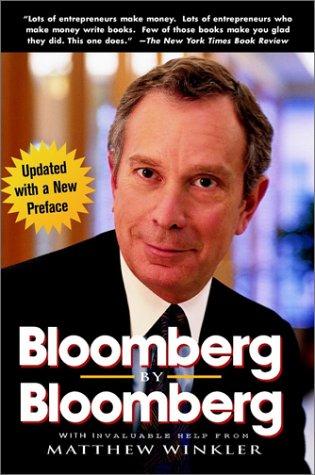
No, yeah, I mean, you invest as well, but yeah. Clearly from the discussion we've had, and especially where you just wrapped it up beautifully, it's like you think of yourself much more as an entrepreneur. You ever read Michael Bloomberg's autobiography?
[Vlad Tenev]
I haven't, no.
[David Senra]
Okay, so he was in finance, and when he got fired, I think from Salomon Brothers, I think it was in 1980, something like that, he had a 15 million dollar golden parachute, which is a ton of money at the time. And everybody, since he was in finance, they thought, "Okay, you're just going to take that money and live as an investor." And he's just like, "No, I want to build something. I want to build a business that actually makes other people's lives better." Talks about it over and over again in his autobiography. It's exactly the story you just told us.
[Vlad Tenev]
Yeah, I think the financial aspect is really integrated into my upbringing and identity as well, which is a reason why I care about it and I care about our customers. Things are changing very rapidly in this world. You have AI, and it's really changing things for the positive, also making people very nervous. But one thing that's not changing, I'm pretty confident, is the importance of having money, investing, generating passive income. I think that's never been more important than it is right now.
[David Senra]
Vlad, you took this discussion in areas I had no possible indication that we were going to go. I didn't even get to half the stuff I want to talk to you about, so I'm going to come back in a few months, and then we're actually going to do the "How Vlad Works" episode. But this was awesome, dude. Thanks for the time.
[Vlad Tenev]
Let's do it.
[David Senra]
I hope you enjoyed this episode. Please remember to subscribe wherever you're listening and leave a review. And make sure you listen to my other podcast, "Founders." For almost a decade, I've obsessively read over 400 biographies of history's greatest entrepreneurs, searching for ideas that you can use in your work. Most of the guests you hear on this show first found me through "Founders."
Books mentioned
Every book mentioned in the episode


delivered
Get key takeaways from each episode delivered to your inbox.