Doug Leone
Doug Leone is a venture capitalist and partner of Sequoia Capital.
Summary
Doug Leone spent 26 years helping lead Sequoia Capital through successive eras of technological change. Born in Italy, he came to the United States without speaking English and carried the insecurity of an outsider into his career. That fear became fuel: whenever he felt himself falling behind, he forced himself to start over. After stepping down from Sequoia at 65 to make room for the next generation, he returned four years later. Now he considers himself a low-level analyst again, racing to understand an AI revolution that he believes is rewriting business more radically than anything he has seen before.
Leone explains the three questions he asks before making an investment: Would he put his children's money into it? If he could make only 20 investments in his life, would this be one of them? Could it return the entire fund? He is interested only in extreme outliers—companies capable of returning 100 times the original investment—and says the biggest mistake venture investors make is selling their winners too early. Sequoia once owned enormous stakes in Apple, Cisco, Google and NVIDIA, but even the greatest investors failed to anticipate how long exceptional companies could continue compounding.
His role as an investor is not to shape a founder's technology. It is to help turn a product into a business: recruiting the first team, building sales and marketing, navigating crucible moments and preserving the founder as the soul of the company. He describes backing David Vélez before Nubank existed, what Fred Luddy's unusual ServiceNow pitch revealed about him and why Sequoia looks for the same qualities in founders and its own partners: a hypercompetitive person with a heart of gold.
Leone also discusses trust as the accelerant that makes business move quickly. Trust requires both competence and good intentions, and it is earned by helping founders when they are most vulnerable. He explains why founders should architect their boards as carefully as their products, why productive disagreement is different from argument and how to deliver difficult feedback so it can actually be heard. He closes with lessons from his longtime partner Michael Moritz: listen to the exact words people choose, put the other person first and always ask what a company could become if everything goes right.
Episode transcript
This transcript was generated using speech recognition software and may contain errors. Please review the episode audio before quoting from this transcript.
[David Senra]
All right, we were just talking before recording, and you just said something that was very interesting. We were talking about people that dominate for decades. You're one of them that's done so, and you said an interesting question is to ask how and why somebody would dominate for decades. What's your answer to that?
[Doug Leone]
My partner in India
[Doug Leone]
said there are many roads to heaven,
[Doug Leone]
and so there are many ways to dominate.
[Doug Leone]
Take Steve Jobs. He had really one job, and he dominated in that domain for a lot of years, or Jensen Huang. Those are more linear. Those are gifts where you find yourself in the middle of the hurricane, and you just want to keep on going because as the world changes, your job changes. What's more interesting is, how do you dominate when you have to remake yourself over and over again, and why do you dominate? Starting with the why, I think it's a deep, insecure need to remain relevant and prove to yourself that you're not getting old and you're not going to be out of date. I mean, if I look back on my career,
[Doug Leone]
each time I remade myself, it wasn't really done out of vision or greatness. It was done out of fear of just being gone. Even a few minutes ago, I asked you, "Let's not make the interview be about yesterday. Let's make it about all tomorrow." And I still have that fear at the age of 69. And the how, I think you have to be willing to let go of your ego. I think you have to assume you know nothing each time and you're willing to start at the bottom. So, when I came back to Sequoia, they gave me this fancy title of chairman. We were in front of our LPs, our investors, the 1st time about 6 months ago, and someone asked me about chairman. I told them, "It's a bunch of bullshit." What I really am is an analyst. I'm a low-level analyst, and I have to prove myself. I just got back from vacation just this morning.
[Doug Leone]
I've had 90 days of getting all calibrated, and my partners asked me, "How do you feel after 90 days?" I said, "I feel like I'm good for nothing. I feel like I've entered, and AI has gotten further away from me than when I 1st started 90 days ago, and so I'm terrified." I told one of my partners just an hour ago that if 9 months from now, which is the one year since I returned, I feel just as irrelevant, I'm going to take myself out. And so, I don't know if I can do it yet another time, and therein lies the fun, and therein lies the answer to your question.
[David Senra]
Do you know who Jimmy Iovine is?
[Doug Leone]
No.
[David Senra]
Okay. Jimmy Iovine, another guy who dominated for decades. He was in the music industry for 50 years, but a lot of people know him because he had the insight to start building businesses with his artists. So, he co-founded Beats with Dr. Dre. They wind up doing Beats Music and the headphones, and they sell to Apple.
[Doug Leone]
I think he's the guy that was involved with The Beatles at the very end.
[David Senra]
Yeah, John Lennon.
[Doug Leone]
Yeah, John Lennon.
[David Senra]
He was an engineer and a producer for John Lennon.
[Doug Leone]
He just showed up on a Saturday, and next thing you know, yes.
[David Senra]
You love him. He's fucking Italian from New York.
[Doug Leone]
Yes. I know who he is. I forgot his name.
[David Senra]
He's awesome. I did an episode with him, but now we've become friends. We talk all the time. He's a very interesting character. But there's 2 things that where you were talking that he said the same thing. He's like, "I don't have a rear-view mirror." He said the same thing when we sat down. He's like, "I don't want to fucking talk about the past. I want to talk about what I'm doing now."
[Doug Leone]
Yes.
[David Senra]
He's like, "There's no trophy room in my house."
[Doug Leone]
Yes.
[David Senra]
"I can't even tell you what I did 5 years ago because I forgot. I'm worried about tomorrow."
[Doug Leone]
Yes.
[David Senra]
That was very interesting. But then my question, you brought up being terrified, and then you said fear before that. What's your relationship like to fear? Because he gave me some of the best advice. He's like, "Most people, when they feel fear, they let it be a headwind." He's like, "I train myself to make it a tailwind. As soon as I feel it, that means I have to fucking go forward right now."
[Doug Leone]
Yes.
[David Senra]
"Right now. Do not think. Step forward."
[Doug Leone]
Yeah.
[David Senra]
What's your relationship with fear? How do you deal with it?
[Doug Leone]
Throughout my life, I felt an awful lots of fear, and it's always been the challenge in front of me. I was afraid of public speaking. I made sure I became the very best. I was afraid of heights. I worked on sailboats. I made sure I was up 96-foot masts. That whenever I feel it, I face it head-on. It's almost a challenge. Look, there's a story that my partners know. I had to get a tooth removed. I actually drilled,
[Doug Leone]
I had to tooth drill for a root canal, and I had to go to a meeting right after that, and I told the dentist, "Drill without any Novocaine." And he says, "You're out of your mind." And my whole life, I wanted to see if I was a badass or not. In other words, am I a fake badass that has this envelope nobody could tell, or am I really a badass on the inside? And I told the dentist, "Take it out with no Novocaine." And he drilled, and I jumped.
[Doug Leone]
And I told the dentist, "I won't move again." And I didn't move again. And I used the trick of thinking what it must be like to go to war and lose an arm or 2 legs. That's pain with consequences. Mine was pain with no consequences. And so I just said, "It's just nerve endings from there to my spine to my brain. Fuck it, I'm not moving." Now, I had to go home and change my shirt because I was a puddle of sweat. But I didn't move. And so,
[Doug Leone]
I love fear. It does wonders
[Doug Leone]
for me. It gives me the challenge to overcome that gives me then a sense of security.
[David Senra]
You mentioned working on sailboats. I read something about you. You were doing this when you were a young kid, right? Were you in high school when you started working on boats?
[Doug Leone]
Yeah, high school and college.
[David Senra]
And it was across the street from or across the river from a country club.
[Doug Leone]
No, it was in the country club.
[David Senra]
Okay.
[Doug Leone]
The country club has the yachts in the water and the pool on the side.
[David Senra]
Do you remember what you said about this?
[Doug Leone]
Yeah, I know exactly what I said.
[David Senra]
Well, can you repeat it?
[Doug Leone]
I said, "I'm going to get those fuckers later." No, it was all the rich kids-
[David Senra]
Wait, hold on. What does that mean?
[Doug Leone]
Well, it was all the rich kids, being the lifeguards, talking to all the girls
[Doug Leone]
at the age of 16, 17 by the pool, having the times of their lives, kind of having the life that- Some of my kids have now. And I was crawling in sailboats, running wires through, sweating like a pig, working overtime, and just looking over at kids my age having the times of their life. And I said, "I'm going to get you all fuckers later."
[Doug Leone]
And I did.
[David Senra]
That is such a reoccurring theme throughout the history of entrepreneurship.
[Doug Leone]
Yeah.
[David Senra]
I felt it that way.
[David Senra]
People are like, "Oh, I'm the 1st person to go to college." It's like, no one in my family even graduated fucking high school.
[Doug Leone]
Yeah.
[David Senra]
And I remember going to public school, and there was this kid that would drive, he had like a 130,000 dollar car. This is like 20 years ago. And he was in one of my classes, and his dad owned like a shit ton of Domino's franchises.
[Doug Leone]
Yeah.
[David Senra]
Which I had no idea were phenomenal businesses. The insight that he had phenomenal businesses, he's just like, "Yeah, me and my dad just went to lunch." They took a helicopter like 200 miles to lunch. I was like, "I'm working full-time at 15. What are you talking about?" And that's exactly how I felt. I'm working on this
[David Senra]
for my other podcast, "Founders." I'm starting to read about Mike Tyson a lot, and Mike Tyson has a video where he talks about the difference, what you just mentioned, the way he grew up compared to the way his kids. And he says his kids would be like, they're like 15 years old, and they're like, "Look at the
[David Senra]
star athlete at school." He's like, "Wow, look at Tracy, so amazing." And he goes, "I wasn't like that." He goes, "What I thought when I saw these people is, wait till I get my shot."
[Doug Leone]
Yeah.
[David Senra]
"Wait till I got my chance. I will show you-"
[Doug Leone]
Exactly.
[David Senra]
"... when I come around what that actually means."
[Doug Leone]
Now, what the trick is, though, is to use that as a motivator but not be an asshole when you're later in life. Don't do unto others as it was done unto you. So, how do you take this incredibly negative experience, make it a positive experience, and then as you mature,
[Doug Leone]
use it in a positive way for the benefit of not only for yourself, but everybody else around you, point one. Point 2-
[David Senra]
Before you get to point 2, how have you done that?
[Doug Leone]
My need to get them back, them, kind of ended by the time I got 50 or so on. I mean-
[David Senra]
50.
[Doug Leone]
Yeah. Well, yeah. It seems like a long time, but it's not. It took a good 30 years. It took a good 30 years to overcome that weakness, because in some ways it is a weakness, because it's a false narrative. Those were not bad kids, and I don't want to live in a false narrative. I finally outgrew it. But the other point, which is more important, for me anyway, is what you do with your kids. To give your kids that level of life is not necessarily a good thing, because what they're going to be missing is the drive that Mike Tyson or you or I or many people that we know had, and that's not the best thing ever. I think you have to inject some misery in your kids' lives so they have that hunger. It can be fake because they know it, but you can't give them everything, because otherwise they won't be hungry.
[David Senra]
How many people that grew up wealthy have that drive that you know?
[Doug Leone]
A good amount of kids that grew up wealthy have drive. Drive can be caused by many things. We have a partner who I'm sure grew up with means that his drive came from competition with his twin brother. They both attended the same college. They both were wide receivers on opposite side of the fields. They adore one another, and they love nothing more than beating the shit out of one another. So drive comes in many ways. I have a son-in-law who is driven like crazy, older brother, I'm sure they fought. He cannot stand cheese because his older brother loves eating cheese. I mean, it shows you these little things. We had a session at Sequoia where we checked in, and one of my partners suggested for the check-in to say, "What is the vignette in life that made you who you are?"
[Doug Leone]
And one partner said, and he cried when he said that, a lot of us cried, he got on a bus when he was 11 or 12, and a girl that he thought was cute looked at him and said, "Boy, you're fat." Now, to you and I, that sounds like a minor thing. To him, it changed his life. 40 years later, 30 years later, he still wakes up at 4 o'clock to work out. I mean, the stories were
[Doug Leone]
in some ways ridiculous, but in some ways, it's really amazing to see how a little kid is affected and how long that vignette carries someone through life.
[David Senra]
What was your vignette?
[Doug Leone]
It was the beach club. It was being ridiculed in high school because I couldn't speak English. It was being made fun of in a classroom. It was being called pasta in high school, because I was an immigrant. All the things that when you're not strong enough, you survive, you endure, and then you try to overcome, and doing it while remaining a good human being.
[David Senra]
I want to tell you about the presenting sponsor of this podcast, Ramp. I have been reading a lot about SpaceX lately. SpaceX is one of the most valuable businesses in the world, and one of the main themes in the history of SpaceX is constantly attacking and questioning your cost. Ramp helps many of the most innovative businesses in the world do exactly that. The median company running on Ramp cuts their expenses by 5%. And one thing SpaceX has demonstrated is that a religious dedication to controlling costs can help actually increase revenue because you can pursue opportunities you couldn't otherwise. And we see that in the Ramp data, too. The median company running on Ramp also grows their revenue by 16%. So when you're running your business on Ramp and your competitors are not, you have a massive competitive advantage that compounds over time. Ramp is the only platform designed to make your finance team faster and happier. Many of the top founders and CEOs I know run their business on Ramp. I run my business on Ramp, and you should, too. Go to ramp.com to learn how they can help your business save time, save money, and grow revenue. That is ramp.com.
[David Senra]
You mentioned the importance of inducing misery into your kids' lives. Do you still induce misery into your own?
[Doug Leone]
Yeah. No, I've gone full cycle and have spoiled myself with material things, realized they don't make me happy at all, got rid of a whole bunch of material things. I sold my fancy cars at a great discount. I just want them gone. It was one day I woke up, I just didn't want to have
[Doug Leone]
cars with vowels at the end of the name. I just got rid of them. I just wanted a more simple life. I wanted to
[Doug Leone]
start to enjoy the little things in life. Now, having said that, I do have toys. I don't want to make it sound like I'm leading the life of a monk, but I've shedded assets on purpose just to simplify my life and, if you will, get down to the really important things in life, which really, at the end of the day, is your family and friends. That's really the most important thing.
[David Senra]
Not just shedding material, like inducing pain or misery into your life at this time, at this point in your life.
[Doug Leone]
Well, I think going back to work, definitely, that was not the easiest move I've ever done, and I'm in the middle of that right now. I'm quite miserable at Sequoia right now, not because of what anybody else does, because I feel that 3 months into it, I'm really good for nothing.
[David Senra]
Let's say when you were building, right? Your 1st few decades there.
[David Senra]
Did work always feel like work, or is it something like you were addicted to doing it, you were obsessed with doing it?
[Doug Leone]
No. It felt like an overwhelming challenge that I didn't know how to conquer, and I felt that until the day I stopped working at 65.
[David Senra]
You got to spend time with Jimmy Iovine, dude. I'm telling you, I think you would love him. He's been around some of the greatest, most talented people in history. Worked with John Lennon, Bruce Springsteen-
[Doug Leone]
Yeah
[David Senra]
... Dr. Dre, Eminem, just like crazy people. And he's like, "Everybody great has a bend in the pipe. There's just something wrong with them that just makes them different." And also, like, the same side of their genius is also their dysfunction.
[Doug Leone]
Yeah.
[David Senra]
And he's like, for himself, it's the same thing. He's like, "It wasn't ever fun to me. Work always felt like work." And he goes, "My bend in the pipe was that it has to be." And what he meant by that is like, "If I'm taking on this business, if I'm taking on this project, if I'm telling you I'm going to do something, I will do it to the point where I almost kill myself before I give up. I have to succeed at it."
[Doug Leone]
Yeah.
[David Senra]
Very similar to the vibe I'm getting off of you.
[Doug Leone]
Yeah. Look,
[Doug Leone]
failure was never an option in my life. I had no plan B.
[Doug Leone]
I remember when I was made a partner at Sequoia, I was down to 0 money. I actually have never said that to anybody, but there was a time in my 1st month where I became a partner that I was homeless. I slept in my car for a week. I showered at 3000 Sand Hill Road. I was down to no money. I was down to 0, 0 money. Sequoia, back then, would buy you a car when you made partner. I bought a car. I didn't have a home. I slept in my car for a week, and then I had some money, and I started getting a rental and so on.
[David Senra]
What was going on in your life that you were homeless?
[Doug Leone]
I went through a divorce when I was 30 years of age, and I gave my ex-wife everything. And I was living on my car allowance of 400 dollars a month. So, I didn't have a home
[Doug Leone]
for a month. And so for a week or so, I slept in my car, and then one of the other associates let me live with him for about 3 weeks, and then I had enough money to go
[Doug Leone]
rent an apartment. So I chuckled for a week that I was a partner at Sequoia and I was homeless. I was the only homeless partner at Sequoia's ever had. I don't think I've ever told that in a public setting.
[David Senra]
At this point, you can't go any lower than you already are.
[Doug Leone]
Oh, no, you can go a lot lower. 1st of all, I was healthy.
[David Senra]
Mm-hmm.
[Doug Leone]
Okay? So you can get a lot lower than that. You can be sick with a disease.
[David Senra]
Good point.
[Doug Leone]
And second, I was a partner at Sequoia. Are you kidding me? My present value, my future earnings were going to be terrific. So I wasn't panicked. I just knew it was only an inconvenience, and I saw the humor in that for about a week. I mean, clearly it would not have been funny to be homeless for a lifetime, and if you're truly homeless-
[David Senra]
Yeah
[Doug Leone]
... that's not funny. But in my case, I was a partner at Sequoia showering at the shower in 3000 Sand Hill Road, parking my car a little bit further away from the office, and sleeping in my car.
[David Senra]
So go back to, you were saying, the level of discomfort that you felt
[David Senra]
right now that you're currently experiencing. Why did you retire to begin with, and then why did you come back?
[Doug Leone]
Well, I didn't retire. If you found
[Doug Leone]
a company, you have season seats. You can stay as long as you want. You can take it public, you can sell it. It's your gig.
[Doug Leone]
I didn't found Sequoia. I was a hired gun. So it seemed to me the right thing to do is to get out of the way and let the next generation have their turns at bat. Don Valentine, he founded it. He stepped away at around the age of 63. I figured 65 was the natural age, and on my 65th birthday, I stepped down. I chose a successor.
[David Senra]
Did you want to step down, though?
[Doug Leone]
It wasn't a matter whether I wanted or not. It was the right thing to do for Sequoia. And so I chose Roelof.
[Doug Leone]
I was the old king, he was the new king. It seemed to me that being the old king with a new king around, you shouldn't be around, you should be removed. And so I stepped out. I was on 10 boards, and I thought that would keep me busy. I founded a biotech company. I thought, "10 boards, biotech company, I'm going to be busy as heck." Not even close, because I had the curse that all my companies were working. When a company's working, there's nothing to do. And so I had a great backlog of companies, and I wasn't busy. So I started taking drum lessons and guitar lessons and piano lessons, and that took me for about a year. And after a year, I thought I was going to lose my mind. It turned out that Roelof stepped down, Pat and Alfred took over.
[Doug Leone]
They weren't the kings I chose, and 30 days into it, they came to my house and they said, "Would you like to come back? You're not on 10 boards anymore. You're on 6 boards. We sold 4 companies." There were companies like Wiz and so on. And I said, "Sure."
[Doug Leone]
And we cut a little deal in an afternoon on a single sheet of paper that we scribbled in.
[David Senra]
Did you see that coming?
[Doug Leone]
That we scribbled. They always wondered to me
[Doug Leone]
publicly for the 2 years before, "Why aren't you around more?" And my answer was, it seemed to me that it's best to stay away and let the new king just do his thing. And when the old king, new king dynamic went away because Roelof was gone, it was much easier
[Doug Leone]
for me and for them. And so they came over, surprise visit. I don't know why they wanted to see me, and I said sure right on the spot. It wasn't a longer conversation.
[David Senra]
Yeah, that's why I asked if you saw it coming, because you...
[Doug Leone]
No, it was of course. And we agreed that I would attend partners meeting, I would be in the inner circle, I would help them spot crucible moments, as we say, to figure out how to navigate them
[Doug Leone]
and make a couple investments. And I've done everything but make a couple investments. I told them I wanted to do nothing for 90 days. I want to get calibrated, and here I am now, day 91, panicked.
[David Senra]
Yeah, but you obviously know this. We're going through this massive technological revolution, this technological shift. Somebody with decades of experience that has seen so many things come and so many different companies and founders come and go, that's invaluable wisdom to have inside the company.
[Doug Leone]
Yeah, except that the world changes, and it's changed more dramatically through AI than-
[David Senra]
Yeah, but how many different changes have you been through?
[Doug Leone]
I understand, but this is the most radical change. This is an industrial revolution kind of change. And so, as I said, I'm 90 day into it. I feel further away now than when I got into it. I mean, look, we're looking at a company. I came back from vacation over the weekend. I saw a memo, I won't tell you the name, of a startup company that wants to raise money without anything at 10 billion pre.
[Doug Leone]
It gets my head spinning. I didn't know if it was a joke. I didn't know if the partners wanted to do that to make fun of me. No, because they would do that.
[David Senra]
Yeah.
[Doug Leone]
And it wasn't a joke.
[Doug Leone]
And so I've never seen revenue growth at this pace. I've never seen prices like this. One could say all you have to do is add 3 0s. It's the same type of business, but it's more complicated than that. And so I've seen a lot of changes. I have good instincts,
[Doug Leone]
but I don't want to rely too much on the past. I want to use the past as a little corner here that I check things against, and I have my heuristics, my 3 or 4 questions I ask myself with each investments. I can discuss those, but I'm focused on what the world's going to look like.
[David Senra]
I would love to know these questions and these heuristics that you're asking. I'm very skeptical because I read history for a living, right? And every time throughout history, you hear, "This time is different. This time is different." And it's never different, right? But this time actually might be different. So I was like, "Well, who could I talk to that could actually answer this question for me that's seen a lot more?" And so I was talking to Michael Dell about this.
[Doug Leone]
Yeah.
[David Senra]
And I asked him, I was like, "Is this time actually different?" And he's like, "Yes." And then he gave this, we had this 30-minute talk where he actually went through why he thinks that actually business is being rewritten and this time is actually different. What are the heuristics that you were mentioning earlier?
[Doug Leone]
I have 2 or 3 of them. One of them is, would I put my kids' money into it?
[Doug Leone]
2nd, if I only make 20 investments in my life,
[Doug Leone]
is this one of the 20? 3rd, can I return the whole fund with this investment? And
[Doug Leone]
if I don't pass those 3, I'm not going to make the investment. And
[Doug Leone]
the reason I put my kids, it gives me the judgment of quality. The reason for the 20, it raises the bar of it could be investable, but is it really the home run, which is the same thing as the 3rd. And those are questions that I've always asked myself.
[David Senra]
Say more about the
[David Senra]
bounding of only having 20.
[Doug Leone]
There's probably 200 investments that you can make in your lifetime, and a lot of them are going to return 2X your money, 3X your money. I only want the ones where you can return 100 times your money. That's all I'm interested in. I want the outliers. I want the ones that really drive tremendous return, that in my lifetime were, first it was 100 million, then 500, then a billion, then 5 billion, then Alfred hit 10 billion, and now Sean hit 20 billion. I told Sean, "You fucker, you kind of ruined it for me. I'm not going to show up now with a 4 billion dollar gain."
[David Senra]
Was that SpaceX? What was that?
[Doug Leone]
Yeah, it's SpaceX. Now, we haven't cashed out yet or whatever, but there's a shot of a 20 billion dollar gain or more. And so he ruined it for all of us.
[David Senra]
The ones that your best performing investments, I'm always curious if you can actually see it back then.
[Doug Leone]
They always surprise you on the upside.
[David Senra]
Right?
[Doug Leone]
Always. They never surprise you when they fail because that was always one of the scenarios you had
[Doug Leone]
thought about, or mostly is. But when they run, they surprise you, and every venture investor has made the mistake of selling too early their winners, every single venture investors. Because if you look at the great companies, they've compounded 20 years after the IPO. NVIDIA or Google or Meta, if you had a little sniffer that this thing had essentially an unbounded market for many years, you should never sell a share. And you can make way more money holding those, because if you're compounding a 5 billion dollar gain, that can turn into a 50 billion gain. If we held Google and had sold Google, that'd be worth, or NVIDIA, that'd be half a trillion dollars.
[Doug Leone]
And there's no investments that can give you that.
[Doug Leone]
And we own 20% of NVIDIA. Think about that. I mean, we own 10% of Google.
[Doug Leone]
And there's many others. Apple, are you kidding me? We were the 1st investor in Apple.
[Doug Leone]
Cisco, we owned a quarter of Cisco Systems. Those are big ownership in very big companies, but we all made that mistake.
[David Senra]
Yeah, sometimes the best financial decisions are not financial at all. So if you look at, like, if you think about the wealth created by Sam Walton, obviously he gave it away before it accumulated to his kids, but if it was still in one person-
[Doug Leone]
Yeah
[David Senra]
... it'd be worth half a trillion or whatever the number is now. And you realize, like, he wasn't making a financial decision.
[Doug Leone]
No.
[David Senra]
He just liked Walmart. It goes back to what Nick Sleep said. Nick Sleep has this great quote where he's like, "The best investors aren't investors at all. They're entrepreneurs who never sold."
[Doug Leone]
Yeah, exactly. That's exactly right.
[David Senra]
You mentioned a few times, I've heard you in other places where you're like, "Hey, I am on boards of cybersecurity companies. I don't know anything about cybersecurity. I'm on board a financial services company. I don't know anything about financial services." What does that mean?
[Doug Leone]
It means that I'm interested in the business and the building the business of a company, not in shaping the technology of a company. Meaning that I'm not a product manager type. That's what founders know. In some cases, that's the only thing they know. They're getting younger and younger. They're 23 years old or 22. They're engineers, and they know that domain. If they have to rely on me to help shape the product 10, 20%, we're in big trouble. Okay? But then you have the business. You have the selling of shares, not the selling of product. And in the selling of shares, you have to wrap everything into it, which is the analysis of market, the product marketing of the final 10% of the product so it's saleable. I can help with that. The product marketing and messaging, the demand gen, the lead gen, and the revenues. And then you've got support and accounting and so on. Oftentime, companies break or they sub-optimize that. That's what I get involved in. And in order to do that, I don't have to be an expert in the technology. In fact,
[Doug Leone]
I'm only partially interested in technology. I'm much more interested in helping founders build a business.
[David Senra]
Say more about that.
[Doug Leone]
So how do you take a 22-year-old that when he comes to us is an outlier in something in life, probably IQ 150 or above,
[Doug Leone]
all the adjectives that venture guys use in a negative sense, I use in a positive sense. Irreverent, shithead, they don't listen. Love it. Give me those founders all day long.
[David Senra]
You got to say more about that. Why do you like-
[Doug Leone]
Oh, because who wants a founder that changes his or her mind depending on who they last spoke to? I want a founder who, for the last 5 months, has gone to sleep and has woken up 3 hours into his sleep just
[Doug Leone]
thinking about the problem, thinking about a solution, crystal clear on what they want to build, no one can detract them, driven like crazy, and so on. That's what I want.
[Doug Leone]
But now we got to build a business. And so who do you crew as the first 10 engineers? What does your first salesperson look like? Do you want people that are up-and-comers? No one that's established and great is going to join you as a startup. That means you have to have an eye for these up-and-comer people in sales and marketing, because the made people are going to play it a little safer. And so to help navigate all those sets of issues, that is what we at Sequoia, I think, are the very best in the world at.
[David Senra]
Can you give me some examples of the founders that you partnered with that you feel you had the best partnership with, that responded to this, that you helped mold and shape and build their business with them?
[Doug Leone]
With David Velez of Nubank. And the reason I choose him for this example is that he was an associate at Sequoia, so I knew him well. I hired him out of Stanford Business School, and I had to give him the bad news that we were not going to open a Brazil office after he moved to Brazil. He committed to Sequoia. He moved to Brazil. We made two investments, and we finally figured out there are no engineers. A few engineers come out of Brazil, and everything coming out of Brazil was, "We are the Uber of Brazil. We are the DoorDash of Brazil."
[Doug Leone]
No real novelty. And one, we had to make the call, "Hey, David, we're not going to open the Brazil office." We offered him a job in California, and he had a notion of a financial services business, a credit card business in Brazil.
[Doug Leone]
Minor problem, he wasn't from Brazil. He knew nothing about financial services. But he had a heart of gold and a heart of a lion. So he was a good man with driven like crazy, and no one could stop him. And so we seeded him. And I remember the call one night. I was at the Roast House. I still remember. I get a call at dinner. It's him. We committed to a million dollars. He says to me, "What do I do next?" And I was in the men's room. I took the call from the men's room. And
[Doug Leone]
we talked it through. He knew what to do next. He was just all alone. "What do I do now?" I viewed it more as a psychological assistance call than a call on what to do next. He wanted some support, and we made a plan of the first 2 or 3 things, and he didn't miss a beat. He didn't miss a single beat for the first 2 or 3 or 4 years. And we built a company now worth, I mean, it was big numbers a few years ago. It's 60 billion dollars now. Like I said, I just saw a startup that wants to raise money at 10 billion pre with no code rate. So I don't know what things are worth anymore.
[David Senra]
Well, David has a-
[David Senra]
Fantastic reputation.
[Doug Leone]
Yes.
[David Senra]
There's a ton of people that have come on the show or people that want to come on the show, and I always ask them, like, "What other founders should I talk to?" It's like, this guy is incredible.
[Doug Leone]
Yeah.
[David Senra]
This is surprising. So an associate at a venture firm then becomes a world-class founder.
[Doug Leone]
Yes.
[David Senra]
Is there other examples that you can think of that follow his pattern?
[Doug Leone]
I've seen it the other way. I haven't seen too many associates becoming founders.
[David Senra]
Yeah. You're actually one of the few. I think most VCs are full of shit when they say, "Oh, the founder is the star, and the founder is the most important. You use this thing where, like, the zero to one is the black magic, and, like, that's the founder's job. I can't help with that. If you need me to help with that, then we're all fucked."
[Doug Leone]
We're all fucked.
[David Senra]
And he's like, "If the VC could do that, they'd be founders then."
[Doug Leone]
Yes.
[David Senra]
And I'm like, you know Divesh from ICONIQ?
[Doug Leone]
Yes.
[David Senra]
So I just-
[Doug Leone]
He's a killer.
[David Senra]
I just had a fucking crazy lunch with him.
[Doug Leone]
He is a freaking-
[David Senra]
Dude, you should sit in our conversations.
[Doug Leone]
He is a killer.
[David Senra]
I wish we just recorded that, but I literally just came through for an hour.
[Doug Leone]
Yeah, yeah.
[David Senra]
And I was talking to him about you, and because I'm like, "I actually think Doug believes this." I think when other VCs say this shit, like, they're full of shit. They actually want to be the guy, and they're very uncomfortable, you know, not saying, "No, I'm actually assisting them. I'm in the service business."
[Doug Leone]
Yeah. We are the service business.
[David Senra]
And I think you actually fucking believe it.
[Doug Leone]
No, we are. And what the trick is, is to retain that founder in the company forever if you can and for as long as possible. Because once you lose that founder, you do lose the soul of the company. A company has many refounding-type moments, and we saw with Meta. Think of what Meta would be without Instagram. That company might be gone. And who pulled that off? Who bought that company in a weekend? We closed the investment in Instagram on a Thursday, and he sold it on a Sunday.
[Doug Leone]
Great IR, but we didn't make any money, really.
[David Senra]
Yeah.
[Doug Leone]
And so you want that founder in the building for as long as possible. Think of the refounding of Apple.
[David Senra]
Your partner, I quote this on my other podcast all the time, Moritz has that great... So he wrote, obviously, "The Little Kingdom" in whatever, the-
[Doug Leone]
Yeah
[David Senra]
... '80s or '70s, whenever it was. And then he updated it in, I think, 2009 to "Return to the Little Kingdom."
[Doug Leone]
Yes.
[David Senra]
And that updated forward. Again, Moritz is a crazy writer. Like, his writing is phenomenal.
[Doug Leone]
He's incredible. You should have seen his memos internally. His reports to the limited partners were funny as heck.
[David Senra]
It kills me because I read biographies for a living.
[Doug Leone]
Yeah.
[David Senra]
And that 60-page, you know, all these obscure ones that people are not supposed to have, they all come to me anyways-
[Doug Leone]
Yes
[David Senra]
... because I do this for a living. And I sat down and read the Don Valentine one that he wrote in one sitting, and then somebody that's mentored by Moritz that I'm friends with, I back channeled, I was like, "Dude, I got to fucking do a founder's episode on this." And it came back, "Absolutely not." I'm like, "Goddammit."
[Doug Leone]
I remember that when I was... There's Mike and I, you know, we both ran Sequoia. A cold-blooded,
[Doug Leone]
strategic Brit and a tactical Italian, gregarious Italian. We had no business being partners, but we made it work for 25 years. But I remember I had a dictionary in my desk, a little black dictionary, because Mike, in a partners meeting, he would use a word that you had to know the meaning of because it was the key to the sentence. I remember faking like I'm going to the bathroom, going and look it up. Like, what does that mean?
[David Senra]
Well, the writing that he put in there, I think he said, "Turnarounds are difficult no matter what. In technology business, they're doubly difficult. They're almost unheard of." He's like, "When has there ever been essentially a refounding of a technology company and in the middle of a turnaround?" And then he has a great line where he's like, "And the first time," he had a partner, he had a co-founder. "The second refounding was by himself."
[Doug Leone]
By himself, yes.
[David Senra]
Even if people don't read the entire book, which I'd highly recommend reading, just buy "Return to the Little Kingdom" and read the foreword that Michael Moritz wrote.
[Doug Leone]
Yeah.
[David Senra]
It gives you an insight into the psychology and just how rare of a talent that Steve Jobs was.
[Doug Leone]
One could argue that NVIDIA had a refounding moment. That was a graphics chip company. And no company up to then had made it through 2 cycles in graphics chip. And already, it achieved the 2-cycle thing, which shocked all of us. And then we all fell asleep. They came up with a GPU for many years. Okay, it's a faster CPU. And one day, we all woke up, and NVIDIA was an AI company. That was a complete refounding by the same founder.
[David Senra]
I found one of my all-time favorite quotes when I was reading the book "Zero to One." The quote says, "The single most powerful pattern I have noticed is that successful people find value in unexpected places, and they do this by thinking about business from 1st principles instead of formulas." That is exactly what AppLovin has done with their advertising platform. AppLovin connects you with over a billion potential new customers inside mobile games. AppLovin allows you to capture undivided attention. AppLovin ads are full-screen video ads that are watched for an average of 35 seconds. That is retention that blows other ad platforms out of the water. And you can launch on AppLovin in minutes. You set the goal, and AppLovin achieves it. There's no complex setup, no expertise needed, and AppLovin scales quickly. They can put your ads in front of over a billion potential customers. Other businesses have seen immediate results, have scaled to hundreds of thousands of dollars of spend per day, and increased their revenue by millions. So you want to get started quickly before all of your competitors are on AppLovin. And you can do that by going to applovin.com. That's applovin.com.
[David Senra]
When I asked you if you induce any misery into your life, like you were saying you should induce it to your kids, I was thinking about Jensen because there's this book by Tae Kim called "The Nvidia Way," which is kind of a company history of NVIDIA, but it gives you enough biographical background. You can function as a biography of Jensen. And he says something in there where he's like, "You know, I don't like giving up on people. I'd rather torture them into greatness."
[Doug Leone]
Yes.
[David Senra]
You get to the end of the book, it's like, oh, he does that to himself.
[Doug Leone]
Of course he does.
[David Senra]
He tortures himself into greatness. He wakes up in the morning, looks in the mirror, and asks why he sucks so much.
[Doug Leone]
And if you're willing to do that to yourself, people will follow you. And people will torture themselves all the way until the goal's met. But you have to be
[Doug Leone]
willing to do that to yourself, and people see that.
[David Senra]
Did you torture yourself?
[Doug Leone]
Absolutely. My whole life. That's all I know.
[David Senra]
So your inner monologue's negative?
[Doug Leone]
I'm kind of a miserable
[Doug Leone]
soul on the inside.
[David Senra]
Say more about this.
[Doug Leone]
I'm always a little unhappy. My instincts are to be unhappy. And I carry a positive vibe, and people see me as fun to be around. It's not an act, but when in my private moments, I'm pretty unhappy. Always. I'm pretty miserable.
[David Senra]
And nothing changes that?
[Doug Leone]
My kids.
[Doug Leone]
I have a reprieve when I'm with my kids and my grandkids and some good friends on a golf course. I play golf. I suck at golf. It's the same 3 guys, so we can laugh for 4 hours.
[David Senra]
I'm going to interrupt you real quick. Does this start when you come to this country? You tell the story of being, like, this precious, like-
[Doug Leone]
Precious, I don't know. I don't know if I'm precious
[David Senra]
... positive boy at 10. Sweet boy at 10.
[Doug Leone]
A sweet little boy.
[David Senra]
And then at 15-
[Doug Leone]
Yeah
[David Senra]
... so that this divine... Dave Ogilvy has this great
[David Senra]
way to put this, and he says, "All great people who do great stuff are divinely discontent."
[Doug Leone]
Yes.
[David Senra]
Like, just never satisfied.
[Doug Leone]
A word I've always hated that I've learned to like is content. I hated that word until about 2 or 3 years ago. I hated the word content. It felt like settling for something.
[Doug Leone]
I hated it. Now, as I get older, it's okay to be content at this point. Maybe I'm over the hill because I've accepted that word.
[David Senra]
Stop talking about yourself that way. You're not over the hill.
[Doug Leone]
No, I'm serious.
[David Senra]
And you're not quitting either. I don't like this-
[Doug Leone]
No, look-
[David Senra]
... attitude I'm getting from you.
[Doug Leone]
No, I have it.
[David Senra]
You're 91 days in. You're not giving up 9 months from now.
[Doug Leone]
I'm not giving up, but maybe it came through that I'm scared shitless.
[David Senra]
Good.
[Doug Leone]
Yeah.
[David Senra]
That means you're fucking doing something.
[Doug Leone]
I haven't done anything yet. I'm going to see if I can do it.
[David Senra]
Okay. You're not ready to get out of the game.
[Doug Leone]
So I was never out of the game.
[David Senra]
Exactly. It's my point.
[Doug Leone]
I was never out of the game. Well, one of them, I don't think of it as a game. I think it was a business where people are employed, 70% of our capital comes from nonprofits, charities, so I never thought of it as a game. In fact, when I ran Sequoia, I made sure we used all the right words. It's not a game. It's not money in the ground, none of that bullshit. It's a business where we're trying to help founders build great companies so we can have great returns for our limited partners. That's a business word. But if I take myself out, it won't be down out of fear. It'd be out of good taste and kindness for my partners. It's not out of fear. I'll never give up out of fear. But if after a year I'm not good for any, I'm going to be the one that's going to have a look in the mirror and say, "You're done. You couldn't do it this last time." Now, I've done a whole bunch of good things in the last couple of years that I want to get into, including starting a company and so on. I happen to think I'm at tip-top of my game. But in this one, I have to show it. I haven't shown it yet, and it's all in performance. It doesn't matter what you do. It's the results at the end.
[David Senra]
Have you seen anybody in your business stay too long?
[Doug Leone]
Stay too long? A 1000000 people.
[David Senra]
Did Don?
[Doug Leone]
No. Don stepped down
[Doug Leone]
in 1993. I believe, I'm going to guess, he was probably 58 to 60 years of age. He didn't stick around for too long.
[David Senra]
Why did he stop?
[Doug Leone]
I think he had enough. I think he had enough. He had two guys in Mike Moritz and me that he thought could take over. He had older people that wanted to take over. And it's interesting how Don told us we were the guys. There wasn't a big conversation. It was a yellow sheet of paper. Don always wrote in green pen on a yellow sheet of paper. One day, we get a
[Doug Leone]
little note that said, "Mike, 1.1.
[Doug Leone]
Doug, 1.1." The other name, another young man, I don't want to embarrass anybody, "1.0."
[Doug Leone]
The older guys, ".7, .6." That was the vision of the carry for the next fund. "DTV, Don, question mark. You figure out what you want to give me."
[Doug Leone]
And that's how Mike and I knew we were the two guys that were chose.
[David Senra]
There was not even a conversation?
[Doug Leone]
No conversation.
[David Senra]
So I'm a big fan of the way he thinks.
[Doug Leone]
Yeah.
[David Senra]
He gave a few talks-
[Doug Leone]
Maybe he talked to Mike Moritz. He didn't talk with me. I just saw the sheet of paper.
[David Senra]
To me, when I think about him, he's like a simple genius to the way he thought and operated.
[Doug Leone]
Yeah.
[David Senra]
Would that be an accurate way to describe him?
[Doug Leone]
I think part of it was accidental. Look, I love Don Valentine, and there's not bad things I could say about Don Valentine, but Don also made a ton of mistakes, as we all did. We sold our Cisco shares for cash
[Doug Leone]
for the total gain of 90 million. We owned a quarter of Cisco Systems.
[David Senra]
How big is that mistake in dollar terms?
[Doug Leone]
What's Cisco's market cap at its height? Might have been half a billion. So, like, what's a quarter of half a billion?
[David Senra]
A lot more.
[Doug Leone]
No, sorry.
[Doug Leone]
Not half a billion.
[David Senra]
Half a trillion.
[Doug Leone]
Half a trillion.
[David Senra]
Yeah, I understand what you-
[Doug Leone]
Half a trillion. A lot of money.
[David Senra]
A lot more than 90.
[Doug Leone]
But look, we all made mistakes. How many distributions I pushed for at ServiceNow? I left a 10Xer on the table. 10X.
[Doug Leone]
It's crazy. We left billions upon billions of dollars, as we all did in the venture industry.
[Doug Leone]
But you know the story. I'm sure that you've heard the story of my review from Don Valentine.
[David Senra]
I don't know.
[Doug Leone]
So I came out of a presentation
[Doug Leone]
with a...
[Doug Leone]
It was Don, me, and two other guys and a founder, and I guess I asked some questions maybe too aggressively. There was a note on the table when I got up. "Doug - not fit to listen to founders." He left that on the table for me to see. I love whenever I hear young guys, "I'd like some feedback," and I get a three-month review. That was my review [Speaker 1 chuckling] right then and there. And so- It was a school of hard knocks. It was the semiconductor days. Of course, we evolved through time. Founders are the most important person in our business. Founder 1st, our clients 2nd, and us 3rd. It's not that we're Boy Scouts. It's not we're 3rd, but we know if we do right by founders, we'll have great returns of which we'll share.
[Doug Leone]
So Don was wonderful. Don was the one, when everybody wanted me out of Sequoia because I was insufferable, Don was the one that said, "Give the young guy a little more time." So he saved my ass.
[David Senra]
Back to this mistake of selling early. I just finished reading this book. It's essentially a biography published in 1966 on all the merchant bank families. It's called "The Merchant Bankers." And at that time, they're all family businesses. And one of my favorite quotes in the book is this guy bitching because they own, like, whatever, 20% of some company like DuPont or something back in the day. And they're like, "Do you understand if we didn't sell this," and he's saying this is like 1915. He's like, "We'd be billionaires in 1915."
[Doug Leone]
Yes.
[David Senra]
So that's a very common mistake in American history.
[Doug Leone]
Yeah, but most companies, if you hold them too long, go away because technology changes. But if you have a sniffer for one of these that happens maybe 5 or 10 a cycle, maybe it'll be a lot more in this cycle, if you can sniff one of those and hold onto it for 20, 25 years, there's really nothing else you have to do in life.
[David Senra]
Are most of your friends investors or entrepreneurs?
[Doug Leone]
Most of my friends are neither. Most of my friends are people that I'd met in my early days of life who have blue-collar jobs,
[Doug Leone]
who
[Doug Leone]
are nowhere near the techno world. I have maybe 2 friends in this
[Doug Leone]
world.
[Doug Leone]
Most of my friends are from high school
[Doug Leone]
and maybe college,
[Doug Leone]
or maybe from Italy.
[David Senra]
Even further back?
[Doug Leone]
Yeah, even further back. I just came from Italy a couple of days ago. I spent a couple of days with a friend of mine who's a cop at the airport in Genoa, Italy. He's one of my closest friends.
[David Senra]
So, you still able to relate to people even though-
[Doug Leone]
Just the notion, relate to people, I find that kind of weird.
[David Senra]
Okay. So why?
[Doug Leone]
What do you mean, relate to people? It's almost as if, "Ah, you're there. I can relate to you."
[David Senra]
No, but you know how this goes.
[Doug Leone]
No, I get it. I get it.
[David Senra]
Yeah, people start out with nothing, they get really successful. It's like they kind of isolate themselves.
[Doug Leone]
No. Thankfully, and that's maybe one of my few good traits,
[Doug Leone]
I'm still normal. I make sure that I lead my life with no handlers. Look, I have everything in life that somebody needs, but I have no handlers. I have no personal assistant. I don't have anybody who cleans up after me. I still take my water glass down in the morning, put it in the dishwasher. I cooked yesterday afternoon. I wash all the pans and everything on my own.
[Doug Leone]
Those are the things that keep me grounded in this crazy world of ours in which we live here in Silicon Valley. In the way I think of myself, a fairly simple man who found himself in the right place at the right time, didn't screw it up, whose only true skill
[Doug Leone]
is a sniffer.
[David Senra]
You keep saying sniffer. What is a sniffer?
[Doug Leone]
Sniffer on people, sniffer... I have an ability to walk in a room in a business meeting and kind of know what everybody's thinking, kind of know what everybody wants to hear. I really haven't lost an investment in 30 years in Silicon Valley. People have beaten me because of price, but I haven't lost otherwise.
[David Senra]
But relate not losing an investment as a sniffer.
[Doug Leone]
Because I
[Doug Leone]
have a sniffer of what people want.
[Doug Leone]
And that same sniffer takes me through what businesses, like what's a real business and what's a dream and what's a pipe dream, even though I do not know much about that technology. Maybe a way to say it, it's EQ. That is really my main skill. And the other thing that I pride myself is I'm a very good soul. In fact, the Sequoia spec of people we want to hire has changed. We had this complicated spec. It's now down to a hypercompetitive person with a heart of gold. That has become our spec in the people we hire. We want people, not like me, but that are willing to do the right thing when it's highly inconvenient for the person doing it, and is willing to walk through walls in order to win, in an ethical kind of way.
[David Senra]
How does the people you want to hire differ from the founders you want to back?
[Doug Leone]
Same thing.
[Doug Leone]
They need to be outliers. The founders we want to back have to be extreme outliers in something, IQ, drive. It's kind of the same thing in the people. We have all these adjectives when you walk in a Sequoia office, the irreverence, the outliers. And I look at that, and to me, they're the same adjectives in people that
[Doug Leone]
we want to back and people we want to hire.
[Doug Leone]
I think we look a lot like our founders. We don't give up.
[David Senra]
So when we go back to this idea that you said earlier where it's like, hey, some of these other traits that other venture people don't like in founders, I love, I'm very attracted to them. Going back to the founder of Nubank, did he have those founder traits?
[Doug Leone]
He had a combination of smarts, drive, clarity of thought, toughness, goodness,
[Doug Leone]
judgment,
[Doug Leone]
mature way beyond his years. Look,
[Doug Leone]
here's what I have to tell you. We interview people,
[Doug Leone]
and Mike Moritz had a great line, called them half-pagers or full-pagers. You interview someone, you write a half page, there's nothing else to write. You're there 30 minutes, you look at your watch, "God, I can't believe, I'm done." And then you have people that you look at your watch, and it's an hour's gone by, and you can't believe it. And David was one of them. And I remember talking to him. The hour flew by, and it was clear to me that we love this person. And he tells the story to show you how Sequoia works. I said, "Yeah, there's somebody else I want you to meet." He makes it to his car, and his phone rang, and it was Mike Moritz. He didn't make it out of the parking lot. That's how fast we move. We pulled him right back in, and Mike met him, and within 2 minutes, Mike and I knew that we're going to hire this kid. And I had interviewed 10, 15 people from Brazil. They all looked the same. They were all these super smart, fine, wonderful guys and girls. They all went in consulting because that's how you self-select in these new markets. I saw it in India and so on. But they all looked the same. I couldn't tell them apart. And then I met David Velez, and within one hour, I knew for sure that he was going to be the person we're going to hire.
[David Senra]
Who are some other great founders besides him that you partnered with?
[Doug Leone]
Fred Luddy of ServiceNow. He was older, but he made everything simple. He came to Sequoia to present, and he told us everything that was fucked up with his company. It was the wildest pitch.
[David Senra]
That's how he started?
[Doug Leone]
Yeah, everything that he screwed up. I mean, if he didn't want to sell shares, of course, he knew what he was doing, but if you didn't want to sell shares, that would have been the type of pitch. Now, we all still saw through that and so on, but he was terrific. Complete clarity of product. He simplified this thing called workflow, where we're asked for something, and you respond, and you answer back, and you ask for something. He simplified workflow to the most basic of ways that people can communicate, and that was the foundation to ServiceNow. That was incredible. Incredible. And then you get into the Israeli founders, which I adore. They are tough. Keep in mind, they think incoming missiles are kind of everyday type of occurrences. And so they're naturally tough. They don't take any shit. They're smart as hell.
[Doug Leone]
Somehow they know what America needs way over there when they work at 8200, which is one of the units in a government in Israel. They're very trustworthy. They're terrific. I love, and they're tough as hell. And the conversation with one of these, usually men, no, actually, there's a woman that she used to be a spy in Iran. She's tough as hell.
[David Senra]
Now she's a founder?
[Doug Leone]
Yeah, she's a founder.
[David Senra]
What's her company do?
[Doug Leone]
It's a cybersecurity company. But not with her, although a little with her. It's almost when you talk to these founders, have you seen those,
[Doug Leone]
I don't know what that sport is where you smack the shit out of one other guy, smacks-
[David Senra]
We had the founder on the show, Dana White's company.
[Doug Leone]
And you take it, and then the guy... No, it's not quite that bad with an Israeli founder, but there are no holds barred. They will tell it to you straight. You'll give it to them straight. It's productive. It's not personal. It leads to an outcome. It leads to an agreement, and it takes 15 minutes. It's just terrific.
[David Senra]
How do you build trust with the people that you want to invest in?
[Doug Leone]
It doesn't start with trust. It always starts with fear. We are the big, bad venture guys who, in their minds, want to own their whole company. In fact, I love to tease founders when they ask me, "How much do you want to own?" I said, "We usually start being happy at about 100%." "But we can go from there." And I do that on purpose to almost take the nervousness out of the room. The way you build trust is
[Doug Leone]
1st to go in and explain to them, "We don't want to screw it up." It all starts with that. And then having the look or the conversation with them that begins to show them you might know something about their business, and then paving the way for them to ask you the first question, which may come in an email, the 1st little bind they find themselves in. And if you rush in and you help them and you take no prisoners and you don't make it painful, and when they're down, you help them, don't turn the screws on them now. If you're going to turn the screws, do it when their ego's up here because they beat the quota by 30% or something. When you help them out when they're in a jam, slowly by slowly, you build trust, which usually takes about a year.
[Doug Leone]
It's not done immediately. There's usually lots of fear at the very start. "Oh, no, I got Doug Leone in my board." It's almost they want Doug Leone, but they're scared as shit to have Doug Leone.
[David Senra]
The reason I ask, because you have one of the greatest quotes I've heard where you said, "Trust is the grease that makes all business run."
[Doug Leone]
It's accelerant. I created the tenets of Sequoia. One was performance, 2 was teamwork, and the other 8 I said, "If you don't have the first 2, the other 8 don't matter." And after I wrote those and I published them, I said, "Shit, I forgot the zeroth one, which is trust."
[David Senra]
Yeah.
[Doug Leone]
With trust. If you have trust in an organization, you can fly. You can make decisions extremely quickly. Trust is interesting, though, because it has both knowledge and intention.
[Doug Leone]
In other words, I can trust your intention, but I think you're a putz, in which case I'm not going to trust you. Or I can trust your skill, but I don't trust your intentions, in which case I run the other way. And so I've taught my partners early on to make sure they understood trust as having those two components.
[David Senra]
That's interesting. I've never heard it broken down like that. What came to mind when I heard that quote from you is like a quote from Charlie Munger, who said something very similar, where he said that trust is one of the greatest economic forces on earth.
[Doug Leone]
Yeah. It's necessary in order to have a business. And you see these companies with broken culture where no one trusts one another, and you can't get shit done. And by the time someone here that knows something makes a decision, which is the right decision, to the time it gets to the VP or the CEO, forget it. It's a whole different thing.
[David Senra]
I'm glad you just said that because I had dinner at his house right before he died, and he told this story where he was like-
[Doug Leone]
Who's this?
[David Senra]
Munger.
[Doug Leone]
Charlie.
[David Senra]
And-
[Doug Leone]
At the ripe age of 99 years of age.
[David Senra]
I know. And then I had another dinner scheduled after his 100th birthday.
[Doug Leone]
Yeah.
[David Senra]
And obviously, he passed away that November-
[Doug Leone]
Yes
[David Senra]
... previous November, unfortunately. He told us a story where it was during the Enron blowup.
[Doug Leone]
Yes.
[David Senra]
And him and Buffett would like... They knew all the assets they actually wanted.
[Doug Leone]
Yes.
[David Senra]
And they had decade-long relationship with a lot of people.
[Doug Leone]
Yes.
[David Senra]
And they
[David Senra]
saw this, I think it was like a pipeline business that Enron owned. Guy Buffett trusted called on Friday. And said, "Hey, this is happening, but you have to wire the money, like, now." Like-
[Doug Leone]
Yeah.
[David Senra]
And it was like a couple 100 1000000 dollars, I think. I forgot what it was. Let's call it 400000000. And the Berkshire lawyer is like, "You can't do this. Like, we have to check it. You're going to be liable if this thing blows up," or whatever. And Munger goes, "We wired the money without even an email." And then I think food was dripping down his mouth, if I remember correctly, and he's like, "We made a couple billion on that risk-free."
[Doug Leone]
Yeah.
[David Senra]
Because he's like, "Why? Because Buffett trusted the guy who was on the other end of the phone."
[Doug Leone]
It's quite interesting because I'm a trusting soul by nature,
[Doug Leone]
and I've never been screwed in business.
[Doug Leone]
I've never pre-wired money, if you will, as a metaphor-
[David Senra]
Mm-hmm
[Doug Leone]
... and paid the price.
[David Senra]
This is why I wanted to read about the merchant bankers, because there's just something very appealing to me. Like, they have an old school, like, gentlemanly way of doing business-
[Doug Leone]
Yes
[David Senra]
... where in many cases, there's no paper at all.
[Doug Leone]
Yeah.
[David Senra]
It's just, you said you're going to do this.
[Doug Leone]
Yeah.
[David Senra]
I said I'm going to do this. We don't write anything down.
[Doug Leone]
Yeah.
[David Senra]
We just do it.
[Doug Leone]
Yeah. Well, it's the value of a term sheet. A term sheet is not worth the paper it's written on, but once you sign it, both sides, I think you have to honor it. You know how many times
[Doug Leone]
we're out where I'm on a board of a company and we signed a term sheet with an investor and then 3 days later, someone's interested at a much higher price? There's no way. There's no way. No, no. We shook somebody's hand.
[Doug Leone]
And people say, "Well, you have a fiduciary duty to take the higher price." No, I have a fiduciary duty to make sure the culture of the company is a clean culture and we do business the correct way.
[David Senra]
Yeah, at the end of the day, you have to be comfortable with, like, your own self.
[Doug Leone]
Yeah, absolutely.
[David Senra]
Yeah, 100%.
[Doug Leone]
Absolutely.
[David Senra]
I'm actually surprised that you're trusting, like default trusting.
[Doug Leone]
Yes, I have a round head, a deep voice, and people are scared shitless of me, and no, I'm serious. And then people find just the opposite. I will bust my ass to help you probably more than anybody else you've ever met. It makes me feel good. It's a very selfish thing on my part. I don't do it for you. I kind of do it for myself.
[David Senra]
What do you mean?
[Doug Leone]
I really like helping others.
[Doug Leone]
It makes me really, really happy.
[David Senra]
Yeah, one of my closest friends is kind of like an advisor and older brother. He says he finds it intoxicating to be dependable for his tribe.
[Doug Leone]
Yeah.
[David Senra]
That's the way he puts it.
[Doug Leone]
Yeah.
[Doug Leone]
Look, I ran Sequoia for 26 years. I never viewed it as running Sequoia. I viewed it as working for all the other people. I used to tell them, "You all have it backwards. I work for you guys or gals. Like, you don't work for me." I mean, yes, I get to make a decision here and there, but the decision I make is so we could all win. But you tell me what you need, and I'll do whatever I can just to get it done.
[David Senra]
Deel is how the best founders turn the world into their talent pool. I've been studying how history's greatest founders operate for a decade, and one thing they all have in common is they understand that recruiting and hiring the very best talent is your most important priority. A players recognize other A players, which is why top companies like Ramp, Shopify, ElevenLabs, Uber, and DoorDash all use Deel. Many of the top founders I know have personally invested in Deel after using their product. And what they discovered is that Deel is the best company in the world at building infrastructure for global hiring. Deel will help your business hire, pay, and manage any worker anywhere in the world so you can retain the best talent anywhere and spend the rest of your time focusing on what you do best, delivering value to your customers. The founder of ElevenLabs has a great description of the value Deel can give your company. He said, "We built ElevenLabs to break down language and communication barriers. With Deel enabling us to hire and support exceptional talent anywhere, we can accelerate our innovation and bring more voices, stories, and ideas to every corner of the world." Deel is trusted by over 40,000 businesses. Learn how they can help your business today by going to deel.com/senra. That is deel.com/senra. So looking forward, you're on day 91. Like, what do you think occupy most of your time in the next 30, 60, 90 days? Like, what is on your mind right now. If you're not looking backwards-
[Doug Leone]
Looking for investments. Because at the end of the day, it doesn't matter if it helps Sequoia during a crucible-type moment and so on, as I said. It's going to matter what's on that sheet of paper or what I've done in the 1st year. So we have a little thing we do on Mondays called MIT, the most important thing for the week. And everybody talks about, "I've got to do this," and I
[Doug Leone]
had nothing going on. I just came back from vacation. I don't think anybody ever said they have nothing going on.
[David Senra]
Mm-hmm.
[Doug Leone]
I mean, it takes guts to say in front of 9 people, "I have 0 going on. My MIT is to go scrounge," I use that word, "for deals."
[Doug Leone]
And that means getting on the phone, calling people I know, networking like crazy, and try to intercept some kind of very nice investments. It's one of the 20 or one of the 30 that I want to make in my lifetime.
[David Senra]
But is that process today different for you than it was when you were at Sequoia previously?
[Doug Leone]
It was because I was more in the deal flow of my generation. In fact, it's very different because the founders of the super interesting companies are 23 years of age.
[Doug Leone]
I don't have a network of 23-year-old age friends.
[David Senra]
This is very interesting to me. I want to hit on that. Before I forget, though, I remember setting a friend of mine up with one of the smartest people I know. He had 2 businesses running, trying to figure out which business he should give his attention to. After like 15 minutes, my smart friend just identified in the core of the issue. And so the guy that I hooked him up with texted me. He's like, "Man, this guy just fucking nailed it. He understood it." And I sent him a text back. I go, "He's my favorite type of person. Very hard to get to, hard outer shell, but once you break through, he'll do anything for you."
[Doug Leone]
Yeah.
[David Senra]
And I think that's very similar to what you were saying. It's like, don't be confused by the round head and the booming voice and the fucking everything.
[Doug Leone]
Yeah, he has a bald round head.
[David Senra]
Yeah, the bald round head.
[David Senra]
The other thing-
[David Senra]
It's very interesting to me. I've had a couple, like, I don't hang out with venture capitalists. Like, I just hang out with founders. Like, I have no friends that are not entrepreneurs. Like, I work on podcast during the day, hang out with founders at night and-
[Doug Leone]
Well, I'm so proud that I'm a founder of a company. I actually
[Doug Leone]
love that.
[David Senra]
Well, no, the reason I bring that up is because it
[David Senra]
happened on a few occasions, but this happened recently where there's another venture capital firm that's like, "Hey, we have an issue with, like, our story and everything. Can you just, like, meet with my partner and, like, talk to us about this? We'll have lunch." I was like, "I fucking like you. We'll just have lunch. I don't even really give a shit about your business, but let's talk." And then I would ask this guy who's been in venture his whole life, which is interesting to me,
[David Senra]
like, who he thinks, like, "If you're a young founder right now, like, who's the 1st person you're going to call? You can pick anybody, and they're going to be your 1st investor." And he starts naming off all these firms. So I go, "How could you work in this business and not understand it?" I go, "You're hanging out with too many venture capitalists and not enough founders. There's nobody on that list." It's exactly what you're talking about. It's these young kids are identifying a vastly different group of people than the previous generation has done. So that is an issue to see across the rest of us.
[Doug Leone]
I mean, in the ideal world, a 25-year-old says, "Let me get some experience. Let me go call Doug Leone."
[Doug Leone]
It doesn't work that way.
[David Senra]
So then what's the solution?
[Doug Leone]
I have to find them.
[David Senra]
Yeah, what's the solution to that?
[Doug Leone]
I think you have to hustle, just like everything else in life. It's what you're doing in your business. You hustle like crazy. All the books you read, all the people you meet, all that you're doing for your business.
[David Senra]
Yeah, but like, here's the thing. I just talked to Divesh about this too, where it's like,
[David Senra]
I have this fucking uncontrollable obsession. Like, I can't tell you why, since I was a little kid, all I want to do is fucking sit in a room and read books. That's never stopped, right? And then once I found podcasting, I just can't stop fucking thinking about it. I get sad. This whole crew that you see here, all these fucking cameras and stuff,
[David Senra]
they didn't tell me that somebody on the team was getting married. They went to Italy. They took 2 weeks off. I was, like, sad as fuck. I went to Italy for, like, what, 3 days, Rob? How long was I gone? I'm like, "I'm going back. I got shit to do." Like, I want to get to work. So it doesn't even feel like a hustle to me. It's just like this compulsion.
[Doug Leone]
I think it's the best kind.
[David Senra]
Yeah.
[Doug Leone]
I mean, it can't feel like a hustle because then you're exhausted. Then you need Friday, Saturday, and Sunday off. No, it's your love.
[David Senra]
Yeah, but one thing that did change, you know Brad Jacobs?
[Doug Leone]
Mm-hmm.
[David Senra]
You spending time with him?
[Doug Leone]
Mm-hmm.
[David Senra]
I mean this in a beautiful way, weird cat.
[Doug Leone]
Yeah.
[David Senra]
Unique. Can just read his book, "How to Make a Few Billion Dollars." Half of it's on his, like,
[David Senra]
not hypnotism, his meditation practices. Like, it's all about his mind and stuff.
[Doug Leone]
Yeah.
[David Senra]
But he's an unbelievably joyful human.
[Doug Leone]
Yeah.
[David Senra]
And he's the one that changed this for me because I was just like you, and like all these other founders and anybody else, these divinely discontent people, it's like my inner monologue, I just wake up every day and I focus on what I did. Just like, that wasn't good enough. You could have done it better. Like, it's just super negative. Until he sat me down one day and he's just like, "This doesn't serve you anymore." He's like, "That got you to where you started to where you are now, but now your drive is generative. Your drive is that you fucking love what you do."
[Doug Leone]
Yeah.
[David Senra]
"So stop being mean to yourself." And it was weird. He's 68 years old when I had this conversation with him, and overnight-
[Doug Leone]
No, the things-
[David Senra]
... overnight, he changed my inner monologue.
[Doug Leone]
No, the things I think about is not all the success I achieved, but all the opportunities I let slip, all the screw-ups I made as an investor.
[Doug Leone]
I don't think too much about rebuilding my life or redoing my life, I should say. But all I think about, oh my God,
[Doug Leone]
the community, the venture community and I have screwed up so badly. I could have done so much better. Look, I've done fairly well.
[David Senra]
No, that's an understatement.
[Doug Leone]
No, both. I'm not saying just financially-
[David Senra]
Yeah
[Doug Leone]
... but in things I've done. But all I can think about is how much better I could have done it. As I think about my next board or 2, I think about it the same way. I mean, all the other boards I've done, I've done a decent job, but I've got a lot of room to really go. I can't wait for my next one to exercise yet another time all my learnings for yet on the next founder for his benefit or her benefit.
[David Senra]
We should actually talk about that because you have a ton of experience with that. So many of my founder friends just have completely fucked up their boards, don't know how to run one, don't like the one they have. Like, what advice do you have around this?
[Doug Leone]
Choose to architect your board the same way you architect your product.
[Doug Leone]
A lot of people choose boards like they choose, like to find a girl or a guy kind of in a bar. You know, "She talked to me, let's go out Friday night." You know, "He talked to me, let's go out." It's no more complicated than that, and they don't put any thought into it.
[Doug Leone]
A board is like a mate, a lifetime mate. There you mate for the next 5, 7 years. I bet you most marriages last probably 5, 7 years these days.
[Doug Leone]
Be extremely careful. And it's not about the 1st term sheet. It's about who do you need, who has the skill set and the temperament you need to complement what you have. And complement means a bit of discomfort, because if both of you have the same background, there's probably a little more comfort, and you want to find a little bit of discomfort. You want to find someone with a very different set of experiences, which means that initially, you're going to talk like this. Initially, you're not going to understand what he or she is telling you. But that's where the learning comes. And so I find people, they don't do it at all. "I got a term sheet." How many times I've heard, "I got a term sheet. I got a lead term sheet."
[Doug Leone]
So what? Who cares? Of course you got a lead term sheet. Everybody gets a lead term sheet.
[David Senra]
So talk about some of the mistakes you've seen in board construction then. Is it just that? It's like this person volunteered and I took them?
[Doug Leone]
So there is domain skills,
[Doug Leone]
there's level of knowledge, and then there's personal traits. So early on when you're building a business, I don't think it helps you at all to find a board member who's an engineer. You're an engineer yourself. That's not the skill you need. That's what I mean by domain skill. And experience, you have no experience, to put a board member with no experience, I don't think it helps you at all. It doesn't mean you have to find someone who's 68 years old, but find someone who's been through the cycle. And then there's personal needs. Out of 10 venture folks, and I've said this and I've taken schiffer, maybe 30% are incompetent. They don't know what they're doing. Another 40%, I call them no-ops. No damage, no anything. They nod
[Doug Leone]
with the group. And maybe 30% or fewer, maybe 20%, know what they're doing. And that's one overlay. The other overlay is
[Doug Leone]
managing their firms, their stature, or their status in a firm. "I need a win, I need an exit. What's my partner going to say?" So you don't really have the board member there. You have the shadow. You have the interpreter of what he thinks he or she thinks the firm wants. If you take a combination of lack of experience, duplicative-type domain, covers your ass with the partnership, and incompetence, that's the worst of all kind. I see that all the time.
[Doug Leone]
I see that all the time. Just completely, let me put it in your terms, completely fucking clueless. Completely fucking clueless to a damage, not a no-op stage, a damaging stage.
[David Senra]
The best boards that you've been on, are the board meetings contentious?
[Doug Leone]
No, but issues are put on the table. Real conversations are put on the table.
[David Senra]
But you're willing to argue forcefully?
[Doug Leone]
You're willing to have the real conversation. The argument implies a tonality, a combative stage. I don't view it as that. I view it as supportive stage to come up with the answer the founder needs. So, we're willing to get the real job done. I won't concede the word argument.
[David Senra]
Interesting.
[Doug Leone]
It's the same thing at a partners meeting. We don't argue, but we have the real conversation. At times, at Sequoia, we have to take a 5 or 10-minute break.
[Doug Leone]
5 or 10-minute break. We walk around, we go back in a room, the temperature has cooled down by 10 degrees, we have the conversation, we come up to an answer, we're all in, we all agree, no more conversations when we go out, it's done. And it's the same thing about board meetings. And it's okay to disagree. It's okay to disagree.
[David Senra]
I would say that one of the most interesting things I learned this year from doing this show, Ed Catmull was nice enough to let me come to his house and record a conversation with him. And he was like, "Hey, a lot of people don't know
[David Senra]
that in the 10 years that Pixar was a public company before the acquisition from Disney, that Steve Jobs fired 2 of our board members." And they might know that he fired him, but they don't know why he fired him. And so I asked him one day, like, "Why did you fire him?" He's like, "Because they didn't disagree with me." He was like, "They always agree with me. They serve no purpose."
[Doug Leone]
Yeah.
[David Senra]
And he was saying that a lot of people say they want to get to the truth, and I think Ed on the episode said most people that say that are actually full of shit.
[Doug Leone]
They are full of shit.
[David Senra]
Steve actually wanted to get to the truth.
[Doug Leone]
No, they are full of shit. Here in California, more than East Coast, people don't like the direct conversation. I had to learn that 1st coming. I went from Italy to New York City, which was halfway to America, and then to California , where everybody told me, "Yes, give me the
[Doug Leone]
feedback, the honest thing." Nobody wants to hear the honest feedback. Who are you kidding?
[David Senra]
Yeah.
[Doug Leone]
Everybody's full of shit.
[David Senra]
But the best founders have to.
[Doug Leone]
They have to, and you have to figure out a way to do it in a fashion that it's understood, received, accepted, and acted upon. It's almost an art. It's not just giving it, it's giving it in the right way, at the right time, with the right tone, with the right words,
[Doug Leone]
with examples, and so on. Look, it's like telling a founder, "Your VP of sales sucks."
[Doug Leone]
You're not getting anywhere. But about if you said, "There's a couple of VP of sales I'd like you to meet, just so you can gauge yourself."
[Doug Leone]
He'll meet or she'll meet 2 people that know what they're doing. Suddenly they'll say, "Holy shit."
[David Senra]
Okay, this is like "Inception."
[Doug Leone]
Well, I don't know about "Inception."
[David Senra]
Okay, so I'm a big fan of Christopher Nolan. I just reread his biography for the second time, and one of my favorite lines in "Inception" is like, "What is the most resilient parasite?"
[David Senra]
Is it bacteria? Is it a worm? It's like, it's an idea. And the whole thing is like, but it can't be an idea that somebody else gave you. You can't say, "Doug, you should believe this." You have to incept them with the idea so they believe that they came up with it.
[Doug Leone]
Yeah, it's like your kids. But are you going to tell your kids all the things they shouldn't do? Good luck.
[David Senra]
Yeah.
[Doug Leone]
Forget it.
[David Senra]
Are you familiar with the shit sandwich?
[Doug Leone]
The shit sandwich?
[David Senra]
On how to give feedback? I don't know if this is the art you were talking about, but shit sandwich is like compliment, the negative feedback, and then another compliment.
[Doug Leone]
Yeah.
[David Senra]
That's why they call it the shit sandwich.
[Doug Leone]
Yeah, well,
[Doug Leone]
I don't know how to do that. If anything, the mistake I make is I'm too direct. I remember
[Doug Leone]
there was a venture guy, Jim Breyer.
[Doug Leone]
I heard him turning down an investment once, and I said, "Oh my God, the founders are going to walk away from this thinking he won the freaking lottery." And I don't know how to do that. And I was always admirers of how he could do that. And
[Doug Leone]
I'm more direct. I hear people talking on the phone for 20 minutes, 30 minutes. My conversations are 3, 4 minutes at most. "Hi, what do you need?" This and that. Done. "Okay, yes, I got it. All right. I'll let you know."
[David Senra]
30 seconds, not even 3 minutes.
[Doug Leone]
Yeah. Most of my conversations are less than 3 minutes long.
[David Senra]
Yeah. Don't you think it's interesting that you don't hang around with other venture capitalists?
[Doug Leone]
Why?
[David Senra]
I don't know. Founders hang out with other founders.
[Doug Leone]
I think it comes to the fact that I grew up from dirt, and the inside of me, there's still mostly dirt.
[Doug Leone]
I really think that's it. I really think that's it.
[Doug Leone]
I'm not an intellectual.
[Doug Leone]
I don't find-
[Doug Leone]
To me, technology is terrific. It's interesting. It changes every day, but it's not my lifeblood. I think humanity and
[Doug Leone]
one-on-one relationships are probably the most interesting thing for me.
[David Senra]
Are you introverted?
[Doug Leone]
I'm right on the line.
[Doug Leone]
According to Myers-Briggs, I'm right in the middle.
[Doug Leone]
I do not like meeting new people in general. In fact, every time I have to meet somebody new, the thought, and it's kind of nasty, that goes through my mind is, "Shit, another asshole I got to meet."
[Doug Leone]
Where I remember talking, where the extroverts, I'm told, find energy.
[David Senra]
Oh, they get energy. They're so gross.
[Doug Leone]
They love it to meet new people. "Oh my God, another person I have to meet."
[David Senra]
Yeah.
[Doug Leone]
And yes, I do it. I can turn the charm gene on. I can fake it. I can be at a cocktail party and know to walk around and network with everybody, but I get home and I'm exhausted from that.
[David Senra]
Yeah, you're definitely introverted.
[Doug Leone]
Yeah.
[David Senra]
I am too. And I think there's a very similar, like, I think about the opportunity cost again. I always quote Munger, where he's like, "The way intelligent people make decisions today, it's all opportunity costs." And for me, it's like, I'm going to spend 2 hours with somebody new.
[David Senra]
That's very expensive compared to maybe the 5 true friends that you have in your life, the cop in Italy or your friends back in New York or whatever. It's like, I'd rather just deepen that relationship that I have than go out and meet new people.
[Doug Leone]
But I realize, though, that putting myself out there and meeting new people makes me happier later. In other words, if I let my instincts of going to the same 3 restaurants or hanging with the same people, if I do that all the time, I'm less happy than if I put myself out there. I dare take these minor emotional risks. I find myself happier because I feel more well-rounded at the end of the day. I feel like I've done something.
[David Senra]
Could you even be in the business that you're in
[David Senra]
but not meeting new people?
[Doug Leone]
No, absolutely. Although it's not a social setting, right? It's work. It's presentation, present, help, assist. I think the closest friend I have as a founder is Velez. All the other founders are pure business. I don't socialize with spouses or with any of the founders.
[David Senra]
But you do with Velez?
[Doug Leone]
Yes, because he was an associate. I hired him. We have-
[David Senra]
Yeah
[Doug Leone]
... kind of a paternal-son relationship.
[David Senra]
Yeah. Is there any venture capitalists that just made maybe one or 5 or 10 investments and then that was it?
[Doug Leone]
CrossPoint Ventures had a hell of a run for 7 years, and they went away. It's a name you may not remember. Look them up. Now, they still exist, but it's all the partners left after just making a whole bunch of investments. There was a venture firm called TVI. You may not remember it. Technology Venture Investor.
[David Senra]
That's the one that bought Microsoft right before the IPO?
[Doug Leone]
They didn't buy Microsoft, but-
[David Senra]
They bought 10-
[Doug Leone]
... Dave Marquardt was on the board of Microsoft.
[David Senra]
Yeah, they got 900-
[Doug Leone]
It was a couple of, one guy
[Doug Leone]
started Benchmark with 2 other persons from another firm.
[David Senra]
But Dave did, I think, if I remember correctly from this book called "Hard Drive."
[Doug Leone]
He was on the board of Micro- He was the only venture investor in Microsoft.
[David Senra]
The year before Microsoft went public, if I remember correctly, they were doing 140 1000000 in revenue, 38 1000000 in profit, and they sold 995,000 shares for a million dollars to him.
[Doug Leone]
No, I don't think, I don't know what they did.
[David Senra]
We're going to put this in the show notes on "Venture Right."
[Doug Leone]
But that was a venture firm that had the keys to the kingdom-
[David Senra]
Yeah
[Doug Leone]
... and somehow didn't last as a venture firm. Where CrossPoint, they just called it in, and they all went their merry way. This is a firm that just couldn't co-exist even though they had everything.
[David Senra]
Yeah, there's something interesting about that. So I can't name who, but it's one of the best entrepreneurs living, and he's like, actually, they were talking about the greatest seed investors of all time. He's like, "Greatest seed investor is my dad. He made one investment and made 40 billion dollars."
[Doug Leone]
That's it.
[David Senra]
He didn't invest in anything else.
[Doug Leone]
That's it. That's it.
[David Senra]
That's awesome. So I asked you
[David Senra]
if you're introverted.
[David Senra]
I want to ask you something that I think Moritz is definitely introspective. You don't strike me as introspective at all.
[Doug Leone]
Moritz taught me how to listen.
[Doug Leone]
Moritz taught me how to listen to the exact word that said, the timing of that word. You really can understand about a human being by just listening to the adjective and so on. I took the Moritz basic training that I got, and I used it, and I expanded on it. I love listening to people speak and-
[David Senra]
Wait, what do you mean you can learn by listening to the adjective they use? What does that mean?
[Doug Leone]
Oh, the words they use when they describe a situation. Humans can't
[Doug Leone]
help but letting it out by showing themselves, and how they use the word "I" versus "we" when describing. "I can sell you this." I'm thinking to myself as he's presenting and said, "Fuck that. You can't sell me shit." That's what I think during the presentation as I have that stupid grin in my face.
[Doug Leone]
But just listen to the specific words that are said, when they say it. We often choose a founder without a line of code, without anything, based on a presentation, a clarity of vision, but we also want to get the interpersonal traits. And you can learn a lot if you just pay super careful attention. I mean, Moritz used to do it to me all the time. He used to re-quote my words back to me,
[Doug Leone]
or the way I said them. It would drive me nuts. It drove me nuts enough that
[Doug Leone]
I learned.
[David Senra]
What was happening there? Why would that drive you nuts?
[Doug Leone]
We used to write memos at Sequoia, and the memo were from and to. And Mike pointed out to me that the from-
[Doug Leone]
Put myself 1st and the to the recipient second. And Moritz was the first that wrote the memos to and from to put the other person 1st and yourself second. I understood that putting the from 1st and the to 2nd as being a somewhat egocentric move where it comes from you. You had to put yourself 1st in that memo. And that's one of the minor little things that I learned from Mike Moritz, and there were hundreds of things like that.
[David Senra]
What else did you learn from him?
[Doug Leone]
So Mike was brilliant.
[Doug Leone]
Let me tell you, he was a very painful co-head, and he knows that. I was painful for him, he was painful for me. Like I said, it's a badge of honor for me anyway that we made it work.
[Doug Leone]
But Mike had the ability to dream broadly in ways that I've never seen before. He could answer the question better than anybody I've ever known, "What if everything goes right?" Not, "Oh, we're hedges and that." No, "What if everything goes right? What can this business look like?" And if you look at the companies he's been an investor in, it's a spectacular list. Look, he had his faults, and we're not going to talk about all his faults here, but on that dimension, he was by far the best in the world.
[David Senra]
All right, Doug, I appreciate you doing this. We're going to run this back because a year from now, you're still going to be doing this. I have faith that you're not going to quit 9 months from now.
[Doug Leone]
Yeah.
[David Senra]
And if when you're still around 9 months and one day from now, let's run this back. I appreciate you taking the time.
[Doug Leone]
Thank you.
[David Senra]
All right.
[Doug Leone]
Bye-bye.
[David Senra]
I hope you enjoyed this episode. Please remember to subscribe wherever you're listening and leave a review, and make sure you listen to my other podcast, "Founders." For almost a decade, I've obsessively read over 400 biographies of history's greatest entrepreneurs, searching for ideas that you can use in your work. Most of the guests you hear on this show 1st found me through "Founders."
Books mentioned
Every book mentioned in the episode
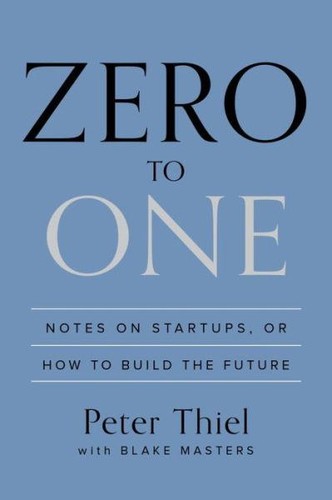
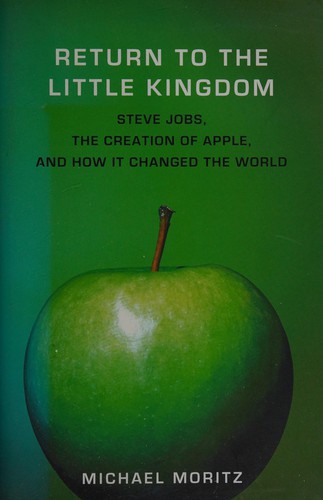
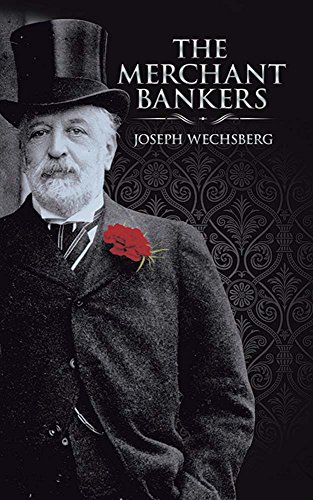

delivered
Get key takeaways from each episode delivered to your inbox.