Scott Wu
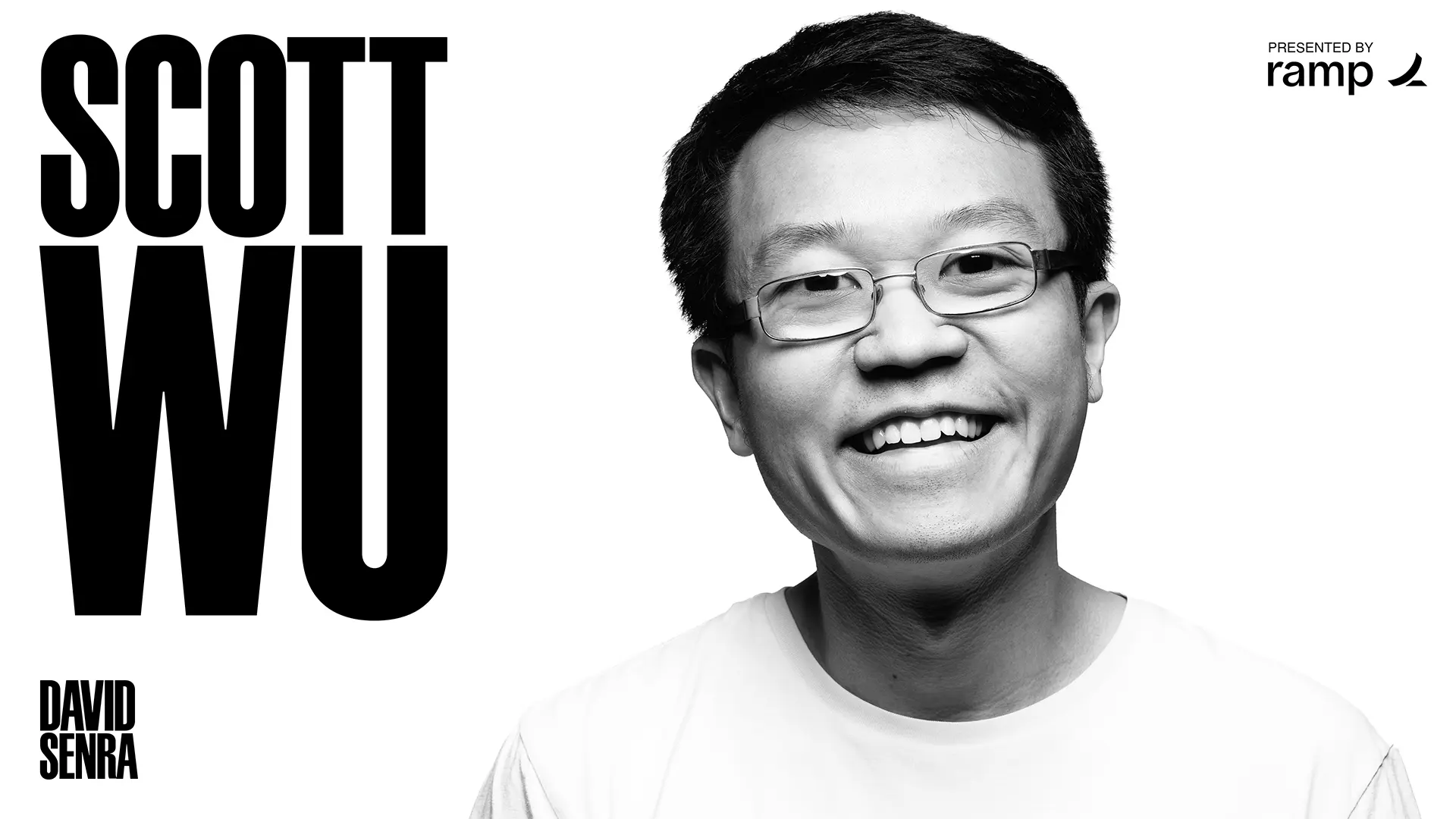
Scott Wu is the co-founder and CEO of Cognition.
Summary
Scott Wu is the co-founder and CEO of Cognition, the company behind Devin, the world's first AI software engineer.
Wu describes himself as "salty," a word he traces to second grade, when he competed in a seventh-grade math competition, lost, and never forgot it. Born in 1997 in Louisiana to a Chinese immigrant family, he grew up the little brother who hated losing at video games and turned that into a career. At the International Olympiad in Informatics he won three gold medals and placed first overall in 2014; he was the 2011 MathCounts national champion. He approaches building a company the way he approaches a strategy game: a tree search, calculating moves, working the decision tree toward victory. By his own account, competition is all he does.
He dropped out of Harvard after two years, worked as a founding engineer at Scale AI, and co-founded Lunchclub before starting Cognition in August 2023 with fellow IOI gold medalists Steven Hao and Walden Yan. They built it in a New York apartment. Devin's annualized revenue then climbed from $1 million in September 2024 to $73 million by June 2025.
In May 2026, Cognition raised at a $26 billion valuation.
Episode transcript
David Senra: I want to know why you describe yourself as salty. What does that mean?
Scott Wu: I've just always been this way. As a kid, I just hated losing. Like, my first competitive memory ever is when I was in second grade, and I went to this seventh-grade math competition. It was a middle school competition that was held at the local university or whatever for middle schoolers.
David Senra: But you were seven.
Scott Wu: Yeah. I was seven or eight years old. I was competing in this middle school math. And I did the math test and whatever, and then they were calling out the names like, "Here's who got third place. Here's who got second. And I was kind of waiting for my name to get called, and then I was none of them, and I just remember being so pissed about that. Yeah. I can't really give you a rational explanation for why it is. I think I just...
David Senra: It doesn't have to be rational.
Scott Wu: Yeah.
David Senra: But how much of your brain is dedicated to competition?
Scott Wu: I mean, it's all I do, honestly. I don't know. I think the...
David Senra: Whoa! What do you mean it's all you do?
Scott Wu: Well, I think a strategy game... I don't know. Even building a company, it feels the same. It's just like, you're calculating the moves. You're thinking about, okay, if you do this, and then this happens, and then you do that, and here are the different moves, and you're calculating out what comes out to success. It's like a tree search, where you're exploring the different options in the decision tree, and you're trying to figure out how to lead to victory. That's the only thing I do in my life.
David Senra: So, this is basically just... You don't have memories when you weren't like this, basically.
Scott Wu: I think that's right. Yeah. I was a little brother growing up, and so my older brother was four or five years older than me. And naturally, we'd play video games, and similarly, I would just always be super salty there as well. I don't know. Yeah, it's just always like that.
David Senra: So, I spent some time with Demis from DeepMind.
Scott Wu: Yeah.
David Senra: And what was interesting is... I draw a lot of similarities between you two, because I've also spent some time with you, and I was like, well, they're both really smart. They're both articulate. They have a friendly UI. Right? But then underneath that is this ruthlessly competitive drive.
Scott Wu: Yeah.
David Senra: And Demis, I think he said this publicly, but I think he said half his brain is dedicated to competition.
Scott Wu: Yeah.
David Senra: And a lot of that comes from his early days in "Chess."
Scott Wu: Yeah.
David Senra: What were you competing in when you were younger besides math competitions?
Scott Wu: Yeah. Well, basically everything. So obviously, the main thing was math and programming competitions. And so, ever since I was really young, that was my life. My whole goal was to become the world champion of competitive programming. I would do that all the time as a kid. The really great thing about these competitions, too, is you compete in your school competition, and if you do well enough in that, then you qualify for the local or the city competition.
Scott Wu: And then, if you do well in that, then you get to the regional competition and state competition, and then you get to go to the national thing, the international thing, right? And so, it's a very nice setup where sooner or later you get to kind of meet people who are like you, basically. When I was a kid doing these competitions, going for that, it was all I really cared about.
Scott Wu: Those people that I met through these national and international competitions were honestly more like... They were my childhood friends more than the people around me in Baton Rouge, Louisiana, were, and it was like we would hang out online. We would talk about math. We'd talk about problems. But all the other things too, I mean, I played, basically, all the different competitive games. So, I played a lot of "Super Smash Brothers."
Scott Wu: I used to go to tournaments for "Super Smash Brothers." It was a lot of fun. Played "Melee," and then I played "Tetris." I played a lot of "Poker." I played some "Chess." I was okay at "Chess." I was not good. I played some "Go." My dad was a competitive "Go" player. My parents came to the US in some sense because of "Go," which was kind of a funny coincidence, because my dad was in grad school in China, and he had a professor who really liked him.
Scott Wu: The reason he liked him was because my dad was a really good "Go" player. Like, he was a 7-dan at "Go," which, if you were to call it in "Chess," would be, I don't know, 2,300 or 2,400 rating equivalent or something like that. He would play with this professor on the weekends and stuff, and they were like... You know, my dad would generally win, and they would talk about the games and stuff. And then, that professor ended up moving to the US to come and teach.
Scott Wu: And at the time, this was super early on in immigration from China to the US, and so it was not a very... It wasn't really a path that people knew that you could take. The professor wrote my dad and said, "Hey, I came. It's great. There's so much more opportunity. It's so much better. You should obviously come as well. I'll help you with your visa application. I'll help you apply to colleges here and everything." And so, my dad applied to grad school in the US, and that's kind of how we ended up here in the first place. I was born after we moved to the US, obviously.
David Senra: So, your dad was competitive in "Go." What was your mom competitive in, though? Because I think I read that you said that she might have been the most competitive person in your family.
Scott Wu: Yeah. No, she was definitely the most salty, I would say, for sure. I mean, she would...
David Senra: What does salty mean?
Scott Wu: Salty just means that you take offense to the idea of losing.
David Senra: Okay, I love that.
Scott Wu: Yeah. She would always be, "Oh, no, no, I'm better at this," or, "I'm very... I can beat you at this." And I don't think she... I mean, she played "Ping Pong" a bunch growing up. Actually, she played on her school's "Ping Pong" team. Obviously, she studied some amount of math and so on. But it was more her personality than any one thing that she really put all of her competitive energy into.
David Senra: I spent a lot of time, obviously, reading the biographies of history's great entrepreneurs.
Scott Wu: Yeah.
David Senra: I was always fascinated by, like, there are usually two different kinds of archetypes for the parents. One, you have the Larry Ellison and Elon Musk. Their dads would literally tell them, "You're worthless." There are stories in Elon's biographies where his dad just gets in his f****** face and yells at him for hours.
Scott Wu: Yeah.
David Senra: Larry's adopted father would just tell him, "You're never going to amount to anything." And so, they had this inner fire to disprove, saying that basically, "No, f*** you, Dad. You're wrong about this," right? And then you have the Estée Lauders, their uncle or even their father is just like, "You're really special. You have a lot of talents. If you put a lot of effort into this, you can do whatever you want." Your mom falls more into the Estée Lauder category, where she would tell you that, "Hey, these people are doing amazing things. You could do even better than them," correct?
Scott Wu: I think they would've been happy enough if I just got a more traditional cushy job and did all of that. I don't know that they specifically steered me towards entrepreneurship and being a founder. But no, they were always very supportive.
David Senra: But your mom gave you self-confidence.
Scott Wu: Yeah, I think she always told me that I was the best. And she was always extremely proud of the... I had these... Like, when we would go to these math competitions...
David Senra: Hold on.
Scott Wu: Yeah.
David Senra: So, you said she always told you that you're the best. Did she say that before there was evidence?
Scott Wu: Yeah, I think so. I think that's right. I think even when I was tiny, she would tell me that I was extremely talented and extremely... You know, she was always a huge source of support, and she always obviously believed in whatever I wanted to do. Because you would compete in math competitions, you would get these trophies and stuff. And growing up, we didn't have pictures of our parents on the walls. We just had all the math competition trophies. My mom was very intentional about, like, "No, the thing that we value in this household is..."
David Senra: Other people's trophies or the ones you won?
Scott Wu: Ours. The ones that me and my brother won, of course. Oh, yeah.
David Senra: Okay.
David Senra: We're going to put up pictures of other people's trophies, and you'd better damn sure replace them with your own.
Scott Wu: Yeah. And so, when I was pretty... My brother as well, we both really liked these competitions, so we would accumulate these trophies, and every time we got one, she would hang it up, and really put it up on the mantelpiece and everything. And no, it was always, I think, what she really valued. I think education was really important to her, and I think being the best was very important to her as well.
David Senra: I want to tell you about the presenting sponsor of this podcast, Ramp. I have been reading a lot about SpaceX lately. SpaceX is one of the most valuable private businesses in the world, and one of the main themes in the history of SpaceX is constantly attacking and questioning your cost. Ramp helps many of the most innovative businesses in the world do exactly that.
David Senra: The median company running on Ramp cuts their expenses by 5%. And one thing SpaceX has demonstrated is that a religious dedication to controlling costs can help actually increase revenue because you can pursue opportunities you couldn't otherwise, and we see that in the Ramp data too. The median company running on Ramp also grows their revenue by 16%. So, when you're running your business on Ramp and your competitors are not, you have a massive competitive advantage that compounds over time.
David Senra: Ramp is the only platform designed to make your finance team faster and happier. Many of the top founders and CEOs I know run their businesses on Ramp. I run my business on Ramp, and you should too. Go to ramp.com to learn how they can help your business save time, save money, and grow revenue. That is ramp.com.
David Senra: What matters to you more? Is it the pain of losing? Is losing is worse than the thrill of winning?
Scott Wu: Yeah.
David Senra: Because that's how you started it.
Scott Wu: Yeah.
David Senra: I could not stand losing. Let me back up. I was reading another Larry Ellison biography. He says this. He's just like, "Listen, I'm addicted to winning, but I fear losing more than I love winning."
Scott Wu: Yeah.
David Senra: And I actually talked to Michael Dell about it, and he's like, "Yeah, it's just the pain of losing is way worse than the good feeling of winning."
Scott Wu: So, I think that's definitely true in terms of how it feels. In order to get anywhere, you got to lose a lot. Almost like a lot of the guys we're talking about, if anything, the way they got to where they are is by losing a lot and having their share of wins along with that. But you just have to put yourself out there and do a lot. So, it's kind of an interesting thing to your point of, like, I definitely feel the same way that, yeah, losing feels way worse than winning feels good, but not by enough that it makes me want to stop trying, if that makes sense.
David Senra: Yeah, no. I think it's impossible.
Scott Wu: Yeah. That's...
David Senra: I know your personality type.
Scott Wu: Yeah.
David Senra: Like, it's just impossible for you not to do this.
Scott Wu: Yeah.
David Senra: Let's get into Devin.
Scott Wu: Yeah.
David Senra: What does winning with Devin look like to you?
Scott Wu: So again, we're hypercompetitive. But also, the other thing about us is that we all had kind of started our own companies before this. So, our founding team was a pretty big founding team. It was nine people. And most of us had already founded our own companies before. We had done different things. It was true for a lot of the early team, and we've always thought about this as, like, this is the big one. And so, we want to go for it all. We want to be a generational business. We want to build a hyperscaler, and we want to go and do that. And maybe we'll succeed, maybe we won't, I don't know. But that's what we're going after.
Scott Wu: And I think, to me, what that means in our field, in building software, is that people sometimes use the term coding agents, or AI programming, or something. I always hear that, I think a little bit about like, well, we're not always... I mean, we're not going to be interacting with code for that much longer. Our programs might not be the right level of abstraction, but I think what is always true, probably, is that it will be the human-computer interface.
Scott Wu: And so, what I mean by that is, the way that we think about Devin, if we're successful, is that Devin is the way that humans can tell their computers what to do. Because that was the whole point of software engineering anyway, right? Is just to be able to work with your computer and tell it what you want it to do. I mean, I think doing that for the world is a massive opportunity, and that's what we're really excited to go after.
David Senra: Why is that interesting to you? You just said, "We all did different things." "We came together, and we're like, 'No, this is the big one.'"
Scott Wu: Yeah.
Scott Wu: Yeah. I mean, the simple answer is we're a bunch of nerds, who are all programmers and built software and so on before, and now this is the idea of teaching AI how to go do that.
David Senra: Wait, say more about what you just said. "We're all nerds." This is the big one because we can actually teach AI how to program.
Scott Wu: Oh, I'm just saying, like...
Scott Wu: We're all nerds who've spent the last, I don't know, 20 years of our lives just coding and making little things for the world, and the idea that you could teach AI how to go make things, and have everybody have an AI that can help them make things and feel the wonder of that, I mean, it's pretty sick.
David Senra: Is that the single idea in the world that animates you the most, that gets you the most excited?
Scott Wu: I think it is incredible, yeah. Well, I would go further too and just say, at a zoomed-out level, it's... I honestly think that...
Scott Wu: Because everyone talks about AGI. Everyone talks about, well, what is the future going to be like? What are human lives going to be, once AI can do everything?
Scott Wu: And I mean, to some extent, I think the thing that is most human, obviously, is self-expression, creativity, having things that you want to make happen in the world and being able to go do those things, right? And so, a lot of how I think about this is basically... We want to build the tool that gives everybody the power to go and make things that they want to make in the world.
Scott Wu: My co-founder has this line, which I've always loved, which is, "We've been spending all this time living in survival mode as a species. And now, we're going to be living in creative mode." And I think that's right. Like, I think, "Minecraft" survival mode is where you're growing food, you're making sure you're safe from the monsters at night, and whatever.
Scott Wu: And creative mode is just like, everything's up to you. You have all the resources at your disposal. If you want something to happen, it'll happen. And the only question for you is, what do you want to make happen? I think it's going to be amazing. And I mean, I think that is like the world that we're going towards, and we want to be the ones building that.
David Senra: Okay. So, talk about what Devin does today.
Scott Wu: Yeah.
David Senra: And then I wanted you to flesh out that idea of where you see it in the future. It's just the interface between humans and computers.
Scott Wu: Yeah.
Scott Wu: Sure. Yeah, so Devin is, today, you know, what folks know as an AI software engineer, and basically, what that means is that Devin is a tool that anyone can use, that will work with them end-to-end on building out software. And so, we work with a lot of the biggest companies across the world. We work with Goldman Sachs, we work with Mercedes, we work with a lot of areas of the US government at this point, and so on. And we work with their software teams to just help them build more and do much more.
Scott Wu: And the thing about it is, in the last 20-30 years, obviously, I mean, software is eating the world is the famous line. I think it's very much true. It's still got a couple of orders of magnitude to go. And in practice, what it looks like is that teams use Devin to ship 10 times faster and to do 10 times more.
David Senra: Okay, so that's where it's at today.
Scott Wu: Yeah.
David Senra: How do you get to where you're saying you might...
Scott Wu: Yeah.
David Senra: Like, you're just the interface between humans and computers.
Scott Wu: So now, we're going to get into a philosophical discussion of what it means to be a programmer or a software engineer, right? And I think if you go all the way back, there was a time where programming was using the vacuum tubes, like plugging all those in and having the machine do the arithmetic, right? Like, the ENIAC was, in some sense, the first computer out there, although it was obviously very different, or it would've been like filling out the punch cards and setting up the... Or putting down assembly, or writing in BASIC or something, right?
Scott Wu: So, we've gone through a lot of generations already, which is my point. And what does it look like, going forward, when you talk about programming, all it really comes down to is how do you tell your computer what to do? And every single piece of software that you use, if you're using Instagram or TikTok or YouTube or whatever, that's a piece of software that somebody, or in these cases, some pretty big teams of engineers came together and thought through all these details of, okay, here's what I want it to do, here's how I want it to look, here's what I want this button to do, here's how I want to architect it.
Scott Wu: Every single little decision, obviously, was made by somebody. But the computer itself is then executing it according to what the wishes of its creators were, right? And I think what we'll start to see is that abstraction will continue to climb, right? And we kind of see this already, at this point, you don't need to know a programming language. It's like you don't need to know Python or Java or something like that in order to build your own software, right? And you can just say, "Hey, here's what I want. I want to make a cool website that does this, this, and that."
Scott Wu: Or, for example, in my existing product, here's what we have today, and I want to change this thing or add this new plan, or add this new feature, and just have the agent go and do that for you, right? I think we're going to continue to go further down that axis.
Scott Wu: One important kind of distinction I'd make, which is, I think, what we'll see a lot more of in the near future, is software today; the math only really works out to create software if it's going to be used at least like a million times or something. Maybe it's 10,000 times or whatever. And my point is, if you want to go build a product today, you need a whole team of engineers. Engineers are expensive. You've got to pay salaries, you've got to go build all this out, and you've got to go and do that, right?
Scott Wu: You need that software to be used enough times or to create enough value for that to be worth it, right? And you know, something like YouTube passes that test because, obviously, so many hours have been spent on building YouTube, but way more hours have been spent on using YouTube. And that's what's made that work out and made it feasible, right? But there are so many things out there which are only very specific things that only need to be used a few times or even, like, only need to be used once, right?
Scott Wu: And so, all the white-collar work that we talk about today, even, is very... All right, you know, wake up in the morning. All right, I'm going to go look through these 15 LinkedIn profiles. I'm going to look for this and that or whatever. Or I'm going to go fill out these forms, or I'm going to do this data analysis and put this Excel sheet together with this research that I found, right? All of these things are things that could be done with software.
Scott Wu: It obviously doesn't make sense to hire a whole team of people to go make you that piece of software, which you're going to use one time and never again, versus just having the human go and do that themselves, right? I think what we're going to get to is we're going to get to a point where you are just giving your instructions to that agent, and the agent on the back end... You know, you don't even have to look at this, but on the back end, the agent is going to figure out, "Okay, I'm going to write this code that's going to go do this. I'm going to put a script that automates this part. I'm going to do this; I'm going to do this."
Scott Wu: And that's what's going to allow it to actually go and do all these things. But what you start to get to, as we're kind of saying, it's like this is really just how you control your computer and how you do what you want to go do, right? And you wake up in the morning, and it's like, here's what I want to go do. You talk to your agent about it, and you figure out the task together. Once it has it, it can do the part of the literal like, all right, put the pen to the paper on writing code. But that task is, you're the one that's deciding what to do.
David Senra: So, this ideal future that's in your mind, right? How far away do you think we are to that?
Scott Wu: Yeah.
Scott Wu: Yeah. I mean, we've made a lot of steps toward it. I would say we've still got a ways to go. You can use Devin today, you can use all the different kinds of coding tools today, and you can do a lot more than you could have done 10 years ago. Or even one year ago or six months ago. But certainly, it's not at the level that we're talking about of you are neural linked into the AI, and you can tell it exactly what you want it to do, and what you want to see in the world, and just have the AI go and do that. When do we get there?
Scott Wu: It's hard to say, but I honestly, I think we'll have solved most of that over the next five years or so. And in AI terms, five years is like a century, in the rest of the world's terms. Obviously, it's kind of crazy to imagine that things can change that much in five years, but I really think it will.
David Senra: So, this is kind of related to something I heard you say, where you're saying that humans just have a really hard time understanding exponential curves.
Scott Wu: It's so true. I mean, you see this in the progress itself. You see this in the scaling laws with the data. You see this in the revenue curves of the companies that are building an AI.
David Senra: Including your own.
Scott Wu: You know, it's like humans aren't really wired for this, right? Like, all of our inherent fight-or-flight responses are kind of our ability to kind of measure things. To vastly oversimplify it, if you're just fighting out there, foraging for food or whatever it is, a good hunt will bring you a couple of days' worth of food or something.
Scott Wu: But obviously, with the kind of exponential curves that we deal with, the equivalent of a good hunt here could be a thousand years' worth of food, and we don't have that intuitive signal in our brains to really understand that, right, at a really deep, like native level. People often underestimate, I think, how fast things can change and how fast the world can change. I mean, my parents even drilled this into me because they grew up in communist China, and they came to the US, and even that...
Scott Wu: Like, we're talking about what we're ultimately even like, much slower scales of progress in some sense relative to, I think, what we're seeing today. But even that was like, as you can imagine, it was incredibly jarring to them.
Scott Wu: You know, the idea that, you come to the US, and everybody has a car and all of these different, it's like all... Everyone has all these household appliances. It was a very different life when they grew up in the '60s in China, when they were much, much poorer, and it was very, very different, right? And I mean, funnily enough, people got used to all these things pretty quickly, and now we can't live without them.
Scott Wu: But I think we'll kind of undergo the same period with AI, where five years from now, it's going to be insane to think about all these things that we're going to have. Ten years from now, we're going to have forgotten that we ever lived without them, honestly.
David Senra: What do you think you understand about AI that other people don't?
David Senra: The reason I ask the question is because we have some mutual friends. I would describe our mutual friends as some of the most AGI-pilled people that I know.
Scott Wu: Yeah.
Scott Wu: Yeah.
David Senra: And I feel every time I have a conversation with them, I'm like, "Oh, even though I pay attention to this stuff, I feel like a toddler compared to somebody like you." And so, I'm very curious; what do you understand about AI that most people don't?
Scott Wu: Yeah.
David Senra: And even people within the tech industry.
Scott Wu: No, you're way too generous. I don't know that I have anything that interesting or that deep of an insight. I mean, I think it's...
David Senra: You say that because you're used to it.
Scott Wu: Here's what I'd say: The way that folks typically kind of predict the future or think about what happens next is they pattern match based on what they've seen historically, and they say, "Okay, well, for a 100 years it's always been like this, and it's probably safe to assume that it will be." And 99% of the time, that works great, right? And in these particular periods where things that actually move, and there are real things that are different, those are the 1% of times where it truly is different.
Scott Wu: Now, rather than any kind of pattern matching, what really matters is just thinking about things from first principles, like AI. There's the famous METR report, which was saying a couple of years ago that AI would do about 10 to 20 seconds' worth of human work without interruption, and then you'd have to guide it or direct it, or it would make a mistake or something like that, right? 10 seconds, 20 seconds, and that's just doubled every couple of months, basically. And now, we're talking about hours of work.
Scott Wu: So basically, an AI can just take a task that would've taken humans hours of work to do. If you go and describe that task well enough to the AI, it will just go and do the whole thing and come back to you with the result, and then you give it the next thing and the next thing, right? And if you just ask from a first principles question, well, why can't that be days? Or why can't that be weeks or months of work? And then what does the world look like if everybody has an agent that can just do months of work for them at a time?
Scott Wu: Then you get to a pretty different conclusion from what we've all seen and what we've all lived for the last several years. And I think that that kind of first principles thinking is as different as it sounds and as crazy as it sounds. You know, this is one of those times where it's actually more correct than the simple pattern match, if that makes sense.
David Senra: I think you've even taken this further, where you're like, "Well, what happens when they can work for a year unassisted?"
Scott Wu: Yeah.
Scott Wu: Yeah. I think that's true, and I think we will get there.
David Senra: If Devin could work for a year without any human assistance, what would you have it do right now?
Scott Wu: Yeah.
David Senra: Destroy your competitor?
Scott Wu: All sorts of things. I mean, no, I still wake up and think about this in every different, like, every little thing that I run. Dumb example, yesterday I was sending out a bulk email, and I was trying to get the email formatter to work, and it's kind of painful. Some of these things are still kind of hard to use, or it doesn't support a certain styling of the email that you want them to do.
Scott Wu: I think I had pasted something with indents and then it just couldn't unindent them, because the editor... I don't know, there were some weird things where the editor would not allow you to unindent one part but not the other, or whatever. And I was just thinking, it's really crazy that I'm still doing this, basically, right? In as much simplicity or honestly more, as it would take you to explain this to another person. Like, "Hey, here's what I want to do. I'm just trying to make it look like this, and then this, and then that."
Scott Wu: Like, the rest of that execution should just be done for you, you know? And then you get to the point where you actually really just get to spend all your time thinking about, well, what do you want to do? Yeah, well, what do you want to build? What do you want to create? What are the things that you want to see in the world that aren't there already?
David Senra: But I think what makes it interesting about what you were saying earlier is that the more you increase the time, the more interesting it gets to me.
Scott Wu: Yeah.
David Senra: So, there's this guy named Edwin Land, who I won't shut up about, and he was the founder of Polaroid.
Scott Wu: Yeah, yeah.
Scott Wu: Yeah.
Scott Wu: Yeah, yeah.
David Senra: Steve Jobs' hero. A lot of what we think of as Steve Jobs' ideas literally just came from Edwin Land, down to, like, the chairs and the table he would use for his presentations. It's like the same thing that Edwin Land used in the '70s with Polaroid.
Scott Wu: Yeah.
David Senra: And he thought of himself as a scientist, not as an entrepreneur. Edwin Land.
Scott Wu: Sure.
David Senra: He died with, I think, the third-most patents. He's just like Thomas Edison, some other dude, and then Edwin Land.
David Senra: And what he did is he couldn't figure out...
Scott Wu: Yeah.
David Senra: He invented the industry of instant photography, before you took a picture, and you're like, "Hey, how's it look?"
Scott Wu: Yeah.
David Senra: They're like, "We'll find out two weeks from now, when we get it back from Kodak. Like, I have no idea." And now, he took a picture of a Polaroid. He's like, "We'll find out in 60 seconds when it dries." But that was black-and-white forever. When I read that part where you're like, "Well, we're going to have agents that can work on a system for a year."
Scott Wu: Yeah.
David Senra: I didn't think of what I would do, which is the question I just asked. I thought of Edwin Land hiring this guy.
Scott Wu: Yeah.
David Senra: He's like, "I want you to think about how we turn this from black-and-white into color."
Scott Wu: Yeah.
Scott Wu: Yeah.
David Senra: And before he could begin, the guy worked there and just thought for two years.
Scott Wu: Sure.
David Senra: I'm like, "That would be very convenient if I could have an agent attack this problem, and while I'm working in the background, because I can't figure it out." They're just thinking about how to attack a single problem for two...
Scott Wu: Yeah.
David Senra: In his case this is the guy that f****** solved instant color photography.
Scott Wu: Yeah, yeah.
David Senra: It just took him two years of thinking to do it. So, this is like...
Scott Wu: Yeah.
David Senra: I'm going to push you on this a little bit more because it's like...
Scott Wu: Sure.
Scott Wu: No, I agree.
David Senra: I don't want your year-long agent to send bulk email.
Scott Wu: Oh, I agree. I do, just to be clear. And I think, at some point, you see this, right, where it's like, when you're talking about seconds, you're literally talking about just a specific command, right? When you're talking about hours, you're talking about giving it a task and having it do the task, right? And I agree with you. Obviously, bulk email is not... For years, what you're talking about is, like, you're giving the agent a mission, basically. And it's like, this is...
David Senra: That sounds way more fun.
Scott Wu: Yeah, exactly. And this is like, what do I care about? And the answer might be, look, I want to... I'll give you a million different examples. The answer might be, look, there's this one societal problem which is really important to me, and I think there's... I think it's a solvable problem. I think we can all be happy, but we really need to spread awareness about it, and we really need to get folks to understand the points of it, and we need to figure out how everybody should work together and coordinate on it.
Scott Wu: That's your point. That's a problem that an agent can think about, right? Or even some of the kind of sillier things, too. Like, there's this video game that I really like, but I wish... You know, if I were making the game, here's exactly how I would think about all these things, and I feel like there's this really cool idea, if you could combine elements from this one game that I really like, but then incorporate some of the elements from this other game, and set the agent off on that mission of, like, look, we're going to go and make the coolest thing ever and the coolest game ever, and we're going to incorporate those elements.
Scott Wu: We're going to think about how those, you know, nicely intertwine and work together, right? Or if it's like, here's this piece of just novel science, which I'm just really passionate about. You know, materials have been created this way for years and years, but here's this avenue of attack, which I've been wondering about and thinking about, maybe there's a different novel construction of materials this way. Set your agent to go work on that for years or months, right?
Scott Wu: And have it study that and explore these things, and run its own experiments, and try all of this. I think all of these are, I think, soon going to be very possible, and to your point, it's very different.
David Senra: Yeah, I like the framing of we're sending them on missions.
Scott Wu: Yeah, yeah.
David Senra: I would have one that would pick the missions that I need to send other agents on.
Scott Wu: Yeah, yeah. Then you'll have the AI, which is the manager AI of the missions, yeah. And I think we will continue. My example of this is, like, I always joke about how, if you think about our ancestors from hundreds of years ago or thousands of years ago, imagine them looking at us and what we do, and it's like, you're pushing buttons, and you're sitting in a room and talking with other people, and you call that a meeting. Those things, that's work for you guys. And it's like, what do you mean that's work?
Scott Wu: Like, I'm in the fields. I'm doing this every day. I'm going farming. I'm making all of our clothes by hand, or taking care of all these things, and that's work. But how can you guys call... And my point is just I think what we will have going forward is going to look that different, from what we have today. We will look at people who, as we say, just have these really interesting curiosities that they want to pursue.
Scott Wu: They have causes that they're passionate about. They have fun ideas or art that they want to create, and they're sending off their agents in pursuit of those missions. And they will think of that as work, and we will look at them and be like, "Wow, it's kind of crazy that that's what you get up and think about all day."
David Senra: I found one of my all-time favorite quotes when I was reading the book "Zero to One." The quote says, "The single most powerful pattern I have noticed is that successful people find value in unexpected places. And they do this by thinking about business from first principles instead of formulas." That is exactly what AppLovin has done with their advertising platform. AppLovin connects you with over a billion potential new customers inside mobile games. AppLovin allows you to capture undivided attention.
David Senra: AppLovin ads are full-screen video ads that are watched for an average of 35 seconds. That is retention that blows other ad platforms out of the water, and you can launch on AppLovin in minutes. You set the goal, and AppLovin achieves it. There's no complex setup, no expertise needed, and AppLovin scales quickly. They can put your ads in front of over a billion potential customers.
David Senra: Other businesses have seen immediate results, have scaled to hundreds of thousands of dollars of spend per day, and increased their revenue by millions. So, you want to get started quickly before all of your competitors are on AppLovin, and you can do that by going to applovin.com. That's applovin.com.
David Senra: When you started Cognition, did you know that you were going to try to make an automated software engineer? Was that your first idea?
Scott Wu: I'll say it was always two things. One, it was always related to code and software, which, again, probably has something to do with us all being programming nerds. And then two is it was always around the idea that these would be like real multi-step iterative processes, which, I would say, was a real hot take at the time. Like, this was end of 2023.
David Senra: Okay. So, this is when I met you guys.
Scott Wu: Yeah. Yeah.
David Senra: And I was on a walk with a mutual friend of ours, and I remember at first... You guys scaled from what, like a million in revenue to 500 million or something like that in what 20 months or something?
Scott Wu: Yeah. Yeah, a little more than 18 months.
David Senra: I remember before you had no revenue, and I heard the idea, and it was pitched as essentially, an automated software engineer.
Scott Wu: Yeah.
David Senra: And I was like, "Holy shit."
Scott Wu: Yeah, yeah.
Scott Wu: Yeah.
David Senra: You're going after labor. This is a huge market. And then you released.
Scott Wu: Yeah.
David Senra: I remember the demo video.
Scott Wu: Yeah.
David Senra: And then you got a lot of shit.
Scott Wu: Yeah, yeah, yeah.
David Senra: Is that a fair statement?
Scott Wu: Well, it was kind of a mix of, I think, the full polar ends of the spectrum, right? So, there were some people who were like, "This is the coolest thing ever," and all this. And then there were some people who were like, "This is the worst thing that you could possibly..." But similarly, in terms of the capabilities, there were some people who were like, "Oh my God, everybody's going to lose all their jobs tomorrow," which is not what we've ever really believed, or thought of this as. To also like, "Dude, there's no way this is ever going to work," and "This is totally a scam."
David Senra: So, what was the criticism? Did you release the product earlier than you wanted to?
Scott Wu: Well, look, it wasn't even a product at the time, to be honest. I mean, it was more just like a prototype or like a demo of what was possible. And we had been working with it and playing with it for a few months at that point, and kind of just wanted to show people some of the examples of what it was capable of because there was a real... I mean, it was pretty insane for us to see as well. Like, I remember the first time that it did a real task, I could not sleep that night. And so, it's just like showing that...
David Senra: Wait, say more about that.
Scott Wu: The first task that Devin did was it set up MongoDB for us. And it's a standard thing. It's issues that a lot of people run into all the time when they're going and getting their kind of initial DB set up or whatever. But we would just run into errors.
Scott Wu: You have this whole flow where you find an error, you Google the error, find some message on Stack Overflow or whatever, or you ask ChatGPT, and it tells you, "Okay, here's what you should try." You try that thing, you run into a different error, and you paste that in, and for this one, we kind of, at some point, we're just like, "Okay, Devin, just try to go fix it. Just go run commands, do whatever you need to go do it." And then it worked.
David Senra: And you couldn't sleep?
Scott Wu: It was truly like... Because again, it's just seeing the exponential curve ahead, because this was a very specific case. It was the one success that we had. It was very much like... Definitely a way better than an average run. But no, there was this feeling of like, why shouldn't all software and all products be built this way now? Like, you can just tell it what you want it to do and have it go do it.
Scott Wu: I mean, it's kind of funny because, yeah, to your point, we did get hate in the beginning. We did not feel motivated at all from the hate to be like, "Oh yeah, no, maybe you guys are right. Maybe we should go an focus on the more kind of chatbot Q&A style product experiences." Maybe more than we should have. Maybe we should have done something in the middle.
Scott Wu: You know, I don't know, but I think for us, when we had seen that and when we had done these different things, all of those demos that we showed in our launch announcement were actual runs of Devin that we had done ourselves and run into and been like, "Holy shit, this is insane." For us, it was always kind of like, "Look, we can debate when or what level of effectiveness or whatever, but it's going to happen." And that's how we always felt about it.
David Senra: So, explain the process of iteration to go from that product, you're getting a lot of hate. Well, actually, you know what? I called Jeremy Stern, who wrote this excellent profile of you in "Colossus," where there are a lot of parts I was just laughing my a** off, by the way.
Scott Wu: Yeah.
Scott Wu: Yeah.
David Senra: And I was asking, I was like, "Tell me the stuff that didn't make the profile."
Scott Wu: Yeah.
David Senra: And he said there wasn't that much because you're kind of an open book, and a lot of people managed their media.
Scott Wu: Yeah.
David Senra: And you could have to talk about certain stuff off the record or whatever, and you were just saying everything. But you did say something about... You made the point that, when you released the first product, what was the benchmark?
Scott Wu: SWE-bench. Yeah, yeah.
David Senra: And it was at like...
Scott Wu: 13%.
David Senra: That was Devin?
Scott Wu: Yeah, yeah.
David Senra: And your point was that that's already better than...
Scott Wu: Yeah, at the time, the best known was 3% or 4% or something like that, but obviously, yeah, 13%. It still means you fail at 87% of the time.
David Senra: Was there a pronounced benefit from releasing early like that?
Scott Wu: For sure, yeah. I mean, so for us, by the way, if you kind of think about this overall AI ecosystem, I mean, a simple way to put it is like, dude, we were late by a lot. OpenAI started...
David Senra: Why? Why though?
Scott Wu: Google DeepMind or Google Brain, I mean, these are obviously more than a decade old already. OpenAI started at the end of 2015, or even Anthropic or others that folks talk about in the world, had been around already for years. We were getting started in early 2024. It was a year-plus out from the ChatGPT launch.
Scott Wu: A lot of the existing players were already there, you know. The same was true in code, specifically. I mean, there was GitHub Copilot, which engineers had already used for years, and that was very much the Q&A, the autocomplete-style experience of working with AI.
Scott Wu: You know, when you start a company, you kind of have nothing. You have no right to exist, is maybe one way to put it. It's an interesting truth about the world, which is, obviously, that startups succeed. You know, startups succeed all the time, and the startup versus big company has been played out for forever.
Scott Wu: But there's no reason in terms of resources, in terms of people, in terms of brand awareness, like, you have none of the things that the big guys have. And so from that perspective, you have no right to win over what they're doing, you know?
Scott Wu: And then, the reason that you are sometimes able to, anyway, is if you really plant your flag in the ground and put a stake into what you think the future is, and you run like hell towards that, and if you turn out to be right on some of the core things... And I think we were wrong on a lot of things, to be clear. There were a lot of things we were... So, definitely, we were early, which is a very fair criticism. I think a lot of the details and the nuances, like we learned and adjusted over time.
Scott Wu: But the idea that you would work with AI as a coworker, rather than as a tool or a chatbot, I think was... I mean, over the last couple of years, it has obviously really grown, and I think it was very important for us, for our brand, for our recruiting, for our customer work, everything, for us to be the first ones that actually planted that flag in the ground and said that.
David Senra: So, when did you have this idea where you guys are going to take a run at very, I would say, ferociously to these giant Fortune 500 companies, or even the US Army uses you.
Scott Wu: Yeah.
Scott Wu: Sure, yeah.
David Senra: Like, where did that strategy come from?
Scott Wu: So, funnily enough, that launch was in March of 2024. And to your point, it went very viral, but again, we didn't have any customers, we didn't have any revenue, we didn't really have like, we had a...
David Senra: I thought your first iteration of the business model was 500 dollars a month or something? Wasn't it? Am I misremembering this?
Scott Wu: No.
Scott Wu: So, we had that. That was actually later on, actually.
David Senra: Okay.
Scott Wu: That was end of 2024.
David Senra: Okay.
Scott Wu: But you know, initially, what we started was just, like, a bunch of people came, asked us for the product. We were like, "Guys, I don't know if this is a product that's ready for prime time. But if you really, you know, well, you can try it, and just let us know." And so, people ran. We had to go and scramble to build a system of like, "Okay, let's do a pilot or a POC."
Scott Wu: And we tried our best to not overpromise and be like, "Guys, really it's very early, but if you want to try it, you can try it." And we did all this, and perhaps unsurprisingly, I mean, they were all just failing, which is kind of natural. It's like, you could do some pretty cool things with it. You could do some pretty interesting toy demos or projects or whatever. But it was certainly not ready to work on an actual company's real codebase and so on, right? And so, from that point, this would've been April or May of 2024.
Scott Wu: We were making agents work with GPT-4. You know, this was like a very different era. So, they were much more primitive agents. We kind of talked about this, and got to this question of like, "Okay, well, what do we think it actually does look like when the agents start to get good enough for adoption?"
Scott Wu: And I think what we kind of came to was, well, different tasks are different, right? And so, there are some tasks out there that are just really mundane and really repetitive, and you're just doing the same tedious thing over and over and over again.
Scott Wu: And there are some tasks on the other end of the spectrum that are really tough, like architecture problems or deep issues that you have to really understand all the context and have all the know-how to know how to fix. And people were trying to use Devin for all of this, and were failing at it, understandably.
Scott Wu: And so, then the question was like, okay, what are the natural tasks that are like, if there's a first task that is going to have PMF and real value from these kinds of agent experiences, where it can do the whole thing end-to-end, what is it that could be? We kind of said, "Okay, well, it should be some of these really repetitive, tedious ones." It's not so cut-and-dry that you can just have an automated script that does the exact thing every time.
Scott Wu: So, it does take, obviously, some intelligence and some amount of meandering. But it is repetitive enough and scoped enough and on a tight enough feedback loop that you can have an agent do it, and it would be able to kind of go and diagnose and fix that problem, right?
Scott Wu: And so, that's kind of what brought us, naturally, to some of these initial use cases, which were things like migrations or version upgrades or helping people upgrade from Java 7 to Java 8 or something like that, which were kind of like, as you can imagine, enterprises had these massive codebases, where they would go and do all that.
Scott Wu: And it's a 50,000-file codebase where you have to go... It's like the same eight things that you need to change in each one. You have to be a little bit thoughtful about how you'd make the trade-offs, but it's a very repetitive task, right?
Scott Wu: Our first success ended up being with a company called Nubank, the biggest bank in Brazil by market cap, at the time. And the use case was one of these big migrations. And we had kind of a custom Devin that was extremely, extremely optimized for doing that. And as we grew from there later on, as things got a little bit more mature, we've had both self-serve business and enterprise business and so on.
Scott Wu: But I think from the beginning, we had always seen this value that building software in the real world and managing massive, massive products that millions of people use every day, was pretty substantially different from just building a cute website or a cute demo from scratch, right? And I think we really, really leaned into that. And naturally, all the Fortune 500 or all the biggest companies in the world are software companies in 2026. You know, even the ones that folks don't necessarily think of that way, right?
Scott Wu: And Walmart or CVS or JPMorgan or Mercedes or whatever, they are all software companies, right? They have massive, massive teams of software engineers. They have tons of things that they're building, and shipping, and maintaining. And that kind of became a natural thing for us to work on because we had learned very early on that we want to work on real problems, and we want to work on things that matter and that people actually care about.
David Senra: So wait, what percentage of your revenue is coming from enterprise then?
Scott Wu: Today, around 75%, 80%.
David Senra: What are people using on the self-serve? Like, what are examples of...
Scott Wu: Yeah. So, we have a lot of teams who use it in self-serve. I mean, that's grown, actually, quite a bit as well, lately. But we have startups who... You know, we have Exa who uses it a ton, or OpenRouter or Build... I ran into someone in my apartment in the elevator, the other day. They're like, "Oh, you're the Devin guy. We use Devin." Yeah.
David Senra: Yeah, are you Devin?
Scott Wu: Hey, I've gotten that as well. "Hey, are you Devin?" And I was like, "You know, I'm actually not, but that's okay."
David Senra: Why didn't we call it "Scott?"
Scott Wu: There's kind of both, self-serve and enterprise. With that said, it is entirely on both sides; it is still actual engineering teams building real output. And so, we don't focus at all on individual hobbyists who are just trying to make a cool thing or something like that. We focus on real teams who are building real products that they want people to use, and getting output out of that.
David Senra: Okay. Can you walk us through... I'm very curious, like, I'm a big enterprise...
Scott Wu: Yeah.
David Senra: I contact you.
Scott Wu: Yeah.
David Senra: Walk us through what happens, and to being a customer.
Scott Wu: You know, it starts with education. And everyone's gone crazy over AI and agents and so on, and those are the buzzwords of the last six months, obviously. So they want to know more about this, but there's still a lot of detail, and what does it actually look like to deploy them?
Scott Wu: So, we'll show them what this looks like. We'll talk them through how we work with teams and how we partner, how we direct them to the right use cases, how we give them guidance on how to maximize their ROI or what projects are or are not feasible with agents.
Scott Wu: And then, from there, enterprises typically, obviously, have some very messy processes. And so, for most software or most, just generally, vendors that they'd want to work with, it's often, I mean, for as you can imagine, for a massive bank adopting software, giving it access to all of the repos, getting through security or whatever, usually for typical companies, it's a 12 to 18 month cycle. The thing that we do naturally is, we just work with them to figure out how we go and do that as fast as is humanly possible.
David Senra: Did you send employees down to South America for Nubank?
Scott Wu: Well, so Nubank... I mean, the first one, honestly, our entire team was the foreign deployed team. Like, we all flew to Brazil.
David Senra: What?
Scott Wu: I mean, it's the first case, it's like, let's be real here, okay? Agents did not work, generally, okay? And so, it was a lot of like, how do you make it work for very specific...
David Senra: Oh my!
Scott Wu: Like, we all flew to Brazil. I was there. The whole team was there. We were sitting there with their engineers, understanding, "Okay, so this is what you do in that case, this is what you do in that case, and this is what Devin needs to know, and Devin needs to be able to read these things, and going and debugging their exact problems. Now, obviously, it's not that at all because, you know...
David Senra: Hold on. We'll get to where it is now. But the idea of like, "No, we didn't deploy a team.
Scott Wu: Okay.
David Senra: We deployed the whole company."
Scott Wu: Oh, yeah. Yeah, dude, I mean, it was...
David Senra: That's hilarious.
Scott Wu: Getting the first customer, obviously, was like a real... I mean, I wonder what they thought of it. But yeah, it was literally like, "Okay, let's go through all these different things that you guys think could make sense. Let's go through each one. Let's try some of it manually ourselves to understand what the task looks like. Let's see if we can teach Devin to do this correctly, and build in the right kind of orchestration for Devin to be able to do this. And let's just..." Basically, building the product was almost building for one company. And yeah, it was fun.
David Senra: So, what do you do today?
Scott Wu: So today, it's obviously much more. It's much more self-start and the agents are so much more capable, obviously. And we've figured out a lot more things with the onboarding experience. But a lot of it is, we're saying that these cycles typically take 12 to 18 months. We try to get deployed with folks within three months. And a lot of that requires folks to... Obviously, first of all, it requires them to really appreciate that it's a priority.
Scott Wu: I mean, if you have 25,000 software engineers that you're... And an organization that's running, that costs 10 billion a year or something, that you think can move three times faster, usually it is a priority. But then it's like, figuring out how we get through the security reviews. You know, we have all the... You know, we can deploy in their private cloud. We have very strict data agreements. We have tight air walls on all these things, obviously. Getting through all the...
David Senra: Do your employees physically have to go? Are they working with...
Scott Wu: Yeah.
David Senra: Are these deals so big that they're working with a specific company and only that company for a period of time, or no?
Scott Wu: Typically, no. We have a full forward-deployed motion. But a lot of what that looks like, as we're saying, is a little bit more user education and guidance. And so we will fly. You know, we still do this, but we'll fly out and kind of go and see customers and work with them, point them to the right use cases, teach them how to get success, help them with their setup and their playbooks, and all these things, for how to use Devin.
Scott Wu: But it's much more kind of like, "Look, we're here to assist you guys. We're giving you a lot of this kind of direction and so on. But you are yourself, and your team is the one that's using Devin and running all of that," right? So, that's a lot of what that looks like. We're set up to be as incentive aligned with our customers as possible, and so a lot of it is not just like, "Oh, here's this tool. Hand it over to your engineers and find out what they say about it."
Scott Wu: It's like, "Okay, well, let's figure out what are the initiatives that you guys really care about, and we will point you to those initiatives. Here are each of the projects that we think Devin, right now, can make you 10 times faster on. And we'll tell you for the ones that it's not, and here's what workflows you should use instead, or here's how you should get to value instead." But it looks more like that than a literal, "We are using Devin on your behalf or something."
David Senra: Deel is how the best founders turn the world into their talent pool. I've been studying how history's greatest founders operate for a decade, and one thing they all have in common is they understand that recruiting and hiring the very best talent is your most important priority. A Players recognize other A Players, which is why top companies Ramp, Shopify, ElevenLabs, Uber, and DoorDash all use Deel.
David Senra: Many of the top founders I know, have personally invested in Deel after using their product. And what they discovered is that Deel is the best company in the world at building infrastructure for global hiring. Deel will help your business hire, pay, and manage any worker anywhere in the world, so you can retain the best talent anywhere and spend the rest of your time focusing on what you do best: Delivering value to your customers.
David Senra: The founder of ElevenLabs has a great description of the value Deel can give your company. He said, "We built ElevenLabs to break down language and communication barriers. With Deel enabling us to hire and support exceptional talent anywhere, we can accelerate our innovation and bring more voices, stories, and ideas to every corner of the world." Deel is trusted by over 40,000 businesses. Learn how they can help your business today by going to deel.com/senra. That is deel.com/senra.
David Senra: Wait, so tell me more about how you align the incentives between your company and then your customers.
Scott Wu: Yeah. So, a couple of things here, which I think are really important. One, obviously, is just really working with them on very clearly defining the ROI, which I think is a very important... I mean, everyone's talking about this, right? Over the last few months, people are going crazy on their token budgets, and one engineer can spend so much, and you want to know that that's actually doing real value for you, and you want to be able to identify where you are...
David Senra: Do you think all of this stuff is a little crazy?
Scott Wu: I think it is directionally correct, but I think there are definitely some places where people have gotten carried away. You know, people talk about, "Oh yeah, we rank our engineers by how many tokens they're spending." Well, let's try and rank people by how much output they're actually producing or how much good work is actually getting done, you know. But obviously, I think the math works out in terms of like, the GPUs are expensive. But if your engineers are actually able to ship three times more, then it's very clearly worth it. You just want to make sure you're doing it the right way, right?
Scott Wu: Obviously, a lot there on just tying to specific outcomes, tying to, okay, what are the actual tickets that are getting done? What are the projects and the initiatives, and this project, which was scoped out for 18 months and was going to be handed off to an outsourced contractor, and was going to cost you 15 million?
Scott Wu: Let's just talk about how you do this all internally with your own team, and you do it for one million, and you get it all done in three months. You know, stuff like that, which I think is super important. The second thing, which I'll call out especially, is just being neutral. A lot of discussion, obviously, about...
David Senra: What do you mean by that?
Scott Wu: Being neutral with respect to all the labs, the models themselves, and stuff.
David Senra: Yeah. I think you said you like being Switzerland.
Scott Wu: Yeah, we like being Switzerland. Exactly. And so, I think it's like an important thing of... We are just as incentivized as they are to figure out how to make their token spend efficient, right? And so, Devin is purposely meant to be a compound model system. And so, all of these different things, for the right task or even the right sub-task of a task or something like that...
David Senra: Describe what a compound model system is?
Scott Wu: Oh.
Scott Wu: Yeah, yeah. So, for each different part of your use case, I mean, imagine... So, let's say you tell Devin, "Hey, customer just reported this bug. There's a Jira ticket. Can you take a look at the ticket and go and solve the whole thing?" Right? What does Devin actually go do, right? First of all, Devin's probably going and investigating, understanding what does the report say? What's going on? Second of all, probably, as any engineer should, it's going to go and try to reproduce the bug itself, right?
Scott Wu: So, it'll say, "Okay, let me spin up the product locally. Let me click around, try to follow the same steps that they followed, and see if I can make the bug happen as well," right? Then if you did that, then, okay, now you're looking at the logs. You're trying to figure out what went wrong. You're pinpointing what are the particular files, or what was the command flow that led to this?
Scott Wu: Then you do the debugging, then you go and test it again, make sure... All these steps, right? Then you put it up for review. And it turns out that there are different models that are good for different parts of these tasks, right? And even across different tasks, obviously, also, it's like, some tasks are these really crazy hard ones, where you want to actually use max thinking, and you want to use the very best models you can get your hands on in the world, right?
Scott Wu: And then, many other tasks are boilerplate enough or repetitive enough that what you care about is just getting it done really fast, getting an immediate answer, having the ability to verify that it was correct, but then beyond that, making sure that it was as cheap and fast and efficient as possible, right?
Scott Wu: And so Devin, rather than being pegged to one model and saying, "Oh, we're only going to serve you GPT for this," or, "We're only going to serve you Opus for this," Devin can use any of the different models it has in its arsenal, which include all of these models from Anthropic, OpenAI, Google, et cetera. But also our own models, right? Or open-source models out there. And it will dynamically go and choose these models for these tasks.
David Senra: How do you think about this? Like, you're a customer of them, but also a competitor with.
Scott Wu: Yeah.
Scott Wu: Yeah. No, I mean, look, I think in practice there's a lot of positive-sum work for us to do together. And so, the way that we think about ourselves, a couple of things. One, software is the only thing that we care about, obviously. And there's a lot of value in focus, and in building products, and building our whole motions specifically around that.
David Senra: Say more about how you think about focus and the value in it.
Scott Wu: You know, back to what we were saying about startups, right? Why do startups ever win at all? And if you do everything, you will lose to Microsoft or Google, who does everything, but also has trillions of dollars more resources and 100,000 more people than you, right? And infinitely more brand-name, right?
Scott Wu: And the way that you build a real kind of lasting business or lasting product is by really, really focusing and narrowing on one specific thing, making a very concentrated bet, and then obviously, your bet has to end up being right. But from there, it's a lot of just really tight execution. And so, in software I love...
Scott Wu: You and I have talked about this. I love the quote from Daniel Ek in Spotify, right? People were saying... So, YouTube's trying to go and do this, and Apple has Apple Music, and why should there be like a... He was like, "You know, I can give you all the other reasons, but the truth is we're just going to care way more about music than they are."
Scott Wu: And I think for us, it's true. It's like, we are just going to care so much more about what does it look to build software end-to-end at Goldman Sachs or at Mercedes-Benz or something that, you know? And there's a lot of nuance in that, and there's a lot of messiness in that, right?
Scott Wu: It's not as simple as, "Oh, here's a sandbox algorithms problem. Go and code me the correct 30-line program that solves this problem," or something. It's like, "How do you work with all the messiness of the real world? How do you understand the codebase as it exists today? How do you collaborate with all the humans on it? How do you plug into their ticketing system? How do you give the agent the ability to test its own code and run everything locally, right?"
Scott Wu: All of these are obviously super hairy, messy problems. And that's what we care a lot about, right? And so, from that perspective, it's very kind of nice like... You know, the labs have their own products. I'm sure they'll continue to do more. But in practice, there are a lot of nice ways for us to cooperate.
Scott Wu: Obviously, on top of that, being the Switzerland means that folks can work with us, and kind of trust in us, that we will kind of route them to the right models, that we will optimize the price performance for them, that we will kind of direct them to the right use cases, and so on. Because we're not incentivized for them to spend more on the models either. We're incentivized for them to get value and to get output out of it.
David Senra: I love that you used the example of the war between Spotify and the rest of the... Like, Apple Music, for example.
Scott Wu: Yeah.
David Senra: Jimmy Iovine, who also came on the show and now, is actually a friend of mine, actually called me yesterday about this, because anytime anything happens with AI music and Spotify, he calls me.
Scott Wu: Yeah.
Scott Wu: Yeah.
David Senra: But we talked about this because he's like, "You don't understand." He had 40 years of experience in the music industry. He had all the relationships.
Scott Wu: Yeah.
David Senra: He's like, "Apple bought me for three billion dollars." Spotify, at the time, he's like, "We're going to go head-to-head with them."
Scott Wu: Yeah.
David Senra: Spotify only had three million paid subscribers at the time.
Scott Wu: Uh-huh.
David Senra: Jimmy's going to fight the war, and he's like, "I have one of the biggest companies in the world."
Scott Wu: Yeah.
David Senra: And then he talked about it. He's like, that wound up being a huge... He thought it was an asset. It was a huge liability.
Scott Wu: Yeah.
David Senra: Because they're like, "We don't give a shit about getting a couple of million more, or tens of millions of more of subscribers."
Scott Wu: Yeah.
David Senra: "We invented the most successful consumer product of all time."
Scott Wu: Yeah.
Scott Wu: Yeah.
David Senra: And he said something, like they just clipped his wings.
Scott Wu: Yeah, yeah.
David Senra: And it was like, he was just trying to do something, they're like, "Oh, this isn't important to us."
David Senra: Where Daniel was going to die if he was not successful. He just cared about it a lot more.
Scott Wu: Yeah.
Scott Wu: Yeah, yeah.
Scott Wu: Dude, even in the two years that we've been around, I've heard so many different versions of the same argument. Because when we started, as you can imagine, this was true for us; it was true for everybody in the space, building the space. The number one pushback that you would always hear from investors, from other people, was like, "But Microsoft already has GitHub Copilot.
Scott Wu: Everybody's just going to use that, right?" And it's like, it was a very reasonable thing to say in some sense, because you know what? They did own all of GitHub, and they did have a partnership with OpenAI, and they did have VS Code and so on. I think in practice, the reality is, there's so much more innovation and so much more to build that there was a lot of positive side... And Microsoft's a great partner of ours, and we do a lot of things together, and we build even more together, right? And, I think the reality is, people have said this forever, like, "Oh yeah, startups versus... Yeah, why should..." You can give all the rational arguments...
David Senra: Ten years ago, it's like, Google will do this, or Facebook will do this.
Scott Wu: Yeah.
Scott Wu: Yeah, yeah, for sure. It's like, "Oh, why should Datadog exist? Or why should Snowflake or Databricks exist?" Whatever. You know, this is the clouds. The clouds have all of it. You know, the clouds care about observability too. And the reality is, it's in some sense, a bit of an uncreative way to think about things, I think.
Scott Wu: Like, if there was one thing that, okay, here's what we all know is going to be the end state future, and everybody's just working toward it, and whoever has the most resources toward it wins. And of course, yeah, it's like, we know who has the most resources today, right?
Scott Wu: But if there are millions of problems out there to solve, there's lots of different things. The world is dynamic. Things change all the time. There's lots of new ideas, or opportunities, or ways to build new products. Then the reality is like, of course, there's lots of different niches to own. There's different things to really bet on. There's different focuses to spend your time on, and I think that will continue. Yeah, I mean, I think it's for better or for worse, after the last couple of months of news, Cognition, I think, has been a bit more of like...
Scott Wu: We've become a bit more known as the folks betting on independence in some sense, because obviously, there have been some high-profile acquisitions.
David Senra: It's funny that you said that because I want to...
Scott Wu: Yeah.
David Senra: One of the questions I'm going to ask you, which you probably won't answer, is, "How many different acquisition offers have you had?"
Scott Wu: Yeah.
Scott Wu: I will not answer that question.
David Senra: Dozens? More?
Scott Wu: Dozens is a lot, dude. I don't know about dozens. But...
David Senra: Oh, yeah. The time. It's probably only a handful that could actually have afforded to buy you, if you would sell. But the amount of times they keep coming back.
Scott Wu: Oh, I see. Well, yeah, it's definitely... Anyway.
David Senra: No, this independence part is really interesting to me. We were on the phone, me, you, and a mutual friend on a three-way, like, I don't know...
Scott Wu: Yeah.
David Senra: I think it was actually last summer. And I'm not going to say the company, but I was like, "Scott, what do you think about an acquisition with 'X'?" Not X the platform.
David Senra: X, the blank company.
Scott Wu: Yeah.
David Senra: And you're like, "I don't know how we'd be able to afford them." You just assumed I meant you buying them. And I just f****** cracked up laughing. It was hilarious.
Scott Wu: No, so I think like... Yeah, and it's the folks... Like, there are folks taking acquisitions and doing things. There's some big high-profile ones. I think those are great, to be clear, and I think it's a very reasonable path for exit. As I mentioned, for us, it's like we've all come into this; we want to build a generational business. It's something we're really excited about.
Scott Wu: And I think people, I think today sometimes, I've seen some more of this nihilism where they say, "Oh yeah, maybe it's just too late and maybe it's not possible anymore." And like...
David Senra: Wait, what does that mean? What's not possible?
Scott Wu: Like, maybe it's not possible to build a new independent business because everything else, you know, it's like...
David Senra: Because the labs are going to do everything?
Scott Wu: Because all the opportunities... Take it, you know? And it's like, guys...
David Senra: Those people aren't founders. Founders are irrationally optimistic.
Scott Wu: Yeah.
David Senra: They're just not founders.
Scott Wu: Yeah.
David Senra: They believe, even though there's no evidence that they should succeed, that they will succeed.
Scott Wu: Yeah.
Scott Wu: Yeah, yeah.
David Senra: So, people like that just need to get a job.
Scott Wu: Dude, I'd say this even with Devin. Like, if you think that going onto the Devin web app, and giving any other coding product out there today, and giving the instructions the way that you do right now, and then you get the pull request out, and then that's how you review it, and that's how you build software.
Scott Wu: If you think that that's going to be the way that software's built forever, then yeah, then nothing will change. But I think we have 10 more generations of these different product experiences to come, right? And building those and doing those, it's like, that is what innovation is, and that's what's going to happen.
David Senra: The advantage I have of reading, for the last decade, of all these biographies of history's greatest entrepreneurs, like, you're studying somebody's life, but in many cases, if you were so successful, they wrote a book about your life. Usually, it's almost like you get a minor in new industry creation.
Scott Wu: Yeah.
David Senra: And every single time, it's just like, "We're too late. It's over. There's no more opportunity."
Scott Wu: Yeah.
David Senra: And the way I thought about this was like, the best definition of a business I ever heard, actually came from Richard Branson, where he says, "All business is an idea that makes somebody else's life better."
Scott Wu: Mm.
David Senra: And if that's true, which I believe it is, then that means there's infinite opportunity now and in the future, because there's infinite ways to make somebody else's life better.
Scott Wu: Yeah.
David Senra: And that's all a business is.
Scott Wu: Yeah.
Scott Wu: Yeah.
David Senra: So, this idea that's like, we got to the end of history, is just bullshit.
Scott Wu: Yeah, fellow that.
Scott Wu: Yeah.
David Senra: And you know, I don't mean to push you on this, but I am personally curious, though, because I know you're already rich.
Scott Wu: Yeah.
David Senra: I don't think money is your North Star, based on the conversations we've had in the past. But there's got to be some crazy number somebody can throw at you, where you're just like, "F***, I have to take this."
Scott Wu: Not really, I mean, it's like the... You know, people have asked me sometimes before. They've asked me like, "Okay, but really though, would you guys..."
David Senra: This is what I'm doing right now.
Scott Wu: Yeah.
Scott Wu: And the way that I say it sometimes is like, "We would sell if we thought it was the most ambitious thing to do." It's kind of an oxymoron, because obviously, I mean, it's... But you know, it's my genuine answer, in the sense that that's what we care about, you know? I mean, it's funny you talk about money. I mean, I don't even... Dude, I don't have a car.
David Senra: Well, you live in an apartment, I just realized.
Scott Wu: Yeah, I have a...
Scott Wu: I have a bunch of apartments. Yeah, it's like, I don't know. I think... I like eating sushi. So, that's fun. Sushi doesn't cost that much. You can do that off of an engineer's salary as well.
David Senra: Just so you know, if this is true, then you are the type of entrepreneur that I find the most fascinating in the world.
Scott Wu: Yeah.
David Senra: Because when startup founders come talk to me, it's just like, I don't give a shit about your startup. I ask the same question. It's like, "Is this your last business?"
Scott Wu: Yeah.
David Senra: Right? I asked Karim from Ramp about this before we did this deep partnership.
Scott Wu: Yeah.
Scott Wu: Yeah.
David Senra: And it's just like, okay, you could sell it. Like, the Zuck example, where they're like, "Why didn't you take a billion dollars?
Scott Wu: Yeah,.
David Senra: I think you own 25% of the company. You would've made 250 million. You're 22." He's like, "Well, what would I do with the money? I would just start another social network. I kind of like the one I have."
Scott Wu: Yeah, yeah.
David Senra: "I just want to build shit anyways."
Scott Wu: Yeah.
David Senra: So, what do I do? And then the other element of this, which I think is almost tied into you, where it's like, I feel like you're just having a lot of fun.
Scott Wu: Yeah.
David Senra: Like, even being around here, it's just like, your company's weirder in the composition of the people, because it's literally just all nerds.
Scott Wu: Yeah.
David Senra: Like, and I think you like...
Scott Wu: Thank you.
David Senra: Yeah, no, and I mean it. But you know, there's usually a mixture of, obviously, the nerds and some other people, and you kind of built this, like, almost like your social network is now...
Scott Wu: Yeah.
Scott Wu: Yeah.
Scott Wu: You're not allowed here if you're not a nerd, yeah.
David Senra: Yeah, it's a physical manifestation of your social network. But the way I would describe this is like...
Scott Wu: Okay, cool, cool. No, so my friends are all also nerds. Yeah, I agree, I agree.
David Senra: And I mean that in, obviously, an endearing way.
Scott Wu: No, no, that's great. I love that, yeah.
David Senra: But the people I'm most interested in, is just like, there's no price, right?
Scott Wu: Yeah.
David Senra: Like the example I use is, "Go ask Steve Jobs. I'll give you two trillion dollars, but you can't work on Apple."
Scott Wu: Yeah.
David Senra: What the f*** do you think he would've said?
Scott Wu: Yeah. I agree. No.
David Senra: No! He's like, "What? I want to work on Apple. That's what I want to do." There's a funny thing that I wanted to tie together, which I didn't find the opportunity till now, is you are currently the second-wealthiest entrepreneur from Baton Rouge, Louisiana.
Scott Wu: Mm-hmm.
Scott Wu: Uh-huh.
David Senra: I don't know if you remember. We've talked about this.
Scott Wu: We've talked about this. Yeah, yeah. Yeah.
David Senra: The first one...
Scott Wu: Chicken Fingers is a great business, but I'm a customer of that business as well.
David Senra: The first one is Todd Graves, owns Raising Cane's.
Scott Wu: Yeah.
Scott Wu: Yeah.
David Senra: I talked to him. He was on the show.
Scott Wu: Yeah.
David Senra: You tell him you'll give 100 billion dollars for your Chicken Finger empire.
Scott Wu: Yeah.
David Senra: No. He's turned down, and I know this for a fact, because I've talked about it.
Scott Wu: Yeah.
David Senra: He's turned down crazy acquisitions offers.
Scott Wu: Yeah.
David Senra: He's like, "I don't care about... It's not the money."
Scott Wu: Yeah. No, I mean, for us, it's very like... Again, this is not rational, but the way that I would describe it, it's like, I feel, and I think all of us do, that it'd be one thing if we tried and we gave it our all, and we just weren't good enough. That'd be fine. Like, okay, it wouldn't be that... Dude, I'd be salty as hell. But I'd be...
David Senra: It wouldn't be fine.
Scott Wu: But it would be like, it would be an outcome, it would be like an outcome that I could live with, you know?
David Senra: Love this.
Scott Wu: But if we felt like, you know, we could've gone for it all, we could've pushed harder, and we didn't. That I think is like... I don't think we would like living with ourselves in that outcome. And that's like the... If you have me explain, it's almost kind of circular. I don't know. But it's like, why are we so excited to do this? Why do we spend all...
Scott Wu: It's like, we want to achieve our potential and build what we were meant to build, you know? And maybe that's something, and maybe that's nothing. But you'd rather find out and see it. Yeah.
David Senra: I think this idea of "You have one life, go," is a perfect place to end.
Scott Wu: Yeah.
David Senra: Thanks for the time, Scott.
Scott Wu: Yeah. Thanks for having me.
David Senra: I hope you enjoyed this episode. Please remember to subscribe wherever you're listening, and leave a review, and make sure you listen to my other podcast, Founders. For almost a decade, I've obsessively read over 400 biographies of history's greatest entrepreneurs, searching for ideas that you can use in your work. Most of the guests you hear on this show first found me through Founders.
Books mentioned
Every book mentioned in the episode
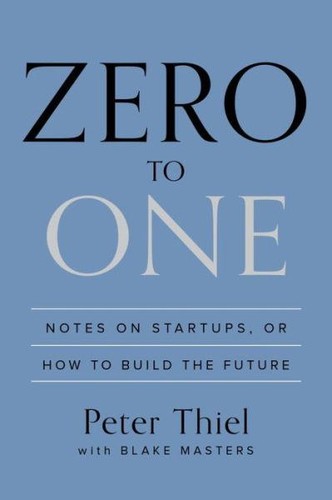
delivered
Get David's key takeaways from each episode delivered to your inbox.