Zach Dell
Zach Dell is the co-founder and CEO of Base Power.
Summary
Zach Dell is the co-founder of Base Power, an energy company on a mission to make electricity more affordable and reliable. His starting insight was that home batteries had the wrong business model. Companies sold expensive backup systems that sat idle most of the time. Base installs batteries at homes, retains ownership and operates them as a fleet: charging when electricity is cheap, discharging when it is expensive and providing backup when the grid goes down. The homeowner gets lower electricity bills and backup power. Base gets an asset it can put to work every day.
Dell explains why batteries can make the existing grid more efficient, why installing them where people consume electricity helps overcome infrastructure bottlenecks and how Base serves both homeowners and utilities. His strategy is to build a compounding cost advantage through vertical integration and technology. That now includes Base Core, a battery designed and manufactured by the company, and a longer-term ambition to help meet the growing power demands of AI.
Dell grew up watching his father, Michael Dell, build a company and knew from childhood that he wanted to become an entrepreneur. After several early ventures failed, he went into investing to study what makes a great business. He describes the “Dad Terminal”—ongoing conversations with his father about strategy, operations and the problems in front of them—and the lessons Base has adopted from former SpaceX employees. Engineers and manufacturing teams work close together, and the entire company organizes around a few clearly defined goals.
He also explains the operating habits behind Base: monthly written updates, visible performance dashboards and a physical turtle placed on the desk of the person responsible for resolving a critical bottleneck. He keeps separate notebooks for working in the business and working on it, setting aside time each night to think on paper without distractions. He discusses building a beloved brand in energy, why his co-founder conversations focus on what is going wrong and why Base is his last company. His ambition is a lifelong effort to make, move, store and sell electricity more affordably and reliably.
Episode transcript
This transcript was generated using speech recognition software and may contain errors. Please review the episode audio before quoting from this transcript.
[David Senra]
So out of every single guest on the show so far, yours is the business that I understand the least. So let's use this conversation as an opportunity to fix that. Explain what you're working on and, like, what your mission and how you're doing it.
[Zach Dell]
Yeah. So the grid is, is something in the power system and, and electricity broadly is a topic that a lot of people don't understand, and it's, it's pretty common. I think that's because there's a ton of nuance to it. It's a very old system. It's highly regulated, and so it's not something that is in kind of natural, common zeitgeist. The truth is our business is, is very simple. We're in the business of making and delivering megawatts, and our megawatts are the most affordable and reliable megawatts in the world, on the planet. At least that's our ambition. And our mission is to power human prosperity by driving energy abundance. And we look to a very simple correlation between consumption of energy per capita and GDP per capita. And the takeaway is that the more energy a population is able to consume, the better their life gets. And so if you can make megawatts, gigawatts, terawatts, uh, more affordable and reliable, it's the best way to make people's lives better. And that's a mission that we have all rallied around and gotten super passionate about.
[Zach Dell]
We think about things in terms of a mission, a vision, and a strategy, right? So the mission is why are we all here? We're all here to fix the grid and deliver affordable, reliable power, and promote human prosperity by driving energy abundance.
[David Senra]
Before we go further, why-- Explain why the grid needs fixing. What's the problem with it now?
[Zach Dell]
It's not that it's broken, it's that it's too small.
[David Senra]
How could something as important as electricity and power not be something that we can scale? Like, how did we get into this situation to begin with?
[Zach Dell]
I think because, um, capitalism hasn't, hasn't been able to work its magic on the industry because it's, it's highly regulated, and the companies around it that have built it don't have an incentive to innovate. They're not-- Uh, they're rate-regulated, and they get paid on, on CapEx, not on R&D, right? And so the amount of money that they spend on R&D as a percent- a percentage of their revenue is, like, as low as any industry you'll ever find, right? They're not engineering-led organizations. They're CapEx-- They're kind of project management and, and CapEx-oriented organizations. And so there has not been a bunch of innovation in how can we scale our capacity to consume electricity. It's just like, how do we go build as fast as we can and earn a return on, on that building? We just change that, right? We are an energy technology company that is R&D-driven, engineering-led, and technology-focused, and we are going to build technology that allows us to scale our consumption of electricity, deliver more megawatts that are reliable and affordable, and help, help meet the moment of the inflection in electricity demand.
[David Senra]
Okay, so that, that's-- While you were talking, that's what I was thinking. I was like, okay, so there's this huge surge and cont- that will continue. We need more, uh, power and electricity because of everything going on with AI. Before that, was there any other inflection point, or did the, the, the demand for electricity in the United States just kind of grow, like, linearly?
[Zach Dell]
Over the last 50 years, demand for electricity in the US has grown at basically the rate of inflation. So it, it has not really grown much. Um-
[David Senra]
Okay, so this is a 1st, this is a, like, a once time in his- one time in history, uh, problem it's having right now.
[Zach Dell]
I think that there was underlying growth kind of coming or, or at least starting to come from the electrification of transportation, uh, and electric vehicles, uh, but that's played out less quickly than some might have thought. I think that will continue to play out as the cost goes down. And things like, you know, electric heat pumps and electrification of, of heavy industry will, will drive electricity demand, but the, the AI infrastructure build-out has massively accelerated it.
[David Senra]
Can you explain, like, how big the demand is for electricity for AI?
[Zach Dell]
I mean, we are-
[David Senra]
I don't even know. I hear about it, but I don't know.
[Zach Dell]
Yeah, so, I mean, the way to think about it is, like, over the last 20 years, electricity demand has grown at roughly a 2% compounded annual growth rate, and, you know, we think it'll go to, you know, somewhere on the order of 10%, which is obviously a 5X, which on a base as large as energy is, is really, really, really big.
[David Senra]
Okay, so then go back to your, the mission and vision.
[Zach Dell]
Yeah, so, so we, we think about it in terms of, you know, the mission, the vision, and the strategy, right?
[David Senra]
Mm-hmm.
[Zach Dell]
The mission is why you're here. We're here to promote human prosperity by driving energy abundance, which basically just means deliver affordable and reliable power. The vision is, what does that even mean? Like, what does that actually look like? And what that looks like is the modern power company of the electric era, right? We think that there's a generational kind of paradigm shift happening in the energy industry, where the last 5 decades of energy were defined by coal and then natural gas as the marginal megawatt, and the next 5 decades will be defined by solar, batteries, and software. And we are going to build that company that is oriented around that new paradigm. And then the strategy is how, how do we win? Like, what is our competitive approach? Uh, what is our formula for success? And I would describe that as developing a compounding cost advantage through vertical integration and technology. And the reason why that is a strategy is because energy, electricity is a commodity, and the best commodity is the least expensive, most reliable commodity.
[David Senra]
Yeah.
[Zach Dell]
Right? And so we've oriented the entire business around the fundamentals of the industry, which is to develop a cost advantage, use technology, use vertical integration, oriented all around the mission of human prosperity and energy abundance. And then, you know, in the last 3 years, something interesting has happened, which is a new consumer of electricity has showed up,
[Zach Dell]
and it's now the fastest-growing and soon going to be the largest consumer of electricity in the world, and its name is AI. And so we're going to orient the company around that to serve that demand and, and meet that moment so that we can continue to expand our AI infrastructure and accelerate all the incredible advances that will come as a result of this technology, which I think is the greatest technological breakthrough of our lifetime.
[David Senra]
So explain how you're reorienting the company around that.
[Zach Dell]
Well, it's less of a reorientation and more of a using all the technology that we're already building and planning to build to accelerate the build-out of AI infrastructure by bringing the, the power to the compute, uh, and bringing the compute to the power. Uh, and, and what this means is accelerating the build-out of decentralized data centers by deploying our megawatts around those data centers and offsetting that load so we can add headroom to the system so we can build more of it. And then taking that compute hardware and actually bringing it to this massive fleet of energy that we've developed to accelerate the deployment of it.
[David Senra]
Okay, so how do you generate more power then?
[Zach Dell]
So there are
[Zach Dell]
really 2 distinct things to think about here. There's generation, and then there's transmission and distribution, right? So generation is where the new electrons come from, right? Solar, wind, gas, coal, geothermal, hydroelectric. There's tons of different ways to get fusion, fission. There's a bunch of different ways to generate energy, and then you have to move it, right? And poles and wires move energy through space, and batteries move energy through time. The grid is a system by which the transmission and distribution happens, and it's built for the peak. So it's massively oversized, which means that you have a bunch of inefficiency in that it's not being used all the time. It's not being highly utilized. And when you have a system that runs at low utilization, it makes the system very expensive.
[Zach Dell]
Batteries allow you to increase the utilization of that system because you can charge them when demand is really low, and you can discharge them when demand is really high. And so you can take the curve of demand, and you can flatten it, and therefore you can lower the total delivered cost because the capacity factor, as it's called in the industry, or the utilization has gone up. So with our current product set today focused on battery storage, we're not making more electricity, we're just using it more efficiently-
[David Senra]
Okay, wait
[Zach Dell]
... to drive the cost down.
[David Senra]
So if I understand, the optimization here is you're not adding more lines and wires. You're actually just optimizing the existing system better through batteries.
[Zach Dell]
Exactly.
[David Senra]
Okay.
[Zach Dell]
We're taking... There's a map. Like, think about in the middle of the day in Texas.
[David Senra]
Like right now, it's hot as hell outside.
[Zach Dell]
It's hot as hell outside. The sun is high in the sky, and if you go to ercot.com and you go look at the prices, I bet you wholesale prices are really low. And that's because we have a ton of solar in the state. It's amazing, right? And so we're charging our batteries right now. I can't tell you that for sure, but we are most likely charging during the solar ramp today, right, when the prices go down. And then when the sun goes down tonight and everyone goes home and they turn on their AC from work, prices are going to go up because demand is going up and supply is going down, right? So the sun is down, the solar is no longer producing, prices go up, we discharge the batteries. So we didn't create new electricity, but we time-shifted it.
[David Senra]
What was happening before? Power companies were doing nothing?
[Zach Dell]
Well, we were just using the system less efficiently. So we were curtailing solar. We still are curtailing solar, and there's a bunch of excess generation that's happening in the middle of the day where that's why prices go so low, is because we're generating more solar than we can use, but we can't time-shift that to be used when the sun goes down in the evenings.
[David Senra]
So that's why you're obsessed with batteries.
[Zach Dell]
And I've been obsessed with batteries since college. And batteries have been around for decades. And actually,
[Zach Dell]
John B. Goodenough, the original PhD scientist who worked on the LFP battery chemistry-
[David Senra]
Hold on, his name was Goodenough?
[Zach Dell]
Goodenough. Goodenough.
[David Senra]
Okay.
[Zach Dell]
May he rest in peace. He was a professor at the University of Texas, just down the street.
[David Senra]
Okay. So how does a kid get obsessed with batteries though?
[Zach Dell]
I mean, it's kind of a long story, but-
[David Senra]
We have time.
[Zach Dell]
... I guess we have time. Look, as you know, and we talked about a bunch, growing up I was always obsessed with big, hard problems and just trying to... And that was always what I... My understanding of capitalism and company building was just organizing people around the hardest problems. And the bigger the problem, the larger the economic outcome downstream of the solution. And I watched my dad do it, and I watched him
[Zach Dell]
totally inflect the PC industry, and now what he's doing with the AI infrastructure build-out and the server business, and that was always my strongest motivation. I mean, he was my hero, and he's still my hero, and I always wanted to be like him. And there's just no 2 ways about it. I wanted to be an entrepreneur. I mean, I started my 1st company in 8th grade, and I started my 2nd company my sophomore year of high school, and I started my 3rd company my sophomore year of college. And basically none of them worked, but I was just learning stuff and just trying to get out there and solve problems. And in college, I was working on a business to... And business in air quotes is more of a science project. It was not really a good commercial idea to convert human waste into compressed methane or biogas. It could be used as a source of low-cost electricity in the rural world, because I was obsessed with this idea of providing people with access to low-cost power that didn't have it, because it was this obvious way to make their life better. And around that time, I was really kind of nerd sniped, for lack of a better phrase, by solar. I thought solar was the coolest thing ever, and solar was great, but the problem with the sun is that it goes away unless you're in space. And so you need a mechanism by which you can use that energy that's produced when the sun is out at times when the sun is not there, and batteries are the answer. And battery technology, most of the batteries in the early days, you had a lot of different chemistries out there, and you had iron-air, and you had solid state, and then you had this kind of NMC high nickel lithium-ion chemistry catch a lot of steam. And most of the EVs and the early EV build-out were this high nickel NMC chemistry. And only in the last 5 years or so, this low nickel LFP chemistry, which is really better for stationary storage, it's safer, it's longer duration, started to emerge. When I was in college, I was really excited about solar, really excited about batteries. In fact, I tried to put together a deal as a 21-year-old college kid to go lease a piece of land on the big island of Hawaii, which has really low-cost land and really high-cost electricity, build a solar array. Actually, it was going to be EPC'd at the time by SolarCity, who was doing a lot of utility scale EPC.
[David Senra]
This is before they sold to Tesla?
[Zach Dell]
Yes.
[David Senra]
Okay.
[Zach Dell]
And sign a power purchase agreement with Hawaiian Electric, which is a 20-year PPA, and then go finance the whole project at 90% loan to value and earn a 20% levered IRR. And I, in college- So, after I'm working on this project in India, I end up going into to finance, down the intern. Basically, it was like, "Okay, this business isn't going to work. Before I start another company, I need to go learn about good businesses. And so I'm going to go to the place where I can find the smartest people that work the hardest, and I'm just going to sit next to them and just work my butt off and try to get smarter, basically, and build tools for my toolkit."
[David Senra]
Well, you knew no matter what, you were going to be an entrepreneur.
[Zach Dell]
For sure.
[David Senra]
Okay.
[Zach Dell]
There was no question. I
[Zach Dell]
was never like, "Oh, I'm going to be a private equity partner at Blackstone."
[David Senra]
No, but you are one of the, because we talk a bunch also, but you are one of,
[David Senra]
of all my founder friends that talk the most like a PE guy.
[Zach Dell]
You take the kid out of Blackstone, but not the Blackstone out of the kid, I guess. I'm very quantitative and I'm competitive, and I love markets and companies, and I think that's because I grew up studying companies and markets and-
[David Senra]
Yeah
[Zach Dell]
... like any good young Jewish boy, I took my bar mitzvah money and put it in the stock market and tracked companies. And it's like, still manage a PA that I have a lot of fun following companies. I just love studying businesses and what makes good businesses. And like you-
[David Senra]
Okay
[Zach Dell]
... a big fan of the Berkshire letters and the Amazon shareholder letters and-
[David Senra]
Yeah
[Zach Dell]
... the Constellation letters and would devour those things. And so it was more of I'm so interested in finance and accounting and investing in capital allocation because it is a necessary skill to be a great CEO of a capital-intensive business, right? And that was always why I've been interested in those things. And so,
[Zach Dell]
long story short, I'm in college and I go intern at Blackstone. I get the return offer. I'm back in college before going back to Blackstone, and I'm like, "Oh, I know how to use spreadsheets now," and whatever. And so I build a model, a memo, slides for this solar project, and I go to New York and I go get in touch with a bunch of project finance teams at these big banks, and I go pitch them on my 30000000 dollar loan that I want to go build the solar array in Hawaii. And they're all like... And I get some meetings, and it's nice people will take the meeting with this college kid, and I present my model and my memo, and they're like, "Who's going to run this project?
[Zach Dell]
Where's your team?" I was like, "What are you talking about? I'm going to just do it, and I have everything figured out, and here's the memo." And they're like, "You're going to go be an analyst at Blackstone." And I got basically laughed out of the room by everybody, but I was dead serious. I was like, "Dude, the math pencils." And I think that would have been a great investment. It would have worked. But was very bullish on solar economics back then, and I show up at Blackstone, and there's a bunch of people who are kind of poking around the battery industry, the supply chain. We looked at carving out a lithium mine, which I spent a bunch of time on. The firm ended up buying a business that's now one of the largest utility-scale battery developers in the country, and I got really excited about what was happening in the battery space. But there was this obvious issue with utility-scale batteries. And when I say utility-scale batteries, I mean big shipping containers in a farm field somewhere. And you can probably think about what that looks like, and you've seen pictures of that. And that's been a really good asset class over the last decade or 2. And there's basically every big private equity firm has a utility-scale battery platform, Apollo and KKR and Blackstone and Oaktree and all these guys, Ares, Brookfield. They all own these assets, and they're highly levered and they're a nice return, but they're fundamentally constrained really by 2 things. One is interconnection capacity. So there's not enough places on the grid to go put these big shipping containers. And the 2nd is transmission congestion. These big load pockets, like downtown Austin, downtown Dallas, downtown Houston, where you need the power, that's not where you can put the shipping container battery, right? And so you have transmission congestion, which shows up in pricing, and you're unable to get the power where you need it at the right time. And so that really showed me or kind of brought to light the insight around a distributed architecture, deploying batteries, deploying-
[David Senra]
At the actual house.
[Zach Dell]
Where the interconnection exists, where the load is.
[David Senra]
Got it.
[Zach Dell]
Right? And so you don't have to worry about the transmission problem. You don't have to worry about the interconnection problem.
[David Senra]
That's really fucking interesting. I don't think I understood that before you just said that.
[Zach Dell]
So then I started studying the distributed battery world and the residential battery world, and I looked at every company in the space and read the 10-Ks and the S-1s and talked to the analysts. And you learn that the publicly traded companies and all the companies in the space, they're all selling a high-margin premium product. It's a 20000 dollar home battery or a 20000 dollar home generator that they sell you outright, they make a gross margin on, and they're done. They're not actually building it like infrastructure. They're not utilizing it like infrastructure. And so it was this aha moment of like, oh, the distributed architecture is the answer, and all the companies that are around that problem, they're focused on the wrong business model. They're focused on high-margin upfront sales. And then I start getting really excited because I'm like, "Oh my God, if you're going to take on an incumbent,"
[Zach Dell]
my view is the best way to do it is to have a counter-position business model. Because if I showed up and said, "I have the best home battery on the market, the best home generator on the market, and I'm going to sell it to you for 10% below the big guys,"
[Zach Dell]
your margin is my opportunity, right? These
[Zach Dell]
big guys are going to compete on price. 1st, they're going to copy my product if it's better. Then they're going to drop their price, and they're going to run me out of business. But if I show up and say, "I don't sell batteries, I sell electricity, and we're going to install this battery on your home. When the grid's up and running, we use it. As a result, you get cheap electricity. When the grid goes down, you use it. And because of our different business model, you pay one-20th or even one-40th of what you'd pay to own it outright," then I can win. And if you want to compete with me and you're one of the incumbents, you've got to completely change your business model, which, as you know, for a public company is very hard, right? Because you go to Wall Street and you say, "We've been making money this way for the last decade, and now we're going to make money in an entirely new way." Typically, Wall Street doesn't like that very much. So I got really excited about this setup of this distributed architecture, this counter-position business model, and then the opportunity to really put a dent in the universe and go after an opportunity that not only was large in scale, but in importance and impact on the world. Back to the point around human prosperity, energy abundance, energy consumption per capita, GDP per capita, and that correlation.
[David Senra]
I want to tell you about the presenting sponsor of this podcast, Ramp. I have been reading a lot about SpaceX lately. SpaceX is one of the most valuable businesses in the world, and one of the main themes in the history of SpaceX is constantly attacking and questioning your cost. Ramp helps many of the most innovative businesses in the world do exactly that. The median company running on Ramp- Cuts their expenses by 5%. And one thing SpaceX has demonstrated is that a religious dedication to controlling costs can help actually increase revenue because you can pursue opportunities you couldn't otherwise. And we see that in the Ramp data, too. The median company running on Ramp also grows their revenue by 16%. So when you're running your business on Ramp and your competitors are not, you have a massive competitive advantage that compounds over time. Ramp is the only platform designed to make your finance team faster and happier. Many of the top founders and CEOs I know run their business on Ramp. I run my business on Ramp, and you should too. Go to ramp.com to learn how they can help your business save time, save money, and grow revenue. That is ramp.com. I found one of my all-time favorite quotes when I was reading the book "Zero to One." The quote says, "The single most powerful pattern I have noticed is that successful people find value in unexpected places, and they do this by thinking about business from 1st principles instead of formulas." That is exactly what AppLovin has done with their advertising platform. AppLovin connects you with over a billion potential new customers inside mobile games. AppLovin allows you to capture undivided attention. AppLovin ads are full-screen video ads that are watched for an average of 35 seconds. That is retention that blows other ad platforms out of the water. And you can launch on AppLovin in minutes. You set the goal, and AppLovin achieves it. There's no complex setup, no expertise needed, and AppLovin scales quickly. They can put your ads in front of over a billion potential customers. Other businesses have seen immediate results, have scaled to hundreds of thousands of dollars of spend per day, and increased their revenue by millions. So you want to get started quickly before all of your competitors are on AppLovin, and you can do that by going to applovin.com. That's applovin.com.
[David Senra]
Back to the idea that you're not selling batteries. You're almost leasing it, right? Like, they cannot buy it from you even if they wanted to. I was telling the crew before you got here, I was like, "There's just some kind of weird parallel, and I don't even know if this makes sense to Zach." But everybody's like, "Oh, you should do more episodes of Founders on Howard Hughes." And I was like, "I've done one or 2." And he's actually interesting, but if you read about, like... I find his dad more interesting than Howard Hughes, right? Because his dad was selling a really advanced drill bit, right, in the 2nd oil boom that was taking place largely in Texas and Oklahoma and everything else. Howard Hughes, I think Senior, was one of the richest people alive, and his business model innovation was that you couldn't buy it from him. You had to lease it. So he would service it. Like, it would break, he'd have to sharpen it, everything else, but you literally were... Essentially, you just had this reoccurring revenue coming in because you can't buy it from me. You can't just buy it and take off and I never see you again. You have to pay me every month. And then that compounded, and you just wind up printing cash. And there's the cash from his dad's business that Howard Hughes used to do the movies and the planes and everything else. There's an interesting parallel to, I think, what you're doing.
[Zach Dell]
The way that I thought about the business model, and Justin and I, the way we thought about it from the beginning, is it just starts with the customer and what they want, right? If I ask you, David, "What would you like out of your power company?" My guess is you'd say something like, "I want my bill to go down and I want to never lose electricity." Is there anything else you want out of your power company?
[David Senra]
No.
[Zach Dell]
No, right?
[Zach Dell]
And so how do we deliver that outcome for you? Well, if I sell you the battery,
[Zach Dell]
you're not a wholesale power market participant. You're not a qualified scheduling entity or a load scheduling entity, and you don't have a hedging team and a trading desk, and you're not thinking about commodity prices, right? And so you can't actually use that battery 99% of the time when the grid is up and running to your benefit. You can't use it to lower your power prices, right? It just sits there on your home, and then when an outage happens, awesome, you have backup that you paid 20 grand for, and you probably feel like you overpaid a little bit, but you're happy.
[Zach Dell]
By us owning the battery, we can use it the 99% of the time that the grid is up and running as a wholesale power market asset. And then we can leverage the value of that to lower your bill, to drop your price, because we're creating value. It's like we have a box on your house that is going to generate money, and we're going to share the money with you in the form of a lower electricity bill. It's really that simple. So the asset ownership model is not because we're greedy or we really just want to own things. It's because it's a way to deliver the best product to the customer. That's all that matters.
[David Senra]
Yeah, in an industry where they don't really give a shit about the customer because they're a monopoly in most cases.
[Zach Dell]
Yes, it's complicated.
[Zach Dell]
So first of all, there's regulated and deregulated states.
[David Senra]
We were talking about this before we started recording. This is really interesting. Can you explain this?
[Zach Dell]
So regulated and deregulated states in the US. It's kind of a history lesson here, but if you look back over 50 years,
[Zach Dell]
electricity is one of the few industries in the US that did not get entirely deregulated. Shipping, airlines, telecom, trucking, electricity in the late '90s, early 2000s, actually in California, deregulation started there, and basically Enron manipulated the market and kind of busted the power market in California, and deregulation totally stopped. And Rick Perry and George Bush in Texas carried the torch of deregulation, and the Public Utility Commission in Texas pushed this kind of competitive market construct. Now, it's going to get even more complicated. In Texas, 80% of the market is deregulated. 20% of the market is still regulated. So Austin Energy is a municipal utility. So we sit here in Austin in our office that is served by Austin Energy. We cannot be the electricity provider to Austin Energy. Same thing in San Antonio. CPS is a municipal utility there. Same thing in Georgetown. Georgetown Electric is a municipal utility there. There's another category of utility called a co-op or a cooperative.
[Zach Dell]
This is more in the rural areas, but now there's really big cooperatives like CoServ, who's a customer of ours, or Pedernales Electric Co-op, that's the largest co-op in the country, also in Texas. And these are... Think of them as kind of nonprofits that operate for the benefit of the members. All the members, like a cooperative, are owners of the cooperative, and their job is to lower rates. And so in Texas, you have 80% of the market, Houston, Dallas, North Austin, Oncor, CenterPoint, AEP territory that is deregulated, competitive. You can sign up to be an energy retailer. You can sell power to anybody. You have the generators who operate the gas plants, the coal plants, and the nuclear plants, and they sell power through a retail provider like us. ... directly to the consumer. And then you have the municipal utilities in Austin and San Antonio and Georgetown. You have the co-ops, CoServ, Guadalupe Valley Electric Co-op, Farmers Electric. These are all customers of ours. And-
[David Senra]
What do you mean by customers of yours?
[Zach Dell]
So we build battery fleets for the utilities that they use in the same way that we do. So for CoServ Electric, for example, we have built them, or are in the process of building them, 100 megawatt and soon to be expanded fleet of batteries that they use in the same way that we do in the deregulated markets. They charge the batteries when the price of power is low. They discharge the batteries when the price of power is high. They make money on the spread. They share that spread with their members in the form of lower prices.
[David Senra]
And they're the ones installing your batteries, or do you still do the installations?
[Zach Dell]
We install them.
[David Senra]
Okay.
[Zach Dell]
We install the fleet for them. So we build them this fleet. So it's much like them going and saying, "I need 100 megawatts of utility-scale battery." Instead of the big shipping container battery, we go put thousands of batteries on their service territory, and we give them a piece of software, basepowercompany.com/coserv, they can go in, they see their whole fleet, they can charge, discharge, they can schedule behavior of the fleet. And it's a wholesale power asset that they can use to lower prices, and then they get the reliability benefit for their homeowners.
[David Senra]
Okay. And so that was going to be my next question. You're only installing right now batteries on individual homes, correct?
[Zach Dell]
That's right.
[David Senra]
Are you doing anything else besides that at the moment?
[Zach Dell]
Today, we're only focused on residential homes.
[David Senra]
Okay.
[Zach Dell]
Yeah.
[David Senra]
Okay.
[Zach Dell]
So back to the market setup. In the early 2000s, you had this deregulation push. Texas really carried the torch. A couple other states in the Midwest, Ohio and Illinois, and in the Northeast, Pennsylvania, New Jersey, Connecticut, Massachusetts, parts of New York, but it's kind of complicated, all deregulated to an extent. Not all of them, and none of them really as far as Texas. Texas is kind of the most competitive and deregulated. That's why we decided to start here. And relative to the deregulated markets, we compete with the retail energy providers, the gentailers, Vistra, Constellation, NRG. And then in the regulated markets, we are a vendor to the utilities, and we're a partner to them. And you're totally right, they don't have an incentive to innovate and go build a factory and come up with new kinds of batteries and technology, because that's not how they're set up to earn. They're rate regulated.
[David Senra]
Explain why they don't have the incentive to do so.
[Zach Dell]
Yeah. So if you had a utility that had a monopoly ownership over a service territory, for example, let's say PG&E has all of California, which is not exactly true. There's LADWP in Southern California. There's SoCal Edison as well. But let's say PG&E, for the illustrative example, has a monopoly over all of California. They can just raise rates indefinitely and just jack profits, and that would be bad for consumers. And so instead, you have this concept of the rate base, where there's a public utility commission that kind of governs the utility, tells them what they can build and what they can't build, and then they earn a return that's regulated, and it's typically 9% unlevered, on the CapEx they deploy. So they go to the regulator, and they file what's called a rate case, which is like, "We need to build all this stuff to meet demand and to upgrade the system." And the regulator says, "Yes, you can build that." And then they go build it, and they earn a return on it. And so there's no financial incentive for them to come up with new technology. Their only financial incentive is to go increase the size of the rate base-
[David Senra]
Yeah
[Zach Dell]
... and go build more assets. And so we show up and say, "We are your technology partner. We are your outsourced R&D engine. We are going to bring to you better solutions so that you can scale your infrastructure without increasing rates for your ratepayers." And that's how we serve the regulated utility. So today, our business is really one technology stack, which we can talk in depth about,
[Zach Dell]
that
[Zach Dell]
is brought to market behind 2 business models, regulated and deregulated. The deregulated model, we directly sell power to the homeowner. We install a battery on their home. We own and operate it. We bid into the wholesale power market when the grid's up and running. When the grid is down, the homeowner gets that battery.
[David Senra]
That would be your preferred... If you could snap your fingers, the entire country would be like that, correct? Would that be better for your business or no?
[Zach Dell]
Not necessarily. I mean-
[David Senra]
Why?
[Zach Dell]
... we love the utility partnership model too, because it has really large reach, and there are benefits to working with one counterparty to address a large service territory. And there are some synergies. For example, you wouldn't want 10 different wires going to a home, right? That would be redundant, right? So it makes sense to have the poles and wires be regulated. And look, I think there's a lot of nuance in energy markets, and so it's hard to say the whole grid should be regulated, the whole grid should be deregulated. It's a very geographically defined problem. But the dereg business is direct-to-consumer retail power and wholesale market participation of our technology. The reg business is we are a vendor to the utilities. We build them these battery fleets, and then we sign 10-year contracts with them, and they pay us for that fleet over time. It's megawatts as a service. That's what that business is, megawatts as a service. We build 100 megawatts, 500 megawatts, 1,000 megawatts, or a gigawatt, and they pay us for that. They use those megawatts, and we make money on them basically buying those megawatts from us over time.
[David Senra]
Okay, wait, and say something more about that. You said these are 10-year contracts?
[Zach Dell]
Yeah. They're typically long-duration contracts where we build them a fleet of batteries, and they operate them for 10 years.
[David Senra]
Why is the long duration important?
[Zach Dell]
Well, they're highly capital-intense and-
[David Senra]
For you or for them?
[Zach Dell]
For us, because we're building them. And so the long-duration contract gives us certainty of cash flows, which we can use to finance.
[David Senra]
I think I have a better understanding of your business now,
[David Senra]
definitely for the non-regulated than the regulated. I want to talk about how you think about company building. You've been obsessed with entrepreneurship since you were a kid. You started your 1st company, you said in 8th grade, 7th grade, something like that?
[Zach Dell]
8th grade, yeah.
[David Senra]
Okay. Talk about-
[Zach Dell]
My cousins who were in high school, they had
[Zach Dell]
a little more experience than me, but not much.
[David Senra]
Okay.
[Zach Dell]
I mean, I've been studying this since, I mean, I
[Zach Dell]
was a little kid. I mean, I had a front row seat to one of the, bias, but one of the greatest entrepreneurs of all time, still operating as one of the greatest entrepreneurs of all time.
[Zach Dell]
And the rate of learn-- I mean, I just get to learn from him every day, and we're incredibly close, as you know. And we compare notes about, and we talk about his business, and we talk about our business, and we provide each other with feedback, and we disagree, and we argue, and it's a ton of fun. And so I've been studying the art of company building for as long as I can remember.
[Zach Dell]
Both in that context and then also in the investing roles. I mean, investing is really just trying to predict the future in the context of understanding what makes a great company and which ones are going to win that version of the future. And so it feels like, it felt like to me, the perfect training ground to become an entrepreneur.
[David Senra]
So you said earlier that your dad, Michael Dell, is your hero. He's one of my heroes too. I actually talked to him yesterday. And the funny thing about that is, I mean, he's got this such a friendly UI, but he's so competitive and so determined to win that there's just a... I don't even know how to juxtaposition between how friendly he is and just how fiercely competitive he is.
[David Senra]
Since you mentioned him, I want to bring up something you told me one time that you called the Dad Terminal. Can you say what the Dad Terminal is?
[Zach Dell]
Yeah. So you joke that I'm
[Zach Dell]
kind of a financially minded person, and the Bloomberg Terminal is-
[David Senra]
Yeah
[Zach Dell]
... obviously this incredible technology that people in the finance industry use to ask questions and get information and think and analyze opportunities. And the Dad Terminal is my version of that, where I call up Dad and we have conversations about business topics and strategic objectives and challenges that I'm facing. And
[Zach Dell]
it's the most fun thing ever because he has more context than anyone but my mom probably on me and what's going on in my brain. And he's got a lot of context on the business because we talk all the time. And he scaled a vertically integrated, capital-intense hardware company, consumer-facing. There's a lot of simulators between our 2 businesses, and so I use it as an opportunity to learn from him. And I like to think that every once in a while he gets a new perspective, or I ask an interesting question, he learns a thing from me. It's a lot of fun.
[David Senra]
I was going to ask, when's the last time you presented him a situation that was new to him?
[Zach Dell]
I like to think it happens pretty often. You have to ask him. Yeah.
[Zach Dell]
But it's fun. We challenge each other and push each other, and
[Zach Dell]
we spend basically no time celebrating, and basically all the time trying to solve problems. And you're right, he's totally competitive and incredibly focused, but he does it with a smile. And I try to do the same thing, and I think if you talk to the team here, they would tell you that I'm pretty intense and pretty competitive and quite focused, but I do it with a smile and I try to have fun. And I take the job really seriously, but I don't take myself that seriously.
[David Senra]
You mentioned vertical integration a couple times. Why is that so important?
[Zach Dell]
It's only important if you're playing a cost-focused game, right? It's not vertical integration because it's fun or because it's cool. It's because we're trying to compete on cost, and vertical integration is a great strategy to win on cost, right? Electricity is a commodity. The best form of commodity is the cheapest one. And if you're going to deliver that, you got to vertically integrate. So that's why we vertically integrate.
[David Senra]
When you 1st started the company, though, how do you go from, "This company doesn't exist," to, "I'm going to create a new, essentially power company that's vertically integrated?"
[Zach Dell]
A lot of reading, writing, thinking, and deliberation with my co-founder Justin and Jared, who's our 1st hire, and Dana and Cole and the early people that joined the company. And I think we still do this to this day. We do a lot of crawl, walk, run, a lot of iterating, a lot of testing and learning. And look, I think we started, Justin and I, with a belief that the energy industry was going through a paradigm shift, that battery storage was a really valuable technology in that paradigm shift, and that building a
[Zach Dell]
battery pack, highly optimized battery pack assembly business in the US was going to be a really strong position to be in. And that's about it.
[David Senra]
Why on that point?
[Zach Dell]
Because batteries had a lot of value, and there was a lot of margin being captured by the OEMs, basically.
[David Senra]
So why is it important to manufacture it here, though?
[Zach Dell]
To control the supply chain. It's less about physically where it is, being in this country or another country, and the fact that coupling engineering and manufacturing and actually making the thing where you design the thing, and having the engineers that make the thing and the engineers that design the thing work close to each other.
[David Senra]
Yeah, because we talked... You have a lot of... I did this episode on Elon, how Elon works. I think it's the most downloaded episode of Founders ever. There's a lot of SpaceX culture or ideas that I hear from you.
[Zach Dell]
Yeah.
[David Senra]
And obviously Justin was there.
[Zach Dell]
Yeah.
[David Senra]
Like-
[Zach Dell]
Yeah, Justin was there for kind of the formative years of his career, obviously Andrew as well. Jared, our 1st hire, was there for the formative years of his career. Same with Cole Jones, who was hire number 4. We've got a lot of SpaceX people here. It's a company that I deeply admire. I've gotten to know Brett Johnson, the CFO there. Really admire him and Glenn, and of course Elon is the greatest technologist of all time. And I think the culture inside of SpaceX and the operational cadence and the way their kind of ability to focus on the critical path and unblock things in their path to get to their goals that are all oriented around their mission is super inspiring and something we've tried to replicate.
[David Senra]
And they're really hard to compete against office space. I think it was here last year or maybe 6 months ago. And you were like, "Yeah, that building over there, we almost had a lease, and then Elon came in and swooped it up."
[Zach Dell]
They did. Yeah. It was a bummer, but
[Zach Dell]
you can only look forward, not backwards, so we found a new spot.
[David Senra]
Okay.
[Zach Dell]
But it's going to be better, actually. We're going to build a
[Zach Dell]
campus with manufacturing, engineering, everything in one place.
[David Senra]
Is this the one out by the airport?
[Zach Dell]
Yeah.
[David Senra]
So talk more about this.
[Zach Dell]
Yeah, so business is growing and we've got to expand our manufacturing footprint. And of course, the headcount too. I mean, last time you were here, I think we were just on the 1st floor. Now we're on all 3 floors. We'll soon fill up the whole thing.
[David Senra]
Dude, the growth is crazy. So I was reading through all of your company
[David Senra]
monthly reports.
[Zach Dell]
Yeah, like the updates. Yeah.
[David Senra]
It's just like, "Okay, we're doing like 1.3 a day or 6 a day." And then I skipped, I went to the end and it's just like, and we have tens of thousands of these things everywhere.
[Zach Dell]
Yeah.
[David Senra]
It's pretty impressive.
[Zach Dell]
It's just maniacal focus, relentless execution, and try to get a little bit better every day, every week, every month, and you can get a lot done. But yeah, business is growing a ton and we've got to expand our manufacturing footprint. Our headcount's growing, and we feel really strongly about in-person work, having everyone in the same place. One team, one dream, one culture. It's not like, oh, the factory people and the office people. It's like one company, and we eat lunch together, we spend time together.
[Zach Dell]
And so having everyone co-located is really important.
[David Senra]
Yeah, and your desk is right here.
[Zach Dell]
Yeah.
[David Senra]
Like in-
[David Senra]
Just the same as anybody else's.
[Zach Dell]
Yeah, of course.
[David Senra]
There's a lot of... Again, like, I am fascinated by the way Elon runs his companies, and then he has what I feel is, like, very simple ideas, but they all work together. Obviously, he's doing complex shit.
[Zach Dell]
Yeah.
[David Senra]
But it's not like rocket science.
[Zach Dell]
Private offices are lame.
[David Senra]
Yeah.
[Zach Dell]
Like, I want to be in the thick of it. I want to be with everyone. I want to overhear stuff. I want people to overhear me. I want people to feel like they can come to my desk and ask me questions. And it's just better. It's more fun. I love the team. I like being with them, and there's no reason to, like, hide away in a private office. And also, I don't deserve special treatment. I'm on the team just like the interns are on the team, just like the person who started a week ago is on the team, just like the 3rd hire is on the team, and we're all on the same team together. We eat the same food. We have the same desk. We use the same tools. And I just think that's the right way to operate.
[Zach Dell]
And so yeah, this new facility's going to be amazing. We're going to have everything co-located. And look, I mean, go to Round Rock, and I think you've been. You see the Dell facility. I mean, for a long time, everyone was there. And of course, now the company is at global scale and they've got offices all over the place, but I've seen that work really well for other companies, and
[Zach Dell]
I think it'll work well for us.
[David Senra]
Okay, so talk about more of the structure. You don't separate design, engineering, and manufacturing. It's all in one of the locations?
[Zach Dell]
Right.
[David Senra]
Okay. And that's taking place right now across the street?
[Zach Dell]
Yeah. So, I mean, you could walk for 2 minutes that way and you'll hit Base Factory One, and you'll see there's like a little driveway here, and you'll see engineers walking back and forth all day long. And most of them have scooters and golf carts and things like that. And
[Zach Dell]
that's where the product is made. This is where the product is designed. And so it's a walk or a golf cart or a scoot to get back and forth. And just having the ability to go design a part, walk over to the factory, see how the part is being assembled, figure out the failure mode and fix it, and iterate quickly with people that you see every single day, it's just a massive accelerant and pace of execution.
[David Senra]
It's funny to me because I've read a ton about the robber barons, the Industrial Revolution, and I feel like there was a good, I don't know, 50, 70-year chunk in American history where we kind of forgot these things. But the way you're describing is exactly what, like, Ford used to do. It's what Carnegie did. It's like what all of industry in the United States before it was moved out used to do. And it's like we kind of lost that knowledge, and now it's coming back. It's like, "Yeah, guys, this is exactly what they used to do. Why don't we just do it that way too?"
[Zach Dell]
Totally. And we have
[Zach Dell]
a lot of the Elon companies, Tesla and SpaceX, but also Nrol. We have these companies to thank for training a whole cohort of engineers on how to build hardware products, how to scale manufacturing, how to ramp a supply chain. And we didn't, like-
[David Senra]
I'm glad you brought that up. I was thinking the other day, I was like, "Could you imagine
[David Senra]
the deficit that America would have if Elon didn't exist in this domain?" Software we'd be crushing, but this, like, this one guy.
[Zach Dell]
It's the most incredible contribution I think anyone has ever made to humanity, is not just the company that he's built, but the engineers that he's trained that have gone on to build other great companies.
[Zach Dell]
Like I said, he's the greatest technologist of all time, in my opinion. It's been a massive advantage being able to hire people that he's trained, that have worked with him, that have learned from him. They bring their best practices here. And then to be fair, we adapt them, right? Like, we do things in a very base way. We have all kinds of things like Base Pace and the turtles and the dashboards and our North Stars-
[David Senra]
Let's go into this
[Zach Dell]
... and all these things-
[David Senra]
Let's go into this
[Zach Dell]
... that are core to our culture that just kind of bubbled up out of the way that our team operates and the way that we solve problems. And many of them are inspired by companies like SpaceX and Tesla, but a lot of them are kind of organic to us.
[David Senra]
Okay, so explain some of these things to me.
[Zach Dell]
So look, I think we, from the earliest days, and you can go back and look at some of the artifacts and writing of this, I've been very focused on a small number of important goals that are very clear and understandable by the whole company. We've been accountable to those goals. Like, we write updates every month on, like, what do we do, what do we not do, what are we going to do next month? And we do that. I've written one of these monthly updates now for the last 3 and a half years, every single month. Never missed a month. Don't plan to. It's a huge cathartic for me to sit down and kind of write the whole thing, and I think it's an asset for the company to have this kind of account of, okay, what happened, what's going to happen next month. They're a great recruiting tool. They're a great fundraising tool. So from the beginning, we started the company with a memo, right? I think you've read it. It's 10 pages, top to bottom, like, what is Base Power? Why does it exist? What is the problem that we're solving? How are we going to do it?
[David Senra]
Where'd you get the idea to write that initial memo?
[Zach Dell]
I'm just the kind of person that has to write clearly to think clearly. I've always been a writer. I loved writing. I love reading, much like you. And I think maybe some of the memo culture stuff comes from finance and investing and getting your ideas out on paper, but I just can't think clearly if I don't write clearly.
[David Senra]
Okay.
[Zach Dell]
And so I needed the memo for myself and kind of just-
[David Senra]
And so you come in here, you carry this little notebook with you too.
[Zach Dell]
Yeah, I've always got my notebooks. I have like-
[David Senra]
Yeah
[Zach Dell]
... 2 notebooks. I have the red notebook, which is in the business, and I have my black notebook, which is on the business. And the red notebook I'm carrying around in the office and meetings, and the black notebook is for at home when I'm trying to strategize and-
[David Senra]
Wait, explain the difference
[Zach Dell]
... just chain in and on. So I think it's the concept of working in the business or working on the business, right? And working in the business is I'm blocking and tackling and solving problems that are blocking us today. And I'm trying to figure out personnel problems and product problems and acute issues that are near term. And then working on the business is thinking 6 months out, 12 months out, and kind of strategic war gaming and chess playing.
[David Senra]
I would love to read that notebook, by the way. It might be private if you don't want to, but like-
[Zach Dell]
There's some good stuff in there.
[David Senra]
Okay.
[Zach Dell]
There's also all kinds of bad stuff in there.
[David Senra]
I know. That's great.
[Zach Dell]
I try to segment out my day with very specific, like, okay, when I'm in the office, I'm largely almost always exclusively working in the business. And then I leave the office basically at 9:00 PM every night. If it were up to me, I'd say longer, but I have a wife who I love and I want to spend time with before she goes to bed. So I leave at 9:00, I go hang out with her until she goes to bed. And then, 10:00 to 11:00 or 9:00 to 10:00 I'm with her roughly, and she goes to bed, and then I open up the black notebook and I sit, and my phone's in another room, my computer's in another room, and I just focus on strategy and what's most important and what are we not thinking about. And sometimes there's very specific things I need to do, which is like, I need to go write an outline of a memo or of a
[Zach Dell]
big thing that's happening in the next couple weeks that I have to figure out, like a big problem. And sometimes I just sit and I have no idea what I'm going to write about, and I just stare at a page until something pops into my head. And that process has yielded some of the best ideas that have come. And I think by deliberately allocating time in the day towards working on the business versus in the business, it helps you. And actually physically having a different notebook that's like a different color, and I open the black notebook and I'm like, "It's time to get creative." Like that, and I'm not in the office. I'm at home, it's after hours, and that just has really helped me, that segmentation of when to work in the business and when to work on the business.
[David Senra]
Do you think there's something special about it being analog, that you're actually writing with pen to paper?
[Zach Dell]
For sure. I've tried to move to computer and all the good ideas go away. I mean, not entirely, right? And what happens is, now I wake up pretty early in the mornings, and 6:00 to 8:00 a.m is kind of my most productive time. But that, I'm in the morning, I'm kind of like doing the work that I assigned myself the night before. So I'm like, "Okay, I got to solve this, I solve that." And then I open the computer and that's all on the computer, and then I'm like actually executing. But there's like this special 30 to 60 minutes in the evening with a pen and a paper and no distractions. I can't get a notification, I can't get a call. Like, I'm just focused, and I really enjoy that. And I'm sure some people have the capacity to focus using digital tools, but the analog is really clarifying and focusing for me.
[David Senra]
Deel is how the best founders turn the world into their talent pool. I've been studying how history's greatest founders operate for a decade, and one thing they all have in common is they understand that recruiting and hiring the very best talent is your most important priority. A players recognize other A players, which is why top companies like Ramp, Shopify, ElevenLabs, Uber, and DoorDash all use Deel. Many of the top founders I know have personally invested in Deel after using their product. And what they discovered is that Deel is the best company in the world at building infrastructure for global hiring. Deel will help your business hire, pay, and manage any worker anywhere in the world so you can retain the best talent anywhere and spend the rest of your time focusing on what you do best, delivering value to your customers. The founder of ElevenLabs has a great description of the value Deel can give your company. He said, "We built ElevenLabs to break down language and communication barriers. With Deel enabling us to hire and support exceptional talent anywhere, we can accelerate our innovation and bring more voices, stories, and ideas to every corner of the world." Deel is trusted by over 40,000 businesses. Learn how they can help your business today by going to deel.com/senra. That is deel.com/senra. Okay, so go back to this idea of North Star. This is a handful of simple ideas-
[Zach Dell]
Yeah
[David Senra]
... that you're getting the entire company to focus on. How do you describe this?
[Zach Dell]
It's 3 things that we must accomplish this year to stay on path towards our mission. So it's become the largest
[Zach Dell]
distributed battery fleet in the world, the
[Zach Dell]
fastest growing battery fleet in the world, land the batteries at the lowest landed cost because cost is everything in a commodity business. And-
[David Senra]
What does land mean?
[Zach Dell]
Get the batteries on the grid on a per kilowatt hour basis cheaper than anyone.
[David Senra]
And how do you affect the price of that? How do you actually do that?
[Zach Dell]
The bill of materials of the hardware, the installation cost, the customer acquisition cost, all the overhead, and the operations get the battery there.
[David Senra]
Okay.
[Zach Dell]
So it's fastest growing battery fleet, lowest cost megawatts, basically, and then financial sustainability, which is basically profitability of unit economics, right? Those are the 3 things, and those are the 3 North Stars. And if you walk in the office, in the middle of the office by the stairs, there's a poster, beautiful, it's well-designed by our design team on purpose, but it only has the 3 North Stars. And that same poster is in the middle of the factory, and everyone walks by it every single day. And at the beginning of the year, I sent out an email to the team and I said, "Look, these are our 3 North Stars. If we get these 3 things done, these 3 things done this year, we're going to be on track towards our mission." And so people know, okay, if we want to achieve this mission, these are the 3 things we have to get done. And then there are goals that come downstream of the North Stars that are kind of specific things that we have to accomplish to hit the North Star. And so everything we're doing internally is focused on those North Stars. So we have these very specific North Stars, we have these monthly updates that organize the team, and then we're just maniacally focused on unblocking whatever is on critical path towards achieving those North Stars, which keep us on track for that mission. So I mentioned the turtle. So the turtle is this device that we use, and there's devices, right? There's like tools. Turtle's a tool, the metrics and dashboards are a tool. We'll talk about both of them. And the updates are a tool, the writing and the kind of organizing of thoughts. So the turtle is a literal physical turtle. Now there's actually a couple of them, that goes on the desk of the person that is on critical path.
[Zach Dell]
That turtle can only be moved when critical path is resolved. So with turtle comes a thing called a hot potato. And a hot potato is like a squad, basically, that spins up around a problem. So if we have a problem in the business, there's a part of the supply chain that there's a part that we can't get at volume, and so there's a turtle on the desk of the head of the supply chain, and there's a team of people that are all working on solving that problem. And there's a meeting every single day, and there's an email that goes out every week to the entire company to updates@basepowercompany.com that is a hot potato update. And it's like, "Hey, this is the constraint in the business right now. This is what we're doing to resolve the constraint. These are the next steps to get the thing resolved." And then when the hot potato is resolved, there's an email that goes out and says, "Hot potato resolved, done." And then those people go back to their normal course of business. And it's not like they're in a meeting every single day forever. They're in a meeting until the job gets done, right? And the turtle physically... And it's like a funny, silly thing. It's like we have... Now there's like a plush turtle, there's a ceramic turtle. There's like all kinds of turtles around the office. And there's like a little version of this where we need to unblock. And it's this concept of like, take your work really seriously, but don't get yourself that seriously. We have freaking turtle stuffed animals all over the place and little inside jokes like this, but they're really motivating for people. And people take pride in having the turtle because it's like, "It's my job now to unblock the business and to move the business forward." So talk about that's a tool, right? You know, every company uses metrics and dashboards, but I think we do it in a really thoughtful way. So if you walk around the office, which you have, it looks like a Best Buy. There's TVs popping out everywhere, and every TV has metrics that matter to the company on those TVs. Good ones in green, bad ones in red. And we joke that every team at the company, as you, as you noted, we all sit in kind of bullpen seating, open floor plan. Every team at the company has TVs that literally hang over their head with the metrics that matter to that team. Good ones in green, bad ones in red. And so you show up every day and you know things are good or things are bad, right? Because the TVs are telling you so, right? And those metrics are really focused and specific, and if they're not high signal, the leaders of the company, their job, and everyone at the company, their job is to point that out and be like, "Hey, that's a bad dashboard." Like, that dashboard isn't telling us something useful. That's guiding us towards the wrong thing, right? So if you measure something that's not useful, you're going to end up going off in directions that are not actually moving you forward. And so the metrics have to be super specific, they have to be oriented towards the North Stars, and they have to be very visible and readable. And that's been a powerful tool to get everyone focused on the right things and then onboarding quickly. Because if you just joined the company and you don't know about the North Stars and you're just learning about them for the 1st time and you're not, you're, like, still kind of wrapping your head around, you know, our mission, vision and strategy, these metrics that point you to very specific things for your team really help you get focused quickly. And then over the time of the, uh, o- over your time at the company, you get steeped in our mission, our vision, our strategy. And I've told you about, you know, there's a presentation I give every quarter called Engine of Success, which I'm actually giving tomorrow, I'm really excited for it, which explains our formula for winning, right? It's like, how do we win? It's our super top secret, you know, like, this is our formula for success. This is how we beat the competition. And it's a lecture, effectively, that I give to the whole company, and it's really designed for the new cohort of people that, that joined in that quarter, because I want everyone from the interns to the most senior people to understand, like, how are we going to do this thing? What's the plan, right? I think a lot of companies, when you join them at our scale, 500 people and growing really fast, they're like, "Hey, here's your desk, here's your computer. You're working on this very small part of the thing." Like, good luck and do a good job.
[Zach Dell]
I really care, Justin and I really care, that the leadership team here, we all really care about everyone understanding why we're here, what we're after and how we're going to do it. Because we want people to come up with all kinds of good ideas on things that are not necessarily directly in their scope because we want to hear them. Good ideas can come from everywhere. And so, and then you have more context on the specific thing that you're working on and how it impacts the broader business. And so we teach these things, and it's really my job, and I'm, I'm kind of like a coach and a teacher to the company in, in a lot of ways. It's a big part of my job. It's like writing these monthly updates, giving these quarterly presentations, really clearly explaining these North Stars, making them the right North Stars, putting them on a poster, making sure all the metrics are right, guiding us in the, in the right direction,
[Zach Dell]
that working on the business so that people working in the business, which I also work in the business every day and I love doing that, can make sure they're working on the right things.
[David Senra]
Yeah, I've heard you describe your role, you view your role as like a player coach. Can you say more about that?
[Zach Dell]
Yeah. So I think the coach side is the working on the business, and, you know, also there's a, there's a personal element to running a company, which is,
[Zach Dell]
man, we are grinding. Like, it is hard. Like, this, this group hustles. I think you've seen that working with the team and meeting the team, and I mean, it is busy here at 9:00 PM, it is busy here on Saturdays, and it's stressful. And so there's a lot of, you know,
[Zach Dell]
helping the team and the people, the humans, do the best work of their career. And that's a lot of the coach side and working with them and trying to... You know, I studied psychology in college, which definitely doesn't make me an expert, but like, you know, I've read all kinds of behavioral psychology books and, and it's a topic that I really enjoy learning about, and I, I love helping people become the best version of themselves. And then of course, guiding the company towards the right North Stars, the right metrics, the right quarterly goals, focusing on the right things. That's really the coach side. And then the player side is
[Zach Dell]
I also want to be a world-class IC, and there are things that
[Zach Dell]
I can do day-to-day in the business to unblock the company, to help go put points on the board. You know, to use a sports analogy, I'm, I'm a big basketball player. Like, when the game's on the line and the team needs a bucket, they can give me the ball and I can go score, right? And I can also guard the best player on the opposing team. And I also know if I'm double teamed, who to pass it to, right? And it's like
[Zach Dell]
you got to be able to drop the play and help, you know, motivate your teammate when he misses a big shot. And also, if your team needs a bucket, like, you got to go get a bucket.
[David Senra]
I interrupted you earlier. You were saying some insights you drew about, uh, entrepreneurship from, um, from starting out investing. What were you going to say about that?
[Zach Dell]
I mean, I think investing, and maybe this was just my perspective of it, is the art of studying good businesses. What makes a good business and what makes a bad business, and how you predict which ones are going to be good and which ones are going to be bad. I'm quite competitive and, and quantitative, and I, and I'm, like, interested in things like accounting and capital allocation and capital markets and-
[David Senra]
You'd be shocked at how many of the robber barons, like, started out accounting, you know? Like Rockefeller-
[Zach Dell]
I mean, it's, it's, it's the language of business-
[David Senra]
Exactly.
[Zach Dell]
... right? It, it, it's... And you, you have to be steeped in it to understand, uh, what makes a business tick and what makes a healthy business and an unhealthy business. And so, um, and there's, there's a lot of also the, the study of people too, back to the psychology point. And, you know, I think this is one of the things that makes Josh, our mutual friend and, and, and who I used to work for at Thrive, world-class at his job is he's just an incredible identifier of talent and he's really good at understanding, like, who's going to be a good CEO and, and not, and, you know, what, what's a good leadership team and not. And so my interest in and, and, and, and passion for investing was largely driven by this is a place where I can pick up a lot of skills to become a great entrepreneur. I can learn the... I can learn accounting, I can learn capital allocation, I can learn what makes great leadership teams. Um, and I, I still love thinking about businesses and thinking about investing primarily as a means to the end of learning how to be a grand- great entrepreneur. Like, the companies I want to invest in are the ones run by entrepreneurs that I want to emulate and I want to learn from.
[David Senra]
Tell me some of the entrepreneurs you want to emulate. That's interesting.
[Zach Dell]
I mean, my dad's at the top of the list, uh, but I, I really admire, uh, Patrick Collison and, and, and John as well, but the Collison brothers, I think the way that they've run that business is, is really impressive. The culture that they've built, the pace of execution, and the way that they've continued to kind of evolve the company over time as it's gotten bigger. Obviously, they started serving startups. Now they're serving enterprises. They're doing a lot of interesting things with kind of emerging technologies like stable coins. I really admire Eric and Karim at Ramp, who obviously are close friends of yours as well, and the way that they have- ... built an incredible talent magnet in a category that, on the surface, is maybe not all that sexy. And then they've turned that category into something really sexy, and they've built an incredible suite of products and tools for companies that are incredibly useful in an area where you wouldn't have otherwise thought that that was possible, or at least I wouldn't have. And they're just great operators. They're incredibly customer-obsessed. They're really focused on the product, and they want to drive outcomes for their customers. Kind of back to the point of, like, do you care about affordability, reliability? They care about saving you time and money. That's all they care about, right? And that's why they're able to differentiate in that space. And so, those are 2 different companies and founders that I really-
[David Senra]
You wouldn't think that a company like Ramp could build a great brand in what many people consider an unsexy category. I feel Base is actually, it's the only brand in power that I can even think of.
[Zach Dell]
We talk about building the 1st beloved brand in energy all the time.
[David Senra]
Yeah.
[Zach Dell]
And you think about just consumer products. I think this is another thing, like studying businesses, being an investor, and the value of that in the path to being an entrepreneur. I think that brands are one of the most underrated moats in business, right? Coca-Cola, Nike,
[Zach Dell]
these brands are so val- It's hard to put a dollar amount on how valuable they are.
[David Senra]
You've read "Zero to One," I assume.
[Zach Dell]
Of course.
[David Senra]
I think I just read it for the 4th time. I just did another episode of "Founders" on it. And he was talking about all the ways to build a creative monopoly. And in that book, the funny thing, he's like, "Well, brands won." He goes, "I just don't understand it." To your point.
[Zach Dell]
It's so valuable, and
[Zach Dell]
there really aren't any beloved brands in energy, which makes the opportunity even bigger because it's counter-positioned. It's unique, right? And so if you're able to do a thing that no one's ever done in your space, you stand out, right? And so being able to build a beloved brand in this category has become a huge advantage for us.
[David Senra]
Are there any other entrepreneurs that you emulate or you study? I mean, obviously you mentioned Elon a few times.
[Zach Dell]
Yeah, I mean, Elon is obviously one of the greatest of all time.
[David Senra]
Yeah.
[Zach Dell]
And I think I've more so learned from the people that I've worked with that have come from his companies and the way that they operate than Elon himself.
[David Senra]
What have you learned from the people that worked for him?
[Zach Dell]
Mostly this maniacal focus on critical path and resolving constraints. And I've also learned a lot of this from Antonio Gracias, who's on my board and has worked very closely with Elon for decades.
[Zach Dell]
The 1st year or 2 of working with Antonio, basically every conversation I had with him, and still to this day, this is the main focus of all of our conversations, every conversation was the same.
[Zach Dell]
"Hey, Antonio, how's it going?" "Good, how are you?" "What's up?"
[Zach Dell]
"Zach, what's your constraint? Like, what's the constraint of the business?" And I would just answer the question, and that's all we would talk about. That's it. "What's the constraint? What's the constraint? What's the constraint?" Like, if we agree on the mission, the vision, and the strategy, okay, we're good there. What's constraining us
[Zach Dell]
to get to that? Let's just focus all of our time and energy on that. And that kind of flows into all the little things in process and kind of how people operate that show up kind of in the day-to-day with the metrics and the dashboards and the hot potatoes and the turtles. All that is, is just trying to get to what is constraining our business and how do we resolve those constraints that are on the critical path on the way towards our mission.
[David Senra]
There's a weird idea here. I've said it a few times on the other podcast, but I'll just say it here. It's like I'm obsessed with things that last for a very long time. And so I looked, I was like, "Okay, what human-made things last the longest?" It's just like, well, countries last longer than companies. Like, companies can last a long time, but countries last longer than countries. What lasts longer than countries? And it's just like, well, is there anything human-made that lasts longer than religions? And I actually think there's a lot companies can learn by studying religion. And just a few of these ideas, which is like, well, 1st, you mentioned earlier, whether it's an intern or the CEO, I want everybody to have a shared base of knowledge. Religions do this excellent. Usually it's a book. We all agree on it. We all own it. We read it one week and we meet together next week. It's like, "Oh, no, we're done with that book." No, we go back to that book over and over and over again. We have the same conversation over and over again. We find places to gather with
[David Senra]
like-minded people, just people that believe the same things we do, in regular intervals. Even if they believe different things, religions have these
[David Senra]
parallels or these
[David Senra]
similarities that I think companies should use. So, I love this idea that this is what pops to my mind when you're talking about, "Hey, I'm on the phone with this guy all the time over 2 years, and it's just the same conversation over and over again." Explain why that's valuable, though.
[Zach Dell]
Because it's focusing, and it just forces you. It's kind of the uncomfortable thing. It's like we don't want to talk about all these fun strategic things and all these bets we can make. It's like, what is constraining us towards our mission? Let's just focus on that. It's incredibly clarifying, and it's uncomfortable at 1st, but over time, it becomes very comfortable because-
[David Senra]
Wait, why would it be uncomfortable at 1st?
[Zach Dell]
Because the natural tendency is to talk about all the different things that are going on and all the different opportunities available to you, and the hard thing is to focus and just focus on the most important thing that is the constraint in between you and your goal. It's kind of like a cope, if you will, to talk about the other stuff, because it's like, "Oh, yes, there's this constraint, but there's all this other stuff going on." It's like, no, focus on the constraint. I think my co-founder, Justin, is very, very good at this. Justin and I, every Sunday, our one-on-ones are on Sundays, and we have these kind of strategy conversations on Sundays, and we don't ever talk about what's going well.
[Zach Dell]
We got a lot of work to do, but I think could largely say the last 3 years have gone reasonably well. You would never know it by tuning into the conversations that Justin and I have on Sundays, because there's no benefit to that. That's in the past. We're only looking forward. What problems can we solve? What things are we worried about? What constraints can we relieve?
[Zach Dell]
That is really the only thing that matters, and all the other stuff is kind of just noise.
[David Senra]
Yeah, Munger and Buffett have a great line on this. They're like, "Tell me the bad news because the good news takes care of itself."
[Zach Dell]
Exactly.
[David Senra]
Is there anything else that you think is beneficial to these conversations? Like, how many times, whether you're talking to a board member, your co-founder,
[David Senra]
how many times are you... Is it just helpful to organize your thoughts with somebody else? Like, do you know Charlie Munger has this thing called the orangutan theory? Have you ever heard of this?
[Zach Dell]
No.
[David Senra]
Okay. So, he says that an intelligent person could sit down and have a one-sided conversation with an orangutan for 30 minutes or whatever the case is, right? Get up, leave. Orangutan obviously says nothing, and the person that had that one-sided conversation actually benefits. Just being able to organize your thoughts out loud.
[Zach Dell]
This is the notebook, right?
[David Senra]
Okay.
[Zach Dell]
This is the notebook, right? This is the monthly updates. This is like, write clearly to think clearly. And my team, you know, when I have a good idea, like, I write it down 1st and I put it in front of them. I'm like, "Hey, I wrote this thing. What do you think?" And it's like, "Oh, I disagree with this, I disagree with that." Then we debate the writing, right? It's like, that's why every night I sit down with this notebook and I stare at it, and I kind of force myself to write stuff, because it just allows you to gather your thoughts. And then I chew things over with Justin, I chew things over with Jared, with Dana, with Cole, with Dino, with Zena, with my dad, with
[Zach Dell]
Lee, with Antonio, with
[Zach Dell]
other friends that, like Zach, and other people who are around the business, have a lot of context, have a little bit of context,
[Zach Dell]
have expertise on the topic. And I think writing... I mean,
[Zach Dell]
how many times have you gotten just, like, a document from me?
[David Senra]
Yeah.
[Zach Dell]
It's like, "What do you think about this?" Right? Like, that's just my way of communicating ideas, and that is how I get my thoughts out of my head is to write.
[David Senra]
I came across this other thing the other day. It's called, like, rubber duck programming, where a programmer would sit there. They'd have kind of like your turtle thing, but it's like the rubber duck is sitting here, and I'm explaining the code I wrote and why I did it this way to the rubber duck. And just hearing me put, like saying it out loud, it's
[David Senra]
very helpful in clarifying thoughts. I do this all the time because obviously my other podcast is a solo podcast. And I'll sit down to record-
[Zach Dell]
Yeah
[David Senra]
... and I'll be thinking, "Oh, I understand why this guy did this or what happened here." And then I hear myself talking like, "I don't actually understand this. I have to fucking sit with it for a little bit longer." Like, it's fascinating how helpful just having, like, even a soundboard that doesn't speak back is-
[Zach Dell]
Right
[David Senra]
... for your thoughts.
[Zach Dell]
And we were talking about the cap table and our investors, and you know most of, if not all of, my major investors. And this is, I mean, I'm constantly sending them things that I write and calling them in early hours in the morning and late hours of the evening and just trying to brainstorm and just kind of chew on things with them. And
[Zach Dell]
it's incredibly-
[David Senra]
Who do you think's been the most helpful out of any of your investors?
[Zach Dell]
I mean, honestly, our mutual friend, Zach.
[David Senra]
We can't say his last name.
[Zach Dell]
We can't say his last name. Who is not even one of our major investors, but is just like a very close personal friend and is a base investor, is one of the best business strategists I've ever met. I think probably the best investor of our generation, one of the best company builders of our generation.
[David Senra]
But he doesn't consider himself an investor. I'm seeing him later on today, but I got to tell you a story about this.
[Zach Dell]
Yeah, go ahead. Yeah.
[David Senra]
A friend of mine was having an issue. He's got 2 companies. He couldn't figure out, "Should I sell one? Should I focus on another?" And I had my own opinions on this, obviously, fucking focus on one thing. And I just arranged for them to sit down-
[Zach Dell]
Very predictable take by you.
[David Senra]
Yeah, exactly. Exactly. And I arranged for them to sit down. 10 minutes later, it took all of 10 minutes of our mutual friend identifying exactly what's wrong, and then the guy I connected him with texted me. He's like, "He got to the heart of issue, like, right away." I was like, "Yeah, that's why he's so fucking good."
[Zach Dell]
He just is a brilliant business strategist and operator, and has seen a lot, and he listens really well. I think he's very patient and thoughtful, and he's been incredibly helpful. My dad is near the top of the list.
[David Senra]
Well, we talked about this when we were on the phone yesterday, because I was supposed to see him last night and I was like, "Dude, I got to get some sleep." None of the conversations with him is going to be 5 minutes-
[Zach Dell]
No
[David Senra]
... if you're his friend. It's going to be like 3 hours, and it's going to be incredible, and you're not going to be able to sleep. I was like, "I got to get up at 5:00 the next day. I'll see you tomorrow."
[Zach Dell]
Totally.
[David Senra]
Yeah.
[Zach Dell]
Yeah. And so, I'm very lucky to have a lot of people like Josh, who I worked with for a couple years and is obviously a major base investor. Brad Gerstner is a great thought partner and is someone I call all the time with crazy ideas. Lee Fixel, his firm Edition, is our largest investor. Antonio and his partner, John Schulkin, are super helpful in this regard.
[David Senra]
But if you had to only pick one?
[Zach Dell]
I mean, it's my dad. It's the truth.
[David Senra]
There you go.
[Zach Dell]
Yeah.
[David Senra]
Okay. Well...
[Zach Dell]
He knows me better than anyone. He's known me longer than anyone, except my twin sister, technically.
[David Senra]
I was talking to him yesterday, and
[David Senra]
one thing that we said, it was just like,
[David Senra]
one thing I respect about you is, like, your effusive praise and admiration for him is really cool. But I was like, "Listen, Zach thinks that he loves you." And I go, "Zach doesn't know what love is until he holds his 1st child in his hands." And your dad laughed. He's like, "He's absolutely right." Like, the way you feel about him, I promise you, love flows down the generations of humanity. Like, he feels that way a thousand times more about you. And you'll understand. You'll fucking appreciate him even more. Hopefully, maybe later on tonight, you start working on the baby.
[David Senra]
But whenever that happens, say 9 months and one day from now, when you're like, "Fuck, David was right about this." And then you're going to appreciate your dad even more, which is going to
[David Senra]
triple your mind. I'm looking forward to that for you.
[Zach Dell]
I'm so excited to have kids. I'm one of 4, and I have an incredibly close relationship with both my parents. And my mom, I mean, if you think my dad is competitive, my mom is on a whole nother level. I mean, she is a-
[David Senra]
I saw the picture in your dad's office. Your mom's a beast, like an athlete.
[Zach Dell]
She's an incredible athlete. She's a world-class endurance athlete. She's done Ironman World Championships.
[David Senra]
Didn't she do some crazy shit for your birthdays where it was like every birthday, she's like, "I'm going to ride like 100 miles plus your age," or something?
[Zach Dell]
She, every year, would ride 100 miles plus our age for all 4 kids, not because we asked her to, but because she wanted a challenge and she wanted to kind of commemorate the birth giving, if you will. And she's just an intense person with an unbelievable amount of love and affection and care. An amazing mom, an amazing wife to him. And I think he constantly talks about how she's the secret weapon, and it's really true. And she
[Zach Dell]
is the engine of the family and the kind of cornerstone. We are definitely a matriarchal family
[Zach Dell]
that kind of revolves around her in the best way. I'm just so lucky to call her my mom and to get to learn from her, and I continue to be inspired by her every day. I mean, she's a force of nature.
[David Senra]
I'm going to switch gears
[David Senra]
real fast because I saw a factory tour of yours. What is this cube? Can you explain? Like, the evolution, I went through all your company updates, and I saw the evolution of what you guys were installing, how you were making batteries, the lessons that you were learning. And now this is kind of like the next generation, your latest product.
[Zach Dell]
Yeah.
[David Senra]
Can you explain, like, all the learnings that went into it and why it looks the way it does?
[Zach Dell]
Yeah, the core. So it's called the base core.
[David Senra]
Oh, I'm sorry, the core.
[Zach Dell]
It's called the base core.
[David Senra]
They call it the cube?
[Zach Dell]
That's okay. It looks like cute.
[David Senra]
Oh, all right. My bad. The core.
[Zach Dell]
It looks like cute. It's called the Base Core, and it is our custom-built battery. And it is the output of the last 3 years of learning how to install, operate, and manage 10s of thousands of distributed home batteries. It's completely designed by us from the ground up. It's manufactured over there across the street, a supply chain that we entirely control and manage, and it's purpose-built for the use case. It's lower landed cost, bill of materials. It installs much faster. It switches over much cleaner. It has more power output, more energy duration, and it's really designed to be a grid resource, and it is the kind of embodiment of our strategy. We talked about mission, vision, strategy. Strategy of compounding cost advantage through vertical integration and technology. This is the vertical integration and technology coming to life. And so now our business goes from good economics, installing off-the-shelf hardware, to incredible economics with this vertically integrated cost structure and a product that we can scale at an order of magnitude greater than the previous product because we were tapping out our existing supplier. Like, we were buying all their stuff, and they couldn't make batteries. I mean, we're sold out through November, and it's August, right? So we cannot meet the demand with the supply chain that exists today. We have to do it ourselves, right? And so we're building factory one, we're building factory 2. We're bringing on module lines and inverter lines as fast as we can to meet the demand, and the only way to do that is with vertical integration, and the Base Core is the embodiment of that strategy.
[David Senra]
Explain why, though.
[Zach Dell]
Because
[Zach Dell]
when you rely on suppliers, you're kind of at the whim of their execution. And when you do it yourself, you control it. You control your own execution, and you can kind of rise to the occasion to meet the demand, and you can invest the CapEx to... You have the conviction. If I go to the supplier and I say, "We're going to be the fastest-growing energy company of all time." 3 years ago, if I said, "We're going to be the fastest-growing energy company of all time. We're going to install 10s of thousands of batteries in the next 3 years and then hundreds of thousands of batteries in the next 5 years, and we need you to go invest hundreds of millions of CapEx to build a manufacturing capacity to meet our demand."
[David Senra]
They're not going to do it.
[Zach Dell]
They're going to be like, "Get out of here, kid."
[David Senra]
Yeah.
[Zach Dell]
Like, "What are you talking about?" Like, "Send me the PO, and then we'll talk." And so we got to do it ourselves. We have to put up the CapEx. We have to build the execution capabilities and expertise to actually go do that stuff. And then when you do it, you have a better cost structure because that OEM that you were buying from no longer collects a margin. That's your margin to keep. And you have more control over the scalability, and you can go make those kinds of forward investments to bet on future growth.
[David Senra]
How deep can you take this vertical integration? Like, when you were just speaking, again, I had this like, you know, this throughout our conversations. Like, I'm not really thinking about Zach and Base. I'm thinking about like, oh, this reminds me of Henry Ford took vertical integration way further than you can even think, that somebody's manufacturing cars, to the point he bought his own railroad because he was annoyed at he couldn't get his raw materials, like, fast enough.
[Zach Dell]
Yeah.
[David Senra]
He was like, "I can actually run a railroad better than you guys, and I will prove it." And he wound up running it, optimizing it, and I think he sold it for, like, a 30 $1000000 profit, too. Like, so how far can you take this?
[Zach Dell]
So there's a lot to say here. I mean, we could take it, and we could go buy a lithium mine and start refining lithium and make our own cells and-
[David Senra]
All the way down to mining?
[Zach Dell]
Sure, you could, right? I mean-
[David Senra]
Call Travis.
[Zach Dell]
Call Travis.
[Zach Dell]
We could do that, but I think it's how far do we want to take it and when, right? And over time, there's kind of like diminishing, but not to 0, maybe plateauing or asymptoting returns to a certain level of vertical integration. And then once you reach a certain scale, it makes sense to vertically integrate further and then further and then further. And based on our current scale, we like the position of final assembly, test, and pack. We design everything. The fabrication is largely done by third parties, our suppliers. We get all the parts, we stick everything together, and we test it and we pack it, and then we go install it, own it, and operate it. Over time, we could reach a scale where you get economies of scale and you get benefits basically that outweigh the cost of making the cell, refining the lithium, mining the lithium, and so on.
[David Senra]
That has to excite you, though.
[Zach Dell]
Oh, yeah, it excites me, of course.
[David Senra]
I was going to say, the way you are.
[Zach Dell]
Of course. But this is a multi-decade, 50-year journey that we're on. And in year 3, it doesn't make sense for me to spend any of my energy and brain power thinking about making cells.
[David Senra]
Correct.
[Zach Dell]
Right? In year 30, it almost certainly will.
[David Senra]
Okay.
[Zach Dell]
Right?
[David Senra]
Do you think you're going to get to year 30? And I don't mean that the company's not going to be successful. Hold on. I love your fucking competitive nature.
[Zach Dell]
Of course.
[David Senra]
No. What I mean about this, like, there's something,
[David Senra]
there's no other word that I have for this. It's just fucking perverted in the entrepreneurship ecosystem. I hate that there's even an entrepreneurship, like, industrial complex. It's like, that's run largely by investors, which I fucking can't stand, which is start, scale, sell. And I'm like, "No." Like, well, then what are you going to do? Like, your exit strategy should be death. So I've had 2 founders on recently where we talked about this. Like, you know Scott Wu.
[Zach Dell]
Yeah.
[David Senra]
Like,
[David Senra]
they're throwing billions at this kid. Billions. And he's saying no so far, and I hope he holds on. But his whole thing, and I think he will because he's already rich, and I believe, and he's super, super competitive. And then I just had Torsten Reil, who's the founder of Helsing, who it's not out yet, but he's just like, he, I think, started the conversation because his whole thing is like, "Europe needs its own way to defend itself. This is not a fucking business. This is a mission." He goes, "We're not selling this for any amount of money." What's your opinion on this?
[Zach Dell]
Look, you said it. It's what are you solving for? Are you solving for the mission? Are you solving for a paycheck?
[Zach Dell]
I think you could probably guess based on where I come from that I'm not solving for a paycheck, right? And the way I talk about the business and the way we act and the way the business is run, we're here to achieve a mission. That mission is kind of never-ending, right? Human prosperity, energy abundance, affordable, reliable power. We're never like, "Well, we did it." Like, "We did the affordable, reliable power thing." Like, "What's next?" Right? Like, that is a mission that will live on forever, probably outlive the company, outlive me. Hopefully, the company outlives me, and then the mission will go on forever. And eventually, either
[Zach Dell]
something will take out the earth that will kill the company, right?
[David Senra]
This company's going to last to the end of the universe.
[Zach Dell]
That's the plan, right? And like-
[Zach Dell]
And so-
[David Senra]
Your dad has a great line about this when he was fighting Carl Icahn. And they're like, "Why don't you just start another company?" He's like, "I'll care about this company after I'm dead."
[Zach Dell]
Well, you asked me, like, "What would it require for your dad to stop working on Dell?" And I told you that you'd have to kill him.
[David Senra]
Yeah.
[Zach Dell]
Right? And so the, the, it's about the mission. It's about, like, I get to... It is the honor of a lifetime, of a fucking lifetime, blessing of a lifetime to get to come, wake up every day, and get to work on this mission with this group of people and come into this building. And, you know, when I'm not here, I'm, like, wanting to be here, right? And I'm, I'm willing to think about it and, like, I'm, you know, I'm constantly obsessing over moving this mission forward, and that'll never change. And your point on vertical integration, like, year 3, year 30, year 50, like, the problems ahead of us or the opportunities that we can go after that will move us closer to that mission will change, right? They'll look more capital-intensive. They'll look like, you know, vertical integration or, you know, going, going, going, uh, deep, going wide. Like, that'll all change, but it's all about the mission. It always will be. And the reason why, you know, we're, we're focused on other things right now other than making cells and refining lithium and, and mining lithium is because there's a bunch of other opportunities across the stack that we want to go chase that are all aligned with the mission. At a very high level, energy is 4 things: make, move, store, and sell, right? You have to make it, generation. You have to move it, transmission and distribution. So you have to generate electricity. You have to move it to where it's made. Store, battery storage. You have to store it because it's not always used when it's made, right? You have to move it because it's not used where it's made.
[David Senra]
Yeah.
[Zach Dell]
You have to store it because it's not used when it's made, and then you have to sell it. Make, move, store, and sell. Generation, transmission, distribution, storage, and retail energy, and all the things around, you know, the software and all the things around selling energy. We started with store and sell because we thought that was the best place in terms of scale and return on capital to enter the market. But we have ambitions across make, move, store, and sell because if we are oriented around the mission, which is affordable and reliable electricity, and electricity is 4 things, if you want to have the biggest impact on the mission, you got to do all 4 things, right? So rather than deeply vertically integrate in year 3 on store,
[Zach Dell]
I'd rather go build great solutions to drive down cost and drive up reliability in the industry in make, move, and sell. And then over time, as opportunities present themselves to get better at make, move, store, and sell, we'll do that, whether that means refining and mining lithium or not. And then there's this new kind of interesting angle where we take that stack that we developed, the make, move, store, and sell stack, and we point it at the largest and fastest-growing energy consumer in the world, which is AI, which we, we, we talked about at the beginning of the conversation.
[David Senra]
Okay, so this is your last company.
[Zach Dell]
Absolutely.
[David Senra]
Okay. Since you're gonna be doing this for the rest of your life, I'm gonna be doing what I'm doing for the rest of my life. I'd love if you come on every, like, 6 months, whenever you want. We'll have more conversations, and then over time, in the next few decades, we'll have, like, an ongoing live history of Base.
[Zach Dell]
I love that. I mean, I love every conversation with you. You always push me to think bigger, push harder, really analyze why I'm doing things, draw comparisons to other, uh, entrepreneurs throughout history, and I, I always learn something in our conversation. So I'd love that.
[David Senra]
Thanks for making the time, man.
[Zach Dell]
Appreciate it.
[David Senra]
Awesome. I hope you enjoyed this episode. Please remember to subscribe wherever you're listening and leave a review, and make sure you listen to my other podcast, "Founders." For almost a decade, I've obsessively read over 400 biographies of history's greatest entrepreneurs, searching for ideas that you can use in your work. Most of the guests you hear on this show 1st found me through Founders.
Books mentioned
Every book mentioned in the episode
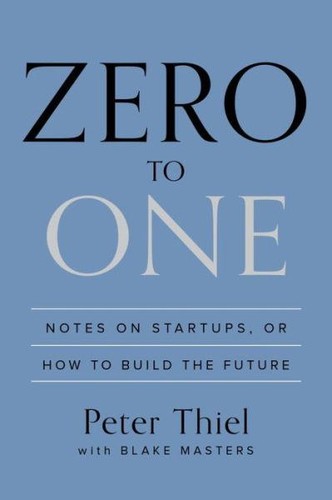

delivered
Get key takeaways from each episode delivered to your inbox.