
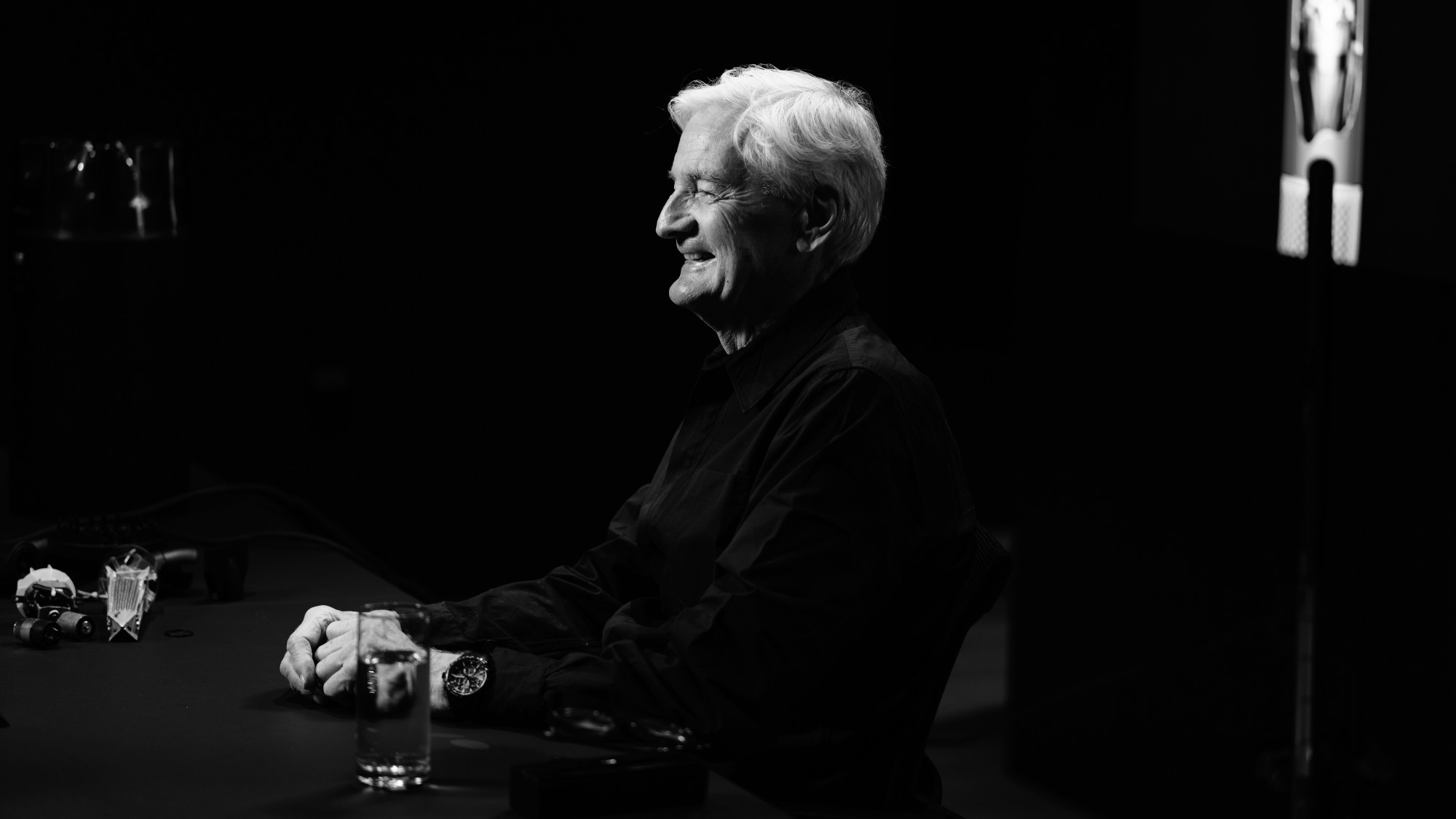

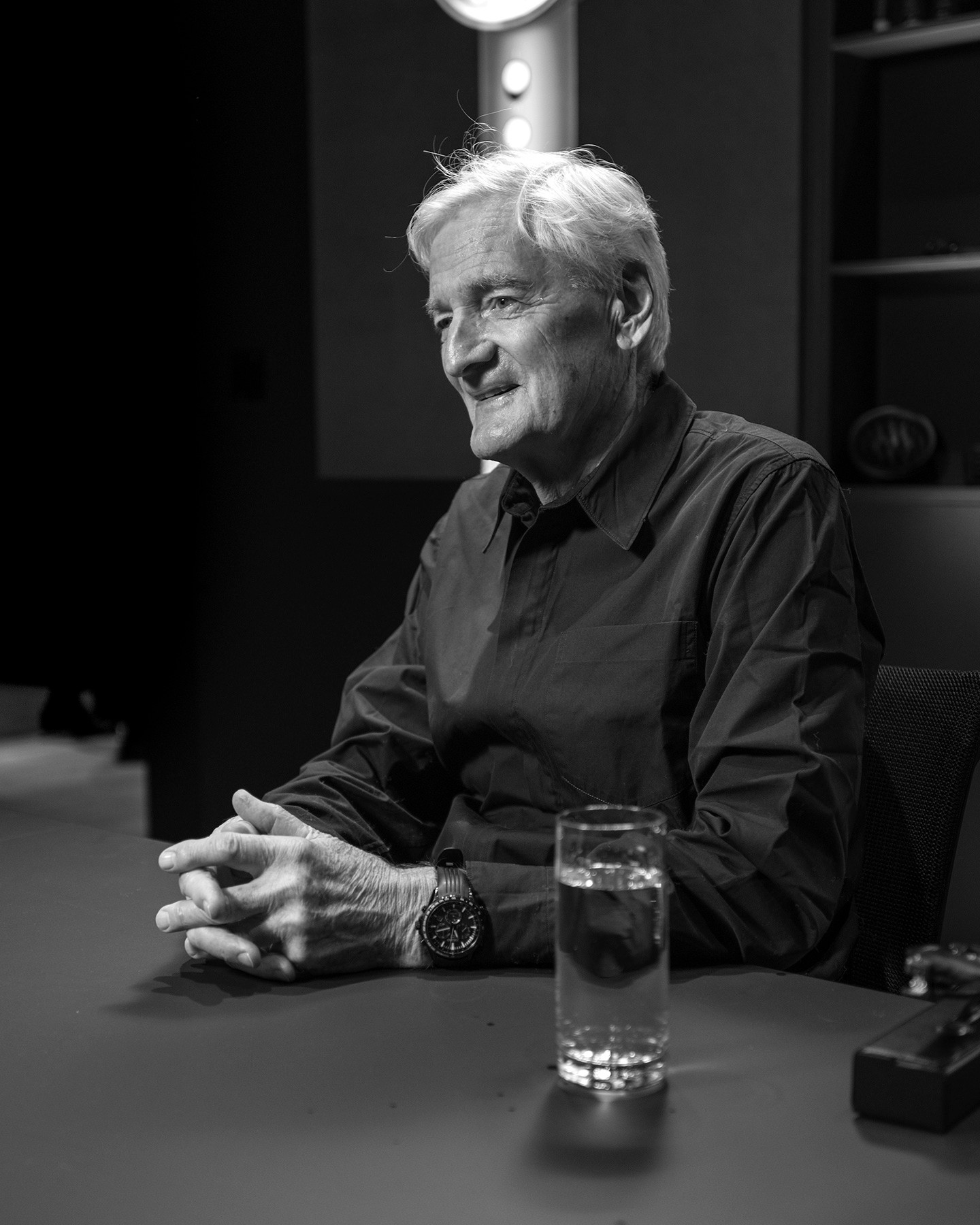
Fingerprint scanners don’t work on James Dyson. Decades of working with his hands have worn down the identifying squiggles and swirls once etched into his dermis. He calls them “a workman’s hands.”
It’s stiffness and the deep ache of arthritis engulfing his once dexterous digits that keeps Dyson from much of the physical work nowadays. But he expects the engineers who work for him to build their own prototypes and conduct their own tests. An imperfect joint, a part that proved difficult to machine, something noticed while gluing the contraption together: those details can explain a failure that looks inscrutable in somebody else’s report. Dyson has spent much of his life getting close enough to find them.
The inventor’s eponymous company manufactures around 30 million electric motors per year. Its technology spans beloved vacuum cleaners to viral hair dryers and other household products. Dyson still owns the whole business, both its successes and its flops. Sitting in an aircraft hanger is a car prototype, the remnant of a project he says cost a half-billion-pounds, approximately $700 million . He doesn’t drive it.
Dyson is similarly unsentimental about the lessons imparted on him. “I learned absolutely nothing,” he says.
For a man who has made failure central to his philosophy, this is an ironic exhibit. Dyson can spend years insisting that a product will work, put his house behind the conviction, and emerge with an invention that bears his name. He can also spend a fortune and stop. Both decisions require him to judge an idea before the evidence is complete, and to live with what happens after.
Dust in the kitchen
The Dyson vacuum cleaner began with an at-home annoyance. Dyson’s old hoover roared away without picking much up. While vacuuming, the bag-full indicator lit up, signaling it was time for a replacement. Dyson couldn’t find another bag, so he emptied the old one, taped it shut, and put it back.
Still no suction.
He opened it again and found a fine coating of dust lining the inside. The bag’s pores were clogged, preventing the air from passing through. Buying a new bag restored the suction briefly, until the same thing happened again. The indicator, he concluded, had been misnamed.
“They call it a bag full indicator. That’s a lie,” he says.
He’d seen a similar conundrum working at the company making his Ballbarrow—a wheelbarrow with a ball in place of the conventional wheel. Powder sprayed onto the metal frames at the manufacturer missed its target and accumulated on a cloth filter causing the filter to clog. The solution was a 30-foot cyclone, which Dyson and his colleagues built when the quoted price for one proved too high. They had to make a hole in the factory roof to accommodate their creation.
The machine spun the dust out of the air, flinging particles toward its outer wall while air escaped through the center. Dyson wondered whether he could shrink the massive gadget to fit a vacuum cleaner. So he made a miniature version from cardboard and gaffer tape in his kitchen, took the bag off his upright vacuum, and connected the two with a hose.
Dyson, 31 years old at the time, vacuumed the house from top to bottom, then did it again for luck. He kept disconnecting the little cardboard cyclone to inspect the dust collecting inside. By his 45th birthday, in 1992, he’d be looking at the fully operational, visually finished Dyson Dual Cyclone.
Not to mention the 5,127 prototypes spawned along the way.
Living through this research and development was serendipitously messy. Dyson worked in a coach house behind the family home, initially lacking even electricity, which he later installed to give himself a light to work by. He bought antique metal rollers from a junk shop for £25 and used them to form cyclones, soldering the pieces together by hand.
For three years, his days followed roughly the same pattern: breakfast with his wife, Deirdre, at half past seven, taking the older children to school, then the coach house at nine. He broke for lunch, saw his youngest child, Sam, and worked until half past six. Sam learned to walk and then to talk while his father made cyclones.
Dyson’s mortgage grew steadily larger. All the while, he’d come inside caked in dust, knackered, and sometimes dejected that another day’s work had failed. He wondered whether he would continue fervently making cyclones until he died, without ever getting anywhere.
His revision process was meticulous and scientific, changing one thing, testing it, and recording the result to precisely identify issues. It’s a discipline he still has to teach young engineers whose instinct is to fix everything at once. The growing pile of discarded models had a use: each could narrow the problem facing the next one.
Dyson now describes the saga as a “hugely enjoyable struggle.” He recalls an intoxicating energy resting on the fact that tomorrow’s experiment might reveal why today’s had gone wrong. While he knew he was making progress, he also carried with him the reality of having three children, a home, and a mortgage that depended on a machine he had no guarantee he could finish.
People who knew better
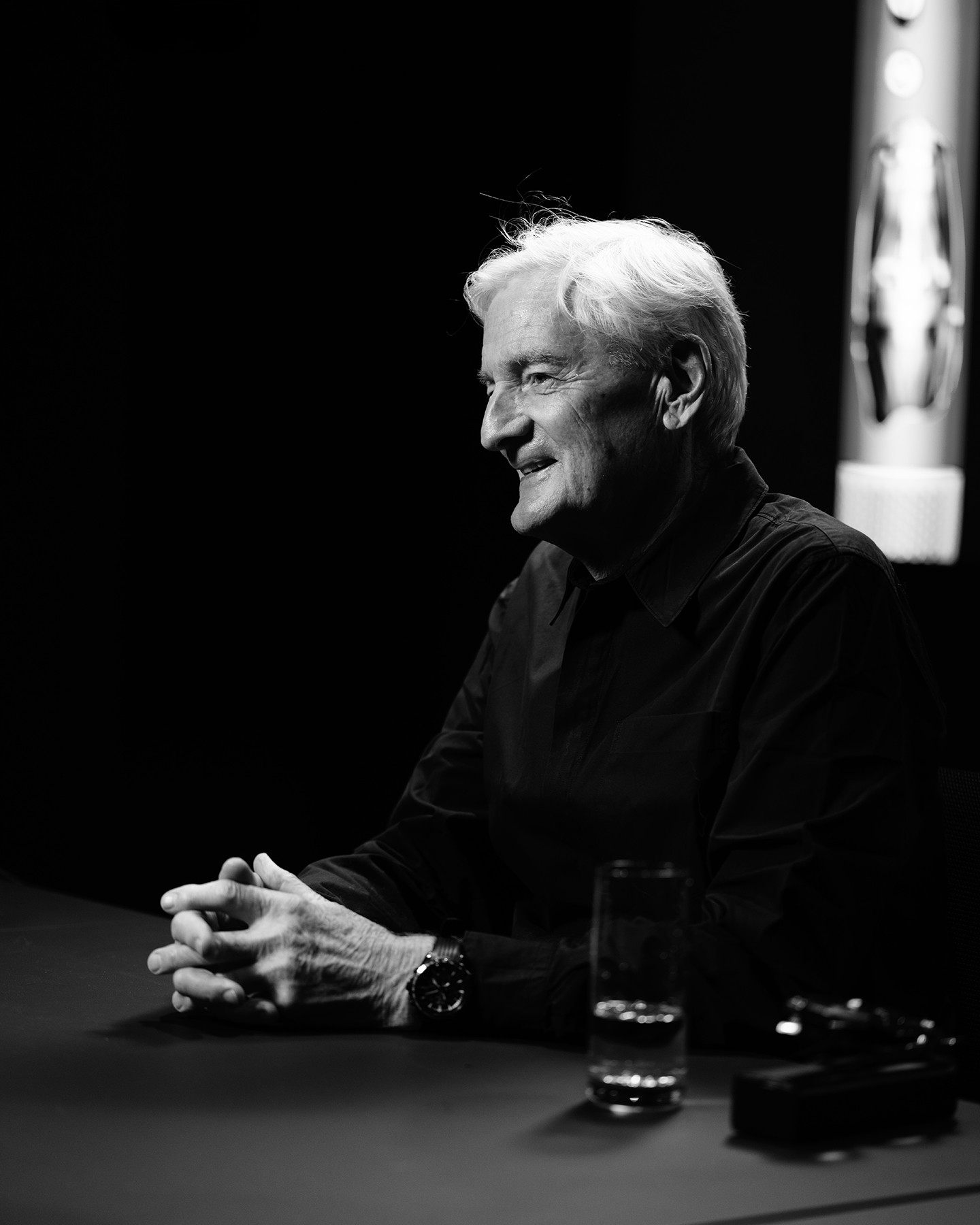
Dyson’s first business grew out of his frustration with ordinary wheelbarrows and their tendency to get stuck in mud. He’d left a job designing, making, and selling the Sea Truck, a high-speed landing craft, to develop the Ballbarrow. When his mentor and employer, Jeremy Fry, offered him financial backing, Dyson turned him down.
“It was to prove something to myself, I suppose,” he says.
Fry had given Dyson an unusually broad apprenticeship when he arrived as a long haired, flowered shirt-wearing Royal College of Art design student. When Fry asked him to sell the boat he had helped develop, Dyson protested that he didn’t know how. Except, as Fry would point out, Dyson knew every part of the product, which made him well placed to explain it to somebody else.
Fry’s approach to engineering was similarly practical. His answer to a question about hydrodynamics would come with directions to a lake and instructions to tow a plank behind a boat. Dyson still draws on those lessons half a century later.
Yet when he set out on his own, he chose other financial backers, including his brother-in-law. Desperate for independence, he rejected the person most likely to understand what he was attempting.
“It was a really stupid decision,” he says.
At first, the Ballbarrow found buyers through small newspaper advertisements. Retailers had laughed at the big red ball and told him nobody would buy it. Readers sent checks anyway. But his backers wanted a factory and a conventional sales operation supplying shops through wholesalers.
The change cut what the company made on each sale roughly in half. And the company sank into debt. Dyson remembers interest rates reaching 22 percent. He’d also assigned the Ballbarrow patent to the company. When he was pushed out, the invention stayed behind.
Dyson had offered those same colleagues the cyclone vacuum as a way out of the wheelbarrow business. Their response, he recalls, was that Hoover or Electrolux would already have invented a better vacuum if one were possible.
And so he went back to Fry, who helped guarantee the borrowing that financed the early vacuum work. Together they chose to develop the technology and license it to established manufacturers. An inventor, he thought at the time, could be like an author: make the thing, then let somebody else handle production and sales.
“Delusion,” Dyson says now.
The misplaced licensing effort entailed years of finding somebody enthusiastic inside a company, only to return later, and discover that person had left. He was spending his time on agreements and cancellations, becoming, as he puts it, a lawyer. Manufacturers already made money from the bags his machine would eliminate; Dyson also believed they simply didn’t want to change.
Then came a five-year legal battle with Amway who Dyson sued for copyright and patent infringement after Amway allegedly copied his dual-cyclone vacuum prototype. Fry, who bristled at litigiousness, wanted out. Dyson bought his 49% stake for around $60,000, and the two remained friends. He was now on his own, financing litigation while a trickle of licensing income kept the enterprise alive.
Control had been expensive to lose. Getting it back was proving expensive, too.
Machines in the shop window
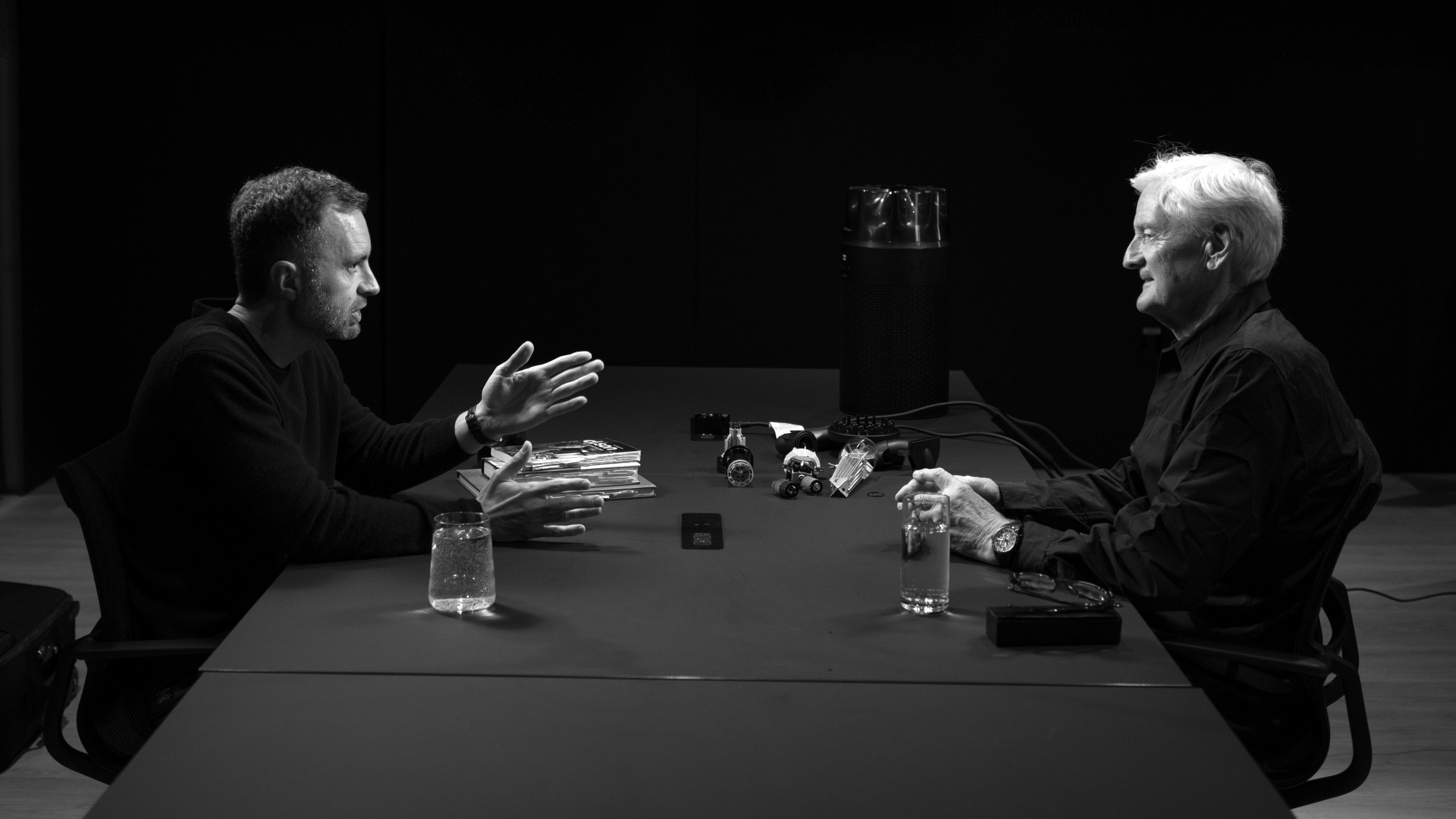
Dyson’s money problems came close to ending his enterprise. He remembers sitting with Deirdre over wine, contemplating giving the whole thing up. They could do something else with their lives instead of being consumed by legal bills.
A resolution of the American dispute finally stopped that drain. By then Dyson was tired of licensing and traveling, and ready to manufacture in Britain himself. The ambition, he says, was a little cottage industry. He would need nearly $800,000 for tooling.
When prospective backers told him vacuum cleaners weren’t an interesting business, or that he would need somebody from the industry to run the company, he went to Lloyds Bank and offered his house as collateral again.
The bank initially refused the loan. But an adviser who visited businesses on its behalf appealed the decision internally. When Dyson later asked why he’d made the effort, the man pointed to Dyson’s determination through the five-year lawsuit, along with his wife’s and mother’s enthusiasm for a vacuum without a bag.
Dyson calls it a real piece of luck. But the machine still had to earn its way out of the house.
Making the vacuum himself meant Dyson could carry his ideas through engineering, manufacturing, and sales. One of those ideas was to let people see the dirt. A customer walking past a row of spotless-looking vacuum cleaners would encounter a strange, transparent machine visibly full of rubbish. The unpleasant contents demonstrated that it worked.
There was also a small booklet hanging from the handle, telling the story of the man who had made it. Dyson thought that somebody spending $200 on an appliance invented and designed by one person had a right to know who that person was. His name on the machine gave customers somebody to hold responsible.
He could also keep changing the machine without waiting for a licensee to take an interest.
Dyson wanted the same freedom over the guts of his machine. Early on, he was buying large, heavy motors running at about 30,000 revolutions per minute. A faster motor, he reasoned, could be smaller, use less material, and operate more efficiently. He recruited people from British universities and spent ten years developing the company’s motor technology.
That work eventually helped lead to the hair dryer: a smaller motor could replace the bulky one in conventional designs. It also created a business opportunity he continues to refuse. Other companies have asked to buy Dyson’s motors. He wants his engineers working on Dyson’s next development instead of adapting the technology to somebody else’s product.
Although supplying other manufacturers could make him money, he’s curt in his reasoning.
“Because that doesn’t excite me.”
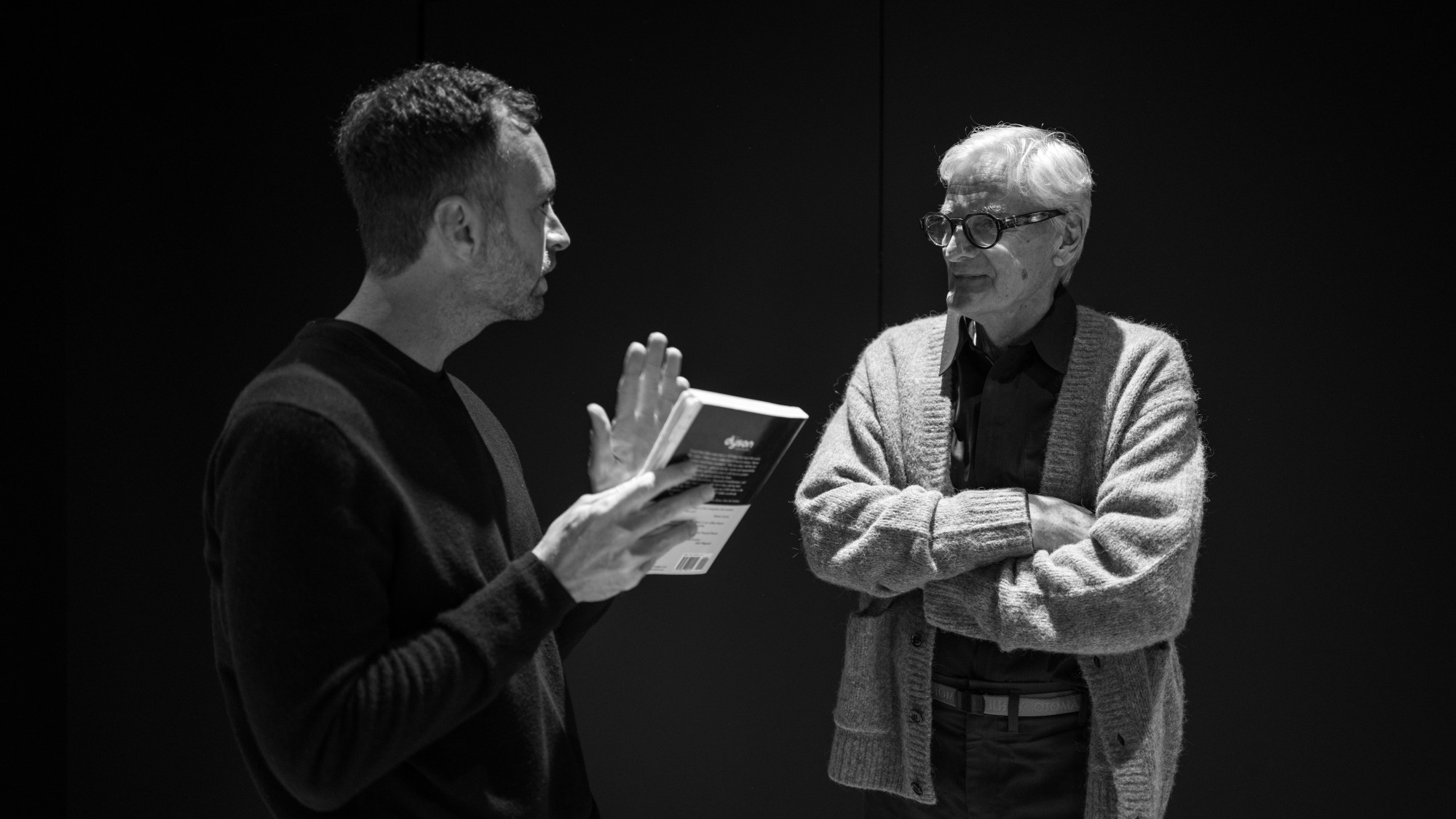
Another corner
Dyson roots his preference for excitement and risk in his father’s death. He was nine; his father was 40. Dyson’s memory of the loss is pieced together in vignettes: the small suitcase, the goodbye at the back door, the brave cheerfulness of a man leaving for hospital. It was the last time he saw him.
At boarding school, other children had both parents to visit them. The headmaster let Dyson remain at the school without paying fees.
In the years following his father’s death, Dyson became intensely competitive and took up running. After reading about a champion middle-distance runner’s training, he started training on sand dunes. Other runners were circling a track; he enjoyed having a method they hadn't discovered. As he won by wider margins, he trained harder, increasingly nervous about being caught from behind. Even winning gave him another reason to keep working.
“I need to live on the knife edge all the time,” he says, describing himself as impatient to get the most out of life, a need that began with his father’s desire to work for the BBC but never having the chance. Dyson describes himself as impatient to get the most out of his own life.
He imparts that spirit on the pupils of his institute, some as young as 17, who are taken into the company. There they study two days a week and work three, earning a salary while learning the theory behind the problems in front of them. He likes the questions people ask before experience has taught them what supposedly can't be done.
There is no obvious point at which Dyson intends to consider his own education complete. In his mind’s eye, there is always something wrong, something to improve. It’s a habit he admits can be “slightly torturous.”
Even now, he denies himself the satisfaction of self-congratulation. “It’s never good enough,” he says. “So you can’t be proud.”