Jeff Zalaznick
Jeff Zalaznick is the co-founder of Major Food Group.
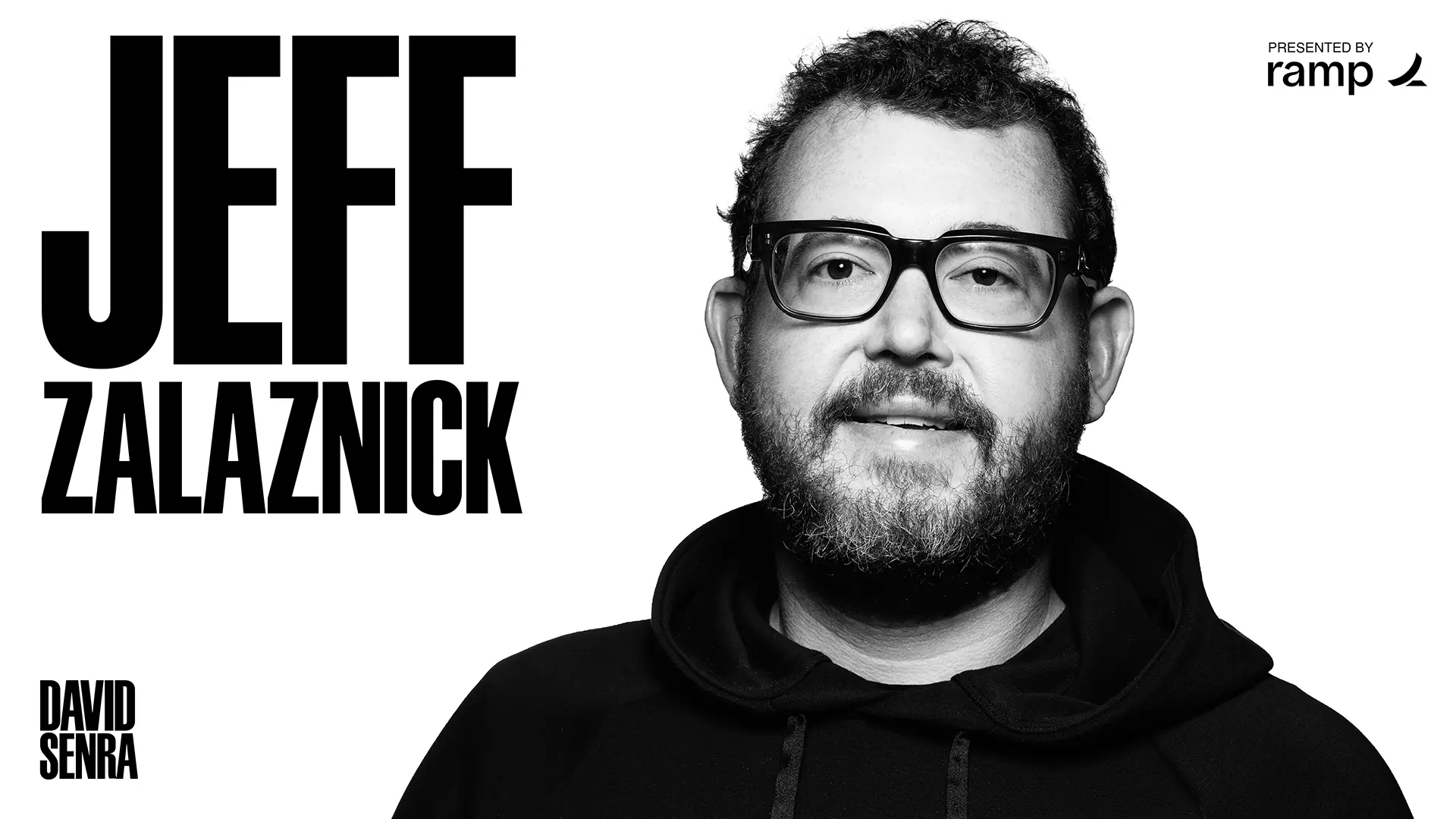
Summary
Jeff Zalaznick is co-founder of Major Food Group, the hospitality company behind Carbone, ZZ's, Torrisi, The Grill, and The Pool. He has opened 77 restaurants and bars and 76 are still operating and profitable. He is now building Major Food Group into a fully vertically integrated hospitality company spanning restaurants, private members clubs, hotels, and branded residential towers.
Zalaznick was obsessed with food from childhood, watching cooking shows on PBS while other kids watched cartoons and memorizing the Zagat guide. His first job out of college was as an investment banking analyst at J.P. Morgan, but he knew it wasn’t his dream. He walked out on his birthday, talked his way into any job at the newly opened Mandarin Oriental, built a restaurant website, and eventually partnered with restaurateur Joe Bastianich to get a front-row seat to the business. Watching Joe work, he realized: "I can do this, and I can do it my way." He quickly sold his companies, and set out to open his own restaurant.
The idea was Carbone — elevated Italian-American food built on a simple thesis: take something everyone already loves and make the best version of it ever done. He found his partners, Mario Carbone and Rich Torrisi, and opened Carbone in March of 2013. It’s now one of the most recognizable restaurant brands and sought-after reservations in the world. From there, they’d go on to launch Major Food Group, and the success has continued.
Episode transcript
David Senra: I want to start the conversation with one of the craziest stats I've ever heard. You've started 77 restaurants and bars, and 76 are still operating and profitable.
Jeff Zalaznick: Yes.
David Senra: Okay. Can you tell us about the one that we're sitting in right now?
Jeff Zalaznick: So, right now we're sitting in one of my favorites. This is The Pool we're sitting in right now, which is probably the most historic restaurant in America. It was originally opened in 1959, built in 1959 by the Seagram family.
Jeff Zalaznick: And at the time these were the two most over-the-top luxurious restaurants ever built, and they were designed by Mies van der Rohe and Philip Johnson, one who was the most famous architect of the time, and one who was soon to become the most famous architect of his time.
Jeff Zalaznick: And this room we're sitting in today is one of the only interior landmarks in America.
Jeff Zalaznick: In fact, it's the only interior landmark restaurant in America, where we had to restore this entire room to what it was in 1959 when we took over about eight years ago.
Jeff Zalaznick: So, what you have here is you have the most incredible restaurant history, and we've been able to be the custodians of that history and take it into kind of the new next generation.
Jeff Zalaznick: But that pool behind us has been sitting here since 1959, and we've really just brought it back to life.
David Senra: So, tell me about what you had to do to restore it. Who owned it and how did you come into ownership of this? Because you knew about this place when you were what, 13?
Jeff Zalaznick: Yeah. I mean, I grew up in New York City. If you grew up in New York City and you cared in any way... But like you, I was obsessed with restaurants and food and what I do today for a living since I was a child. I was watching cooking shows when I was 10 on PBS, before there were any cooking channels or anything like that.
Jeff Zalaznick: And I was aware of what was going on in the big picture of New York restaurants. And if there was any restaurant that you would know of as like, "One day I want to go there," it was the Four Seasons, which is not related in any way to the hotel. The original Four Seasons was a restaurant, which is where we're sitting right now. This was called the Four Seasons. That was called the Grill Room. This was called The Pool Room, which is where we're sitting right now.
David Senra: Right.
Jeff Zalaznick: And that was really the most kind of incredible aspirational restaurant that you would want to go to, that you would have a chance to go to, maybe. I had a chance to go there for... I think I came here and actually sat in this corner for my grandmother's 75th birthday or something like that.
David Senra: Mm-hmm.
Jeff Zalaznick: This was a place that you would come for major special events, in my case, you know what I mean?
Jeff Zalaznick: Or if you were one of the kings of New York, you would be having lunch in The Grill every day, and that was really where power lunch was invented, right? So, there's a huge history of both what this restaurant means in terms of food, because it does have an incredible and an interesting history in terms of food, being the first restaurant that ever had seasonal ingredients, the first American restaurant that ever wrote their menus in English, right, versus in French.
David Senra: Wait, tell me about that.
Jeff Zalaznick: So, this restaurant in 1959, before this place opened, anything that was fancy and expensive was French, and you would go to fancy French restaurants, and the menu would be written in French.
Jeff Zalaznick: The Four Seasons was the first restaurant where that was written in English, and so this was really the first example of American fine dining. It was the first time that American as a cuisine was actually thought of and celebrated. So, it didn't exist before then. There was no such thing, right?
Jeff Zalaznick: American was a hamburger and fries, right? It didn't exist in terms of the luxury fine dining world. And so, this was revolutionary in that sense, and it was a guy named Joe Baum, who was a great restaurateur of his time, the best restaurateur of his time, and someone who I've always looked up to and we've always studied his process, who came up with this creation and created this place.
Jeff Zalaznick: And it was also the first restaurant where the design was equally, at the time, important to the actual restaurant. So, the food was something that was new and spectacular. It introduced the ideas of seasonality, it introduced the ideas of foraging, it introduced the ideas of American cuisine. The list goes on of how many things were created in this room.
David Senra: The stuff that's still talked about today originated back then.
Jeff Zalaznick: This was the first place.
David Senra: Okay.
Jeff Zalaznick: So, when we took over, right? JFK had his birthday party here. The famous birthday party before he went to the Garden and Marilyn Monroe came out of the cake.
David Senra: Okay.
Jeff Zalaznick: He ate asparagus soup up there.
Jeff Zalaznick: Okay? So, the story goes that...
David Senra: Was Marilyn here?
Jeff Zalaznick: Marilyn, it's unknown. But the... No.
David Senra: She's upstairs.
Jeff Zalaznick: Right. She was... Who knows? But I don't know if you saw in the kitchen, we have a quote from JFK, but the reason for that is because he famously loved this room, and he famously had his big birthday where she jumped out of the cake in Madison Square Garden. He had the dinner here.
David Senra: Okay.
Jeff Zalaznick: And he was so busy walking around talking to people, as you can imagine, that he didn't get a chance to eat. And so, he actually went up to this... This room didn't exist up there. That was a storage room, right? And where some people would hide and do whatever they needed to do. And we've now opened it up and made this beautiful lounge up there. But before that, when we took it over, it was just a storage room. Those doors were all closed.
Jeff Zalaznick: And famously, he kind of snuck in there, and his favorite thing to eat was cream of asparagus soup.
Jeff Zalaznick: So, he said to the kitchen, "Make me a cream of asparagus." They said, "Of course, Mr. President, whatever you want."
Jeff Zalaznick: And so, he ate this cream of asparagus soup, so we actually had an ode to that dish on the menu that we still run depending on... The dish actually will come back now in spring, called Jack's Pie, which is a cream of asparagus pie that we make to honor that moment that happened here.
Jeff Zalaznick: But there's so many moments that happened here. That may be one of the most famous and public, but so many incredible moments happened in this building that you have to understand that when I came in and we were able to take over this restaurant, this was something that was beyond your wildest dreams. It was an institution that you never thought would change, right?
Jeff Zalaznick: Because it just... You couldn't even penetrate your brain that no matter how successful you had become in restaurants, like this was run by two guys that had been handed it down years ago, after Joe Baum, et cetera, two of his guys that worked there took over. They handed it down to two other guys. Those two guys, unfortunately, they kind of ran it into the ground, right? They didn't reinvest any money in it.
Jeff Zalaznick: They basically were using it kind of as their own cash machine, which was just not reinvesting. This is a giant facility that needs a lot of upkeep, a lot of cleaning, a lot of restoration at all times.
David Senra: I don't think you discussed this publicly, but we talked about just the revenue from these two rooms alone would make it... If this was just the only business, it would make it a substantial-sized business.
Jeff Zalaznick: Yeah, I mean, listen, this business, because you have what is The Pool, which is probably the most famous event space in New York for the last half a century, right? And then you have The Grill, which was most famously known not only for its architecture and for the fact that it was where power lunch was founded.
Jeff Zalaznick: So, conversations like these all happened for the last 60 years in that room next door. And where you were placed in that room and where you sat in that room was all very significant to your status, and it was written about in the Post or, hey, where you sat. Oh my God, they saw so-and-so in Siberia the other day. What happened? Maybe he's getting fired. Whatever it might be. That was a...
David Senra: What's Siberia?
Jeff Zalaznick: Siberia was the second level up the stairs where you never wanted to be sat, or you were thrilled to get sat because you were just finally let in, right? You know what I mean? So, you would work your way up, and based on who you were and what you did, they would allocate the booths and the main tables, and then the second floor was always called Siberia, and that was always very public. It was always where people were seated and what was going on.
Jeff Zalaznick: And one of the things that we did when we came in here, which has given this new life, when we were...
Jeff Zalaznick: First of all, the process to get this place was a crazy process, right? So, this building, which is the Seagram Building, as I said, the building's designed by Mies van der Rohe. These interiors were designed by Mies van der Rohe and Philip Johnson. The Seagram family obviously built the building and paid for these restaurants to be built.
Jeff Zalaznick: Later it was bought by Aby Rosen.
Jeff Zalaznick: Aby Rosen still owns it today.
Jeff Zalaznick: And he was so frustrated with the way that the guys who were here, even though they had been here for 20-plus years, these two, he was so frustrated with the way, as a great lover of the arts that he is and of architecture, he was so frustrated with the way that they were keeping it up that he decided that he wanted to get rid of them because they wouldn't... He would come and the place was full of dust. It had really been run down.
David Senra: Yeah, you were telling me in the other room that the panels, which are like, what? Gray or white.
Jeff Zalaznick: Yeah, so they're gray.
David Senra: Yeah.
Jeff Zalaznick: But when we took them over, they were black, right? Because no one had ever cleaned them, so they had 50 years of cigarette and cigar smoke that had accumulated, and no one in 50 years had ever thought to go clean the tile.
David Senra: How much did you spend on restoring this place?
Jeff Zalaznick: We spent about 40-plus million dollars.
David Senra: That's incredible.
Jeff Zalaznick: Yeah, so we took... Basically this is a...
Jeff Zalaznick: You have the Grill Room and private rooms. You have The Pool. You have the Pool Lounge. Downstairs we have another restaurant called The Lobster Club, and we obviously rebuilt a beautiful first-class kitchen. The kitchen hadn't been redone since 1959, so you couldn't run a super high-end restaurant to our standards without rebuilding the entire kitchen. And so, we put in what may be the nicest kitchen in New York, if not one of them.
Jeff Zalaznick: Not only to be able to do what we do, which is a combination of serving the best food to diners in an à la carte setting at The Grill, but also to be able to put out what is, I think, second to none in terms of events, right? So, if you have a 200-person dinner in the room we're sitting in here right now, when you get your Dover sole, it's going to taste like the best Dover sole you've had, as if you ordered it just sitting with you and me, right? It's hot. It's perfect.
Jeff Zalaznick: The food here is what we are known for. No one is able to do large-scale events the way that we are here, at the quality level we are here.
David Senra: I want to tell you about the presenting sponsor of this podcast, Ramp. I have been reading a lot about SpaceX lately. SpaceX is one of the most valuable businesses in the world, and one of the main themes in the history of SpaceX is constantly attacking and questioning your costs. Ramp helps many of the most innovative businesses in the world do exactly that. The median company running on Ramp cuts their expenses by 5%.
David Senra: And one thing SpaceX has demonstrated is that a religious dedication to controlling costs can help actually increase revenue because you can pursue opportunities you couldn't otherwise. And we see that in the Ramp data too.
David Senra: The median company running on Ramp also grows their revenue by 16%. So, when you're running your business on Ramp and your competitors are not, you have a massive competitive advantage that compounds over time. Ramp is the only platform designed to make your finance team faster and happier.
David Senra: Many of the top founders and CEOs I know run their business on Ramp. I run my business on Ramp, and you should too.
David Senra: Go to ramp.com to learn how they can help your business save time, save money, and grow revenue. That is ramp.com.
David Senra: Deel is how the best founders turn the world into their talent pool. I've been studying how history's greatest founders operate for a decade, and one thing they all have in common is they understand that recruiting and hiring the very best talent is your most important priority.
David Senra: A players recognize other A players, which is why top companies like Ramp, Shopify, ElevenLabs, Uber, and DoorDash all use Deel. Many of the top founders I know have personally invested in Deel after using their product, and what they discovered is that Deel is the best company in the world at building infrastructure for global hiring. Deel will help your business hire, pay, and manage any worker anywhere in the world so you can retain the best talent anywhere and spend the rest of your time focusing on what you do best, delivering value to your customers.
David Senra: The founder of ElevenLabs has a great description of the value Deel can give your company. He said, "We built ElevenLabs to break down language and communication barriers. With Deel enabling us to hire and support exceptional talent anywhere, we can accelerate our innovation and bring more voices, stories, and ideas to every corner of the world."
David Senra: Deel is trusted by over 40,000 businesses. Learn how they can help your business today by going to deel.com/senra. That is deel.com/senra.
David Senra: So, go back to how you got the opportunity to take this place over.
Jeff Zalaznick: So, we got the opportunity because there was a rumor in Page Six that Aby Rosen was going to throw out the guys at the Four Seasons, okay? I was sitting on a plane with my partner, Mario.
Jeff Zalaznick: We were reading the Post like we always would, right? This is now 10 years ago.
Jeff Zalaznick: So, we've got the Post, we're on the plane, and Mario says to me like, "Do you see this?" And I said like, "Can't be possible." Like, you know what I mean? It was one of those things that couldn't... It was such an institution that you couldn't believe that this could be happening.
Jeff Zalaznick: So, I knew Aby a little bit. We were friendly, and I had his number in my phone, but we didn't talk all the time or anything.
Jeff Zalaznick: So, I said, "It's worth a shot." And I texted him, "Four Seasons," question mark.
Jeff Zalaznick: And he wrote me right back like, "Let's discuss ASAP."
Jeff Zalaznick: So, we were actually on our way back to New York. I literally went from the plane to his office, which was, at the time, across the street from where we are now. And I said, like, "What's going on with this?" He's like, "I'm getting rid of these guys. They've let the place go to shit," and he basically decided he was going to run, because of the significance of this place, his own RFP process, like a city process, but he was doing it personally, which fits very much with his personality, which I love. He was going to run his own RFP process for different operators to come in. So, we ended up in what was like... This was, for us at the time, a huge jump.
Jeff Zalaznick: So, my company's only existed for 15 years, right? So, this is now, we go back eight, nine years ago. So, we didn't have half the amount of restaurants we have today. We had some great successes, and we were definitely the up-and-coming group.
David Senra: What was your biggest success? Like, what were you most well known for at the time that you were bidding on this place?
Jeff Zalaznick: Carbone.
David Senra: Carbone?
Jeff Zalaznick: So, Carbone was our first real big success, right?
David Senra: Yeah.
Jeff Zalaznick: That was opened in 2013, and that put us on the map on a large scale. And from there, we went on to open a variety of other restaurants that were all successful.
Jeff Zalaznick: And then this opportunity came about, and so we were competing for this space. I mean, everyone wanted... This was every restaurateur's dream.
Jeff Zalaznick: So, everyone we were competing against was... He has been established for 20-plus years in the restaurant business, all the best people that existed in New York at that time. And at the end of the day, we successfully convinced Aby that we were the guys to go with.
David Senra: How do you think you did that?
Jeff Zalaznick: I think that Aby was the perfect person to be in control of this because he understood me, he understood us, he understood what we did, he understood in betting on the kind of future of what restaurants could be versus going with the institution, right? Because he was going to end up with another couple old guys that were doing things they had done before, and it was going to be something stale.
Jeff Zalaznick: And I think he appreciated our energy. You know what I mean? And our energy and our thought process and the fact that our process already had been established, as people who really cared about New York. Our company's deeply grounded in New York, deeply grounded in New York history, and we consider ourselves all students of New York history and New York restaurants.
Jeff Zalaznick: So, this had a huge meaning to us, and the appreciation of the history of this place, combined with the best ideas and the best menu and the best food and whatever we put in front of him, he decided that he was going to partner with us to do this.
David Senra: There's a couple things like... This is obvious from speaking to you, and I see this with anybody who gets to the top of their profession. You have this crazy database of your entire industry's history in your head that comes out in conversations, and you tell these beautiful stories about it. But also, it's blatantly obvious that you're very passionate about this. And I would say passion is infectious. And I wonder, obviously, I think you express that to everybody you interact with. You definitely expressed it to this guy. You know Josh Kushner, right?
Jeff Zalaznick: Very well.
David Senra: He has a great quote that I always think about that I think is dead right, and he's just like, "If it comes down to picking the most experienced person, or the smartest person, or the person that wants it the most, you always bet on the person that wants it the most." I wonder if that was the situation here.
Jeff Zalaznick: There's no question about it. That was always our thing was that we were going to win no matter what. And we went about things that way, and we still do to this day. Which is rare in my business that people... We literally did something like this last week. But what we would... If they asked us to put in front of them X, Y, and Z, we put that with whipped cream and cherries on top in 100 different variations for them to be like, "Holy shit."
Jeff Zalaznick: You know what I mean? And I think that same thing resonated, to your point, it resonated with Aby that we were going to be the best possible group. We were going to... This meant the most to us, and that we would be truly what we said we would be, which is custodians of what is the greatest restaurant space in New York. And the concepts that we developed here, and how would you bring this... The biggest breakthrough that I had that I believe ended us up here was the biggest counterintuitive one, right?
Jeff Zalaznick: Which is always how it works, right? So, everyone else, including potentially him at the time, it was such an institution that you never even contemplated that this room, The Grill, which is now one of our busiest restaurants, one of the busiest restaurants in New York as far as it pertains to fine dining, that it would ever be anything but this power lunch thing.
Jeff Zalaznick: It's been power lunch for 60 years. It's been power lunch since my parents were children. Just to put it in... Okay, that's how long this has been power lunch. So, the first thing that I said was, "We're not serving lunch. We're only opening for dinner," because the truth is that restaurants can't be successful serving lunch.
David Senra: Why?
Jeff Zalaznick: No one drinks.
David Senra: Cheers, by the way.
Jeff Zalaznick: Cheers.
David Senra: Thanks for doing this. Thanks for having me here.
Jeff Zalaznick: Of course. Thank you for being here.
David Senra: Yeah, of course.
Jeff Zalaznick: So, basically, what we did was we said, "We're not even open for lunch," because we need to reestablish this as the place you want to be for dinner. We already know that history has told us it's going to be a great place for lunch. It's in the center of Midtown, and it's obviously a very convenient room, and it's got provenance as the most powerful dining room to eat lunch in. We need to do that for dinner, and how do I do that for dinner? I don't open for lunch immediately, right? And I think that resonated with him greatly, right?
Jeff Zalaznick: Because I said, "To do the types of numbers we're talking about, this needs to be a dinner restaurant, not a lunch restaurant. Lunch restaurants don't make money."
Jeff Zalaznick: And so, that was a big rebranding of what we did here. We kept the name The Grill, right? But renamed it that versus the Four Seasons, which obviously at this point in time had become quite confusing given the rise of the hotel.
David Senra: Yeah, that's important. It has nothing to do with the hotel.
Jeff Zalaznick: Right, it has nothing to do with it. While they were building the Four Seasons restaurant, he was opening the original Four Seasons in Canada, in Toronto. But I mean, nothing to do with one another.
Jeff Zalaznick: But huge confusion all the time. People would say, "Meet me at The Four Seasons." People would show up here versus the bar that people used to hang out at on 57th Street. We rebranded it as The Grill. We made it a true dinner destination.
Jeff Zalaznick: We took the history and the heritage, which you'll see throughout all of our work, of what it meant to be a quintessential American restaurant. How do we interpret that? We went back into the history books. We only serve dishes at this restaurant that you could have ordered. Obviously not the way we make them, but you could have ordered.
Jeff Zalaznick: We have seen them on a menu in our menu research in 1959, and we built a menu around that, and that turned out to be an incredible project and probably my favorite restaurant that we have because of all this incredible history.
Jeff Zalaznick: But it also informs and kind of tells a story about our process in general, which always deals with huge amounts of research, studying, reading, going to the New York Public Library archives when we were young, and still doing this, and pulling old menus and pulling old articles to learn about what was going on there, to read those articles, things that weren't even available online at the time, or even at all.
Jeff Zalaznick: I don't know now. But to really find out what's at the core of this concept that we're doing and what is the story that we're telling. Because I think the one thing that we've done, and that my biggest contribution to probably the restaurant business is that we made sure that from day one, that we had a very specific process, right? One was that food was paramount.
Jeff Zalaznick: The food had to be the best. That's the thesis of our company, Major Food Group. It's all food is number one. But not too far behind are two other things. One is that the restaurant has to tell a complete story, and if it doesn't tell a complete story, then it doesn't work. And right behind that is that it's got to be fun.
David Senra: Before we get to fun, tell me how a restaurant tells a story.
Jeff Zalaznick: So, a restaurant tells a story because we set a narrative. It's no different than... We often compare it to making a movie.
Jeff Zalaznick: If we're right here in the place we're sitting, right, we're telling a story of American fine dining seen through our lens while paying homage to the time period the building was built in and all the history that had happened before it, as we create a menu, and a service style, and uniforms, and music, and artwork, and all the different things that go into creating hospitality spaces but are often overlooked.
Jeff Zalaznick: We make sure that that entire story makes sense. So, whether it's the chair you're sitting in right now, like this chair was designed by Mies van der Rohe in 1959. We had it remade by the same people.
Jeff Zalaznick: The things that you might not even notice as a customer, but subconsciously they have an effect on you, and consciously, different things have different effects on different people.
Jeff Zalaznick: Some people may talk about how amazing their server was and how it was to interact with their captain. Some people may talk about the soundtrack that was playing. Some people may talk about the artwork that was on the walls. Most people hopefully are talking about how great the food was and how great a time they had. And in my business, the only thing that's even relevant is the most important thing, which is, are they coming back?
Jeff Zalaznick: I always tell everyone that works for us, it's not a matter of if they come, because anywhere we would open, everyone's going to come and try a new restaurant. All that matters is that a customer's going to come back. That's what you need to look at and measure, because coming once is easy. You could open a restaurant tomorrow, and everyone will come once, right? Anyone can do that, right? You know what I mean? But will they come back? How often will they come back? Is it where they're going to choose to have special moments, special occasions?
David Senra: This is key, though, because we talked about this when you and I had dinner a few weeks ago.
Jeff Zalaznick: Right.
David Senra: And what I admire, it's like I'm obsessed with people that do things for a long period of time. Because anybody can succeed for a year, for five years.
Jeff Zalaznick: Yeah.
David Senra: It's like you've been doing it for 15 years. You're at the top of your game. I think your future success is going to be much greater than what's behind you. But you were even saying it's like that's even more true in the restaurant business. Can you explain why?
Jeff Zalaznick: Yeah, because I mean, listen, the restaurant business, especially in today's day and age, it's a trendy business, right? And everyone wants to try something that's new, right? You know what I mean? And everyone's excited to go to an opening, everyone's excited to go to a place for the first time to say that they went here.
Jeff Zalaznick: But the big question is, after they've done that, after they've checked that off their list, after they've taken their Instagram photo to prove they went to this place and whatever else, which is, we could talk, it's a whole other topic, but do they still want to come back, spend money with you, right? And feel good about the money that they spent when they left, right? Because at the end of the day, we're in the business of providing people with an incredible evening, right?
Jeff Zalaznick: We're here to entertain you, we're here to delight you, we're here to feed you, and we're here for you really to walk out with a smile on your face, feeling like, "When's the next time I can come back? When's the next time I can get a reservation?" I always say the perfect thing is someone that comes to the desk and makes a reservation on the way out for the next time they're going to come. That's one of the many factors that makes this business so hard, especially in New York. There are so many restaurants.
Jeff Zalaznick: There are so many seemingly great restaurants that you're reading about every day that are opening, that you want to try, and you want to go to this one, and you want to go to that one. So, how do you become something that people are coming back to all the time, that becomes something that people identify with, a place they want to gather for business, for pleasure, and also for special occasions, but all the time? You know what I mean? And on a regular basis. And I think that we have a great blend of that, right?
Jeff Zalaznick: We have a great blend of the demand, all of our regulars that are consistently coming back to many of our properties, once a week or more, and people that have been trying to get in for months at a time and are there for their first time, and hopefully, they can't wait to make their next reservation to come back. That's the critical piece. They have a statistic, right? We've all heard it. Nine out of ten restaurants close within the first year of their being open. That's like the famous rule of thumb.
Jeff Zalaznick: And many restaurants have a great first three months, and then no one shows up again. But that's historically probably what has plagued the most restaurants throughout time.
David Senra: Hearing you speak, what comes to mind is there's this great quote that Steve Jobs said towards the end of his life. He says, "The older I get, the more I think that people's motivations on what they're doing matters." It becomes more important. Where you have this obsession when you're a 13-year-old kid about being obsessed with food, but now you have restaurants that may be higher status. There's celebrity restaurateurs. There's celebrity chefs.
David Senra: So, I can't help but wonder if the people that you see coming into this are doing it, you said, their motivations and why they're doing it are completely different than yours. Do you see that as well?
Jeff Zalaznick: Yeah, I mean, I think that, to your point, what we were talking about, right? My generation, myself and my partners, Rich and Mario, when we came in and started coming up with our own restaurants, right? You know what I mean? That was kind of the last generation of people that were doing this solely based on blind passion for this business.
Jeff Zalaznick: It was the only thing that we could imagine doing, and it's the type of thing that, if you love this business, it is, by math, the hardest business you could go into.
Jeff Zalaznick: But if you love it, and if you're passionate about it, and you study it, and you do the work that's necessary, which is critical, you have a chance of being successful, and you have a chance of creating really special places that you're proud of and that you love sharing with people.
Jeff Zalaznick: And that's truly the essence of hospitality, right?
Jeff Zalaznick: We love to bring people together and serve them great food and make people happy and have them have a great time and leave with a big smile on their face, and that brings us great joy.
Jeff Zalaznick: I think that, for better or worse, what's happened is that with the rise of social media, with the rise of Instagram, TikTok, et cetera, it did two things, right? So, two things happened. First, you had food TV going back 20 years, right?
Jeff Zalaznick: I mean, that started the whole idea of celebrity chefs, celebrity restaurateurs, et cetera, right? So, now cooking became cool, right? And cooking was in the spotlight, and people were watching Food Network. And then the internet started, and you had websites and blogs and all this different food content. And then, obviously, now we're living in an extreme where you have viral food-related content on all these platforms.
Jeff Zalaznick: And the thing is that now, to have a line around the block, right, you don't necessarily have to be even making something that's that good. It just has to go viral, right? And that lasts a pretty finite period of time. There's very few examples of this food that went viral that went for years, right? It might go for six months, it might go for four months, it might go for a year, but it's very rare that that happens.
Jeff Zalaznick: And in that, all those things combined turn the restaurant business and restaurateurs into a much more glamorous business, right? When I came in, it was not a glamorous business. It was a business that people were like, "Why on earth would you go into that business," right? Like, "Are you crazy?" You know, "You're going to be broke. You're not going to... Nine out of ten are going to fail. You're not going to have any chance of success."
Jeff Zalaznick: But they didn't know what's going on in my head or my partners' heads and what we believed and knew we could do from the beginning. Now that it has become more glamorous, and you have all these other, not only people that want to go into it, right, but you have another reason for customers to come. You have different entry points, you know what I mean? That didn't exist before.
Jeff Zalaznick: People see it as... You know, are saying, "Let me try to create something that's going to go viral," not "Let me create the best version of this product because I have a great passion for it, here's the history of it, and here's how we're going to do it, and here's why it's going to be the best version of that that's ever been done."
David Senra: They don't even know the history.
Jeff Zalaznick: They don't know the history, and the history for them does not matter because all that matters to them is how does it look on my Instagram, and how does it look on my... And how is it going to catch on, right?
Jeff Zalaznick: And that's just a totally different approach. That being said, everyone always says, "Well, do you not like that?" No, I love it for me, because the other side of that is that you have a much more educated consumer who's much more interested in spending their money on food and beverage than ever before.
Jeff Zalaznick: So, we benefit greatly. Some people looked at it, I think, the wrong way. When that all started, however many years ago, restaurateurs would talk to each other, hospitality people would talk to each other. They'd say, "Oh, now everyone's a food critic." You know like, "Oh, how do we deal with this? Everyone's a food critic." And I'm like, "This is fantastic." You know what I mean? And everyone's like, "Why?" I don't even have Instagram to this day. I don't even know what goes on on it.
Jeff Zalaznick: But what I know is that if these people want to come and wait in line and wait months for reservations to come to my restaurant, and sometimes only to just take a picture of a dish, that's an incredible shift of things. These are not cheap dishes, right? You know what I mean? So, I'm not selling a bagel and a donut. You know what I mean?
Jeff Zalaznick: I'm selling expensive meals, and if that's going to drive people's willingness not only to spend on it, but also it does drive their awareness and their understanding of food. Because naturally, if you're looking at food content all day, you understand it better than if you didn't, right? So, we have a more informed customer, right?
Jeff Zalaznick: Some of them are there just to take the picture, but many of them are there also to enjoy incredible experiences because they've tried all these different ones, because they've become more engaged with food and beverage and more comfortable with it being something you spend money on.
Jeff Zalaznick: And I think that's probably the biggest thing that happened during my career, was that right when I really started, and right when we opened kind of Carbone and things started to explode for us, food truly kind of joined the rest of culture as one of the significant things, right?
Jeff Zalaznick: So, if you were growing up in New York, people would talk about Broadway shows, and ballet, and dance, and sports, and... Restaurants became another form of cultural currency. It was something that if you were a cultured, sophisticated person, you needed to know about restaurants. You needed to talk about it. It became a topic of every... "Where'd you eat last night? What did you have? Oh my God, I want to try that."
Jeff Zalaznick: None of that really existed at the level that it did before, even when we started, and then that's just now been amplified to a level that is exponential and hard to even measure at this point, when you add in all these new ways that people share their experiences.
David Senra: I found one of my all-time favorite quotes when I was reading the book "Zero to One." The quote says, "The single most powerful pattern I have noticed is that successful people find value in unexpected places, and they do this by thinking about business from first principles instead of formulas." That is exactly what AppLovin has done with their advertising platform. AppLovin connects you with over a billion potential new customers inside mobile games. AppLovin allows you to capture undivided attention.
David Senra: AppLovin ads are full-screen video ads that are watched for an average of 35 seconds. That is retention that blows other ad platforms out of the water. And you can launch on AppLovin in minutes. You set the goal, and AppLovin achieves it. There's no complex setup, no expertise needed, and AppLovin scales quickly. They can put your ads in front of over a billion potential customers.
David Senra: Other businesses have seen immediate results, have scaled to hundreds of thousands of dollars of spend per day, and increased their revenue by millions. So you want to get started quickly before all of your competitors are on AppLovin, and you can do that by going to applovin.com. That's applovin.com.
David Senra: Okay, I want to go to your unconventional path to break into the industry, this industry you were obsessed with since you were a kid.
Jeff Zalaznick: Yeah.
David Senra: Let's go back to, I think, your what? Early 20s?
Jeff Zalaznick: Yeah.
David Senra: Can you just tell us what was going on in your life at this time? You even had a different job, if I remember correctly.
Jeff Zalaznick: Yeah.
David Senra: And then you take a very unconventional and risky decision to quit your normal job, and talk about the path that you actually... How you got into restaurants.
Jeff Zalaznick: Yeah.
Jeff Zalaznick: I was strangely obsessed with food and restaurants from a very young age. While other kids were watching cartoons, I was watching cooking shows. Okay, at that time, the only cooking show was available on PBS. It was a show called "The Frugal Gourmet."
David Senra: "The Frugal Gourmet"?
Jeff Zalaznick: Yes. There was one cooking show that was on after school, and that's what I would be watching. So my whole life was always focused around food. In high school, I took a semester that I went to cooking school. So it was always an incredible focus of mine. Now, at that time, I could never imagine that this thing that I love to do so much, eating, cooking, drinking, bringing people together, having a great time, that's what I enjoyed to do... It's still what I enjoy to do today.
Jeff Zalaznick: It was hard for me to even really realize, because I liked doing it so much, that that could actually be what I would do with my life. Because at that time, it was a hobby, and that's how people looked at it. "Oh, you love to cook? That's great." Okay, you know what I mean? Whatever it might be. My first job out of college was at JPMorgan as an investment banking analyst.
Jeff Zalaznick: And I worked there in the technology, media, and telecom group. That experience very quickly made me realize I don't care whether this is the hi... I didn't know what I wanted to do. I knew that if I could get this job, just on paper, it was the highest-paying job out of college.
David Senra: And very popular, higher status.
Jeff Zalaznick: Yes, but it was a very simple equation.
David Senra: Yeah.
Jeff Zalaznick: It was like, I'm not sure what... I don't know what, but if this is the highest-paying job and I can get one, let me go do that.
David Senra: You're how old at this time?
Jeff Zalaznick: I'm 21 years old. I had never even opened an Excel spreadsheet. I didn't go to business school, so I didn't know any of this. So I went to JPMorgan, and they basically teach you. It's an amazing thing. It's like a free business school. You go there for the first six months, and they teach you how to do everything, which was actually very beneficial to me.
Jeff Zalaznick: But I very quickly realized when I was in the office, I started to realize there was something a little bit different about... Every guy, all the other analysts around me, would be reading "The Wall Street Journal" and "The Financial Times." I'm sitting there reading "Travel + Leisure" magazine and weird cooking magazines, and everyone's looking at me like, "What's wrong with this guy?" And I also realized the power of restaurants. There were two things that happened.
Jeff Zalaznick: One was, because I was so obsessed, I would go out. This is before you would use a Zagat guide to find the great restaurants in New York, and I had memorized the guide, right? So the guide was memorized, so a game I used to play would be someone would open the guide, and they'd name a restaurant in New York, and I'd tell you the rating. It was 24, 26, 40... It went up to 30. But that was a fun game for me. Name a random restaurant, I'll tell you the rating. I memorized this guide, and I had...
Jeff Zalaznick: So I wanted to try all these great restaurants. That was the bible of New York restaurants 25 years ago. That's how everyone figured out what restaurants they were going to go to. And basically, I found two things out. One was, because I had this incredible passion, and it was natural for me... It was natural for me to be in restaurants. It was natural the way I felt when I went to restaurants. It was natural the way I got along with the people who worked in restaurants, which is its own culture.
Jeff Zalaznick: Like, whether it was waiters, whether it was the chefs, whether it was the restaurateurs or the owners, these were the people I got along with. We understood each other. So, I would spend time, and all my time that I could outside of work, which was not that much at that time, but trying this place and trying that place, and spending all the money that I was making to go to try these restaurants and try every single thing that I possibly could in the amount of time that I had. Two things happened.
Jeff Zalaznick: One was that I realized the power of restaurants... Because I went to these places, because I had become friendly with a lot of restaurateurs at that time, I realized that the greatest currency I had was that I could get my senior, you know, the managing directors that everyone was afraid to talk to, suddenly I was helping them get dinner reservations.
Jeff Zalaznick: And they thought it was the craziest thing that I could get them into Nobu or wherever it was at the time. They thought it was the greatest thing that ever happened to them. So I started to see, there's something here, the currency of restaurants, and it had already started. You know what I mean? Of people, these impossible tables, and being able to access them, and what that meant to people and what they'd do to have those great experiences that were out there.
Jeff Zalaznick: I started to see that, and at the same time I started to see, when you look up to the top of your job or wherever you're working, and you look at the guy who is the top guy, the guy making the most money, and the guy who you're obviously going to try to be like if this is what you're going to do. These guys were miserable, right? And I was like, "I cannot do this." I kind of realized very quickly that, A, I don't want to be like that guy.
Jeff Zalaznick: I want to be like that guy that I met last night in the restaurant. And on top of that, I'm never going to be the best at this. I can be the best. I don't know yet what it is, but as long as it's something that has food and people surrounding it, whether it be restaurants, hotels, or otherwise...
Jeff Zalaznick: So, I walked out of my job on my birthday in my second year, which is a two-year program, so it was right before that was coming to a close. It was in August. And right at that point, I said, "You know what? I've had enough of this. I got to go do something around hospitality and food and beverage." And it was still so crazy of an idea to go into the restaurant business that I didn't even take that. I went to go work in a hotel, which seems a little less crazy, right?
Jeff Zalaznick: You know what I mean? So I walked from literally a few blocks from here. At the time... You can put it into perspective, the timing. The Mandarin Oriental Hotel in Columbus Circle had just opened, right? And the Mandarin Oriental was, at the time when my Travel + Leisure I was reading, the most expensive hotel to ever open, right? And it was like the crown jewel of New York, and everyone...
Jeff Zalaznick: It was a big deal because it opened with Columbus Circle, and it was a big, big deal. So I walked into the hotel to try to get a job, right? And so I went to the front desk, and they were like, "Well, we don't give jobs here. You got to go to the service entrance in the back." And I was like, "Oh, okay." You know what I mean? "So how do I get there?" "Oh, walk around the thing."
Jeff Zalaznick: So I walked around the thing. I ended up going in and saying, "I'm looking for a job." And they're like, "Do you have an appointment?" No. I was on my lunch break. And I said, "No, but I'm in my suit. I'm from JPMorgan." And they said, "Well, you got to come back with an appointment." I said, "Well, please just do me a favor." You can see the guy, the HR director... It's one of those half walls. You know, like the half walls, more like a show where you could see the person in the office through the glass.
Jeff Zalaznick: So he was in one of these classic HR cubicles where you kind of see what was going on. And I said, "Could you..." He was like that far away from me. So I was like, "Could you just ask him... Tell him that I'm here, that I'm an investment banker at JPMorgan, and that I will take any job in this hotel that he will give me." He thinks I'm out of my fucking mind. And I get up, and I leave, and I remember walking back to work.
Jeff Zalaznick: I remember calling someone and saying, "I don't think that went so well, but we'll see what happens." Because he kind of was like, "Yeah, well, we'll see. Nothing's available." Let alone the next day my phone rings, and it's the head of HR at Mandarin Oriental, and he says, "Hey, you know, it was nice meeting you yesterday. We just had the head of guest relations quit. Do you want to take that job?" I said, "That'd be fantastic."
Jeff Zalaznick: He goes, "Great. When can you start?" I said, "In two weeks." He said, "Great." So I ended up leaving and going to work at the Mandarin Oriental Hotel. What I got very lucky with was that, at that time at the Mandarin, guest relations, which means a lot of different things in different hotels... Guest relations can be a synonym for concierge, or it could mean VIP services, which is what it meant in this hotel.
Jeff Zalaznick: So, it ended up being an ideal starting point for me, because basically what I did, as kind of what ended up leading the VIP kind of concierge, the services, whatever you want to call it, was that I handled all our most important guests no matter what they were doing. So, from rooms to restaurants to check-in to every single aspect of the hotel.
Jeff Zalaznick: So I got to very quickly learn what I wanted to learn about how to run a hotel at the highest level, and also the food and beverage outlets that were there that I got a chance to work in. So that was kind of my first foray into that. Now, my parents thought I was crazy. They said, "You're leaving the best job that theoretically exists," to go into what at that time, again, was not what it is today.
Jeff Zalaznick: It's not like this fancy, fun business, right, that you see people as being big successes then. It was like a place that you could never make any money. I continued to do it, and it led me to... At that point, I still hadn't fully decided I needed to open a restaurant. I knew I needed to be around food all the time. I knew I needed to be around people all the time.
Jeff Zalaznick: I loved dealing with customers. I loved dealing with people. I loved being around food. If I could check those boxes, I was very happy. And so, that led me at the time to do what I was... I started a website.
David Senra: This is the very unconventional path.
Jeff Zalaznick: Yes.
David Senra: So you go from employee at Mandarin Oriental to entrepreneur.
Jeff Zalaznick: Right, so for all my VIP guests at the Mandarin Oriental, using my JPMorgan skills, I built my own Excel database, right, of restaurants. And this database was so well JPMorgan-style organized, right, that basically, it was all my restaurants that I liked. It was exactly what you wanted to eat when you went there. It was exactly what table you wanted.
Jeff Zalaznick: It had who you need to speak to at the door. It had every information because this was now... So they'd call me and say, "I want to go here and here." I'd be like, "Great, I can..." I rose through the ranks there because I knew I could get everyone into these restaurants, because I was always spending my time in all these restaurants. That database... Then one day, I was walking into my building late from, you know, we didn't get out of work at JPMorgan till two, three in the morning, as you know.
Jeff Zalaznick: And I had an incredible doorman named Max, and I'm walking in and I'm talking, and he says... He introduces me to this kid. This kid is a student at NYU, and he's a programmer. So, I say to him, I say, "You know, I have this idea." This is all standing in the lobby at two o'clock in the morning. I said, "I have this idea. I think I have this database already built in Excel, and there's nowhere to properly search online." This is before anything existed.
Jeff Zalaznick: There's no website where you can search restaurants properly and have it rated and graded and et cetera, et cetera, and also that tells you what to eat there and what the signature dishes are, and blah, blah, blah. All the things that we easily access now. But I had this vision to create this content site all around restaurants that would allow people to use what I had built for themselves, right? So they could just say, "I want an Italian restaurant downtown," and it would say, "Here are the three that are recommended. Here's what you should eat there," et cetera, et cetera.
Jeff Zalaznick: That became a site called Always Hungry that I created, which was a content site, and that was really my door into the restaurant business as a whole, because now I was on the content creation side. So I got to be very close with the best chefs and best restaurateurs in the city, interviewing them, talking to them, doing things like this. You know what I mean? Before podcasts existed or anything of that nature.
Jeff Zalaznick: But we were having them take us through their process or through the restaurant, et cetera, et cetera. And what happened was, after doing this for a little while, I started to realize, I understand this. It all made sense to me. I need to be doing this myself, not talking about the people that are doing it. It was that feeling of like, this is what I'm meant to be doing, not some internet... It's not a thing... I really don't even understand the internet portion of. I'm just creating food content.
Jeff Zalaznick: That led me to starting another website called DinePrivate with a guy named Joe Bastianich, who was one of the most famous restaurateurs at the time. He came to me because I was, at the time, this is 20 years, the food-web guy. There wasn't anyone in my space. You know what I mean? Like, I was the guy. So the biggest restaurateur, one of the guys that I looked up to, came to me and said, "I have an idea. I want to start OpenTable," which existed at the time, "but for private dining rooms," right?
David Senra: Like this room.
Jeff Zalaznick: Like this room, right?
David Senra: Okay.
Jeff Zalaznick: But he had just opened a restaurant at the time called Del Posto, and he had like seven private dining rooms, and he was having trouble booking them all the time. And his idea was like, well, what if we automated this, so you could do it online?
Jeff Zalaznick: So, I didn't really have that much interest in doing it except for that I knew that it would give me an opportunity to spend time with Joe as his partner and do that on a daily or weekly basis.
David Senra: So wait, you were going to be co-founders together on this new project.
Jeff Zalaznick: Correct.
David Senra: He was one of the restaurateurs or chefs that you most admired.
Jeff Zalaznick: He was the biggest restaurateur of that moment, okay? He was partners with Mario Batali. He was one of the, if not at that moment, the biggest restaurateur doing some of the biggest projects.
David Senra: That was smart on your part.
Jeff Zalaznick: Right. So I figured if I get to have a front row seat and beyond that, be his partner and start working with him and figuring out all these intricacies that we would have to figure out around restaurants, I can learn everything. You know what I mean? And so basically, that's why I ended up doing that project. And he never knew my motive was that... My motive was to become him, right? But...
David Senra: He's the opposite of the guy you saw at JPMorgan.
Jeff Zalaznick: Right. Correct.
David Senra: I don't want that miserable guy.
Jeff Zalaznick: Exactly.
David Senra: I want that guy.
Jeff Zalaznick: I was like, "I want to be like that guy. I want to be like Joe." So the opportunity to be his partner was something that I said, "You know what? Even though I don't want to build another website, I'll do it." So we built it. The biggest thing that it gave to me was obviously that I would literally meet him three times a week. We'd sit in Del Posto, we'd drink wine, we'd hang out, we'd talk. I'd watch how he did what he was doing. I'd watch the way that he was...
Jeff Zalaznick: We'd talk about restaurants. We'd talk about the intricacies of every last detail, many of which we needed to program into this thing that we were building. And that really, really put me in a place where I realized I can do this, and I think I can do it my way, you know, and I can definitely do it as good, if not better, as what I see him and the other peers that we were working with do it.
David Senra: But this is really important. I want to pause here because this is something that I see reappear over and over again in all these biographies of history's greatest entrepreneurs I read. And it drives me crazy, because if you listen to normal people, they're like, "Oh, you should generate evidence first and then have confidence." It's like, no, you have it exactly backwards. Belief comes before ability.
Jeff Zalaznick: 100%.
David Senra: You're in your early 20s at this time?
Jeff Zalaznick: Yeah. About 25.
David Senra: Think about it. You have this obsession. You're in your early to mid-20s. This is the guy you most admire, and you're like, "Actually, I can do that."
Jeff Zalaznick: It was natural to me. The only thing I can equate it to when I talk to people, it's like... Okay, it's like if you're an athlete and you were just naturally good at basketball, and obviously now you've honed your craft to be one of the best. But I was good at this. I understood why they put this here. I understood why those guys are coming here on the service. I understood what was on my plate, how it was cooked. Was it seared? Had they blanched it? Had they done this? Had they done that?
Jeff Zalaznick: And I could tell you, "There's a problem with this because of this," just by tasting it, right? "Okay, here's what you gotta redo with it." And part of it was all the studying, right? All the years of eating, repetition, studying, cooking, et cetera, et cetera, and part of it was just natural talent. At the end of the day, you have to have a great palate, right? You know what I mean? If you don't have a great palate, it's going to be tough to taste food professionally.
David Senra: Yeah.
Jeff Zalaznick: Right? But part of that also just comes with a lot of study and a lot of repetition, no different than anything else.
David Senra: Well, if you're 25, you've already had this obsession, at that point, for half your life.
Jeff Zalaznick: Right.
David Senra: And it's funny, you use the word athlete, because I heard, when you were speaking, this weird clip of Larry Bird... A young Larry Bird came to my mind, because he played at this small school. They said he's too slow. He didn't play against tough competition. You're not going to make it in the NBA. They're telling him after he got drafted to the NBA, before he went. And so, he had a lot of self-confidence, but he goes, "Wait a minute."
David Senra: So they used to have this thing called rookie camp, where all the rookies would start playing together, and he's like, "It took me... I was hearing all this stuff, like I'm too slow, I have horrible competition." It took him, he goes, three days at rookie camp to realize, "Not only can I play in this league, I'm going to dominate in this league."
Jeff Zalaznick: Right.
David Senra: It's like the same exact situation here.
Jeff Zalaznick: That's very similar. So what I went through was exactly that. It went from, "I can be like these guys," to, "I'm going to be able to dominate this world." Right? You know what I mean? And I was 100% confident in that idea, and I took that. I was able to sell off these two businesses that I had started. I took the very small amount of money that I made on those.
David Senra: Oh, wait, so you burned the boats. So you sold off your website before you started your first?
Jeff Zalaznick: Yeah, so basically what happened was, I don't know why, is that I had both businesses running, and at that point, I was like, "I got to go and open my own restaurant. This is what I'm meant to do." I was so locked in on this idea, and, "I got to get out of these businesses." And one thing led to another. I spoke to a friend of mine who was in kind of the venture capital world.
Jeff Zalaznick: We sold Always Hungry, which was the content site, in a matter of a few months, right? You know what I mean? We sold that, and we sold DinePrivate, so I was able to get out, and then basically, I hit the streets saying, "I'm going to find a restaurant space."
David Senra: The best businesses I've studied all figured out the same thing early. Your team is only as good as the information they're working from, and today, that team includes people and agents, but most generic agents only have limited information, and don't know the most important aspects of your business, like your actual customer conversations, your sales history, what worked last quarter, and what didn't. This is what HubSpot fixes.
David Senra: It connects AI to your real customer data, so when you ask AI to write an email, it knows this customer asked about pricing three weeks ago, it knows what campaign brought them in, and it knows that customer already contacted support twice this month, and that changes everything for a startup. When you're hiring, new team members can see how you actually sell. When you're fundraising, your data is clean and ready, and when you're scaling, you're building on something designed to grow with you, not rebuilding from scratch.
David Senra: It's the same platform that more than 300 startups who have grown to over a billion dollars in valuation grew their businesses on. And now HubSpot for Startups offers this service at up to a 90% discount exclusively for eligible startups. Visit hubspot.com/startups to learn more. That is hubspot.com/startups.
David Senra: Did you think you were going to be the chef at the time?
Jeff Zalaznick: No.
David Senra: Did you know who you were going to partner with or no?
Jeff Zalaznick: No. So what happened was I learned, watching Joe and other restaurateurs, the biggest reason why restaurants don't work out, if it's on the restaurateur-owner's part, is because there's always been this classic tension between the restaurateur and the chef. It's been happening throughout history, right? It's a classic thing. The chef wants to make this food, the restaurateur wants to make more money, and they're fighting all the time about these things, and then eventually they break up.
Jeff Zalaznick: That's an age-old... That's the stereotypical restaurant story. So I watched that happen a lot of times, right, while I was watching the industry so closely. I also realized that the best partnerships were when restaurateurs and great chefs were partners. That was still somewhat of a novel idea, right? You know what I mean?
Jeff Zalaznick: And so I, from day one, was looking for who am I going to be partners with? I'm not going to hire a chef. I'm going to look for people that have the same ambitions that I have, but most importantly, that can make the most incredible food in the world, and as I'm looking around for spaces. So simultaneously, I decide that the restaurant I want to open, which is my favorite type of restaurant, was whatever my version in my head of Carbone was at that time.
David Senra: Carbone's going to be the first restaurant you would do?
Jeff Zalaznick: The idea of this elevated Italian-American restaurant was my big idea, right?
David Senra: Yeah.
David Senra: Okay.
Jeff Zalaznick: Because what I saw was the following... And to me, everything made perfect sense, but other people didn't see it, right? I saw that some of my favorite restaurants to go to, Il Mulino, Scalinatella, Rao's, et cetera, these are the best experiences.
Jeff Zalaznick: But at the end of the day, the food is not that good, and they were very expensive restaurants, and I would spend as much time, as many times I could go there, spend all my money going to these places. That's how much I loved them. I loved the moves at the beginning of the meal. I love what they put down. I love the whole thing. And as a New Yorker, that's the most classic style New York restaurant, right?
Jeff Zalaznick: These kind of finer dining Italian restaurants. My idea was, what if I take this, but we take the entire thing to a different level. So instead of a veal chop being the shittiest veal you could buy, pounded this thin, right? You know what I mean? Why don't we buy the best veal you can buy and make it a beautiful chop and still make a veal parm out of it, but not pounded so it's just you're eating breadcrumbs. These little ideas. What if I made a lobster fra diavolo, but the lobster was perfectly cooked?
Jeff Zalaznick: Never had happened at that point in time. Never, okay. It never had happened. Simple ideas like this, right? What if you reinvented a Caesar salad, but the lettuce was perfect baby gem lettuce, and you use this ricotta salata instead of Par...
Jeff Zalaznick: What if you took these dishes and gave them the love and respect that people would give when they were cooking fancy French food in terms of ingredient sourcing, et cetera, and you applied that to Italian-American food, right? And to this archetype that was very much beloved by New York and beloved by me especially.
Jeff Zalaznick: And right around the same time, my two partners opened a small, it was a 10-seat Italian-American restaurant on Mulberry Street. And it had started to gain some traction. You know what I mean? People were talking about it, and they served sandwiches during the day, and they served a five-dish prix fixe menu for 35 dollars in the evening.
Jeff Zalaznick: And people would line up to go to the 35-dollar prix fixe, and so it caught my eye, and at first, I just had the sandwiches during the day, and they were spectacular, and they were very much in line with this philosophy that I was looking for. They were doing elevated versions of chicken parm sandwiches and of chicken francese sandwiches, all the same idea, but in sandwiches, right?
Jeff Zalaznick: And at night they were doing reinvented versions of classic Italian-American dishes, right, with different influences and a little bit more avant-garde in that way, but it was still this elevated version of truly Italian-American cooking. And at this point, I'm a food expert, you know what I mean? I'm eating six meals a day at different restaurants. I'm tasting food, again, for a living at that point.
Jeff Zalaznick: And I go into that restaurant, and another restaurateur I was friends with took me there, said, "You gotta try this place." I didn't have a restaurant or anything at that point. He knew me from my web stuff, and we were friends, and he took me to this place. He goes, "You gotta try this place." I was so blown away by the food, and I was like, "This is crazy." You know what I mean?
Jeff Zalaznick: "The hundreds of meals I've eaten this year, this is by far the best food I've had." And it happened to be the exact same philosophy and genre of things that I was thinking about and actually actively looking at spaces to do. So that night I went... Rich and Mario were working at The Pass, and we started talking, and they tell the story all the time, that all the guests would come over and start talking to them, but when we started talking, it was a little different, because I knew what I was talking about, right?
Jeff Zalaznick: So the high-level food conversation, which has been going on now for 15 years together. So we had this great conversation. I was blown away by the meal. I got home that night, and I told my girlfriend at the time, who later became my wife, I said, "I think that I found the guys I want to partner with, and I want to bring you back to the restaurant." I called because there was a line around the block. I called just doing what I would always... It was a Hail Mary. I didn't really know them or know what was going to happen, but I didn't want to wait on line.
Jeff Zalaznick: So I called, and I said, "Hey, it's Jeff Zalaznick. I was hoping I could come in tonight for two people." And then they're like, the girl who picked up, Nicole, who ended up working with us for many years after, said, "Hold on one second." It was a leap of faith they'd have any idea who I was. I wasn't a well-known person at this point. You know what I mean? In restaurants, I was, but it all comes full circle because Mario, my partner Mario Carbone, had worked at Del Posto, which was Joe's restaurant, and Joe and I, when we would meet all these times...
David Senra: This is your partner on the...
Jeff Zalaznick: On DinePrivate.
David Senra: Yeah.
Jeff Zalaznick: When we would meet all these times, we would sit in the dining room at Del Posto like you and me are sitting now, and we would drink wine and hang out, and we'd be working and laughing and talking and whatever it was, and he would see me sitting with Joe in the dining room.
David Senra: Mm.
Jeff Zalaznick: So, he knew me and recognized me, and we had said hi once or twice or whatever it was. And so when I called, they said, "Actually, we'd love to have you, but can you come in at 10?"
David Senra: Is this after you had the high-level conversation with him?
Jeff Zalaznick: We had just had a quick high-level conversation on my way out.
David Senra: Okay.
Jeff Zalaznick: Five minutes, 10 minutes.
David Senra: Okay.
Jeff Zalaznick: And I only knew later, because we tell this story all the time, that they felt that. You know what I mean? I thought it was a great conversation.
David Senra: They felt the same.
Jeff Zalaznick: And apparently they felt the same.
David Senra: Okay.
Jeff Zalaznick: They said, "Can you come in at 10:00 p.m.?" I said, "Sure." She said, "Because Mario gets off service at 10, and he would love actually to talk to you about something."
David Senra: Oh, great.
Jeff Zalaznick: And I said, "That's crazy. I want to talk to him about something. That's why I'm coming in." This is all real, not made up. I literally say... I remember hanging up and being like, "It's the craziest thing," to my wife Ali. I said, "Ali, we got to go at 10:00, because the thing I was telling you about, he wants to talk to me, too. So we're going to go at 10:00, and I'm going to go out with him after, and we'll talk." And so we went for dinner, and after service, him and I went for drinks. And the rest is kind of history.
Jeff Zalaznick: I mean, we basically sat down at The Jane Hotel. I told him my idea, what I wanted to do, what I wanted to do with Italian-American food, and he immediately said, "That's exactly what we want to do. That's our dream." We were there till 4:00 or 5:00 in the morning just talking about what we wanted to create. And we talked through... He had worked for Joe for a long time, so we talked through, like, "We don't want to be..." Joe only made Italian restaurants for the most part.
Jeff Zalaznick: We don't want to just make Italian restaurants. We want to make different types. And should this first thing work, my ambition is to be the biggest, greatest restaurant company in the world, and my ambition is to grow into hotels and into much bigger things, right? And the entire hospitality experience. We talked about all these things in our first conversation, which has basically been the exact roadmap that we have followed up until today, right?
Jeff Zalaznick: Was talked about in our first conversation. And we stayed there all night talking, and it was like meeting your soulmate, kind of. Like if you play in a band and you guys start playing, and then it just all starts working. I then met Rich the next day, and we decided to partner up. And I quickly started working with them at Torrisi, which was the original restaurant, different than the one that it is now.
Jeff Zalaznick: From there, we started on our path to try to find the right space to do Carbone. And so that was probably in the summer of... They opened in January. In that summer, I joined them, and we set our sights on creating what would be the greatest Italian-American restaurant ever opened.
Jeff Zalaznick: The ambition was only to be the greatest New York-style Italian-American restaurant that had ever opened, and to really, truly reinvigorate this art form that we all had grown up with together in New York that was slowly fading and being kind of left for dead, right? You know what I mean?
Jeff Zalaznick: Like, no one was paying attention in fine dining to spaghetti and meatballs, right? You know what I mean? Fine dining at that point in time had become this very, very, very serious tasting menu. The chef's always right. I'm going to serve you these five dishes. That's all you can have tonight. That's the only thing that I'm making. No substitutions, no allergies. You eat what I tell you and say thank you. That was the general tone of restaurants. And people loved it.
Jeff Zalaznick: That was the general tone, was, I'm going to go in. If I want to eat a great meal, a great fine dining meal, the only options as we were coming up. So we loved this Italian-American thing, and we were also very blatantly and very collectively fighting against something that we also liked at one point in time, but were at this point just sick of, which was this incredibly inhospitable, robotic style of fine dining, right?
Jeff Zalaznick: Okay, which didn't make any sense when you started to break it down. The whole idea of hospitality, the whole idea of restaurants, is taking care of your customers. When did it become that you come to my restaurant, I'm telling you exactly what you're eating, you can't have anything else, I don't care what your preferences or your allergies are. When did that become the way that people want to eat? It had its moment, and we basically were ready to say, "We're done with that." And so when we came out with Carbone, which the Italian-American restaurant has that spirit of abundance built into it, we celebrated to the maximum.
David Senra: Yeah.
Jeff Zalaznick: That's why Carbone famously has... I made the menu the biggest menu in Manhattan, right? Because at that point, everyone was giving you these tiny little cards with like six ingredients listed on it. That everything had become so austere. So our menu was big. It was bold. There were 70 things on it. And on the very top of that menu it said, "A piacere." "A piacere" means, "whatever you want," right?
Jeff Zalaznick: Because my whole thing, and our whole thing, was that if we're so good, if someone asks for a piece of grilled chicken, why can we not make that for them really well? What that means is, like, we're not that good, because I can only make you... If anyone, just so you understand, without even that much culinary training, could make you four or five dishes, if they make the same exact dishes every single night, and probably get them to a point that is acceptable, right?
Jeff Zalaznick: Obviously, you need to be great for it to be great, but the whole difficulty of a restaurant is that you've got 70 different dishes. All that's got to be prepared for. How much do you prepare? What ingredients came in? Did they all come in right? You've got all these different moving parts, you've got hundreds of moving parts just to put out the menu that you're putting in front of people.
Jeff Zalaznick: That being said, that's your job. Like, you know what I mean? Your job is to do that at an incredibly high level, if that's what you're putting in front of people. Now, if I have the ingredients, obviously, if you come in and you ask me to make you Chinese food, that's what I call food terrorism.
Jeff Zalaznick: You know, that's like coming to... When people come to our Italian restaurants, so they want not... They love Italian food, but they want nothing with onions and garlic, which, actually, we now accommodate. But at the time, we thought that was the craziest thing. You're coming to an Italian-American... Can't eat onions and garlic.
Jeff Zalaznick: But they're outside of crazy requests, you know what I mean? Our opinion was, "We're here to serve you. We can make you anything. Of course, if you want that plain and not with sauce on it, we can do it. Of course, if you want a pasta done a little bit... That pasta with this sauce... Of course, we can do that. What do you mean we can't do that?" And at that point in restaurants, that was a crazy thing.
Jeff Zalaznick: So, we came in, not only with this big, bold Italian restaurant serving the best versions of Caesar salads, and beef carpaccios, and baked clams, and obviously, the spicy rigatoni vodka, and different pastas, and veal parm, and all these different dishes, done in a way that no one had ever been presented. A quality of product that no one had ever used for them.
Jeff Zalaznick: And that really resonated with people. And what really also resonated with people was that we created the category, which is now thrown around in every conversation of experiential fine dining. Meaning that coming to Carbone, because of the nature of what we created, because of the types of captains that I went out and hired, they all were part of this movie. To your point earlier about, we were telling a story.
Jeff Zalaznick: We were finding our voices in our creative process. We didn't realize what we were doing at the time, which now guides everything that we do. But we were creating that story, right? This was 1959, New York, Little Italy. You know, we were on Thompson Street, which had a great Italian-American history. We were in a restaurant called Rocco, which was the oldest exist... Open when we took it over, an Italian-American restaurant that was still open since 1929, in New York City.
Jeff Zalaznick: So we always loved history. That was the space we put the original Carbone in. We kept the original sign, which has, obviously, become an iconic thing.
David Senra: Now, explain the sign part, because that was interesting too.
Jeff Zalaznick: The sign is a crazy story. So, this is my first big lease I'm negotiating. You know, it's our first big restaurant. But we found the space because I was, one day, standing there, and a guy I knew tapped me on the shoulder, and he said, "I think I have a space..." We'd been looking for a space for Carbone for over a year.
David Senra: Why was it taking so long?
Jeff Zalaznick: Because it needed to be the perfect space, and we wouldn't settle for anything less. We had our restaurant, Torrisi, running. We decided we were going to build a sandwich place next door, called Parm, which ended up being the first restaurant that I had built from scratch, and that was more of a sandwich shop. You know, small though. We're talking about 18-seat restaurants that happened to be...
Jeff Zalaznick: We moved the sandwich concept out and moved it next door. We did that because we were waiting patiently, developing the food, developing the concept, but we hadn't found the space, and we weren't going to... We knew it had to be a very specific type of space. And one day, a guy came up to me, and he said, "You know, I think I have a space you might be interested in." And he said, "It's right around the corner." And I said, "Great. Let's go right now." And he walks me down the block. We turn right on Thompson Street, and I see the sign. And as we're walking up the block, I look at him, I say, "We'll take it."
David Senra: Just from seeing the sign?
Jeff Zalaznick: Just from seeing the sign. He goes, "You haven't even seen what's inside." I said, "It doesn't matter. I know this sign. I know this place. This is exactly what we're looking for." We go in. Obviously, the place is a mess. It hasn't been maintained in many years. There's an old Italian guy in the corner smoking cigarettes, and like, who's been there, not paying rent for six months or something. At that point, he's like, "I'm dying to get rid of this guy, you know. I don't know what to do."
Jeff Zalaznick: I said, "Well, give him till the end of the year. Let him get the holiday... We should start January 1st." I was trying to be very friendly. And in the lease, right, I had put very specifically that I had this vision that this sign... You know, we had to do a whole bunch of construction inside, and change where the kitchen was, and dining rooms, and all this other stuff. But it had the perfect bones. It had this incredible history. The building had an incredible history of New York and Italian-American stories.
Jeff Zalaznick: And this place was, obviously, a very storied place. It'd been there for close to 100 years. And basically, we put in the lease that we needed the sign. The sign had to stay. And so they put in the... Didn't seem like a big ask. They put it in the lease. And right before we were going to execute it, I got a phone call that the owner wants 10,000 dollars for the sign. To keep it there.
Jeff Zalaznick: Now, it seems irrelevant at this point in time. But for us, at that point in time, 10,000 dollars was a big decision and conversation, right? So, we had a whole... And we decided, as the sign has to stay, "Yeah, finally, let's just pay him. It's worth it in the scheme of things. This sign is very important." Even though we gave him the money, in kind of a classic New York fashion, he was so angry that he was being removed, even though he hadn't paid rent in close to...
David Senra: This is the guy that...
Jeff Zalaznick: The guy who had been in the restaurant for the last 40 years or whatever.
David Senra: Okay.
David Senra: Yeah.
David Senra: He's not the one who's getting this 10,000 dollars though, right? It's the owner?
Jeff Zalaznick: No, he's getting it.
David Senra: Oh, okay.
Jeff Zalaznick: He's saying, "If you want me to leave the sign, I want the..." No, okay, so we agreed finally. And New Year's Eve was supposed to be his last night, and we were taking over January 1st. And that night... It's a neon sign if you've been to Carbone, right? So it's this old sign that... And it's called "Rocco," right? It said "Rocco Wines & Liquor," below it in green, and it had "Rocco" written in red.
Jeff Zalaznick: And when I show up on January 1st, there's shattered glass from... The sign is there, but all the neon had been shattered by him, to like, you know...
David Senra: Like, a "F*** you," on the way out?
Jeff Zalaznick: A "F*** you," on the way out.
David Senra: Yeah.
Jeff Zalaznick: He shatters all the glass. At that moment, I look at the sign, and I say... At first, I'm pissed off, and I'm yelling, I'm cursing, I'm calling the landlord. I'm doing the whole thing, and then after a few minutes, I'm like, "I think this guy gave me the biggest gift he could've given me.
David Senra: Yeah.
Jeff Zalaznick: We're going to keep this sign, and instead, we're going to put "Carbone" in neon on top of the Rocco sign, and put back the "Wines & Liquor." And that became what is probably the most iconic sign in fine-dining restaurants in the world, which we now have, obviously, all over the world. But that sign was incidental. Only because he broke all those lights did it become the quintessential "Carbone sign" that it is.
David Senra: We're deep into this conversation, just because I think your lore and history is really, really fascinating. And it's just so in line with the rest of the people I talk to, the people... It's my own experience, the people I read about. It's like this true interest revealed early. And it's so smart. And you kept using the word "natural," which I think is really important.
Jeff Zalaznick: Yeah.
David Senra: That this just felt natural to you. And I think that's the biggest thing. It's like you want to get to the top of your profession, it's going to be really hard fighting against your own innate desires, stuff that you're interested in. You should just go with whatever is natural, even if it's low status, or you didn't even see it.
David Senra: I'm sure when you started, you thought, "Okay, I can dominate this industry," but the size that the industry has become... The amount of opportunity that you've already experienced so far, and that's ahead of you, too, is just probably beyond what you could've predicted right there, back then. Can you give us the state of the business now? Like, just describe when someone says, "Okay, what's Major Food Group?" What does it entail?
Jeff Zalaznick: So, I would say at this point, Major Food Group is on its way to becoming a fully vertically integrated hospitality company. So, we started as a kind of luxury fine-dining restaurant group, which is what, for the majority of our careers, we've been. And then now, we've started to add to that, private members clubs, which has been a huge business for us.
Jeff Zalaznick: Branded residential towers, like we're just finishing one in Miami right now called "Villa," which will be an 80-unit super high-end condo building, right? That we're doing, that we've designed. We're doing all the amenities for, all the food and beverage, all the apartments. You know, every detail, everything you touch, everything that you feel in there.
Jeff Zalaznick: So, we're doing branded residential, we're doing hotels, and we're really kind of expanding the scope of what we're doing, so that we can really take care of you 24 hours a day.
David Senra: Say more about that.
Jeff Zalaznick: You know, I think that where we get right now, our approach to hospitality has proven to be one that's incredibly successful and beloved. And I always say that our process is not that difficult. We just create places that we want to go to, right? I mean, that's been our entire ethos: We build places where we want to go. That's it. And if we don't want to go there, we don't want to build it.
Jeff Zalaznick: Whether that be a restaurant, or a private club, or a hotel, we know how to do it, and we know how we would want it done, and we create those environments. So, being able to apply... You can apply that idea. The most difficult part of any hospitality property is the food and beverage. It's the most complex, no matter what.
Jeff Zalaznick: But what's happened over the last decade plus is that everyone has come to realize that. So, people building hotels, people building buildings, people building much larger format things, realize that the food and beverage is actually the most difficult and, theoretically, at this point, the most important part of it.
Jeff Zalaznick: So, that's been our way into spreading our wings to say, "We don't want to just take care of you for the three hours you're sitting in our restaurant. We want to take care of you from the minute you wake up to the minute you go to bed." And the way that we do that is our style of hospitality. We're going to do that the way we would want it done. And we're going to apply the same philosophies that we do to everything else in restaurants to the greater hospitality landscape.
Jeff Zalaznick: So, that's really what we're focused on today, as we grow into not just being a food and beverage classic restaurant company, but also adding all these different arms that come with it. And you know, then you have other verticals that are not related to... You have luxury hospitality, and everything that we're building in that. For example, we've taken the Carbone brand, and it's become such an incredible lifestyle brand that we've applied that, and we now sell Carbone tomato sauce.
David Senra: I don't think people understand. These products, now you're essentially selling products, right?
Jeff Zalaznick: Yeah, right.
David Senra: They can scale to insanely large degree.
Jeff Zalaznick: Yeah, so Carbone tomato sauce is, for example, which is sold in thousands of doors across America, right? More than you could ever penetrate with a restaurant. Only so many people can come to a restaurant in a day or a month or a year, right?
David Senra: Yeah.
Jeff Zalaznick: So, Carbone sauce has become an enormous business for us, which is growing at a pace we never even expected, you know? And it's really put us at the top of kind of the premium sauce category, and it actually has worked incredibly harmoniously, where even though that's a product that you buy in the store, and it costs less than 10 dollars, right?
David Senra: Mm-hmm.
Jeff Zalaznick: It's a little piece of what people see and aspire to, at the restaurant. And they don't contradict each other, right? At the end of the day, they're both standing for the same thing, which is being the best expression of something that you're familiar with, right? When I say that, I mean that everyone's had jarred tomato sauce, right? Whether it be Ragú or whatever it might be.
Jeff Zalaznick: We make the best one. It's not going to be something you've never had before. It's going to be the best version. That's our entire thesis around restaurants, right, and food. If you look at our menus, very rarely am I going to serve you something that's the first time you've ever had these foods or this dish. Our goal is just to make you the best version that you've ever had, which is... Again, that same philosophy goes throughout everything that we do. You know, whether it'd be how we build a building, or how we make a jar of tomato sauce. All of the same process.
David Senra: I recorded an episode for this show here in New York with James Dyson, who's my personal hero, just because I... He's like, probably, the most stubborn and determined person I've ever met, or I've ever read about. He struggled for basically a decade and a half of just failing, after failing, after failing. Did 5,127 prototypes before he got it right, his vacuum cleaner, and that was his whole point. He's like, "I don't have to invent markets. I can just look at the market, find a product that can be improved, and then just relentlessly re-engineer and optimize it."
David Senra: And yeah, the end result, because he hasn't interrupted the compounding for 45 years, he owns 100% of his business. It's like one of the most valuable privately held businesses by a single person in the world. And it's literally just like, "That vacuum cleaner sucks.
Jeff Zalaznick: Mm-hmm.
David Senra: Everybody uses vacuum cleaners. I'll just make a better one. That hairdryer sucks."
Jeff Zalaznick: Yeah, that's the whole...
David Senra: Yeah, he does it over and over again.
Jeff Zalaznick: That's our whole thesis. I mean, that's really our whole thesis.
David Senra: It's almost like a... I think I said it on that episode, it's like, "He identified your mediocrity as my opportunity."
Jeff Zalaznick: That's really the thing in our belief about food and hospitality. Again, it's that everything has been done in one way or the other. "Has it been done the right way?" is a better question, right? So, there's always something to look at in our businesses and take something that, generally, people already like, and make a much better version of it, right?
Jeff Zalaznick: You use the vacuum cleaner. It's like, things that people are already eating. People have been eating spicy rigatoni vodka with vodka sauce since way before you and I were born, right? But why does this one taste so much better than all the other ones? It's a very simple thing, but it's something that a lot of work and thought goes into.
David Senra: So, I want to go back. You guys had this conversation with your partner the first night? You stayed up till 4:00 or 5:00 in the morning talking about, "We're going to do Carbone first, but we want to do other things." What was the first thing that you did that was not a normal restaurant?
Jeff Zalaznick: The real first divergence was getting involved with hotels, which we did in Boston at the Newbury, which was really our first foray into hotels.
David Senra: What'd you do there?
Jeff Zalaznick: We created and opened the entire concept. So, we became partners in the concept, and we were brought in to basically do everything from design to execution, to branding, et cetera.
David Senra: Were you guys a partner with the hotelier?
Jeff Zalaznick: Yes. So, the hotel group that was building it brought us in to help with their... They wanted our assistance with the luxury execution.
David Senra: But do you own a piece of the entire project?
Jeff Zalaznick: We own a piece of the brand.
David Senra: Okay.
Jeff Zalaznick: And we have restaurants, and we have bars, and we have all this stuff inside the hotel. But we were really brought in to design the experience. And that was years ago. And then, I'd say, the biggest step that we've recently taken in the last few years has been private members' clubs. We started with ZZ's in Miami, where you and I had dinner.
David Senra: It's my favorite restaurant in Miami.
Jeff Zalaznick: I appreciate that. And then we opened a much bigger one here in New York, which has two... It's in the entrance to Hudson Yards. It's got two restaurants and three bars. It's a much larger space.
David Senra: Why make it a private members' club, as opposed to just another restaurant? Why'd you decide to do that?
Jeff Zalaznick: Private members' clubs are fantastic because it's... You know, as I love win-wins, right? So, a private members' club is a win for the business and for the customer, right? Because for the business, it's a much better business, right? So, all the things that make the restaurant business the hardest business, right, if you know what you're doing, somewhat go away when you add a subscription model to it.
Jeff Zalaznick: Now, you're Netflix with a restaurant, right? You have people paying annual dues and monthly dues every single year. It automatically renews. If you do your job well, you have very little attrition, and you've got... You know that every year, X amount of dollars of subscription revenue is coming in. So, you start to look at it... It's a very different business than the restaurant business, where you have virtually no visibility, right? I mean, if it starts to hail one day, that's not going to be a good day in the restaurant.
David Senra: Yeah.
Jeff Zalaznick: You know what I mean? If it's pouring rain, that's going to be a different... You know, the restaurant business has 100 different variables that are going to affect, right? It's spring break, and everyone's away, so the week's quiet. I mean, there are 100 different things. Sure, at our level, you know them, and you can predict them to some extent, right? But you're putting on a new show every night, where the variables are always changing, and you got to do it the same exact way you did it the night before.
Jeff Zalaznick: That's why it's the hardest business in the world. Everything's got to flow perfectly, so you're full every night, and nothing is preventing people from getting to your restaurant. A private club, right? Again, you now have a subscription model below it, so that's now fixed. Right? And it changes the whole nature of what you're... That's on the business side. That's why everyone's trying to go into private clubs, because it's a much better business, right?
Jeff Zalaznick: But the other side of it is that, that wouldn't be the only reason we could do something like that. The other reason is that at the end of the day, it's what customers want in a luxury sector, because you can apply a much higher level of personalization, you can apply a much higher level of knowing your customer, and not just anticipating what they want, knowing what they want, right? So here our job as a restaurant is to anticipate what guests want.
Jeff Zalaznick: Private clubs, you don't need to anticipate. You literally have them fill out a form of what they want, right? So yeah, okay. So you know what kind of water they drink. You know what their drink of choice is. You know where they like to go. You know their favorite dishes. You know their diet. Yes, you know that in a restaurant, but sometimes, you got to talk about it at the table. Everything is more natural, more fluid. It allows for a much higher level of service. And the interesting thing we've done in private clubs is that you've seen now that private members' clubs have started to become much more popular. They always were big in London.
David Senra: I was going to say, what... You have to know the history of this, where...
Jeff Zalaznick: Yeah, so private members' clubs were always big in London, right? So, even for any of us who have traveled to London, generally, the majority of places you'd be going or being taken for business would be private members' clubs, right? That was the culture in London. Everything was a private club. That's what it was. Still is to some extent.
David Senra: When does it come to the States?
Jeff Zalaznick: So, about, let's say, five, six, seven years ago... Forget about Soho House, because that was always something a little different.
David Senra: Yeah.
Jeff Zalaznick: The super luxury, super exclusive private clubs, right, you know what I mean, which were prevalent in London, the idea started to percolate into New York. And kind of right around the same time, yeah, you had a few different private clubs open. The difference with ours was that what I saw and what I knew from London, from being at all these places in London, was that the thing about private clubs was that it was all about being there.
Jeff Zalaznick: The food was never any good, right? So you'd go there for dinner, but really you just wanted to go there to have a drink and kind of see what was going on. You never sought out to go there for dinner; aside from that, it was a cool place, and it was cool to take your friends to your membership club for dinner.
Jeff Zalaznick: What we did was that we applied our expertise, which has kind of, I think, set us apart in that space, which I take a lot of pride in, which is we're very much focused on food and beverage. Our clubs, ZZ's, the food comes first, right? It's a great place just to hang out. It's a great place to sit and have drinks. Of course, you're going to build a beautiful place that people can sit and congregate, and that's a given. And there are lots of new examples in New York.
Jeff Zalaznick: But we actually have a point of view, which is that, for example, ZZ's in New York, right? We have two restaurants. We have an Italian, a private Carbone, that has about 30% to 40% dishes that are only available there. We have our ZZ's Classic Japanese restaurant. We have bars that all have their own snacks and whatever else. We're also the first people to ever have a culinary concierge.
Jeff Zalaznick: So, to double down on that idea, if you're a member of ZZ's, you can call 48 hours in advance, you can call your concierge, and you can say, "I have investors coming to town from Egypt. Can you make me an Egyptian feast for my dinner? It's going to be six of us." And we have a team of chefs who put together whatever you call and ask for. It could be a theme, an Egyptian feast. It could be, "Hey, I want you to make... It's my mother's birthday. Here are her three favorite dishes that she had," or, "Here are my favorite three recipes of hers. Can you remake them for this dinner?" People do that kind of stuff a lot. People recreate their favorite birthday meals or anniversary meals.
David Senra: Hmm.
Jeff Zalaznick: We get everything from people wanting to do, "Hey, can you make me 10 courses of just beautiful caviar dishes?" To, "I want chicken nuggets and Big Macs done at the highest level." You know what I mean? And so, we'll do anything. We'll make you anything you want, and do it very thoughtfully. But again, it's all about indulging and indulging in kind of food, beverage, and excellence around that topic. Everything else is just amenitizing around that.
Jeff Zalaznick: At the end of the day, I always tell people, even friends, "If you're not focused on eating and drinking, there's no point in being a part of our club." Which is very different than most clubs, because you join just to kind of go hang out there and have a drink, that's okay.
David Senra: I just like it because the food's great.
Jeff Zalaznick: That's the idea.
David Senra: I also like it's way quieter in there.
Jeff Zalaznick: Yeah, well, that's a nice thing, you can control the crowd, and it's all about the food.
David Senra: Yeah, but the food is just...
Jeff Zalaznick: And that's what keeps people interested.
David Senra: You personally hang out there more. I feel like you gravitate towards that spot more than any of the other ones.
Jeff Zalaznick: Yeah, I definitely spend the most time there. I mean, in Miami, it's my de facto office. I love being there because, A, I love the food. And I think it's the best environment for me to spend time in, and be able to meet with people, and have the right people around me.
David Senra: As you move forward, are you going to try to expand the members' club more than the traditional restaurants?
Jeff Zalaznick: Listen, traditional restaurants for us are an ever-growing thing, right? And just based on things that come to us. We don't say, "Okay, we're going to open 10 restaurants this year."
David Senra: So how do you do future planning? Let's actually talk about that.
Jeff Zalaznick: We look at... Because of the nature of our business, we're generally dealing with so much incoming opportunity. Our general process is sorting through what could be interesting and what's not interesting at all, and...
David Senra: Who's pitching you and what are they pitching you?
Jeff Zalaznick: Everyone you could imagine under the sun. Generally, people who are building new cities, new developments, new neighborhoods, whatever it might be. New stadiums whatever it might be, where food and beverage plays an integral role and hospitality plays an integral role. And so, that's all around the world, right? So, globally. So, we're constantly looking at different opportunities and geographies that make sense to us.
Jeff Zalaznick: You know, I always say, for me, it's not such a hard equation, right? If you tell me, "Is this an interesting city to open a restaurant in?" All I say is, "Find me two or three restaurants doing 20 million dollars or more," and then it's an interesting city. There's not that many cities in the world that have restaurants doing 20-plus million dollars a year, fine-dining restaurants.
Jeff Zalaznick: And when you can find those places, you already know that you can come in there with a great, expensive concept, that if you do your job well, you can blow away the competition in those markets because the business is there.
David Senra: You start in New York, maybe the most difficult place in the world to start a restaurant.
Jeff Zalaznick: Yeah.
David Senra: But then you came down... I think this was accidental. Your accidental discovery that Miami was this wide-open market where people love to go out, they love to spend money, and they want great food. And you essentially found a market with almost no competition. Is that the way you would describe the way you spotted this opportunity?
Jeff Zalaznick: Miami was one of the great surprises of my life, in the sense that... I ended up there the day before COVID began, and ended up getting kind of stuck there. What I started to realize as a New Yorker, when you would historically have gone to Miami, you'd go for the weekend with your family, or you'd go for a night to party and come back. You know what I mean? Like, it was really a place that you'd go for a couple of nights, and then go to have a good time, come back.
Jeff Zalaznick: And what I realized after living there for the first six months that I was there was, not only is this an incredible place to live, just in general. Do you know what I mean? The entire place is a very special place. That's not at all what you experience when you come in for your quick... Like, come to our bars and party for three days, or come to this kind of thing to hang out for a couple of days.
Jeff Zalaznick: It's this incredible place with incredible people, and also with what you saw that happened during that time, with this incredible drive that was not related to party affiliation or anything political. You know, there was a drive between all the people that I would meet in Miami, as the momentum towards Miami started, to make Miami the best city in the world.
Jeff Zalaznick: And nothing, no matter who you were... Right, which I had never experienced, because there's so much pushback on one side or the other, in New York, about everything, right? If you've got a good idea, someone's got a reason why you shouldn't build that. You know, there's always a push and pull on everything, and it's very hard to make a lot of progress quickly on things, whether it's filing plans to get a restaurant done or building an entire neighborhood, whatever it is, or moving a tree.
Jeff Zalaznick: You know, try to move a tree in New York. Your grandchildren will still be trying to move the tree. You wanted to move a tree in Miami, they move it the next day if you're doing something great. They were running, and that's why Miami exploded the way it did, is that, of course, it came from the leadership that was there. But what was amazing to me was that the entire city, everyone you'd meet, was all...
Jeff Zalaznick: Everyone would work. It was working towards the same goal, which was basically like, "We've been waiting. We have the best city in America," right? You know what I mean? "We've been waiting for people like you to show up and do your thing here. We're ready for more sophisticated products. We're ready to not only have restaurants that aren't nightclubs. We're ready for all this stuff to happen." And so, I felt that in such a positive, amazing way.
David Senra: How many times did you have to go out to eat to realize, "Oh, I'm going to clean up here?"
Jeff Zalaznick: Not that many, right? You know what I mean? There were only a few places that people went. So, within a few months, I basically called my partners, and then I said, "Listen, the opportunity here is the biggest I've ever seen." On top of that, it was in the middle... And it was New Year's Eve every single night. So every single night I didn't have a restaurant open, I was like, "How do I not have a restaurant?" Because everyone was there, out every night.
David Senra: Yeah.
Jeff Zalaznick: It was the only place that was open. So, I very quickly found a space. I turned around the Carbone on Collins Street in 100 days from taking the lease. Got it open.
David Senra: Wait, the one that's south of Fifth?
Jeff Zalaznick: Yes.
David Senra: You did that in 100 days?
Jeff Zalaznick: A hundred days from the day I signed the lease to the day we opened, which was one of the great restaurant feats of all time.
David Senra: Is that one of your highest grossing restaurants?
Jeff Zalaznick: Yeah. And so, I mean, that's an amazing story. I basically found a restaurant that had closed down during COVID, because they were afraid about what was going to happen. It was sitting there, relatively new and relatively unknown, in the sense that I knew that I could come in. It was in a perfect location. Everyone said, "How did you find this location?" And I say, "Well, 100 yards in each direction, exactly, basically, from this restaurant, are two of the highest-grossing restaurants in America." Joe's Stone Crab and Prime 112.
Jeff Zalaznick: Since I've been a kid, okay? These are two of the highest-grossing restaurants in America. Every time that list comes out, here are two of them. We're directly in between the two of them. That's all the math I'm doing. They're like, "Oh, well, what about the thing across the street?" I'm like, "I don't care about the thing across the street. You got the two highest-grossing restaurants in America on either side of me. How bad can this be?" You know what I mean?
Jeff Zalaznick: Of course, it's going to be a great location. So, I basically told them, "You can change any..." I knew they couldn't do that much in that amount of time, right? So I was able to say things I don't normally say, it's like... You know, I had an "Ocean's Eleven" style. Everyone was all over the country, and we flew them in from all over the country. All my guys that...
Jeff Zalaznick: We all flew in. Everyone flew in to meet me. Mario came down, and he ended up moving down there as well. And basically, I said, "You guys can do whatever you want here." And I had my designer there. He flew in from San Francisco, Ken Fulk.
Jeff Zalaznick: And I said, "Here's the thing. You can spend as much money as you absolutely want. But there are two conditions. Nothing can be moved. So if there's a light, it can be a different light, but it has to stay there. If there's an outlet, there's an outlet. It has to stay there. The kitchen does not change, right? The bar that's there, you can do whatever you want to it, but it cannot move. Nothing can move. Bathroom's there. Cannot move. Do whatever you want inside.
Jeff Zalaznick: But here's the other catch. You have 90 days to do it. So go, feel free, it's the middle of COVID, to spend as much as you can possibly spend, to make this look and feel like the most incredible Carbone in the world, but you cannot move a single thing."
Jeff Zalaznick: Because I know from doing this many, many times, once you... That's what takes forever, right? You know what I mean? It doesn't take that forever to put up new curtains, and paint, and make it sound. But Ken and our team did an incredible job. It was ready in 90 days. We didn't move a thing. And it was a brand new restaurant that opened, and we didn't even change the floor plan. The floor plan was the same as the restaurant before it.
Jeff Zalaznick: And that restaurant with the same floor plan was doing about, call it, seven million dollars in revenue. And when we opened Carbone with the same exact seats, right? You know what I mean? That restaurant does over 30 million dollars in revenue. So, that is the smartest way to build restaurants, right? Because people invest so much money in building restaurants, right? Even here, where we're sitting, right, we did spend a lot of money. But relatively, to build this, right, from scratch would have cost hundreds of millions of dollars today.
David Senra: Yeah.
Jeff Zalaznick: In a way, the greatest thing is when you can find something that already has the bones, because where people get stuck all the time is you invest so much money into build-outs that you can never catch up. When we came to Miami, we were able to open... You know, there was so much opportunity. There was no one doing what we were doing. There was no great experiential fine dining. There was no real fine dining to begin with.
Jeff Zalaznick: And certainly, there was also a culture there, that the customers were ready for it, but there was no one there to train the staff. So everyone would come to me and say, "How are you going to open all these restaurants in Miami? The service there is horrible." And that's the first. Everyone would say that. And I was like, "I don't think the service... I think there's no one here teaching people how to do the service," right? And that's what we found. We had a lot of people who moved down from New York.
Jeff Zalaznick: I gave a kind of town hall meeting where I invited any of our employees who were in New York, furloughed or not working, to come down to Miami, and I'd have a job for them there. We had a lot of our... You know, from busboys to C-level executives move down to Miami. And they're all still there. They're all incredibly happy. And they brought the New York sensibility. We brought our training and have found incredible people in Miami. They just needed someone to teach them.
Jeff Zalaznick: And that's how we were able to open. We've opened seven, eight restaurants in the last few years in Miami and about 12 total in South Florida, and a private club, and we're about to finish our residential condo building
Jeff Zalaznick: We take over the largest beach parcel in America. The three acres on the beach on Miami Beach in...
David Senra: What are you going to build there?
Jeff Zalaznick: Imagine the greatest beach club you've ever been to, right? Think of European-style beach clubs with the most incredible food. Our take on that, again, going back to your kind of classic. You know, you've seen it before, but we're just going to do it a lot better on the kind of beach club and restaurant side. The site is huge, so it'll have another restaurant. It'll have private rooms. It will have a spa. It will have incredible pools and a beach. I mean, it's three acres on a beach.
Jeff Zalaznick: There's no property like that in America. So it'll be a giant campus of kind of indulgence, and fun, and great food, done in a way, and at a level that has not been done before, and with lots of different... You'll have your main kind of beach club restaurant, but you'll also have dinner restaurants. You'll have a Sadelle's on the beach for breakfast. You'll have all these different elements to it, which are very exciting. But that's our next big project there.
David Senra: Jeff, this has been awesome. Way before I've gotten to know you, which has been an absolute pleasure, you've made my favorite products in terms of the restaurant space.
Jeff Zalaznick: Thank you.
David Senra: And now, the more time I spend talking to you, the more it makes sense that it all flows from this obsession and this desire you had to just be really, truly excellent at what you do. So, I really appreciate you taking the time. This was awesome, man.
Jeff Zalaznick: Thank you. Great to see you.
David Senra: I hope you enjoyed this episode. Please remember to subscribe wherever you're listening and leave a review. And make sure you listen to my other podcast, Founders. For almost a decade, I've obsessively read over 400 biographies of history's greatest entrepreneurs, searching for ideas that you can use in your work. Most of the guests you hear on this show first found me through Founders.

delivered
Get key takeaways from each episode delivered to your inbox.