Micky Malka
Micky Malka is the founder of Ribbit Capital.

Summary
Micky Malka is the founder of Ribbit Capital and helped create Node, which he describes as the first digital art studio designed for digital artists. He calls himself “an entrepreneur at heart and an investor by design”—a deliberately broad description that allows him to resist labels, which is precisely the point. The one label he wants on his tombstone: “He was a rebel.”
In his mid-20s, Malka and his partners put all the proceeds from their first dot-com exit into starting Lemon Bank in Brazil. He says they nearly lost everything when the economy failed to take off. At its peak Lemon Bank operated roughly 7,000 locations and served 50 million customers while targeting Brazil’s large unbanked population. He later sold it to Brazil’s largest bank.
Years later, after meeting Walmart CEO Doug McMillon in 2019, Malka proposed that Walmart and Ribbit build a better financial-services business together. That effort became OnePay, which now provides payments, debit, credit and lending products across Walmart’s ecosystem.
At Ribbit, decisions are made as a group, no single partner is assigned to a company, and the team shares calendars, inboxes and emails. Malka confirms that Ribbit is his sixth company and says he intends to keep building it indefinitely. As he puts it, “The best entrepreneurs never have to sell their company.”
Episode transcript
David Senra: Thanks for doing this, Micky.
Micky Malka: David, it's a pleasure to be here with you.
David Senra: There are so many times in our previous conversations where I'm listening to you speak, and I'm like, "Shit, Micky really does think and act very similar to a lot of history's greatest entrepreneurs that I read all these biographies about for Founders podcast." And one thing that I think you have in common with them, and that you said before to me, is that you hate being labeled. Can you say more about that?
Micky Malka: I think it's a way of always growing up in Venezuela, and all my life, you never had people being labeled. I never learned what that was about. And every time somebody tried to put me on a label, I fought really hard to get out of it. From, "Hey, are you tall? So, you must be playing good at basketball." And my first answer is, "No, I suck at basketball." Just trying to get myself out of any particular label, all the way to, "Are you an investor? Are you an entrepreneur?" And it's like, "What about if I'm both? What about if I'm not any? Why do I need a label?"
Micky Malka: And the more you walk through life allowing things to have labels, the more difficult life is because then you cannot see through it. You just see what you've been told to see. So, I think it's part of my rebel cause to never accept labels.
David Senra: Yeah, I think if you're labeled, it means you're kind of conforming to an existing mold, and I think the great founders are inherently non-conformists.
Micky Malka: Yes, and you have to be non-conformist because the world can always be better. So, why accept whatever is there today?
David Senra: So, when you just said, "Hey, are you an entrepreneur? Are you an investor?" "Maybe I'm both, maybe I'm neither," like, today, how do you view yourself?
Micky Malka: So, I describe myself as an entrepreneur at heart and investor by design. Such a general line that allows me to do anything, right? Some days I can wake up and be an entrepreneur. Some days I can be an investor. Someday I can be both. Someday I can be something completely different. But at heart means that it comes from a place from inside, that if I change my heart, I can just change it. And by design means that if I learn and I keep learning how to do something, I can only get better at it. So, I just allow myself to keep learning.
David Senra: So there's really no... Like, you are completely fluid. You don't really put a label on yourself.
Micky Malka: Correct, I don't. I try, and I avoid it. The only label I want to get in life is that people say I'm a great friend, I'm a great partner, and I'm a good father. And if I can get that label, that label I would love to have. The other ones, I don't care.
David Senra: Yeah, I'm always interested in how people think about their own perception of their work, because I just had this great conversation with Rick Rubin. And I had to interrupt him one time because he's like, "Yeah, I kind of think of myself as a researcher." And I'm like, "What?" Because people think music producer, and now he's a podcaster, and he's a consigliere to some of the top artists in the world.
Micky Malka: Yeah.
David Senra: And he's just like, "All day I'm just finding what I'm intensely curious about and just researching that as far as I can."
Micky Malka: And I think that's what it takes, and that's what entrepreneurs do every day, and that's what a great investor does every day. But you don't get labeled like that, but yes, I will agree with you.
David Senra: Question: I went to your website. I've read a bunch of these, like, what do you call them? They're not even manifestos. What do you... Are they essays?
Micky Malka: They're essays.
David Senra: Okay. So, I'm very curious. You've only done a handful.
Micky Malka: Yes.
David Senra: I'm very curious, like, how your writing shapes not only your thinking, but also what you want to build through Ribbit.
Micky Malka: Writing is everything because we can sit here and talk about ideas for hours, but if you're not willing to put them in writing, you will never learn what truly they are, how deep they are. And what I find is typically those essays that you read, they start by being probably 20 pages long, but I can actually get a napkin and explain to you each one on a napkin.
Micky Malka: And if I can do that, if anybody can explain anything complex to you on a napkin, it means that they have studied enough that they know how to articulate it. So, what we do there is we start by writing our essays. And our essays, what they are allowing us to do, is to not conform to what the world thinks today. It's to allow us to conform to what the world looks like in 10 years, 15 years. Just imagine and let it flow. Let it go. Let that energy get out there. Let that energy be taken from our brains and our Q&As and our diligence, and our calls. Just put it out there and see what happens.
David Senra: Why do you think that's beneficial?
Micky Malka: Because it gives you conviction. If you cannot have conviction, then you're going to be going in mood swings with the markets, up and down. If something changes, you've got to be able... The only way to really have a joyful investment life or life in general is to try to play this very long infinite game, and the only way to do that well is you have to... You need conviction in whatever you do. You've got to be willing to be wrong for a long time.
Micky Malka: But if I write it, and we put it in writing, and we share it with the world, and we get feedback, it allows us to make sure that the compass is in the right direction.
David Senra: How long do they take to write?
Micky Malka: Some of them can take us a year. Some of them can take us four or five months. But the whole process to get a thesis that we like, sit down, think about it, articulate it, test it, share it, come back, work it, probably like a year, year and a half.
David Senra: I know you're a fan of Buffett. You've been a shareholder for...
Micky Malka: All my life.
David Senra: Yeah, like...
Micky Malka: Since I was 13.
David Senra: That's crazy.
Micky Malka: Yeah.
David Senra: I saw one of your tweets; I think it was from like 2015, and you're just like, I think you were holding for like 25 years or something like that at that point.
Micky Malka: Yeah.
David Senra: So even more now. And I know you read all his shareholder letters, which I'm a huge fan of.
Micky Malka: Yeah.
David Senra: Did that influence your decision to start writing these essays?
Micky Malka: Completely. So, I bought my first share of Berkshire when I was 13 years old in Venezuela. It was November of 1987.
David Senra: How?
Micky Malka: It was my...
David Senra: Why would a 13-year-old be interested in Berkshire?
Micky Malka: I don't know. I had read a few articles in Fortune magazine about him, about American Express, about Coca-Cola, about certain brands, and I love the brands he had in his portfolio. I didn't know anything about float or insurance. I was not very familiar with that line of business.
David Senra: I would hope not at 13.
Micky Malka: And back then, what he used to say was, "Buy it and get it shipped, mailed to you in physical form. Don't leave it in a broker house so people can add margin against it." And there I was, I was 13. I had my bar mitzvah in November of '87.
Micky Malka: The crash had happened a month before, the October '87 crash.
David Senra: Yeah.
Micky Malka: Stock went down a lot, and I didn't collect enough money to buy one share, so I asked my grandfather for a loan, asked for a loan, which he charged me interest on as a way to teach me, and bought one share and had it mailed, and in the mail it showed up in Venezuela. Luckily, I don't know how I didn't lose it. And so, since then, every year, I get the annual letters by mail.
David Senra: Yeah.
Micky Malka: And I will read them, and I will highlight them, and then I will go and learn. That made me have to buy the little book from The Wall Street Journal called "Understanding Money and Markets" because there were terms I didn't understand in the letter. And my self-learning came from doing all of that since I was 13.
David Senra: Imagine what a 13-year-old kid could do now with AI, like if he or she wanted to go through Buffett's letters, and then now it's just this, like, thought partner and companion, compared to you having to buy a book and look up the definition of things.
Micky Malka: It's insane. Like, I was thinking about it, and I was saying if I were to do it again at 13 now, with all of this, I will go to AI and tell them, "Take those letters. Find me the Buffett partnership letters from before," which are very hard to find, but you can find them, "Read them, analyze them, come back to me, give me the..." Like, it will be insane what you can do.
Micky Malka: Now, I think you will lose a little bit of the nuance because part of it, if you read them carefully enough, and you've done it, you know that the pattern repeats, and what you learn from it is not the decisions he makes; it's how, in any environment, he repeats the same pattern of decision-making process, and that's the most important thing that you get from reading it. I don't know if AI can give you that.
David Senra: Wait, say more about that.
Micky Malka: So, it doesn't matter if you were in the 1970s when there was a little bit of inflation or high inflation in America compared to standards. And he talked there about how he treated float and how float of insurance worked, or in the era of zero interest rates on... And then how he talked about float and the cost of float. It didn't matter what was the macroeconomic conditions of the world or the macroeconomic conditions of the interest rates were. He used the same pattern every single time to define how to think about money.
David Senra: Why do you think that's so special, that he used the same pattern?
Micky Malka: Because I think it's the discipline that he built. He just did fine, was amazing at taking all the noise away, canceling noise, and focusing on the three things that matter the most, and that only you can do if you study enough. What I learned... And I went to the annual meetings for a number of years, and I got to meet him and hang out with him afterwards and all of that for a number of years. To me, going there was not learning anything new. It was just seeing how he applied those principles to the new economic conditions that every year were around.
David Senra: I want to tell you about the presenting sponsor of this podcast, Ramp. I have been reading a lot about SpaceX lately. SpaceX is one of the most valuable businesses in the world, and one of the main themes in the history of SpaceX is constantly attacking and questioning your cost. Ramp helps many of the most innovative businesses in the world do exactly that.
David Senra: The median company running on Ramp cuts their expenses by 5%, and one thing SpaceX has demonstrated is that a religious dedication to controlling costs can help actually increase revenue because you can pursue opportunities you couldn't otherwise, and we see that in the Ramp data too. The median company running on Ramp also grows their revenue by 16%. So, when you're running your business on Ramp, and your competitors are not, you have a massive competitive advantage that compounds over time.
David Senra: Ramp is the only platform designed to make your finance team faster and happier. Many of the top founders and CEOs I know run their business on Ramp. I run my business on Ramp, and you should too. Go to ramp.com to learn how they can help your business save time, save money, and grow revenue. That is ramp.com.
David Senra: This is really special to me right now because... Have you spent any time with Daniel Ek in person?
Micky Malka: No.
David Senra: Okay. He's one of the wisest people I know, and I just did the... Right, like, a couple of days after I filmed that episode with Rick Rubin, who, again, I've been making episodes on Rick Rubin forever. Like, I grew up loving hip-hop, so he founded Def Jam in his dorm room, which is one of the most iconic hip-hop record labels.
Micky Malka: Yeah.
David Senra: And so, for probably a decade and a half I was a fan of Rick Rubin from afar before I got to meet him.
David Senra: And then, like probably, I don't know, a couple of days, maybe a week later, I was having a drink with Daniel, and he goes, "Well, how was it hanging out with Rick?" And I was just like, "What was fascinating to me is just like the aura is still there, but if you actually analyze Rick and his career, Rick Rubin and his career, it's like he had..." Basically, when he was 19, he started Def Jam, and now I think he's 63. He had like four ideas, and these ideas are not f***ing complicated.
David Senra: It's like the adherence to the love of simplicity, reduction instead of production, always working with the very best people you possibly can, building the product for yourself first. Literally, he is the patient zero.
Micky Malka: Yeah.
Micky Malka: Yeah.
David Senra: "I'm just building stuff that I want to see," and I was like, "Yeah, and that's it." It's remarkable that those are like the components of that, and I was like, "It doesn't even seem that special because they're just so simple ideas." He's like, "Yeah, but who adheres to the same four ideas for 40 years?"
Micky Malka: Yeah.
David Senra: I was like, "Shit, that is what's special." It's very similar to what you just said about Buffett.
Micky Malka: That's what's so special.
David Senra: Yeah.
Micky Malka: And that's why the writing is special for us.
David Senra: Okay.
Micky Malka: You have to adhere to that.
David Senra: So, do you want to talk about the one that you wrote recently on tokens?
Micky Malka: Yeah.
David Senra: So, I love what you just said. You read it; it's very long, and there are charts and everything else, but you're like, "I can distill it down to a napkin." I think compression is understanding. Let's start with the napkin version of the token essay, and then you can expand on it from there.
Micky Malka: The concept is very simple. The word token means something different to everybody. If we start with Ryan from Visa, the word he defines as token is different than the word that Sundar has for token at Google, or the different word that OpenAI has for token, or Anthropic.
David Senra: Mm-hmm.
Micky Malka: They're all different, but they all mean the same. It's machine-readable information. So, if you think about companies, we call them token factories because just think about the Industrial Revolution example in this token revolution era, where every company needs a supply of tokens, of information, money, and knowledge, and then they do something, and they deliver something new. And you need basically three components to deliver any service, any promise, or any product.
Micky Malka: You're going to need to understand identity, you're going to need to understand value, and you need to understand the intelligence that goes into it. And right now, we're in the early innings, where we're starting to see first is the frontier labs being the token factories. They're taking all the information from the web, from videos, from the world, and they're finding a way to ingest it and create a different set of tokens that somebody else can consume. So, they are the raw material providers to these factories.
Micky Malka: Now, in the next few years, we're going to see that evolution go deeper and deeper and deeper, and it will be much more personalized, and it will be much more complete to verticals that we haven't even touched. Like today, token factories don't touch money that much. Money's been outside of AI, and we're on year four or five. It's funny because money's supposed to be one of the first, most fungible things that should be playing the game, and it's not.
David Senra: Why do you think it should be one of the first things to playing the game?
Micky Malka: Because it's one of the things that flows the most in the world. Everything flows through money. Like, my whole life, the thing about what keeps my learning going is I follow flows. I believe that nothing's static, right? Money is never static. Money, it's like gravity. It always falls, it always moves. It's always going somewhere.
David Senra: Mm-hmm.
Micky Malka: It's like water. It's never stuck. Energy is flowing everywhere, from the lights that are in here, but also from our own energies. Right now, we're creating both energies, and we're sharing that energy. And so, I find that for something that is as dynamic as money, it is not attached to AI yet on anything.
David Senra: So, how does it get attached?
Micky Malka: I think it's going to be that intersection between probably what blockchains will do and what AI will do because you will need to have intelligent, smart contracts that will do stuff on your behalf. And you can start to see great entrepreneurs and great founders working on it. We can talk about Patrick at Stripe and how they're building all this.
David Senra: Literally, when you were saying that, I just heard John Collison talk about this, and basically he said that that's the only thing he's working on. It's like agentic... Payments for agents.
Micky Malka: Yeah. And that's the future. You can talk to anybody in that space or Vlad at Robinhood doing the same for equities, and you can see how they're tokenizing assets. And we're in the early innings, but we're behind compared to knowledge. Knowledge went much faster. Money, it's behind, which is fine.
David Senra: So explain, because I don't know anything about this, and you study this night and day, so explain what you think is going to happen with this in the next year or two.
Micky Malka: I don't know the next year or two. It's hard to know because with the speed of AI, what happens in the next 12 months...
David Senra: Or yeah, next few months, whatever.
Micky Malka: But what I will say is that what we should start seeing very soon is agents that are designed for specific functions that will take care of your financial life in ways that you have never been taken care of. And some of the best founders have articulated this really well. David from NuBank, David Vélez said, "Mobile was the way to put a bank in your pocket. Now AI is going to be the way to get you a banker in your pocket."
Micky Malka: So, what I expect to see very, very soon is an AI agent that can go and do all kinds of investment decisions and recommendations. He can go do all kinds of commerce decisions and recommendations, and it can start to do any kind of payment decisions and recommendations on your behalf.
Micky Malka: And you are going to start to see how that's going to free up time and ideas that you don't have today. We're just starting. The signals that this is going the right way are signals from prediction markets. Prediction markets are an interesting market. Some people call it gambling. Some people call it a place where you can bet on anything 24/7. But here's the thing, it's 24/7. And what agents need are 24/7 rails. So, all of this is building the rails to allow all of this to happen.
Micky Malka: And what we expect is that we're going to see a bunch of new companies or incumbents that are going to be shipping these features in ways that we have not experienced before.
David Senra: That was going to be my next question to you. Who do you think actually wins this? Because you just named, you know, three pretty big, well-established companies, Stripe, Robinhood, and NuBank. You think it comes from them, or you think it comes from a startup?
Micky Malka: I think it comes from them, because first, they're still founder-led, or Revolut also. They're still founder-led. Those founders are pushing the boundaries of all of this. They are at an age, and they are at a place, and if you talk to them, they're still as hungry as they were on day one. They're still in that day-one mentality, and they're just going faster than the incumbents. For a while, I thought the incumbents were going to catch up. In 2021, '22, '23, I thought they were pairing up.
Micky Malka: There was not much difference between a financial product offer from an incumbent and from one of these neo brands. That's different today. Again, AI has just become a nitro rocket for this breed of technology companies to just accelerate even faster and separate themselves again, which is the beauty of the infinite game. In the beauty of the infinite game, you never get to win, and you never get to lose. You're simply ahead or behind.
Micky Malka: And they were ahead for a long, long time, and then the other ones were catching up, but the rules changed. What happens? You're ahead again, and the other ones fall behind. But the game never ends. That's the way I live my life. That's the way I think about everything I do. That's the way I make decisions. I don't think about winning or losing ever on anything I do. I just think about, "Will this put me ahead or put me behind in the game?" And then just keep playing the game.
David Senra: So, I know you play the infinite game. You want to play forever, but do you consider yourself a competitive person, though?
Micky Malka: Define competitor.
David Senra: I guess the way I think about this internally is just like, I'm in a very positive-sum industry. If you listen to my podcast today and another podcast tomorrow, I don't lose on that. But I still wake up every day trying to do the best job I possibly can.
Micky Malka: Yes. So, if that's a competitor, yes. I try to do the best I...
David Senra: But it's not relative to other people.
Micky Malka: No. I don't look at other people. Each one is playing their own game. I try really hard not to have fear of missing out. I try really hard to just make sure that I'm playing the best game I can to play this game until the last day I am alive. It doesn't matter if I win or lose because you will... That's not the game. You fall behind. Actually, I will tell you that I've learned about myself; I'd rather be behind.
Micky Malka: I'm a much better person being behind than when I'm ahead. When I'm ahead, it means, "Oh, you guys are doing well. This is going in the right direction. You were right. This happened, this played out." And immediately, immediately, my spider senses get all activated and say, "Okay, that means that whatever the..." I got to change the rules because it's not good to be ahead. You want to be ahead for a while, but you want the rules to change to fall behind so you can innovate again.
David Senra: Yeah, this is why I said that you... There's so many times when we were talking like, "Goddammit, Micky sounds just like the people I read books about." I just met James Dyson, who's like a personal hero of mine.
Micky Malka: Yep.
David Senra: And he said the exact same thing on this podcast. He's just like, "Losing is so much more interesting."
Micky Malka: Yeah.
David Senra: He's like, "You just learn so much." He likes being behind.
Micky Malka: Yeah.
David Senra: Yeah, he just has that chip on his shoulder. Well, really just the desire to constantly improve. He just feels you're going to improve a lot more when you're losing or you're behind.
Micky Malka: A hundred percent. I'm much better when I'm behind. I learn more. Everything about it just gives you much more energy.
David Senra: I want to go back because I interrupted you. I want to go back to your idea of, like, every company's becoming a token factory.
Micky Malka: Yeah.
David Senra: The only token factories that you see right now are the labs?
Micky Malka: No. So, you're starting to see application layers that are starting to show up, that are building token factories. Think about on the voice AI. Think about ElevenLabs or Decagon or Sierra. They're all companies that are understanding how to... They're creating... They're token factories. They're creating a service that did not exist before in a way that was not possible. We're going to a world where every single piece of information needs to be readable by a machine, and that's how the world will go to the next generation.
David Senra: So, you finish writing the letter, what do you do next?
Micky Malka: We share it with our founders, people that we work with closely, and we allow them to, and our LPs, our investors. Why? Because we want them to hold us accountable. This is our thinking. You have the chance, you can walk out or you can keep believing in our thesis. So, we put it out there, and then we go out and we start talking about it with the founders that we met while we wrote it. And what happens...
David Senra: These are founders that you've not yet invested in?
Micky Malka: Most of them are founders that we have not yet invested in. Because as we write a thesis, we have not invested in them yet. We're learning from them. Maybe on the way we make an investment or two, maybe, but most of the time we don't. And then after that... And what happens is some of the best founders will read it and say, "Oh, wow, you guys really understand it. This is deep. Let's talk about it." And that's how we build those relationships that take a long time to build.
David Senra: So, I know you spend a lot of time with people in their early twenties. Do you feel that this is the way they're thinking about building companies?
Micky Malka: Good question. I think some of them are. I think some others are not, like any other generation. What I believe the people in their twenties have right now is that they are the smartest, fastest-learning generation we've ever had in history. They learn the fastest, and it's because they get used to listening to podcasts at one and a half, 2x. They don't have to wait for the mail to arrive with an annual letter a month later. They can read it in real time, right?
Micky Malka: So, their ability to process information is so much faster than our brains have ever been trained for. So, you can see it in the way they process. What I think the best ones can do also is that they can articulate a vision and a story and bring people to follow them. But not all of them have those skills yet.
Micky Malka: They haven't developed them because that generation, as much as they're super smart learners, they were also not trained to be great communicators on the other side. So, the few that are great communicators, I think they have it embedded in them.
David Senra: How do you think they view company building differently than somebody that's, say, 10 years older than them?
Micky Malka: I think they look at org charts very differently. I think they look at functions very differently. The org chart structure that we inherited and that we grew up with, I don't think it applies anymore in the same way they did. Humans are the key center, and they will be for as long as we are alive in our lifetime. But org charts and the way they organize people are completely different, and you can see it.
Micky Malka: They are self-organizing. And I love studying this because one of my mentors is Dee Hock, the founder of Visa, and I spent with him almost 10 or 12 years visiting him and talking to him, and he's a creator of "The Chaordic Organization." He is the believer that you should never organize... The best expression of humans is in the intersection between chaos and order. If you're too orderly, you don't innovate. If you're too chaotic, you don't communicate, and you break.
Micky Malka: So, chaordic is the right place to be. They're actually doing... These kids are doing a great job by pure nature of how they were trained and wired with this era of technology to be in the epicenter of chaordic So, that's how they're working, and that's what's different about them.
David Senra: What else did you learn from Dee? The fascinating thing, a couple of people have asked me before, because I've done two or three episodes on Dee Hock... He wrote this great autobiography which tells the story of Visa. But then, when he was a much older man, he also has these two books of maxims called "The Autobiography of a Restless Mind," volume one and volume two.
Micky Malka: Yeah.
David Senra: Again, somebody who can compress the language and give you a lot of ideas in a sentence or two. A lot of people have asked me this: "Why do you think Visa's one of the most successful companies of all time, I think one of the most profitable per employee companies in history, and yet not a lot of people talk about it?"
Micky Malka: Yeah.
David Senra: And somebody asked me one time, or a few people have actually asked me this, "Why do you think that is?" It's like, because it's still very confusing on how he actually built it. I've read his book two times, and I still don't really understand.
Micky Malka: Yeah.
David Senra: So, what else do you think you learned from Dee Hock? Did he influence the way you built Ribbit at all?
Micky Malka: Yes.
David Senra: Okay, I want to hear about this.
Micky Malka: And not only Ribbit, but my previous startups, too. Because he taught me so much about how to get people to be the best version of themselves in the kind of organizations that you have to have. Even my go-to question in interviews is a question he taught me how to ask. So, I've learned so much from him.
David Senra: What is that question?
Micky Malka: I give people six words, and I tell them to organize them in a certain order. And then the way they walk through that order says a lot about the person. And it was a letter that Dee wrote to his team in 1972, I think, where he articulates all of this. So, I learned that from him. So, spending time with Dee, what you get is that he understood human psychology better than anybody in that era in that particular space.
Micky Malka: He understood that to get bankers, who by their sheer DNA are people who tend to be risk-averse and people who care too much about their reputation... He found a way through this model of association. His biggest success was the legal model he used. No one had ever done a company in that structure.
Micky Malka: An association model allows everybody to save face, but at the same time take the credit, and that's how he won. Because it doesn't matter who you were, which bank competed with the other one. He didn't care, because each one can compete by themselves, but at the same time, win if the brand won. That was the beauty of Dee. When you spend time with him, he will say, "It was the model," and people don't get it.
Micky Malka: So, I find that his restless mind was alive even in his early 90s, because I would have sworn that he could have been Satoshi Nakamoto if he had been 40 years younger. He had explained to me blockchain and what... For him, Visa was a failure, if you talk to him, because he only got to release the simple version of it, which was payments. He wanted to do a lot more, which looked a lot like blockchains and smart contracts are today. But he was probably 60 years ahead of his time.
David Senra: Deel is how the best founders turn the world into their talent pool. I've been studying how history's greatest founders operate for a decade, and one thing they all have in common is that they understand that recruiting and hiring the very best talent is your most important priority. A players recognize other A players, which is why top companies like Ramp, Shopify, ElevenLabs, Uber, and DoorDash all use Deel. Many of the top founders I know have personally invested in Deel after using their product, and what they discovered is that Deel is the best company in the world at building infrastructure for global hiring.
David Senra: Deel will help your business hire, pay, and manage any worker anywhere in the world so you can retain the best talent anywhere and spend the rest of your time focusing on what you do best, delivering value to your customers. The founder of ElevenLabs has a great description of the value Deel can give your company.
David Senra: He said, "We built Eleven Labs to break down language and communication barriers. With Deel enabling us to hire and support exceptional talent anywhere, we can accelerate our innovation and bring more voices, stories, and ideas to every corner of the world." Deel is trusted by over 40,000 businesses. Learn how they can help your business today by going to deel.com/senra. That is deel.com/senra.
David Senra: Let's go back to the young kids that you spend time with and the way they think about company building compared to some of the older founders.
Micky Malka: Yeah.
Micky Malka: From what sense?
David Senra: I think the founders, moving forward, like, obviously, they're going to be way more capital efficient. I think they're going to own larger percentages of their companies, because they're going to need to raise less money. I think you used the analogy of one time, if you go back and look at some of the robber barons, like Henry Ford, owned 100% of his company.
Micky Malka: Yes.
Micky Malka: Yep.
David Senra: Or some of them would go public, and they'd own 70% or 80% of the company. Yeah, I'm just very curious, like, how you think they're going to be building companies, again, a 21 or 22-year-old compared to even, like, a 35-year-old.
Micky Malka: So, the first thing about this generation is that they understand that if they play by the rules of the game, they will not win. The rules of society right now. They will be stuck in student debt. They will be stuck in a bunch of problems that... They've been watching this through YouTube. They've been reading about it on social media.
Micky Malka: They've been seeing that we have spanned an era of Elons, of innovation, of Edison people mindsets, that it's allowing the mind to really flow. And surprisingly, capital is right now at historical levels of almost unlimited capital access, especially if you're younger; there's even more capital than before.
Micky Malka: It's a perfect scenario for this generation to really create and take risks in ways that you cannot imagine. Funny enough, when you talk to them the most, you will find that a lot of them feel that working on software alone is boring. It's not fun. It's not challenging enough. They want to build physical objects. They want to touch materials. They want to get their hands dirty in building stuff that will actually matter and get to our hands one way or the other, which is super interesting because that was not the generation of the last 15, 20 years. Everybody was trying to go capital light.
David Senra: Mm-hmm.
Micky Malka: Everybody was trying to build software only and try to go through the cycles as fast as you can. This generation is not afraid of getting their hands dirty, so it's super interesting to see the behaviors. What's the difference? Why? I don't know. Like, maybe they just find that they grew up with a phone, they grew up with a tablet, they grew up with a computer, so it's not interesting enough to limit the world to just bits and bytes.
David Senra: Mm.
Micky Malka: But the more time I spend with them, the biggest thing and the biggest question that I find myself asking them is, because the oldest of this generation are probably 25, 26, the younger are 18, you ask them, "What were you doing during COVID?" And that is the most fascinating question. The most successful ones right now were the ones that, during COVID, were learning and were on YouTube sucking up information about anything, and learning about everything in life.
Micky Malka: So, when they go and build companies, they find that, first, they're naive, so anything's possible. Second, technology's there, so anything's possible. Third, if you're older, you got knowledge and you got wisdom, but you may not have the motivation. So, they need to find out how to bring that from people. And so, what you're starting to see is that the best ones are attracting some of the best older people to come join them because they feel that magnet.
David Senra: So, the younger people are recruiting the older ones.
Micky Malka: Yes. And they're making them work in little hubs of two or three with two young ones. They're pairing them.
David Senra: Mm-hmm.
Micky Malka: Two 22-year-old kids with somebody much later working in teams together. And that's where they're jetting between their knowledge of the new ways of operating systems with the knowledge that you need from 20 years of experience.
David Senra: If you play this out over the next five to ten years, aren't they going to have a massive technical advantage too? Because me and you use AI a lot, but we have other stuff going on in our lives, whereas they can live and breathe it 24/7.
Micky Malka: Yes, and they will. And we just got what... This year's high school class, sorry, college class, is the first one that actually went to college and had AI for four years. We just started. The senior class, the rising seniors of college, is the first class ever that probably used ChatGPT to write an essay to get into college.
David Senra: I keep asking questions about these young people that you hang out with because I've had founders, like, literally in their mid-thirties, and they're the technical leaders of these really successful companies. They're like, "I don't know if I can do this anymore. I'm too old." I'm like, "What do you mean you're too old? You're 35 years old." They're like, "Yeah. I think I'm going to get smoked by a 24-year-old."
Micky Malka: I don't think they're too old to be honest, and I don't feel old, and I feel I can still play the game. But you've got to understand that you've got to play a different game. You cannot keep playing the same game that you were playing in your twenties or in your thirties. You've got to understand that the way these dynamics work and what you can bring to them are very different. What can you bring to them? Wisdom, knowledge. Give them experiences, stuff that they don't understand.
Micky Malka: By the way, the best ones, they still lack, and they have to refine its taste. They got to be able to articulate how to build something beautiful. That's not easy, and it's something that we've lost in society, is ability to build beautiful stuff. Silicon Valley has lost that ability a long time ago, and we have to bring it back. I'm hoping this generation is the one that spends time thinking about how to deliver beautiful experiences.
David Senra: Say more about Silicon Valley losing the ability to build beautiful things.
Micky Malka: So, if you think about the last 15 years, the incentive systems and every metric of success were wired on scale, grow, go bigger, have more nuance, more what... But it wasn't about building beautiful products. When was the last time you bought something, some technology product that you loved, and you were like, "Wow, this is beautiful"?
David Senra: I don't even want to tell you. It's embarrassing, the answer. It was a Dyson vacuum cleaner.
Micky Malka: That's great. And by the way, Dyson comes up a lot when I ask this question.
David Senra: Airwrap, yeah.
Micky Malka: Yes.
David Senra: If you have a daughter or any women in the house, like... They're obsessed with Dyson's products.
Micky Malka: Yeah, and somebody in your team here was showing us that they still carry the iPhone SE.
David Senra: The SE. Yeah.
Micky Malka: Right? The small iPhone. Why? Because it's beautiful. It was one of the first ones designed in a different way. So, we have lost that ability, and because we have given a prize and a reward for efficiency, algorithm, compounding of those things, and we have put aside how it makes you feel.
Micky Malka: In this world where technology is taking over a lot of our lives in the way we're going, more than at any time in history, we're going to need that feeling back again, how it makes you feel. And it's not just the brand with a TV commercial. That's the point I'm less worried about. It's more about what's authentic, what's beautifully designed, and what does it make you feel when you are around it.
David Senra: It's the perfect time that you're bringing this up because right now, literally a few hours this morning and the last few days, I've been rereading this biography of Jony Ive. I think it's called "Jony Ive: The Genius Behind Apple's Greatest Products," or something like that. All he talks about is feeling, feeling, feeling, feeling. He didn't think computers were for him. He thought they were ugly and tacky. He starts using a Mac. This is years before he's even working at Apple, and he's just like, "Oh, there's a human behind this."
Micky Malka: Yeah.
David Senra: You can tell there's an actual human that cares behind this, and all he talks about... He's talking about redesigning hairbrushes and about how it makes him feel, to your point.
Micky Malka: And I think that if we don't bring that back, the founders that will do that will win, and the founders that don't have that ability, they don't have a chance.
David Senra: Right before you came over, I was on the phone with our mutual friend, Neil Mehta, and he keeps telling me about Nik from Revolut, right? And we were talking about some unrelated stuff, and I go, "Oh, I'm about to see Micky Malka." He's like, "You got to ask him about the conversation we had if he remembers," because he said you invested way before he did. I think he's done now the last two or three rounds, but I think he remembers calling you and passing on Nik. Can you tell me, why do I keep hearing about Nik, and what do you think makes him so special?
Micky Malka: You got to understand Nik for how he grew up and who he is to understand who he was. Funny enough, I was in London a few weeks ago, because they finally got their bank license approved. And there was a chancellor there and some public officials speaking, and Nik was there with Vlad, the co-founder. And I was looking at my phone, and I was remembering when was the first time that we had handshaken our Series A.
David Senra: Mm-hmm.
Micky Malka: And it was literally that same day, 10 years before.
David Senra: Oh, wow.
Micky Malka: And so, I went to them, and I showed on the phone and said, "Listen, 10 years ago, we were drinking vodka shots because we were in Russia to do our A round." And what was it about him from day one, first, the name Revolut stood for who he was. He wanted to truly create a revolution in money. Like, there was nothing in the middle about it. He had come to London. He had left Moscow. He was a trader.
Micky Malka: He was frustrated with how complex it was to move money, how difficult, how expensive, and how unfair it was for everybody in the system. And he says, "F*** it, I've got to change this." So, that core DNA was there from day one. And then he lived it every single day. He will wake up every day and go swimming.
Micky Malka: He will work in the office. He was the first one to arrive, the last one to leave, and the first one to arrive the next day again. And he will swim, and stay fit, and just relentlessly focus on getting this mission moving forward. And people just either competed with him at that level, because he was performing at a level, and an execution that he was just a machine. He was nonstop, "I just have this mission, and I have to do it in my lifetime."
David Senra: I'm glad you said "machine" because I think that's what Neil described him as. He's like, "He's like a fu***** terminator."
Micky Malka: But that was Nik in his late 20s. That was who he was in his late twenties. Now, the Nik of today, 10 years later, he's gotten better. He's gotten better because now he can lead. He can lead by example. He can lead by mission. He's a missionary also, now. He can lead by taste. He has very strong opinions on how things need to go. He still has 20 people directly reporting to him.
Micky Malka: And he will work seven days a week. And then every number of weeks, take two weeks off. Like, you can see that his behavior of work is fine-tuned to who he is now, compared to who he was before. So consistency, what I like to do is when we back these teams, we try to understand the DNA of the founder, and we try to understand what drives them and how do they work.
Micky Malka: But more importantly, we want to see if that DNA reflects in the offices, in the team, in the people, in the way they talk, in the way they move. And you still go to the Revolut offices, which is, like, now in, I don't know, 15-20 countries, and I've been to the one in the Middle East, in Barcelona, in London, in the last year and a half. You still breathe... That DNA is still there. So that's what keeps it going. It's a very special way that you got to understand the founder really well to know because each org is very different.
David Senra: So, when you say you want to understand the founder's DNA, how do you go about understanding that?
Micky Malka: You got to spend time with them. And you got to ask them all the questions, and you got to build a level of trust where, honestly, you don't have to talk about business that much. What kind of level of trust you've got to... How do you build that trust to talk to them in a way where they feel that they can trust you back? That they can call you when they cannot sleep at night?
Micky Malka: Those are the things that you got to... I spend most of my time, and the team at Ribbit spend most of the time doing, which is building that level of understanding and relationship, so we know how they behave. Once you know how people behave, then everything's fine, because you will see consistency, or they will break it.
David Senra: Explain why it's important to you to be the person that they call when they have problems. Like, you just used the example of when they can't sleep at night.
Micky Malka: Because all of us have something that wakes us up at night from time to time. And that particular mind problem that you're trying to solve, it's the biggest thing that you have to get unlocked to keep being the best version of yourself. And when you're there, sometimes it's really hard to trust if it's a vulnerable question. Sometimes it's really deep and has a lot of strategic consequences, and you want to be really... You're going through your mind a lot.
Micky Malka: And if we get that phone call, it means that we did 100 things right to deserve the right to be there to help this person think through it. Never answer the question. Just help him or her answer the question.
Micky Malka: And that meant that you were able to talk about life and family, and you were able to talk about society and politics, and you were able to talk about everything, because that's the only way you're going to get to really help this person answer the question.
David Senra: So you have, in many cases, you know, decade-plus relationships with a lot of the founders that you back. Can you compare Nik to the other ones? What are the traits that you think they share among the people that you spend the most time with?
Micky Malka: Well, they all want to win in their own well-being. If they are true to themselves, they still... The mission that they wrote on the first day is still present today. And when you find that authenticity, they win. So, the ones that are authentic are the ones that you can keep seeing. The ones that fake it till they make it, and then they change, and then they move, and then they... Those are the ones that, over time, you just don't have the appetite to spend time with. It's not worth it.
David Senra: Is it reflected in the performance of their company too?
Micky Malka: Sometimes people...
David Senra: And you have people who fake it, and then they build massively successful companies?
Micky Malka: Yeah.
Micky Malka: Yes.
Micky Malka: They are, for sure. But sometimes, somewhere, somehow down the line, authenticity matters. And as long as you're authentic to yourself, and you keep your values authentic, and you remind yourself why you're doing what you're doing, and you can wake up every day with that energy, you'll be fine.
David Senra: So, if we go back to that idea that Rick Rubin has these handful of ideas, could be four, could be five, could be six ideas that he just used for over multiple decades. What would be the list of traits that you would... If I said, "Hey, list out the four or five things that you want the founders, that you want to build long-term relationships with and partner with over long term have," what would your answer to that be?
Micky Malka: We have this thing called the Isle of the Tiger. It's our way of thinking about the people that we want to back and how we want to partner with them. And as everything, as I told you before, it needs to fit in a napkin. So if it will roll in a napkin, it means that we've thought about it long enough that we have it, right? And it's basically the energy of a scientist, the conviction of a missionary, the heart of a partner, the dreams of an athlete, the obsession of an owner.
Micky Malka: When we meet them and we spend time with them, we want to make sure those things are present. And if they are, that's the kind of people that we want to partner with.
David Senra: How long did it take you to develop? Is this over several years where you guys figured out these reoccurring traits?
Micky Malka: This is several years. This is probably a decade to actually... We probably put it into a napkin five years ago. So yeah, it took us almost 10 years.
David Senra: Do you consider yourself a patient person?
Micky Malka: Yes.
David Senra: Several of the questions I've asked you today is like, "Oh, yeah, that took a couple of years, and that took a couple of years." You started your first company when you were, what, 17?
Micky Malka: Seventeen.
David Senra: You founded multiple companies, but you founded Ribbit 20 years later? [unintelligible]
Micky Malka: I founded Ribbit much later. I founded Ribbit almost 20... Yeah, 20 years later.
David Senra: Yeah.
Micky Malka: Twenty-one years later.
David Senra: Twenty-one years later. You've been doing it for almost what?
Micky Malka: Fourteen years now.
David Senra: Fourteen years.
Micky Malka: Yes.
David Senra: And I heard you say it before, it's like, well, everybody's like, "Well, you guys had this fantastic record. You've done all this." You're like, "Yeah, but it's super early."
Micky Malka: We got a long way to go.
David Senra: Yeah.
Micky Malka: We found amazing people to partner with. We got great ideas. We're still building. I mean, we built a company with Walmart. I mean, think about it. It's the first time ever that that has happened.
David Senra: Okay, I just heard about this. We have a mutual friend named Sebastián, former founder of Rappi, and he's like, "Ask him about the deal he did with Walmart."
Micky Malka: It just speaks to a little bit of this value system of ours, David. We had a chance to meet... I've been a fan of Sam Walton all my life, right?
David Senra: Same.
Micky Malka: And I had read every book. I had never been to Bentonville until a few years ago, but I had read everything about him, and I followed, and I remember Buffett owned the stock for a particular period of time until he sold it, and that was when I first learned about Walmart back in the day. And in 2019, through Sarah Friar, who's now at OpenAI, but she is on the board of Walmart. She organized a dinner where I had a chance to meet Doug McMillon, the CEO at the time.
Micky Malka: And we had a lovely dinner in San Francisco a few months before COVID, and Doug, after dinner, he says, "Listen, if you ever find yourself in Bentonville, come visit me." And I'm like, "I don't know what I'm going to do in Bentonville, but..." So, I left the dinner. I was so impressed by Doug, his way of speaking, his understanding about macro, the world, the values of Walmart. Everything was so present in him at that dinner.
Micky Malka: It was a small dinner, so it could have been something different, but it was authentic to him, and we went as a team to a couple of Walmart stores. We tried every financial product we could buy. We did remittances, prepaid card deal, and we found bugs, and we found all these things that looked like 1990s fintech.
David Senra: Were they selling them themselves? Or there was vendors inside of Walmart?
Micky Malka: They had vendors, and they had partners, and they had their own Walmart card.
David Senra: Okay.
Micky Malka: It was a whatever card. So, I wrote them in January before COVID and said, "Listen, if you're in Bentonville, I'd love to go see you." And lo and behold, he said yes. Showed up, sat down with Doug, and he introduced me to John Furner, who's now the CEO of Walmart, who's a long side with Doug. They were there for almost 30 years at Walmart, both of them, since they were 17.
Micky Malka: And John is my age, so we started at the same time, in two different continents, and we were sitting in the same room talking about this. And I said, "Listen, you guys can build something much better with financial services here. This is not your priority number one, two, or three. It is for us. Let's figure it out." And they did something that they had never done. They created a JV, a company that we both go on, and we went together and built a rock-star team with our new brand.
Micky Malka: We bought two companies and built an infrastructure run by Omer Ismail today, and it's called OnePay, and it's one of the biggest financial brands that you've never heard of.
David Senra: Operating out of all the Walmarts?
Micky Malka: You will see it online on every shopping card experience in Walmart. You will see it at the retails everywhere. If you want to pay with your phone today, the only way to pay at Walmart is with OnePay. If you want to have a debit card, it's the only way. You want a loan from Klarna, it goes through OnePay. If you want an installment loan, or you want a credit card, it goes through OnePay. Every single financial product to millions and millions and millions of American consumers.
Micky Malka: And the beauty of that is that with John being... And this is the beauty of the Walmart culture. John had been in China for a number of years. He had learned how WePay worked and how Alipay did business. They were investors in India, in Flipkart and PhonePe, so then they saw what could happen with mobile money. They have been the greatest partners to have.
Micky Malka: And so together, between the founder team, Ribbit, and Walmart, we have built this amazing journey together that is quite unique for a big corporation like that.
David Senra: I found one of my all-time favorite quotes when I was reading the book "Zero to One." The quote says, "The single most powerful pattern I have noticed is that successful people find value in unexpected places, and they do this by thinking about business from first principles instead of formulas." That is exactly what AppLovin has done with their advertising platform. AppLovin connects you with over a billion potential new customers inside mobile games. AppLovin allows you to capture undivided attention.
David Senra: AppLovin ads are full-screen video ads that are watched for an average of 35 seconds. That is retention that blows other ad platforms out of the water. And you can launch on AppLovin in minutes. You set the goal, and AppLovin achieves it. There's no complex setup, no expertise needed, and AppLovin scales quickly. They can put your ads in front of over a billion potential customers.
David Senra: Other businesses have seen immediate results, have scaled to hundreds of thousands of dollars of spend per day, and increased their revenue by millions. So you want to get started quickly, before all of your competitors are on AppLovin, and you can do that by going to AppLovin.com. That's AppLovin.com.
David Senra: Tell me if I'm connecting things that are unrelated or not, but I don't think I am. What was the business that it was either you or your partner built? It was this branchless bank in convenience stores or some shit like that in South America.
Micky Malka: Yeah.
Micky Malka: Brazil.
David Senra: In Brazil.
Micky Malka: Yes.
David Senra: Okay. What was the name of that?
Micky Malka: It was called Lemon Bank.
David Senra: Okay, Lemon Bank.
Micky Malka: Yes.
David Senra: It sounds like you almost took an idea that worked in Lemon, because you guys... You were the founder of that or?
Micky Malka: Yes.
David Senra: Okay. We'll explain what Lemon Bank is, but then you sell it to the biggest bank in Brazil, right?
Micky Malka: Yes.
David Senra: Is this not the same idea, but kind of with Walmart?
Micky Malka: Yes.
David Senra: This speaks to why I ask you if you're patient, I ask you what are the traits that you notice in the greatest founders, because I notice them in you. So patience, long-term thinking, reputation, which I want to get to in a minute, which is how me and you actually met.
Micky Malka: Yeah.
David Senra: Because you helped me. Like, I had a big decision to make in my career, and your reputation preceded you, and I was like, "I actually need to meet this guy because I have some questions for him." So this is what I mean. It's like, you talked about the infinite game earlier. It's like, "I'm going to do this till I die," which you just said, which I f****** love, by the way. And I'm hearing you talk, and I knew the rough shape of the Walmart thing. I didn't know what it was called. I'm like, "Wait a minute, this sounds like Lemon Bank."
Micky Malka: Ah, yes.
David Senra: Okay, so explain the connection between the two.
Micky Malka: That's the infinite game, right there. You just said it yourself really well. When you're playing this life game, and it's infinite, being ahead or behind in 2003, when we started our business in Brazil... And I lived there for three years and grinded, a few times, almost died trying this business, and we almost killed the business twice along the way. I almost lost all the money I have ever made.
David Senra: Wait, we got to pause there. We're going to get to what it does. How did you almost lose all the money you ever made?
Micky Malka: Because we had sold our first dot-com company, and then used all the proceeds to start this bank in Brazil. I moved with my wife to Brazil. We were living there.
David Senra: So you had no investors? Or you just all...
Micky Malka: No, we had no investors. It was just my business partner, Wences Casares, and myself, and Michael.
David Senra: So, you put all your chips back on the table?
Micky Malka: All the chips back on the table. We were 25-26. And almost lost everything because the economy didn't take off. No matter what we did, we just couldn't... Which is how you learn that macro matters. And I learned that growing up in Venezuela with hyperinflation and devaluation. But then, another thing is to live it also when all your money's on the table.
David Senra: So wait a minute, you're a 25-year-old kid wanting to build, essentially like a branchless bank?
Micky Malka: Yes.
David Senra: Is that how you describe it?
Micky Malka: Yes.
David Senra: And your idea at the time is to set these little kiosks? What would you call them?
Micky Malka: Yes. There were three models. We had inside existing stores at checkout, we had kiosks inside stores, which was a hybrid model, and we had franchisees, little stores that only did our payment systems. Because this is before the smartphone, right? But it was mobile or a lot of... But it was a hybrid of 2003 to 2007 era.
David Senra: Mm-hmm.
Micky Malka: So, we had to build all of this and run all of this. At peak, we had 7,000 of these physical spaces all over Brazil. We were serving 50 million customers. Half of Brazil back then was unbanked.
David Senra: Unbanked?
Micky Malka: Unbanked.
David Senra: So that was the opportunity...
Micky Malka: That was the opportunity to bank them. We were the first to bank them, to 50 million people.
David Senra: So essentially, you did the legwork for the largest bank, where it's like, "Now we've attacked this customer segment that you haven't succeeded with. We succeeded."
Micky Malka: Correct.
David Senra: You essentially rounded up a bunch of, now, customers for them.
Micky Malka: Correct.
David Senra: They want to buy you.
Micky Malka: That's exactly it.
David Senra: Right? So you sell in what year?
Micky Malka: 2008.
David Senra: So, 2008. That insight then comes into play, what is that, 12 years later?
Micky Malka: Twelve years later.
David Senra: You're starting to talk to Walmart in 2020.
Micky Malka: Yes.
Micky Malka: Yes. And that's the long game. That's the infinite game. And by the way, you can tie every single one of our decisions that we've made, which were big decisions like that in the Ribbit life, to something that happened to me 20 years before.
David Senra: This is really important, especially for younger entrepreneurs, because you said earlier, there's just something wrong about... Like, we're optimizing for just start, scale, sell, right?
Micky Malka: Correct.
David Senra: Where it's like, some of your partners you've been partners with for 20 years.
Micky Malka: Yes.
David Senra: Some of the people you've backed. You met Vlad at Robinhood when... I don't even think they had a product yet. There was not an app, right?
Micky Malka: No, they were...
David Senra: It's not a public-facing app.
Micky Malka: It was not released.
David Senra: No customers.
Micky Malka: No, no customers.
David Senra: So, your relationship with him was for 15 years.
Micky Malka: Yes.
David Senra: I always say it's like when I've read all these biographies for the other podcasts I have, it's like, "Just stay in the game long enough to get lucky." It's like so much of this stuff is not predictable.
Micky Malka: Yeah.
David Senra: And I think that maxim is so... Just stay in the game long enough to get lucky. So, you've built a massive business 12 years after you built a very successful business in South America. Now, think about the scale of Walmart. This is not comparable to anything else.
Micky Malka: And that's the power of compounding.
David Senra: Yes.
Micky Malka: And it's compounding relationships, and ethics, and work, and principles, and love and passion, and time, and just don't care about the winning or losing, just let it be. Because the power of compounding is the most important equation in society. And everything on friendships, on family... Just be consistent, work every day...
David Senra: Yeah, this is like a very Buffett-Munger kind of thing. Like, Munger has that line where he's like, "You need to learn the few big ideas in each discipline, they carry most of the freight," I think is the way he describes that. And through all this reading, my version of this is like, "Oh, time carries most of the weight." Like, if you're in a good business, just stay there, and time will actually carry most of the weight to what you want to do. And so, that leads, if you're going to play the infinite game, then...
David Senra: And you want to do things over the long-term, you have to protect your reputation, which is another thing that Buffett would repeat in his shareholder letters. Like, "Hey, we can lose money. We can lose a lot of money, actually. We can't lose a shred of reputation." I want to know how you think about reputation, and then I want to know... And then I'll talk about why it's so important, how it led me to you.
Micky Malka: I started to go to the Berkshire annual meetings when I was 18. And back then, they were much smaller. They were on a Friday afternoon at a Holiday Inn, a couple of hundred people. And as soon as they moved to the bigger convention center a few years later, they had this movie clip playing in the beginning of the annual meeting with a bunch of TV commercials or Buffett interviews over the years.
Micky Malka: And every time since I was young at that age, they were playing the Buffett getting deposed when he was the chairman of Salomon Brothers, saying that line that you just said. It got stuck in my brain.
Micky Malka: Yeah.
David Senra: So wait, they replayed it at every annual meeting?
Micky Malka: Every annual meeting. It was there that deposition...
Micky Malka: He said that line on a deposition at Congress for something that Salomon Brothers was doing with the Treasuries, taking advantage of the Treasury issuing market.
David Senra: Yeah.
Micky Malka: And they played it every single year. And I remember it every single year. And part of the reason why I wanted to live that life is because it was natural to me. It was the way you wanted to live life. So yes, reputation matters more than anything.
David Senra: There's a handful of people that I really trust and admire, and then the people I trust and admire want to know who they trust and admire. And I had a decision I had to make, and I wasn't sure how to make it. There was a lot of uncertainty. I didn't have the information I needed. And I realized that you were actually in possession of this information. We won't talk about the details of this.
David Senra: And I actually, never, almost ever asked to meet people, and I asked two separate people, I was like, "Do you mind making this introduction for me?" And then the first time we met, we actually wound up talking for several hours.
Micky Malka: Yeah.
David Senra: And then we became fast friends.
Micky Malka: Yup.
David Senra: But I made a big decision in my career, based on how fantastic your reputation was, and so therefore, almost like... Charlie Munger has that great line where he's like, "Trust is one of the greatest economic forces in the world." And it's like the level of trust that you have built up over an excessive long time. Well, people I trust made me be able to build a relationship and trust your judgment really fast, so that I could make a decision based on your reputation.
David Senra: And I think this is super important. It's also something that comes up over and over again. Like, I did this episode on Jensen. There's this book called "The Nvidia Way," which is kind of like a half-biography of Jensen, half-company history.
Micky Malka: Mm-hmm.
David Senra: And it talks about how he pitched Don Valentine. Don Valentine's still alive, still making an investment decision at Sequoia, and Don's like, "That was the shittiest pitch I've ever heard. I'm still going to give you money because your reputation precedes you, and it's so excellent."
Micky Malka: Yeah.
David Senra: It's so valuable.
Micky Malka: It is the most valuable asset. It's the only asset we have. It's our reputation. Everything else can come and go, but that's the one thing that we have that will always stick with us, even when we're dead.
David Senra: You know who also shaped my thinking on this? Have you ever heard Palmer Luckey talk about reputation? Have you?
Micky Malka: No, I haven't heard him talk about it.
David Senra: So, he says the exact same thing. He's like, "Any time..." He thinks this idea, where if people try to destroy your reputation, you should just rise above the phrase. Like, "No, this is bullshit." Because you have to fight back, because the problem is that it forecloses opportunities. If this person is damaging your reputation and it's not true, it's going to foreclose future opportunities, and it's not like if somebody...
David Senra: And he's so on point, he's like, "This is invisible." And I thought it was a really interesting insight.
Micky Malka: But...
David Senra: He's like, "I let somebody destroy my reputation and, and unfairly, and two years later I ask for a meeting with a guy who took that story and believes it, he's not going to tell me, 'I'm not taking the meeting because your reputation sucks.'"
Micky Malka: Ooh.
Micky Malka: Yep.
David Senra: He's going to make up some other story. So he's like, "You have to protect it and then fight against it." I thought it was interesting. It's very like a Ben Franklin kind of idea.
Micky Malka: Yeah?
David Senra: Because Franklin would nurture, and then also protect and fight back against his reputation 250 years ago. It's very fascinating.
Micky Malka: I love it. I didn't know that about Ben Franklin. I'm going to read more about that.
David Senra: So, I told you right before we started recording that I got the art piece that I ordered at NODE. I don't even know how to describe the fact that I could spend about an hour there with you. Can you just describe what the hell NODE is and why you're doing it?
Micky Malka: Yes. So, I think it's in the spirit of being a rebel. So my wife and I, we love art. We find that art is beautiful, and when you find stuff that speaks to you, it has immense value. It's been around all of us since the caves, right? It's always been there. And five years ago, we stumbled upon digital art for the first time. I was on Twitter scrolling, and I saw an art piece that looked something very similar to a physical art piece we have from the '70s.
Micky Malka: And then, we got into it and started to find other artists in digital art that were doing beautiful stuff that matched something beautiful in history. So, we started to pair them together. And that journey took us, like any journey, to get to know the artists, because what's the difference between these artists? They're alive. And they're all here, and they're all using... They all studied computer science one way or the other, and they just decided to be artists and tell a story in a different way.
Micky Malka: Once you start to meet them... They were rebels in the complete expression of the word, the same way we were describing some of the rebels in companies. Like, think about right now, we're running a show on Beeple. Think about...
David Senra: That's the one I saw.
Micky Malka: That's the one you saw. So, think about Beeple. Think about an entrepreneur who decided for 5,000 days to do an art piece every single day, post it online, so he can only get better. He read a book that said, "If you do something every day, you will only get better at it." And he started in 2007, sketching, in 2011 started to use Photoshop, in 2014 Cinema 4D, and so the software evolves. And every single day, he posted an image online that no one bought.
Micky Malka: People paid attention and just made fun of it or congratulated him or jumped against it, until in '21, he sells the first 5,000 days, what is that, 14 years, for 69 million dollars. And suddenly, it's like an IPO moment. No one pays attention for a long time. You sell it. What does a real rebel do? He said, "F*** it. We're going to double down. I'm going to build a studio. I'm going to start building a lot more stuff that I couldn't do before."
Micky Malka: And now he's one of the most prolific artists alive. All he does, his work is digital, and he's not the only one. People see CryptoPunks, and they see a JPEG. Actually, I see a movement. I see a cultural artifact. The first art on chain ever created, and it happens to be portraits. Guess what? Every single art movement in history starts with portraits. They always evolve the portrait.
Micky Malka: So the story is, we went to the museums, and we said, "This art should be seen." Because at home, we post, we get, we put it around our house, and all my kids, when they were teenagers, brought their friends... Guess where their attention went.
David Senra: Not the art you have hanging on the walls.
Micky Malka: It went to this.
David Senra: Yeah.
Micky Malka: Fifteen-twenty minutes in front of it, talking to it, interacting, asking questions that one didn't understand. We go to museums, and they said, "Yes, we can do this 2028, five years from now, four years from now, and we'll have to find a curator who's going to curate what the artist wants to do." And my wife and I look at each other and say, "No f****** way. This needs to happen today."
Micky Malka: So NODE is the first digital art studio designed for digital artists. It is a space where the artist is his own curator, because that's what rebels do. You design how you want to show your art.
David Senra: Yeah.
Micky Malka: You don't let somebody else tell you how you want to put your art. And it's a place where you come, and you get your hands on with the art that speaks to the future. And we put this place in downtown Palo Alto for a particular reason. Because Silicon Valley needs creativity. We need to bring it back. So, our contribution to society is to put it in a place where people can actually walk in and see it. And we've opened it five months ago.
Micky Malka: We had close to 60,000 people show up already. Every weekend we're breaking records. It's free. It's open. And people are interacting. And the most beautiful thing, kids are bringing their parents. So, you tell me the last time you went to a museum where the kids are telling "Dad, let's go in."
David Senra: Yeah.
Micky Malka: Exactly. So, that is the difference. So, I think we need it, going back to beauty, to taste, to creating authentic stuff, and these artists are the most authentic people right now, using digital tools. So, let's show them. Let people interact with them, and let that be the driver for entrepreneurs to use it in their own practices.
David Senra: But this is what I meant about you're way more of an entrepreneur than you are an investor, because just like, when you start a bank for the unbanked in Brazil.
Micky Malka: Yeah.
David Senra: You're like, "Well, I'm not going to open up branches." I mean, what opportunity, what's the white space that these incumbents are not: "I'm a rebel. What is the white space that these incumbents are not attacking?" Well, you just said the museums, they don't even have the infrastructure to display digital art.
Micky Malka: No.
David Senra: And like, I went to NODE with you. Like, the walls are customizable. The Beeple's in there for what, two months, something like that?
Micky Malka: Yes.
David Senra: Yeah, and then the next one comes in. The infrastructure's still there, but now the artist gets to essentially use the infrastructure as a canvas for his or her art.
Micky Malka: Completely.
Micky Malka: We think the world will have a lot of these places. Museums will change. They will evolve. It will take a while.
David Senra: The location that you picked speaks to, again... Like, you're kind of just identifying what's the way they did it, and like what's the way I should do it now, where you can walk into it. It's in a very small downtown area.
Micky Malka: Yes.
David Senra: It's not like a destination in and of itself. It's something you can just... It's like part of the neighborhood, if that makes any sense.
Micky Malka: If you read history, which is part of the beauty of playing infinite games, where you have to live in the future but also understand the past, this is not very different than what happened in Paris with the rebels in their art movement, when they were not accepted in the museums. And this is how the Impressionism came to be. And all the art that was a revolution that changed the way we look at art in the last 100 years. We're living through that same moment. Funny enough, it's not in Paris. Maybe it's starting in Palo Alto.
David Senra: And so, you look at the first NODE in Palo Alto almost like a prototype.
Micky Malka: Yes, because the name NODE, it's meant to be a node in the network. So we will be learning here for the next year to perfect our technology, improve our UIs. There's a bunch of engineers working on this. It's a foundation with engineers, like think of how different it is to traditional art, and then expanding and opening in many other places.
David Senra: Another thing that I want to talk to you about, what's with your fascination with rebels? It's all over your website. People who know you talk about this all the time.
Micky Malka: Well, first, I'm a "Star Wars" generation, right? And I grew up with "Star Wars." I'm a big fan of "Star Wars." And to me, growing up in Venezuela, the only way to survive in that environment is you had to be a rebel. The system, the dark side was all over, the chaos was present. You had to rise above that. And the rebel mindset is one where you know authentically and genuinely that something can be better, and you're willing to give your life for it.
Micky Malka: To me, being a rebel is just a way of being. It's a way of looking at the world, and when you see something, you can always look at it and accept, "How do you make it better? How do you make it more beautiful? What is missing?" Like, just the mindset of always being willing to know that better means it can still be better.
David Senra: I mean, a 17-year-old starting a company.
Micky Malka: Yes.
Micky Malka: Yes.
David Senra: That would lead me to believe that you had this rebel... You know, you were essentially a born rebel.
Micky Malka: Yes.
David Senra: How did you apply that? Because people reference you as one of the greatest venture capitalists. I'm like, that's not how I think of Micky. I don't think of him as a venture capitalist.
Micky Malka: Yeah.
David Senra: So, when you're building Ribbit, how did you apply your inherent rebel nature to... You're essentially almost like an artist in the sense of, "This is the canvas that I'm building. This is how you think I should do it, but this is how I'm going to do it." How did you think about it when you started?
Micky Malka: If I end up being labeled as the greatest venture capitalist... First, I hate labels, and second, I will be very depressed. Because that's not the label... I want no labels. All I want on my tombstone is to say, "He was a rebel." That's all I want to be said there. And that will say everything about me. The way I raise my kids, the way my relationship with my wife, the way I treat my friends, the way I make business decisions, the way I change my mind. I'm willing to change my mind if I learn something that is different. That's a rebel mindset.
Micky Malka: Everything that is the opposite is a mindset that I know too well. My kids are perfect. I'm the best at what I do, and I run away from any of those things.
David Senra: Mm-hmm.
Micky Malka: Actually, I find that the rebel mindset is one that you are always asking questions. You're a rebel. You are nonstop asking questions. You want to learn. You want to keep... But you and I know a lot of people who get to a point in life when they stop asking questions, and they start to preach. That's past the rebel time. And everybody has that breaking point somewhere in their lives.
Micky Malka: I want that to be the last day of my life. So, I need to live by that principle on everything that I do, on every behavior, or on... Like, I'm rebelling now against the traditional art world. I'm trying to allow artists to show art in a different way. We rebel at Ribbit, the way we design it. People were asking, "Well, what are you? Are you a venture guy? Are you an early-stage guy?" I'm like, "Yes." "Are you a late-stage guy?" "Yes." "Are you a fintech guy?" "Yes." "But are you doing now defense or..." "Yes." Like, yes. What's wrong? I'm not going to let anyone allow that. That is the rebel mindset.
David Senra: You are a founder, but you think so much like a founder. So this decision, in 2012 to start an investment firm. Like, why?
Micky Malka: I don't think of it as an investment firm.
David Senra: Okay. You have to say more about this.
Micky Malka: To me, it's a startup. It's a company. And we build our own technology stack, and we have a small team, and we consider ourselves rebels, and our meetings are called Tatooine, and we have Jedis, and we behave...
David Senra: Oh, I didn't know this.
Micky Malka: Yeah, yeah.
David Senra: Oh, so you're really into "Star Wars."
Micky Malka: Yes, completely, and...
David Senra: Are you backing Jedis or you have Jedis?
Micky Malka: We back Jedis.
David Senra: Okay.
Micky Malka: And we have Wookiees, and we have Jedis. We have the whole thematic, truly alive, in the way we think, because it has to be authentic. And people who work with us at Ribbit, the whole team feels that ownership, that teamwork. Investment firms are very siloed, in many ways, and I don't love that. We want to over-communicate, even internally. Like, right now, the entire team knows that we're sitting together. Everybody can see my calendar and my inbox. They can see my emails. And I can see anybody's emails.
Micky Malka: We share all the information, so we can actually become better as a team. That mindset is very rebellious in this environment. And how we make decisions. We don't make individual decisions. We make group decisions. And there's no, like... Somebody asks, "Who's the partner responsible for that company?" It's like, "What partner?" And you ask the founders. They say, "I don't know." I call Micky for something. I call Nik for something. I call Justin for something.
Micky Malka: We are just a team that works together in very different ways. So, that is the joy of going to the office every day. I love being there and spending time with the team, because we just have fun together.
David Senra: What was the insight, though, that caused you to do this instead of... Because you started how many companies before this? This is your sixth company?
Micky Malka: Yes.
David Senra: Something like that?
Micky Malka: Yeah.
David Senra: But your sixth company looks vastly different from your first five, correct?
Micky Malka: Yes.
David Senra: So, what was the insight between five and six, though?
Micky Malka: In the infinite game, I just had to learn how to do it right. And this time I did it right, because I consider myself... Even though they were successful, and they created a lot of impact and changed a lot of people's lives around the world, I consider myself a failed entrepreneur.
David Senra: That's absurd. That's what you got to say. Like, why?
Micky Malka: Because the best entrepreneurs never have to sell their company.
David Senra: Okay, another fist bump on that. There you go.
Micky Malka: And so, I had to learn for 20 years, how to get to the point to design the structure, the culture, the team, the knowledge, the aperture, the brand, and compound all those values to a place where we can do something forever.
David Senra: This is the infinite game.
Micky Malka: This is the infinite game.
David Senra: Nick Sleep has one of my favorite lines ever, and he goes, "The best investors aren't investors. They're entrepreneurs who never sold."
Micky Malka: 100% agree.
David Senra: Yeah. So that's fascinating. Look, okay, "The fact is, I'm a failed entrepreneur because I had to exit." You had crazy successful exits too, for my first five because I didn't find the vehicle in which I can do forever.
Micky Malka: Yes.
David Senra: Which is again, like I'm new to... Being relatively known in this community in the last five years for a podcast, and I didn't understand because I sat in a room by myself for a decade, and just talked into a microphone and read books.
Micky Malka: Yeah.
David Senra: I didn't think about the outside world at all. And then, everything kind of came to me. And so now, I have to constantly vet everybody around me, and I get a lot of advice from especially older, more successful entrepreneurs. They're like, "Man, you have to be so f****** careful with... Because there's..." It goes back to Charlie Munger. It's like most people are rat poison.
Micky Malka: Yeah.
David Senra: Right? And it's just like you have to vet them in all different directions.
Micky Malka: Yes.
David Senra: And even people I want to have dinner with or talk to, like you. You ask a bunch of people, and they're just like, "He's obsessed with this infinite game."
Micky Malka: Yeah.
David Senra: This infinite game. He doesn't need more money, and he doesn't need to do another deal in his life, but he just can't stop.
Micky Malka: But it's this joy. It's this thing that every day you get better. And you are just improving. And you know, I sat with Charlie Munger once, after another meeting at the Happy Hollow Golf Club, where Warren had this thing afterward. And I saw myself, and I only had one stock of Berkshire. I was probably 25 years old. And I sit next to him. Well, he sits next to me. I'm sitting. He says, "Hey, is this seat taken?" I said, "No. Come on. Sit here, Charlie."
Micky Malka: And we started to talk. And in that room was everybody. Bill Gates was there, all these big CEOs of all these companies, and I was the youngest guy by an order of magnitude. And he looks at me and says, "You must be very wealthy to be here." And I said, "Actually, no, I only own one share." He says, "You don't get it. You are the wealthiest guy in the room." And I said, "You're wrong, Charlie." "No, no, you are." "Why?"
Micky Malka: "You have the power of time. All of us here are in our last chapter. You're just starting your time. You will compound for the next 70 years of your life. So, never forget the rule I'm about to tell you. You only need to get rich once." And then that was it. He says, "And now I'm going to eat," and just sat down and ate.
David Senra: I love that. Time is the only true currency we have.
Micky Malka: It's the only true currency you have.
David Senra: I appreciate you spending your time giving it to us today. This was awesome.
Micky Malka: Thank you. Thank you for having me.
David Senra: Yeah.
David Senra: I hope you enjoyed this episode. Please remember to subscribe wherever you're listening, and leave a review, and make sure you listen to my other podcast, Founders. For almost a decade, I've obsessively read over 400 biographies of history's greatest entrepreneurs, searching for ideas that you can use in your work. Most of the guests you hear on this show first found me through Founders.
Books mentioned
Every book mentioned in the episode
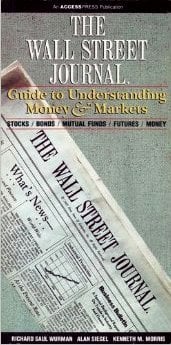

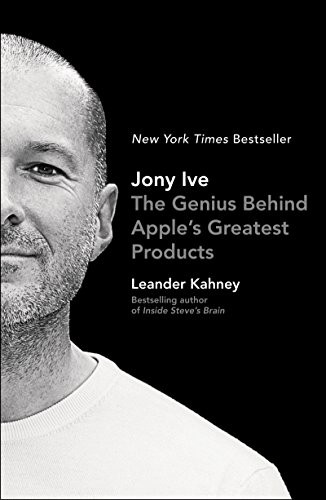
delivered
Get David's key takeaways from each episode delivered to your inbox.