Steve Stoute
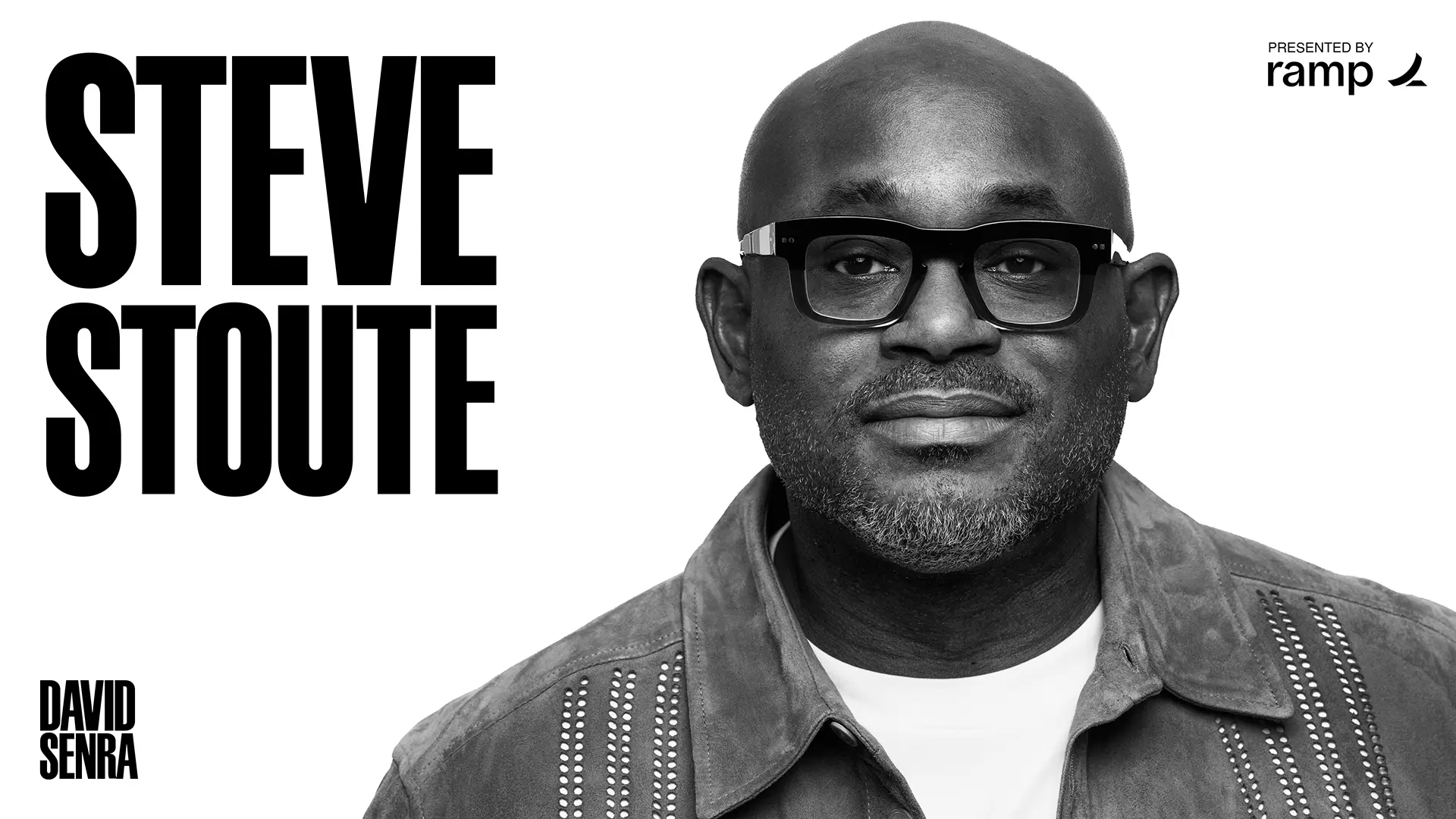
Steve Stoute is the founder and CEO of Translation and UnitedMasters.
Summary
Steve Stoute is the founder of Translation, the marketing company behind some of the most iconic brand work of the past 25 years, and UnitedMasters, the independent music distribution platform he launched in 2017.
Stoute grew up in Queens in the 1980s, where hip-hop was his entire world. He worked his way into the music business, eventually managing Nas and becoming an executive at Sony and then Interscope under Jimmy Iovine.
In 1999, at 29, he walked away from a $2 million salary to take a $150,000 job at the Arnell Group — trading income for education. He was there to learn the advertising business from the inside out. What he saw clearly was that Madison Avenue was using an old playbook, failing to see that artists were shaping fashion and other cultural trends.
Stoute brokered Jay-Z's S. Carter shoe deal with Reebok — the first sneaker deal for a non-athlete — helped launch McDonald's "I'm Lovin' It" campaign, and came within one meeting of signing LeBron James. He watched an 18-year-old LeBron walk away from a $10 million signing bonus to bet on himself. It confirmed everything Stoute believed: the world had already changed, and the old gatekeepers just hadn't caught up yet. UnitedMasters was built on that same conviction — giving artists ownership of their masters and a direct line to their fans.
Episode transcript
David Senra: Dude, I've been a fan of you for over 20 years, because I grew up listening to hip-hop, and everybody in hip-hop knows who you are, so I'm very excited to have a conversation with you.
Steve Stoute: Mm-hmm.
Steve Stoute: Yeah.
David Senra: One of the fascinating things that Jimmy Iovine told me about you was you made a very unusual decision coming out of a record label. Like, you could've started your own record label, and you said, "No, I'm not going to start a record label. I'm going to go full-on into advertising and marketing." Can you tell me about that?
Steve Stoute: It was 1999. And I get a lot of credit for seeing that whether it was Napster or MP3s were going to shift the music business from the CD. We started to see signs of it, but it was in the fledgling stages of that. So, I didn't quite see it. What I did see was an industry that didn't know the difference between good and great.
Steve Stoute: What I mean by that is that when an industry is booming, sometimes when it's booming because of the business model itself, mediocre gets rewarded. And then, over time, it catches up. But in the beginning, mediocrity is applauded and financially rewarded.
Steve Stoute: And I knew that because we were selling CDs for 16 dollars, and people were paying for it when there was only one song on the album. That wasn't going to sustain itself. Like, there was something wrong with that. Why would you pay 16.99, and you only liked the first single? And executives were getting paid tons of money on that idea, and they weren't even talented.
Steve Stoute: And I'm like, "This is going to have to cave in." Outside of that, what I seen was an advertising business that felt archaic. The advertising business at the time looked at the world through the lens of Black, White, Hispanic. And I'm like, "That's not the way people relate to products in marketing. It doesn't...
Steve Stoute: No one looks at them and goes, "Well, oh, they're speaking to me because I'm White," or like, "That's how I prefer to get spoken to because I'm Black." These things weren't real. And the music business did teach me that. The music business taught me that the idea that people listen to certain records had nothing to do with their ethnicity. DMX was selling in Iowa.
Steve Stoute: The radio station in Iowa didn't play DMX. Where Eminem was being purchased in Harlem. That had nothing to do with White and Black. But why were products treated that way? You know, when you want to sell a Cadillac to a Black person, you put a deep voiceover like, "The new Cadillac Escalade." Nobody wants that.
Steve Stoute: And Spanish people don't want an ad that just says, "Hola, da, da, da." Like, these things don't work. My whole idea was, why don't you just find shared values? Like, if you're an 18-year-old African American from Compton, and you're an 18-year-old White kid from Greenwich, Connecticut, and you like skateboarding, it doesn't make a difference if you just speak about skateboarding. You're both going to find the shared value in the culture of skateboarding. But this other thing that was happening just felt like it was dying. And I knew that if I got into that industry, I could make a difference.
David Senra: But what Jimmy, I think, admired most is that you didn't care what was expected. You didn't make the decision that everybody else was making, or a decision that was expected of you. It's like you forged your own path.
Steve Stoute: So, I'm giving you the rationale of how I seen it. The idea of seeing it that way and then jumping, and to go into a business in which you didn't understand, yeah.
David Senra: Exactly.
Steve Stoute: Look, I can reference a lot in the Jimmy podcast, not that I want this podcast to be the advertising for all your others, but you've had a lot of interesting people, and there is a lot of six degrees of separation in the way we think.
David Senra: Yeah.
Steve Stoute: When the unknown is a better option than the known, run in that direction. Run towards darkness. And the unknown was what I didn't know, right? The advertising business. But the known was this industry that was going in the wrong direction. In a direction where they were selling one song for a lot of money, they had a monopoly on the distribution of CDs, and they controlled radio and MTV.
Steve Stoute: And those things didn't seem like they were going to last forever. So, running towards the unknown became very easy, not because... Oh, and also because I was 29 years old, right?
David Senra: Mm.
Steve Stoute: And I didn't have a family yet. I didn't have kids. I'd already made a lot of money. I'd already done well. So, I wasn't needing money, and I didn't have a family that was reliant upon me to earn instantly. And if I didn't make that decision at that point in time, I would have never made it at all to change industries. F*** it. We're going in the advertising business.
Steve Stoute: And I had a big proof point. The proof point was when I was at Sony, I made the soundtrack. I was fortunate to make the soundtrack for the film "Men in Black." I had known Will Smith and his manager, James Lassiter, for many, many years.
Steve Stoute: And when they were making that film, they wanted to make the soundtrack. They were making it with Sony, who also distributed that film. I was a Sony executive, and they said, "Look, Stoute, you do this." I wanted to do it. I was excited to do it. And the song became a hit, right? "Here comes the Men in Black," with Will.
Steve Stoute: But what was bigger than the song was the glasses. And he said, "I make these look good in the movie." It was all in the music video. God knows what the impressions were when you measured that, if you measured it in today's sort of metrics.
Steve Stoute: And the glasses became contagious because of the popular culture impact of that song and that video. And I'm like, "If we're in the music business, why aren't we getting paid off those glasses?"
Steve Stoute: Ray-Ban has nothing to do with any of this, other than they gave Will the glasses. Like, why aren't we make... So, the guy in the company that did the product placement for those glasses, while I was thinking this, "He was trying to find me because he wanted to find the next thing that did that." And I was like, "If we can sell 14 million glasses or whatever the number was, I could do this shit all the time."
Steve Stoute: The idea that Jimmy was putting the Beats headphones in music videos was literally a derivative of that idea. I had seen that idea very early, and my peers and others in the industry would tell you that.
Steve Stoute: I've seen that. I was infatuated with the idea to the point that I left the industry to learn the advertising business, to understand the language, the dialogue, the people, the movers, the shakers. I wanted to understand that business. So, I immersed myself in it, not by studying it, but by quitting and doing it. Jimmy allowed me to do that. I had worked for him at that time. I had left Sony and had gone to Interscope. I'd done great work with Interscope.
Steve Stoute: Jimmy and I was close. He's a mentor of mine. And when I told him I wanted to do it, the deal was like, "Look, man, I got your back, but bring the deals to Interscope first." So, a lot of the early things that I had done were based around Interscope artists. And I mean, I got great stories about me, Jimmy, and Steve Jobs trying to bring... When I was working on McDonald's early around the "I'm Lovin' It" launch, we wanted to do this around the same time as iTunes was launching.
Steve Stoute: And the thing about Apple at that time, the stock was at 9 or 10. You know, it was like there. And you know, it was... So, in 2001, I don't like to go all over, Enron had just...
David Senra: Take this wherever you want, man.
Steve Stoute: In 2001, the Enron thing happened, right, where the CEO and the CFO, they no longer could... The CFO couldn't say, "Oh, well, the CEO told me to do it. That's why I did it." That was Sarbanes-Oxley, which came out of this whole thing. And everyone was scared about insider trading. So, I remember when we knew that the iPod was coming because of Jimmy's relationship with Steve.
Steve Stoute: We all wanted to buy a stock in Apple. And the stock was at 9. Not that we knew that 9 was cheap. We just knew that something good was going to happen. And we were all scared to death to buy stock in Apple. And we were like, "No, we're going to jail, and we're going to be Jeff Skilling." I'm like, "No, no, no, no." But back during that time, I was transitioning out, and the iPod launched before iTunes. People think they launched at the same time.
Steve Stoute: So, when iTunes launched, the one thing about Apple, at that time, is if they could put distribution, the expense of distribution to a third party, Steve was all about that. He was all about, "How can I find somebody else?" Remember, HP was the partner for the iPod. They're the ones who put it in all of the Best Buys and Circuit Cities or whatever the retailers were around the world. Apple didn't have the sales team to do that.
David Senra: And they didn't have their stores yet, right?
Steve Stoute: They relied on a third party to do that. They did HP. HP happened to be one of my clients, Carly Fiorina, at the time. And with iTunes, the same type of thing. Who could we get to distribute it? Jimmy was trying to get a deal done with Coca-Cola.
Steve Stoute: An executive at Coca-Cola, Steve Heyer, turned it down twice. I was representing McDonald's, and I had the idea that we're going to do the music meal. You know, Big Mac and large fries, or a hamburger, fries, and a song.
Steve Stoute: And McDonald's turned them down as well. The executive at McDonald's sort of was like posturing, and Steve went nuclear. I mean nuclear on them. I mean, at the time, he said some shit to them. I was like, holy shit.
Steve Stoute: It's like, you're in a meeting, and the meeting hasn't quite gone bad yet, but it's going directionally in a place where you kind of predict that it's going to not end correctly. And he's seen that coming, and he just said, "Man, don't you guys know you make food that kills kids?" It's like, "Oh, shit." Now, I'm a young executive trying to... I'm trying to do the right thing, I'm trying to come up.
Steve Stoute: Jimmy knows Steve Jobs. I got McDonald's. Jimmy and I have worked together. We're doing the tango. We're going to bring this McDonald's, iTunes, Apple thing together. And then he says that, and the guys at McDonald's are looking at me like, "You walked me into this shit?" And I'm like, "He's just playing, man. He don't mean that."
David Senra: Yeah.
Steve Stoute: Ugh, I remember that feeling at that time was like, "Shit, what the f*** am I doing?
David Senra: Did they try to kick Steve Jobs out of the meeting? How'd the meeting end?
Steve Stoute: Kick Steve Jobs out of the meeting?
David Senra: Yeah, I guess, yeah.
Steve Stoute: First of all, the meeting was at Apple. They weren't kicking Steve Jobs out of any meeting.
David Senra: So, we're actually going to do an episode with Ed Catmull, who's the founder of Pixar.
Steve Stoute: Yeah.
David Senra: And he worked with Steve Jobs for a long... I think he worked with Steve Jobs uninterrupted for like 24 years.
Steve Stoute: Yeah.
David Senra: And he tells a story, in his autobiography, "Creativity Inc.," about what a meeting with Steve Jobs is like. I think it was like Magnavox...
Steve Stoute: Of course.
David Senra: Yeah.
Steve Stoute: The Magnavox. They made video games, they made television...
David Senra: Yeah, and they used to have this commercial probably in, I don't know, maybe '80s or '90s, where somebody's sitting in a chair, and the music is so loud, it's blowing the guy's hair back.
Steve Stoute: Yeah.
Steve Stoute: Yeah, blowing.
Steve Stoute: Was it Magna... It could've been Maxwell.
David Senra: Or Maxwell, sorry, yeah.
Steve Stoute: The tape company.
David Senra: Yeah.
Steve Stoute: Yeah.
David Senra: That makes more sense. And it's like you remember that commercial? It was like, that's what it's like being in a meeting with Steve Jobs. He's just so overpowering. He's such a force of nature that kind of blows you back in your chair.
Steve Stoute: Look, I didn't have the exposure to Steve Jobs like that. I was in, maybe, two meetings with him where, I mean, like real meetings where there was feedback and that kind of thing. And that was that. I mean, I'm close with Eddy Cue, and he tells amazing Steve Jobs stories, along with Jimmy. That was just my version of getting a taste of it, and it was like, "Holy shit"
David Senra: I want to tell you about the presenting sponsor of this podcast, Ramp. I have been reading a lot about SpaceX lately. SpaceX is one of the most valuable private businesses in the world, and one of the main themes in the history of SpaceX is constantly attacking and questioning your cost. Ramp helps many of the most innovative businesses in the world do exactly that.
David Senra: The median company running on Ramp cuts their expenses by 5%, and one thing SpaceX has demonstrated is that a religious dedication to controlling costs can help actually increase revenue, because you can pursue opportunities you couldn't otherwise. And we see that in the Ramp data, too. The median company running on Ramp also grows their revenue by 16%. So, when you're running your business on Ramp and your competitors are not, you have a massive competitive advantage that compounds over time.
David Senra: Ramp is the only platform designed to make your finance team faster and happier. Many of the top founders and CEOs I know run their business on Ramp. I run my business on Ramp, and you should, too. Go to ramp.com to learn how they can help your business save time, save money, and grow revenue. That is ramp.com.
David Senra: I found one of my all-time favorite quotes when I was reading the book "Zero to One." The quote says, "The single most powerful pattern I have noticed is that successful people find value in unexpected places. And they do this by thinking about business from first principles instead of formulas." That is exactly what AppLovin has done with their advertising platform. AppLovin connects you with over a billion potential new customers inside mobile games.
David Senra: AppLovin allows you to capture undivided attention. AppLovin ads are full-screen video ads that are watched for an average of 35 seconds. That is retention that blows other ad platforms out of the water, and you can launch on AppLovin in minutes. You set the goal, and AppLovin achieves it. There's no complex setup, no expertise needed, and AppLovin scales quickly. They can put your ads in front of over a billion potential customers.
David Senra: Other businesses have seen immediate results, have scaled to hundreds of thousands of dollars of spend per day, and increased their revenue by millions. So, you want to get started quickly before all of your competitors are on AppLovin. And you can do that by going to applovin.com. That's applovin.com.
David Senra: Going back to the Ray-Bans, so you were at Sony when you're...
Steve Stoute: Yeah.
David Senra: Is that the first time that you're like, "Oh, wait, wait. You can translate cultural influence to sales, like business success"? Is that the first time where it clicked? Or was there something that happened before that?
Steve Stoute: I had known it intuitively growing up in Queens, and being around hip-hop my whole life, much of my... You know, when I was 16, it was 1986, when Run-DMC performed at Madison Square Garden, and it was Fresh Fest. It was like a sort of the coming-out party of that hip-hop, could have actual rock stars.
Steve Stoute: So, that was my wheelhouse, and the only reason why I wore Adidas Shelltoes was because of them. Like, we knew that. So, it wasn't like it was a new idea or Grand Puba advertising for Sprite, which was amazing. Amazing.
David Senra: Wait, did you do that deal or was that before you?
Steve Stoute: That was way before me, but I remember when he said the line, "First thing first, obey your thirst," and he talked about Sprite. You've seen these things, or St. Ides Malt Liquor. You used to look at these ads with Ice Cube and St. Ides.
Steve Stoute: These things were so powerful that hip-hop would be working with these brands, and it would influence urban culture immediately. And when I talk about urban culture, I'm talking about dense cities, not even Black kids. I'm talking about just the dense inner-city. I use it as a measurement of the space, density of people.
Steve Stoute: They would gravitate towards these products that these artists talked about either in their music or did blatant ads for. So, by the time I had gotten to Will Smith and "Men in Black," I mean, I had seen it for 25 years. But it still wasn't mainstream culturally impactful yet, for reasons that I still don't understand. Like, it was very clear and obvious.
Steve Stoute: But like most things, when the alternative is working, when the incumbent can still rely on the old business practice, they won't disrupt themselves. They'll just keep doing that, right? Why would I invest any money in understanding hip-hop when Kenny G is still selling? I mean no disrespect to Kenny G. Michael Bolton is still selling, whatever it may be. But if those things are still working, you're not going to pay attention to Wu-Tang.
Steve Stoute: You're not going to pay attention to things like this. Or if you're still selling in a world in which you can say, "I'm going to target white consumers." I used to talk about this all the time, like Black consumers are the best consumers in the world because they buy products that aren't marketed to them.
Steve Stoute: I grew up in a world where I'd see African American women buying products, L'Oréal products, in which there was only white women with blonde hair on the box, or on the commercial, and African American women would buy it. Or the same thing with African American men. And people took advantage of that.
Steve Stoute: But when brands leaned into being authentically connected to where culture was, which also spoke to those segments, they were taking market share. They were taking that attention. So, to me, it was just a matter of time before it tipped, and that became the new marketing paradigm. And that's why I called my company "Translation," because I wanted to translate that cultural insight for Fortune 500 companies. And the first company that gave me a shot, that's still my client today, is McDonald's.
David Senra: Okay, so this is what I was curious about. So, you're at Interscope. What are the assets that you have when you start Translation? So, you're young. You don't have a family. You can take more risks. You have an insane network. You've already been... You were managing Nas at that time. What were the non-financial assets you had going into this, like jumping into a new industry?
Steve Stoute: When I first left, remember I said I learned first, right? Before I started Translation, my marketing services company, I learned and I worked as an intern at a company before that.
David Senra: Which one was this?
Steve Stoute: It's called Arnell Group.
David Senra: Okay.
Steve Stoute: Right, so I worked at this company. Not worked at, I became partners with. When I left the record business, I was making a couple of million dollars a year at 29, and I went into an agency in which I got paid 150,000 dollars and 20% equity. I didn't necessarily understand the value of equity at all. I certainly understood 150,000 was a lot less than two million, two and a half million.
Steve Stoute: But I wasn't even betting on the equity, man. I was really betting on the education. I sincerely mean that. I did not know what was going to happen at all. But I knew I was going to learn. That was the period in which I had gotten exposure to certain clients like McDonald's and Reebok.
Steve Stoute: So, at Reebok, that was a client when I was partners in this agency, I'd met Adam Silver at that time, who was the deputy commissioner of the NBA, because we were doing all the marketing. Reebok had the license for the NBA, and I was doing all the marketing around the throwback jerseys. And then, I was seeding them, and all the artists back then were wearing throwback jerseys. So, it became this really big deal, like, "Wow, this guy knows what he's doing. He has..."
Steve Stoute: That's where the market was going, but I had gotten a lot of credit because it was just selling like crazy, and Reebok was the beneficiary of it as the NBA licensee. They were the NFL, and the NBA licensees at the time. A gentleman by the name of Paul Fireman was the founder of Reebok, who did an amazing job. He trusted me and put a lot of investing behind my ideas.
Steve Stoute: And then, the thing that was the loudest was this idea that every artist wanted to be a basketball player and every basketball player wanted to be a rap artist. And I came up with this platform called "The Sound and Rhythm of Sport." And we made this commercial for Reebok with Allen Iverson and Jadakiss, and it was explosive. And I had Hype Williams, a music video director, shoot it.
Steve Stoute: And no one thought... It was like, this sounds crazy today, I mean, to think, but it was like, how could Hype Williams, a music video director, shoot a TV commercial? I'm like, "I don't even know what you're saying." It's not a TV commercial. It's entertaining content, whether it's a music video, right, which was "Men in Black," or a 60-second same idea, but you call it a TV commercial only because you run it on television, not because the format is different, just because you're running it on television.
Steve Stoute: So, music videos ran on MTV, but if you took the music video off MTV and made it a 60-second spot, just run it on television, it's a television commercial.
David Senra: I heard you six years ago, you're like, "Everything is advertising." That you jumped to advertising earlier. People thought you were bugging. That's the term you used.
Steve Stoute: Yeah, bugging.
David Senra: You were like, "Everything is advertising." I just talked to Brian Armstrong about this, founder of Coinbase.
Steve Stoute: Yeah.
David Senra: And he said the same thing. It's like, "Everything is marketing." It's just like, you have to entertain or get people's attention, and then you get a message across that serves some kind of thing that you want to happen in your business. In his case, the new products that Coinbase is building or the financial performance of the stock, whatever the case is.
Steve Stoute: Yeah.
David Senra: But I love that you're like, "Everything is advertising."
Steve Stoute: Again, at that time, it was just... You know, when you're trying to explain something that you fully don't understand, but you just know it's instinctively correct, it's hard to get people to buy into it because they're like... Most people are risk-averse, so it's like, "What are you talking about?" Why would this guy be able to shoot a TV commercial? He's never shot one. I'm like, "Because it's the same thing."
David Senra: I mean, what is a music video? It's an advertising for a song.
Steve Stoute: It's a TV commercial for a song.
David Senra: Yeah.
Steve Stoute: If you run it on television, right? So anyhow, we shot this content, as we've evolved, and it blew the f*** up, because it was Jadakiss rapping to the sound of a basketball bouncing, and Allen Iverson can dribble a basketball and make it sound like a beat.
Steve Stoute: So, it sounded just like any other hip-hop beat, but it was literally a ball bouncing while this guy rapped over it, and the commercial was beautiful. And it was boom. And that changed the trajectory of Reebok, and when that happened, that was a big deal. And then, I started doing artist deals around sneakers. I did the Jay-Z S. Carters.
David Senra: But that's the first ever non-athlete shoe deal.
Steve Stoute: Yeah.
Steve Stoute: Yeah.
Steve Stoute: Yeah. Yeah.
David Senra: This is, again, why I wanted to talk to you. You just see stuff before anybody else.
Steve Stoute: Yeah, we did that. We did the, the G-Unit. 50 was just hot at that time.
David Senra: What was the marketing? And you guys did something smart, if I remember correctly. Like, didn't Jay put out a mixtape around...
Steve Stoute: Yeah.
Steve Stoute: Yeah.
David Senra: It was like, the S. Carter...
Steve Stoute: We did the S. Carter mixtape, which was a mixtape around the sneaker, marketing the sneaker, the S. Carters. Then we did a commercial with 50 and Jay-Z. No one understood it at the time. Like, why would you be doing this? Why are we spending money on this? And I'm like, at the time, all I could say to them was like, "It's like a commercial. Imagine trying to sell a product to housewives, to women overall, and you got Martha Stewart and Oprah. That's what this is." This is like the equivalent of that level of power between these two guys.
Steve Stoute: And that's the only way I could explain it to somebody who didn't understand it, you know? And the S. Carters were big, the G-Units were big. Then I did the Pharrell sneaker, and Pharrell would tell you that was his foray into footwear, and he gives me a lot of credit for his path into design, because I gave him that opportunity very early.
Steve Stoute: What was clear was that Nike wasn't doing lifestyle at that time. They just thought "Just Do It" was all about athletes and performance. So, what I was trying to do was tap into the truth, which was people were wearing sneakers not to perform at all, just so it could match their hat, their shirt, that other thing. It was fashion. So I just started choosing guys that didn't want to work out or run or jump at all, Jay-Z being the number one version of that.
Steve Stoute: Right? He doesn't give you the athletic vibe, right? He gives you the vibe of like, "I'm chilling." And then it was 50, and then it was Pharrell, and it was all just playing along the lines of fashion.
David Senra: Dude, how many people are wearing Jordans that are not playing basketball in them?
Steve Stoute: It was the only white space left, because there was no way I could market Reebok as the agency of record at the time. I told Paul, I went like, "Mr. Fireman, there is no way I can convince a 16-year-old they can jump higher or run faster than Nike and Reeboks. Like that's not happening. Okay? So, let's go into the other thing, which is the non-performance stuff."
Steve Stoute: And it got so hot that we got a chance to go into the performance business again, and we were trying to sign Kobe, and I have great stories of pitching Kobe. First of all, I signed Kobe to a record deal, a recording contract, when he was a rookie, and then we pitched LeBron. That's how LeBron and I became good friends to this day. When we pitched LeBron, and he... There's a famous story of LeBron.
Steve Stoute: We're pitching him for Reebok. They sent a plane. Everybody wants to sign him. I tell Paul while he's coming in from Akron, we're flying from New York to Boston to meet him there. And I'm like, "Paul, we do this in the record business and it works. You give an artist an advance, and you give it, you bring the advance right there."
David Senra: Like, in cash, in a duffle bag?
Steve Stoute: Well, that has been done in the music business, but this was going to be a check. And I've seen Paul f******, this was some balling shit, call his wife because he couldn't get the company to get the check, and his wife wrote a personal check for 10 million dollars. And the driver, when we landed, had the check.
Steve Stoute: We went to the meeting, and Paul says, "LeBron, I know 100 million dollars. Adidas is going to offer that when you go see them next, and then Nike's going to offer that when you see them. I'll match that deal and give you a 10 million dollars signing bonus right now to not take those meetings. That's the number. We'll give you the number plus the 10 million dollars." So, Paul took my advice all the way. LeBron, he's going back. He has to be in homeroom the next morning, okay?
David Senra: He's in high school, right?
Steve Stoute: He's in high school. He's going back to homeroom the next morning. He's in there with his mom and his team, his agent, at the time, but he's clearly... LeBron James, he's making the decision.
Steve Stoute: We leave the meeting. He asks for some room. We leave the boardroom, Paul and I. We go to the other room. We're like, "Oh, you think he's going to do it?" I'm like, "Man, I think so. Like, it's 10 million dollars, man. The guy... But we're paying him exactly what he's going to get paid. We're not... This is just a bonus. This is not coming from the money. This is a signing bonus to sign it now, and not take the other meetings."
Steve Stoute: We come back in the room. This 18-year-old kid says, "No, I'm betting on myself." He didn't say that, but we knew that. He was going to take the other meetings. He walked away from 10 million dollars, a check signed to his name, to go back to the projects in Akron and back to homeroom. I applauded him because I knew at that moment in time that the world had changed.
Steve Stoute: When a young African American that was in poverty knew that his talent was bigger than that check, it taught me a lot. It taught me a lot about where the world was going, and that we were already there. And it's something that I'm proud of him for to this day. Not that Reebok was the bad choice or anything like that. It wasn't even about that. It was the fact that he believed in him more than the money at that moment in time. That was a big shift for a community of people.
David Senra: But I think that's one of the main themes that runs through your entire career, is you're encouraging other people around you to bet on themselves. Even the story you told about the Ray-Bans, we sold the glasses. We didn't get anything for it.
Steve Stoute: Yeah.
David Senra: Like, I read Andre Agassi's phenomenal autobiography called "Open," and he goes out one night, is hungover, and he's a wild boy, and he winds up playing a tournament the next day. Wins the tournament, but he's wearing Oakleys, like the crazy multicolored ones.
Steve Stoute: Yeah.
David Senra: And just because his eyes are bloodshot, he's hungover, right? He wins the tournament. There's a crazy photograph that gets put on the cover of "Sports Illustrated." He winds up selling a ton of Oakleys. Did he get equity in Oakley? No. You know what he got? He got a Dodge Viper sent to his house by the founder of Oakley. So it's like, if that guy bought you a 60,000 or 80,000 dollar car, how much money did he make?
Steve Stoute: Yeah.
David Senra: And so, your whole thing is just like, why are you giving it away? This is very entrepreneurial.
Steve Stoute: Because it happens all the time, again, when the incumbent is already making money doing what they're doing. When you're making all this money, if you're in the record business at that time, think about this.
Steve Stoute: The music business used to sell singles, right? So, you'd buy the single for 4.99 or 3.99, and then, the single was a way to get you to ultimately buy into the artist for a less expensive price, and then ultimately, when they drop the album, you'd buy the album. When the CD came, they didn't even f*** around and sell singles no more. They removed the single.
David Senra: The single was on cassette?
Steve Stoute: The single was a cassette.
David Senra: Okay.
Steve Stoute: Or a 45 or before that, but it was a cassette. So, when they stopped selling singles, they wanted the artist so badly that one song, one music video... You heard "Hot in Herre," and you've seen that video, you're 16.99. Without even knowing what song number two, three, four, five, six was. You didn't give a f***. And the industry took advantage of that. What's the first single?
Steve Stoute: Let me tell you what happens in that environment. You spend all your time making one single, the rest of the album... Right? So, the creativity suffers because they're buying it anyway, so let's just try to make the first single. What's the thing that's going to work on MTV, and what's the thing that's going to get on radio? That thing. In fact, a lot of artists would make an album, and then go to all the top producers just to make the first single.
Steve Stoute: So, they'd make a whole album with one guy or two guys, and then go to one specific person to make a song that was the radio record. And that song could sound like nothing else on the album.
David Senra: Mm.
Steve Stoute: They didn't give a f***. They just wanted to sell, obviously, the thing, and it worked. So, when you're making that margin on that product, the last thing on your mind is who's making money off the glasses? All of the shit that's being sold in the music video. What are the other businesses that we should be building on the back of this because we're giving it away? And that's what Jimmy talked about. Why don't we own the end customer?
David Senra: Why don't we build businesses with the artists?
Steve Stoute: Why don't we build business with artists? When I first started UnitedMasters, my music distribution company, the first thing I tried to do, the only thing I wanted to do, was build a universal, a record company agnostic CRM system. My whole idea was, if anything else, you go on Amazon, it's like if you buy this, then you buy that, right? So, if they're selling you toilet tissue or whatever, they're selling you the next thing, there's a plunger, there's this.
Steve Stoute: There's other things that have associated with that product that you just bought. My whole thing is that if you listen to "Yeezy," "Yeezus," the Kanye album, "Life of Pablo," 30 times, why ain't the next thing I'm referring to you a pair of Yeezys or a hoodie that he made? It's not that.
Steve Stoute: And the record companies and the artists had no CRM tools. Every other product that I've seen, digital product, you found a way to go, okay, the margins are going to be a lot lower, but the remarketing is going to be cheap because I know who the customer is. So, even if I make this amount of margin on the first transaction, the fact that I now have your name and your taste, I can sell you the next product, and this is what you talk about that you learned Jeff Bezos knew about selling windshield wipers.
Steve Stoute: Once you bought on the platform, and he had your intelligence, your information, he could find out what else you wanted, and he could speak to you directly. The record business doesn't own their customers at all. I mean, at all. I have a theory around this, at least as of late. If the artists knew who their fans were, they wouldn't need a record company at all.
Steve Stoute: If you're an artist, and you have 200,000 people who love you, you know how much money you can make with those 200,000 people selling them higher margin items or selling them the music, and then, the higher margin items like hoodies and T-shirts and merchandise and other things that go back to the essence of why they fell in love with you in the beginning?
Steve Stoute: When the record companies cut the deal with Spotify, and this whole 70-30 split, they had all the leverage in the world. In fact, they took equity in Spotify. The record companies own a piece of Spotify. It was a big thing that came out that's like, was that value passed along to the artist who was the leverage that they utilized in order to get that equity?
Steve Stoute: But putting that to the side, rather than negotiating the equity, why wouldn't you renegotiate the access to the data, the real access to the data, so that the artist would know. If you listen to that... If Taylor Swift has a fan that listened to her album 700 times, why wouldn't Taylor Swift be able to communicate directly with that artist to sell them the ticket directly, sell the fan the gear directly?
Steve Stoute: The record companies, I believe, never negotiated that when they had that leverage, because they didn't even want to have to share that information with the artists. Time has passed, and maybe there's privacy laws around it, but they could've still had the option to opt in. Do you want Taylor Swift to be able to contact you? F*** yeah. F*** yeah. Do you want Kendrick Lamar to be able to contact you? F*** yeah. Beyoncé? Hell yeah.
Steve Stoute: But they didn't negotiate that because they knew they would have to share that. And once the artists had direct connection to their fans, record companies would then become obsolete. I was trying to build CRM tools for the artists, so like any other brand would have CRM tools. These CRM tools would allow you to navigate with your customer, and that you could be able to manage that relationship.
Steve Stoute: The rude awakening was there is no data to be gotten. There's no data to be gotten, meaning that the data source, Spotify or YouTube or whatever it was, were not going to ever give you the user IDs, right? So, on a...
David Senra: Apple wouldn't either, right?
Steve Stoute: No. Or Apple, no.
David Senra: Yeah.
Steve Stoute: They're not going to give you the user IDs. So, it's not like if that phone downloaded something, or streamed something X amount of times, I wouldn't be able to send an advertising directly to that phone. They wouldn't allow you to do that. Years later, there was a law around it, GDPR, that talked about this, so that definitely got in the middle of this, and it was around Facebook, and voting, and things of that nature that sort of brought this to light.
Steve Stoute: But prior to that, if it would've been shared, and the artist had an opportunity to get that intelligence, and the fans had a chance to allow the artist to get an opportunity to that intelligence through those platforms, I think we'd be talking about a completely different industry today.
Steve Stoute: When I was building UnitedMasters, and I started in 2017, the idea about building an independent distribution company was driven by the premise that the record business at one point, for decades, since its inception, was you have to find a record company in order to find an audience. You get a record deal, we control radio. We're going to get you on the radio.
Steve Stoute: We're going to get you on MTV. Oh my God. Because trying to get on MTV and radio, if you didn't have a record company at a point in time was almost impossible. Since this whole digital content revolution, artists would find audiences before they found a record company. So, if they found an audience before they found a record company, why would they have to give over their rights?
Steve Stoute: Why would they have to sell off their name, image, and likeness in perpetuity to somebody because they gave them a half a million dollars when they were 18-19 years old in the beginning of their career? So, we started UnitedMasters with the premise to invert the economics so that the artists got the lion's share of the economics because they actually did the work.
David Senra: They kept the ownership. That's why you called it UnitedMasters.
Steve Stoute: Yeah. You got it. And Ben Horowitz was a big supporter of that in the beginning. Tim Cook strongly believes in that. Tim Cook is a big believer. It's the Apple ethos to support, and give the creative tools. They believe in that. Whether it's an architect, a designer, or artists themselves, they believe in that at its core. So, it's not like it's an idea that doesn't have massive support behind it.
Steve Stoute: But it takes a generational shift because the artist, for so long, it was a Stockholm syndrome. They're stuck in these deals. They believe that if I'm signed to a record company, A, I'm going to get a lot of money. They're going to make me global. I'm going to get awards, and recognition around it, so I'm going to keep doing that.
Steve Stoute: Then you have another generation of artists that are coming up right now that are like, "Are you f****** crazy? I own my shit. I market myself anyway. These guys don't do anything for me, at least I don't believe they do. I rely on myself first and foremost. I'm the best marketer of myself. I'm the best marketer to my audience of myself than anybody else can do, a third party can do. So, I'm betting on that." So, you have artists, independent artists right now that are blowing the f*** up, that are doing really well.
Steve Stoute: We have an artist on UnitedMasters, BigXthaPlug, he's made 20 million dollars this year. I mean more, more, more. And it's his, and he owns this, and it's something that he can give to his family, his kids. He owns it. This idea, when you've seen years ago, people ask, like, when Prince wrote slave on his face. Prince changed his name from Prince to a symbol to get out of a contract because Warner owned his name, image, and likeness.
Steve Stoute: So he said, "If I change my name to a symbol, doesn't that navigate me out of the contract that I signed?" He wrote slave on his face. One of the most successful artists of all time wrote slave on his face because he knew that I don't even own the shit that came out of my brain.
David Senra: That's crazy.
Steve Stoute: When you explain this to technology companies, I explained this to... Larry Page was the first guy that invested in UnitedMasters. I said, "Could you imagine if every time a seed investor came in, they actually owned the IP, and intellectual property? They owned it?" That's what it is in the music business. The guy comes in first and gives you a check for half a million dollars. He owns your name, and image, and likeness. You can't be f******. That can't be real. I'm like, "I swear to God that's real."
Steve Stoute: That's why these artists, at the end of their career, they die broke, because they don't own anything. It's owned by the person who discovered them. It's not owned by them. Even though, they have the unique gift to create something that others can't, they don't own it.
David Senra: They actually have the thing that's rare and therefore valuable.
Steve Stoute: Yes. And why I love where we are today, and the democratization that digital has provided is that an artist can now, and not only musicians, artists, painters, like I'm a painter, I draw. Substack, I'm a writer, I'm a journalist.
David Senra: Podcasters.
Steve Stoute: Podcasters. Like, I don't need the publisher to be a third party that owns this anymore. I can find an audience on my own. And the power in that and the economics in that, and the long-term value of that is something that we've never seen before in the hands of the actual creatives.
David Senra: Deel is how the best founders turn the world into their talent pool. I've been studying how history's greatest founders operate for a decade, and one thing they all have in common is they understand that recruiting and hiring the very best talent is your most important priority. A players recognize other A players, which is why top companies like Ramp, Shopify, ElevenLabs, Uber, and DoorDash all use Deel. Many of the top founders I know have personally invested in Deel after using their product, and what they discovered is that Deel is the best company in the world at building infrastructure for global hiring.
David Senra: Deel will help your business hire, pay, and manage any worker anywhere in the world so you can retain the best talent anywhere, and spend the rest of your time focusing on what you do best, delivering value to your customers.
David Senra: The founder of ElevenLabs has a great description of the value Deel can give your company. He said, "We built ElevenLabs to break down language and communication barriers. With Deel enabling us to hire and support exceptional talent anywhere, we can accelerate our innovation and bring more voices, stories, and ideas to every corner of the world." Deel is trusted by over 40,000 businesses. Learn how they can help your business today by going to deel.com/senra. That is deel.com/senra.
David Senra: There's a long history of the music industry, executives in the industry essentially f****** over the artists. I read Jay-Z's fantastic book, "Decoded," and he talked about reading this book called "Hit Men."
Steve Stoute: Yeah.
Steve Stoute: Mm-hmm.
David Senra: And I think it was all the stuff crazy shit going on in the '70s and '80s.
Steve Stoute: Yeah.
Steve Stoute: Yeah, yeah, yeah.
David Senra: And he's like, "Okay." I was...
Steve Stoute: No, '60s. '60s.
Steve Stoute: Yeah, '50s, '60s, '70s. It's a crazy book.
David Senra: And so he's like, "Oh, I get..."
Steve Stoute: You have to read that book. It's almost like reading, it's like the book they turned into "Goodfellas."
David Senra: Really?
Steve Stoute: That's what it feels like when you read it. What was the name of the book that turned into "Goodfellas," the movie?
David Senra: I don't remember. But Jay-Z's point was just like, all it is, like... I just read the book. I'm like, "I'm going to avoid that."
Steve Stoute: "Wiseguy."
David Senra: Okay. Jay-Z's like, "I read the book, and I'll just avoid doing that," and then he came into the game independent. I think the founding of Roc-A-Fella.
Steve Stoute: Mm-hmm.
David Senra: So he got it, and he got it back in what, '96? How the hell are you still telling this story in 2000...?
Steve Stoute: Hold on, wait. Timeout. Jay got it because he was turned down. Record companies wouldn't sign him.
David Senra: Okay.
Steve Stoute: A guy that talented, they wouldn't sign him. He had no choice but to go independent. He figured it out, and then when he got independent, he obviously figured it out. Master P figured it out. Cash Money figured it out, to a certain extent, because there's different versions of this. There's different versions of guys figuring it out. There's a figuring it out where you're like, "I own the whole f****** thing. It's mine, and you're my partner, and I pay you a percentage, right?"
Steve Stoute: Then there's a version of it like, "Look, I'm not going to allow one contract to hold everybody," which was Wu-Tang's thing. The RZA had a record deal, and it didn't work. Then he came back, and invented this thing called Wu-Tang, and he made sure that he did not sign what he had signed prior, when he was Prince Rakeem, an artist.
David Senra: What was the difference?
Steve Stoute: All those artists could be allowed to sign. Wu-Tang was signed in one place, but the artists had the right to sign in different places. They weren't stuck under one agreement, right? So, what happened in the record deal, like if I sign the group, that if anybody in that group ever went solo, they also had to be with me. That's what record companies deals looked like at the time.
Steve Stoute: So, if I signed you in a group, if you decide to break off from the group, you're with me first. When he did the deal immediately with Wu-Tang, none of them had to sign with the record company that originally, BMG, RCA, which originally gave them the deal. That was a breakthrough, that guys got hot off the album, the Wu-Tang album, and then was signing deals in other places. People had never seen that before. And then when you seen Master P, No Limit, this was independent and putting out number one top five records every week, and talking about how much money they were making and selling records out the trunk.
Steve Stoute: It was like, what are they doing down in New Orleans? These guys were finding ways in resourceful manners, and were making a ton of f****** money.
David Senra: But how did they get in? How did they get on radio or MTV if they were independent?
Steve Stoute: This idea, the power of emerging subculture, they were building something on the way up. Remember, man, if you get 200,000 people who love you, the amount of money in that is tremendous, and they grow with you. They didn't need MTV and radio at the time. They may have had a local radio station. They were down in New Orleans.
Steve Stoute: They had a community of people who bought into this idea, and they were building No Limit Records, and that contagion and growth kept going throughout the South. And at some point, MTV had to play it. You couldn't be left out. Right? So, it wasn't about you needed it at some point because it was so popular, versus it needing you to break.
David Senra: Okay, so this is the difference between, like, top-down. Record companies at the time, they're like, "We have these relationships with national radio, and MTV.
Steve Stoute: Yes.
David Senra: We're going to make you a star. We're going to push it from the top down."
David Senra: Master P and these other guys, they did bottom up. I remember hearing Sean Parker on an interview one time, and he said this unnamed record company executive was just like, "Give me anybody in the world, even if they're not talented, and with enough push behind them, I can make them a popular musician." Basically, he's saying they controlled the system. It was like a whole collusion.
Steve Stoute: They did control the system.
David Senra: Yeah.
Steve Stoute: They control radio.
David Senra: Is this related to what you were saying earlier, how mediocrity was famous...
Steve Stoute: Rewarded.
David Senra: Yeah.
Steve Stoute: Look, and I'll use references like I said, Kenny G, who's a great musician, or Michael Bolton. And sometimes I just say these things because I know it brings shock value, but just to make the point. I shouldn't know the Britney Spears song "Oops! I Did It Again." There's a lot of NSYNC songs I shouldn't know, but they were pounded in your brain. You couldn't avoid it, because MTV and radio, local radio, they had a monopoly on it.
Steve Stoute: So, all of a sudden, you started listening to this music. By the way, I grew up my whole life thinking Hall & Oates was Black. Because you would listen to his songs, and they were like... There were a time in the '70s where there were no music videos, so you would hear the voices, and a lot of these artists were trying to sound African American or, R&B artists. So, you would hear it, and you'd be like, "I guess they are Black," and then you find out, obviously they were not.
Steve Stoute: But when they control the system, they could push something on you, and the power of repetition will force you to have some recall. Whether you like it or not, now that's a whole another story, but the awareness is more than there. And if I got a 50/50 shot because you already heard it, I love those odds, versus the shot that you never heard it at all.
David Senra: Yeah.
David Senra: Repetition is persuasive. So again, I think we both have a love of... I love to study the advertising industry. And I'll go back to the early 1900s, when it was just copywriters were the best advertisers. But even if you think about the '50s and '60s, when they're building all the massive advertising firms, the global advertising firms on Madison Avenue, it's like they all talk about this for 100 years.
Steve Stoute: Yeah.
David Senra: You're not repeating your ads enough. Repetition is persuasive. Do it over and over and over again. If you see all the deals we do with our partners, I don't... You can't buy an ad on any of my podcasts, a single ad. You're doing at least a year, in many cases, many, many years.
Steve Stoute: Yeah.
David Senra: You have to repeat this. It's so important. So, going back to you're realizing, hey, what is the purpose of a record label? You're essentially creating almost a record label infrastructure in UnitedMasters, or through UnitedMasters, but the artists maintain ownership.
Steve Stoute: Yeah.
Steve Stoute: Yeah. Yeah.
David Senra: So, you're taking the parts like, "You guys can market better than we can. You have control." I've watched all your interviews. I love Russ, the rapper Russ.
Steve Stoute: Love him.
David Senra: You've done a bunch...
Steve Stoute: Dope.
David Senra: Yeah.
Steve Stoute: Dope.
David Senra: I've taken so many ideas.
Steve Stoute: He's so f****** good.
Steve Stoute: By the way, he's so... The way he explains it, his passion around it, dope as f***.
David Senra: And I've taken ideas from the way he markets his music to the way I run my podcast. I don't see any barriers here. It's the same thing, whether you're a filmmaker, you mentioned a writer earlier, a rapper, a podcaster, a founder.
Steve Stoute: Yeah.
Steve Stoute: Yeah.
David Senra: It's all the same thing.
Steve Stoute: Painter.
David Senra: Russ is a rapper, but he's really an entrepreneur.
Steve Stoute: 100%.
David Senra: His product is...
Steve Stoute: He is.
David Senra: Yes.
Steve Stoute: First of all, A, he is an entrepreneur, like, full stop, a good one, a really good one.
David Senra: We should tell people that don't know. He's the first person in history to a single person that wrote, recorded, engineered, produced, mixed, and mastered an album that got a billion streams.
Steve Stoute: Hey!
David Senra: A single person.
Steve Stoute: I don't know all of the stats around him as an artist. Him as a business person, and the way how prolific he is at explaining his business, and the amount of songs he puts out, knowing that, if you don't like this song, I may put out 12 songs, and then you like the 13th song, and then all of a sudden you like song number one, and then his whole catalog.
Steve Stoute: When he was explaining that in the beginning of his, you know, of my sort of entering his journey, I was just blown away by how prolific he was as a business guy to explain it. And then, Chance the Rapper. There were a lot of guys that took independence in the whole digital era, and took it and turned it on its head, and they were proud about it. I don't want a record deal. Are you f****** crazy?
Steve Stoute: You can't give me 200 million dollars. You can't buy me out of this shit. That was a next step. When I just talked about LeBron James saying, "I wouldn't take the 10 million dollars," that's Russ saying, "I wouldn't sell my publishing for 200 million dollars." Right? You start to realize the power of ownership.
David Senra: There's a funny story I got to tell you about Russ, and he might have said it to you on the interview you did with him, which again, both of them were excellent. When his business manager said, "Hey, this company wants to buy your catalog," he goes, "I just need to know the number. You obviously know the answer is no. I just want to know the number so I can put it in a song. I can rap about the fact that I turned down this much money."
Steve Stoute: Yeah.
Steve Stoute: Yeah.
Steve Stoute: LaRussell, Russ, Tobe Nwigwe, BigXthaPlug, Larry June. There's Brent Faiyaz. There's so many artists that your audience may not even know the name. They're making so much money because they're independent. And now, you're watching the artists that were signed for many, many years. Usher's an independent artist now. Usher's independent. Usher was the first independent artist to play the Super Bowl. Then Bad Bunny. Bad Bunny's an independent act.
David Senra: Are you serious? I didn't know that.
Steve Stoute: Yes, he's signed to Rimas. Bad Bunny's an independent artist. These guys are making a fortune. They own themselves. That's the future of the music business. That's the future of all of these media businesses. You own this podcast. What does it mean? The power of that. F****** look at Joe Budden. When I talk about Russ, I think about Joe Budden, too. Joe Budden walked away from a lot of money, man.
Steve Stoute: And forget me and going into the advertising business, this guy left a rap career. Whether he left the career or the career left him, he went into the podcast business very early, and he's done an amazing job. And then he turned down Spotify, and went to Patreon because he wanted to work directly with fans. He's like, "I don't want any obfuscated version of money. I want to get paid exactly what I deserve because I have the audience who pays me directly," and he uses Patreon.
Steve Stoute: These are great things that are breakthrough in business models. I look at all of these artists as solo entrepreneurs, as SMBs. The SMBs that used to be flower shops and bodegas and this, that, and the third, are now streamers, independent artists, influencers, podcasters, vloggers, and writers on Substack. They're the new SMBs. And I don't think industries has caught up to that idea yet.
Steve Stoute: I don't think the insurance companies understand it. A lot of the new fintech companies understand that, but there's so many incumbent industries that don't see that yet, so they're still looking at the old version of SMBs, and they're so locked in with that.
David Senra: You know who gets it? It's the founder-led companies because just like you had that observation when you were 29 years old, it's like, "I'm in this industry that's maybe dying, or this can't be sustained."
Steve Stoute: Yeah.
David Senra: It's being attacked by technology, right? You're not going to sell these high-margin CDs anymore when Napster exists. Same thing that Jimmy Iovine realized, you realized as well. And so, even look at some of our big partners, like, I'm a huge partner with this company called Ramp.
Steve Stoute: Yeah.
David Senra: It's like that's a founder-led company.
Steve Stoute: Ramp is awesome.
David Senra: They think like founders, and they place a huge... You're talking about multi-year bet on me because of the... All they asked, they didn't... There's no numbers. You talk about being intuitive. They didn't even know how big the audience was. All they said is, "Us and all of our Founder friends, the most elite people, are listening to you. Let's figure out how to work together."
Steve Stoute: 100%.
David Senra: And that's how Founders think. It's like I don't care if State Farm hasn't come into podcasting yet, or I get... They have now. But all the money that's flowing from TV and radio is going into podcasts once in a [unintelligible].
Steve Stoute: Yeah. Well, I have seen this with Cash App was in very, very early. It was a marketing guy at Cash App, so f****** good. Seen it early. Placing bets on... Emerging subculture is on its path to mainstream culture.
Steve Stoute: So, placing the bets on the right guys who are driving this emerging subculture, whether it be podcast or whatever it may be as a medium, it's just a matter of time before those things become the next mainstream go-to mass-consumed product.
David Senra: And the founder that... I mean, dude, I've talked to Mark Zuckerberg about this. I've talked to Jeff Bezos about this, to Daniel Ek. They get it completely. They understand the power of this, especially when you have a very wealthy and [unintelligible] audience.
Steve Stoute: You do the work. The one thing about you is that you actually do the work. You're well-read. You understand the topic of each person that you are interviewing. This whole idea now that, and you and Jimmy sort of got into this, and I'm a big believer in this, that we're at odds with fame and talent.
Steve Stoute: Fame and talent historically always had this relationship where they knew how to coexist. In fact, fame was an accelerator, would blow the flames so that talent can get, so it'd get bigger. So, they had a great partnership.
Steve Stoute: And I would say in the last 20 years, maybe longer, but like 20 years, it's become very profound that those two things are at odds. In fact, fame believes it doesn't need talent at all, and I've come to the realization that talent believes that.
Steve Stoute: And what I mean by this is this whole idea that you are famous without having any talent, or if you're talented, you actually will put the talent to the side, and do the thing that will get you most famous rather than actually utilizing your talent to get that attention and that fame.
Steve Stoute: And that's a very dangerous aspect of where we are in society when talent is not being incentivized to be talented, where fame is being incentivized to be famous for things that are not necessarily driven by talent.
David Senra: Yeah, it's not a world I want to live in.
Steve Stoute: It's the world that we do live in. And I don't know what the long-term unintended effects are of this, but I've seen this affect many different industries, including politics, where fame is more important than the talent.
Steve Stoute: In corporations, in politics, in popular culture, whether it be films or podcasts, you name it, that fame is the driver, not the talent itself. Now, you find the rare cross-section of talent. You do all the work, and you have a great following, but that's rare.
David Senra: I think this also plays into what you're saying is, why independence and retaining ownership is so important because Russ may not have obviously the audience that Taylor Swift does, but Russ makes a phenomenal living. I think he's got, whatever, 10-15 million listeners, so it's not a small audience, but it's not power...
Steve Stoute: Yeah.
David Senra: It's not a 100 million monthly listeners.
Steve Stoute: Yeah.
David Senra: But if you own it, and you retain control, his unborn grandkids are already rich.
Steve Stoute: And if you really owned it, he would have the CRM intelligence around the people who loved him, and that's the next step of the music business. That's where these industries have to go next. Because the creators are going to demand that. They're one step removed from demanding that. Like, "I need to know exactly who listens to this podcast. I don't give a f***, or you're not going to get the podcast." Whoever the distributor is or whoever the platform is, you know what?
Steve Stoute: The next evolution of this in the next three years, I have to be able to go direct, and I have to be able to collect that fan data. I want to send out the newsletter. I want to send out the fan a sort of correspondence. It's the platform you own. I now want to be able to have my direct relationship with the fan. And somebody's going to build the next platform that's going to become the one that drives consumption, is the one that allows that to happen fluidly. That's for certain. Book it.
Steve Stoute: That's what Jimmy's talking about, what he wants to do with his company. That's exactly what we're doing. That's why you're seeing these shifts right now in the marketplace. There's a company called Eleven, or Even rather. ElevenLabs is different, right? Even...
David Senra: We use ElevenLabs for our transcripts. Shout out ElevenLabs.
Steve Stoute: ElevenLabs is an Andreessen Horowitz-led company. They're f***ing awesome.
David Senra: Right.
Steve Stoute: They invest in and they believe in founders.
David Senra: Yeah.
Steve Stoute: They believe in CEOs. They bet on good CEOs. They have great CEOs in their portfolio.
David Senra: What does the company EVEN do?
Steve Stoute: EVEN allows the artists to sell directly to their fans, and they're selling merch and vinyl, and vinyl is now considered merchandise. And a lot of the independent artists have used them for a while, and now artists on labels have used them, and they have found success using their platform to sell directly. And now UMG is moving in that direction. They just signed a deal with them.
Steve Stoute: So, I guess the good news out of all of this, since we started UnitedMasters, is that the independent music space, and there's a lot of us, have outgrown, on the front line, the major labels. So, if you talk about new releases, market share, the independents have... Obviously, the record companies make a lot more money. They have catalog and all these other things.
Steve Stoute: But because of that trend line, what the major labels are doing now are borrowing tactics from the independents, including buying the independents. UMG just completed the purchase of Downtown Records, which has a lot of independent, all independent music assets.
Steve Stoute: And Sony has an independent... The fastest-growing part of their business is a company called The Orchard, which is all about independents, which is where Bad Bunny, for example, is signed to, or through his company, Rimas. So, the majors are now following the independent. Watch and see what happens. Pay attention to what Ryan Coogler has just done with "Sinners."
David Senra: Now, what's that?
Steve Stoute: Oh. So, Ryan Coogler, top three, if not the best director, "Fruitvale Station" and obviously "Black Panther" and now "Sinners," which just got nominated for the most Oscars in probably ever. I think 16 is the most ever. The rights of that movie reverts back to him.
Steve Stoute: So, what he did when he negotiated his deal with Warner to put out "Sinners," which he wrote and directed, was that he would only put it with a studio that would allow him to get the rights back in a certain period of time. So, they put up the money, and he gets... That is unprecedented in the film industry. What we just talked about is happening in the music business, with Russ, does not happen in the film industry. We're talking about hundreds of millions of dollars as the initial bet.
Steve Stoute: He says, "You're not getting the movie. You're not getting my intellectual property unless you allow this movie to revert back to me. I'm not giving this to you." They agreed to it. The movie went on to make 400 million dollars at the box office. It's the most awarded movie, definitely this year, probably ever, with 16 Oscar noms. What do you think every other director and film producer is thinking right now? Because once you break that ice, right, the door is now open.
Steve Stoute: "I want Ryan Coogler's deal. I want to get that. I want ownership." Ben Horowitz said to me, we were sitting there years ago, he said, "You know..." He talked about the evolution of the workforce and that it went from the indentured servant, to the slave, to the employee, to the owner.
David Senra: Mm-hmm.
Steve Stoute: We're at the owner. People want ownership, whether it's stock in the company or ownership of a print or ownership... In the art business, one of the big thing with artists is artist sells... Gallery finds artists, artists work, gallery markets artists, and sells to you buying. You buy it for 100,000 dollars.
Steve Stoute: Artist is so happy. David owns his work. David sells that work that he paid for 100,000 dollars for 10 million dollars. Artist doesn't get any of the lift from the 100,000 to the 10 million.
David Senra: Mm-hmm.
Steve Stoute: Artist feels like, "Why don't I get a carry-on all of this? It's my name. It's my intellectual property. How come I don't get a piece of this?" You're going to start to see that take place when artist sells work, and they get a carry every time that work is sold.
Steve Stoute: The galleries, which are, at this point, the necessary middleman, because the galleries are like, "You wouldn't have an audience if it wasn't for me." As everything else is taking place, you're going to start to see the galleries start to lose relevance because the artists are going to start finding audiences directly without needing a gallery to authenticate the fact that they are great artists. And this is the way the world is going.
David Senra: Yeah. The common theme through everything we're talking about is just the constant elimination of middlemen.
David Senra: Brian Halligan founded HubSpot 20 years ago, and he has this line about AI that I keep thinking about. He said, "Most companies are using AI to make their teams more productive, but the companies that will thrive make the company itself the intelligence." And that is exactly what HubSpot does. HubSpot gives you AI that works, AI that actually knows your customers and your business. Your AI needs to know what you know, your actual customer conversations, your sales history, what worked last quarter, and what didn't.
David Senra: HubSpot connects AI to your real customer data, so when it writes an email, it knows this customer asked about pricing three weeks ago, it knows what campaign brought them in, and it knows that they already contacted support twice this month. And that's when you start seeing actual results. Visit hubspot.com to learn more. That's hubspot.com.
David Senra: So, we've been talking a lot about ownership, going your own path, making your own independent decisions. We had dinner at our mutual friend Rick Gersten's house several months ago, and you told this amazing story.
Steve Stoute: Rick Gersten just got paid.
David Senra: He's coming on the show.
Steve Stoute: Oh, yeah.
David Senra: We'll let him talk about that.
Steve Stoute: Don't edit that out.
David Senra: No, no.
Steve Stoute: Okay.
David Senra: That's staying in. He definitely did an incredible deal just now, which we're going to talk about on the podcast. But something you told me that night, which was very fascinating, it's like, I really admired the fact that you bet on yourself, just like you talked about LeBron betting on himself, the people you respect the most.
Steve Stoute: Yeah.
David Senra: Because people don't understand. You built a phenomenally successful, not only was Translation influential, but it was making a ton of money, and you took another unusual decision to roll that into UnitedMasters.
Steve Stoute: Yeah.
David Senra: Can you talk about that?
Steve Stoute: Yeah. You know, I believe strongly that music and marketing, at least the segment that I focused on with Translation, it's the same customer.
Steve Stoute: And if I'm going to make marketing ideas that focuses on Gen Z, primarily, and understands that culture is what drives decision-making. If I have a music company that distributes artists at scale, I'll be able to glean intelligence from that in order to make that a marketplace offering that no one could f*** with. That was really what I was... The idea.
Steve Stoute: In my heart of hearts, building a company today, if you want to disrupt and do something that is groundbreaking, you have to live at the convergence of culture, technology, and storytelling. They have to be able to coexist. The culture people can't be too cool for the technologists. The technologists can't be too nerdy to give a f*** what culture's talking about. These things must work as one.
Steve Stoute: So, when Jimmy was talking about his school at USC, and he talked about software people don't make hardware because they don't respect design, or these... These worlds must collaborate. So, the emotion that brings these things together are, obviously, it's curiosity, but the emotion that drives it is empathy. You have to have empathy for things that you actually don't understand, and know that the power of these things working together is going to create something phenomenal.
Steve Stoute: Bono said something to me one time, which is so profound, that we should all take with us, which is, "You can get anything done in this world if you're willing to not take credit." So, this idea that you're going to put the idea of doing that thing, and you're not going to let the politics of who gets the credit for it affect everyone's incentive of doing that thing.
Steve Stoute: If you can actually remove that feeling of needing to be self-applauded for doing that, you can get anything done. And I believe in building a company that's disruptive. To be able to get culture, technologists, and storytellers to work together, they have to be able to put themselves second to the idea and be in service to that idea. And that's the company I'm building, and that's the company I want to be a part of.
Steve Stoute: That's the only thing I want to do, is be a part of things like that, that bring worlds together. And I did that in the music business. I was always working on how do we tell stories that are going to bring that and that together?
Steve Stoute: So, whether that be basketball and that, or Eve and Gwen Stefani. These things that I was working on was always about if you could put two worlds together, you're going to find a synergy that's going to compound each one of those worlds' individual worlds.
David Senra: Yeah, you're kind of like a habitual line stepper. You don't really respect boundaries between anything else, because you don't think there should be boundaries. Like, even your decision to sign...
Steve Stoute: I don't believe it.
David Senra: Exactly. Well, it's obvious, me studying your career for so long.
Steve Stoute: Yeah.
David Senra: But even your decision to sign Kobe to rap.
Steve Stoute: Yeah.
Steve Stoute: Well, let's talk about that for a second.
David Senra: Let's talk about Kobe, because you had a relationship with...
Steve Stoute: God bless, God bless.
David Senra: Yeah, yeah.
Steve Stoute: God bless that man and his family. When Kobe came out as a rookie, I'd found out that he was part of a group, actually, when he was in high school, and they were recording. But the one thing I knew about him, which we all knew about him, was his competitive nature with Shaq. Shaq was a successful musician. Shaq sold millions of records. Shaq really sold millions of records. Shaq has a song with Wu-Tang.
Steve Stoute: Shaq has songs with Notorious B.I.G. on Shaq's first album. I know this sounds crazy. So, when I went to Kobe, I already knew he wanted to do better than Shaq. So, he wanted a record deal, and my bet was that he's going to really do his thing because he wants... And the first thing is Kobe Bryant went, "Do I sign the group?" Three months later, he gets rid of the group.
Steve Stoute: And now he's the solo act. I got a chance to know him really well. He spent a month at my house in New Jersey at the time, working on recording the album, and I watched his routine, which was phenomenal. And I watched this... And I remember watching it at...
David Senra: You saw his work ethic.
Steve Stoute: I had to book a local gym and watch him shoot 1,000 shots, and then he had these tapes of Michael Jordan going right, Michael Jordan going left, Michael Jordan guarding people going right, Michael Jordan guarding people going left. And you realize that he didn't come to America until he was 14, 15 years old. He had all this footage that I guess the team had made for him of these cutdowns and shit.
Steve Stoute: But watching him go through that taught me a lot about discipline, and he had that f****** early. I mean, obviously, I'm not saying anything that's not obvious to everybody at this point in time. But his recording career, we made the first song, it didn't go over well, but he met his wife, he met Vanessa at the set, so it went over very well.
David Senra: Yeah.
Steve Stoute: He met his soulmate on the set. But the experience of working with him was amazing. He worked really f****** hard.
David Senra: Even on rapping?
Steve Stoute: He immersed himself in it, man. He was around Nas all the time. And obviously Nas and Foxy Brown, and he came to New York, he lived with me. I mean, he was in it. He was in it, man.
David Senra: Yeah, I love the idea that it's like the way you do one thing is the way you do everything.
Steve Stoute: Everything. By the way, if you look, that's the one thing I learned in life, that idea. Whoever said that coined it perfectly. How you do anything is how you do everything. That guy was hardworking. You ask athletes, whether it be Tom Brady, LeBron, you go to these guys' lockers, it's perfect. It's how they play on the court is how they f****** make sure that their locker looks. It's pristine, like all the great athletes.
Steve Stoute: It's not sloppy. It's not sloppy because somebody comes and does it for them. They don't leave it sloppy. They are very pristine. If you just look at a player's locker, it will tell you a lot about how that players play, and that's everything about that. And I was just saying about Kobe, everything he did, he went all the way.
Steve Stoute: And then he came to New York, and I have great stories where where he was training to play against Allen Iverson, and he got 10 New York City-type point guards. I had a guy go get him for me. Shout out to my man, Anton, who worked for me at the time in the music business, but always had a love for basketball, and he's now a recruiter for the Cleveland Cavaliers. But back then, when I said, "Look, Kobe, he's going to guard Allen Iverson. He wants 10 New York City point guards with handles. Can you find them?"
Steve Stoute: This guy go finds them. They go to Chelsea Piers. These guys are lined up at half court, 10 of them, with basketballs. Kobe's at half court, at the foul line, and they start coming through, one by one. And with a head of steam, they have to get by him and go to the basket. He's stripping the ball, blocking the ball, and as soon as he gets that one, the next one comes. He does not play offense, like an assembly line. I was like... This is after a thousand shots, and this, that. It's like, "Who am I dealing with?" And he's 18, 19.
David Senra: Is there anybody in the music industry that you thought had a Kobe-level work ethic?
Steve Stoute: Beyonce. She's at the top. I mean, the work. From everything I've seen, like work ethic... I know Michael Jordan obviously has a strong work ethic, but I don't know that firsthand. Beyonce, Kobe, Ray Lewis, and Ed Reed.
David Senra: Who's the rapper that has the best work ethic?
Steve Stoute: I would say Jay, out of all of them, has the strongest work ethic.
David Senra: Okay. I wanted to ask you about Jay-Z. I didn't expect you to answer that with him. I heard you tell this hilarious story years ago on a podcast that Jay-Z rolled... I think this is before you guys were close. He rolled up on you with his crew at the office. I think you were still at Sony, and you're like, "This is the first thing. This is when we started getting close."
Steve Stoute: Yeah.
David Senra: You told a story that you were barefoot.
Steve Stoute: Yeah.
David Senra: What? I remember I was like, "Why are you barefoot at Sony, at Headquarters of Sony?"
Steve Stoute: It's so crazy. Hold on. I don't know if it's because I'm from the West Indies and from Trinidad and shit. I would be barefoot right now.
David Senra: Well, next...
Steve Stoute: I don't know why I'm not barefoot.
David Senra: Next time we do the podcast together, we'll both be barefoot.
Steve Stoute: I love being barefoot. I feel comfortable being barefoot. My son and my daughter, they take off their shoes all the time. I have a lot of stories about being barefoot and...
David Senra: But this is the first time I heard about you. This is like '99, and I think this is a remix of a Mya song or something, and...
Steve Stoute: That was a result of it. So...
David Senra: He's like, "Tell Stoute to holler at me, man"
Steve Stoute: That was before that. That led to that. The story is, obviously, I had known of Jay, and in New York, there was this thing, there was like Biggie and Nas, and then Jay was the guy coming up behind them in the New York rap scene thing. Okay.
David Senra: Because "Illmatic" and "Ready to Die" came out before "Reasonable Doubt?"
Steve Stoute: Well, before, but people were judging it just rap skills. It's almost like it was A, sales, and notoriety, and skills. And it was just like Biggie was the best, or Nas was the best. Jay was coming up to be in that conversation. He says that in a record. "People on the streets is watching. Who's the best rapper, Biggie, Jay-Z, or Nas?"
David Senra: "Biggie, Jay-Z, or Nas." Yep.
Steve Stoute: He talks about that, because that was like a thing. He inserted himself in that conversation. It was really...
David Senra: Which is smart.
Steve Stoute: It was very smart, because the conversation really was Biggie or Nas. But anyhow, there was something going on with an artist that they were supposed to sign, and they had never signed them. They basically, let's say you and I, you're doing a deal, and then you don't sign the deal for six months, but the paperwork is there, and you're basically holding an option without even holding it, because you don't sign the deal.
Steve Stoute: So, after six months or there's time that goes by, I'm like, "Look, I was working with the artist. There was a lot of other interest for more money in the artist." And I'm like, "He's going to do a deal over here." And then Jay and his team were like, "No, he has to keep his word." Bro, it's been f****** six months. Like, his word is expired. I mean, it's been six months. And they did not like my response. So, it's 9:00 in the office, and they roll into the office, him and four or five other guys.
David Senra: This is Jay-Z?
Steve Stoute: Jay-Z, Tata.
David Senra: Had you met Jay before in person or no?
Steve Stoute: I'd seen him before, but we didn't know each other like that.
David Senra: Okay.
Steve Stoute: And I didn't give a f***, and neither did he. And he come to the office. I'm at Sony at the time, and they're like... So, we speak on the phone, and he's like, "We're coming to see you right now." I'm like, "Great. I'm at 550 Madison." And they come upstairs, and I'm sure they... I didn't even notice at the time, they thought, "Oh, we're going upstairs, and he's probably going to have some guys, and there's going to be like some face off or some version of that," I guess.
Steve Stoute: They came upstairs. I let them upstairs, front desk let them up, they come upstairs, and I'm by myself, barefoot. And I'm like... And you seen their face.
David Senra: Yeah.
Steve Stoute: And I'm like, "Listen, I don't want to have an argument about anything that doesn't involve big houses." They just start laughing. I'm like, "Unless there big houses involved, this is a stupid conversation." And then literally after...
David Senra: Wait, wait, wait, what, what do you mean I don't want to be involved with anything but big houses? You say it's like a small deal?
Steve Stoute: Yeah, like money.
David Senra: This deal can't buy...
Steve Stoute: If we're not talking about a lot of motherf****** money, what are we talking about? So, my analogy to that was just big houses. I'm like, "Are we talking about big houses? Because it doesn't even matter unless we're talking about big houses." They loved that shit. So, they're laughing, and then Jay and I became friends and started playing Madden all the time, and then realized that our... Not realized, but my cousin was his cousin.
Steve Stoute: My father's brother married a woman that happened to be connected to his side of the family. They were cousins. So, my cousin was his cousin, so we were second cousins. And that all came out because we started to hang out with each other, and it was like, oh, shit, right. That's true. F***, I didn't even realize that. And we ensued a...
David Senra: And then how soon after did you guys start doing business together? Because you did...
Steve Stoute: Immediately. Immediately.
David Senra: Okay. So, you did his shoe deal.
Steve Stoute: The first deal we did was I got him to write "Still D.R.E." for Dr. Dre. So, Jimmy comes to me, this is Jimmy.
David Senra: Jimmy Iovine.
Steve Stoute: Jimmy Iovine.
David Senra: Yeah.
Steve Stoute: I love that. You're in podcast mode. Like, Jimmy. The audience doesn't know that. Jimmy Iovine. Jimmy Iovine, who was on the last episode, in case you want to go and listen to that again. Dr. Dre comes in with the album, "The Chronic 2001," which is a f****** amazing album.
David Senra: Classic.
Steve Stoute: Right. And he plays it for Jimmy, and Jimmy goes, "Are you sure that's it?" Dre's like, "Yeah, this is the shit, da, da, da, da, da." So, Jimmy's like, "What does Eminem think?" Because Eminem's hot at the time.
David Senra: Yeah.
Steve Stoute: So, Dre's like, "What the f*** you mean, what does Eminem think?" And I'm sitting in the meeting, and Jimmy's so good at reading the room. He bets on his nose more than any other sense. F*** his eyes and f*** his ears. His nose. Does Dre know, confidence tell me that this is the shit, or is there any f****** crack in the door that he can go further? And whatever line of questioning he asked led to like, "Let's try to make one more."
David Senra: Jimmy's always, one more.
Steve Stoute: One more.
David Senra: One more.
Steve Stoute: One more. So, Dre plays a bunch of beats for the one more, and I pick five beats. They cut me a CD with five beats to make the one more, and Steve's going to go help get the record made. Man, I'm honored. It's Dr. Dre. F*** all that.
David Senra: Motherf****** Dr. Dre.
Steve Stoute: F****** motherf****** Dr. Dre. F*** all that. I can't believe I'm getting on a plane with Dr. Dre beats, and I'm flying to New York with it. There's nothing I could be more responsible for than having f****** what this guy cooks on me, and I go to New York. There's a beat I like, but I don't say anything. I play the beats for Timbaland. I remember playing it for Timbaland, and he's like, "You got f****** Dre beats?" I'm like, "Hell f****** yeah." Play it for Timbaland. Timbaland's like, "That shit right there is crazy." Call Jay. "Yo, Jay, listen to this shit. You got f****** Doc..." "Yes, motherf*****. Listen to this." He hears that shit. He picks the same exact beat. The same beat I like, Timbaland picked, and then Jay-Z picked. I told Jimmy, "See if I can get Jay to write it." I asked Jay to write the record, and Jay writes f****** "Still D.R.E."
David Senra: And he doesn't actually write, right? Is this at the point in his career where he stopped writing? He's still doing...
Steve Stoute: Yeah, but he f****** raps like a West Coast artist. Listen to "Still D.R.E." Every line Snoop says in the hook is f****** Jay wrote. I was like, "This guy's different." He wrote Snoop's parts on that song.
Steve Stoute: He knew West Coast lingo. He understood the nuance of being from the West Coast. If you listen to that song, talking about the 405, talking about khakis with the cuff and the crease. Like, he understood that thing. And they did it word for word, and it ended up becoming the first single.
David Senra: You just brought something to my mind, because I've been reading a lot about Bob Dylan, and it's like I'm always interested in who influences the influencers.
David Senra: So, two of the greatest living musicians, like Bruce Springsteen. He's like, "I just follow Bob Dylan."
Steve Stoute: Yeah.
Steve Stoute: Yeah.
David Senra: And when you study Bob Dylan's early career, he was so good at mimicking. He could sit in Club Wha? in Greenwich Village and listen to you play, and then be able to recreate your sound exactly as if he was you. Kobe could mimic. We're talking about people. Bob Dylan, great, can mimic people.
Steve Stoute: Yeah.
David Senra: Kobe could mimic. Look, he could mimic Michael Jordan. Now you're saying the exact same thing.
David Senra: Jay-Z's not from the f****** West Coast, yet he could rap as if he grew up there.
Steve Stoute: Yeah.
Steve Stoute: It's not even a problem.
David Senra: Yeah.
Steve Stoute: It wasn't even an issue. Jay-Z can write R&B songs. What people need to know is I am not taking anything away from the great writers, Maya Angelou, Shakespeare, you name the writers, nothing. Nas and Jay-Z are in that conversation. They're that good.
Steve Stoute: The way they can paint pictures that you would never, with words, like you're watching a film, is a phenomenal gift that, because of the art form being rap, gets overlooked because of the beats, the clothing, the media surrounding it.
Steve Stoute: But the words that they paint, the feeling that they can give you, if you listen to those songs. That's why you love it, because you could actually put yourself in an environment that you didn't grow up in, and you could live through those lyrics. They painted the pictures more vividly than anybody else.
Steve Stoute: And one of the greatest things that I've ever done... Look, people give me a lot of credit for doing many things, the greatest thing I've ever done was be able to manage Nas, one of the greatest writers of all time.
David Senra: You went into the hood, Queensboro Projects, to find this young prodigy. Can you tell that story real quick about how the hell did you even hear about Nas, and then what lengths did you go to manage him?
Steve Stoute: Yeah.
David Senra: So, let me back up, too.
Steve Stoute: Yeah.
David Senra: This is why... Shout out to our mutual friend, Jared Kushner, for putting us together, the way I met you. I'll tell the story real quick, right?
Steve Stoute: So, listen, Queensbridge Projects, Nas, Jared Kushner. That's what you just did.
David Senra: Yes, exactly.
Steve Stoute: Okay. All right, cool.
David Senra: But we're going to go back. But because I was a little sad the first time I met you, because obviously Jared's a close friend of both you and I. And he's like, "We're having this private birthday party at this private restaurant in Miami." Get in that room, there's not a lot of people there. There's like eight to ten people, and they're just f****** killers. I heard Steve Stoute, I was like, "Oh, shit." And I'm sitting across from you, and you're like, "Who is this big-headed f****** dude?" That I was lighting you up with questions all night.
Steve Stoute: I couldn't believe that you knew... No, you know what it was? No, no, I'm glad you said that. We never talked about this. I was shocked by the nuance of what you knew. The specificity and the nuance of what you knew was alarming to me. It was alarming to me. That's what it was. It was almost like, "Wow." But it was wow in a scary way. But I didn't know what you did.
David Senra: Yeah.
Steve Stoute: Because if you knew that level of information and you didn't do this, it'd be psychotic.
David Senra: A stalker.
David Senra: Yeah.
Steve Stoute: Yeah. I didn't know what you did, so I didn't know that I was speaking to a journalist or a writer.
David Senra: I'm not a f****** journalist, but that's why I told you...
Steve Stoute: Okay, what the f***? You're more than a podcaster.
David Senra: Yeah. But that's why I was like, "Jared, I need you to..." Because it felt that way. I was like, "Dude, I need another shot at Stoute," because this was... And so, Jared says something to you.
Steve Stoute: Yeah.
David Senra: Vouched for me, and then Rick.
Steve Stoute: No, when they told me what you did, then I got it.
David Senra: And then like all these other people.
David Senra: Yeah
Steve Stoute: But when you started coming at me with these hip hop f****** Jeopardy f****** insights, I'm like, "F*** off."
David Senra: Yeah, exactly.
Steve Stoute: "Hey, we're trying to eat dinner. It's this guy's birthday, you f****** attacking me." Anyhow.
David Senra: Let's go back to Nas.
Steve Stoute: Let's go back. Jared Kushner definitely played a role in this, big time. I'm at home. I live with my parents. And I decided that I wanted to be in the music business. I didn't know what I was going to be, I didn't know what was going to turn out. All I knew was that that was my calling at that time, whatever.
Steve Stoute: And what nailed it for me was I was sitting in my... I had my car, I was in my driveway listening to Nas, "It Ain't Hard to Tell."
David Senra: Before "Illmatic" is out or no?
Steve Stoute: Yes. There were two singles.
David Senra: Okay.
Steve Stoute: "Halftime" and then "It Ain't Hard to Tell."
David Senra: Is "Halftime" the one he did with Large Professor?
Steve Stoute: Yes.
David Senra: Where it's like, "Street disciple, my raps are trifle."
Steve Stoute: Yes. Mm-hmm.
Steve Stoute: No.
David Senra: "I shoot slugs from my brain just like a rifle." That's one of my favorite Nas lines ever.
Steve Stoute: No, no. That's "Live at the Barbeque."
David Senra: Okay.
Steve Stoute: And then "Live at the Barbeque" was him part of a... There's four other rappers on that thing. "Halftime" came out, and "It Ain't Hard to Tell" uses a Michael Jackson sample. And I heard "It Ain't Hard to Tell." I was in my driveway, I was like, "I need to know this guy."
David Senra: Prodigy.
Steve Stoute: I can't. This is... The thing that he was saying, shit, I couldn't even believe what this person was saying.
David Senra: That he wrote it, but he was like 16.
Steve Stoute: Yeah, he was 17. I can't even believe... It was like so f****** genius. So, anyhow, I was on my journey. For me, my idea of trying to figure something out when there's no clear path is to start from ground zero. Ground zero was, where's he live at? Queensbridge Projects. Go to Queensbridge Projects.
Steve Stoute: There was no other way to find this guy, not that I knew of at that time. So, when I went to Queensbridge Projects, I make this joke, the projects, it's not even a joke, but the projects doesn't have a front door. It's a bunch of buildings. There's no clear front door.
Steve Stoute: So, you basically are walking to a building, and I'm trying to find somebody who I could ask, "Yo, where does Nas live, or hang, or whatever?" And that person immediately goes to get a gun, because I looked like one of the guys that they had beef with.
Steve Stoute: And then somebody tells you, "Wait a minute, wait a minute, wait a minute. I think that guy works with these producers and shit." And the second guy who said that happened to give the first guy reasonable doubt, to go further in the question, it happened to be Nas' brother, Jungle, that I asked.
David Senra: Mm-hmm.
Steve Stoute: So, I did ask the right person immediately, randomly, or the wrong person, depending on how that thing ended.
David Senra: And yeah, knowing about Jungle, like he's going to have a gun.
Steve Stoute: Yeah.
Steve Stoute: He's never leave home without it. And that led to me meeting him, and when I met him, I realized that as brilliant as he was and as successful as "Illmatic" was, that the infrastructure around him did not give him the opportunity to be able to be everything he can be.
Steve Stoute: And as much as I get credit for going there and having the guts to do that, I was one of 50 people who tried to, seeing that he was an undervalued asset. It wasn't a unique idea. He chose me, and he put his career in my hands at 25 years old, and I had not done it before. Why he chose me, I'll never understand.
Steve Stoute: I do know that 30 years later, 31 years later, that's my brother. We're really good friends. And I look at a lot of relationships in the music business, and whether the person's died, or they're no longer friends or partners, or whatever it may be, him and I started our careers together, and not one thing has ever interfered in our relationship and us being brothers. I love him. He's one of the greatest things that ever happened in my life, in my family's life.
David Senra: That's a beautiful place to end. Stoute, thanks for taking the time, man. I really appreciate you doing this.
Steve Stoute: All right, man.
David Senra: I hope you enjoyed this episode. Please remember to subscribe wherever you're listening and leave a review, and make sure you listen to my other podcast, Founders. For almost a decade, I have obsessively read over 400 biographies of history's greatest entrepreneurs, searching for ideas that you can use in your work. Most of the guests you hear on this show first found me through Founders.
Books mentioned
Every book mentioned in the episode
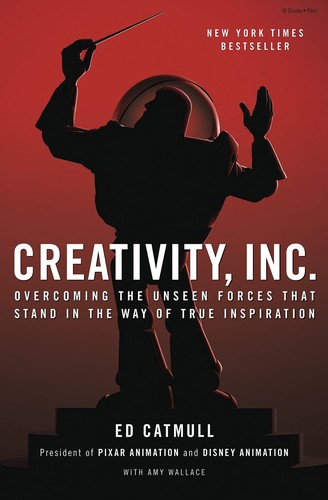
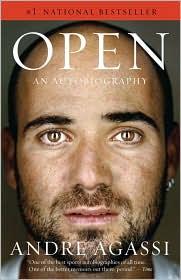
delivered
Get David's key takeaways from each episode delivered to your inbox.