Michael Ovitz
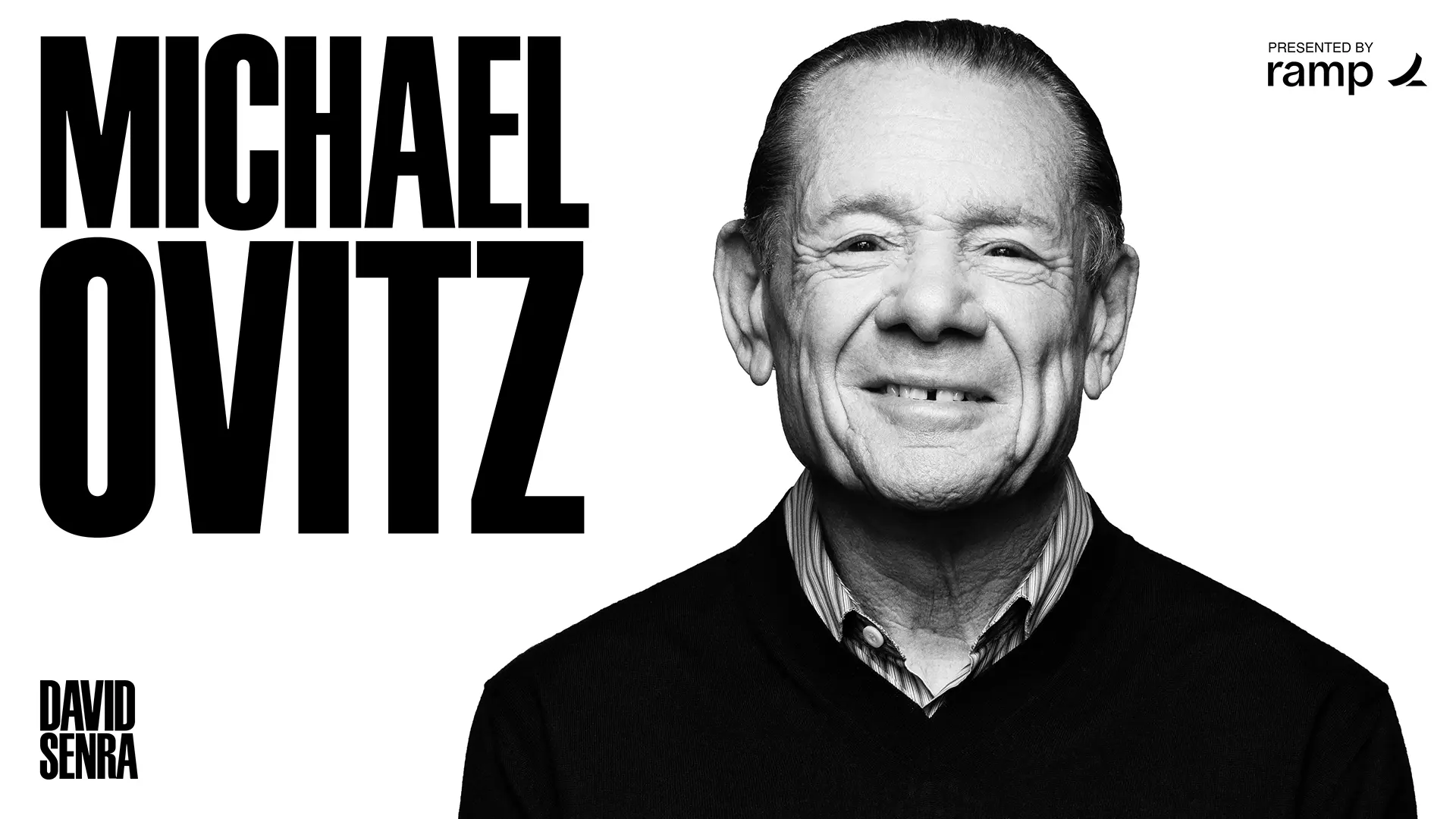
Michael Ovitz is the co-founder of Creative Artists Agency (CAA).
Summary
Michael Ovitz is the co-founder of Creative Artists Agency (CAA), one of the most powerful and influential talent agencies in Hollywood history, built on a revolutionary approach to representation that fundamentally transformed the entertainment industry.
He is an entertainment executive and dealmaker widely regarded as one of the most formidable operators in Hollywood. During his time leading CAA, Ovitz represented virtually every major star, including Tom Cruise, Robert De Niro, Meryl Streep, Steven Spielberg, David Letterman, Barbra Streisand and many more.
Starting as a mailroom trainee in the 1960s and reshaping the power dynamics of the entire industry by the 1980s, he became known for his relentless strategic thinking, his creation of the "packaging" model that bundled talent for studios, and his ability to orchestrate deals of unprecedented scale and complexity. He built a reputation in entertainment circles through his fierce intelligence, relentless work ethic and his ability to build CAA into what many called "the most powerful company in Hollywood."
His major accomplishments include co-founding CAA in 1975 in an audacious break from the establishment, pioneering the packaging system that gave agents unprecedented leverage over studios, orchestrating landmark deals including the sale of Columbia Pictures to Sony, serving as President of The Walt Disney Company and building CAA into a multi-billion dollar enterprise that expanded far beyond traditional talent representation into sports, consulting and global entertainment infrastructure.
This is Michael's second time on the podcast. Watch the first episode.
Episode transcript
David Senra: It's good to see you again. Thanks for doing this again.
Michael Ovitz: Yeah.
Michael Ovitz: I swear I haven't seen you since yesterday.
David Senra: Well, we'll start there. Why did you tell me yesterday that you're busier today at this point in your life than you've ever been?
Michael Ovitz: Great question. As I said to you yesterday, and you know I'm busy because you saw, you got a look at it. First of all, let me apologize for being horrible company to you.
David Senra: You weren't. It was amazing. I guess we should tell the people watching and listening to this that I flew back from New York to LA with you on your plane, and you had texted me the night before. You were like, "Just a warning, I'm going to be horrible company because I'm going to work all the way through."
David Senra: And so what you did, we sat next to each other, and you essentially, before we took off, started working. We flew, landed, and then you were still working. You're like, "Hey, I'm not getting off the plane in case you want to leave."
Michael Ovitz: I was on a Zoom.
David Senra: Yeah, exactly.
Michael Ovitz: Yeah.
David Senra: No, it was awesome. You weren't horrible company at all.
Michael Ovitz: No. I said to you, "I enjoy it," which is the problem. It's like the ultimate stimulus response.
David Senra: Why is the fact that you love working a problem?
Michael Ovitz: Well, it's not a problem for me. I think it's a problem for people that I'm close to that would like me to work less. I don't agree with that. And I am busier than I've ever been in my life.
Michael Ovitz: I actually said to Tamara the other night, who'd probably like me to work a little bit less, it's the most exciting time I've ever seen in my entire life, and that includes the entertainment sweet spot of the late '70s through the end of the '90s, which was the last great period in the film business and television business, pre-streaming, obviously.
Michael Ovitz: I thought I was in heaven in those years with respect to the amount of things that could be created out of thin air. Today, and for the last... I started in '92 working in technology while I was still at CAA. It's now 26.
Michael Ovitz: I'm still doing it. I can't wait to get up in the morning. I literally can't wait.
Michael Ovitz: I am privileged to be able to work with some of the smartest men and women I've ever met in my life. They're all young.
Michael Ovitz: They're all out to do something special. They're motivated by all the right things. And every day when I'm in a meeting with these people, I learn something.
Michael Ovitz: So I get discovery, I get education, I get my brain stretched.
Michael Ovitz: I get to watch things like I've always watched creatively, created out of thin air.
Michael Ovitz: I get to listen to the presentation, get challenged about whether I should get involved or not, and I do everything I can to spread myself around enough so I can get all the food for thought that's possible, because that drives me. It's that discovery process that drives me.
Michael Ovitz: And it's not a FOMO process, frankly. It's very interesting in technology.
Michael Ovitz: I was talking to Ben Horowitz about this. It's a learning curve that gives you a stimulation that you have seen, heard, and heard something that you didn't know, but that stimulation then turns into a form of joy that you've made yourself a better person off of someone else's knowledge base.
Michael Ovitz: And I said the other day to one of my young mentees, I said, "Consider me Dracula for the brain." And you know, the original Dracula, the conceit of the story, the book, forget there was no movie in those days, the book was this constant quest for eternal youth, and you suck a young person's blood and it makes you young. I like to view myself as in the same way, except in the gray matter area. I'm really interested in what the thought process is.
David Senra: Why do you think today is more exciting for you than even the '70s, '80s, and the '90s?
Michael Ovitz: Because in the '70s, '80s, and '90s, we were dealing with mediums that had been around for a long time.
Michael Ovitz: The exciting part was the creation of the software of the moment, which was film or videotape or music or books.
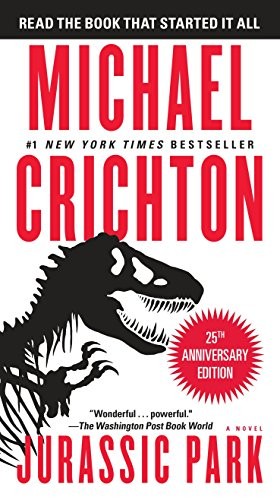
Michael Ovitz: It was fantastic to read Michael Crichton's rough draft of "Jurassic Park."
Michael Ovitz: It was a thrill, but it was a book, and there have been books since the invention of the printing press. Actually, since prior because they're handwritten.
David Senra: Yeah, before that.
Michael Ovitz: But now change is so dramatic that it's almost frightening.
David Senra: Mm.
Michael Ovitz: Max Levchin, who was the founder of Affirm and PayPal, and I think you know Max.
David Senra: I know of him. I've never met him, no.
Michael Ovitz: No, I thought you should have him do the show.
David Senra: Yeah.
Michael Ovitz: He's brilliant and a great guy. He said to me... A couple years ago, we were at a dinner, and he said, "If I take a day off from work, I come back, and I feel like I've missed a week."
Michael Ovitz: And then I saw him recently at the Allen Conference, and he said, "If I..." I reminded him of him, and he said, "If I take a day off now, I feel like I've missed three months." And everyone thinks that way.
Michael Ovitz: AI is so fast, and as far as the speed of change that the benefits are to anything that we do. It’s extraordinary. Now, there's a ton of potential downside, and I like to not forget that. I think we have to be very responsible with it.
Michael Ovitz: On the other hand, I feel the upside far outweighs the downside.
Michael Ovitz: Was at a dinner with a friend of mine who's a research scientist working on cancer cures, and I said, "How's the five trials going?"
Michael Ovitz: He said, "I can't believe what's happened." And I said, "What?" And as you know, to set the stage, it takes a long time to get from stage one, which are mice or other types of animals, to stage three, which are human trials. It could be five, it could be 10 years sometimes.
Michael Ovitz: He said, "I have five trials going. Four were started pre-AI. They're from 5 to 10 years in the making. I started one after post-AI, and I've gotten results in nine months on a cancer cure." Think about the ramifications of that and what it means for our society.
Michael Ovitz: I was in a meeting last week in New York, and two young engineers told me they had discovered a friend of theirs is working, all because of AI, on a cure to stimulate the retinal nerve if your vision is going bad.
Michael Ovitz: I mean, it's every day. It's every day something different. And here's the real answer to your question.
Michael Ovitz: We all had to be specialists until AI.
David Senra: Mm-hmm.
Michael Ovitz: Now we're all generalists. So, I get to work in consumer products, in high tech, in defense, in medicine, in biopharma. I get to be involved in all these things that I'm totally unqualified for. I don't code.
Michael Ovitz: I'm not a scientist that can sit and understand the vocabulary of science, but I can learn about it really fast and have enough vocabulary to understand what these brilliant young minds are creating. So, this creativity is the same as entertainment creativity, but at a wildly different degree of difficulty and level up. It's not even close.
David Senra: So what is the role that you're playing in the projects that you're pursuing right now?
Michael Ovitz: I will basically do whatever is needed to help form these businesses. And the reality of business, which very few people really grasp, is that the basics of business, no matter what the field is, are exactly the same. The blocking and tackling parts are the same.
Michael Ovitz: So as pointed out to me, a film or a television show or a book or a song is packaged around talent. Talent, creator, engineer, same thing. Talent needs someone to help execute. Engineer needs people around them to help get the business in line and organized, coded, whatever they need done.
Michael Ovitz: The creative person making the entertainment then has to get financing.
Michael Ovitz: The engineer or founder of a company needs venture capital.
Michael Ovitz: With the entertainment maker, he then has to get distribution. Founder has his product.
Michael Ovitz: He's got to find a DSP or someone else to distribute his work or just take it on his own on the internet. Either way, both also need marketing. How do you put the name into the ether? And then how do you sell the product? How do you make a profit? How do you build a culture? How do you build something that lasts beyond you?
Michael Ovitz: We started CAA in 1974.
Michael Ovitz: In 2026, it's as strong today as it was when I was there because we set a business model in place that has stood the test of time. And the guys that took it over followed the trajectory of where they needed to take the business and kept the same values and principles.
Michael Ovitz: And at the end of the day, it's binary. It either works or it doesn't. 50 years in business proves that it works.
David Senra: I want to tell you about the presenting sponsor of this podcast, Ramp. I have been reading a lot about SpaceX lately. SpaceX is one of the most valuable businesses in the world, and one of the main themes in the history of SpaceX is constantly attacking and questioning your costs. Ramp helps many of the most innovative businesses in the world do exactly that. The median company running on Ramp cuts their expenses by 5%.
David Senra: And one thing SpaceX has demonstrated is that a religious dedication to controlling costs can help actually increase revenue because you can pursue opportunities you couldn't otherwise. And we see that in the Ramp data too. The median company running on Ramp also grows their revenue by 16%. So when you're running your business on Ramp and your competitors are not, you have a massive competitive advantage that compounds over time. Ramp is the only platform designed to make your finance team faster and happier.
David Senra: Many of the top founders and CEOs I know run their business on Ramp. I run my business on Ramp, and you should too. Go to ramp.com to learn how they can help your business save time, save money, and grow revenue. That is ramp.com.
David Senra: So let's go back to you have a million different things you could work on. You have very limited time. You're ruthlessly efficient, which is what I saw on the plane yesterday, and I kind of guessed from our multiple conversations. So, how do you choose which projects to do right now and how you're going to spend your time?
Michael Ovitz: Choices are made for me. I don't have to make the choice.
David Senra: What does that mean?
Michael Ovitz: It means that the degree of interest is proportional to the individual that's telling me about it, whether it's an investor, a founder, shareholder, venture capitalist...
David Senra: So are you just saying you just follow your intense curiosity? What do you mean by that?
Michael Ovitz: Well, I follow my curiosity. I want to see everything.
David Senra: Okay.
Michael Ovitz: I can't do everything.
David Senra: Yeah, exactly.
Michael Ovitz: And also, there's a lot of things I don't want to do. There's a lot of ideas that don't interest me. But I like meeting the people. That's what I like. As you know, I collect art and people. I love art, and I love to meet smart people, and that drives me. But the choices almost, David, get made by themselves. Is it interesting? Will it stand the test of time? Can it be built? Can it be financed? Can it be distributed?
Michael Ovitz: All the basics of business have to be overlaid on any of these ideas.
David Senra: So do you consider yourself more like an investor, a partner? How do you think about yourself when you're working on projects?
Michael Ovitz: I work overtime to not be categorized.
Michael Ovitz: I don't want a label.
David Senra: All right, you have to say more about that.
Michael Ovitz: I'm glad you're laughing at me, David. And I'm glad you feel comfortable that you could laugh at me.
David Senra: I'm not laughing at you. I love the stuff that you say.
Michael Ovitz: And David, if I was younger, I'd leap out of my seat and throttle you.
David Senra: I have no doubt of that.
Michael Ovitz: But I'm too old.
David Senra: No, but you might be able to throttle me. We're going to come back to this line of questioning, but you came up to the house just now, and you're like, "Hey, sorry again for being horrible company yesterday." I go, "Bullshit, Michael." I go, "You were an excellent example of the fact that you're maybe 35 years older than I am," and I was actually inspired by how efficient and how relentless you are with your work ethic. I was like, "Oh, I thought I was working hard. This guy should not be outworking me."
Michael Ovitz: As I said to you, I love working. I love learning. I love working.
David Senra: I love you, so I of course would not be laughing at you. What do you mean you don't want to be categorized?
Michael Ovitz: I don't want to be typecast.
David Senra: Okay.
Michael Ovitz: And I said this to a young founder yesterday. When I grew up in the business world, we were basically specialists.
David Senra: Mm-hmm.
Michael Ovitz: So if you were in the entertainment business, you chose a vocation in film.
Michael Ovitz: There were subdivisions of film. There was animation. There were documentaries. There were long... There were action pictures. There were comedies. You did one of those things, or you did television, or you wrote books, or you were a producer, or you were a director. You had one vocation in a larger field.
David Senra: Yeah.
Michael Ovitz: Today, there's no such thing.
Michael Ovitz: Today, you have to be a generalist. You have to know a little bit about everything. And then unless you're a deep scientist and you're founding Palantir or Anthropic or one of these businesses that require extraordinary brain compute power, then you are a specialist.
Michael Ovitz: But in the world I live in, I want to be a generalist.
Michael Ovitz: I'm not capable of being a specialist.
David Senra: How much of this is tied to the advancements that we've seen in AI?
Michael Ovitz: None.
David Senra: Okay, so this was your-
Michael Ovitz: I've been like this my whole life.
David Senra: But then people like you are now almost have superpowers and even more additional leverage because of AI. Is that the way you look at it?
Michael Ovitz: Absolutely.
David Senra: Okay.
Michael Ovitz: Absolutely. Look, I have it sitting on my phone. It's insane how many times I go to my phone and go to Claude or OpenAI or Google to get answers on things and get a deep dive in a nanosecond. I was looking at my grandson, who's 10 years old, and he's going to school at a special school in New York called the Alpha School, which is...
David Senra: Oh, Joe Liemandt.
Michael Ovitz: Yeah.
David Senra: I just spent a bunch of time with Joe two weeks ago.
Michael Ovitz: I have unbelievable respect for that man, that he's doing what he's doing.
Michael Ovitz: My grandson, my oldest son's first son, Chris's son, you know Chris, is 10 years old. He's been in that school since last September, and in six months, he's a different kid. He can't wait to go to school. Don't have to ask him to do his homework.
Michael Ovitz: He is given unbelievable responsibilities.
Michael Ovitz: This is all set up by using AI to teach them. They do two hours a day of hard study off an iPad, and he's as fluent now in knowledge as he's ever been, and he's 10.
Michael Ovitz: When I got called to fly to Hawaii to meet with the senior C-suite executives from Matsushita Electric, one of the largest companies in Japan, that at the time had 15 to 20 billion dollars of liquidity on their balance sheet, unheard of in the late '80s. I had to figure out how to learn about the company.
Michael Ovitz: I had to go to a stockbroker's office.
Michael Ovitz: I had to go to the library.
Michael Ovitz: I had to use all analog tools. I had to get a physical copy of their 10K.
Michael Ovitz: Today, doing the same kind of work, as you know, I'm in the middle of two transactions right now, which are public. I mean, one's public, one's not. I went down a rabbit hole on three AI platforms. I spent six, seven hours, two different days.
Michael Ovitz: I had so much information that I needed to add to my instinctual information because I'd been around that business so long.
David Senra: Which would have taken you in the '80s, at the time you're going to Hawaii, how long?
Michael Ovitz: I needed four weeks to prep for the meeting in Hawaii. I put it off for four weeks. I put it off for two reasons.
Michael Ovitz: One, culturally, when asked in those days, I'm not talking about today, but by traditional Japanese executives, your response has to be slow and measured.
Michael Ovitz: As a matter of fact, I got asked for a meeting by a Japanese company and spent three weeks putting them off because, and that kind of works for them. It's their culture. They're very slow to trust. As a matter of fact, I used to crack up when, in the early '80s, I was going to Japan once a month for business, and friends of mine were going, and they'd come back and they'd call me and they'd say, "My God, I just had the greatest meeting in Japan. I'm going to close." And I'd start laughing.
David Senra: Mm-hmm.
Michael Ovitz: And they would say, "What are you laughing at?" And I'd say, "Well, call me in a year and let me know how you're doing." None of them closed anything. I spent a year cultivating relationships before I even got an assignment. But the amount of time it took me to learn about those individual companies.
David Senra: You spent a year cultivating relationships before you even got an assignment?
Michael Ovitz: Yeah.
David Senra: What made you take an interest in Japan?
Michael Ovitz: I've always been interested in Asia. Always. I'm interested in Japan and China. Have been since... I started an interest in Japan in high school because I had a lot of Japanese American friends. And when I would go to their homes for dinner, I was blown away by the difference culturally.
Michael Ovitz: And remember, this is 50 years ago, so you had a different ethos at the time and a different feeling about...
David Senra: Between the Japanese and American relations post-World War II.
Michael Ovitz: Yeah, yeah.
David Senra: Correct? Okay.
Michael Ovitz: Yeah.
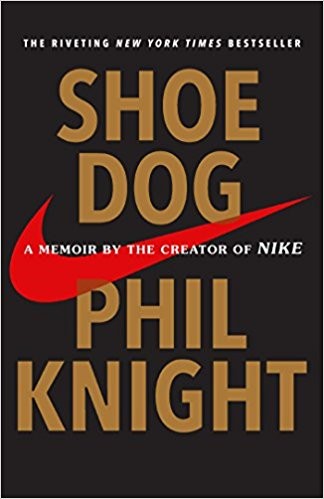
David Senra: Have you read Phil Knight's book, "Shoe Dog"?
Michael Ovitz: Yeah.
David Senra: Same thing. His idea was like, "Hey, we're going to sell... We're going to try to disrupt the German athletic shoes with their Japanese competitors." And he got a lot of pushback because of the essentially tension between America and Japan at the time.
Michael Ovitz: Yeah.
Michael Ovitz: I had a joint venture with Phil. I'm crazy about him. He's one of the-
David Senra: Did you? I didn't know this.
Michael Ovitz: Oh, yeah. I did when I was at CAA. Nike and CAA had a joint venture. Matter of fact, Phil Knight and I had one of the greatest experiences in my business career. The two of us decided that there should be an NCAA college football playoff. I remember this is 40 years ago.
David Senra: Yeah.
Michael Ovitz: So we met up at his place in Beaverton, and we plotted out this whole strategy, and we put an entire visual and written presentation together.
Michael Ovitz: And I was fortunate because I was very close to the chancellor of UCLA because I was chairman of the UCLA Medical Center, and his name was Chuck Young. He passed away recently. Great guy. And he was very influential in the college president world. And I convinced him to get Phil and me an audience at their meeting in Kansas City.
Michael Ovitz: And here's a guy who's running Nike, and with... I mean, running it, and here's a guy who's running a very successful entertainment business.
Michael Ovitz: And we did an amazing video that showed all of our stars and all of the athletes that were under contract to Nike. And we were on a stage in front of 150 NCAA presidents.
Michael Ovitz: And we showed that we could have made all the schools at the time millions of dollars of revenue if we just did a playoff rather than chose bowl games with random people.
David Senra: Mm-hmm.
David Senra: Mm-hmm.
Michael Ovitz: We rehearsed what we were going to do. We had a fantastic dual presentation. We ran our video. We both got up to the rostrum on each side of the screen. That's how we decided to start to present. And we started pitching. And we're both not bad at that, the two of us. And he's particularly good. And we look at each other, and we realize no one's listening to us.
Michael Ovitz: They're having conversations at the... They're at round tables instead of chairs.
Michael Ovitz: And then we ran another video, and then I walked over to him, and I said, "This is not going well. We have to start to wing it." And we did. And we left.
Michael Ovitz: And they ultimately said they didn't want to do it. They told us they wanted to commission a report, which they did.
Michael Ovitz: It ran about 500 pages, and the conclusion they came to was exactly what we told them. And now, 30 years later, they decided to do it. So the amount of money they left on the table was frightening. We both learned a really good lesson from that so.
David Senra: How competitive is Phil Knight?
Michael Ovitz: Phil Knight is the most competitive businessman alive, bar none.
Michael Ovitz: I'm crazy about that guy. I have such respect for him.
Michael Ovitz: He took a standard item, these shoes, and he changed the world with them. If you go back to the beginning when he did Tiger, which was a Japanese shoe, it's where he started, when he and Penny, his wife, were selling these things out of the trunk of their car.
David Senra: Yeah.
Michael Ovitz: The soles were flat, and they weren't really comfortable. They were made for running because of his track coach, Bill Bowerman.
David Senra: And his co-founder, yeah.
Michael Ovitz: Yeah. But all of a sudden, they get cushier, the heels get higher, they're in colors. I love going online and doing the customization thing.
David Senra: Yeah.
Michael Ovitz: I just think it's the most fun thing imaginable.
David Senra: The reason I ask is because out of all the people I've read for my other podcast founders, the most ruthlessly competitive, I'd put Michael Jordan up there. I think Larry Ellison, young Bill Gates definitely like this, but Michael Jordan is open, and he's just like, "I don't have a gambling problem. I have a competition problem."
Michael Ovitz: Yep.
David Senra: And Kobe would tell stories about... Kobe's like, "Michael Jordan's my older brother. I'm competitive when it comes to basketball. Michael's competitive with everything. Who can eat this salad the fastest, or just the..." He's just got an addiction to competition. And yet I was reading this obscure biography of Michael Jordan. I think it was written before he retired, and they were talking about in the history... This is after Michael has signed to Nike, and within the first few years, immediate success.
David Senra: But then there's this guy that got in Michael Jordan's ear to maybe convince him to go and launch with somebody else. And they had a meeting where they... Essentially, somebody at Nike warned them. They're like, "You don't understand. Phil Knight is the most competitive person on the planet. If you do this and you betray him, he will chase you to the ends of the earth."
David Senra: And I just remember reading that book and being like, "They're saying this to one of the most competitive people and saying, 'No, you think Michael Jordan's competitive?' You haven't seen anything with this guy."
David Senra: And the reason I think it's funny is because in "Shoe Dog," obviously an autobiography, he's like, "Yeah, I'm a pretty competitive fellow." I'm like, "Mm, that might be an understatement."
Michael Ovitz: I have to say, David, I'm thinking right now about ending the podcast because I really am upset that you didn't name me as one of the most competitive people you've met.
Michael Ovitz: No, look, at the end of the day, let's be straight out about it, it's not politically correct.
David Senra: Yeah.
Michael Ovitz: But business is a competitive, cutthroat sport.
Michael Ovitz: Now, I'm not saying you do anything immoral or illegal, and you have to have guidelines, but if you're not willing to get out there and do what Magic Johnson did on the court, or Michael Jordan, or any of the greats... I learned it from Earvin. Earvin, who I am crazy about, who I helped start his business career. I only mention it because he's been kind to me beyond belief in his autobiography and everything else.
Michael Ovitz: He came to me and said, "Look, I want to be in business." No other athletes at that time said that. And they did their service, in 35 they were done. Earvin said, "When I'm done, I want to be able to be a businessman," and we went and set that course.
Michael Ovitz: What I learned from Earvin was an extraordinary lesson that helped me build CAA, which was when he was doing the fast break on, which was referred to as Showtime down that court, he had no goal except to score, and he didn't care who got that ball in the basket. It just had to get in there.
Michael Ovitz: And you had four guys, two and two, running down that court, or three and one, with him carrying that ball, and he'd move down that court.
Michael Ovitz: He would pick whoever he thought could make that shot, and he had no ego about it.
David Senra: So, how'd you use that idea at CAA?
Michael Ovitz: Because it was about winning at the end of the day. It's about competition. It's about not having an ego about it. One of the great things we did at CAA is I didn't care who scored. I just wanted to score.
Michael Ovitz: And when we asked people to do things at CAA, even the youngest people, we never asked them to do anything we wouldn't do ourselves. And if they were slow on it, I went and did it to prove a point.
Michael Ovitz: I can't tell you how many times a week in a morning meeting where I asked someone to do something, or one of the department heads asked someone to do something, and it didn't get done by 5:00, one of us did it.
David Senra: I found one of my all-time favorite quotes when I was reading the book "Zero to One." The quote says, "The single most powerful pattern I have noticed is that successful people find value in unexpected places, and they do this by thinking about business from first principles instead of formulas." That is exactly what AppLovin has done with their advertising platform. AppLovin connects you with over a billion potential new customers inside mobile games. AppLovin allows you to capture undivided attention.
David Senra: AppLovin ads are full-screen video ads that are watched for an average of 35 seconds. That is retention that blows other ad platforms out of the water. And you can launch on AppLovin in minutes. You set the goal, and AppLovin achieves it. There's no complex setup, no expertise needed, and AppLovin scales quickly. They can put your ads in front of over a billion potential customers.
David Senra: Other businesses have seen immediate results, have scaled to hundreds of thousands of dollars of spend per day, and increased their revenue by millions. So you want to get started quickly before all of your competitors are on AppLovin, and you can do that by going to applovin.com. That's applovin.com.
David Senra: This is why yesterday was so important because it's one thing, we've obviously built a friendship. We've had countless dinners. We've spent a lot of time talking. I've f***ing read your book like three times.
David Senra: I had this thought. We're going to go in a weird direction. I had dinner with Charlie Munger when he was 99 years old, okay?
David Senra: And anybody at 99 is going to have some level of cognitive decline, right? It's going to happen. And I'm sitting across from this guy, and all I remember is I have to work hard when I'm reading books, and I highlight everything. I take notes. I reread them. People are like, "You have such a good memory." It's like, I've read the thing, I read my notes 10 times. I don't have a good memory.
David Senra: And yet I would ask Charlie, he was sitting in front of his bookshelf behind him, and I see a book that he'd recommend reading one time, and I had read. And I'm like, "Oh, Charlie, tell me about this biography of Henry Kaiser behind you." And he would rattle off the businesses he built, the revenue of the companies, what happened to that company, how many, what happened to his business partners.
David Senra: And then after we went from his library to go to dinner, I was like, "Hey, do you mind if I go through your bookshelf?" He's like, "Go ahead." I'm assuming I pick up the book, probably covered in notes. Nothing. Completely empty. Maybe like one or two notes in pencil in the margin.
David Senra: And when I realized this, my God, imagine what his brain was like, his mind was like, when he was 45 or 65, and that is who you're competing against. I thought about that yesterday because I obviously understood and read about your work ethic. We've talked about it.
David Senra: But then to also see it, even you're six decades into your career, and I was like, "Oh, there's like different levels to this." It's like a fundamental difference between reading about something and then observing it. So I want to tie this together. I wasn't expecting to go on your competitive drive. When you jumped into the agent business in the very beginning, was it obvious that you were just going to be able to outwork everybody else around you?
Michael Ovitz: Well, it was-
David Senra: Was it obvious to you at that time?
Michael Ovitz: It was obvious to me, but no one else. Everyone said we were going to fail. One of my closest friends I worked with at William Morris said something to me I have not forgotten since he said it to me in 1974. It's something I will never forget, and it turned out to be such a fantastic stimulant for me to this day. We were sitting together. We were having a coffee.
Michael Ovitz: He said to me, "So good that you're starting this business. In a year, you'll be looking for a job." I said, "Really? And what makes you think that?" He said, "Oh, you're going to fail." I said, "Really?" He said, "Yes, you can't make it. There's almost 200 agencies out there. You're not going to compete with the big ones."
Michael Ovitz: Second incident, within six months of that, a leading TV literary agency run by the best friend of one of our guys, we met with the thought of merging, which would give us what we needed, which were writers, because they're the font of packaging, right?
Michael Ovitz: In the meeting, and I told you this story before, so I want to say it fast and not repeat it in detail.
Michael Ovitz: The four partners of that agency said, "We'll never represent any movie stars." And I looked at them, and I said, "Why do you say that?" And he said, "You'll never get them." I said, "We're going to have all of them." And he said, "You're just so arrogant." I said, "I'm not arrogant at all, actually. I just know I'm going to outwork every one of them."
Michael Ovitz: Every time we signed a movie star, which was once a week, we took out a full-read page ad in Variety. This is when there were no computers. People actually read. And took one out every Friday.
Michael Ovitz: Every time we signed a movie star, I took that ad, tore it, put it in an envelope to those four guys, and I did it for the next 10 years.
Michael Ovitz: Now, competition, love it. Monopoly, absolutely love it. There's no room for competition. I love Peter Thiel's monopoly lectures at Stanford. He's spot on.
David Senra: He says competition is for losers.
Michael Ovitz: It is for losers because you're competing with yourself, basically. That's how I view it. I'm not competing with anybody else. It's why I keep my calls to a minimum, my Zooms to a minimum, my meals to a minimum of time devoted. When someone says to me, "I have to take an hour Zoom," I kind of laugh at them.
Michael Ovitz: I say, "What law is there on the planet that says a Zoom has to be an hour?" I said, "Frankly, if you get free Zoom, they cut you off at 45 minutes." I said, "So what rule is it that it has to be an hour?" "Oh, I don't know." I do them in 20 minutes. I just don't believe it. If we're in the middle of a critical diligence item or somebody is trying to explain something really complicated, okay, I get that. But the concept, for example, of hour meetings.
Michael Ovitz: Let's just fill the hour even if we have nothing to say. I don't want any small talk. It's not social time. I'd love to hear about your kids, but I'd like to hear that over dinner or lunch. I'm not interested. Let's get down to what we're doing. What are we doing? We're trying to build a business. We're trying to market that business, and we're trying to blow out the competition as fast, as cleanly, as simply, and as brutally as we can.
Michael Ovitz: Because the idea is to keep it going until they can't see straight. And to do it any other way makes no sense to me. Now, by the way, there are people who have done it without that thesis. But it's not a thesis I subscribe to.
David Senra: There are people that have done it without this ruthless competitive drive, you mean?
Michael Ovitz: Yeah. By the way, I'm excluding creative people because creative people have a hard and a soft side. They have a much harder side than people tend to imagine or think. But they have a very soft side because they're very sensitive. It's that sensitivity and perceptual ability tied together that creates images or words.
Michael Ovitz: But they also have a very hard side. I've watched Martin Scorsese take Harvey Weinstein apart in a room, like he was a toothpick, over a movie that he was doing, where Harvey was giving him the dumbest notes imaginable.
David Senra: Imagine thinking you could be in a position to give Scorsese notes on a movie.
Michael Ovitz: Well, that's the whole point, isn't it? Listen, I've been in rooms with mega filmmakers, because we had all of them. At one time, CAA represented the top 50-grossing variety-box-office filmmakers; we had 46. And I was upset because I didn't have all of them. There were four I couldn't get. And it really upset me, and it gnawed at me my whole career there.
Michael Ovitz: But I find that notes are good if you give them, and then let somebody do what they want to do. They know better. Now, on timing and other things like that, that's a different story. But nobody should be giving Marty notes about the core of his film, or the conceit of a character, or where he's putting the camera, you know? It's a joke. It really is a joke. I mean, the man's seen every movie ever made.
Michael Ovitz: He has an encyclopedic knowledge. And it's interesting, he's like Charlie Munger, but he's not... Doesn't do that for a living. There are people who are gifted in their recall. I'm not one of those people. You just said you're not. I really have to struggle with the memory that I need to keep in place for what I do.
David Senra: Tell me more about the hard side of some of these creative geniuses that you worked with. What do you think is driving their need to be hard? So just that they're disagreeable when it comes to their craft?
Michael Ovitz: Not at all. I think they are protecting their vision. I think filmmakers have a very clear vision of what they want to achieve. I think sometimes they lose their way, but they get it back. I had a situation with Barry Levinson, and Dustin Hoffman, and Tom Cruise on "Rain Man," where Dustin couldn't find a character in the first week, and I think Barry got very frustrated because a lot of the movie was not scripted. A lot of it was done in the moment.
Michael Ovitz: I think that the movie benefited from this problem at the beginning, because Dustin found the character. Barry had the patience to let him do it, which is hard because you're losing money every day.
David Senra: Mm-hmm.
Michael Ovitz: Everyone forgets that. And then Barry found a balance of improvisation versus script. And the movie is perfect. Perfect from beginning to end.
David Senra: So bring me back to the meeting between Scorsese and Weinstein. The hard side of him came out because he was protecting his vision?
Michael Ovitz: Well, Marty had a point of view that was right. That's why I ended that meeting pretty fast. First of all, he shouldn't have been in the editing room. It's okay for Marty's agents to be in the editing room, but not the producer, unless the producer is someone incredibly close to him, where they've done multiple movies together.
David Senra: You've been around a lot of founders. Isn't that the same instinct to protect the vision that Marty had in that situation, isn't it the exact same thing that they're doing to the company...
Michael Ovitz: I think it's a common denominator of anyone who's successful. I think we're talking about all the things that make people successful in any vocation. Dedication, work ethic, intelligence, curiosity, protect the vision. Find things that give you food for the thought for the vision. Inventory them in your head. Let them marinate, because if they stay in your head, that means you're onto something.
Michael Ovitz: It's no different than the way I collect art. I collect art contextually, which is, I see as many images as I can. My brain takes in what I like, rejects what I don't over time. And that's how I collect. So, it's a foundational issue of context. And I think filmmakers do the same thing.
David Senra: Yeah. You've spent a bunch of time with Josh Kushner, I know, especially at the beginning of Thrive.
Michael Ovitz: Yes.
David Senra: I just spent some time with him, and a large part of our discussion was really just about his vision. And from hearing him speak and just listening to him kind of map his thoughts out, it was like you said, protecting the vision is an interesting way to think about it. The way I thought about it, I read this biography of this guy, he was an engineer, he started Harman Kardon, the high-end audio equipment, and when I was...
Michael Ovitz: Sidney Harman?
David Senra: Yeah, exactly.
Michael Ovitz: He was a guy I knew well.
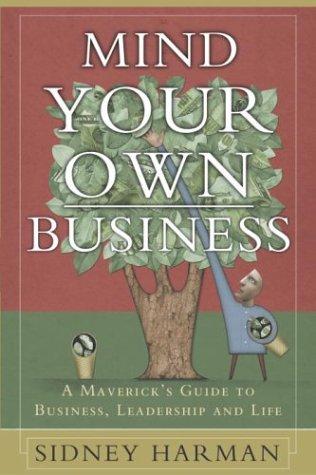
David Senra: Yeah, he's got a great book. I think the autobiography is called "Mind Your Own Business."
Michael Ovitz: I've read it. He was an amazing man, and I'm an audiophile. And he, at one time, made the greatest speakers. They were called Infinity RS 1Bs, and they were four towers, not two.
David Senra: It doesn't surprise me that he was able to build the best product in the category that he competed in. He describes his philosophy in that book, but what I'm hearing from the experiences you've had with some of these creative geniuses, some of the conversations I have had with these founders, he put it the best way. He's like, "The founder is the guardian of the company's soul." You know, I was listening to Josh speak, and during our conversation, I was like, "Oh, he's guarding the company's soul. He wants to make sure there's a soul inside of Thrive."
Michael Ovitz: I met Josh when he was at Harvard Business School. Jared, his brother, was a friend of mine and asked me to help him with... Josh, in Harvard Business School, had a very valuable game company while he was in school. And Jared asked me to help him with it. Josh then is exactly the same as the Josh today. There's no difference.
Michael Ovitz: Wildly smart, very loyal, low-key, thoughtful, highly intelligent, and very easy to talk to. And will hold his ground. But what makes him fantastic is that he'll yield his position if you can talk him out of it. I love people who hold their ground until you prove them wrong.
David Senra: Yeah, I would say since you just made... You kind of connected this whole theme of this conversation we're having right now, it's like we're really just talking about the traits of people who are successful, regardless of the domain they choose to operate in. And that's something that reoccurs in all these biographies. It's like, "I don't care if the idea is not mine, I just want to win."
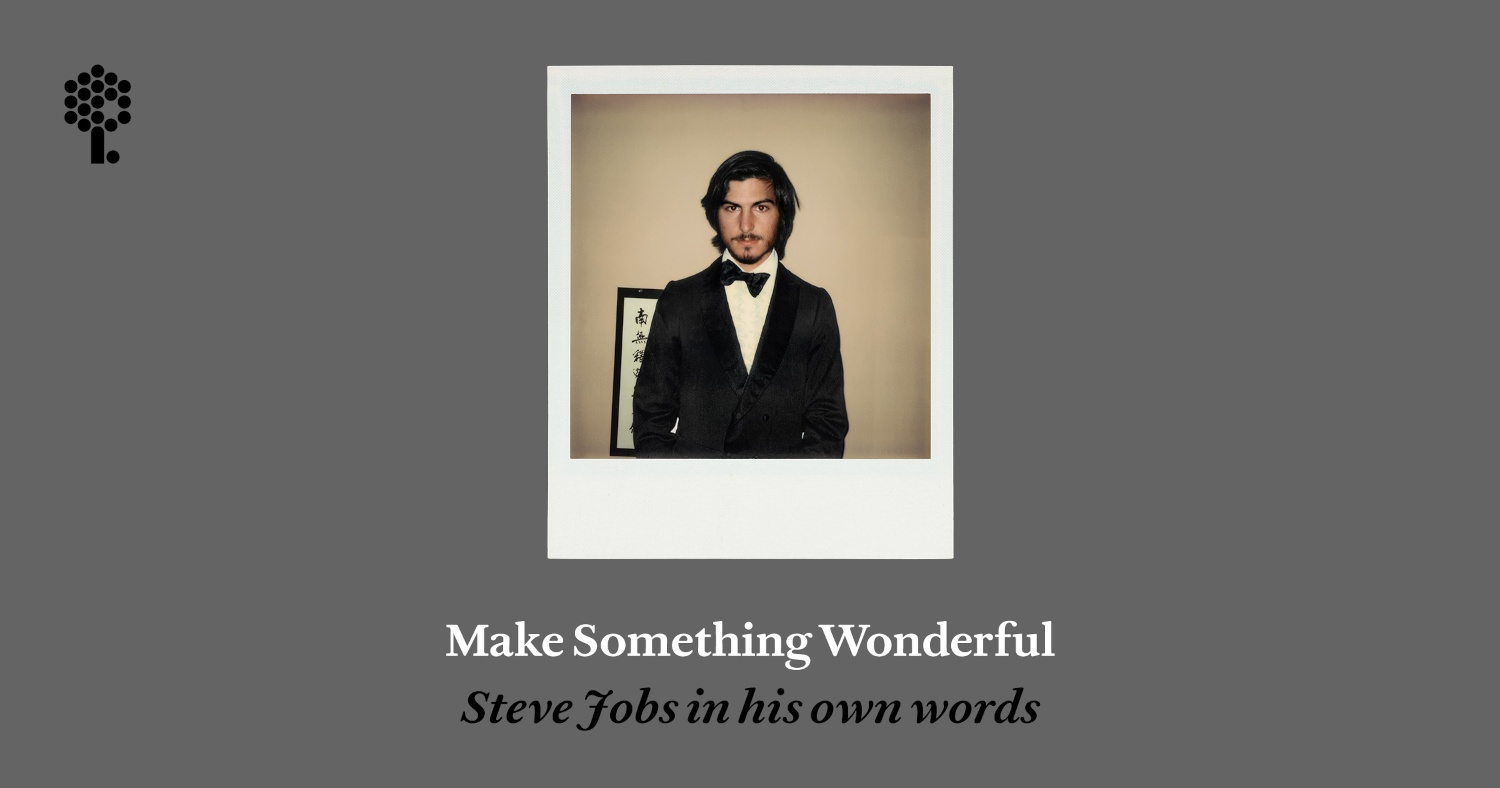
David Senra: And so, if you can push back on me and say, "No, David, you're wrong about XYZ," which has happened several times, especially with my approach to podcasting over the years, I'll be like, "It might take me a while, but then I'll eventually flip." And I think you see that common... I think of Steve Jobs. I just finished rereading "Make Something Wonderful," which is this book put out by his widow.
David Senra: It's an excellent book. But there are a ton of examples in that case where it's just like, he had thought X, and he was really adamant about thought X, and then he would test this... They said it's something like... What do dolphins have? Like, echolocation. He would throw out an idea, and sometimes he didn't even believe in that idea, but he would throw it out just because he wanted a reaction back, and then the information comes back to him almost like sonar, like whatever dolphins have. And then he'd think about it for a little bit, and then he'd wind up changing his mind.
Michael Ovitz: I consulted for years for him on when he first had the idea. And it was some of the best times I ever had because he's whip-smart, unbelievable memory, totally unstoppable with an idea, and could take completely intransigent positions on things, and actually, you could talk him out of it if he agreed.
Michael Ovitz: The best trait any businessman can have. When I ran CAA, I had a very simple thesis: I'll take ideas from anybody. No idea is stupid, because a bad idea may stimulate a good idea. And I want to hear from young people. I'm not interested so much in the opinions on new things from the older people. But from the older people, I want their wisdom to be spread all over it.
Michael Ovitz: We had a setup where every 90 days we'd put 200 people in a circle with their chairs tied to each other, and everybody had 30 seconds to pitch an idea, and you couldn't pass. We had a mail room guy pitch an idea about cable. We promoted him on the spot to agent. On the spot. It was that good.
David Senra: Explain this 200 chairs tied together.
Michael Ovitz: What I came up with was this concept for meetings, and we did it at all our retreats, where everyone sat in a circle or an oval. As we grew, it went from a circle to an oval, because the geometry didn't work.
David Senra: Mm-hmm.
Michael Ovitz: And we made everybody's chairs touch. There was no way out of the circle or oval. That was done intentionally. And if you wanted to get out, you had to push your chair back, and you could see the hole as big as could be. We would meet with that as a foundation, that everyone was participating. And I ran it, and I would sit there, and I'd call people that didn't say anything. And it'd coax them to say things.
Michael Ovitz: Some people were upset, but everyone came around in the end: "Thank you for pushing me out of my hole." And people need to learn how to communicate in groups, but the people who run those groups have to learn how to listen, and learn how to get ideas from people.
David Senra: And so you literally developed a mechanism where every single person in the company, down to the people working in the mailroom, could pitch an idea directly to the founder.
Michael Ovitz: To everyone who was a senior executive in the company. We were all there. Everybody was there. The whole concept was, "We want to hear from you." I started the first meeting with saying, "No idea is too dumb. I want to hear everything." Over my career, some of the greatest ideas I've ever had, or stolen, or appropriated, have been from other people. And as you know, I'm a mega Picasso fan of all my art.
Michael Ovitz: The guy appropriated everything. One of his most famous sculptures of bullhorns, which is handlebars from a bicycle, that he saw with a seat welded together.
David Senra: Didn't he have that quote that Steve Jobs would repeat, that, "Good artists copy, great artists steal?" I think that's Picasso, right?
Michael Ovitz: Yeah.
Michael Ovitz: I don't know. But it sounds about right.
David Senra: Yeah.
Michael Ovitz: But Steve, for example, had a vision about computerized animation that Disney didn't share. They were wrong. He was right. That's it, you know? It's Barry Diller's famous line, which I will never forget and still use all the time. He competed to buy CBS, I think, or Paramount, I don't remember which one, but Sumner Redstone got both of them somehow.
Michael Ovitz: And when Barry was asked by the press for what did he think he lost, he looked at him, and he said, "He won, we lost. Next case." Which is like, says it all to me. It was so brilliant. "He won, we lost. Next case." He's right. Six words. You can't look back. I am so upset when friends of mine that try to do deals that I consult on, and they make a mistake, or they lose it, and then they dwell on it. It's dumb.
Michael Ovitz: It's not going to change. So, what are you looking back for? I don't like to look backwards. I think you have to always look forward. There are people who totally disagree with me. But I'm a forward-looking person. If I've made a mistake, and God only knows. I think one of the reasons founders talk to me is that I can tell them things they're going to do wrong, because I've done it all.
Michael Ovitz: I've made every mistake in business you can make. I've had some wins, too, but I've made a lot of mistakes. My goal is to use that to prevent my young people from making further mistakes, because they're all going to be the same.
David Senra: It's unbelievably valuable if they can learn from other people's experiences. I think that's one of the things I get most out of our conversations. I also like that you are unapologetically extreme. You don't hide the fact that you are an extreme personality, that you were when you were younger. You still are to this day. You just threatened to jump out of the chair and, I think, throttle me, is the word that you used?
Michael Ovitz: I was trying to be polite.
David Senra: That's really polite.
Michael Ovitz: But I did say I'm too old to do it.
David Senra: That's fine. I wouldn't even fight back. That's fine. I have too much respect for you. Tell me about this deal that we can talk about. I know you have a few deals going on. A few are not public.
Michael Ovitz: One I can't talk about.
David Senra: Yeah, exactly. So tell me about the one that you can talk about.
Michael Ovitz: Yeah.
Michael Ovitz: Well, it's public. I can say that Bill Ackman and I have been friends for 33 years. Had a discussion about his position in Universal Music. We were kicking it around. He was a large shareholder and was on the board. I like Lucian Grainge a lot because he's a talent guy. And my thesis about all these companies is, if you don't have someone who understands talent running the company, because you can always get an operator... If you don't have someone who understands talent, that company's going to die.
Michael Ovitz: And Lucian's really good, but Lucian's growing the company geometrically every year, signing every artist. Publishing's great, and the stock keeps going down. And it crept down to, like, 10 points under the IPO price, and I said to Bill, "Let's take it private," and he loved the idea. And a number of things occurred. I told him we couldn't do it unless it was friendly, because Bill has done both.
Michael Ovitz: Bill's very smart, I mean, really smart, and very direct, which is what I like about him, because as you know, I like... I love your opinions because you tell me what you think. And we did some diligence, met with Lucian to see if he'd be interested if we did do something. Gave him a 41,000-foot overview. Made it very clear that a condition precedent to the deal would be his running the show.
Michael Ovitz: We would support it. I would become chair and support him, and particularly in the tech and AI area, which he's very attuned to, but could use some help. You know, in his job, there's not enough hours in the day. There just aren't. You think about the amount of time he has to spend internally, externally with talent in studios. It's just endless. It's an impossible job. It's so difficult, and he does it brilliantly.
Michael Ovitz: And we sent the letter. We did it publicly. So there's no secret. There's nothing nefarious. No one's going behind anybody's back. Put the money terms right on the table. We're very well financed. Made a very handsome deal, offer, and we're waiting for an answer.
David Senra: Deel is how the best founders turn the world into their talent pool. I've been studying how history's greatest founders operate for a decade, and one thing they all have in common is they understand that recruiting and hiring the very best talent is your most important priority. A players recognize other A players, which is why top companies like Ramp, Shopify, ElevenLabs, Uber, and DoorDash all use Deel.
David Senra: Many of the top founders I know have personally invested in Deel after using their product, and what they discovered is that Deel is the best company in the world at building infrastructure for global hiring. Deel will help your business hire, pay, and manage any worker anywhere in the world so you can retain the best talent anywhere, and spend the rest of your time focusing on what you do best: Delivering value to your customers.
David Senra: The founder of ElevenLabs has a great description of the value Deel can give your company. He said, "We built ElevenLabs to break down language and communication barriers. With Deel enabling us to hire and support exceptional talent anywhere, we can accelerate our innovation and bring more voices, stories, and ideas to every corner of the world." Deel is trusted by over 40,000 businesses. Learn how they can help your business today by going to deel.com/senra. That is deel.com/senra.
David Senra: So, we talked about the opportunity cost of your time, and picking which project to dedicate your attention to, your resources to. Why did you choose to do this?
Michael Ovitz: I think music is a critical component going forward in the new internet era, particularly with AI. We've seen it, what's going on with Suno and Udio, where they're taking IP that other people own, even 10 seconds of it, and constructing custom-made songs. Music is never going away.
Michael Ovitz: I think the advent of Daniel Ek's Spotify, which he developed in a garage in Sweden, in Stockholm, is a game-changer. And I think that music's at the foundation of so many things that are digitally based, from games to movies, television, AI, all of the image capturing that's done.
Michael Ovitz: Don't you find it fascinating that on TikTok, Instagram, and YouTube, almost everything you see, someone chooses music to go behind it? It's part of our culture, worldwide. It's not country-by-country. There's a common denominator of British and American music around the world, and it's a door-opener. It's something everyone can hear and relate to, even if they don't speak the same language.
Michael Ovitz: So, I love the idea. I love Bill's financing capability. I love Lucian's management and talent expertise, and I like the fact that I grew up in that business. My first job was in the music business. I started a music division at CAA, that, to this day, is the tops. I think it's a lot of complementary factors. Whether we get it or not, I have no idea. It's frankly up to one shareholder, and that's one family that controls 28% of the stock.
David Senra: What do you think would the effect of AI be on the music industry? So, I talked to Jimmy Iovine about this. I still don't understand. He texted me about this two days ago, and I'm reading through this, and I still don't understand what he means, so I'll see him when he gets back. But if Universal Music Group has... I think it's the largest music catalog in the world, right?
Michael Ovitz: Yes.
David Senra: AI is not going anywhere. You said people are already taking and training new songs based on other people's ownership. Is the idea that the record labels could do that themselves, or are you saying that's going to be a huge potential future income stream?
Michael Ovitz: I'm not going to say anything about it, because I think it's a very difficult problem that right now is under analysis by all the music companies.
David Senra: Is there anything analogous that you've experienced in other forms of entertainment from the past?
Michael Ovitz: Oh, yeah. I was appointed to a US trade delegation in 1996 by President Clinton. I was a large fundraiser for him, and I went to Beijing with 20 business people, President Bush, 41, to try to get them to stop pirating video cassette movies and television shows.
David Senra: The Chinese?
Michael Ovitz: Yes. They were the largest producer of pirated tapes in the world, and we went over. I spent a week there. It was a fascinating week. I got to sit with Jiang Zemin, who was the prime minister, the chairman of the party. And I guess, they don't call him the prime minister. He was the chairman.
Michael Ovitz: Zhu Rongji who was the brilliant financial, former mayor of Shanghai, who did all the financial architecture for what you're now seeing, of getting China into the 21st century.
Michael Ovitz: And we had round and round of meeting, and President Bush was incredibly popular there, because he was ambassador to China, and he was very well-liked.
David Senra: You don't have to comment on this if you don't want to, but something just came to mind because I just had a conversation with Ed Catmull, founder of Pixar, and I would have to imagine you and Bill Ackman are doing this because you think AI could be a massive advantage and tailwind to the music industry.
David Senra: The reason I bring this up is because Ed was constantly... His entire career, his whole goal was to take the latest technology and apply it to storytelling and animation, right, with the stated goal...
Michael Ovitz: Which he did.
David Senra: Which he did, with the stated goal of making the world's first feature-length, computer-animated movie, which he did, obviously, with "Toy Story." I have this guy who works with me on my other podcast, Founders. His name's Maxim. He's a young filmmaker. I flew him over from England to go to this recording with Ed Catmull, because Maxim wants to make films. This is one of the best filmmakers of all time, or built one of the best companies that made the best films of all time. Maybe you should talk to him.
David Senra: And me, him, and Maxim were talking before we started recording, and I asked him, I was like, "How..." You know, he's obviously pro-AI. He's pro-technology. He's like, "You cannot get a..." Ed Catmull, that is. He's just like Walt Disney. He called Walt Disney a technologist, and he's like, "Go through Walt Disney's career. He always embraced the latest technology in service of telling the better story or completing the project in a better way than whatever he's working on."
David Senra: And I go, "Ed, when do you think we're going to see the first phenomenal, full-length, completely AI-generated movie?" And he's just like, "There's a better question that you're not asking." And I bring this up because you were best friends with Michael Crichton, and he says, "There was a line of demarcation in our industry: pre 'Jurassic Park' and post 'Jurassic Park.'
David Senra: Once Steven Spielberg made "Jurassic Park," the entire movie industry was changed forever. And part of that was obviously the CGI of the dinosaurs. And he's like, "How many minutes of CGI dinosaurs are in that movie?" And I was like, "I don't know. I've seen the movie a million times since I was a kid." I was like, "I don't know, like 20." And I think the answer is like four minutes. And his point was like, you can even use... The technology is powerful, even if you use it for a short amount.
Michael Ovitz: Yeah.
David Senra: It could be 10 seconds in a three-minute song, or six minutes in a two-hour movie.
Michael Ovitz: When I put "Jurassic Park" together, and I read the book, I said to Michael, a couple of things. I said, "One, it's brilliant, and everyone loves dinosaurs. Two, you don't need a big star because the dinosaur is the star," which was important financially. "And three, there's only one human on the planet that could realize this into a movie, and if he doesn't want to do it, we can't do it."
Michael Ovitz: And it was Steven. Sent the book to Steven. Called me the next day. He said, "I'm in." I believe there's more than four minutes. What Steven managed to do is, for the times he used the dinosaurs, the biggest fear for that movie was, "Can you make them look real?" And Steven said he could do it, and I knew he could do it, and he did it.
Michael Ovitz: Everyone was scared to death that it would look like an early "Godzilla" movie, where it was just so obvious of what it was. Steven integrated the CGI and the actual dinosaur parts that he made and shot. There was a head, there was a part of a body that you didn't see the whole thing. He did it brilliantly, but he got them to look really real. He researched who could do it. They tested and tested and tested, and they got it done.
David Senra: Why do you think Steven Spielberg was the only person? Was he a singular character?
Michael Ovitz: Steven had the ability to understand the storytelling side, the casting side, and most importantly, the technical side. In those days, not everybody had that. Remember, that was in the '90s. Not everybody had the ability to use technical things. Jim Cameron did. Steven did. Not every director could do that.
David Senra: And so, was he like a Walt Disney kind of character, too, where he was, throughout his entire career, trying to embrace the latest technology that would help him build something?
Michael Ovitz: Steven knew more about everything. He and Marty. Marty, Steven, and Stanley Kubrick, to me, knew more about film, filmmaking, film history, respect for film. I put together a group for film preservation around Marty, and it was Marty, Steven, Sydney Pollack, Francis Coppola, and Stanley Kubrick, all clients of mine.
Michael Ovitz: And that's what they were into. They were real, real people about film. You know, when I go to speak at a film school these days, I get very nervous. I'm particularly nervous around my 24-year-old daughter, Minty, her friends, who I'm crazy about. When they talk about old movies, it stops at 1990. You know?
Michael Ovitz: And I did a film class where I didn't even introduce myself. I had two classes merged together. I was asked to do this. I said, "Who's David? Anybody here know David Lean?" No hands. "Anybody here know Frank Capra? Anybody here know Willie Wellman? Anybody here know Michael Curtiz?" I kept going, too.
Michael Ovitz: Those were directors from the '40s, mostly '40s and '50s, who made some of the greatest films of all time. "Lawrence of Arabia."
David Senra: Which Spielberg would rewatch every year, when he was learning to make films, too.
Michael Ovitz: I still watch it. Matter of fact, one of my best, most cherished gifts from Marty is the original, the full-length uncut version of "Lawrence of Arabia" on a giant video disc that they stopped making machines for. I, thank God, still have one. Do you remember those, the big ones before the little ones came?
David Senra: No, this is before my time.
Michael Ovitz: Oh, I keep forgetting you're a child. In any case, there's no respect for the foundation of the film business, in my opinion. It's really interesting as an art collector. I had dinner the other night with Cecily Brown, who's one of my favorite contemporary artists. She talks about artists of the past with great respect and unbelievable knowledge.
Michael Ovitz: So, she pointed to an artist for me to look at when we were at dinner the other night, and she started talking about Lucian Freud, who's an amazing artist. This artist was influenced by Freud. She knew the whole chain. And most great art is derived from other art. You know? I have a fantastic Mark Grotjahn painting at my house. He's an LA artist, a very gifted guy. There are two faces in it that are right out of African masks and Picasso's "Les Demoiselles d’Avignon."
David Senra: You wouldn't know what you're looking at unless you had that background of all the time and effort you've put into just understanding art and all the history of art.
Michael Ovitz: As I said to you before, knowledge is power. So, I have a room in my house that has probably 25 African antiquities, three Picassos, all of which came out of those antiquities, because 50 years before the turn of the century, between 1850 and 1900, the Catholic missionaries were tossed out of Western Africa, Nigeria, which had a whole series of regions of tribal art, and they were reliquary figures. They were religious figures. They took them all with them when they were thrown out to Paris and Brussels.
Michael Ovitz: It's why one of the biggest museums of African art is in Paris, because they came back. In the early 1900s, when they ran out of money, they put these masks in the weekend little fairs that they had on the river, on the left bank, and they sold them for four or five francs. Picasso bought 50 of them, and there are pictures of his studio in Rue des Grands with these masks everywhere.
Michael Ovitz: If you look at his early art, all the faces are African masks. And you know, it's funny, Phil Knight and I tried to do a project to do a portable show for inner cities, to show that relationship for a point of pride of what your culture did. Some of my African art is as good as some of the European art in the same period. It's that good.
David Senra: Michael, what I love about our conversations is no matter what I prompt you with, you can come up with these incredible stories, and I never know the direction that we're going to go in. I really appreciate you taking the time and doing this again with me.
Michael Ovitz: I enjoy talking to you, as you know, except when I'm on the plane working.
David Senra: Thanks. I'll see you again soon.
Michael Ovitz: Okay.
David Senra: I hope you enjoyed this episode. Please remember to subscribe wherever you're listening, and leave a review, and make sure you listen to my other podcast, Founders. For almost a decade, I've obsessively read over 400 biographies of history's greatest entrepreneurs, searching for ideas that you can use in your work. Most of the guests you hear on this show first found me through Founders.
Books mentioned
Every book mentioned in the episode
delivered
Get David's key takeaways from each episode delivered to your inbox.